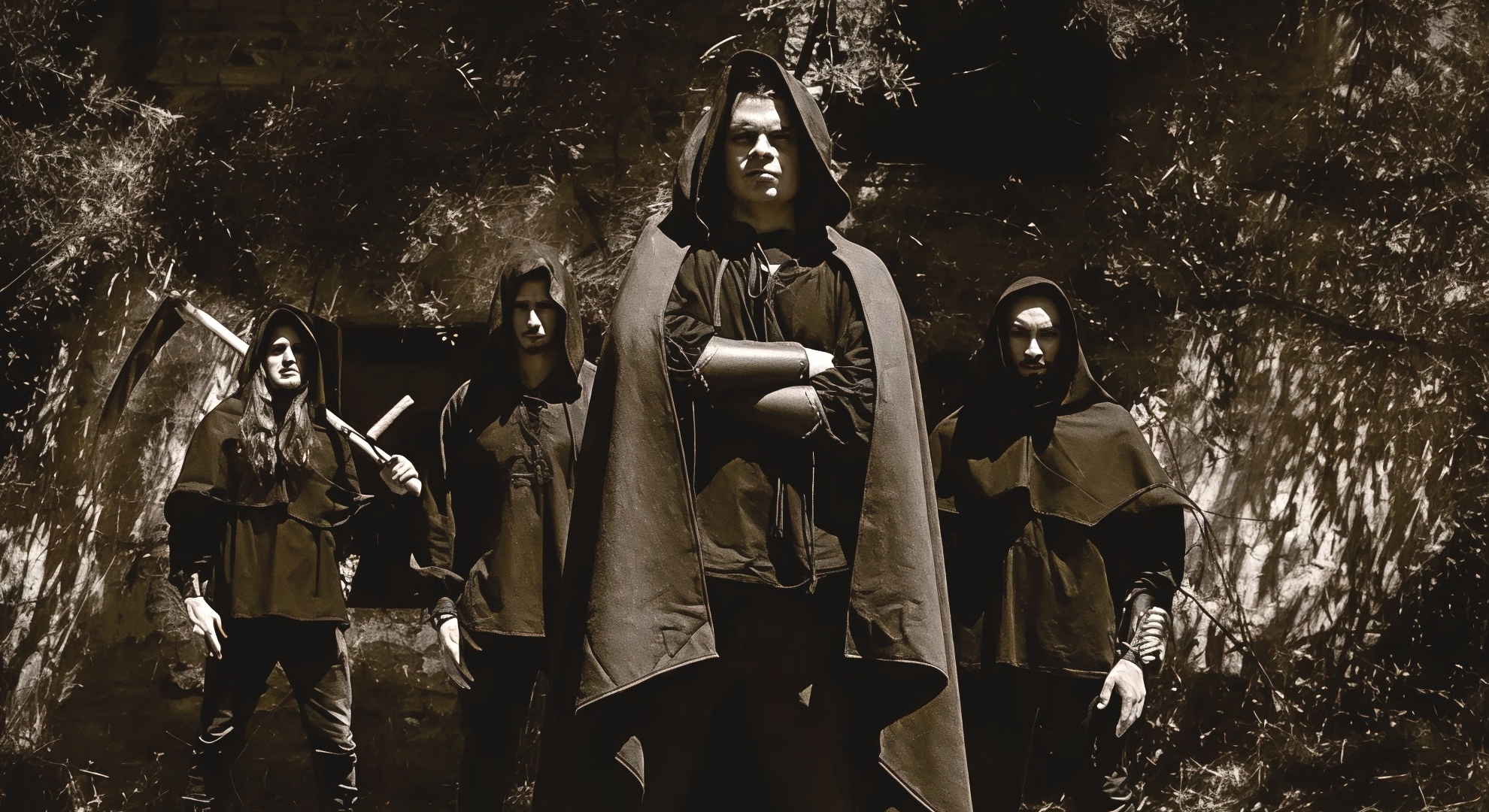


Italy’s monsters and massacres once traveled as woodcut pamphlets, and Canticum Diaboli set that printed world to black metal on ‘Compendium Horribilis,’ which Ad Noctem Records issues on November 11th, 2026. The Italian quartet’s second full-length gathers nine tracks around tragic and macabre stories from Italian history, folklore and superstition, sung in Italian and Latin.
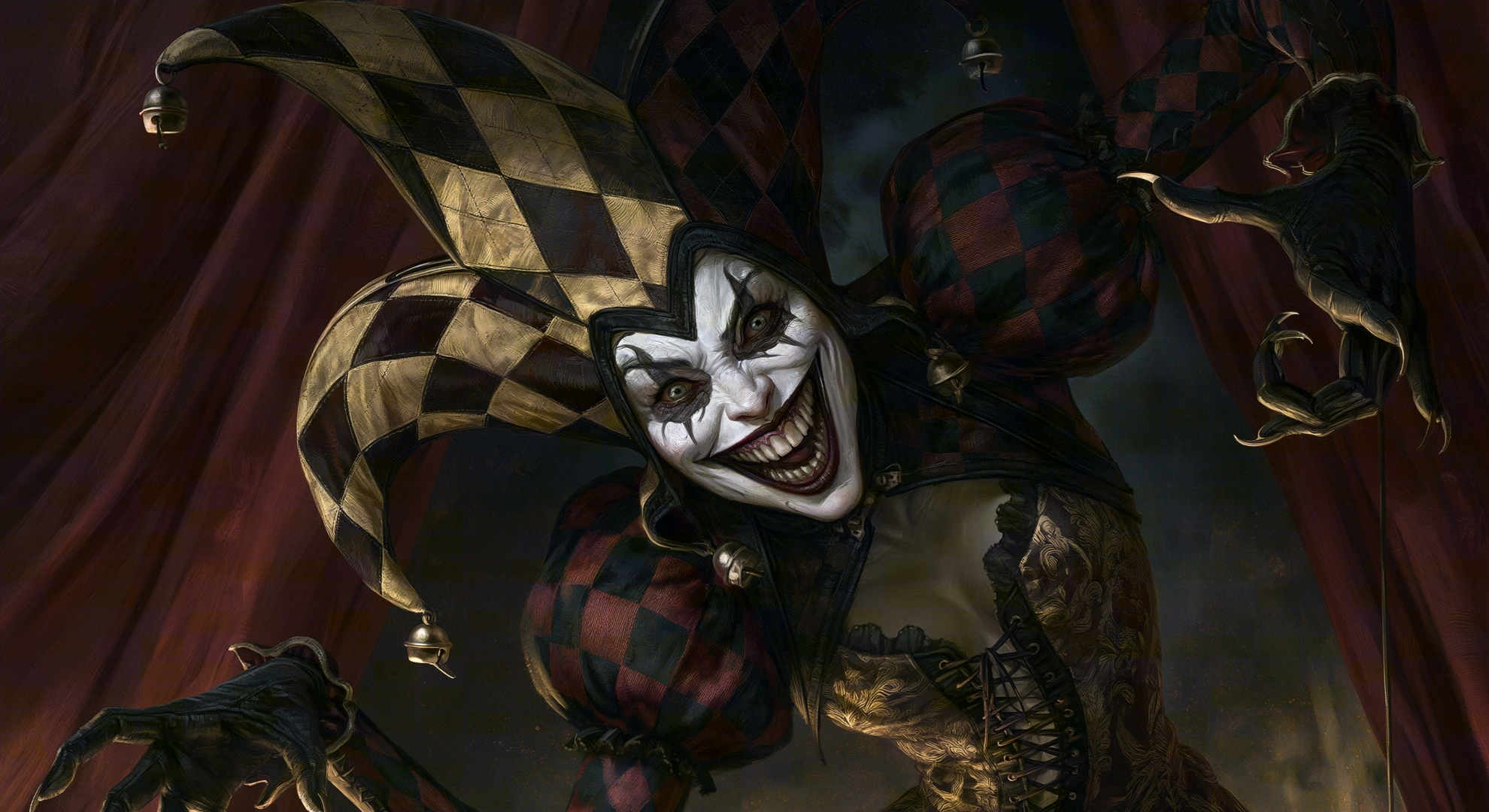
The subjects run from the execution of Giordano Bruno and the Sack of Rome in 1527 to a Venetian vampire legend, the funerary practice of the putridarium and the Monster of Ravenna, and guitarist Apostata drew the cover after the look of sixteenth-century printmaking, with the monster at its center.
The conceit changes what a black metal record owes its sources. An album that names Ravenna, Collalto and a year in Roman numerals commits itself to an archive of pamphlets, trial papers and local tradition rather than to a mood. The band is Italian and several of its subjects belong to its own corner of the country, yet the Latin it sings is shared across Catholic Europe, and that double position, regional in subject and European in reach, gives the record its tension.
A Band Slow to Surface
Canticum Diaboli began in June 2014, when Apostata founded the band, and by the band’s own account the start was slow because the lineup kept changing. Apostata and the lead guitarist Laevus devoted themselves to songs and lyrics until Cernunnos, now the vocalist and bassist, and the drummer Impudicus joined in 2017.
The band’s first full-length, ‘De Flammis et Dei Ruina,’ followed on January 8th, 2019, some five years after the founding.
The band comes from the Veneto, with early activity in Salgareda, in the province of Treviso, and later in Padua and Treviso. That geography bears on the new record, because the castle of Collalto, setting of one of its stories, stands at Susegana in the same province.
The current lineup pairs Cernunnos on vocals and bass with Apostata on rhythm guitar, Laevus on lead guitar and Asmodeus on drums. The drum seat has changed hands more than once since 2017, from Impudicus to Penthos and then to Asmodeus. The official album credits also list guest contributors: Nicholas Petri on drums, beside the permanent drummer Asmodeus; Claudia Ciullo on harp, Francesco Marcuzzo on violin and Gianluca Baccichetti on drums, all on ‘In Principio’; and guest vocals by Davide Lazzarini of Membrance on ‘Venetica Vampyra’ and by The Melancholy Spirit on ‘Sanguis Martae Fiascaris.’
Francesco Peccolo arranged and recorded the traditional instruments.
A Debut, an EP and a Pope
‘De Flammis et Dei Ruina’ has eight tracks, opening with ‘Dies Irae’ and closing with ‘Laus Ultima,’ which runs 9:17. Its titles alternate between Latin, as in ‘Vae Victis’ and ‘Nox Profana,’ and Italian, as in ‘Misantropia’ and ‘Alba Nera.’ The compact disc edition carries a booklet whose images are all woodcuts by Apostata, so the visual method of the new cover was already in place in 2019.
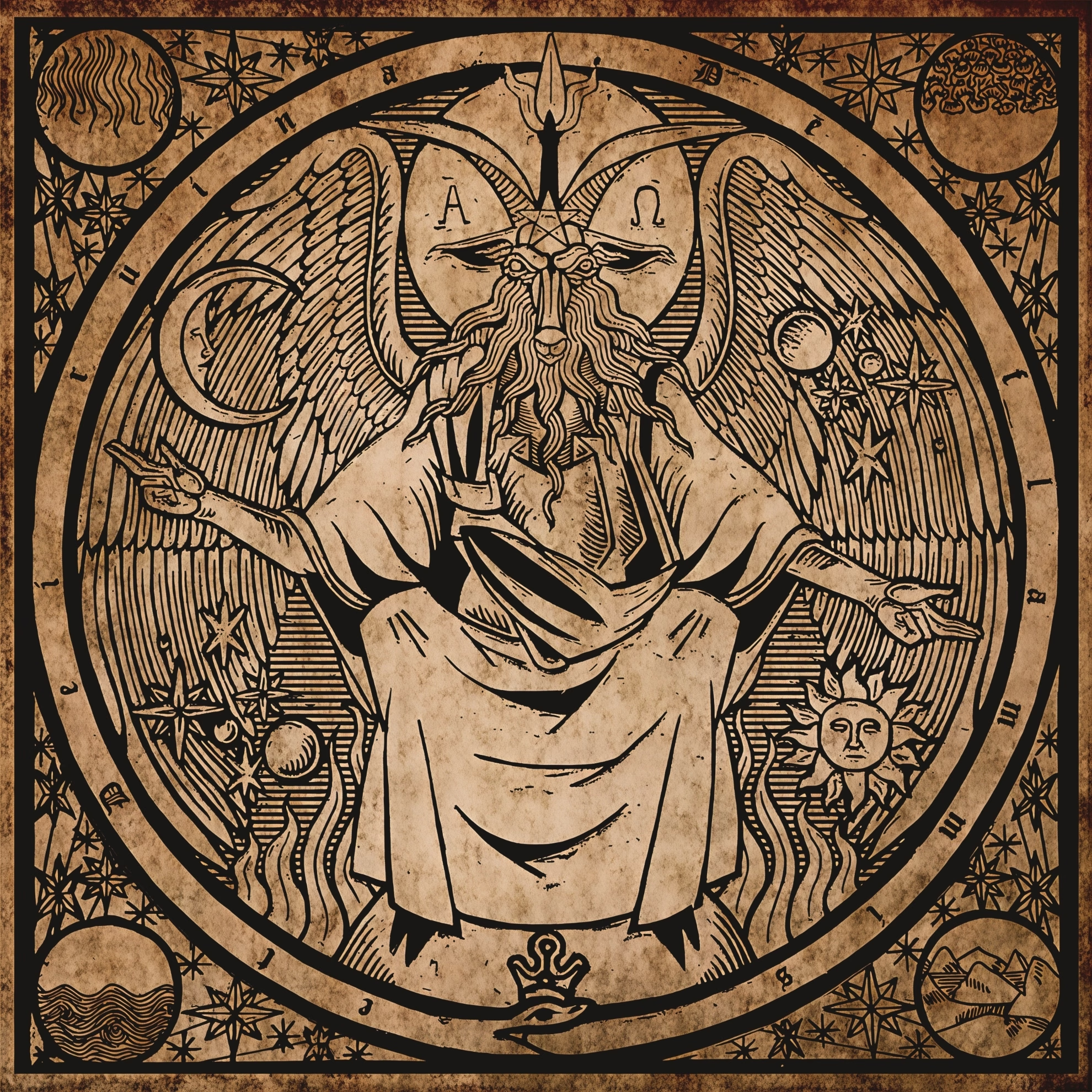
‘Ecce Pontifex Bonifatio,’ the five-track EP of May 16th, 2023, narrowed the lens to a single pope and a single year, 1302, when Boniface VIII issued the bull ‘Unam Sanctam.’ The bull gives the second track its title, and ‘Mala Anagnia’ points to Anagni, where the pope was seized the following year. The EP was self-produced, and its Latin titles show a band treating a documented person as a subject.
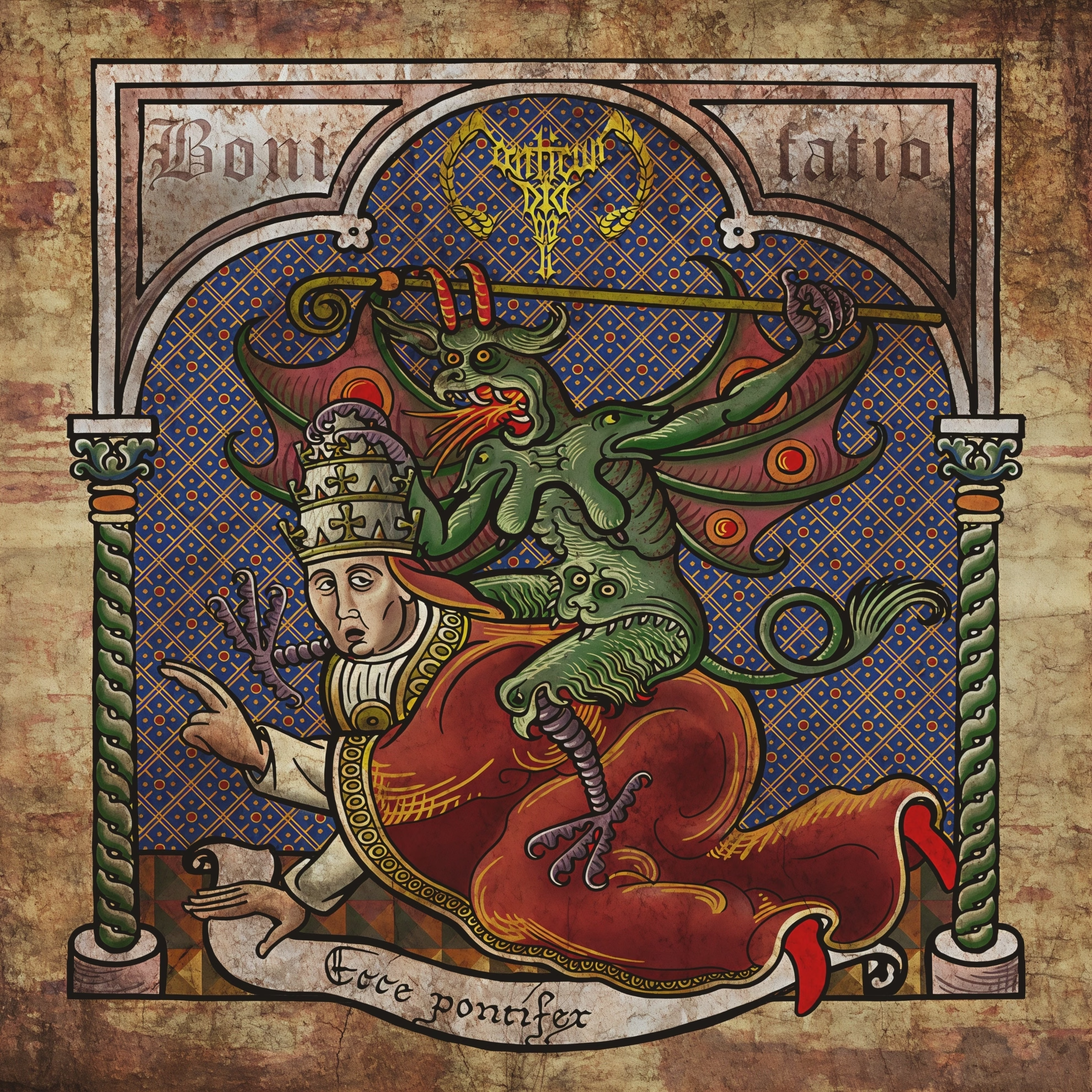
The new record widens that aperture to nine tracks, and the titles show how. None of the debut’s eight titles refers to a person, a place or a date. On the new record, five of nine do: ‘Venetica Vampyra,’ ‘Monstrum Ravennae,’ ‘Bianca di Collalto,’ ‘Sanguis Martae Fiascaris’ and ‘Ferro Ignique MDXXVII.’ The shift from abstractions such as ‘Tempesta’ and ‘Misantropia’ to addresses is a documented change in how the band names its material, and it points toward a record that argues from specific cases.
Fire in the Eternal City
On May 6th, 1527, the imperial army of Charles V, made up of Spanish, German and Italian soldiers who had gone unpaid and mutinied against their commander, broke through the walls of Rome and sacked the city.
Historians have long treated the sack as a rupture in papal Rome and in Renaissance culture. Clement VII was left a prisoner in the Castel Sant’Angelo, and the art historian André Chastel traced how the sack scattered the artists of papal Rome and altered its cultural life.1
For the band, the event survives as printed memory. The tracklist closes with ‘Ferro Ignique MDXXVII,’ a Latin formula for iron and fire followed by the year in Roman numerals, and the title points to the Sack of Rome.
Giordano Bruno stands at the other end of that century’s violence. Born in 1548 outside the walls of Nola, he was a Dominican friar who broke with his order, taught and wrote across Europe, and returned to Italy, where he was tried by the Venetian and then the Roman tribunals of the Holy Office.2
He was burned alive in Rome’s Campo de’ Fiori on February 17th, 1600. Ingrid Rowland’s biography presents a philosopher whose case was tried on religious grounds, not a simple martyr for science.
The tracklist does not name him, and the band has not said which song carries his story. The pairing with the Sack of Rome nonetheless gives the album two Roman fires, one lit by an army and one by a tribunal, 73 years apart.
A Monster in Print
The Monster of Ravenna was born, by contemporary report, in early 1512 near the city of Ravenna, and it became one of the best-known prodigies of the sixteenth century.
Pamphlets and diaries across Europe described it, and a common reading took the birth as an omen of the outcome of the Battle of Ravenna.3 Its features changed as accounts copied one another, so the creature known to later readers was partly the work of the printed record.
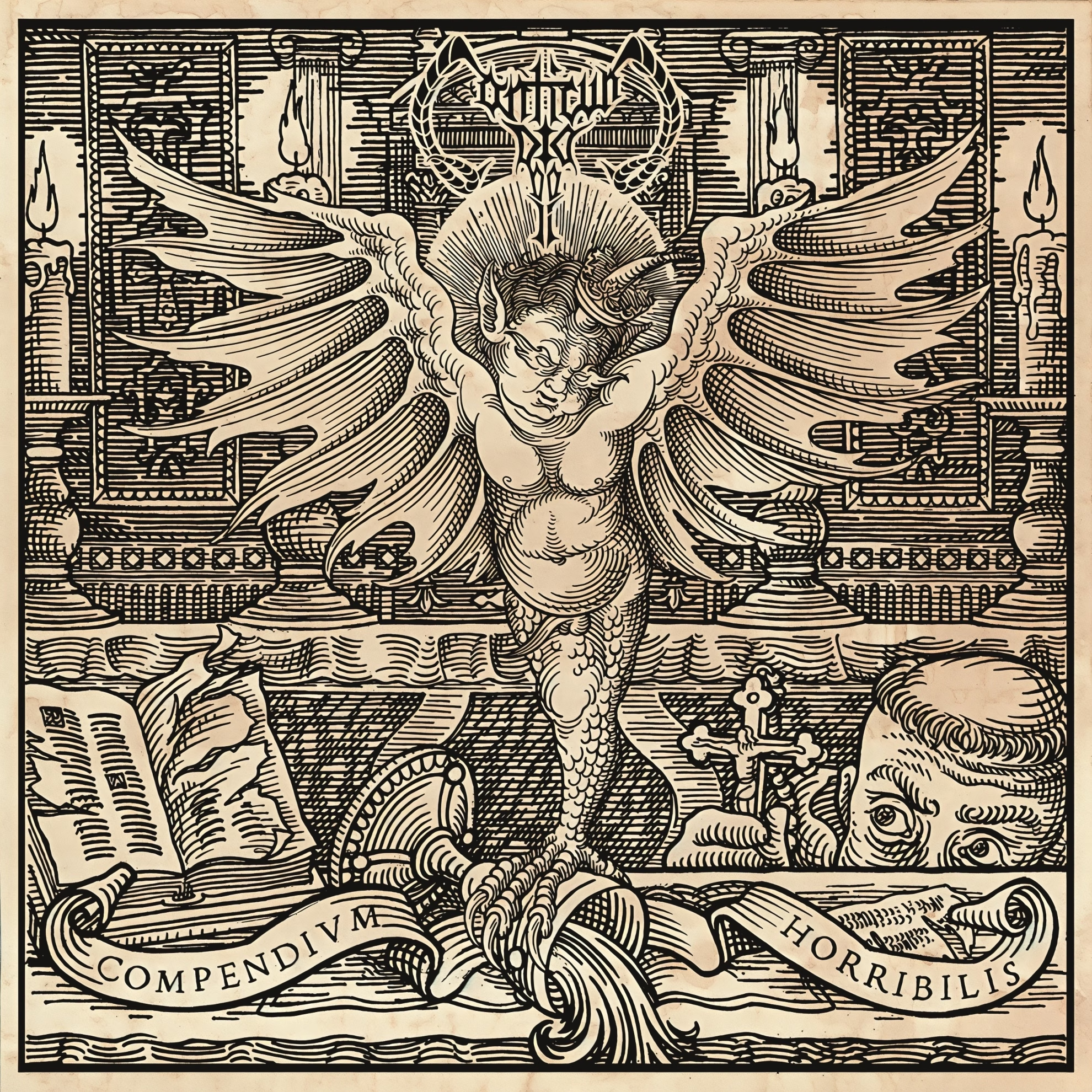
Apostata, who made the woodcuts for the debut booklet, places the creature at the center of a cover drawn after sixteenth-century printmaking. The band has not said why it chose the monster for that place. Whatever the reason, the fit is exact: the monster’s fame depended on printed images, which makes it a fitting emblem for a record that borrows the look of the broadside.
Bricks, Benches and Ghosts
The putridarium belongs to a later and quieter history. In northern Italy during the eighteenth and nineteenth centuries, certain crypts held stone seats with drainage openings on which the dead were placed until the soft tissue had gone, after which the bones received a second burial; southern counterparts aimed at mummification rather than skeletonization.4
The practice is therefore not medieval, and it carries the album well beyond the century of woodcut prodigies into the funerary habits of the modern age.
The Venetian vampire legend is less specific. The band has not said which story it means, but the best-known case in the scholarship is a skull found in a plague burial on the island of Lazzaretto Nuovo, associated with the epidemic of 1576, with a brick lodged in its jaw. Two forensic specialists published the excavation in 2010 and read the brick as the trace of a ritual against a vampire, and other researchers disputed that reading two years later.5
Bianca di Collalto is a legend of the band’s own province. Local tradition places her in the castle of Collalto at Susegana, in the province of Treviso, as a handmaid walled up alive through the jealousy of the castle’s lady, and versions differ on the names. Her ghost is said to appear to the Collalto family, and a nineteenth-century literary retelling by Francesco Dall’Ongaro fixed the tale in print. No scholarly account of the legend could be confirmed at the time of publication, so it stands here as tradition and not as documented history.
‘Sanguis Martae Fiascaris’ invites a harder question. The name matches Marta Fiascaris of San Daniele in Friuli, a woman whom the Holy Office tribunal of Aquileia tried in the seventeenth century on a charge of feigned sanctity, holding her for six years before she returned home in May 1656.6
The band has not confirmed the connection, so the match of full name and period makes the case a strong parallel, not a confirmed source. If the parallel holds, the song would sit beside Bruno’s trial as a second encounter between a tribunal and a person it could not classify, one a philosopher and the other a woman accused of counterfeit holiness.
Set side by side, the announced subjects share a pattern: a monster that officials and pamphleteers had to interpret, a handmaid walled up, a vampire pinned with a brick, bodies drained on stone seats, a philosopher burned, a woman tried for feigned sanctity. Each case involves a community or an institution deciding what a troubling body or claim meant and what to do with it, and that pattern is what turns the album from a gallery into a catalogue of procedures.
Burn for Us
The single confirmed advance piece is a video for ‘Arde Pro Nobis,’ and it premiered on YouTube on October 7th, 2026. The title is the available evidence. “Arde’” is the Latin imperative of the verb to burn, and “pro nobis” means “for us,” so the phrase turns the litany response “ora pro nobis,” pray for us, into a demand for fire.
The rest of the tracklist keeps to a vocabulary of ecclesiastical Latin and public punishment. ‘Morte all’Inquisitore’ is phrased in Italian as a cry against the tribunal’s officer, and the band has not said which of its subjects the song addresses.
The record was produced at New Sin Studio, and the release materials describe extensive use of analog equipment during the sessions. The studio operates in Loria, in the province of Treviso, under the producer and engineer Luigi Stefanini, and its previous work includes records by the Italian acts Labyrinth, Elvenking and Vision Divine. Ad Noctem Records issues the album on compact disc, with a digital edition alongside it. No vinyl or cassette edition had been confirmed at the time of publication, and pre-order availability had not been confirmed either.
Latin Beyond the Veneto
In the weeks since the announcement, the record has been reported in German, Italian and English-language metal press, which gives the album an international readership before it is released in full.
That readership meets a record sung in two languages with different ranges. Latin travels easily, since it was the working language of the Church whose courts, rites and prodigies the album describes, and its vocabulary survives in liturgies far from Italy. Italian carries the local freight: ‘Bianca di Collalto’ names a castle in one province, and no translation can supply the local memory that makes the name mean something.
The pamphlets the record imitates were themselves export goods, since the Monster of Ravenna reached readers across Europe. The Sack of Rome belongs to the same traffic in reverse: the army that took the city included German infantry, and a German-language announcement of a record about it reaches the lands those soldiers came from. Each fact in that meeting is documented, and together they place the album’s international reach inside the history it recounts.
Stories the Archive Kept
Canticum Diaboli took nearly eight years to follow their debut, with a five-track EP between, and the documented shift in that interval runs from abstraction to address, from one pope to nine named cases.
The advance title ‘Arde Pro Nobis’ points toward a record that keeps the Church’s own Latin in play while turning its formulas against it. Beyond the Veneto, the same record meets readers shaped by the pamphlets, armies and tribunals it describes. Its weight, on the evidence of its announced subjects, lies in the argument that Italy’s horrors were archived before they were sung, and that an archive, once printed, belongs to every country it reached.
Which story from your own region’s archive of prodigies, trials and legends would you most want to hear set to music, and what would be lost if it were sung in a language other than the one it was first told in?
References
- André Chastel, ‘The Sack of Rome, 1527,’ trans. Beth Archer (Princeton: Princeton University Press, 1983). ↩︎
- Ingrid D. Rowland, ‘Giordano Bruno: Philosopher/Heretic’ (New York: Farrar, Straus and Giroux, 2008). ↩︎
- Lorraine Daston and Katharine Park, ‘Wonders and the Order of Nature, 1150–1750’ (New York: Zone Books, 1998), 177–82. ↩︎
- Roberta Fusco, ‘Putridaria (Strainer Rooms) and Draining Practices of the Bodies: Anthropology of Death in the Modern Age,’ in ‘Papers in Italian Archaeology VII: The Archaeology of Death’ (Oxford: Archaeopress, 2018), 532–39. ↩︎
- Emilio Nuzzolese and Matteo Borrini, ‘Forensic Approach to an Archaeological Casework of “Vampire” Skeletal Remains in Venice: Odontological and Anthropological Prospectus,’ Journal of Forensic Sciences 55, no. 6 (2010): 1634–37; S. Minozzi, A. Fornaciari, and G. Fornaciari, ‘Commentary on Nuzzolese and Borrini, “Forensic Approach to an Archaeological Casework of ‘Vampire’ Skeletal Remains in Venice,”’ Journal of Forensic Sciences 57, no. 3 (2012): 843–44. ↩︎
- Dario Visintin, “L’inquisizione in Friuli alla metà del Seicento,” ‘Giornale di storia’ 6 (2011). ↩︎
Leave a Reply