

Flatness is not neutral. Across the eastern reach of England, the ground was once water: reed bed, peat bog, and slow-moving mere stretching between Lincolnshire and Cambridgeshire, home to communities who fished, trapped wildfowl, and cut turf for fuel long before anyone thought to call the region drained.
What replaced that water was farmland, and what replaced the memory of it was folklore — tales of black dogs on lonely causeways, of villages that sank rather than surrendered. It is this ground, engineered rather than simply inherited, that has occupied the East Anglian trio Fen for the better part of 20 years.
Two Decades in the Drained Fens
Fen formed in 2006, taking its name directly from the flat, waterlogged country of East Anglia its members called home. The founding lineup of Grungyn, Theutus, and Frank Allain, who performs as The Watcher, set out to weld the raw hostility of early black metal to a more reflective, melodic sensibility.
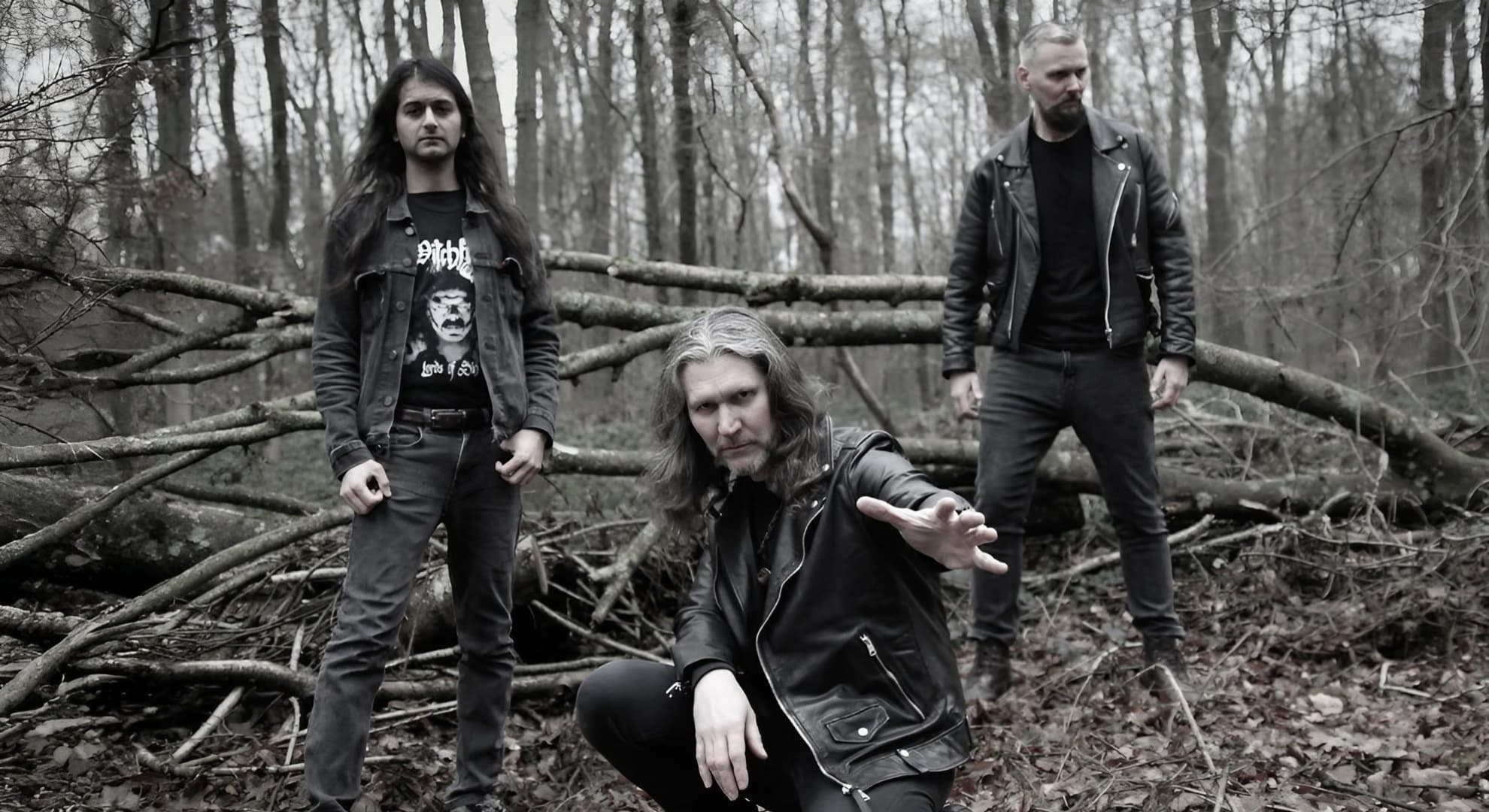
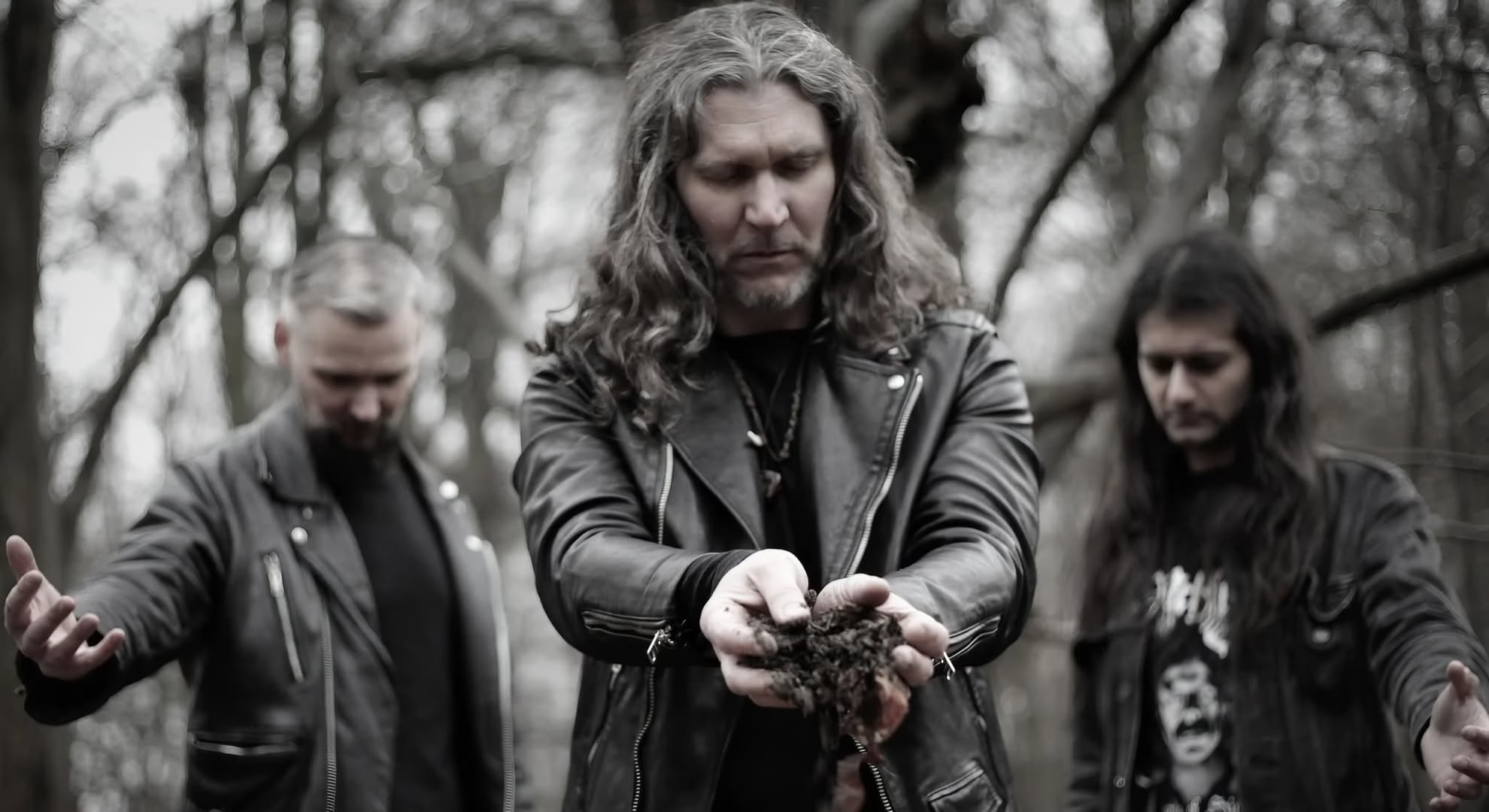
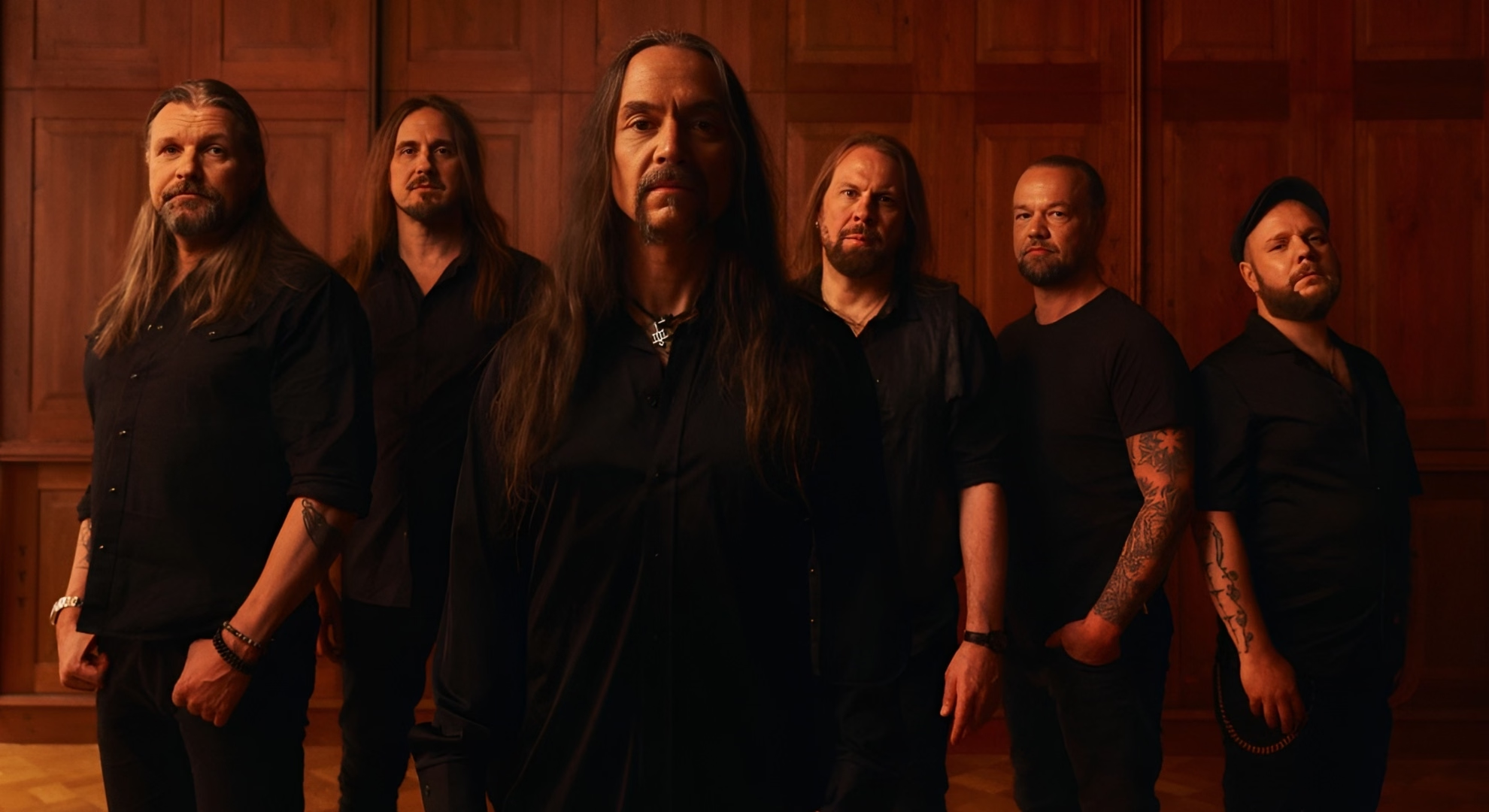
The band recording today is a trio: Allain on vocals and guitars, Adam Allain, known as Grungyn, on vocals and bass, and a drummer credited only as J.G. That founding intention has held across two decades of continuous recording.
An early EP, ‘Ancient Sorrow’ (2007), preceded the debut full-length, ‘The Malediction Fields’ (2009), which found favor among early listeners of England’s atmospheric black metal circle, then coalescing around Winterfylleth and Wodensthrone in the wake of the pioneering duo Forefather.
Fen extended that foundation across five further albums — ‘Epoch’ (2011), ‘Dustwalker’ (2012), ‘Carrion Skies’ (2015), ‘Winter’ (2017), and ‘The Dead Light’ (2019) — each one widening the band’s technical range while keeping its sound recognizably its own.
The wider style Fen helped establish — an English strand of atmospheric black metal — draws its emotional charge from a documented tendency within the genre to treat forbidding, half-wild surroundings not as scenery but as active collaborators in a record’s meaning.1 That tendency is precisely what ‘Elemental Part One: Mourning Earth’ pushes furthest: a record that treats its home ground less as inspiration than as co-author.
The Record Before the Return
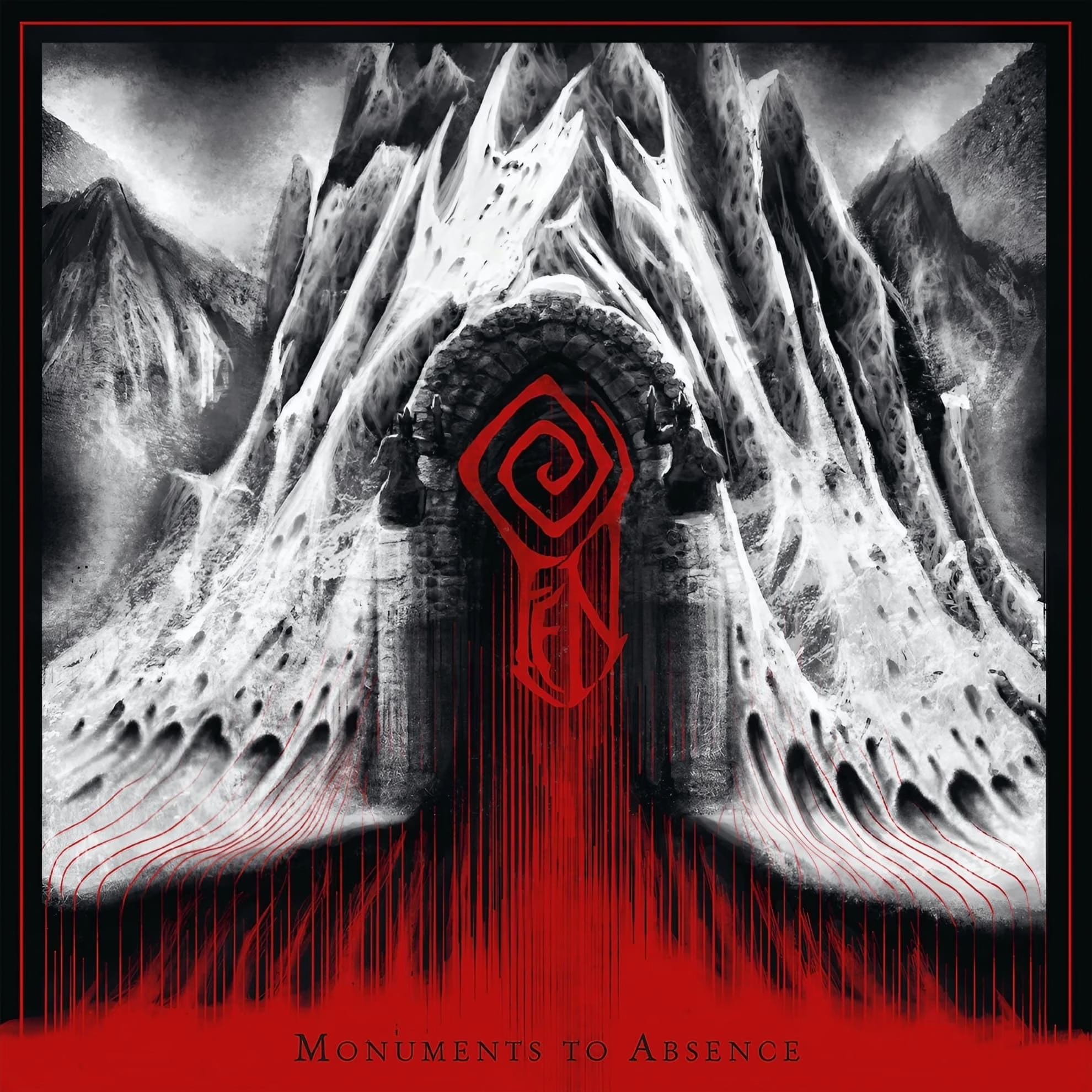
Fen’s immediately preceding album, ‘Monuments to Absence,’ was released in July 2023 as an eight-track statement of anger, hopelessness, and despair at the human condition, arranged with a density and velocity that left little room to breathe between passages.
Its harsh permutations of black metal were repeatedly broken by cleaner, more atmospheric sections, doom-weighted tempo changes, and full-throated riffing, the whole composition pitched toward intensity rather than repose.
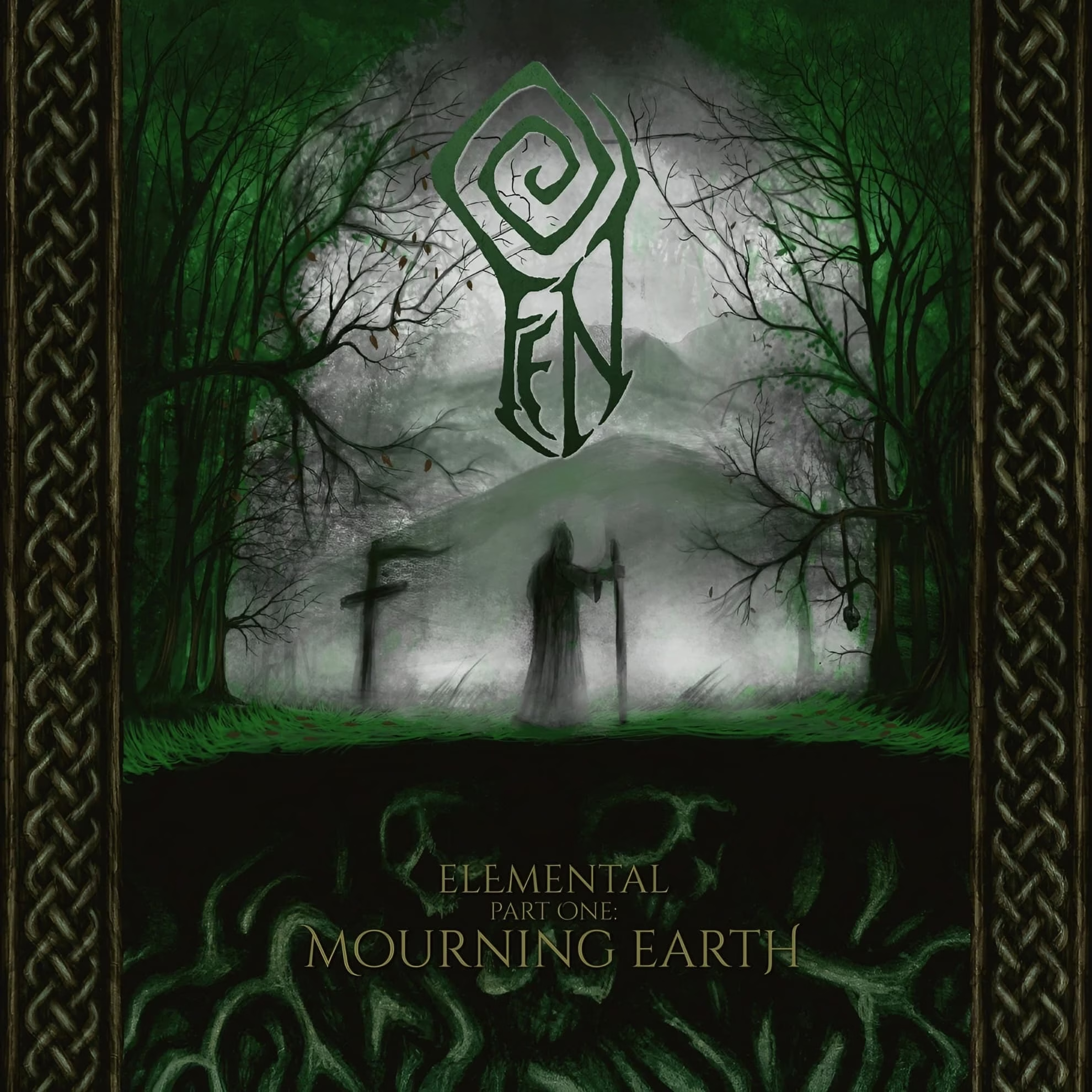
‘Elemental Part One: Mourning Earth’ answers that density with space. Where the 2023 record arranged its ideas dense, fast, and unrelenting, the band deliberately opened room on the follow-up for its themes to develop at a slower pace, tracking large sections live in the studio to preserve a more natural sense of motion.
The rhythm section moved away from blast-beat-driven momentum toward more dynamic patterning, allowing the bass to interweave with the drums rather than simply reinforce them — a change the band frames as a culmination of 20 years of accumulated technique rather than a departure from it.
Reaching what the band calls its twentieth full year, Fen set out with this release to encapsulate the complete range of its sound, a record the band itself describes as sitting between its first and most recent albums, using ‘Winter’ as a waypoint between the two.
Land That Would Not Forget
The band’s own account of the new album’s themes centers on a fenland dawn that offers no relief, and an equally unrelieved dusk in which the narrator sits with the recognition that tomorrow will bring nothing different, haunted by what Allain described as “the half-heard whispers of the spirits bound to the soils.” That relationship between grief and soil is not simply figurative.
Before the seventeenth century, the Fens were an amphibious country: a shifting expanse of open water, reed bed, and peat bog that supported communities of wildfowlers, fishermen, and turf-cutters rather than settled arable farmers, an economy and a way of life built around water remaining exactly where it was.2
That water was systematically removed. Commissioned first by the Crown and later by Francis Russell, fourth Earl of Bedford, together with a syndicate of investors known as the Adventurers, the Dutch engineer Sir Cornelius Vermuyden began draining the Great Level in the 1630s, cutting new channels, including the Bedford River, to redirect the Ouse and convert the wetland into farmland.3
The engineering was contested from the outset. Local commoners, whose fishing and turbary rights depended on the fen remaining flooded, resisted the new works through legal challenge and outright sabotage, a conflict that stretched into the following century even as the drained ground itself began sinking, its dried peat shrinking below the level of the channels meant to keep it dry.
The Advance Singles
Two tracks have surfaced ahead of the album’s release, each accompanied by an official video and each bearing directly on the record’s stated shift toward space and dynamic contrast. ‘Tectonic,’ the first single, released in late May 2026, opens on tremolo-picked black metal before shifting into slower, doom-weighted passages built around the record’s central image: the movement of tectonic plates as a stand-in for buried emotional pressure finally surfacing.
Allain addressed the song’s premise directly, describing how the shifting of continental plates “underpins all that we know,” before turning to how a single geological event could destroy the fragile evidence of civilization built above it — a link between deep-time forces and personal instability that the track sustains through its structure rather than simply stating in its words.
‘Abyssal Plain,’ the second advance single, announced in early August 2026, pushes the same geological framing toward its bleakest extreme, imagining the seabed’s lowest point as the place where identity itself dissolves. Allain framed the track as a descent in which “faces, names, places” lose all meaning, the music matching that erosion with a slower, more open arrangement than the record’s opening pair of songs.
Together, the two singles position ‘Elemental Part One: Mourning Earth’ as a record moving deliberately from surface tension toward complete submersion, an arc the full track list — ‘Glacier,’ ‘Tectonic,’ ‘Massif,’ ‘Abyssal Plain,’ ‘Barrow,’ and ‘Moor’ — appears built to follow in sequence.
Formats Beyond the Fens
Prophecy Productions is releasing ‘Elemental Part One: Mourning Earth’ across a deliberately physical range of editions: a 36-page hardcover artbook pairing the six-track album with a bonus disc of additional material, a limited vinyl LP pressed in transparent green and black splatter and capped at 300 copies, a standard black vinyl LP, and a CD Digisleeve with a 12-page booklet.
A digital pre-order through Bandcamp accompanies each of these editions, secondary to the pressed and bound versions the label is treating as the release’s primary form.
Fen’s reach beyond England’s own scene is documented rather than assumed. Over the past decade the band has performed at SWR Barroselas Metalfest in Portugal, Damnation Festival in the UK, and Prophecy Fest in Germany, and has toured alongside the Romanian act Negură Bunget, English peers Wodensthrone, and the American band Agalloch.
Each of those associations places Fen’s particular strand of English atmospheric black metal — built on fen mist and industrial-era loss rather than Nordic winter or North American old-growth forest — inside listening communities shaped by different, equally specific relationships to place and grief.
Negură Bunget’s following carries its own documented preoccupation with Carpathian folk ritual, while Agalloch built a following in the Pacific Northwest around old-growth forest as a site of both reverence and industrial loss. Fen’s version of that preoccupation, rooted in engineered rather than untouched ground, offers those same listeners a variation on a shared grammar: loss framed not as wilderness under threat but as wilderness already, and irreversibly, removed.
Ground That Keeps Its Grief
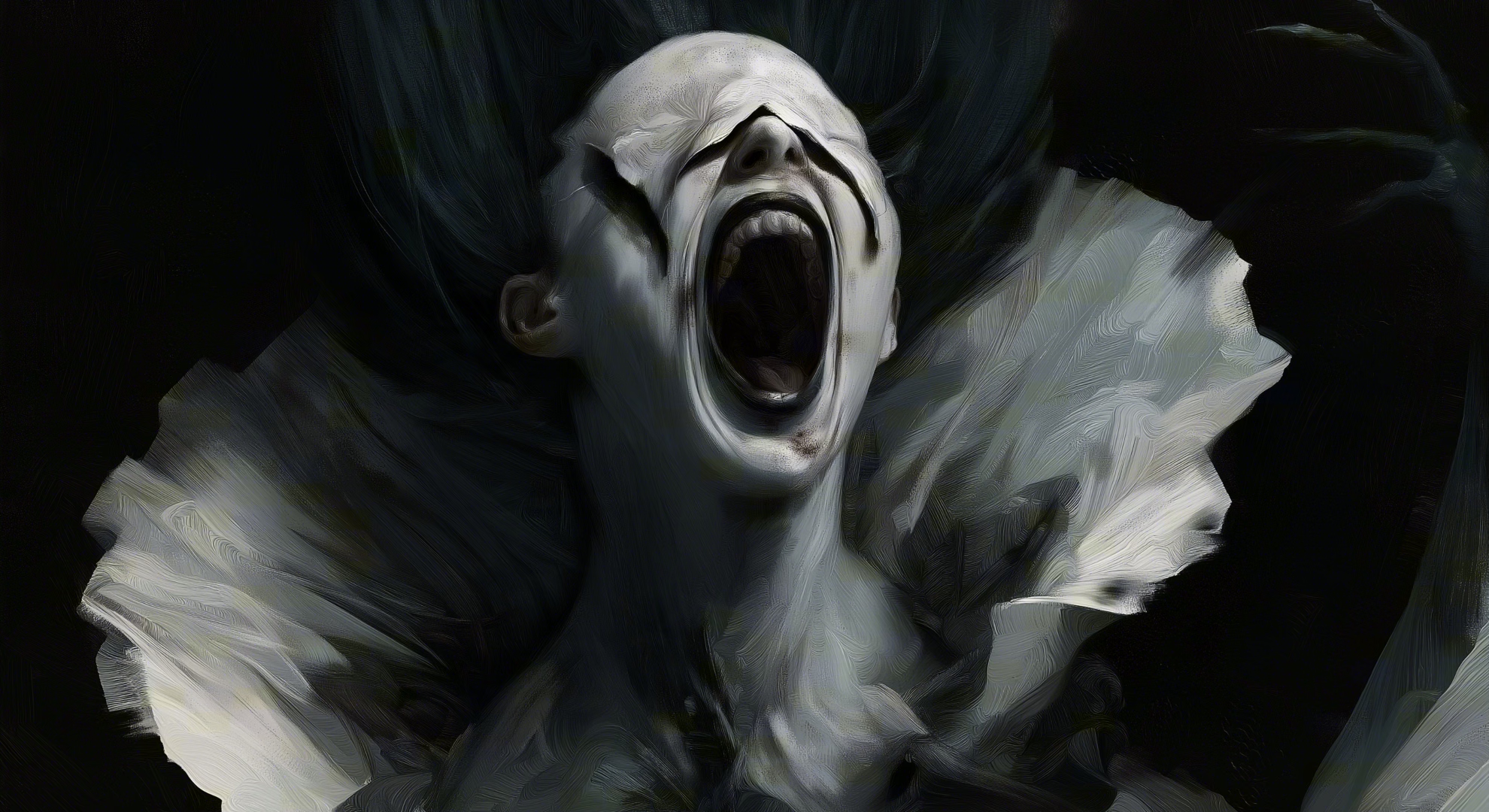
Two decades after taking its name from a stretch of engineered ground, Fen enters the first half of a two-album cycle with a record that treats that ground as an active participant rather than a backdrop.
‘Elemental Part One: Mourning Earth’ does not present the fen country as simply bleak scenery for black metal atmosphere; it presents drainage, resistance, and haunting as a continuous local history the band has spent two decades learning to score. The second half of the cycle, described by the band as already well developed in both concept and material, is positioned to extend that same address to further elemental ground.
What is already audible across the two released singles — the slow opening toward space, the willingness to let a single geological or spectral image carry an entire song — suggests a record confident enough in its subject to let three centuries of local memory do work that atmosphere alone cannot.
For those who have followed Fen’s two decades of increasingly patient music, what does it mean for a band to spend 20 years setting one stretch of engineered ground to sound, and does that same bond between a very specific place and a very specific grief have an equivalent in the ground each one calls their own?
References
- Owen Coggins, ‘Ecology, Estrangement and Enchantment in Black Metal’s Dark Haven,’ Green Letters 25, no. 2 (2021): 130–142. ↩︎
- Harry Godwin, ‘Fenland: Its Ancient Past and Uncertain Future’ (Cambridge: Cambridge University Press, 1978). ↩︎
- L. E. Harris, ‘Vermuyden and the Fens: A Study of Sir Cornelius Vermuyden and the Great Level’ (London: Cleaver-Hume Press, 1953). ↩︎


Leave a Reply