

In the summer of 1713, Russian forces crossed into a Finland that belonged, administratively, to Sweden, and did not leave for eight years. Villages were burned. Men of fighting age were conscripted or killed. Women and children were taken east in numbers still debated by historians. Finns call this period “isoviha,” the Great Wrath, and in the country’s collective memory it occupies a place closer to a national wound than a historical footnote.
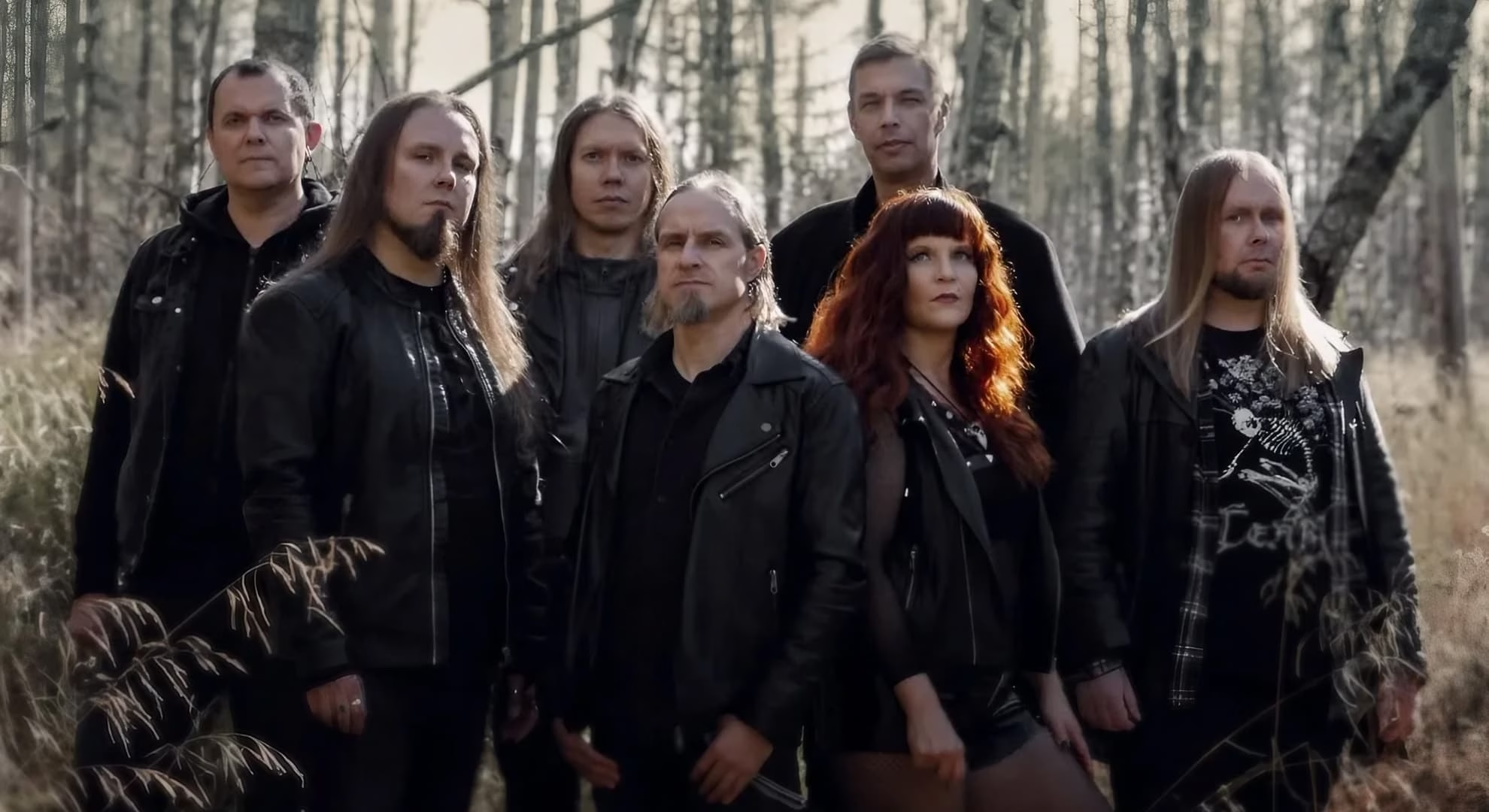
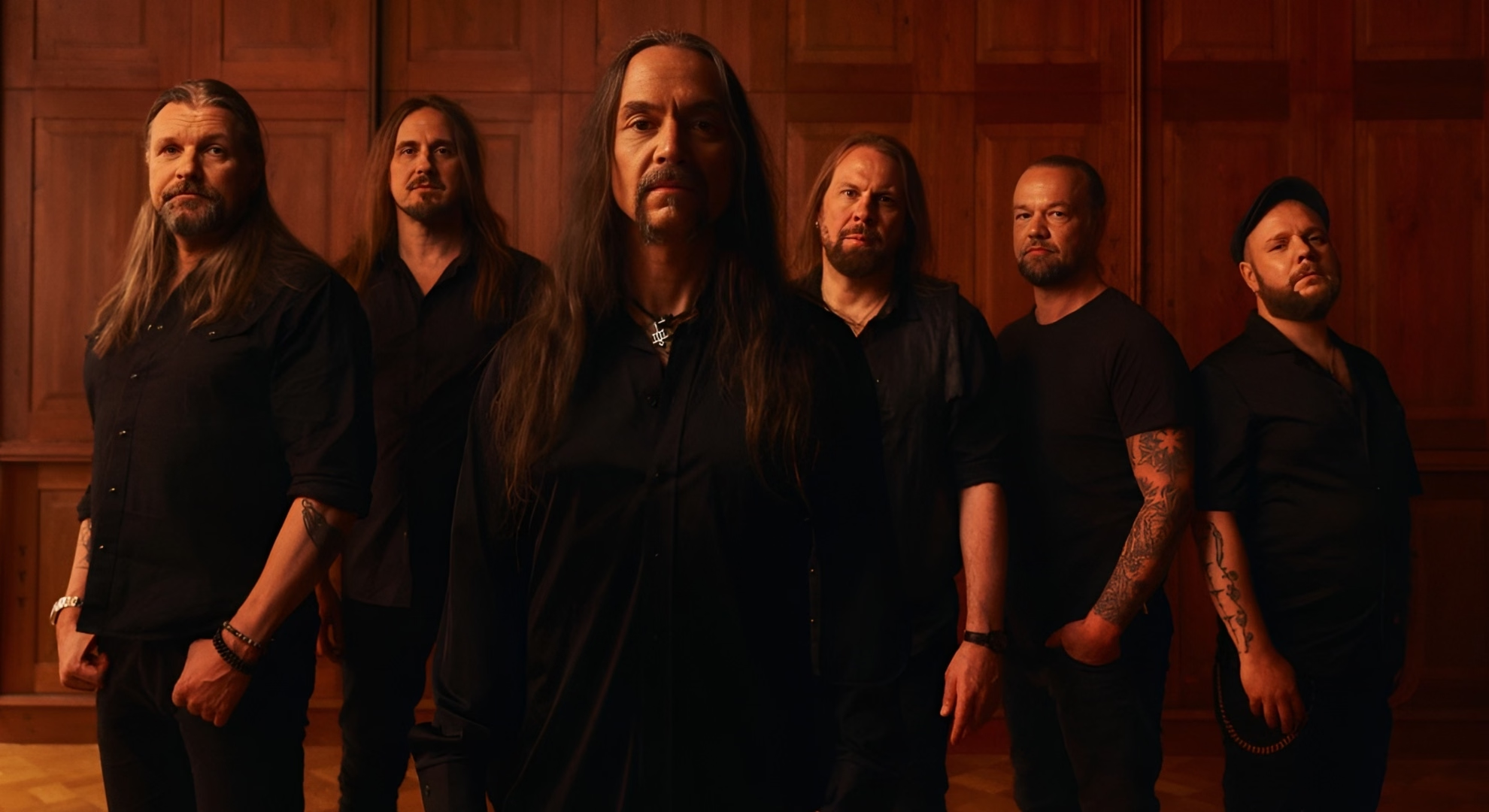
It is this period, not the present, that the Finnish melodic death metal band Noumena chose as the setting for the song that reintroduced them to the wider metal press this year.
Isoviha, a Province Under Occupation
The Great Wrath ran from 1713 to 1721, coinciding with the final and most brutal phase of the Great Northern War between Sweden and Russia. Finland, then an eastern province of the Swedish crown rather than an independent state, absorbed the worst of the fighting and its aftermath. Regular Russian occupation forces were joined by irregular raiding parties, and the province’s civilian population bore the weight of both.
Political historians Osmo Jussila, Seppo Hentilä, and Jukka Nevakivi describe the period as one in which the province’s earlier, more stable relationship to Swedish rule gave way to a lived experience of devastation that shaped Finnish historical consciousness well into the era of independence.1
The Treaty of Nystad in 1721 ended the occupation and ceded parts of Finnish Karelia to Russia, but the demographic and psychological toll of the intervening years left a mark that Finnish folk memory carried forward largely outside official histories, in oral narrative and superstition.
A Beetle’s Warning in the Timber
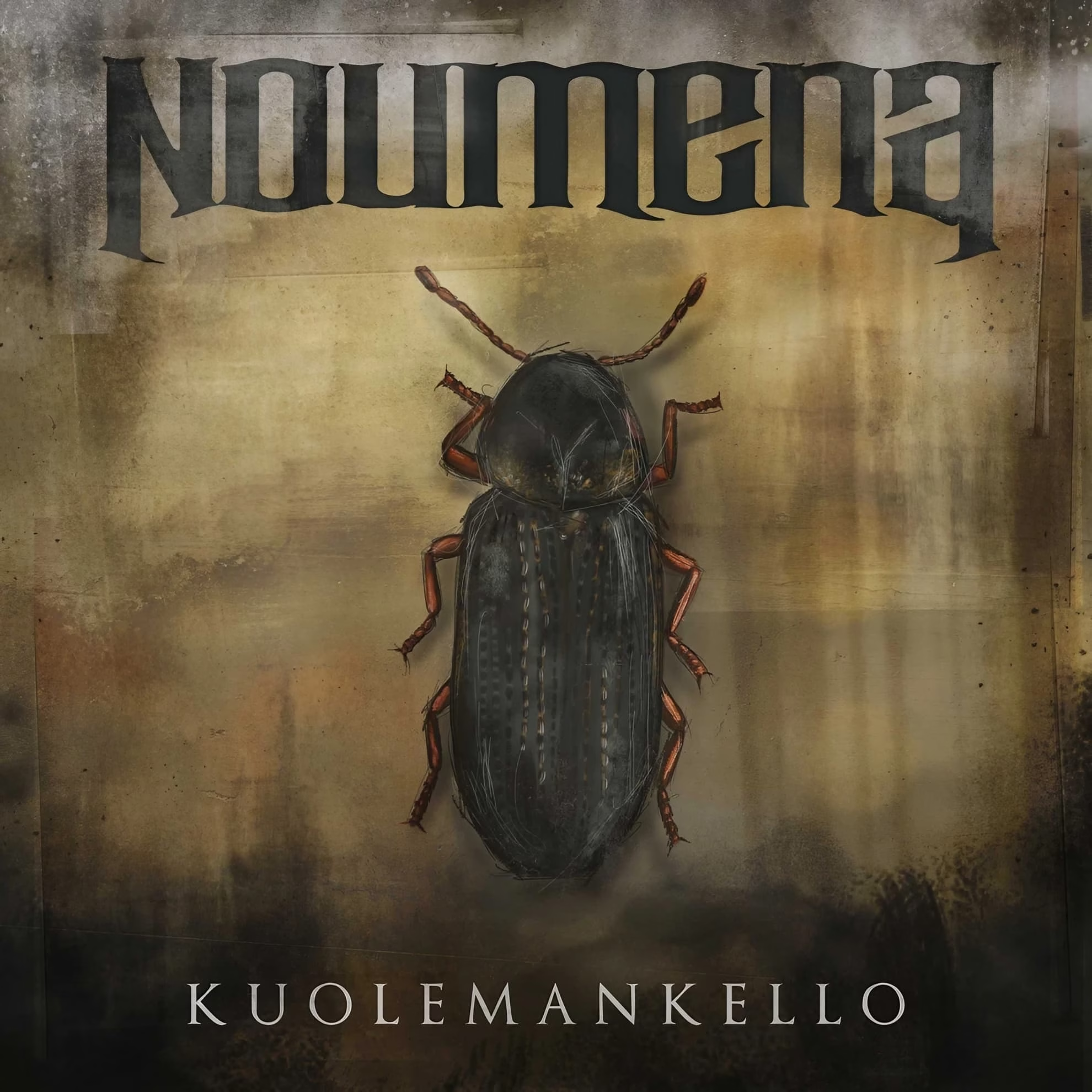
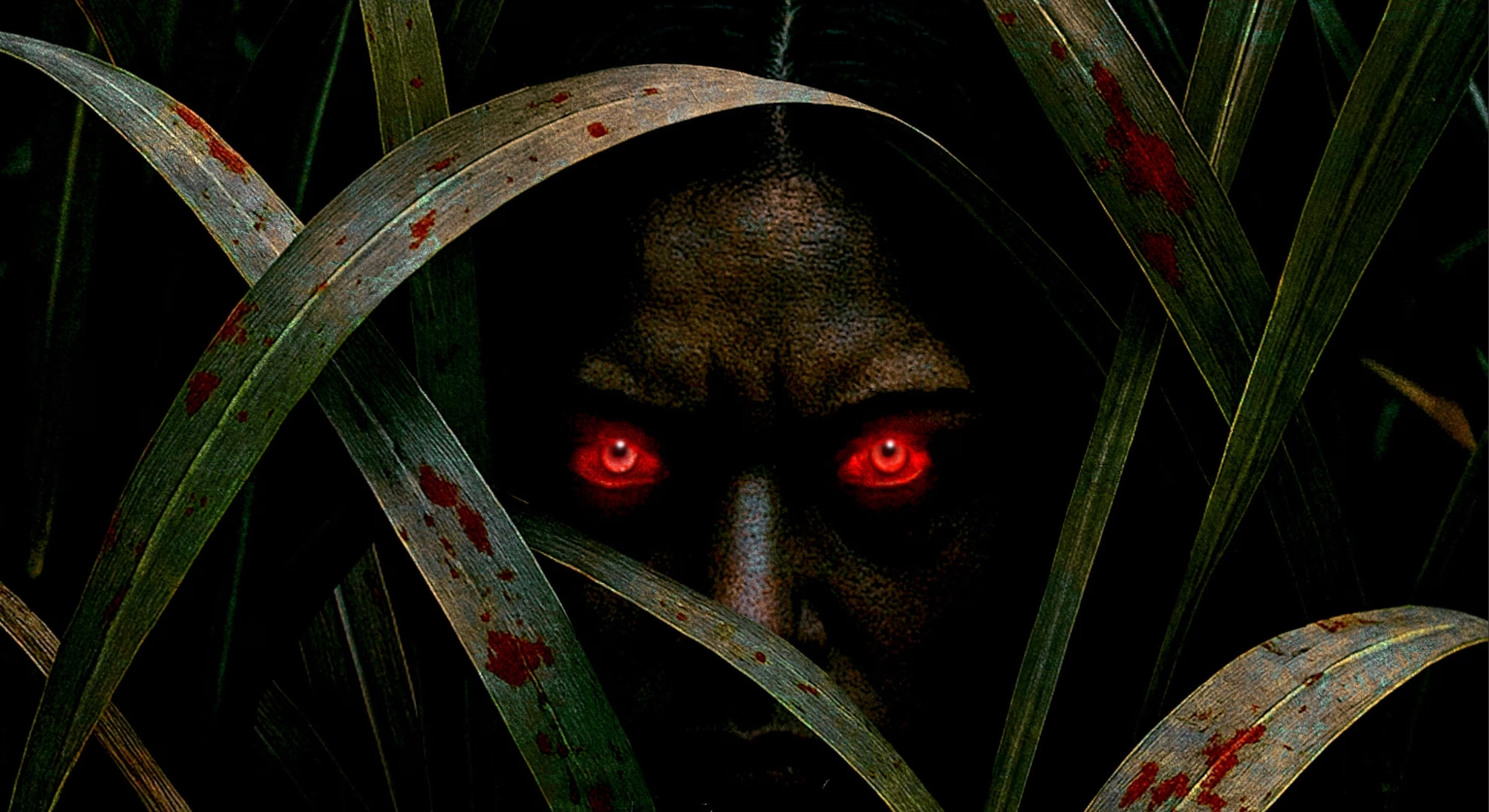
One such superstition anchors ‘Kuolemankello,’ the lead single from Noumena’s seventh full-length album, ‘Maanääri,’ released August 21st through the Finnish independent label Haunted Zoo Productions. The title translates as deathwatch beetle, a wood-boring insect whose mating call, a rhythmic ticking produced by striking its head against timber, was heard in rural Finnish households as an omen of an approaching death.
Folklorist Laura Stark’s study of magical belief in early modern rural Finland documents how domestic sounds and small disruptions of this kind were routinely read by Finnish households as messages from beyond ordinary perception, part of a broader magical worldview in which the boundary between the natural and the supernatural ran directly through the home.2 Noumena’s lyricist, Hannu Savolainen, folds that belief into the occupation itself.
In his own account of the song, quoted in the band’s official materials, Savolainen explained that the deathwatch beetle has been regarded in Finnish folklore as an omen of death, and that in the song, the beetle ticking inside the wooden walls warns of a grim fate, with the story set during the savage era of the Great Wrath in seventeen-hundreds Finland.
He added that even in this mournful tale there remains a small glimmer of hope, a trait he described as characteristic of Noumena’s songwriting more broadly.
Ähtäri to the Spinefarm Years
Noumena’s own history runs almost as long as the interval between the Great Wrath and its rediscovery in popular memory would suggest, though on a considerably more modest scale. The band formed in the spring of 1998 in Ähtäri, a small town in the South Ostrobothnia region of central Finland, built around the songwriting partnership of guitarists Tuukka Tuomela and Ville Lamminaho.
Two demo tapes and a run of regional concerts led, in 1999, to a recording deal that collapsed when the signing label went bankrupt before releasing the finished album. The record eventually surfaced in 2002 as ‘Pride/Fall,’ issued by the Australian label Catharsis Records after a delay of several years. A stronger showing with a 2004 promo brought Noumena to Spinefarm Records, then Finland’s dominant metal imprint.
A Colder Dialect of Melody
Melodic death metal did not begin in Finland, and this distinction matters to where ‘Maanääri’ now sits. The subgenre took shape in Gothenburg, Sweden, in the early nineteen-nineties, as bands including At the Gates and Dark Tranquillity reworked the aggression of Swedish death metal into something more overtly melodic, trading transgressive horror imagery for a register closer to introspection.
Musicologist Benjamin Hillier, tracing that shift in detail, identifies a deliberate move away from the chaotic, gore-driven lyricism of earlier Swedish death metal toward emotional registers built around melancholy and emptiness, achieved partly through the incorporation of classical instrumentation and a more prominent melodic role for guitar.3
Finland’s branch of the genre, which Noumena helped define alongside contemporaries such as Insomnium and Wolfheart, pushed that inherited melancholy further still, favoring longer song structures, folk-inflected melody, and a colder emotional register tied to the specific weather and historical memory of the country rather than to the Gothenburg scene’s original vocabulary.
Where the Swedish originators used melody to soften an inherited aggression, the Finnish variant Noumena helped shape treats melody itself as the primary emotional argument, with aggression positioned as counterpoint rather than foundation. ‘Kuolemankello’ sits comfortably within that inheritance, its Great Wrath narrative giving concrete historical shape to a melancholy the genre has otherwise tended to leave general.
From ‘Anima’ to ‘Maanääri’
The band’s most recent studio record before ‘Maanääri’ was 2020’s ‘Anima’, their sixth full-length and first release following the 2017 record ‘Myrrys.’ Recorded and issued through Haunted Zoo Productions, ‘Anima’ continued the folk-inflected, forest-bound atmosphere that had become a Noumena hallmark, built around the dual vocal interplay of growler Antti Haapanen and clean vocalist Suvi Uura.
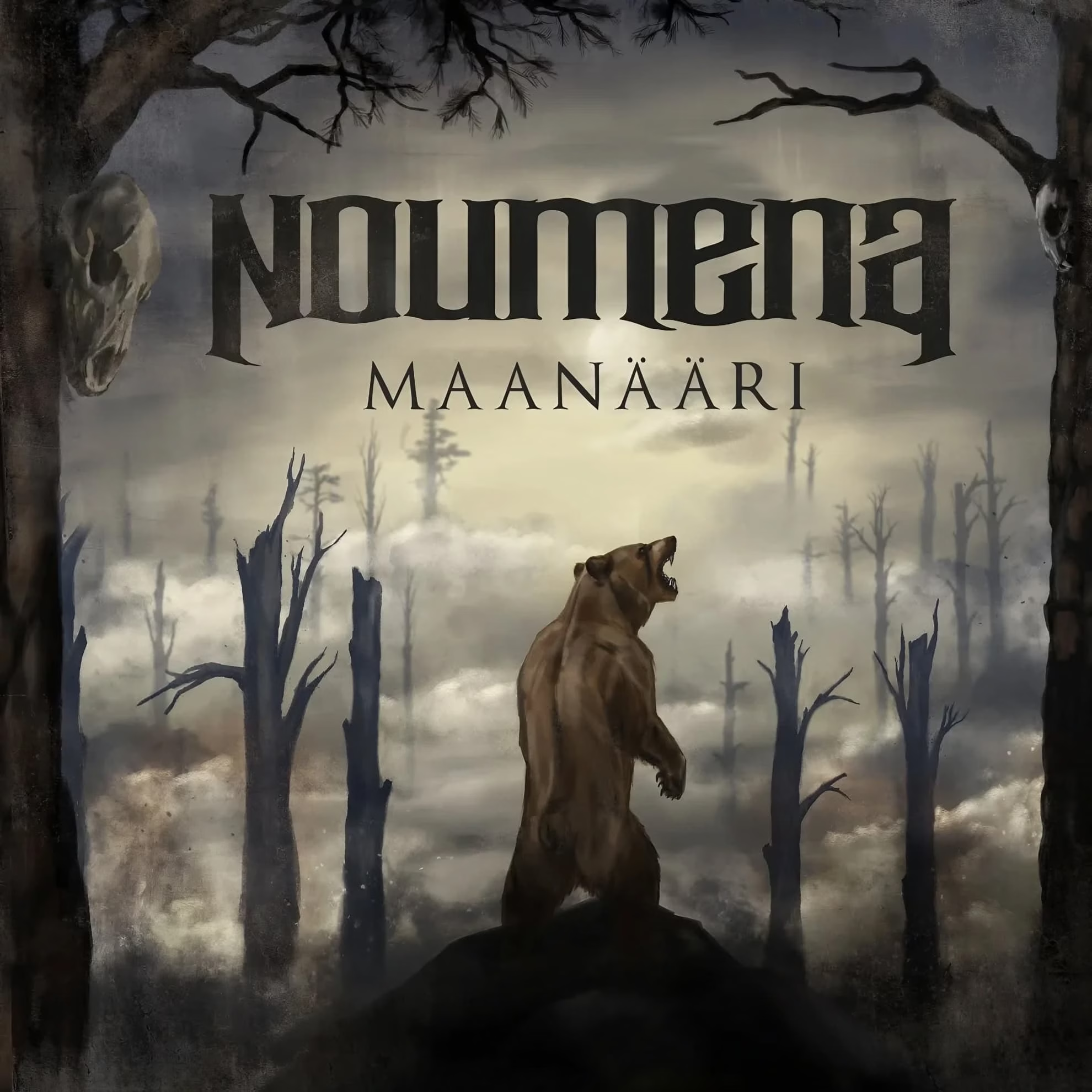
It drew attention for maintaining a striking consistency across a catalogue that critics have long argued deserved wider recognition alongside better-known Finnish peers. Where ‘Anima’ leaned into contemplation and longing, favoring slower tempos and a more meditative pace, ‘Maanääri’ positions itself, on the evidence of its confirmed advance material, as a harder and more narratively concentrated record, trading some of its predecessor’s unhurried atmosphere for the tighter, historically anchored storytelling that ‘Kuolemankello’ represents.
Two Singles Beyond the Wrath
Two further singles have followed ‘Kuolemankello’ into public release, and both extend the record’s emotional register in directions distinct from the Great Wrath narrative. ‘Surunkehrä,’ the second single, continues what guitarist Ville Lamminaho described as a lineage of melancholic, mid-tempo Noumena songs stretching back through earlier tracks in the band’s catalogue.
Lamminaho traced its origin to an evening spent playing his daughter’s acoustic guitar at home, from which the song’s folk-inflected melody and shifting time signatures grew into what he described as a driving, pulsing arrangement.
‘Tyhjyys,’ the third single, moves further from historical narrative into a study of isolation, described by guitarist Markus Hirvonen as a piece about the search for a lost connection. Hirvonen recalled that its acoustic introduction took shape during a sleepless night, when he let a feeling of emptiness and sorrow pass directly into the guitar.
Taken together, the three confirmed singles suggest a record that alternates between externalized historical horror and interior desolation, using the Great Wrath narrative of ‘Kuolemankello’ as one register among several rather than the album’s sole organizing idea.
Two Editions, One Argument
The physical release, due August 21st, comes as a digipak compact disc and a double gatefold vinyl edition, the latter carrying the album’s nine tracks across three sides and appending three additional tracks, ‘Ihmisen tie,’ ‘Murhenäytelmä,’ and ‘Silent Words,’ on a fourth side previously unavailable in this combined physical form.
Both editions are available for pre-order through the band’s own web store and through specialist metal retailers, with a companion release-week bundle pairing the record with tour merchandise. Digital formats are confirmed as available through major digital platforms as a secondary option to the physical editions that remain the release’s primary frame.
What a Century-Old Omen Still Owes
That vocabulary, and the historical specificity ‘Kuolemankello’ gives it, is what ‘Maanääri’ stands to test most directly once it reaches listeners in full. A song about an eighteenth-century occupation, built around a centuries-old folk belief in an insect’s warning, is a considerably more exact proposition than the general Northern melancholy that has carried much of Finnish melodic death metal to this point.
Whether the remaining six tracks match that specificity, or return to the more diffuse emotional register of ‘Anima,’ is not a question the three confirmed singles alone can answer. What they establish is a band willing, after more than a quarter century, to reach further into its own country’s documented past than its earlier records required, and to test whether a decades-old folk omen still carries enough weight to hold a modern audience’s attention.
Does a specific, documented historical horror, like the Great Wrath, carry more weight in extreme metal than the genre’s more common vocabulary of general dread, or does something get lost when grief is tied this closely to one nation’s history?
References
- Osmo Jussila, Seppo Hentilä, and Jukka Nevakivi, ‘From Grand Duchy to a Modern State: A Political History of Finland since 1809’ (London: Hurst & Company, 1999), 22–27. ↩︎
- Laura Stark, ‘The Magical Self: Body, Society and the Supernatural in Early Modern Rural Finland,’ FF Communications 290 (Helsinki: Academia Scientiarum Fennica, 2006), 134–139. ↩︎
- Benjamin Hillier, ‘The Aesthetic-Sonic Shift of Melodic Death Metal,’ Metal Music Studies 4, no. 1 (2018): 5–23. ↩︎
Leave a Reply