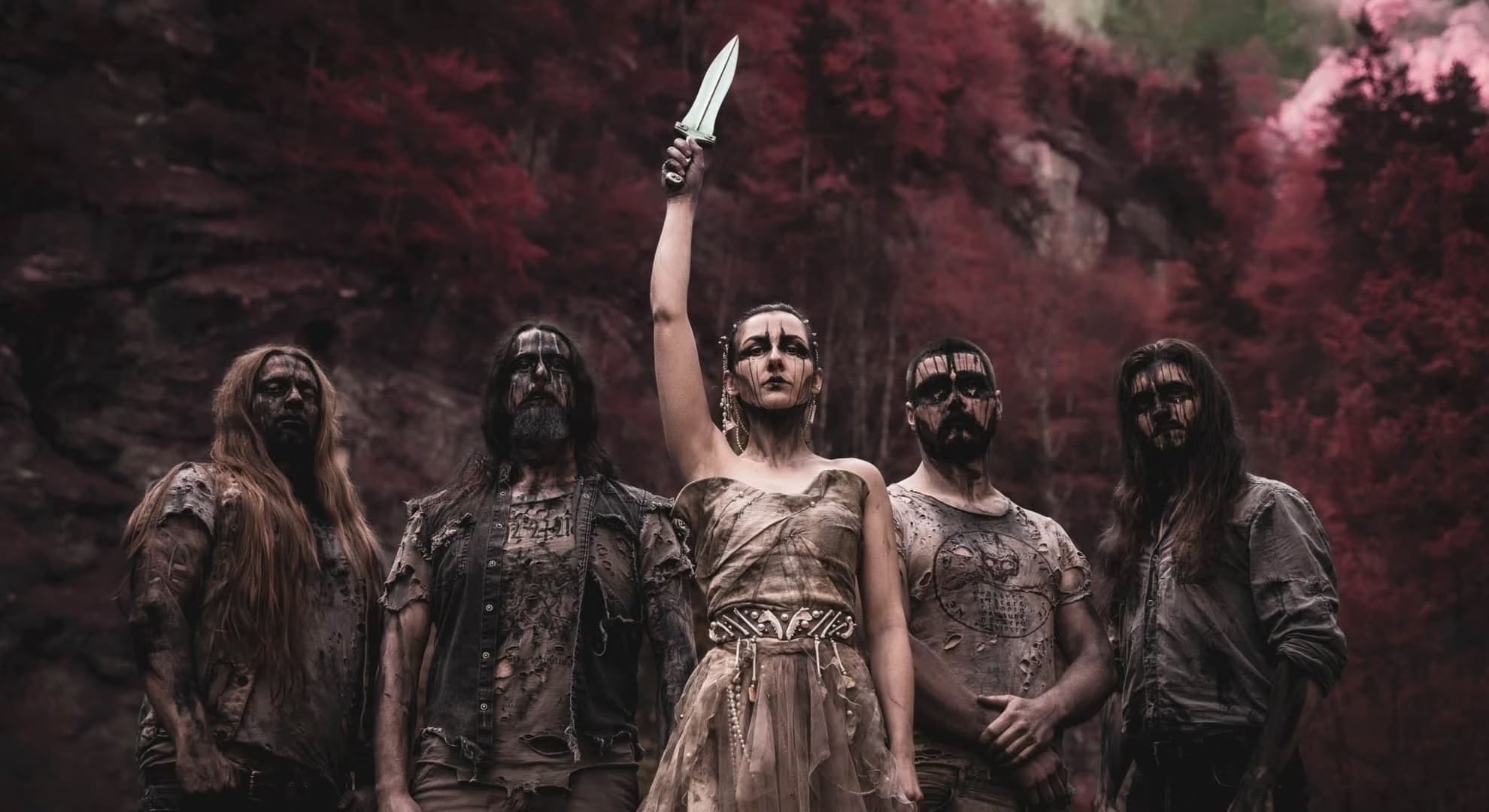


In the autumn of 392, an imperial decree closed the sanctuary at Eleusis, and rites that had run there for almost two thousand years went dark. The hierophant, whose title named him the one who reveals the sacred things, had shown initiates an object that no surviving text records. When Theodosius ordered the Mysteries suppressed, that revelation ended, and whatever the initiates had seen went with them into silence.
The wish to stand before an annihilating light and survive the sight of it did not end at Eleusis. It surfaces again, in a colder register, on a black metal record made in southern Germany, where the sun returns not as the source of life but as the thing that consumes it.
Sixteen Years of Southern Cold
Firtan formed in southern Germany in 2010 and have spent the years since refining a single idea rather than discarding it. Their black metal folds atmospheric and pagan inflection through the violin and piano of Klara Bachmair, whose strings lend the band a register few of their countrymen share. That instrument sets them apart from the tremolo-and-blastbeat orthodoxy of the second wave they otherwise draw upon.
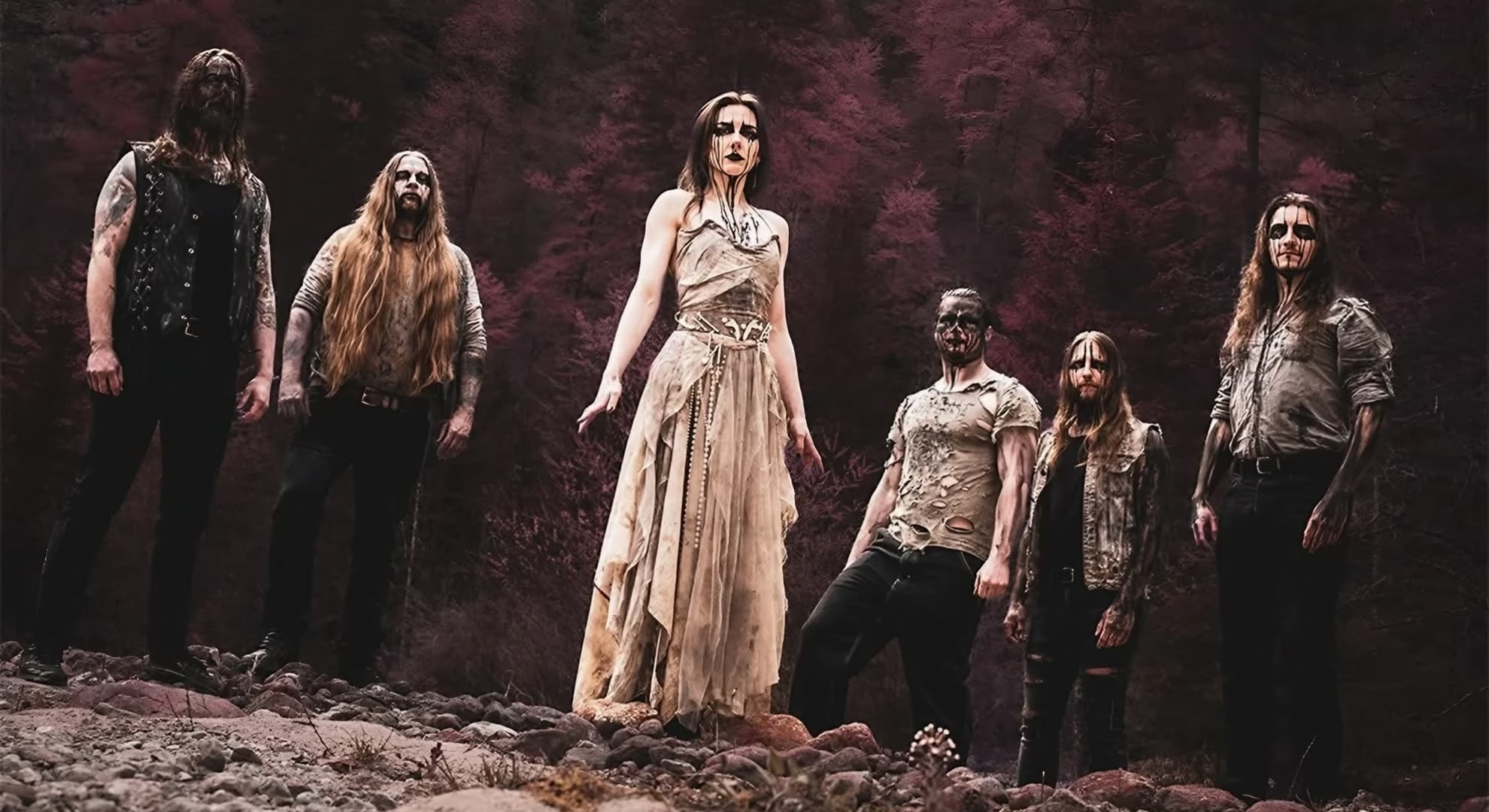
The trajectory has been outward as much as upward. The band carried their music across Europe well before this record, sharing stages with Rotting Christ, Imperium Dekadenz, and Der Weg Einer Freiheit, and reaching festival audiences beyond the German-language core that first received them. Across earlier full-lengths such as ‘Okeanos’ (2018) and ‘Marter’ (2022), that palette widened without softening.
‘Ethos,’ released September 13th, 2024, pressed the band toward its rawest and heaviest statement to that point. ‘Helios,’ their fifth full-length, reaches listeners on October 2nd, 2026, again through AOP Records. What changes is not the severity but the subject: the German-language interiority of the prior records gives way to a concept drawn from two ancient mythologies at once.
The Sun and the Chariot
The album’s governing figure is Helios, the Greek sun driven each day across the sky in a chariot of fire. ‘Solis Currus,’ the Latin name for that vehicle, points to the myth of Phaethon, who seized the reins, lost control, and scorched the earth before Zeus struck him from the sky. The record takes the sun in exactly that aspect, as a power that ruins whatever presumes to approach it.
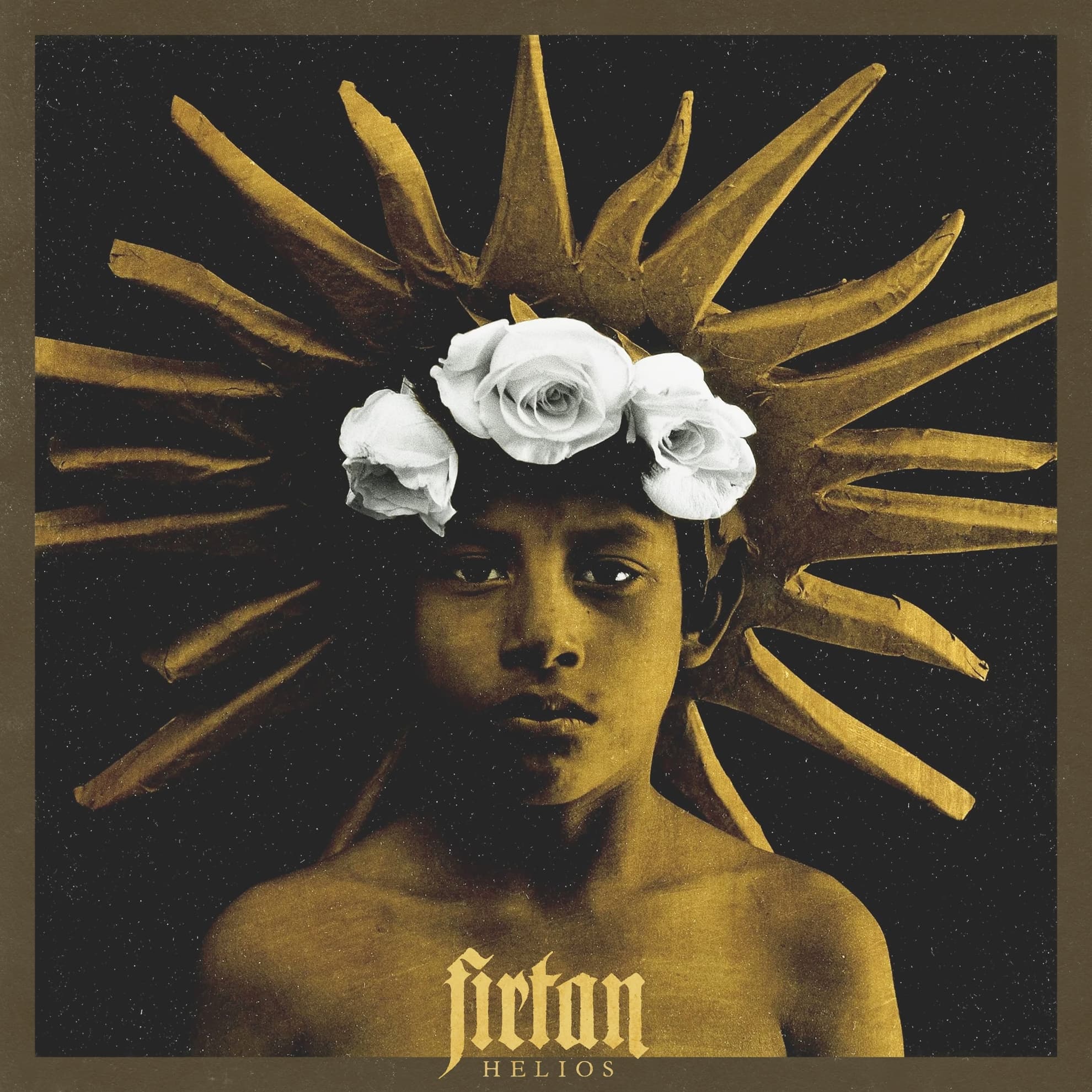
That solar figure is older than Greece. The same chariot crosses the sky in the Vedic hymns, where Surya rides his own team of horses, and both images descend from a single Proto-Indo-European inheritance reconstructed from the shared vocabulary of its daughter traditions.1 Firtan hold the two mythologies against each other rather than merely citing them, and the record’s argument lives in that pressure.
The Goddess and the Breath
From that shared root the record turns east. ‘Kalikas Tongue’ draws on Kali, the Hindu goddess whose lolling tongue in temple iconography has been read as bloodlust, as shame, and as the arrested instant when she recognizes the body beneath her feet as Shiva.2 The image belongs to a tradition that makes the divine feminine terrible before it is consoling.
The Sanskrit vocabulary continues across the tracklist. ‘Himsa’ names harm, the term against which the doctrine of ahimsa, non-violence, defined itself; ‘Revealing Prana’ turns to the yogic breath, the life-force said to move through all living matter.3 Set beside titles such as ‘Ascension’ and ‘The Form Revealed,’ they trace an arc of violence and disclosure that answers the solar myth in its own key.
The One Who Reveals
The single that opens the record to the public is ‘The Hierophant Way,’ released with a video ahead of the album. Its title reaches back to Eleusis and the priest who revealed the hiera to initiates, binding the Greek mystery tradition to the record’s solar arc.4 In the myth those Mysteries carried, Persephone’s descent and return braided solar and chthonic theology into a single rite, which is the same doubling the album pursues.
The track carries a guest vocal from James McClellan Dorton III of the Australian band Ne Obliviscaris. His low, cavernous delivery sets a deliberate contrast against Firtan’s shredded upper-register shriek and Bachmair’s strings. As the sole publicly available piece of ‘Helios,’ the single positions the record toward that collision of voices rather than resolving it.
The Light That Consumes
‘Helios’ is not a record about the sun as comfort. It takes the oldest solar deities of two civilizations and holds them against a self that cannot survive their full sight, and it reaches that argument from a genre built on cold rather than heat. On October 2nd, 2026, a band sixteen years into one pursuit offers the encounter at full length, and the meeting it stages belongs to no single tradition.
When a record binds the Greek sun to the Hindu goddess and the Eleusinian rite, and reaches you through a small imprint that asks to be sought out, is it the particular mythology that pulls you toward it, or the older human wish to stand before a consuming light and refuse to look away?
References
- M.L. West, ‘Indo-European Poetry and Myth’ (Oxford: Oxford University Press, 2007), 194–200. ↩︎
- Wendy Doniger O’Flaherty, ‘Women, Androgynes, and Other Mythical Beasts’ (Chicago: University of Chicago Press, 1980), 90–95. ↩︎
- Georg Feuerstein, ‘The Yoga Tradition: Its History, Literature, Philosophy and Practice’ (Prescott, AZ: Hohm Press, 1998), 267–272. ↩︎
- Walter Burkert, ‘Ancient Mystery Cults’ (Cambridge, MA: Harvard University Press, 1987), 89–95. ↩︎

Leave a Reply