

In the Gospels, the site where Roman authority carried out the execution of a condemned man carried, in Aramaic, the name Golgotha, the Place of the Skull, from the Hebrew gulgoleth. Whether the name recorded a field of skulls left by the Roman garrison or a rock formation shaped like one, later tradition converted the site itself into an emblem, its physical particulars absorbed by the theology built on top of them.
Southern Brazil, six thousand miles from Jerusalem, is not a place Christian iconography typically returns to for scrutiny rather than devotion. Across nearly a decade, a small extreme metal underground centered in Rio Grande do Sul, the country’s southernmost state, has treated the vocabulary of the Passion less as an object of worship than as material for argument.
On July 24th, 2026, that argument reaches its most concentrated statement yet in ‘Dreaming,’ the fourth full-length album from the Caxias do Sul duo Litosth, released through the independent label Personal Records.
Formed in the Serra Gaúcha
Litosth formed in 2016 in Caxias do Sul, a city in the Serra Gaúcha wine region of Rio Grande do Sul, settled through nineteenth-century Italian and German immigration, a demographic history distinct from the Afro-Brazilian coastal cities more commonly associated with the country’s music abroad.
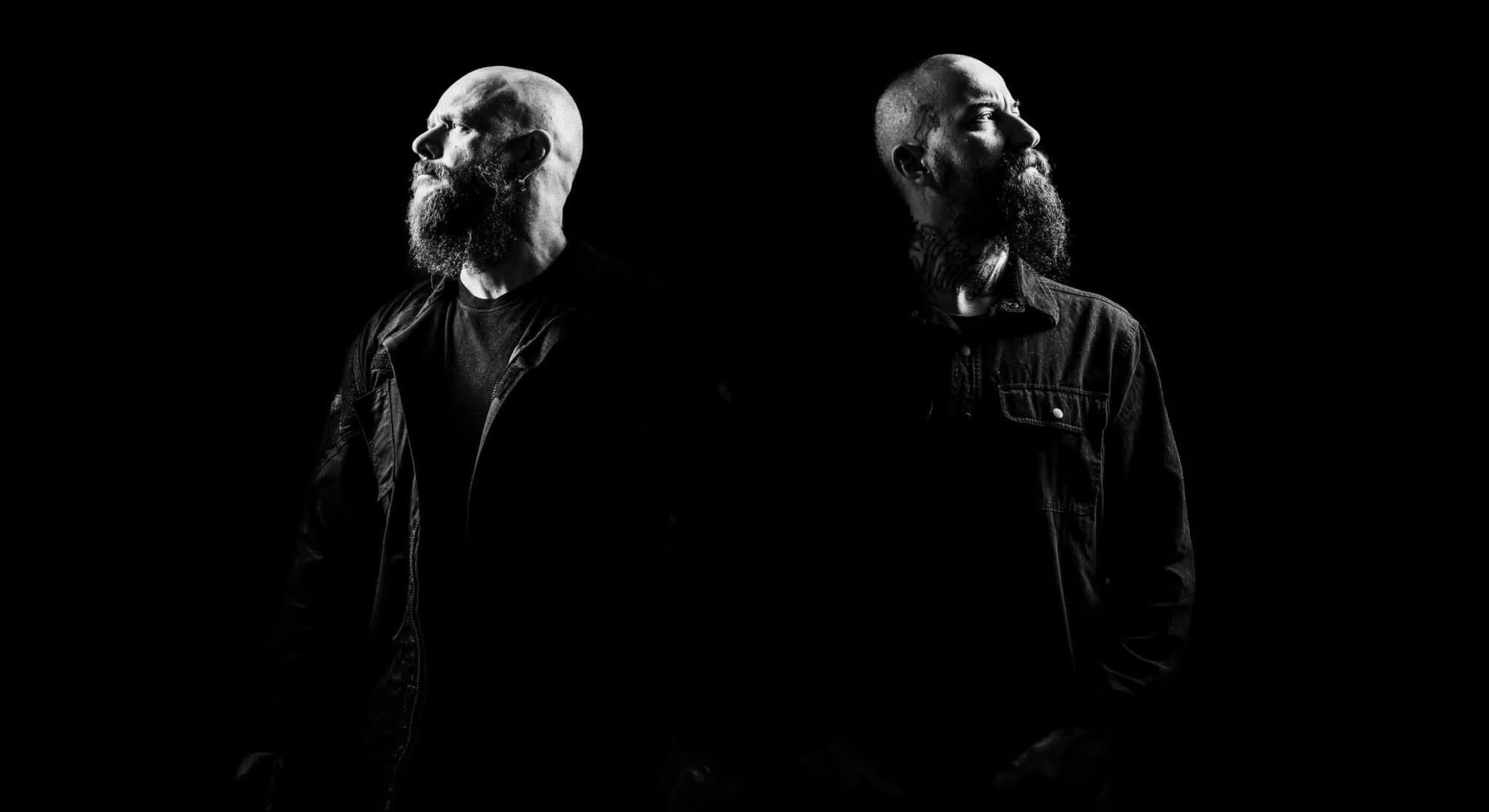
The project took shape around multi-instrumentalist Maicon Ristow, the band’s primary instrumentalist, and Wendel Siota, credited as both bassist and lyricist, whose words gave the band its philosophical register from the outset.
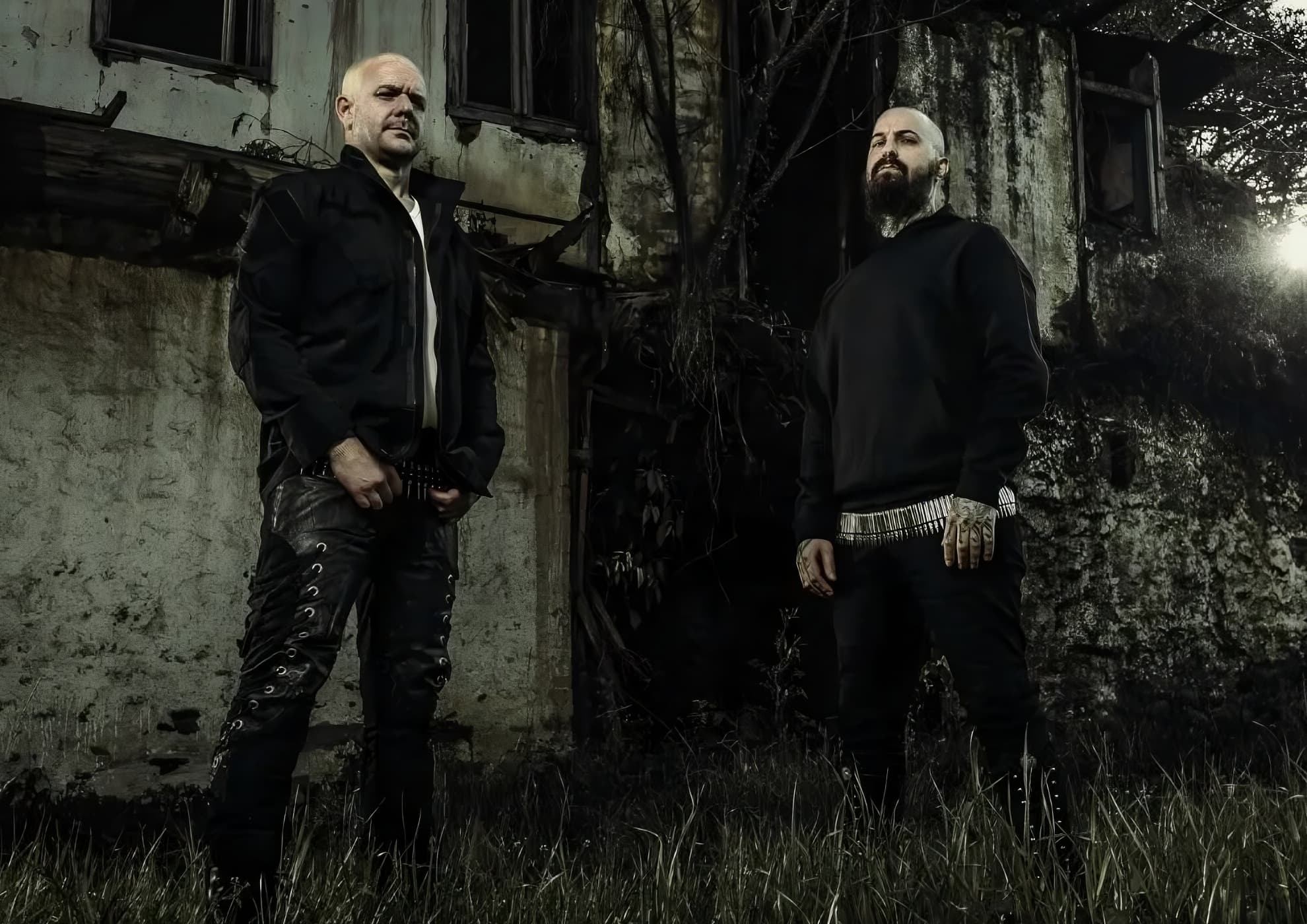
Both musicians reached Litosth already embedded in the region’s black metal underground. Ristow’s credits include I Gather Your Grief and Swords at Hymns, two of the acts named in the band’s own promotional materials among the most prominent black metal groups active in Latin America.
Siota’s credits extend through Dark Celebration and the same Swords at Hymns lineup, a shared history that gave the duo an immediate fluency with the genre’s Scandinavian source material before they wrote a note together.
Three Records Before the Fall
The project’s debut, ‘Crossed Parallels of Self Refraction,’ was released in 2019, followed by ‘Farther From the Sun’ in 2022. Both records established a sound indebted openly to Norwegian black metal’s grandiosity and the ornate melodicism of early Swedish acts, an inheritance that later critics reviewing ‘Cesariana’ compared directly to Arcturus and Borknagar, a European tradition transplanted whole into a scene an ocean away from the fjords that produced it.
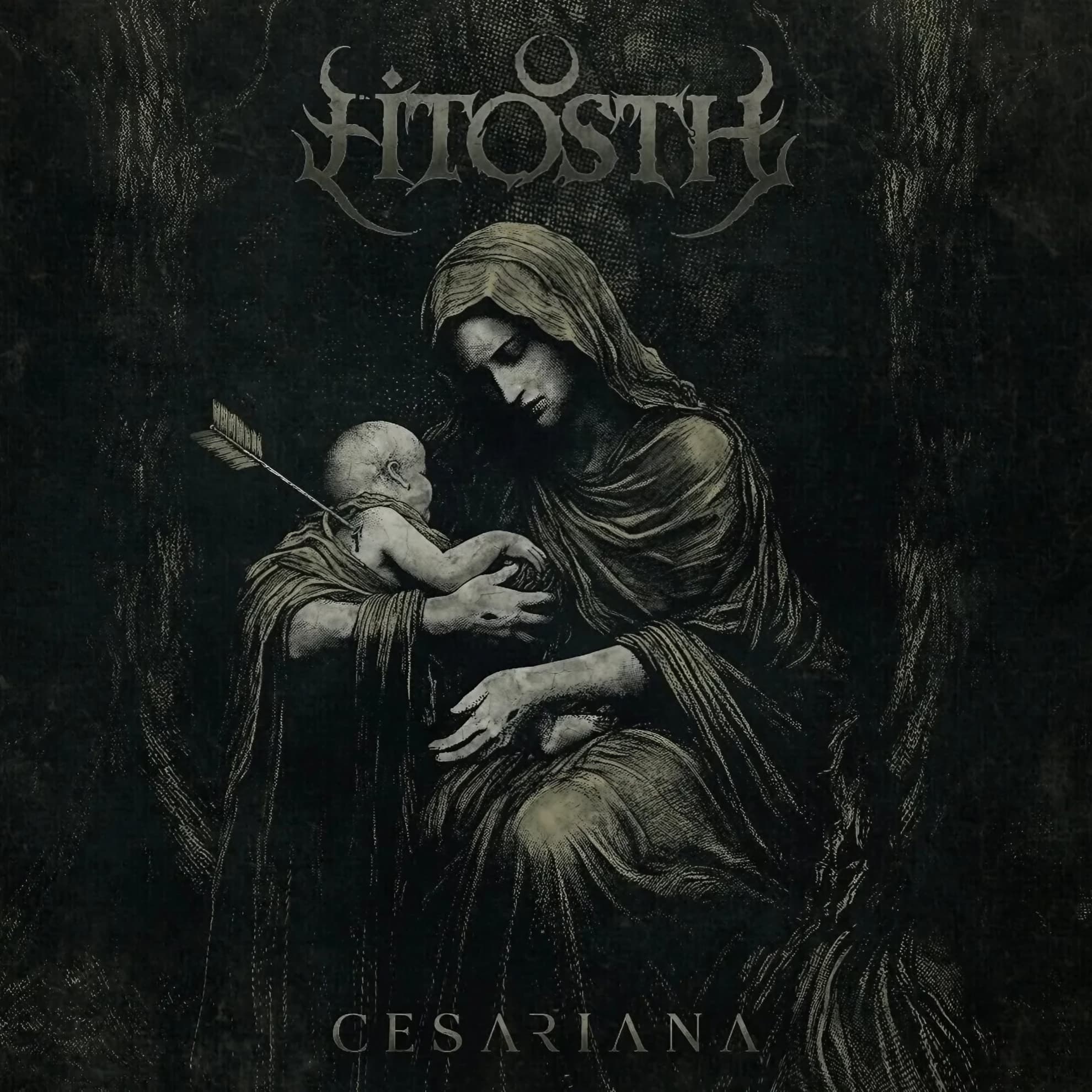
‘Cesariana,’ released February 2nd, 2024, through Personal Records, pushed that inheritance toward a more explicit thematic argument. The album framed itself as a document of resilience, eight songs confronting the demand that survival be treated as cause for celebration. Siota later described that record as a cry of revolt, a direct confrontation with the presumption that everyone is obligated to be happy.
‘Dreaming’ does not repeat that confrontation so much as extend its logic past the point of protest. Where ‘Cesariana’ argued against an imposed obligation, the two confirmed advance tracks from ‘Dreaming’ suggest a record less interested in arguing than in describing what remains once that obligation has been stripped away: faith, morality, and the sense of purpose those structures once supplied.
The eight-track sequence, ‘Defy,’ ‘Ruin,’ ‘Eclipse,’ ‘Abyss,’ ‘Monolith,’ ‘Iconoclast,’ ‘Nadir,’ and ‘Golgota,’ reads less as a set list than as stations along a single downward trajectory, closing on the record’s most historically loaded title.
A Verdict Named Golgotha
The album’s first advance track, ‘Golgota,’ reaches the public as a lyric video on March 22nd, 2026, positioned by the band as the record’s closing statement despite being the first material released ahead of the album.
The video’s release coincided with the band’s official press announcement, and a complete album stream followed on June 22nd, 2026, through the YouTube channel Black Metal Promotion.
According to Siota, the song functions as a direct address to religious hypocrisy and imposed morality, an argument that ancient dogma has been repurposed as an instrument of control, with hatred recast as truth by those who claim to sell salvation. He described the track as a heavy critique of figures who preach purity while relying on fear and guilt to suppress independent thought.
Ristow described the instrumental writing across ‘Dreaming’ as answering to that same severity. Rather than compose eight tracks that merely narrate a fall, he explained, the intention was for the listener to experience the fall as the music itself, arrangements built to move between the immense and the exact instead of settling into a single register.
That the band chose to close the record on a track named for the site of the Crucifixion, rather than open with it, reframes the historical reference. Golgotha in Christian tradition is the site of redemptive sacrifice, the place where suffering resolves into salvation. Positioned as ‘Dreaming’s’ final track, ‘Golgota’ offers no such resolution: the site of the sacrifice becomes, in Litosth’s ordering, not a beginning of grace but an ending with nothing beyond it.1
The site’s afterlife as physical geography, not merely as scripture, deepened Golgotha’s authority rather than settling it. The Gospel accounts place the location just outside Jerusalem’s walls, common ground for Roman execution rather than a marked shrine.
It was Eusebius of Caesarea who, in the fourth century, identified a rock outcropping beneath a Roman temple as the authentic site, prompting Constantine to demolish the temple and raise the Church of the Holy Sepulchre directly over it. That imperial act converted an anonymous killing ground into the most contested address in Christian geography, its precise boundaries argued over by pilgrims, clergy, and archaeologists for the seventeen centuries since.2
Breaking the Icon
A second advance track, ‘Eclipse,’ reaches the public on July 2nd, 2026, premiering as a guitar-and-bass playthrough video through the American metal outlet No Clean Singing. Alongside ‘Golgota,’ it constitutes the only publicly confirmed material from ‘Dreaming’ at the time of writing; the remaining six tracks, including the sixth cut, ‘Iconoclast,’ await the album’s full release.
‘Iconoclast’ carries its own historical weight independent of whether its music has yet reached listeners. The term names a specific chapter of Byzantine religious history: the period beginning in the year 726, when Emperor Leo III ordered the systematic destruction of icons, painted images of Christ and the saints venerated across the eastern Mediterranean, a campaign that split Byzantine society for more than a century until the Second Council of Nicaea condemned the practice in 787.
The dispute was not merely aesthetic. It was a fight over whether the sacred could be represented at all, or whether representation itself constituted a form of idolatry.3
For a record whose two confirmed songs already treat institutional faith as an object of suspicion rather than devotion, a track titled after the historical destruction of religious images extends the argument formally. The iconoclasts of eighth-century Byzantium sought to eliminate the image in order to protect the sanctity of what it represented. ‘Dreaming,’ on the evidence of its title and its advance singles, appears to pursue a different aim, not protecting the sacred from representation, but dismantling the sacred itself.
Nihilism as a Working Method
The album carries eight tracks distributed on compact disc through Personal Records, with a digital edition available through the label’s Bandcamp page; vinyl or cassette formats had not been confirmed at the time of publication. The producer and recording studio behind ‘Dreaming’ had not been confirmed through official sources at the time of publication, a gap consistent with a release built almost entirely around the two musicians’ own credited roles rather than outside personnel.
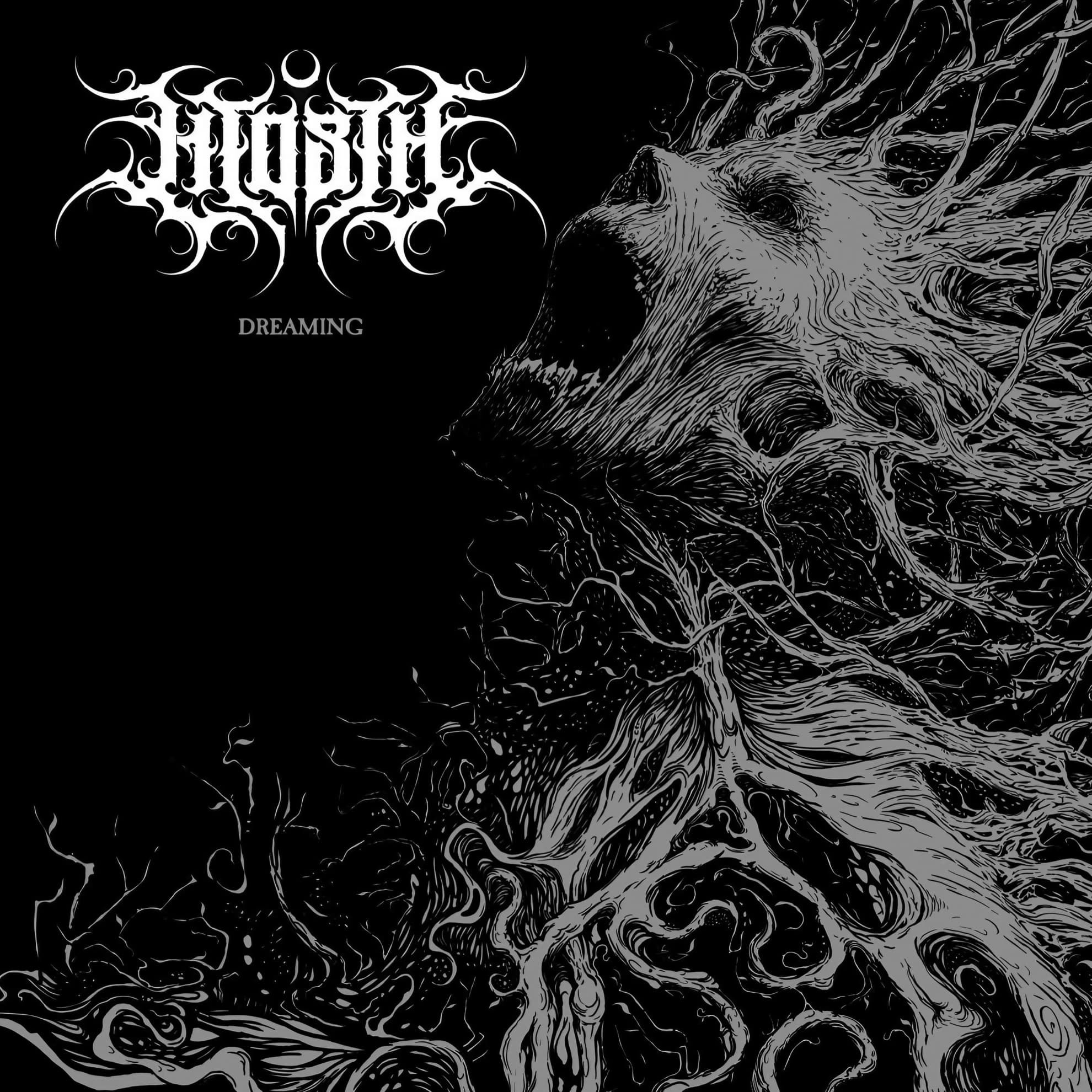
What the album’s title argues, in this context, is specific rather than atmospheric. ‘Dreaming’ does not describe a nightmare, a familiar metaphor in extreme metal for horror or dread. It describes the end of dreaming altogether, the cessation of a particular aspirational impulse that, in the record’s own logic, was never anything but an imposed structure.
That distinction places ‘Dreaming’ within a documented philosophical tradition rather than a generic gesture toward darkness: the twentieth-century diagnosis of nihilism not as despair but as the recognition that inherited systems of meaning no longer hold, a position scholars have traced across religious, philosophical, and aesthetic responses to the erosion of unifying belief.4
Descent Without a Homeland
Litosth’s audience was never going to be assembled primarily from Rio Grande do Sul. Personal Records operates from Mexico rather than Brazil, distributing the band’s physical editions through a cross-border Latin American underground infrastructure that treats national boundaries as incidental to genre affiliation.
That infrastructure connects Litosth to a documented pattern in Brazilian extreme metal, whose most internationally recognized practitioners emerged in the postdictatorial period translating domestic disillusionment into a genre built for confrontation rather than reconciliation.5
Litosth’s own engagement with Christian iconography draws from a different well than that earlier generation’s more explicitly national material, but it inherits the same basic premise: that extreme metal, wherever it is made, functions as a vehicle for arguments a culture’s other institutions will not host. For listeners outside Brazil and outside Christianity’s institutional weight altogether, reference points such as Golgotha and Byzantine iconoclasm travel differently than they do for an audience raised inside those traditions.
What crosses intact is not the theology but the shape of the argument: an inherited system of belief, examined and found to demand more than it returns. That is a proposition an international underground built on suspicion of imposed order has recognized before, aimed at other doctrines, in other languages.
Whether ‘Dreaming’ sustains that argument across all eight tracks, rather than the two currently available to the public, is a question only July 24th resolves. What the record’s advance material and its own title already establish is a Brazilian duo working in a genre borrowed from Scandinavia, aimed at the imagery of a faith six thousand miles from Caxias do Sul, and finding in that distance exact material for an argument they are making at full length for the fourth time.
When a South American extreme metal record builds its central argument from Golgotha and Byzantine iconoclasm rather than domestic imagery, does the historical distance sharpen its critique of inherited belief, or does something get lost in translation for listeners closest to the tradition being examined?
References
- Jaroslav Pelikan, ‘Jesus Through the Centuries: His Place in the History of Culture’ (New Haven: Yale University Press, 1985), 82–86. ↩︎
- Joan E. Taylor, ‘Christians and the Holy Places: The Myth of Jewish-Christian Origins’ (Oxford: Clarendon Press, 1993), 97–113. ↩︎
- Leslie Brubaker and John Haldon, ‘Byzantium in the Iconoclast Era, c. 680–850: A History’ (Cambridge: Cambridge University Press, 2011), 69–74. ↩︎
- Karen L. Carr, ‘The Banalization of Nihilism: Twentieth-Century Responses to Meaninglessness’ (Albany: State University of New York Press, 1992), 3–9. ↩︎
- Idelber Avelar and Christopher Dunn, eds., ‘Brazilian Popular Music and Citizenship’ (Durham: Duke University Press, 2011), 154–159. ↩︎


Leave a Reply