
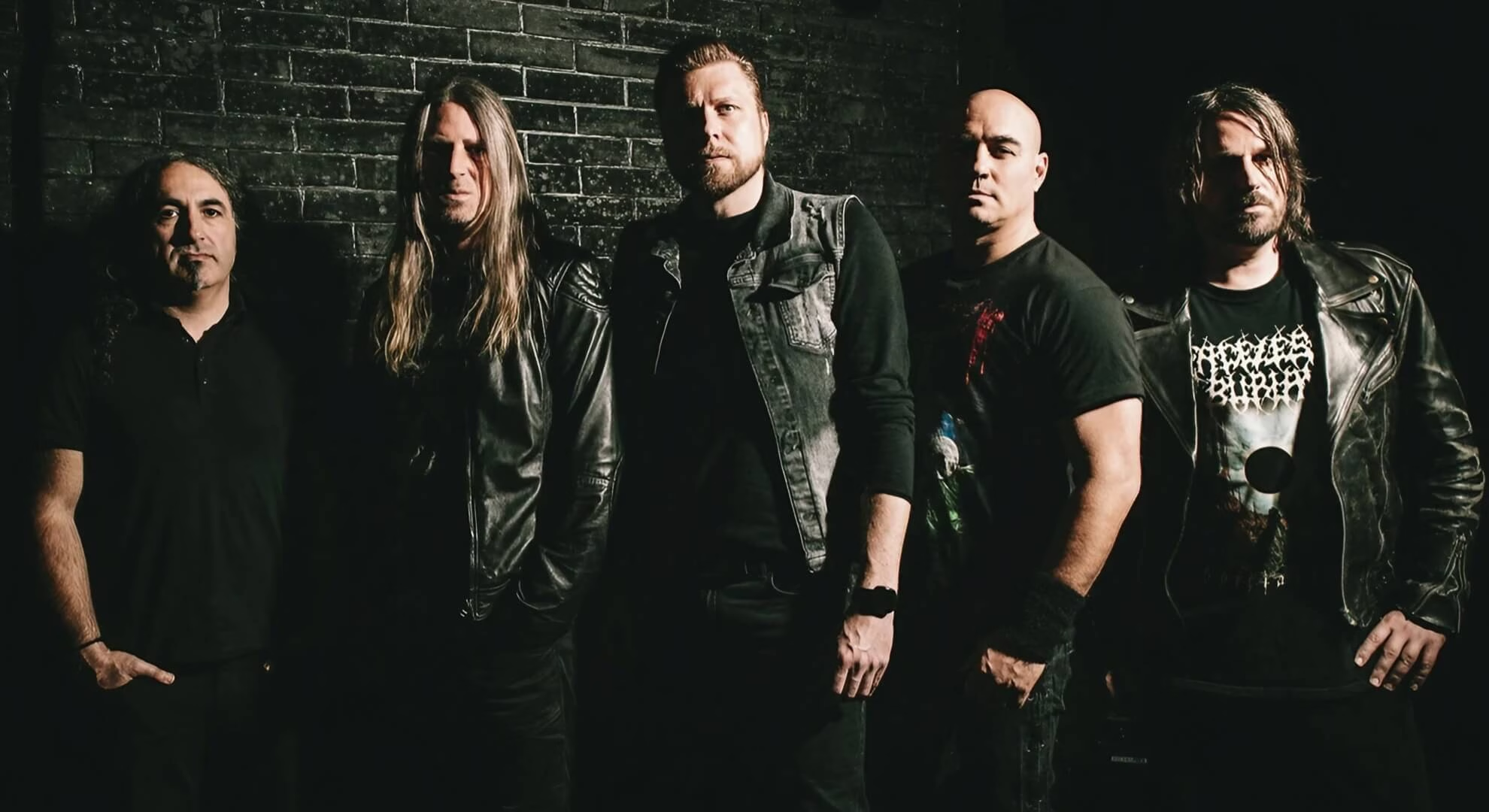


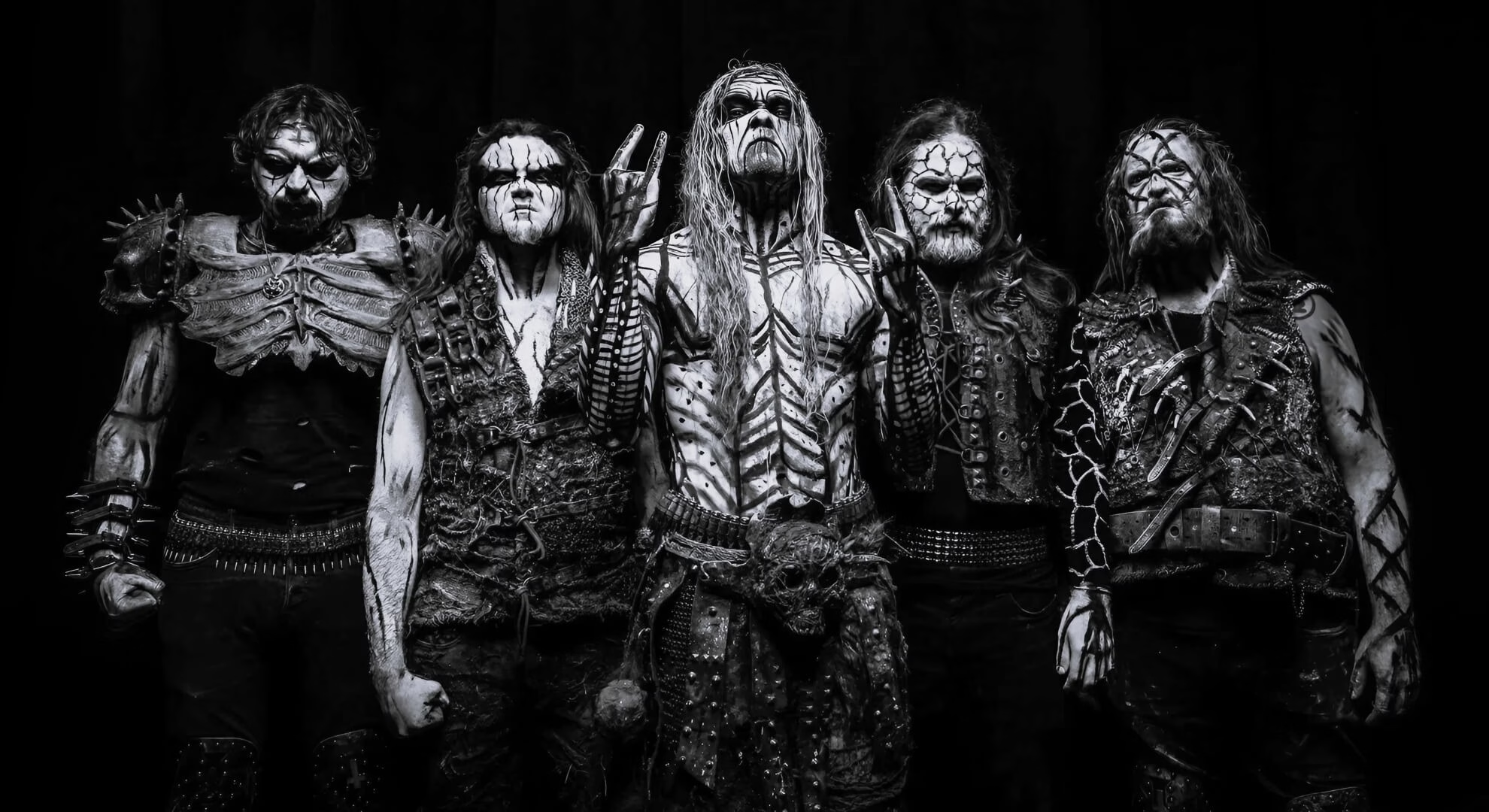
An artistic statement can be a singular, explosive event, a fixed point in history. More rarely, it is a signal that persists, echoing across decades to be received and reinterpreted by its own creators. For the German melodic death metal band Night in Gales, that signal was first transmitted thirty years ago. Now, they are answering their own call. The band has announced that on October 31, 2024, they will release ‘Sylphlike (Re-Recording 2024)’ through Apostasy Records, a complete reimagining of the 1995 demo that launched their career.
This project is not a revision of history but a conversation with it, an act of a mature, seasoned band engaging with the raw, ambitious energy of its nascent self. It is a fulfillment of potential that was always present, now rendered with the clarity and authority that only time can bestow.
The original ‘Sylphlike’ was not a product of the digital age. It was a physical artifact, a self-produced MCD born from the tactile, analog world of the mid-1990s underground. The band speaks of a time of the “worldwide paper & pen underground,” a laborious, pre-internet network of letters, fanzines, and tape trading.
Their efforts were herculean by modern standards: “at times, we sent 30-40 mailings a day,” they recall, a demonstration of the manual labor required to disseminate art before the advent of instant global distribution. In this ecosystem, the success of ‘Sylphlike’ was extraordinary. It sold a total of 7,000 units, a figure the band themselves calls “simply unbelievable.”
This was not a passive metric of consumption; it was an active measure of community. Each copy sold represented a deliberate connection made, a physical object exchanged, a node in a global yet deeply personal network.
Revisiting this artifact in 2024, with its own emphasis on tangible formats like limited vinyl and cassette tapes, is a conscious invocation of that materiality. At a time dominated by the ephemeral nature of streaming, this project stands as a bridge between two distinct cultural paradigms.
It connects the slow, deliberate, and physical network of the 1990s underground to the instantaneous, dematerialized world of the twentieth-first century. It is a powerful statement on how art forged in the former can find new form and profound new meaning in the latter, arguing for the enduring value of the artifact in a world awash with disposable content.
Germany and the Gothenburg Explosion
Appreciating the significance of ‘Sylphlike,’ requires a return to the musical landscape of 1995. That year stands as a critical juncture in the history of extreme metal, the moment when a new sound, centered in Gothenburg, Sweden, coalesced into a full-fledged movement.
Pioneered by a triumvirate of bands—At The Gates, In Flames, and Dark Tranquillity—this new style, soon to be known as melodic death metal, represented a radical aesthetic shift. It fused the aggression and harsh vocals of death metal with the intricate, harmonized guitar melodies of the New Wave of British Heavy Metal (NWOEHM).
The release of three landmark albums within a short span—At The Gates’ ‘Slaughter of the Soul’ (1995), Dark Tranquillity’s ‘The Gallery’ (1995), and In Flames’ ‘The Jester Race’ (1996)—codified the genre and established its foundational texts.
Formed in 1995, Night in Gales were not followers of this movement but exact contemporaries, emerging from the fertile soil of the same cultural moment. Operating from Germany, they were geographically removed from the Gothenburg epicenter, yet their debut demo demonstrates how immediately and organically this new musical language resonated across borders.
The remarkable grassroots success of ‘Sylphlike’ reveals an international appetite for this sound that existed even before the genre was fully defined by the music press. Their early work was an immediate and intuitive interpretation of the nascent style, with critics later noting that their sound fell “clearly into the Dark Tranquillity’s ‘The Gallery’ kind of mood,” confirming their direct participation in this aesthetic lineage from its inception.
This geographical and developmental separation provides a unique lens through which to view the history of the genre. The principal Gothenburg bands experienced immense and specific evolutionary pressures. In Flames famously pivoted toward a more commercial, alternative metal sound in the early 2000s, while At The Gates, at the height of their creative power, disbanded abruptly after ‘Slaughter of the Soul,’ unable to sustain their own explosive momentum.
Night in Gales, by contrast, followed a different trajectory. Their career was marked by struggles with record labels and a subsequent period of disillusionment and inactivity, particularly after the release of 2001’s ‘Necrodynamic.’ This difficult period, however, effectively insulated them from the commercial temptations and stylistic shifts that altered the course of their Swedish peers.
Their modern work, beginning with their 2018 return album ‘The Last Sunsets,’ has been widely seen as a powerful recommitment to the core tenets of the melodic death metal sound.
In this context, Night in Gales can be seen as a kind of historical control group for the Gothenburg experiment. The ‘Sylphlike’ re-recording offers a unique benchmark: the genre’s foundational DNA, re-examined and executed with modern precision, but filtered through a lens that is free from the specific stylistic mutations accumulated by the original pioneers.
It presents an answer to a fascinating historical question: what was the original promise of this sound, and what does it become when fulfilled with three decades of wisdom, unburdened by the diversions of the intervening years?
Re-engaging the Gothenburg Aesthetic
The innovation of melodic death metal was not merely one of feeling, but of form. As the musicologist Benjamin Hillier has documented, the genre was defined by a specific “aesthetic-sonic shift” away from its progenitors. Hillier’s research identifies a crucial transformation in musical structure: a move away from the riff-based composition of traditional death metal toward a style built on harmonized lead guitar melodies unfolding over distinct chord progressions.
This approach was heavily indebted to the twin-guitar interplay of NWOEHM bands like Iron Maiden, but it was re-contextualized within an extreme metal framework. This shift from riff to progression is fundamental to the genre’s “melodic” descriptor, creating the space for the soaring, melancholic harmonies that became its signature.
Equally crucial to this aesthetic shift was the role of production. The dominant sound of Swedish death metal in the early 1990s was the raw, abrasive “Sunlight Sound,” forged by producer Tomas Skogsberg at Sunlight Studios in Stockholm. The Gothenburg bands, in a conscious effort to differentiate themselves, sought a different sonic identity.
They found it at Studio Fredman with producer Fredrik Nordström, who became the primary architect of the clean, powerful, and articulate sound that would define the genre. Nordström’s work on albums like ‘The Jester Race,’ ‘Whoracle,’ and ‘Slaughter of the Soul’ established the sonic canon for melodic death metal, making him not just a producer but a co-author of the movement’s identity.
Night in Gales’ decision to enlist Fredrik Nordström to mix and master ‘Sylphlike (Re-Recording 2024)’ is therefore an act of profound historical and artistic significance. As a German band, their original 1995 demo was recorded outside of this specific Swedish production ecosystem, at Sound Station Studio in Ratingen.
Bringing their thirty-year-old compositions to Nordström represents more than a simple quest for a modern, high-fidelity mix. They are retroactively submitting their foundational work for inclusion in the official sonic canon of Gothenburg.
This act elevates the project from a simple re-recording to a historical document, sonically positioning the ‘Sylphlike’ material alongside the seminal works of At The Gates and In Flames, as if it had been recorded in that hallowed studio in 1995. It is a form of sonic canonization, cementing the band’s legacy within the very tradition they helped shape from afar.
This re-engagement with the genre’s core aesthetics extends to its visual dimension. Hillier notes that the movement was also characterized by a shift in extra-musical elements: more legible band logos, “cleaner, softer” artwork, and more poetic, melancholic lyrical themes replaced the gore and aggression typical of death metal.
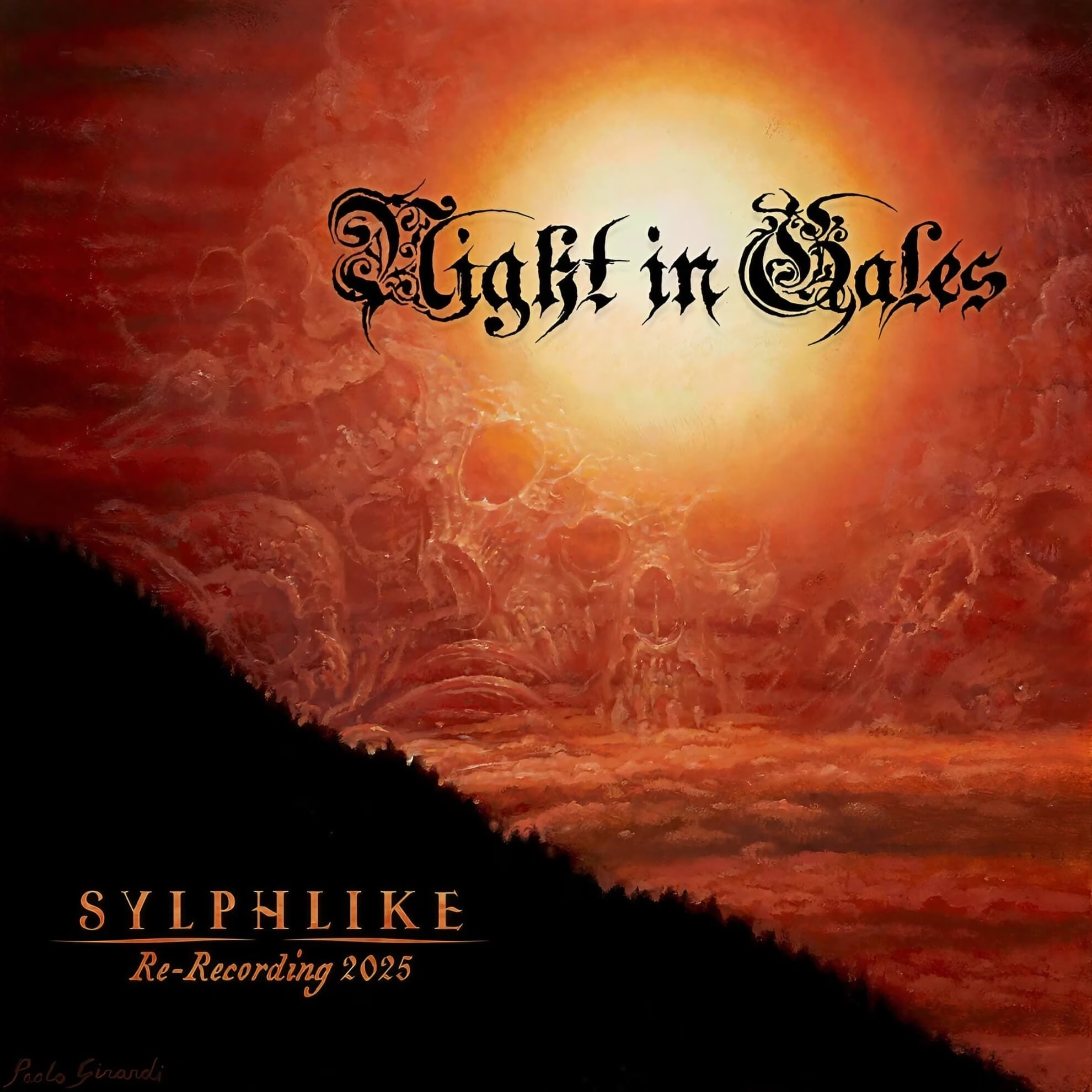
This created a cohesive and accessible identity. For the re-recording, Night in Gales commissioned artist Paolo Girardi, who also created the art for their recent album ‘The Dawn of the Dying Sun,’ to revisit the original demo’s cover. Girardi, the band explains, “hand-painted the original photograph of the artwork and breathed ominous life into it.”
This process is a perfect metaphor for the album itself: taking a historical artifact and rendering it anew with greater depth, texture, and mature intent, creating a visual dialogue between past and present.
The Title Track Reborn: ‘Sylphlike’
As the first preview of the project, the re-recorded title track, ‘Sylphlike,’ serves as the primary evidence of its success. Released with an accompanying lyric video, the track is positioned as the opening of the “next chapter of their 30th anniversary celebration.”
The song immediately fulfills the band’s stated goal: it “captures the raw energy and melodic fire that defined the band’s beginnings while showcasing the razor-sharp precision of today’s Night in Gales.” The youthful abandon of the 1995 recording is now channeled through the focused power of thirty years of experience.
The signature dual-guitar harmonies, the very heart of the Gothenburg aesthetic, are rendered with breathtaking clarity and force, weaving intricate, melancholic lines that were only hinted at in the original’s murkier production.
Fredrik Nordström’s mix is masterful, creating a vast sonic space where every element can breathe. The immense, downtuned guitars possess both weight and articulation, allowing the elegant sorrow of the melodies to soar above the rhythmic intensity. The drumming of Adriano Ricci provides a foundation of surgical precision that anchors the song’s emotional currents, a marked evolution from the more chaotic energy of the original performance.
At the forefront, Christian Müller’s vocals have matured from a youthful rasp into a commanding, spectral roar that conveys both aggression and a deep sense of world-weariness. The overall sound unites “past and present in a sound that feels both timeless and intense,” achieving a grandeur that the original compositions always deserved.
Crucially, this precision does not come at the expense of vitality. The band made a deliberate choice to record in a “short and intense session to capture the same spontaneity and live feeling that made the original so unique.” This methodology is audible in the track’s palpable energy. It avoids the sterile, overly polished feel that can plague modern re-recordings, instead imbuing the performance with a visceral immediacy. The result is not a museum piece, but a living, breathing work of art—an echo from the past made perfectly, powerfully clear.
A Dialogue with the Past
Returning to their very first artistic statement is an act made all the more potent when viewed through the full, often turbulent, arc of Night in Gales’ career. Their thirty-year journey can be understood as a narrative in three acts: a rapid ascent, a difficult period in the wilderness, and a powerful return to form. This history frames the ‘Sylphlike’ re-recording not just as a celebration, but as a definitive act of artistic self-knowledge.
The first phase, from 1995 to 1998, was one of unmitigated ascent. The phenomenal underground success of the ‘Sylphlike’ demo and the subsequent ‘Razor’ EP led to a contract with the influential label Nuclear Blast Records.
Their debut album, ‘Towards the Twilight’ (1997), and its follow-up, ‘Thunderbeast’ (1998), were high-quality releases that cemented their reputation as Germany’s premier melodic death metal act, earning them tours with genre titans like In Flames and Dismember.
The second phase, however, marked a period of creative and professional struggle. The albums ‘Nailwork’ (2000) and ‘Necrodynamic’ (2001) saw the band deviate from their established sound, incorporating more pronounced thrash and hardcore elements.1 This stylistic shift was met with a mixed reception, with some contemporary critics suggesting the band seemed “lost” between genres.
A move to Massacre Records for ‘Necrodynamic’ compounded their problems, resulting in poor promotion and a disastrous European tour that left the band feeling “disappointed and disillusioned.” This led to a prolonged hiatus, during which the members focused on other musical projects, and the future of Night in Gales was uncertain.
The third and current phase began with their definitive return in the late 2010s. Albums like ‘The Last Sunsets’ (2018) and ‘The Dawn of the Dying Sun’ (2021) have been hailed as a powerful resurgence, an evolution of their core sound that re-established their relevance and creative vitality. This modern era finds the band operating with a renewed sense of purpose, confidently embracing the style they helped pioneer.
Viewed against this timeline, the re-recording of ‘Sylphlike’ becomes a deeply symbolic act. It is a corrective gesture, a powerful statement of artistic identity that deliberately bypasses the entire period of stylistic searching and commercial difficulty. Returning to their very first recording, Night in Gales is reaffirming that their original impulse in 1995 was their most authentic one.
The journey through the wilderness was not a failure, but a necessary crucible that forged the wisdom and skill required to finally perfect that initial vision. It is a correction of their own historical trajectory, an act that solidifies their legacy around the pure, melancholic power of their foundational sound.
A Resurrection in Six Parts
As a complete work, the re-recorded ‘Sylphlike’ stands as a cohesive and potent artistic statement, a resurrection of the six-part vision that first introduced Night in Gales to the world.
The album will present the full original tracklist, beginning with ‘Bleed Afresh,’ moving through the title track, ‘Avoid Secret Vanity,’ and ‘Mindspawn,’ before concluding with the instrumental piece ‘When The Lightning Starts’ and the final track, ‘Flowing Spring.’ This sequence, now rendered with the full force of the band’s modern capabilities, offers a complete narrative arc, showcasing the dynamic and compositional ambition that was present even in their earliest work.
The package is unified by Paolo Girardi’s evocative artwork, which creates a vital link between the band’s past and their contemporary visual identity.2 His approach—to hand-paint the original photograph—is a physical manifestation of the project’s entire philosophy. It honors the source material while imbuing it with new layers of texture, detail, and meaning, transforming a familiar image into something deeper and more resonant.
History Is Not a Relic
The ‘Sylphlike’ project treats history not as a static relic to be admired from a distance, but as a living, dynamic entity—a text to be engaged with, reinterpreted, and understood anew through the lens of accumulated experience. It rejects the simple allure of nostalgia in favor of a far more complex and rewarding endeavor: a direct dialogue between an artist’s past and present selves.
Night in Gales, by bringing the full weight of their technical mastery and emotional maturity to bear on the raw, untamed energy of their youth, has created something that is neither old nor new, but timeless. They demonstrate that the journey of an artist is not a linear progression that leaves the past behind, but a continuous, evolving conversation where the initial spark of inspiration is never truly extinguished. It can be revisited, rekindled, and fanned into a brighter, more brilliant flame.
‘Sylphlike (Re-Recording 2024)’ is more than an album. It is a powerful symbol of persistence, a definitive correction of the historical record, and an undeniable statement on the enduring power of a sound that, three decades ago, helped redefine the very boundaries of extreme metal.
How does the act of an artist re-recording their formative work change your perception of the original artifact, and what does it reveal about the dialogue between an artist’s past and present selves?
References:
- Hillier, Benjamin. ‘Musical Practices In Early Melodic Death Metal.’ Journal of Music Research Online 11 (2020): 1-28. ↩︎
- Hillier, Benjamin. ‘The Aesthetic-Sonic Shift of Melodic Death Metal.’ Metal Music Studies 4, no. 1 (2018): 5–23. ↩︎
Leave a Reply