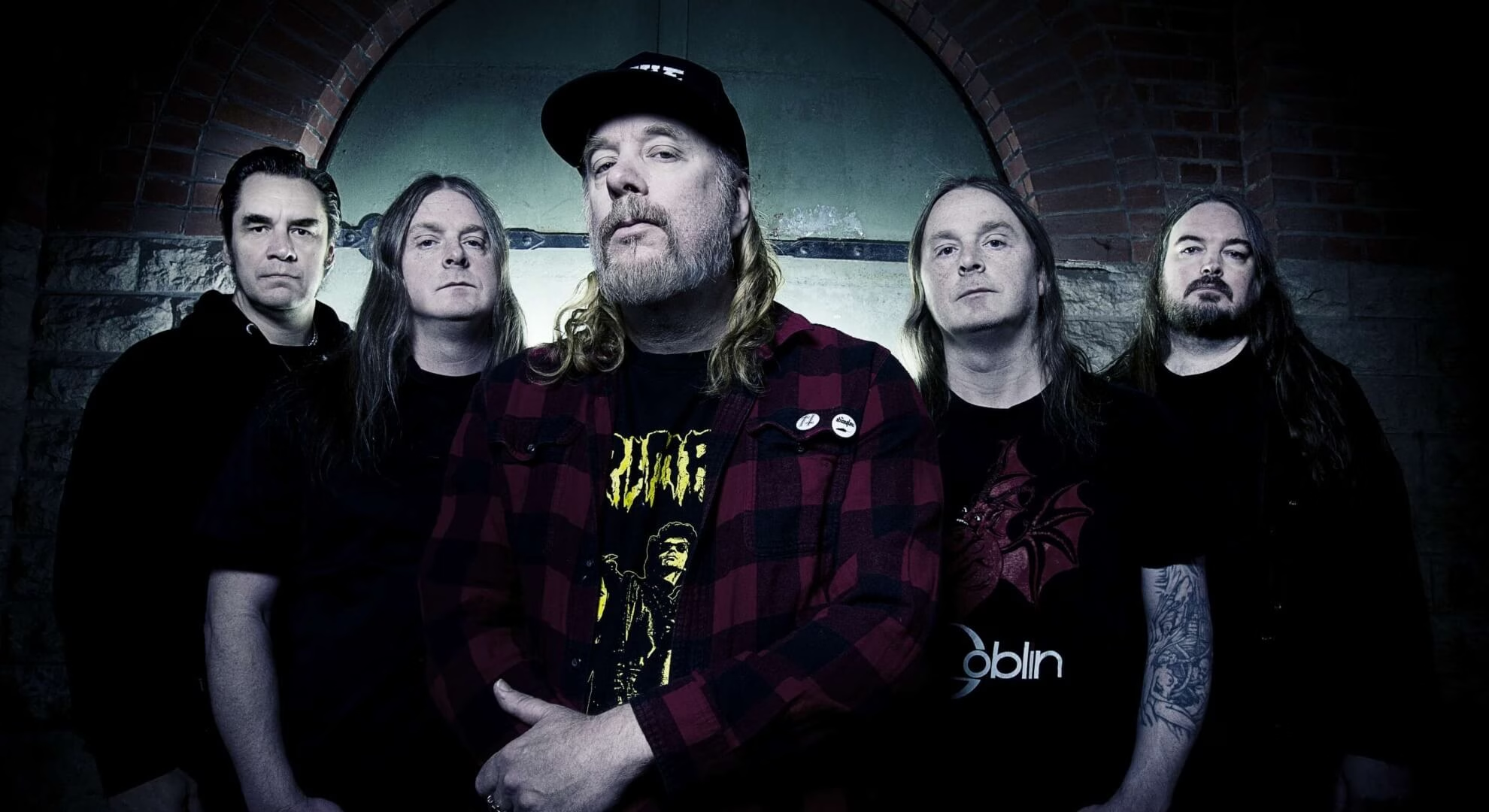


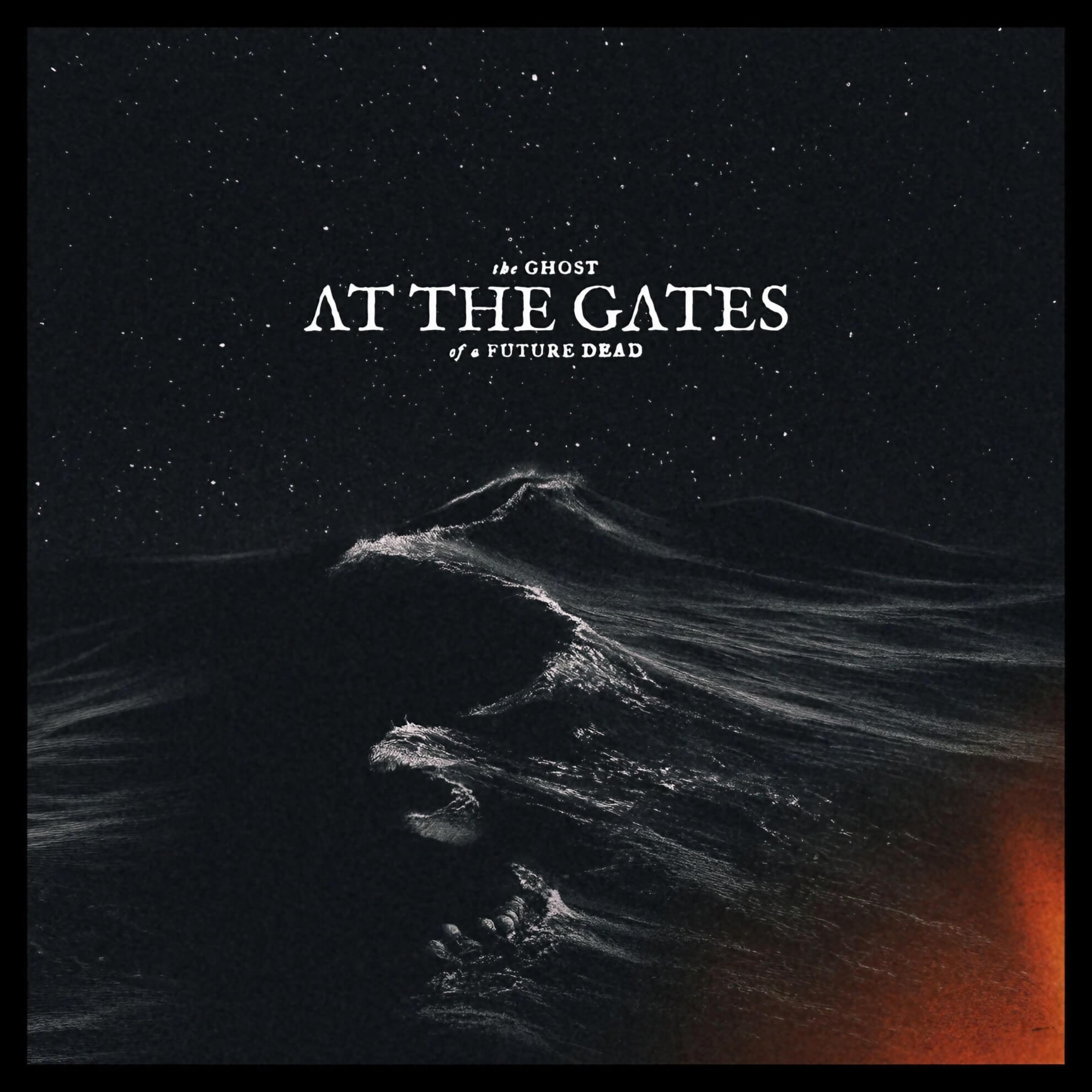
In the sprawling, multi-decade history of extreme metal, few announcements carry the profound, devastating, and triumphant weight of a posthumous masterpiece. On February 20, 2026, the Swedish melodic death metal pioneers At The Gates officially revealed the comprehensive details of their eighth studio album, ‘The Ghost of a Future Dead.’
Scheduled for a global release on April 24, 2026, via Century Media Records, the album arrives as a monumental tribute to the indomitable human spirit and serves as a heartbreaking final chapter for one of heavy music’s most beloved, influential, and intellectually restless figures.
The record stands as the definitive, fully realized tribute to the band’s founding frontman and lyricist, Tomas “Tompa” Lindberg. Lindberg tragically passed away on September 16, 2025, at the age of 52, following a grueling, multi-year battle with adenoid cystic carcinoma, a rare and aggressive form of oral cancer.
While posthumous releases in the broader music industry can sometimes be fraught with incomplete ideas, fragmented studio patchwork, or the interference of outside entities attempting to guess a deceased artist’s intentions, ‘The Ghost of a Future Dead’ represents an entirely different and fiercely protected entity. The album was entirely completed in the studio more than two years prior to its public announcement, remaining heavily guarded in the band’s vault as Lindberg underwent intensive cancer treatments.
Every single detail of this forthcoming release—from the hauntingly prescient album title and the ferocious, razor-sharp sound mix to the exact track sequencing, the physical artwork, and the overall aesthetic presentation—remains exactly as Lindberg intended, directed, and approved.
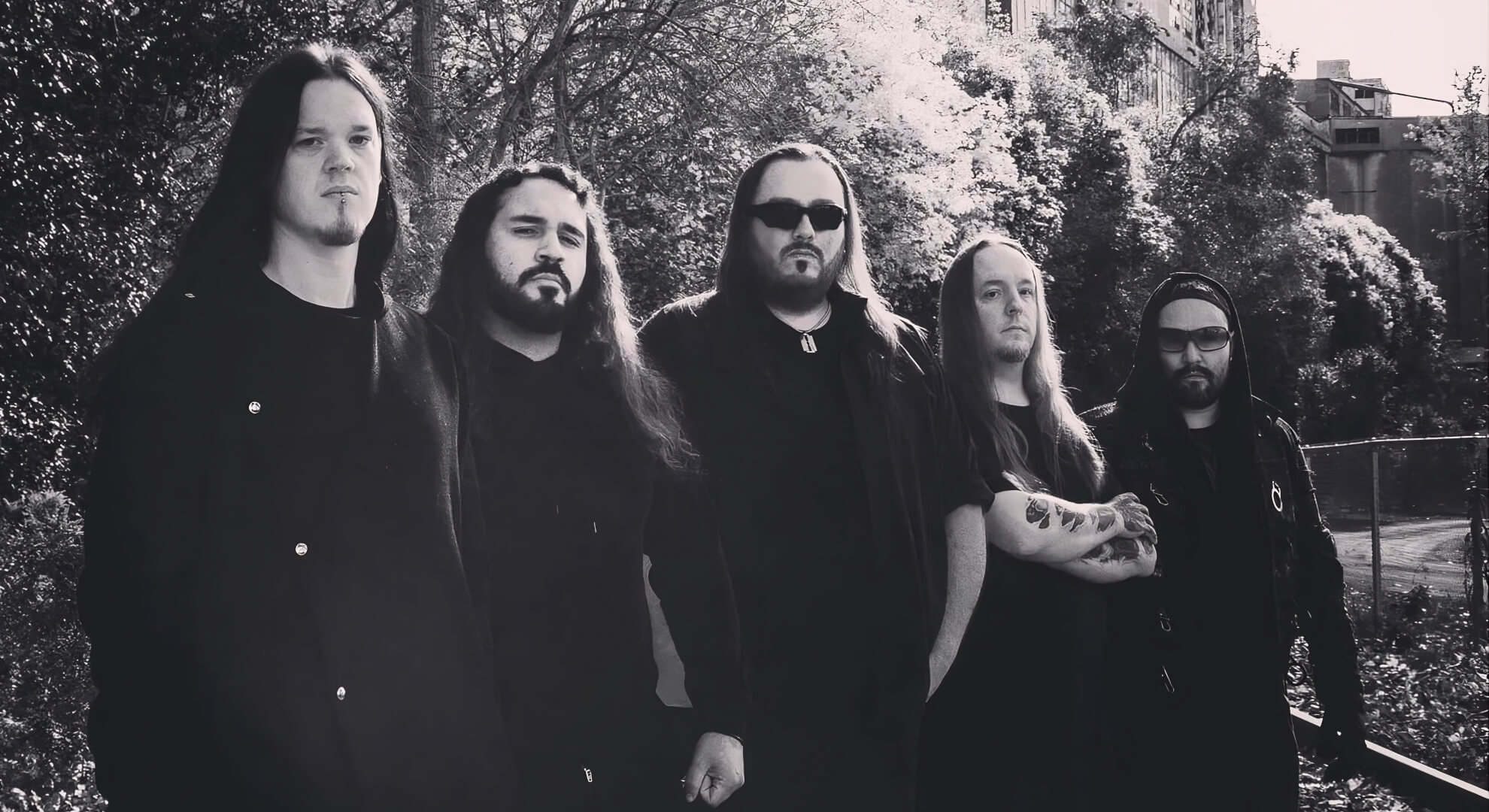
The surviving band members—bassist Jonas Björler, guitarists Anders Björler and Martin Larsson, and drummer Adrian Erlandsson—released a unified, emotional statement detailing the painstaking process and the sacred purpose behind the record. They confirmed that over the preceding years, the collective worked intimately with Lindberg, meticulously discussing and refining every sonic and visual detail to ensure absolutely nothing was left to chance or outside interpretation.
Rather than relying on the standard promotional language typical of heavy metal press cycles, the surviving members framed the album strictly as a solemn obligation. They rejected outside interference and commercial polish, ensuring that every sonic choice remained an unfiltered reflection of Lindberg’s final artistic will. The record exists not as a new product to be marketed, but as the uncompromised realization of what the band recognized solely as “Tomas’ legacy.”
Evaluating the magnitude and the emotional gravity of ‘The Ghost of a Future Dead’ requires contextualizing the album not merely as a batch of new tracks, but as the culmination of a thirty-five-year journey that fundamentally altered the geography of heavy metal. It demands acknowledging the philosophical depths Lindberg explored, the unparalleled bravery he exhibited during his final vocal tracking sessions, and the global brotherhood of musicians currently mourning his absence.
An Evolution from Gothenburg Grit to Cosmic Dread
Recognizing the monumental weight of ‘The Ghost of a Future Dead’ means viewing it not merely as a tragic posthumous artifact, but as the deliberate, final masterstroke of a restless sonic evolution. As detailed in our recent retrospective on his life and influence, At The Gates never simply existed within the melodic death metal genre; they were its primary architects.
While our archival coverage thoroughly traced their trajectory—from the raw, crust-punk urgency of their 1990s output through the profound philosophical depths of their modern reunion albums—this new record warrants specific attention for how it actively responds to that history.
Knowing his physical abilities were rapidly deteriorating, Lindberg actively orchestrated a stylistic course correction for his swansong. He issued a strict directive to strip away the progressive, orchestral experimentation of their most recent output and return directly to the relentless, hard-hitting ferocity of their 1995 ‘Slaughter of the Soul’ era. Yet, he carried forward the terrifyingly real cosmic dread and poetic vulnerability of his late-stage writing.
The resulting album stands as a staggering career capstone. It is a deliberate, furious merging of the band’s foundational aggression with the philosophical weight of a man staring directly into the void, perfectly closing the loop on a thirty-five-year artistic journey.
Echoes of Bergman and Ligotti in the Melodic Vanguard
To properly measure Tomas Lindberg’s contributions, one must pull back the historical lens and view his body of work as a crucial chapter in a broader lineage of Nordic melancholy and existential art.
As noted in our previous feature examining his unique, pained vocal delivery, Lindberg was less a traditional heavy metal frontman and more an apocalyptic philosopher armed with a microphone. Much like the stark, existential cinema of his countryman Ingmar Bergman—particularly films like ‘The Seventh Seal,’ where protagonists physically wrestle with the literal specter of Death—Lindberg employed his highly aggressive medium as a stark canvas for confronting human mortality and cosmic indifference.
His late-career writing elevated the genre’s entire intellectual vocabulary. Through deep integration of the magical realism of Jorge Luis Borges and the crushing cosmic pessimism of modern authors like Thomas Ligotti and Eugene Thacker, Lindberg bypassed standard extreme metal tropes entirely.
He aligned his artistic output more closely with the bleak, absurdist theater of Samuel Beckett or the creeping, undefinable dread of weird fiction than with the straightforward horror aesthetics of his contemporary peers. In doing so, he cemented At The Gates as a profound cultural force capable of articulating the sheer terror of human transience.
Shaping Art in the Shadow of Tragedy
The creation of ‘The Ghost of a Future Dead’ was shaped amidst profound human suffering. While the heavy music community is already acutely aware of Lindberg’s tragic battle with adenoid cystic carcinoma—which we reported on extensively following his passing—the precise timeline of this album’s production reveals an astonishing level of artistic dedication.
The illness was not merely a background event; it was the central, defining reality that dictated every aspect of his final performance and the band’s operational urgency.
Confronting the imminent silencing of his defining instrument, Lindberg exhibited a staggering level of resolve. In early January 2024, literally the day before he was scheduled to be admitted to the hospital for the major surgery, he entered a recording studio in Gothenburg with a singular, desperate mission: to track the vocals for the entirety of the new At The Gates album.
Rather than succumb to the despair of his prognosis, Lindberg viewed the studio session as his final proving ground. Bassist Jonas Björler recalled Lindberg’s singular focus, noting the frontman was entirely driven by the need to complete the vocal tracks before the surgery irreversibly altered his capabilities.
He tracked the entire twelve-song album in a single, grueling day, recording the vast majority of the vocal lines in miraculous single takes. This exhaustive process guaranteed the band possessed a finished product, entirely insulated from the uncertain surgical outcome or his subsequent physical deterioration.
These recordings, initially captured as urgent vocal demos, possessed such raw, unbridled power and emotional resonance that they were ultimately kept as the final vocal tracks on the finished release. Following the marathon session, Lindberg’s public reflection was notably devoid of self-aggrandizement. He simply expressed a profound, exhausted relief, noting only that “it felt good to have it done”—a humble understatement for a Herculean final performance.
Following the initial surgery, the surviving band members remained in constant, daily contact with Lindberg while they finalized the instrumental tracking and the arduous mixing process, ensuring his directorial voice remained present even as his physical voice healed. “His surgery went well and we were in contact the whole time when we were in the studio. He was very excited to hear everything,” guitarist Anders Björler recalled, highlighting the collaborative tether they maintained throughout the production.
The album was fully recorded and mixed by mid-2024, but the band made the collective, heartbreaking decision to completely withhold its release. This postponement was rooted entirely in the desperate hope that Lindberg’s condition would stabilize and improve, allowing him to be physically present to celebrate the album’s launch with the fans he loved so dearly.
Tragically, the subsequent years were categorized by Jonas Björler as an agonizing emotional “rollercoaster ride” for the band, Lindberg’s family, and his close friends. The highly unpredictable and aggressive nature of adenoid cystic carcinoma meant alternating weeks of positive developments and devastating setbacks.
Despite undergoing extensive, punishing courses of radiotherapy and the initial surgical intervention, doctors discovered new, deeply embedded remnants of the cancer in early 2025. These new traces were deemed entirely inaccessible by further surgery or radiation, severely limiting his treatment options.
An undisclosed medical setback in May 2025 forced Lindberg into long-term medical care. In mid-August of that year, the situation turned dire, as massive, secondary infections severely complicated his already fragile state, rendering his primary doctors unable to effectively treat the underlying cancer.
Reflecting on this turning point, Jonas Björler summarized the realization of the inevitable: “So we kind of knew that it was going in the wrong direction, for sure.”
When it became abundantly clear that the trajectory was irreversible, the band members—with the exception of drummer Adrian Erlandsson, who was stranded in the United Kingdom—visited the hospital in Gothenburg to sit by his bedside and bid a final farewell to their lifelong friend and creative partner.
Tomas Lindberg passed away on September 16, 2025, leaving behind a monumental void in the world of heavy metal and a legacy that will echo for eternity.
The Triumphant Return of the Founding Songwriter
The creation of ‘The Ghost of a Future Dead’ is also profoundly significant on a sonic level for reasons extending beyond Lindberg’s heroic final vocal performance. The album marks the triumphant studio return of founding lead guitarist and primary songwriter Anders Björler.
The architecture of At The Gates’ signature sound has historically relied heavily on the dynamic, almost telepathic interplay between the Björler brothers. Following the band’s acclaimed 2014 comeback album ‘At War With Reality,’ Anders Björler unexpectedly departed the group in March 2017 to pursue other interests.
He was replaced by guitarist Jonas Stålhammar, who performed capably on the band’s subsequent releases, ‘To Drink from the Night Itself’ (2018) and ‘The Nightmare of Being’ (2021). However, in July 2022, At The Gates announced their official parting of ways with Stålhammar, confirming shortly after that Anders Björler had officially rejoined the ranks.
This critical reformation officially reunited the core lineup responsible for the 1995 masterpiece ‘Slaughter of the Soul.’ With Anders back in the fold, the writing process for the new album commenced organically and rapidly. Jonas Björler noted that he and his brother deliberately avoided laying down strict, overarching musical rules, allowing the instrumental foundation to form naturally without becoming “creatively restricting or forced.”
The album’s aggressive sonic architecture, therefore, was not a calculated attempt by the band to recapture past commercial glories, but a deliberate creative directive from Lindberg himself. Confronting his mortality, the frontman explicitly sought a visceral, combative backdrop for his final philosophical statements, steering the band away from the sweeping orchestrations of their recent work.
Anders Björler framed this pivotal shift in their creative process: “We had not really talked about a blueprint for the album, but it was Tomas’ idea to do something more reminiscent of ‘At War with Reality’ or ‘Slaughter of the Soul.’ We were very focused on doing a very hard album – that was Tomas’ goal.”
Jonas Björler viewed this directive not as a regression, but as an intentional synthesis of the band’s history, noting the music relies on “a mixture of ‘Slaughter Of The Soul,’ ‘At War With Reality’ and some progressive elements of the last two.”
To properly capture this requested intensity, the band enlisted the expertise of world-renowned Swedish metal producer Jens Bogren. All recording and mixing took place at the prestigious Fascination Street Studios in Örebro, Sweden—a facility practically synonymous with pristine, massive-sounding modern metal records.
Bogren, a past collaborator with the band, was instrumental in balancing the raw, urgent, visceral energy of Lindberg’s single-take vocal performances with the razor-sharp, surgical precision of the instrumental arrangements. The result is an album that sounds simultaneously polished and dangerously unhinged.
A Gothenburg Brotherhood United in Mourning
The announcement of ‘The Ghost of a Future Dead’ is deeply intertwined with the ongoing, collective, and highly public grief of the global metal community, and specifically the Gothenburg scene that Lindberg helped build from the ground up. The immediate reaction to his passing in September 2025 illuminated the profound personal and professional reverence his peers held for him across the world.
Mikael Stanne, the esteemed vocalist of Dark Tranquillity and The Halo Effect, offered several poignant, extensive tributes that established Lindberg not just as a contemporary, but as the indispensable architect of their shared musical lineage. Reflecting on the historical weight of his peer, Stanne flatly stated the reality of the genre’s genesis: “Without him, there would be no Gothenburg death metal scene.”
Stanne elaborated on Lindberg’s gravitational pull during the foundational years of the movement, describing him as the inciting force that unified the local youth. “More than anything, I think Tompa really inspired the scene, because he was kind of that central figure for everything that kind of went on in Gothenburg at the time,” Stanne noted, explicitly linking the existence of Sweden’s biggest exports to Lindberg’s early ambition. “There would be no Dark Tranquillity or In Flames without him.”
Anders Fridén, vocalist of In Flames, echoed these sentiments, sharing a deeply personal message that positioned Lindberg as an early mentor who directly shaped his career trajectory. “Thank you for sharing those tapes on your Walkman back in the day, sitting on the bus, riding in to the city,” Fridén wrote. “Maybe I would not be where I am today if it was not for you showing the way.”
The brotherhood of the Gothenburg scene was heavily evident during live performances in the immediate months following Lindberg’s death. During a hometown show at the Filmstudion in Gothenburg on October 18, 2025, Dark Tranquillity halted their standard set to honor Lindberg by performing a searing, emotional cover of the At The Gates classic ‘Blinded By Fear.’
This tribute extended well beyond Swedish borders; during the massive 70,000 Tons of Metal cruise in early 2026, Dark Tranquillity again performed the track for an international audience. Video footage from the event captured a visibly moved Stanne standing completely alone on stage at the song’s conclusion, gazing upward as if communicating with the spirit of his friend—an intimate moment of raw grief and immense respect manifesting in front of thousands of fans.
Furthermore, the scene rallied together for charitable causes in his memory. In November 2025, it was announced that Dark Tranquillity, The Crown (one of Lindberg’s former bands), and The Halo Effect would perform at a specialized charity concert honoring Lindberg. The event ensured that his legacy translated into tangible financial support for cancer research and awareness, fighting the disease that took him too soon.
Stanne’s personal reflections on the progression of the illness highlighted the sheer psychological toll of watching his dynamic friend decline over a two-year period. Emphasizing the whiplash of false hope that characterized the diagnosis, Stanne shared openly: “It has been a horrible two years knowing that he was struggling and kind of battling this disease. Everybody thought, of course, ‘Yeah, it is gonna be fine. He is gonna power through it.’ But a couple months ago we realized that it is worse than we thought… it is devastating.”
The Future Without a Figurehead
As April 24, 2026, approaches and the heavy metal world prepares to consume the final artistic statements of Tomas Lindberg, questions naturally arise regarding the future of At The Gates as an active, ongoing entity.
For a band that has already navigated mythologized breakups, triumphant reunions, and significant lineup shifts over thirty-five years, the tragic loss of their unmistakable voice and intellectual driving force presents an existential crossroads.
Currently, the surviving members—Anders Björler, Jonas Björler, Martin Larsson, and Adrian Erlandsson—have chosen to focus their entire collective energy solely on honoring Lindberg’s memory through the respectful curation and release of ‘The Ghost of a Future Dead.’ There are absolutely no immediate plans to recruit a replacement vocalist, nor are there any plans to forge ahead with writing new studio material under the At The Gates moniker.
When pressed by the media on the possibility of live performances in the post-Lindberg era, bassist Jonas Björler remained highly cautious. He framed any potential future activity not as a resumption of business, but strictly as a contextualized tribute: “Yeah, we have not really discussed those things because we are gonna release the album first and then we will see. Maybe some shows to celebrate him or something, but we are not sure about anything right now.”
This measured approach aligns perfectly with the underlying ethos the band established upon their initial 2007 reunion. At that time, guitarist Anders Björler famously outlined their guiding philosophy, clarifying that the band had made a conscious decision “not to make a career out of this… because we have so much fun and we love what we do together. That is more important than anything. And that is why we do not want it to dictate our lives in any way.” Without Lindberg’s guiding presence, the compulsion to maintain At The Gates as a traditional commercial touring machine is completely non-existent.
In looking at the broader festival circuit for 2026, the absence of At The Gates speaks volumes. Major international extreme metal events, such as the Beyond The Gates Festival in Bergen, Norway, have already announced their full 2026 lineups. While revered bands like Electric Wizard, Blood Incantation, Beherit, and Marduk are slated to perform, the distinct absence of At The Gates from the global touring circuit serves as a stark, daily reminder of the massive void left in the scene.
Similarly, the Hell On Air Festival in Belgium announced its complete April/May 2026 lineup, showcasing the continued health of the live metal ecosystem, yet missing one of its foundational pillars. The scene continues to move forward, but it does so with a heavy heart and a missing vanguard.
Resonance of a Defiant Swansong
Usually, when an album comes out after an artist passes away, it feels like a patchwork of unfinished ideas, pieced together by grieving bandmates or labels looking to cash in. ‘The Ghost of a Future Dead’ wholly defies this tragic norm. It exists instead as an act of absolute, uncompromising artistic autonomy in the face of physiological annihilation.
Tomas Lindberg recognized the immediate approach of the very cosmic indifference he had spent a lifetime studying, and he chose to meet it not with quiet resignation, but with a calculated, ferocious roar.
Throughout his tenure as a pioneer of the Gothenburg sound, Lindberg employed extreme metal to interrogate the bleakness of human transience, famously positioning consciousness itself as a tragic error. Yet, the creation of this final record stands in direct defiance of his own cosmic pessimism. Through marshaling his remaining strength to permanently capture his voice just hours before it was irrevocably altered, Lindberg subverted the void. He cemented a permanent, immovable monument out of his own impermanence.
The resulting album is not merely a compilation of twelve new tracks; it is an impeccably produced, aggressively performed, and philosophically dense monument to a life lived entirely on its own terms. As the needle drops on this final artifact, the physical suffering of the man strips away, leaving only the towering intellect and undeniable ferocity of the artist. Tomas Lindberg may have surrendered his physical form to the dissonant void, but the ghost of this future dead will command the vanguard of heavy metal for eternity.
As we prepare to hear Tomas Lindberg’s voice for the final time, how do you reconcile his profound lyrical explorations of cosmic pessimism with the undeniable, defiant endurance of his final studio performance? In what ways has the relentless evolution of the Gothenburg sound, guided by his unique philosophical lens, shaped your own emotional connection to extreme music over the past three decades?

Leave a Reply