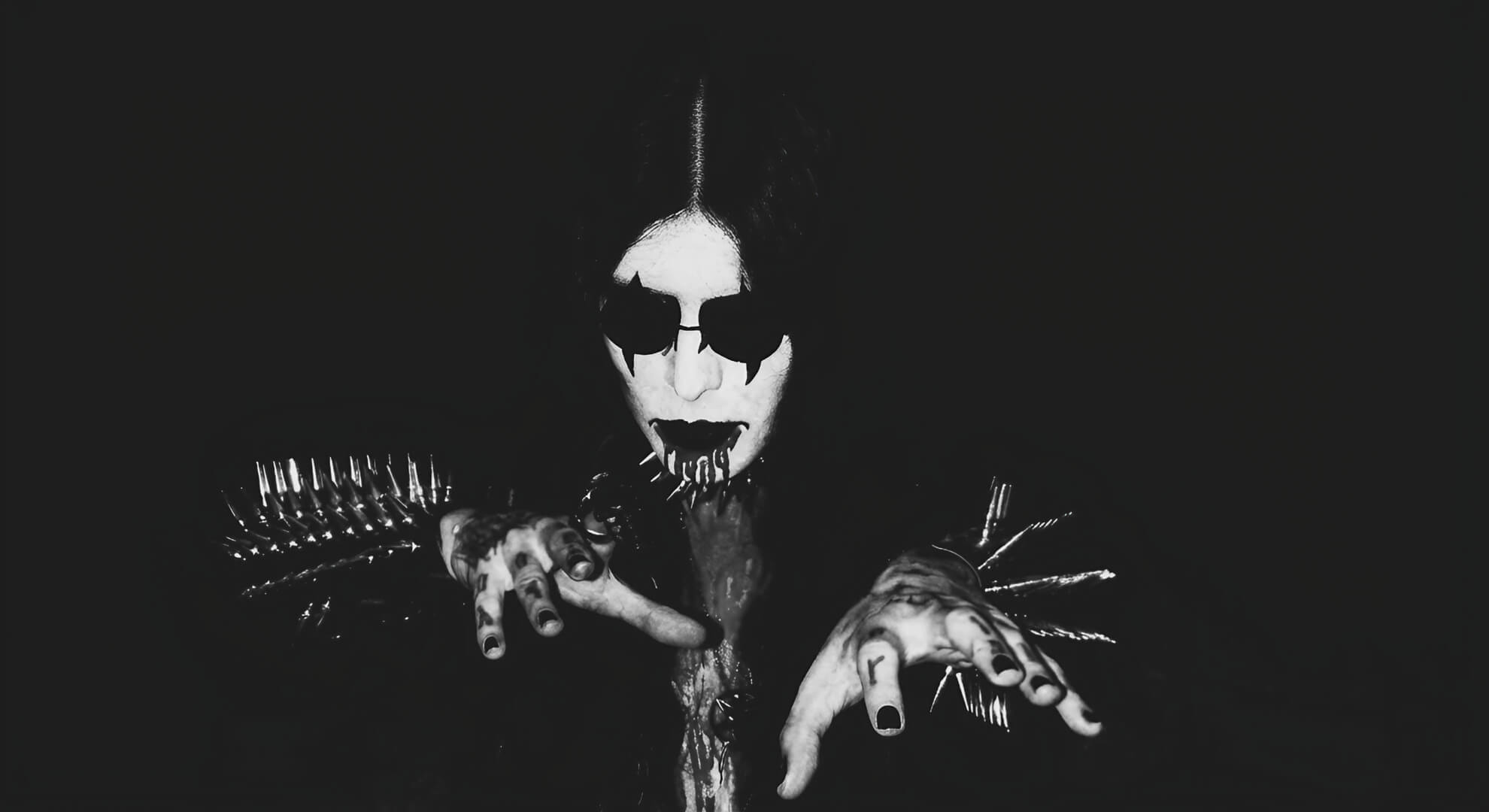


For nearly a decade, the Floridian collective known as Worm has been a shapeshifting anomaly, transitioning from its early, raw, lo-fi black metal sound to become a grand architect of its self-styled “Necromantic Black Doom.” Century Media Records has announced that the band’s musical evolution is set to reach a major turning point with their fourth full-length album, ‘Necropalace,’ scheduled for release on February 13, 2026.
The revelation of ‘Necropalace’ is not merely a release notice; it is a coronation. Having officially departed the underground incubator for the global infrastructure of Century Media Records, Worm has signaled an ambition that transcends the swampy confines of the band’s Everglades origins.
Accompanying this announcement is a cinematic music video directed by special effects master Norman Cabrera, a guest appearance by guitar virtuoso Marty Friedman, and a conceptual framework rooted in the “ostentatious gold” and “grotesque velvet” of 1996 symphonic black metal. This feature explores how Worm is “walking backwards into the future,” exhaling the dust of the past into the lungs of 2026.
‘Necropalace’: The Gates of Castle Ravenblood
The release of ‘Necropalace’ is calibrated for maximum atmospheric impact. Scheduled for Friday the 13th of February, 2026, the album will be available in formats that emphasize its tactile, artifact-like quality, including “Bloodlust” and “Blue” vinyl editions and a standard jewel case CD.
The album art, featuring a vampiric figure enthroned before a swirling crimson void and a descending dragon, serves as a vivid window into the “domain of dread,” complementing a seven-song tracklist that reads like chapters in a gothic grimoire.
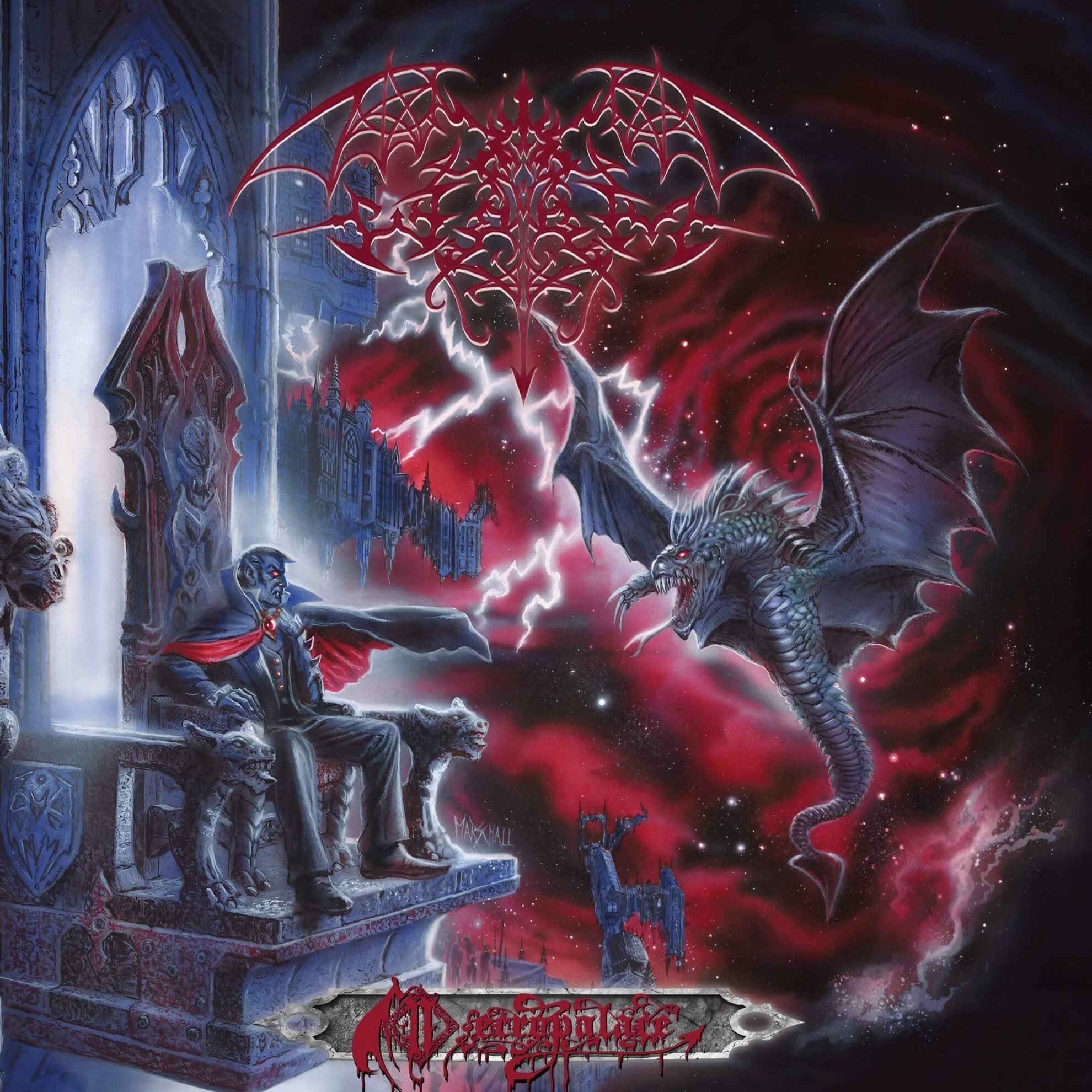
This visual composition strikes a resonant chord with the cover of Necromantia’s seminal 1993 debut, ‘Crossing the Fiery Path.’ The Greek legends, known for their unique use of 8-string basses and the vampiric persona of the late Baron Blood, pioneered a theatrical, occult approach to black metal that parallels Worm’s current trajectory.
Whether a deliberate homage or a synchronous manifestation of the genre’s collective unconscious, the artwork acts as an indirect tribute, bridging the Florida swamp with the aristocratic, vampiric mysticism that defined the early Hellenic scene.
Central to the album’s identity is the lore of “Castle Ravenblood,” a metaphysical fortress described by Phantom Slaughter as a repository of “memories and nightmares” preserved for centuries. The press materials adopt a distinct narrative voice, warning the listener of a “swirling mist” and “phantom figures” that guard the icy gates.
This conceptual pivot suggests a move away from the purely swamp-drenched atmosphere of Foreverglade toward a colder, more aristocratic European aesthetic—a “world of lush velvet and ostentatious gold, covered in the dust of time.”
Phantom Slaughter has cited an “obsession with 80s/90s horror” as a primary driver for the album’s aesthetic. This creates a juxtaposition unique to Worm: the humidity of the Florida underground clashing with the freezing, vampiric tropes of Scandinavian black metal lore.
A Cinema of Blood and Velvet
Coinciding with the album announcement, Worm released a 10-minute short film for the title track, marking their first foray into narrative music video production. The video acts as a visual manifesto, depicting subterranean candle lit corridors and phantom figures that mirror the album’s concept.
Essentially, the video avoids the digital sheen of modern metal clips, opting instead for practical effects that evoke the horror inspiration cited by Phantom Slaughter. Viewers are treated to a tableau of corpsepaint, swords, and vampire fangs, creating a dark fantasy world that feels tangible and decayed.
The recruitment of Norman Cabrera as director elevates the project from a music video to a piece of genre cinema. Cabrera is a veteran special effects and makeup artist with a resume that includes ‘The Walking Dead,’ ‘Fright Night II,’ and visuals for Danzig.
Cabrera’s connection to Danzig is particularly telling; he created the practical creature effects for the ‘How the Gods Kill’ video, inspired by H.R. Giger, demonstrating a legacy of translating heavy metal iconography into physical reality.
His studio, Norman Cabrera Monsters, specializes in creature fabrication, ensuring that the “ultimate evil” depicted in ‘Necropalace’ has a physical presence. The involvement of Ted Nicolaou, director of the cult vampire classic ‘Subspecies,’ as a consultant further cements the video’s authenticity within the horror canon.
Sonic Archaeology and the 1996 Connection
To comprehend the sonic gravity of ‘Necropalace,’ one must engage in a form of sonic archaeology. Worm’s sound is not “sui generis” but a highly specific synthesis of two distinct historical currents: Funeral Doom and Symphonic Black Metal.
The defining evolution of ‘Necropalace’ is its expansion into symphonic black metal, specifically citing the year 1996 as a touchstone. This reference point is deliberate. The mid-90s saw the rise of Norway’s Emperor (‘In the Nightside Eclipse,’ 1994) and Limbonic Art (‘Moon in the Scorpio,’ 1996), bands that integrated orchestral arrangements and synthesizers to create a spectacular splendor.
It also channels the bombastic zeitgeist surrounding Dimmu Borgir’s ‘Enthrone Darkness Triumphant’ (1997), a pivotal release that shattered the genre’s lo-fi orthodoxies. These albums introduced high-fidelity production and keyboard-heavy theatrics that polarized the underground but undeniably expanded black metal’s cinematic potential, prioritizing atmosphere and majesty over raw aggression.
Limbonic Art, in particular, serves as a spiritual ancestor to the ‘Necropalace’ sound. Known for their cosmic atmosphere and obsessive layering of keyboards, they represented a divergence from the raw “true” black metal of the era. Worm’s embrace of this specific sound—often characterized by “pseudo-orchestral” soundscapes and “virtuosic shred”—is a choice to walk backwards into the future.
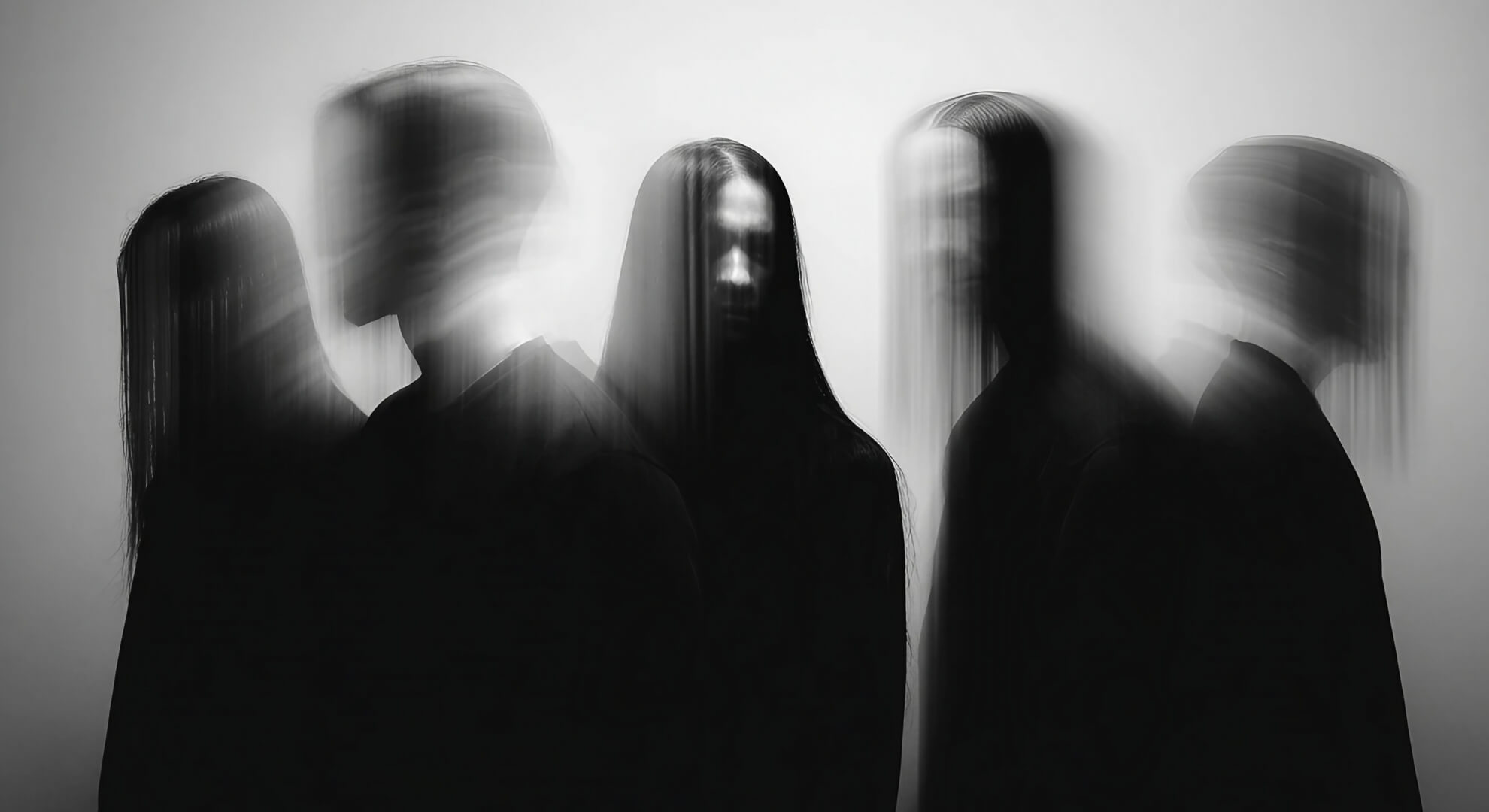
This commitment to the era extends beyond the sonic realm into the visual. The musicians’ own image and promotional materials deliberately evoke the grim atmosphere of the early 90s Scandinavian scene. From the stark, high-contrast use of corpse paint to concert posters that mimic the cut-and-paste “xerox” aesthetic of underground fanzines, Worm crafts a visual identity that feels less like a modern branding exercise and more like a rediscovered artifact from the golden age of black metal.
The Scandinavian Blueprint
The visual style of Worm can only be fully grasped by looking back at the frigid upheaval of the early 1990s Scandinavian black metal movement. This period was characterized by a militant rejection of death metal’s increasing commercialization, with groups such as Darkthrone and Mayhem deliberately distilling their music and presentation to a “necro” core.
The visual presentation was defined by the severe, monochrome application of corpse paint, which functioned not as a mere theatrical prop but as a ritualistic act of dehumanization, turning the musicians into symbolic conduits of the deceased. Photography further cultivated this mystique: deliberately grainy and high-contrast, the images captured the artists in raw, unconventional settings like snowy woods or candlelit caverns rather than polished studios, reinforcing their separation from mainstream society.
The dissemination of this culture was equally primitive and passionate. Before the digital age, the scene thrived on the “tape trading” underground, a global network of pen pals connected solely by snail mail and an honor system of reciprocity. Fanzines like Jon “Metalion” Kristiansen’s legendary Slayer Mag (Norway), Isten (Finland), and Nordic Vision served as the only reliable news sources, their pages assembled with scissors and glue in chaotic collages of xeroxed jagged logos and blasphemous imagery.
Information traveled slowly but with immense weight; a single mailorder catalog from Osmose Productions, Nuclear Blast Records, No Fashion Records, Misanthropy Records, or Relapse Records was treated as a sacred text, its product descriptions scrutinized by teenagers hungry for the next grim masterpiece.
This specific lo-fi visual language, which Worm channels, taps into a powerful nostalgia. This is a nostalgia not merely for the music, but for the tangible danger, the waiting, and the mystery that once shrouded the genre’s nascent years—a time when hand-drawn flyers were photocopied until the ink bled into abstract darkness, and dubbed cassettes were traded in packages wrapped in layers of tape to evade postal inspectors.
Virtuosity in the Domain of Dread
At the core of Worm remains the duo of Phantom Slaughter (vocals, keyboards) and Wroth Septentrion (guitars, keyboards, timpani, engineering). Wroth Septentrion, known in the technical death metal world as Philippe Tougas (First Fragment, Chthe’ilist), brings a level of virtuosic shred that distinguishes Worm from their doom peers. His contributions on the previous EP, ‘Bluenothing’ (2022), were noted for their “Iron Maidenesque” solos and soaring leads, a trend that is pushed even further on ‘Necropalace.’
The sonic fidelity of ‘Necropalace’ is stewarded by two titans of the modern old school renaissance: producer Charlie Koryn and mixing/mastering engineer Arthur Rizk. Koryn (Morbid Angel, Ascended Dead) captured the sessions at Elektric City Recording in Portland, ensuring the rhythm section retains the death metal backbone essential to the band’s heaviness.
Arthur Rizk (Power Trip, Blood Incantation) is renowned for a production style that is “warm and organic,” avoiding the sterile compression of modern metal in favor of a dynamic range that allows the dust of time to breathe.
In a move that perfectly encapsulates the “romantic” aspect of Worm’s sound, the album features a guest solo by legendary guitarist Marty Friedman on the closing track, ‘Witchmoon – The Infernal Masquerade.’ Friedman, celebrated for his exotic phrasing in Megadeth and Cacophony, has long championed the idea of contrasting aggressive music with classy, melodic resolution. His ability to weave melodies into heavy compositions aligns seamlessly with Worm’s ambition to merge the horrific with the beautiful. This collaboration validates the subgenre’s shift toward technical proficiency and high melodrama.
The Ritual at Northwest Terror Fest
Historically a studio-bound entity, Worm has carefully curated their live appearances to maintain an air of exclusivity. This strategy continues with the announcement of their performance at Northwest Terror Fest 2026 in Seattle (May 7-9, 2026).
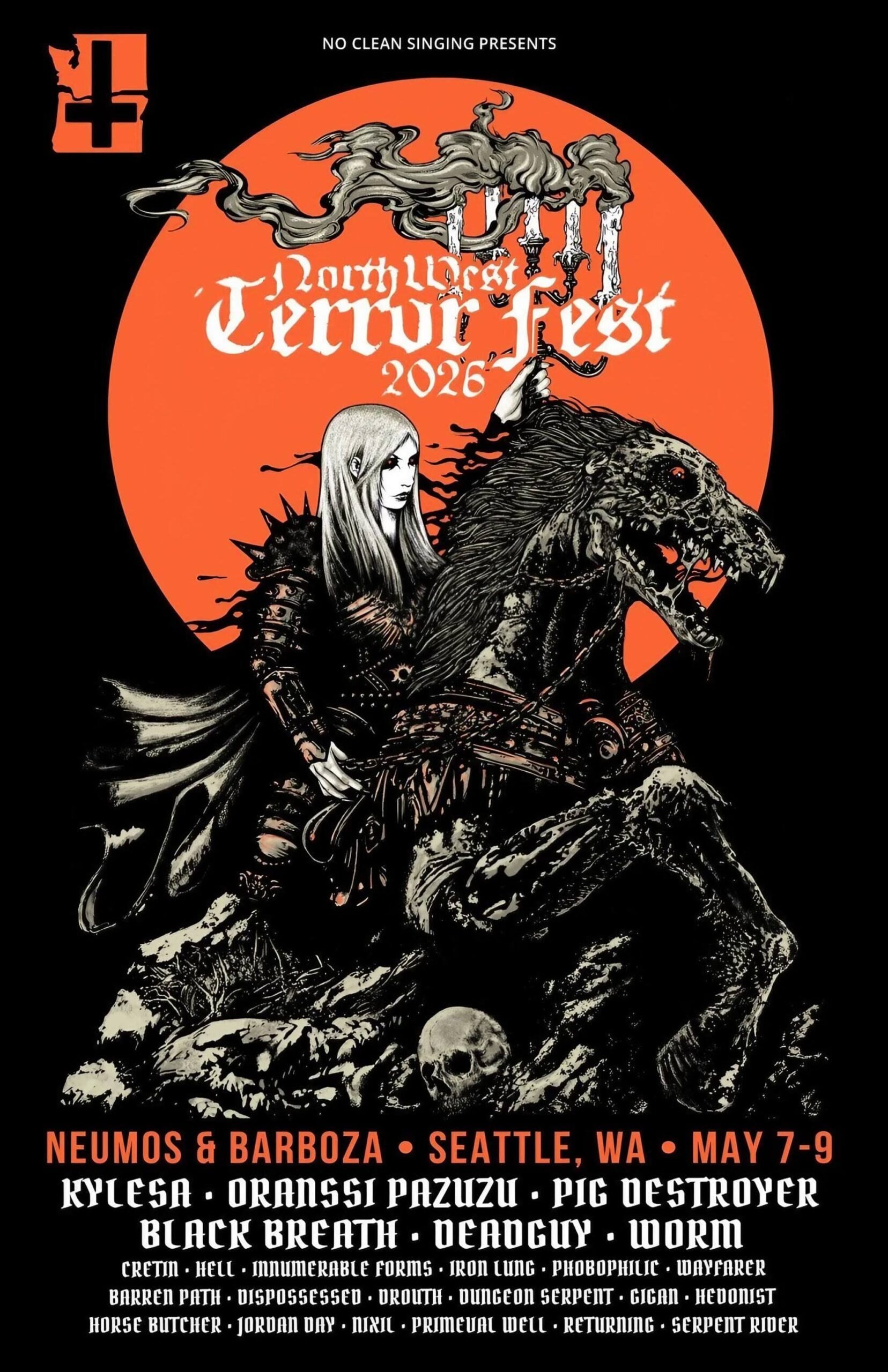
Worm’s set is billed as a “WA/OR Exclusive,” sharing the stage with a United States exclusive reunion of Black Breath and a heritage set by Pig Destroyer performing ‘Prowler in the Yard.’ This positioning reinforces Worm’s status as a destination band rather than a touring workhorse.
It is important to distinguish this appearance from the tour dates of Wormwitch, a separate Canadian blackened death metal band touring in early 2026; Worm’s live presence remains a rare and exclusive ritual.
The Coronation of the Ultimate Evil
With ‘Necropalace,’ Worm has not just paid tribute to the past; they have built a terrifying vision for extreme metal’s future. The album masterfully fuses the suffocating atmosphere of funeral doom with the “ostentatious gold” of symphonic black metal and the intricate skill of 80s shred. The resulting sound is a cohesive, cinematic nightmare—a monument that transforms its influences.
The presence of iconic figures like Marty Friedman and Norman Cabrera highlights the band’s unique curatorial perspective, proving that the dark, primal swamp and the majestic, ornate castle can coexist. As the metal world awaits the arrival of the “ultimate evil” on February 13, 2026, Worm offers a powerful synthesis, inviting listeners into a necropalace where the ghosts of 1996 and the virtuosos of the 80s perform their macabre dance.
How does Worm’s deliberate revival of the polarizing symphonic aesthetic from the mid-90s reshape your perception of modern death doom metal, and do you believe this move towards high-fidelity theatrics enhances or dilutes the raw atmosphere of their earlier swamp-based works?

Leave a Reply