
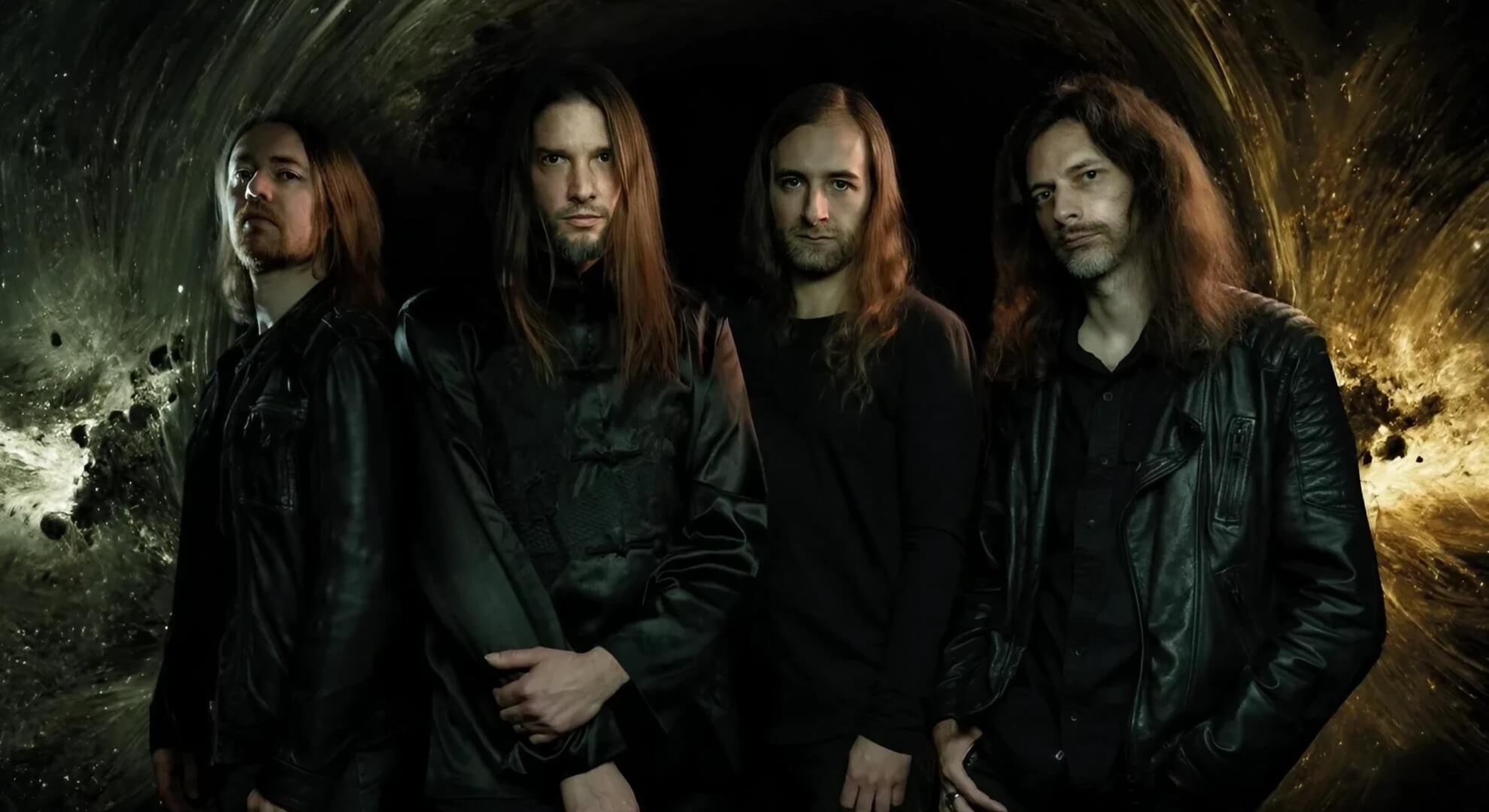


The distinct, sterile silence that precedes a classical performance is usually a boundary line—a demarcation separating the sacred space of the concert hall from the profane noise of the street. Heavy metal’s realm is where silence is typically a malfunction, a breathless gap before the assault. But on the stages of the Netherlands in 2024, during the recording of ‘Bach Out of Bounds,’ the German progressive death metal collective Alkaloid dissolved that boundary with the precision of a surgeon and the force of a tidal wave.
Scheduled for release on January 23, 2026, via Season of Mist, ‘Bach Out of Bounds’ is not merely a live album; it is a manifesto. It represents the culmination of a decades-long flirtation between the most technical fringes of extreme metal and the rigorous harmonic structures of the Baroque period. Yet, where lesser bands have treated classical music as a pantry of melodies to be raided for “neoclassical” shredding—a practice academic Robert Walser famously dissected as a grab for cultural prestige—Alkaloid approaches Johann Sebastian Bach not as a relic to be emulated, but as a contemporary peer to be interrogated.
The album, recorded across performances at the Bachfestival in Dordrecht, the Paard van Troje in The Hague, and November Music Festival in Den Bosch, documents a project that seems, on paper, like an act of hubris: a “supergroup” of tech-death virtuosos sharing the stage with sopranos, cellists, and accordionists to perform the Mass in B Minor alongside songs about Lovecraftian cosmic horror. However, the result is arguably the most significant synthesis of “high” and “low” musical cultures since the late 1990s.
Led by the polymathic frontman Morean (Florian Magnus Maier) and the rhythmic architect Hannes Grossmann, Alkaloid has produced a work that feels less like a concert and more like a séance. By juxtaposing the divine order of Bach’s ‘Agnus Dei’ with the entropic chaos of their own Cthulhu, they have created a dialectic of order and chaos, faith and nihilism, structure and the void.
The Highbrow-Lowbrow Dialectic
Realizing the magnitude of ‘Bach Out of Bounds,’ one must first dismantle the weary trope of “classical metal.” Since the 1970s, guitarists like Ritchie Blackmore and Yngwie Malmsteen have appropriated the aesthetic markers of the Baroque—harmonic minor scales, diminished arpeggios, and pedal points—to signify virtuosity and power.
As musicologist Noel E. Monk argued in his seminal text ‘Running with the Devil,’ this appropriation was often a strategy of legitimation, a way for working-class musicians to claim the prestige of the conservatory without submitting to its discipline.
Alkaloid, however, operates from a different vantage point. These are not outsiders looking in; they are insiders breaking out. Morean is a classically trained composer who has written for orchestras; Hannes Grossmann’s drumming is informed by a deep understanding of polymetric structures that rival Stravinsky in complexity. Their engagement with Bach is not an affectation but a conversation in a shared language: counterpoint.
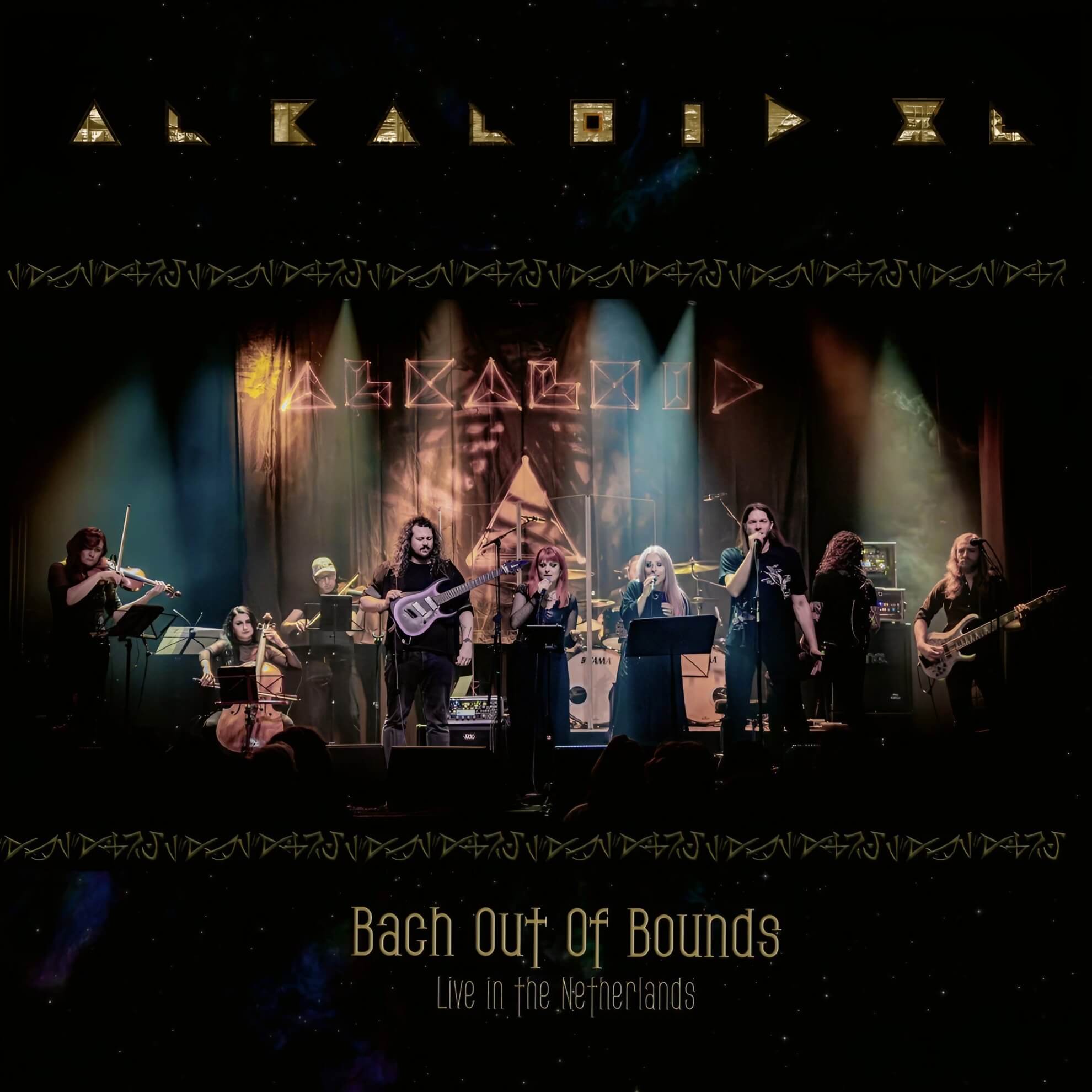
The significance of this album lies in its refusal to dilute either genre. When metal bands collaborate with orchestras, the result is often a wash of strings burying the guitars, or conversely, a rock band playing simplified riffs over a symphony. ‘Bach Out of Bounds’ avoids this by adhering to the “gold standard” of arrangement: structural integrity.
As Morean notes, “I did not change any notes of Bach’s scores, but I took maximum liberty in how I arranged them.” This fidelity to the text, combined with a radical reimagining of the timbre, creates a sense of “reverse engineering,” where the listener realizes that the distortion of death metal and the harmonic tension of Bach are, in fact, compatible technologies for exploring the sublime.
The project was commissioned by the Dutch Performing Arts Fund (FPK), a detail that carries immense cultural weight. It signifies an institutional recognition of extreme metal’s compositional validity. We are far removed from the moral panics of the 1980s; here, the state patronizes the growl and the blast beat as legitimate vehicles for interpreting the national heritage of European art music. This shift marks a maturity in the genre that Alkaloid embodies more fully than perhaps any of their peers.
The Lineage of the 90s Metal Scene
The roots of ‘Bach Out of Bounds’ dig deep into the fertile soil of the 1990s death metal scene, a period that saw the genre splinter from its crude, thrash-indebted origins into a myriad of sub-genres. While bands like Cannibal Corpse and Deicide pushed the boundaries of extremity and gore, a separate faction began to explore the limits of technical proficiency.
This was the era of Death’s ‘Human’ (1991) and ‘Individual Thought Patterns’ (1993), Cynic’s ‘Focus’ (1993), and Atheist’s ‘Unquestionable Presence’ (1991). These bands introduced jazz fusion elements, non-standard time signatures, and a philosophical bent to the text that moved beyond simple shock value.
Alkaloid is the spiritual successor to this specific lineage. The members of Alkaloid grew up in the wake of this “intellectualization” of death metal. They witnessed the genre’s transition from the garage to the music school. However, unlike the Florida scene which leaned heavily into jazz fusion, the German technical death metal scene—spearheaded by Necrophagist in the late 90s and early 2000s—leaned into the “neoclassical.”
Necrophagist’s ‘Epitaph’ (2004) is the Rosetta Stone for understanding Alkaloid’s musical vocabulary. Hannes Grossmann and former guitarist Christian Münzner were key components of Necrophagist during its most influential period. That band’s relentless precision and use of harmonic minor scales codified a style that was often criticized for being “soulless” or “robotic.” Alkaloid was formed, in part, as a reaction to that criticism—a desire to retain the technical facility of Necrophagist but to inject it with the organic, progressive fluidity of the 70s and the atmospheric weight of doom metal.
In ‘Bach Out of Bounds,’ we see the final maturation of this 90s seed. The technicality is no longer a sport; it is a tool. When they perform Bach’s ‘Allegro,’ they are not showing off how fast they can play; they are demonstrating that the “motorik” drive of the Baroque concerto is the ancestor of the death metal blast beat. The 90s obsession with “progress” has led them here: back to 1730.
Alkaloid: Engineers of the Void
The personnel of Alkaloid reads like a roll call of the European technical metal elite. To assess the ensemble’s capability to tackle Bach, one must review the individual trajectories that converged on this stage in the Netherlands.
Morean is the conceptual heart of the project. A vocalist and guitarist who also fronts the black metal outfit Dark Fortress, his true distinction lies in his background as a classical composer. He has written for the Royal Concertgebouw Orchestra and is a member of the contemporary music group Noneuclid.
This dual identity is crucial. When Morean arranges Bach, he does so with the authority of someone who understands the score from the inside out. His approach to vocals—shifting between guttural growls, Tibetan throat singing, and clean melodic lines—mirrors the varied textures of the orchestra. In ‘Bach Out of Bounds,’ his role is that of the bridge builder, translating the vernacular of the eighteenth century into the dialect of the twentieth first.
Grossmann is arguably the most influential drummer in modern technical death metal. His work with Necrophagist, Obscura, and Blotted Science established a new standard for limb independence and polymetric layering. On this album, Grossmann also serves as the mixing engineer, a role that cannot be overstated.
Mixing a live album that combines a loud metal band with acoustic instruments (violin, cello, accordion) is a logistical nightmare. Grossmann’s mix achieves a clarity that allows the counterpoint to breathe, avoiding the muddy “dense noise” that plagues similar crossover attempts. His drumming on tracks like the ‘Allegro’ is particularly noteworthy; he manages to accent the syncopations of Bach’s melody without overwhelming the delicate interplay of the strings.
Bass player Linus Klausenitzer, another Obscura alumnus, is known for his use of the 6-string fretless bass. In a metal context, the bass is often relegated to doubling the rhythm guitar. Klausenitzer, however, treats the instrument as a cello’s electric cousin. His fretless tone, with its characteristic “mwah” swell, adds a vocal quality to the low end.
In the Bach arrangements, he often carries the continuo line—the harmonic foundation of Baroque music—but imbues it with a fluid, singing quality that softens the jagged edges of the distorted guitars.
A significant shift in the band’s dynamic came with the departure of founding guitarist Christian Münzner prior to this recording. Münzner, a legend of the “neoclassical” shred style, left due to logistical and personal reasons. His replacement, Justin Hombach (Eternity’s End), brings a different energy. Where Münzner was fluid and liquid, Hombach is fiery and aggressive, with a background in power metal and speed metal.
His playing style, heavily influenced by the high-speed picking of the Shrapnel era but updated for modern tech-death, creates a new friction within the band’s sound. Joined by the new guitarist Max Blok, the duo faced the daunting task of learning Alkaloid’s complex catalog and the new Bach arrangements. The reviews of the live performance suggest they succeeded brilliantly, with reports of them “shredding harmoniously” with the violinists.
The Bach Arrangements
The album’s tracklist is a carefully curated journey through music history, alternating between the sacred works of Bach and the profane mythos of Alkaloid. The treatment of the Bach pieces is of particular interest to the musicologist.
‘Allegro (BWV 1052-I)’: The Baroque Blast Beat
The ‘Allegro’ from the Harpsichord Concerto No. 1 in D Minor is a piece defined by its relentless forward motion. In its original form, the harpsichord weaves a dense tapestry of sixteenth notes against the rhythmic punctuation of the string orchestra. Alkaloid’s arrangement translates this texture perfectly into the language of metal.
The harpsichord, a plucked instrument incapable of sustaining notes, relies on speed and ornamentation to create volume and texture. The distorted electric guitar, particularly when palm-muted, operates on a similar principle. The “chug” of the metal guitar is the modern equivalent of the harpsichord’s pluck.
Assigning the harpsichord’s right-hand runs to the electric guitars and the left-hand accompaniment to the bass and rhythm guitar, Alkaloid reveals the inherent “heaviness” of the composition. Grossmann’s drumming here is a revelation; he uses the double-kick drum to mirror the “motorik” rhythm of the Baroque, proving that the blast beat is not a negation of melody but a rhythmic intensifier.
‘Adagio – All Is Vanity (BWV 1052-II)’: A Doom Metal Requiem
The second movement of the concerto, the ‘Adagio,’ is transformed into a piece of crushing doom metal. Morean’s arrangement explicitly references the genre’s slow tempos and heavy saturation. The subtitle ‘All Is Vanity’ connects the piece to the biblical concept of Vanitas—the fleeting nature of earthly life—which is a central theme in both Baroque art and doom metal lyrics.
The original piece is built on a recurring bass line (basso ostinato) that creates a sense of obsessive, circular grief. Alkaloid amplifies this obsession by slowing the tempo and dropping the tuning. The result is a sonic expanse that feels like a slow descent into a grave. The interplay between the electric guitars and the live strings here is particularly effective; the violins float above the distorted sludge like ghosts, creating a texture that is both beautiful and terrifying.
‘Agnus Dei (BWV 232)’: The Silence of the Lamb
The ‘Agnus Dei’ from the Mass in B Minor is the album’s emotional fulcrum. Released as a single, it stands as the most radical departure for the band. Here, the distortion is stripped away. The guitars recede, providing a delicate, ambient accompaniment to the voice of soprano Rianne Wilbers.
Wilbers, a singer with a background in both metal and contemporary classical music, delivers a performance of “grace and gravitas.” The ‘Agnus Dei’ is a plea for mercy (“Lamb of God, who takes away the sins of the world, have mercy on us”). In the context of a death metal concert, this plea takes on a new resonance. It becomes a moment of vulnerability in a genre defined by invulnerability.
It highlights the “Otherness” of the divine—a concept that Alkaloid explores from a different angle in their Lovecraftian tracks. The silence of the metal audience during this performance is palpable on the recording; it is a moment of collective holding of breath, a recognition of a power that transcends volume.
The Lovecraftian Superstructure
The genius of ‘Bach Out of Bounds’ lies in how it seamlessly integrates Alkaloid’s original material with the Bach pieces. The originals are not merely filler; they are the counter-argument to Bach’s thesis.
‘Haunter of the Void’: The Fugal Nightmare
The centerpiece of the album is the new, commissioned track ‘Haunter of the Void.’ This ten-minute epic was written specifically for this project, with the aim of applying Baroque composition techniques to Alkaloid’s sonic universe.
The song is constructed using strict counterpoint, but the scales are twisted. Instead of the diatonic harmony of Bach, Morean uses the dissonant, chromatic scales of technical death metal. The result is a “fugal nightmare”—a piece that has the structural integrity of a Bach fugue but the emotional content of a horror soundtrack.
The lyrics describe a “severed, digitized brain” shot into the void, trying to reconstruct reality. This is a direct nod to H.P. Lovecraft’s ‘The Haunter of the Dark,’ a story about a writer who inadvertently summons a cosmic entity.
The use of the accordion in this track is a masterstroke. Played by Marieke Hopman, the instrument’s reedy, breathing quality bridges the gap between the organic strings and the synthetic distortion. It sounds ancient and futuristic simultaneously, perfectly capturing the “steampunk” aesthetic that often accompanies Alkaloid’s sci-fi narratives.
‘Beneath the Sea’: The Prelude to Cthulhu
Another new track, ‘Beneath the Sea,’ serves as a prelude to the band’s signature song ‘Cthulhu.’ This track employs the guest vocalists to create a siren-like atmosphere, drawing the listener down into the depths. The use of the 5-string violin (played by Oene van Geel) adds a lower, darker register to the string section, mimicking the groans of a submerged leviathan.
‘Cthulhu’ and ‘The Fungi From Yuggoth’: The Cult Ritual
The performance of ‘Cthulhu’ is the album’s climax of heaviness. The chorus, a chant of the famous Lovecraftian mantra (“Ph’nglui mglw’nafh Cthulhu R’lyeh wgah’nagl fhtagn”), is elevated by the presence of the classical choir. It transforms the song from a metal track into a genuine ritual.
The juxtaposition of the ‘Agnus Dei’ (a prayer to the Christian God) and ‘Cthulhu’ (a prayer to a Cosmic Entity) on the same setlist is a profound statement on the nature of worship and fear. Both prayers acknowledge human insignificance in the face of a higher power, but where Bach’s God offers mercy, Cthulhu offers only madness.
The Production of Space
The production of ‘Bach Out of Bounds’ deserves special mention. Hannes Grossmann, handling the mix, faced a unique challenge: how to balance the extreme dynamic range of a live orchestra with the compressed, high-gain signal of a tech-death band.
In typical metal production, the goal is impact. Drums are triggered, guitars are quad-tracked, and the dynamic range is often squashed to achieve maximum loudness. In classical production, the goal is transparency and dynamic fidelity. Grossmann navigated this by adopting a “dry” but spacious mix. The drums are punchy but not overpowering; the guitars are distinct but leave room in the frequency spectrum for the cello and accordion.
The decision to record in venues like the Bachfestival and Paard van Troje—spaces designed for acoustic music—contributed to the natural reverb of the recording. You can hear the room. You can hear the decay of the snare drum and the tail of the violin notes.
This creates a sense of physical space that is often lacking in modern metal records, which are frequently recorded in isolation booths and assembled on a grid. ‘Bach Out of Bounds’ sounds like a performance, with all the danger and energy that implies.
The New Legitimacy
The commissioning of ‘Haunter of the Void’ by the Dutch Performing Arts Fund (FPK) is a watershed moment for the genre. For decades, heavy metal has been viewed by cultural institutions as, at best, a commercial product and, at worst, a social nuisance. The FPK’s support suggests a shift in this perception. It acknowledges that the compositional complexity of bands like Alkaloid is on par with contemporary “serious” music.
This parallels the arguments made by musicologists like Esben Lilja, who has written on the musicology of heavy metal, noting its connections to the Baroque. It also validates the lifestyle of the modern progressive metal fan. The stereotypical image of the metalhead as a beer-swilling nihilist is outdated.
The audience for Alkaloid is one that appreciates polyrhythms, reads Lovecraft, and is open to sitting through a Bach aria. This is a “high-information” subculture, one that values virtuosity and complexity in all its forms.
The collaboration with musicians like violinist Julija Hartig and accordionist Marieke Hopman further bridges the gap. These are award-winning classical musicians who did not treat the gig as a novelty but as a serious artistic endeavor. Their integration into the band for these shows was total; they were not backing musicians, but essential voices in the counterpoint.
The Event
The performances captured on ‘Bach Out of Bounds’ took place in early 2024 at the Bachfestival in Dordrecht and other venues. The atmosphere of these shows was reportedly electric. The venues, typically used for classical concerts or pop shows, were transformed into temples of heavy art.
The visual component of the shows—captured in the music videos—reinforces the album’s themes. The band, dressed in black, performing with focused intensity, devoid of the usual rock star posturing. The lighting was stark, emphasizing the architecture of the music rather than the personalities of the musicians.
The tour dates for 2026, supporting the album’s release, suggest a continued commitment to this hybrid approach. The band is scheduled to play festivals like the Meh Suff! Winter Festival in Zürich, but the existence of this live document opens the door for more theater and festival bookings outside the traditional metal circuit.
The Future of the Riff
‘Bach Out of Bounds’ poses a challenge to the metal scene: where do we go next? The “arms race” of speed and technicality has reached a saturation point. Bands like Archspire have pushed the physical limits of human performance. Alkaloid suggests that the next frontier is not physical, but structural.
By returning to Bach, Alkaloid is not retreating into the past; they are retrieving a lost technology. Counterpoint—the art of combining independent melodic lines—is a tool that metal has largely ignored in favor of the riff (a single melodic line accompanied by chords). Alkaloid proves that counterpoint is the ultimate “heavy” technique. It creates a density of information that overwhelms the senses, much like the “cosmic horror” of their lyrics overwhelms the mind.
This album may well spark a “Baroque Revival” in extreme metal, not of the superficial Yngwie Malmsteen variety, but of a deeper, structural kind. It invites bands to look at the architecture of classical music, not just its ornamentation.
The God and the Monster
In the final reckoning, ‘Bach Out of Bounds’ is a triumph of ambition. It is a record that could only have been made by musicians who have mastered the extremes of two disparate worlds. For the listener willing to follow them into the void, Alkaloid offers a vision of heavy metal that is not just a rebellion against the past, but a reclamation of it.
They have proven that J.S. Bach was the original heavy metal composer, dealing with the same themes of death, judgment, and the sublime that animate the genre today. When the final notes of ‘The Fungi From Yuggoth’ fade out, one is left with the unsettled feeling that Bach’s God and Lovecraft’s Monsters are inhabiting the same room, watching each other across the divide of three centuries. And in that silence, Alkaloid has built a bridge.
The album is exhaustive in its detail, rich in insight, and demonstrates a nuanced understanding of its subject. It is a document of a specific moment in time when the walls between the conservatory and the club finally crumbled, revealing that the void behind them was the same all along.
As Alkaloid bridges the chasm between the conservatory and the mosh pit, we invite you to reflect on the boundaries of your own listening experience: Does the imposition of strict Baroque order upon the chaotic textures of death metal heighten the emotional impact for you, or does this intellectual rigor threaten to tame the feral spirit that drew you to extreme music in the first place?

Leave a Reply