


A Hungarian primary school lesson about the Mari becomes, on Thy Catafalque’s ‘XIII: Sárga erdő,’ a folk song that no Mari ever sang. The song is ‘Cseremisz,’ the third single from the thirteenth album by Tamás Kátai’s project, which reaches physical release on November 20th through Season of Mist.
Invention and documentation meet in that song, and the meeting shapes how this Hungarian project now travels to concert stages far from home.
A Project Born in Makó
Thy Catafalque began in Makó, in southeastern Hungary, in 1998, when Kátai and the guitarist and bassist János Juhász set out to make avant-garde post-black metal. Juhász stayed until 2011, the year of ‘Rengeteg,’ the first album Kátai wrote and recorded entirely alone. Every record since has carried his sole authorship.
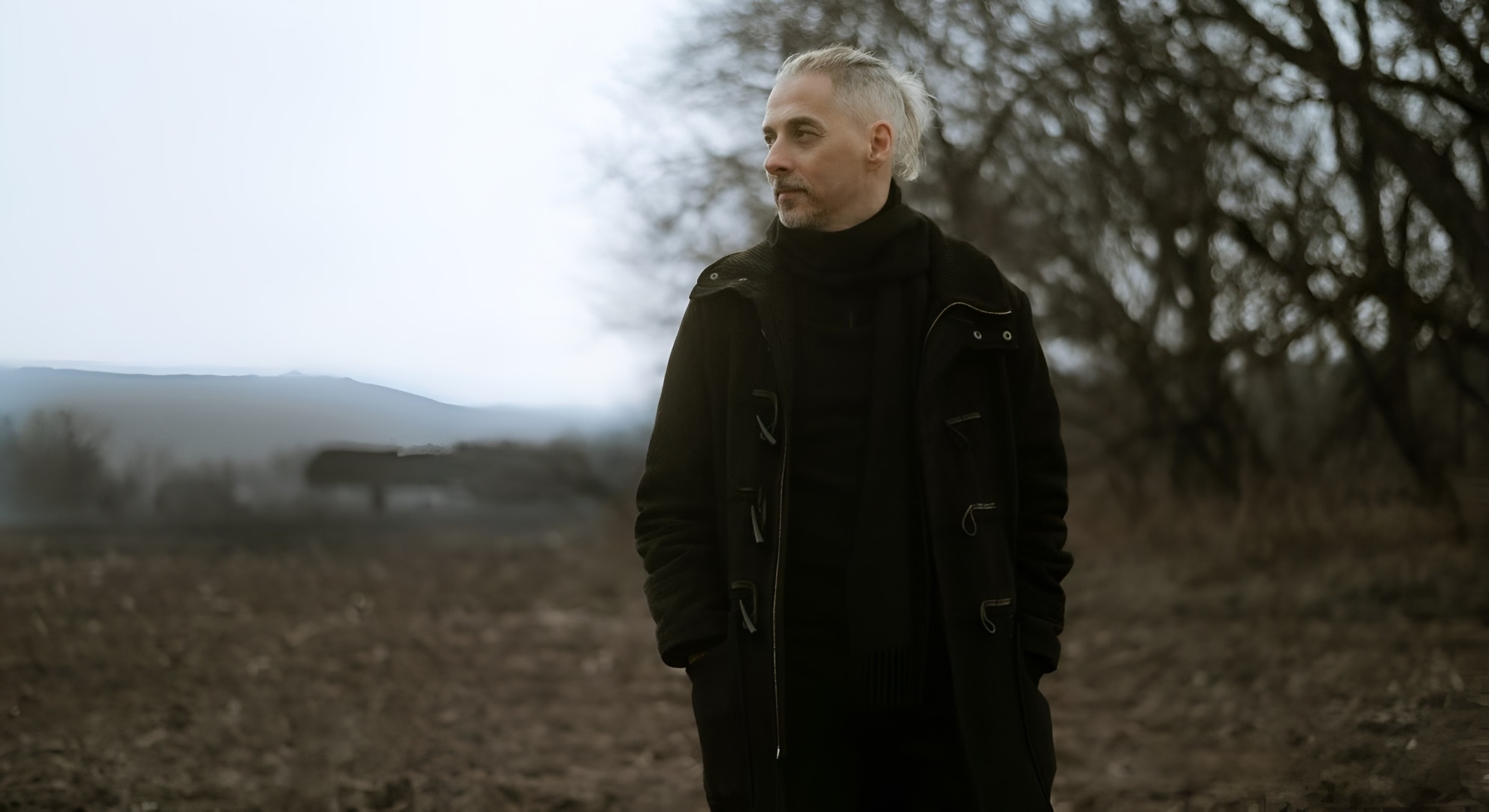
The black metal of the first two albums, ‘Sublunary Tragedies’ in 1999 and ‘Microcosmos’ in 2001, did not last. By ‘Tűnő idő tárlat’ in 2004 the project had moved away from most of that tradition, and ‘Róka hasa rádió’ followed in 2009.
During the years that produced ‘Sgùrr’ in 2015, ‘Meta’ in 2016 and ‘Geometria’ in 2018, Kátai lived in Edinburgh. ‘Naiv’ in 2020 and ‘Vadak’ in 2021 followed, and he has since returned to Hungary.
A project once confined to the studio became a stage act in 2021, when a festival performance at Fekete Zaj in Sástó, with rotating musicians, was recorded as the live album ‘Mezolit,’ released in 2022. Gábor Vári, the engineer who now mixes and masters Kátai’s records, played guitar in that line-up.
A Dark Night of the Soul
The album before this one, ‘Alföld,’ appeared in 2023, and Kátai described it as “very bleak.” Its successor, ‘XII: A gyönyörű álmok ezután jönnek’ (‘The Beautiful Dreams Are Yet to Come’), followed on November 15th, 2024, and Kátai explained that classical and acoustic instruments added color to it.
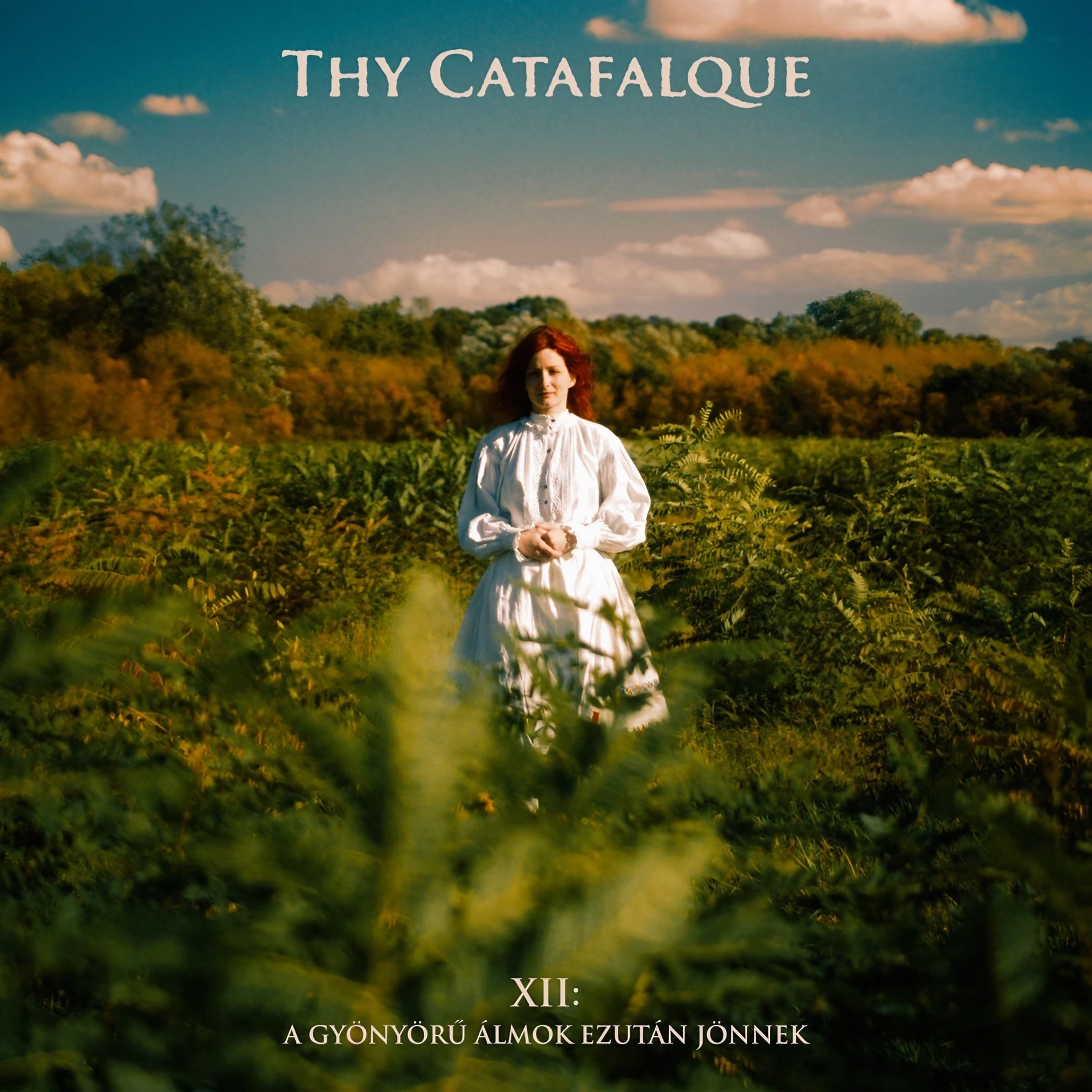
‘XII’ also changed who stood beside him in the studio. It was the first Thy Catafalque record made with an outside producer, Vári, who is credited with Kátai as producer and as the engineer who mixed and mastered the album at Miracle Sound Szeged. “Gábor was the perfect co-producer,” Kátai said. More than 20 guest musicians played on the record, and Kátai has compared it to a dark night of the soul.
The band that played ‘XII’ onstage shows how the project has changed. A recording of ‘Ködkirály’ made on November 23rd, 2024 at Dürer Kert in Budapest credits Krisztián Varga and Zoltán Vigh on guitars, Kátai on bass, Árpád Szenti on drums, and Martina Veronika Horváth, Ivett Dudás, Gábor Dudás and Bálint Bokodi on vocals. Every one of those names appears again in the credits of ‘XIII: Sárga erdő.’
The Forest and Its Credits
‘XIII: Sárga erdő’ (‘Yellow Forest’) runs to 12 tracks. Kátai is credited as producer, and Vári as engineer and mixing and mastering engineer, with recording split between various locations and Miracle Sound Szeged in Szeged. Vári’s credits on ‘XII’ and ‘Mezolit’ suggest a continuity of sound with the previous record, although Kátai alone is credited as producer this time.
Szenti is credited with drums and percussion, and the album’s press materials describe his playing as the first use of live drums in the project’s history. In all, 34 musicians and vocalists contribute. According to the same materials, Kátai describes the album as having no unifying lyrical concept, only the feeling of wandering through the forest of past times.
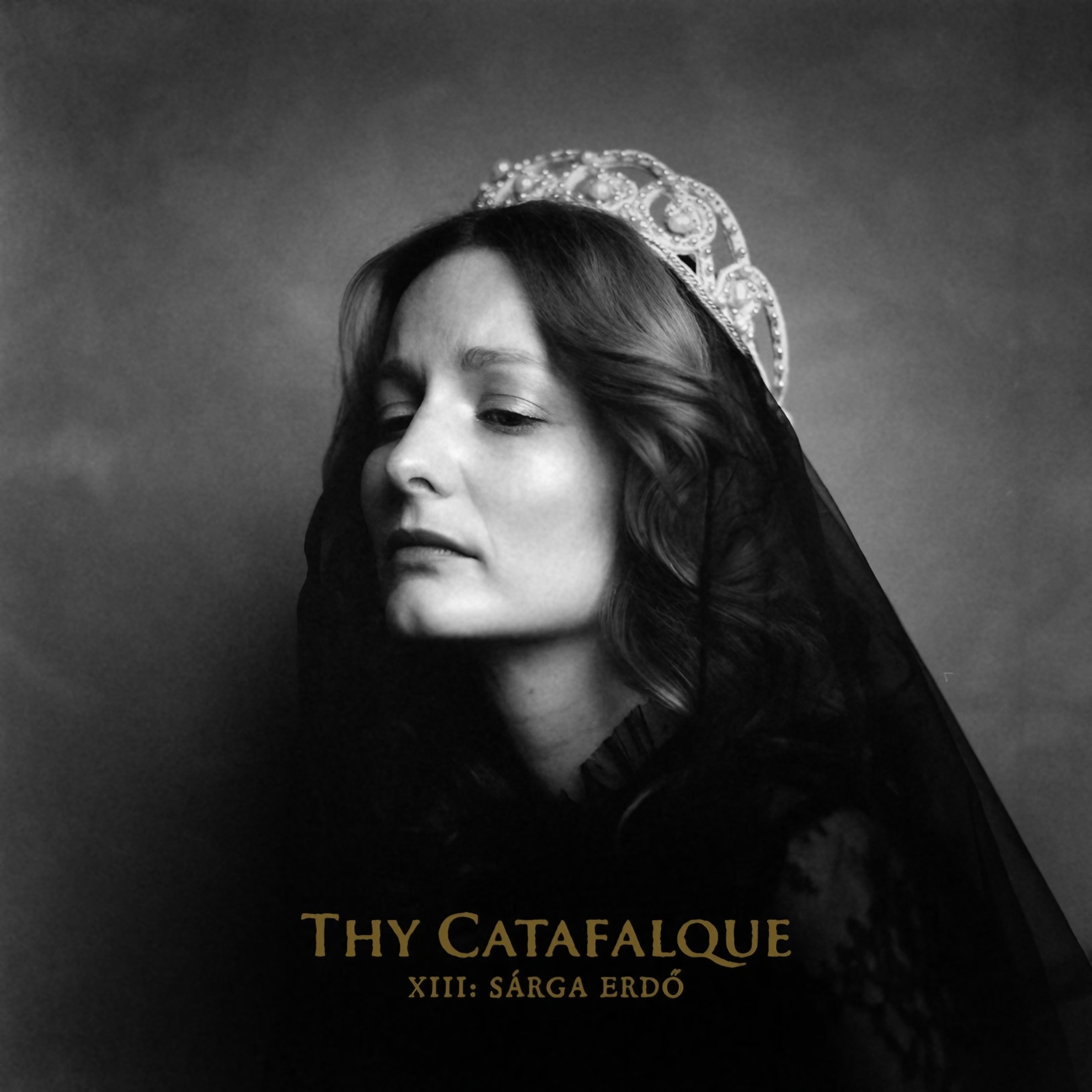
The physical release is the record’s primary frame: a CD mediabook whose first pressing includes a 40-page booklet, and gatefold double vinyl in black, in four colored variants, and in a leaf-filled crystal-clear edition limited to 100 copies. A digital download accompanies them. Pre-order availability through the artist’s Bandcamp page had not been confirmed at the time of publication; the label’s own pre-order page lists the physical editions.
Three Advance Singles
The lead single, ‘Búcsú a piros madártól,’ or ‘A Farewell to the Red Bird,’ opens the album, and its video appeared when the record was announced on September 17th. Kátai filmed it himself in woods a 10-minute walk from his family home in Makó, beside the river Maros, and cut live footage from concerts in Brazil, France and Hungary together with hand-made and digital animation that he left rough on purpose. “I wanted to keep it that way,” Kátai said, “because it has a more personal touch.” The track’s credits list Bokodi on vocals, Varga on guitar and Noam Dayan on the kamancheh, a bowed fiddle.
‘Tömbök,’ the second single, released on October 5th, 2026, is track 10. Its credits name Ivett Dudás and Gábor Veres on vocals, Varga and Vigh on guitars and Dario Cei on flute, so the guitarists who stand beside Kátai onstage are the ones credited here.
A Song for the Cheremis
‘Cseremisz’ is track 8 and the third single, released on October 29th with a video. Its title is the Hungarian form of Cheremis, an older name for the Mari, a Finno-Ugric people of the Volga and Kama region whose Uralic language is written today in two literary standards, Meadow and Hill.1
The older name carries a history of conquest. Ivan IV took Kazan on October 2nd, 1552, and the Cheremis lands on the right bank of the Volga were attached to the new fortress town of Sviiazhsk, in a middle Volga region that stayed in rebellion for years afterward.2 Those sixteenth-century uprisings are remembered as the Cheremis Wars.
Kátai recalled learning about the Cheremis in primary school and described them as “a very distant and mystical people to me.” The kinship behind such a lesson has a documented history. In the second half of the nineteenth century, a dispute known as the Turkic-Ugric linguistic war set József Budenz and Pál Hunfalvy, who placed Hungarian among the Finno-Ugric languages, against Ármin Vámbéry, who championed a Turkic origin. By the end of the century the Finno-Ugric position had prevailed, although belief in a Turkic ancestry survived in public opinion.3
Kátai explained that the song is a fictitious folk song from that region and that it “could be connected to recent historical events as well.” He did not specify which events he meant at the time of publication, and nothing in the song’s credits or in his published statements supplies an answer.
The credits place Hungarian traditional instruments at the center of the song. Anikó Barna plays the citera and the koboz beside Dmitry Karev on accordion, Cei on flute and Szenti on drums, with Bokodi singing and the Male Choir of Tiszaföldvár joining on this track alone.
Kodály’s Cheremis Melodies
Hungarian music has a documented history with the Cheremis that predates any metal record. In 1906 the wife of the Finnish linguist Yrjö Wichmann gave Béla Bartók Cheremis folksongs she had collected, and Bartók saw a striking resemblance between them and Hungarian fifth-shifting melodies. He decided to travel to the Cheremis region, and the First World War ended the plan.
Roughly half a century later Zoltán Kodály sent his student László Vikár to the Volga-Kama region to study the same melodies, and between 1957 and 1979 Vikár and the linguist Gábor Bereczki carried out field research across the territory bounded by the Volga, the Kama and the Belaya.4
Their work reached print as ‘Cheremis Folksongs’ in 1971 from Akadémiai Kiadó in Budapest, the first volume of a series that went on to cover Chuvash, Votyak and Tatar songs.
Kátai has not said that this tradition informed ‘Cseremisz,’ and no source confirms a connection. The documented contrast is nonetheless plain. Hungarian scholars crossed the Volga region to record songs sung by living people and published them with translations; Kátai writes a song that no scholar could record, because no one sang it before. Both acts treat the Mari as kin worth attending to, and both begin in Hungary.
Leaving the Studio
For most of its history Thy Catafalque existed only on record. The concerts abroad documented in the video for ‘Búcsú a piros madártól’ confirm that the project now travels as a band, and its Hungarian titles reach readers abroad through translation: ‘A Farewell to the Red Bird’ for the lead single, ‘Yellow Forest’ for the album.
The same translation work frames ‘Cseremisz.’ The statement Kátai issued with the single opens by explaining that the title means Cheremis and by naming them a Finno-Ugric people of the Volga, which is the schoolroom lesson restated in one sentence for readers who may not have had it. Outside Hungary that lesson cannot be assumed, and the premise has to carry the song: a fictitious folk song, a documented people, a choir and traditional instruments.
The Song Without a Source
Two documents of the Mari now sit side by side in Hungarian music: the field recordings that Kodály’s student made on the Volga, and a song written in Makó for a people whose tradition it does not quote. The first treats the Mari as a source; the second treats them as a memory.
‘XIII: Sárga erdő’ reaches physical release with a choir, a live drummer and a premise stated plainly, and the audiences who have already seen the band abroad will meet that premise without the schoolroom attached. What the full record holds beyond its three advance singles remains unheard at the time of publication.
When a musician invents a folk song for a people he knows only from a childhood lesson, does the song preserve that lesson, replace it, or leave you with a memory of your own?
References
- Jeremy Bradley and Jorma Luutonen, ‘Mari,’ in ‘The Uralic Languages,’ 2nd ed., ed. Daniel Abondolo and Riitta-Liisa Valijärvi (Abingdon: Routledge, 2023), 527–575. ↩︎
- Christoph Witzenrath, ‘The Russian Empire, Slaving and Liberation, 1480–1725: Trans-Cultural Worldviews in Eurasia’ (Berlin: De Gruyter, 2022), 87–91. ↩︎
- Anna Kyriazi, ‘Turanism in Hungary,’ in Encyclopedia of Romantic Nationalism in Europe, ed. Joep Leerssen (Amsterdam: Study Platform on Interlocking Nationalisms, 2023), (online entry, unpaginated). ↩︎
- János Sipos, review of Tatar Folk Songs, by László Vikár and Gábor Bereczki, ‘Acta Orientalia Academiae Scientiarum Hungaricae’ 52 (1999): 311–312. ↩︎




Leave a Reply