
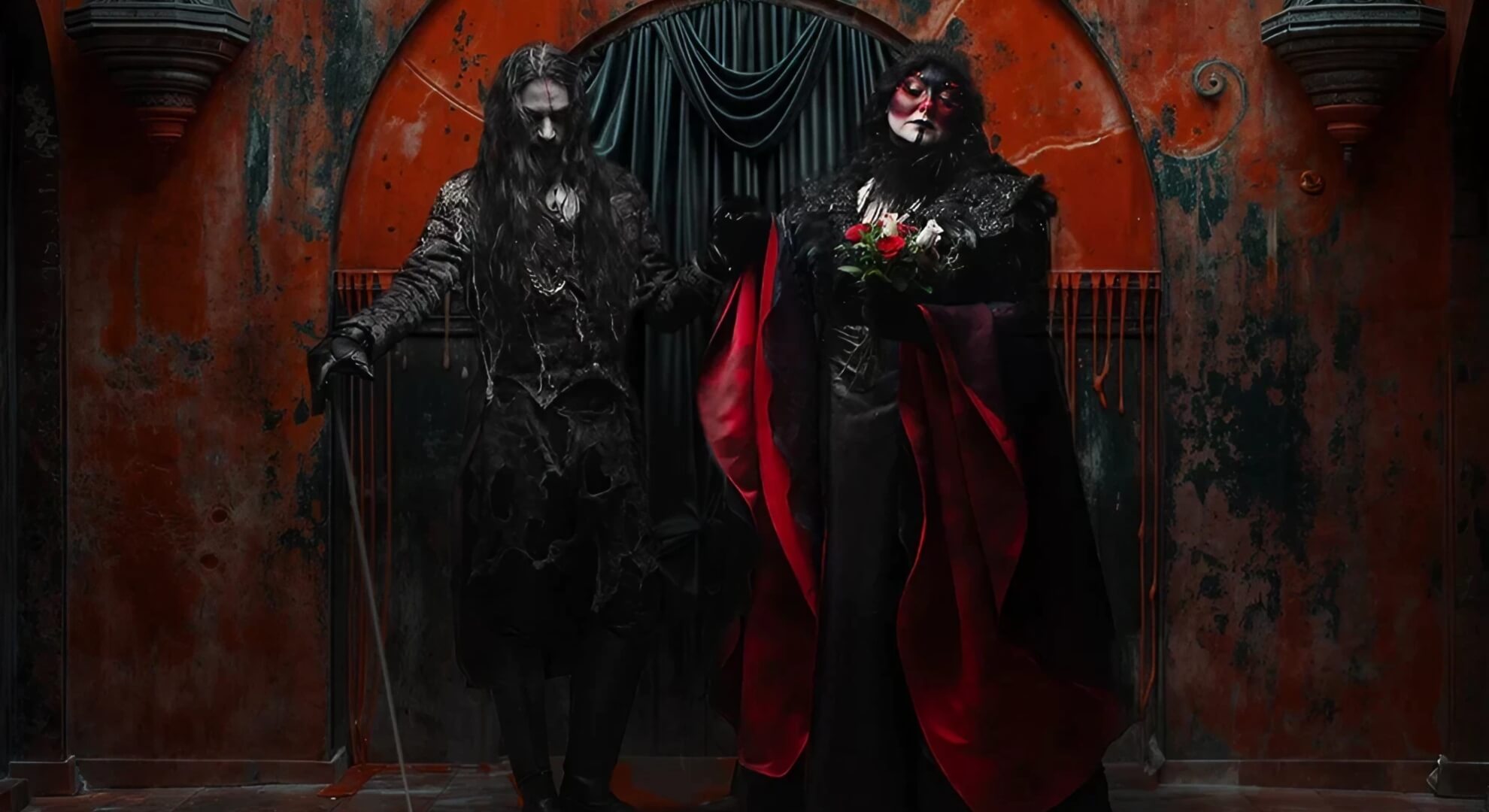


Grand Opera, in its purest form, is the theater of heightened emotion. It is a stage where human experience—love, betrayal, triumph, and most potently, tragedy—is magnified to its grandest scale, rendered in soaring arias and thunderous orchestration. It finds its most profound truths not in subtlety, but in the unsparing depiction of suffering and the catharsis that follows. It is this tradition, one of Verdi and Puccini, that the Italian band Fleshgod Apocalypse has long aspired to join, albeit through the dissonant and brutal language of death metal.
For years, their ambition has been their defining characteristic. Hailing from Perugia, this quintet has relentlessly pursued a maximalist fusion of extreme metal and classical composition, crafting albums that are undeniably audacious but have sometimes buckled under the weight of their own grandiosity. Past efforts, such as 2011’s ‘Agony’ or 2013’s ‘Labyrinth,’ were lauded for their vision but often criticized for a production so dense it became a “suffocating” wall of sound, a sonic war where the orchestra and the metal band fought for dominance rather than finding harmony.
Then, in August 2021, the theater of abstract tragedy became brutally real. Frontman, founder, and creative mastermind Francesco Paoli, an avid mountaineer, suffered a near-fatal fall in the Italian Alps. The harrowing aftermath was not a fictional libretto but a lived nightmare.
“After my fall, I woke up in a hospital, underwent several surgeries, constantly getting terrible news and spending many months not knowing if I would ever be able to play an instrument again,” Paoli recounted. “I felt condemned. Fear, painkillers, wheelchairs have been daily food for my frustration.” This was not the stuff of mythology or social allegory that had fueled their previous concept albums; this was a “gut-wrenching musical journey” born from authentic, life-altering pain.
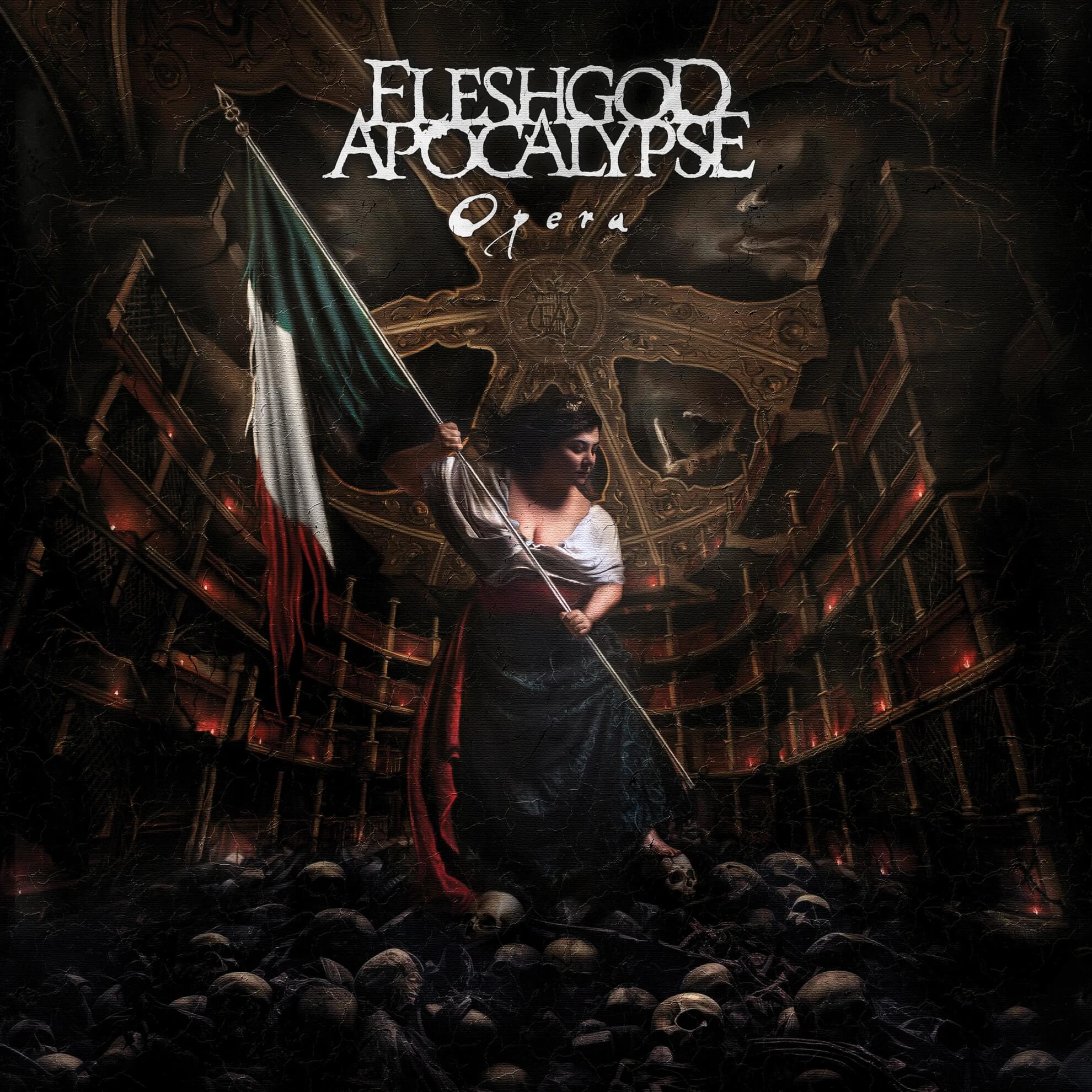
It is from this crucible of suffering that Fleshgod Apocalypse has forged ‘Opera,’ their sixth studio album and the unequivocal masterpiece of their career. Structured as a 10-act theatrical piece, the album chronicles Paoli’s ordeal, from the moment of the fall to the long, arduous path toward recovery. The experience, while devastating, provided the band with the one element their art had perhaps been missing: a raw, visceral, and deeply personal narrative core.
The stakes of their previous albums, whether the labyrinth of Knossos on ‘Labyrinth’ or the collapsing society of ‘King,’ were allegorical. A story about a Minotaur allows for grand artistic statements, but they remain at an intellectual remove. A story about one’s own brush with death is immediate and corporeal.
The emotions—the terror, the agony, the flicker of hope—are not imagined; they are recalled. This shift from the abstract to the personal demanded a new kind of artistic discipline. The objective was no longer simply to be “epic,” but to be truthful to the experience. This truthfulness, in turn, necessitated a more focused and deliberate approach to songwriting, where every orchestral swell and blast beat serves the emotional arc of a real story.
The trauma became a refiner’s fire, burning away the purely decorative bombast that had sometimes cluttered their work, leaving behind a stronger, more purposeful, and profoundly moving artistic statement, and indeed, ‘Opera’ is the sound of a band that has stopped merely gesturing at the sublime and has instead earned it through genuine suffering.
Act I: The Fall and the Fear
‘Ode to Art (De’ Sepolcri)’
The curtain rises not on a metallic onslaught, but on a note of somber theatricality. The album’s opening track, ‘Ode to Art (De’ Sepolcri),’ is a mournful, two-minute piece for piano and soprano, immediately establishing the record’s dramatic intentions. This choice is significant, centering the voice of soprano Veronica Bordacchini and foreshadowing her pivotal role in the unfolding drama. It is a moment of quiet before the storm, the calm air atop the mountain before the fall.
The Moment of Impact: ‘Pendulum’
The plunge comes with ‘Pendulum,’ the song that chronicles Paoli’s accident. The track eschews the band’s typical hyperspeed for a tempo that is deliberately slower and groovier, built on a riff that lumbers and swings like a hulking giant. The music itself mimics the physics of a fall, a sickening loss of control.
The composition is a masterclass in sonic storytelling: piano lines and dissonant strings dance around staccato bursts of guitars and drums, creating a dizzying soundscape of chaos and confusion as the world turns upside down.
It is here that the album’s central vocal dynamic is established. Paoli’s guttural growls are the raw, internal monologue of the victim, a man confronting his own mortality. Countering him is Bordacchini’s pristine soprano, which functions here less as a simple melody and more as a classical Greek chorus, an external voice observing the unfolding tragedy with a kind of terrible beauty.
The Aftermath: ‘Bloodclock’
If ‘Pendulum’ is the fall, ‘Bloodclock’ is the harrowing aftermath—the moments of waking confusion, the near-death visions, and the paralyzing fear. The track’s power lies in its use of extreme dynamic shifts. It begins with the disarmingly gentle tones of a harp and a nylon string acoustic guitar, lulling the listener into a false sense of calm before earth-shaking horns and blast beats careen the track towards an epic chorus.
This violent juxtaposition perfectly mirrors the physiological shock and adrenaline of a life-threatening event. Paoli’s performance is wrenchingly vulnerable, incorporating spoken-word passages and audible heavy breathing, grounding the high drama in a raw, human reality. The artifice of the opera is pierced by the sound of a man struggling for life.
This new dramatic structure was enabled by a serendipitous shift in the band’s lineup. The period leading up to ‘Opera’ saw the departure of longtime bassist and clean vocalist Paolo Rossi and, crucially, the promotion of Veronica Bordacchini from a recurring guest to a full-time, central member of the band. On previous albums, Rossi’s clean vocals provided a valuable melodic counterpoint, a textural layer within the metallic framework. But the narrative of ‘Opera’ required something more—it needed a distinct character, a dramatic foil to Paoli’s protagonist.
Paoli himself has explained this conceptual framework, stating that Bordacchini interprets the roles of abstract entities like “Death, Life, Hope,” who engage him in a dialogue throughout his ordeal. The lineup change was therefore not merely a personnel adjustment but a narrative one. It provided the perfect vocal casting for the story the band was compelled to tell.
The music was transformed from a monologue with melodic asides into a genuine duet, a call-and-response between the guttural growls of the mortal man and the soaring soprano of the immortal concepts that torment and guide him. Bordacchini’s elevation was not a replacement but a narrative necessity, a change that unlocked the band’s ability to fully realize the album’s ambitious “Opera Lirica” concept.
Act II: The Agony and the Ecstasy of Recovery
The album’s second act charts the grueling, complex, and emotionally volatile journey of recovery. It is a testament to the human will to survive, the psychological battles waged in the quiet of a hospital room, and the disorienting haze of pain and medication. It is also where the album’s sonic architecture becomes its most crucial narrative element.
The Defiance: ‘I Can Never Die’
This track marks a pivotal turn in the narrative, a violent and defiant resurrection. Following the somber piano of the introduction, “I Can Never Die” crashes in with the force of a cardiac arrest, a blast of pure “victory” that immediately shifts the album’s emotional register from despair to resilience.
The song is a relentless musical assault, driven by battering ram blast beats and buzzsaw guitars, with Paoli delivering an eardrum-rupturing roar of the title phrase. But the ferocity serves a profound thematic purpose. The song is a glorious anthem to the idea of immortality through art.
Paoli has explained that in the moments he faced his own death, his first thoughts were of his legacy: “‘who have I been’ and ‘what am I leaving behind’”. The song is his answer, a philosophical treatise born from trauma, arguing that memory is the strongest force in the universe and that the art one creates outlives the artist, belonging to posterity.
This concept is visually mirrored in the song’s stunning music video, where director Martina L. McLean draws on the chaotic masterpieces of Hieronymus Bosch, casting the band within infinite, hypothetical paintings to underscore the enduring power of creation. Musically, this defiant philosophy is crystallized in the song’s structure.
The breakneck chaos of the verses, a sonic representation of the struggle for life, gives way to a colosseum-sized chorus that verges on power metal. Here, Veronica Bordacchini’s soaring, clean vocals deliver a majestic, hook-driven melody that starkly contrasts with the pummeling instrumentation. This juxtaposition—the sublime melody rising above the brutal chaos—is the song in microcosm: a declaration that even in the face of annihilation, the beauty of what we create can never truly die.
The Internal Conflict: ‘At War With My Soul’
Recovery is not a linear path, and ‘At War With My Soul’ portrays the internal psychological struggle with visceral intensity. The song moves with a heavy, militaristic march, its structure built on powerful guitars answered by towering choral pillars, sonically representing a battle being waged within the protagonist’s mind.
The orchestration, particularly the use of blaring French horns, creates a palpable sense of drama and anxiety, embodying the feeling that something foul is lurking in the darkness, waiting to strike. It is the sound of a man fighting not just for his body, but for his sanity.
The Pain and the Haze: ‘Morphine Waltz’
This track is an explicit and unflinching ode to the opiate-fueled reality of severe physical trauma. The music is intentionally complex and disorienting, featuring intricate, Dream Theater-like unison guitar and piano runs that convey a state of medicated confusion and relentless pain. It is a waltz with a chemical partner, a dance on the edge of consciousness.
Notably, the track features Bordacchini employing a grittier, more forceful vocal style, a departure from her pure soprano that demonstrates her remarkable versatility and her full integration as a dynamic performer capable of expressing a wider range of emotions beyond ethereal beauty.
Act III: A Duet with Destiny
The final act of ‘Opera’ brings the narrative to its emotional and musical climax. It is here that the band showcases a newfound maturity, a wider emotional range, and the triumphant culmination of their ambitious “Opera Metal” concept. The struggle gives way to reflection, acceptance, and a profound, if scarred, sense of peace.
The Climax: ‘Per Aspera Ad Astra’
The title of this track, a Latin phrase meaning “through adversity to the stars,” signals the thematic peak of the entire work. It is described as the album’s most operatic track, a piece that is simultaneously grotesque, brutal, yet deeply moving.
Its structure is a microcosm of the album’s journey: a quiet, piano-based bridge slowly builds with an epic, soaring guitar solo before erupting into a final, climactic chorus where Paoli and Bordacchini trade lines. This is the sound of the final, successful struggle, the moment the protagonist breaks through the pain and reaches for redemption.
The Human Heart: ‘Matricide 8.21’
Following the climax, the album moves into a space of deeper vulnerability. ‘Matricide 8.21’ is a mysterious and haunting piece that serves as an emotional and poignant moment on the record. It begins with the distant sound of a voice, as if from an old recording, before unfolding into a melodic and symphonic structure that tells the story of a complex relationship. The track is a moment of dark, gothic reflection that further cements Bordacchini’s versatile, star-making performance.
A Wistful Vow: ‘Till Death Do Us Part’
It is ‘Till Death Do Us Part’ that reveals the band’s newfound confidence most clearly. A heavy ballad with a more accessible, almost mainstream feel, the track is packed with a quiet emotional gravitas that is all the more powerful for its restraint.
Beginning with a slow, deliberate groove, the song uses its romantic and macabre lyrics to maintain a wistful tone throughout. The song’s fade-out to the sound of a lo-fi radio is a sophisticated, cinematic choice, a poignant and intimate closing of a scene. This willingness to embrace quieter, more traditionally melodic forms demonstrates an artistic maturity that transcends genre constraints.
The Evolution from ‘King’ and ‘Veleno’
‘Opera’ is not just a triumph in isolation; it represents a remarkable evolution, a synthesis of the band’s entire career. It refines the best qualities of their past work while decisively correcting their most significant flaws. The album takes the stately and royal feel of their 2016 benchmark, ‘King,’ but infuses it with a far more potent and personal emotional core. More importantly, it serves as a direct and powerful answer to the perceived missteps of 2019’s ‘Veleno.’
Where ‘Veleno’ was criticized for its thin production, less interesting songwriting, and a forgettable quality, ‘Opera’ is its polar opposite: sonically rich, emotionally resonant, and relentlessly memorable. Its shorter, more focused runtime and hook-driven compositions mark a clear and conscious improvement, a fact noted by numerous critics who have hailed it as a significant leap forward and a contender for the best album of their symphonic era.
Conclusion
As the final, mournful piano notes of the title track fade to silence, the curtain falls on a command performance. ‘Opera’ is the album where Fleshgod Apocalypse’s formidable technical skill and compositional ambition finally found a story worthy of their grandiosity.
The crucible of personal tragedy forged a new kind of art for the band—one that is more focused, more emotionally direct, and ultimately, more profoundly human. They have successfully channeled their influences, from Morbid Angel to Mozart, into a singular, cohesive vision.
The band and their label have suggested that with this album, they are pioneering a new subgenre called “Opera Metal”. While such labels can often be marketing contrivances, ‘Opera’ makes a compelling case for its legitimacy. Through its clear narrative structure, its use of distinct vocal characters engaged in dramatic dialogue, and its unwavering commitment to its theatrical concept, this album transcends the conventions of symphonic death metal. It is a genuine, if brutally rendered, opera for the twentieth-first century, an achievement that sets a new standard for the genre.
In the end, ‘Opera’ is more than just a collection of songs; it is a profound statement on resilience and the transformative power of art. As Paoli himself stated, the band managed to “turn one of the worst things in life into a work of art.” It is a harrowing, beautiful, and deeply moving journey that documents a descent into hell and the arduous climb back into the light.
Leave a Reply