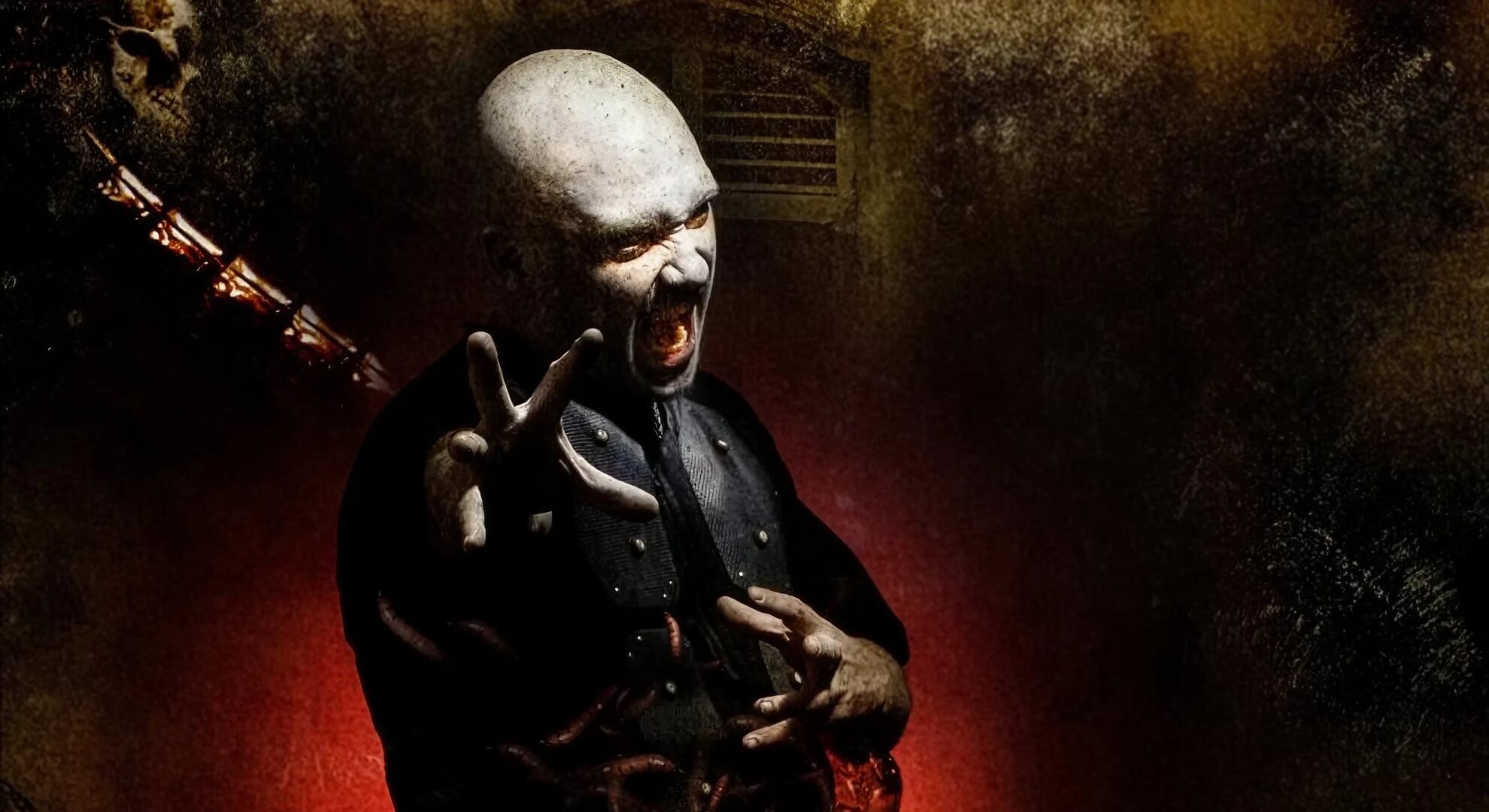


There is a particular gravity to a first encounter. Not the gravity of novelty, which dissipates quickly, but the gravity of something that has been anticipated long enough to take on the character of myth — an event the imagination has rehearsed so many times that its actual arrival feels less like a beginning than a completion. For the Bogotá black metal community, September 20, 2026 carries precisely that weight. On that night, at the Teatro Royal Center in the Chapinero district, Old Man’s Child performs in Colombia for the first time. So, simultaneously, does Hecate Enthroned. Two bands. Two separate histories of proximity deferred. One evening at the corner of Carrera 13 and Calle 66.
When this publication covered Old Man’s Child’s return to activity in June 2025 — documenting the announcement of their first new studio album in sixteen years and their inaugural live appearances since the early nineties at Sweden Rock, Tons of Rock, and Fire in the Mountains — the Latin American chapter had not yet been written.
The 2025 circuit was a necessary passage: a set of carefully chosen European stages on which Galder and returning original drummer Tjodalv reacquainted themselves and their audiences with what Old Man’s Child means as a live presence, distinct from what it has always meant as a recorded one.
The Return to the Throne Latin America 2026 tour is the next movement in that arc. It is not a detour or an addendum. It is the moment the reactivation becomes genuinely continental — when a project that spent decades existing primarily as a catalogue item for collectors outside Scandinavia finally submits itself to the physical reality of audiences who have been waiting, in some cases, since ‘The Pagan Prosperity’ was in rotation in Bogotá’s underground listening spaces during the late nineties.
Galder was unambiguous about the intention behind the return to activity when he announced his departure from Dimmu Borgir in August 2024. He noted that he had been considering the decision for years, and that “it is time for Old Man’s Child to get on stage again.” The phrasing is significant: not to record, not to release, but specifically to perform. The live dimension of the project had been the missing element for the better part of two decades, and its restoration — first in Europe, now in South America — constitutes the actual substance of the reactivation, beyond the new album itself.1
What Oslo Sends South
Old Man’s Child was never a representative of the Norwegian black metal mainstream, even when that mainstream was at its most internationally visible. The project emerged from Oslo in 1993 with a compositional temperament that prioritised melodic coherence and formal precision over the lo-fi rawness that characterised much of the second wave’s defining output.2
Where many of Galder’s Norwegian contemporaries found ideological significance in deliberate primitivism, Old Man’s Child invested in the structural possibilities of the genre — the interplay between symphonic keyboard arrangements and precise riffing, the discipline of constructing a song that could hold extreme aggression and melodic narrative in the same measure without either quality overwhelming the other.
That particular aesthetic position has always travelled well. It produced the kind of black metal that listeners could approach from the progressive metal tradition, from the classical end, or from the extreme underground, and find something that spoke to their specific entry point.
In Colombia, where extreme music audiences are characterised by an unusually broad historical and stylistic literacy — the product of three decades of sustained underground culture rather than casual commercial exposure — the Old Man’s Child catalogue has occupied a specific and cherished position. ‘The Pagan Prosperity’ and ‘Ill-Natured Spiritual Invasion,’ both confirmed for the Return to the Throne setlist rotation, are not obscurities to the crowd that will fill the Teatro Royal Center in September. They are touchstones, works that informed how younger Colombian musicians understood the relationship between melody and extremity.
The 2025 record, released through Reaper Entertainment after sixteen years of studio silence, now travels with the band to Bogotá as the newest term in that conversation. Its arrival on the Return to the Throne Latin America 2026 tour gives the Colombian performance a double function: a reclamation of the classic catalogue in the live setting, and a first introduction of the new material to an audience that did not have the European festival circuit as its point of access.
The Welsh Shadow, Twice Deferred
Hecate Enthroned’s journey toward September 20, 2026 is longer and stranger than Old Man’s Child’s. The band formed in Wrexham, Wales in 1993 — the same year Galder established his Norwegian project — under the name Daemonum before adopting both its definitive name and its symphonic black metal direction in 1995.
Their debut full-length, ‘The Slaughter of Innocence, a Requiem for the Mighty,’ released in 1997 through Blackend Records and produced by Andy Sneap, announced an aesthetic in which orchestral density and percussive brutality were not competing priorities but mutually intensifying ones.3 The keyboards on that record are not atmospheric decoration. They are load-bearing elements — the architecture of dread against which the blast beats acquire their full dramatic force.
Three decades of recording followed, from ‘Dark Requiems’ and ‘Unsilent Massacre’ through the 2019 album ‘Embrace of the Godless Aeon,’ without a single confirmed appearance in South America. The first attempt came in December 2012, when the band was scheduled to perform in Bogotá in what would have been their inaugural date on the continent. It was cancelled due to internal problems.
A rescheduled date for July 2015 collapsed a second time. The underground absorbed both cancellations in the way it absorbs most disruptions: with patience, with a sharpened sense of anticipation, and with a slightly more intense investment in the recordings that remained available.
The result, for the Colombian audience that receives Hecate Enthroned on September 20, is that this performance arrives carrying the weight of two false starts and eleven additional years. That is not a trivial burden. It gives the night a specific emotional texture — the feeling of something finally delivered after it has been owed for long enough that the debt has compounded.
Three Decades of Preparation
The community that gathers at the Teatro Royal Center in September did not assemble itself around events of this scale. It assembled itself across thirty years of smaller rooms, clandestine rehearsal spaces, and the slow accretion of underground knowledge that constitutes a genuine scene rather than a market.
Colombia’s relationship with extreme metal is inseparable from the socio-political conditions that gave it urgency. In the late eighties and nineties, Bogotá and Medellín offered young people a narrow set of institutional pathways — and beyond them, the informal economies of the armed conflict that defined the period.4
For a generation that refused all of those pathways, extreme music provided what nothing else could: a community structured entirely around aesthetic commitment, where the quality of your dedication to the music was the primary credential, and where the collective act of listening and performing was, in itself, a form of civic resistance.
Rock al Parque, the government-funded annual festival established in 1995, is the most visible institutional expression of that culture — a thirty-year democratic project that has gathered tens of thousands of metal devotees annually and forced the capital’s mainstream civic life to acknowledge the roqueros as a legitimate constituency. But the deeper structure of the Colombian extreme music scene is not in the festival. It is in the underground clubs of Chapinero and La Candelaria, the rehearsal rooms of Teusaquillo, the record stalls of the San Victorino market where imported black metal arrived before it arrived anywhere else in the region.
That infrastructure produced listeners of unusual depth — people who know not merely the albums but the pressings, not merely the singles but the EP tracks, not merely the band names but the specific lineage of personnel that connects one release to the next.
When a bill like Old Man’s Child and Hecate Enthroned is announced in Bogotá, it is this community that responds first and most intensely. The tickets sell not to casual attendees drawn by name recognition but to people who have been present in this culture for years, who understand exactly what this night represents, and who arrive at the Teatro Royal Center with the kind of accumulated preparedness that transforms a performance into something more than its parts.
The Chamber on Carrera 13
The Teatro Royal Center, situated at Carrera 13 No. 66-80 in Chapinero, is the venue that Bogotá’s contemporary extreme music ecology has built its most demanding programming around. Its acoustic design accommodates the precise requirements that both acts impose on a live space: the symphonic density that Hecate Enthroned’s layered keyboard-and-guitar arrangements require across the full frequency range, and the deliberate riff architecture that defines Galder’s compositions at every dynamic level, from the most delicate melodic passage to the most percussively driven assault.
The proximity of the audience to the stage in this room is a compositional force in itself — it ensures that the textural detail in both bands’ work registers physically, not merely as spectacle.

Doors open at 6:00 PM on September 20, with the performance beginning at 7:00 PM. Support acts had not been announced at the time of publication.
The night of September 20 does not deliver something that the Bogotá underground merely wanted. It delivers something it had earned, across three decades of sustained commitment to extreme music as a discipline and a community practice. Two bands that shaped the melodic and symphonic vocabularies of European black metal — one having spent the better part of thirty years existing without consistent live presence, one having attempted this continent twice before and failed both times — converge on a room in Chapinero at altitude, in the cool September night, before an audience that has never required proof of their significance and that arrives, finally, not to be convinced of anything but to be present for what was always coming.
Which of the two deferred absences — Old Man’s Child’s studio silence or Hecate Enthroned’s cancelled Colombian dates — shapes more profoundly how you approach the music you will hear on September 20?
References
- Deena Weinstein, ‘Heavy Metal: The Music and Its Culture,’ revised ed. (New York: Da Capo Press, 2000), 221–225. ↩︎
- Michael Moynihan and Didrik Søderlind, ‘Lords of Chaos: The Bloody Rise of the Satanic Metal Underground,’ revised ed. (Port Townsend: Feral House, 2003), 88–94. ↩︎
- Simon Reynolds, ‘Bring the Noise: Twenty Years of Writing About Hip-Rock and Hip-Hop’ (London: Faber and Faber, 2007), 318–322. ↩︎
- Alfredo Molano, ‘The Dispossessed: Chronicles of the Desterrados of Colombia,’ trans. Daniel Bland (Chicago: Haymarket Books, 2005), 44–49. ↩︎


Leave a Reply