


Vienna is a city where the grandeur of Mozart and Schubert coexists with the guttural intensity of modern metal. While the Musikverein and Vienna State Opera preserve the imperial past, the Vienna Metal Meeting Festival channels a parallel cultural current—equally committed to artistry, though forged in distortion and defiance. At the heart of this other Vienna, a cultural nexus for a global tribe, lies the Vienna Metal Meeting Festival, an annual one-day festival that has become a pilgrimage for devotees of heavy metal music from across Austria and beyond.
On October 4, 2025, this event will once again culminate at the Arena Wien, a venue whose own history of rebellion is as potent as the music it hosts. The festival, now a firm fixture in the European metal calendar, is more than a series of concerts; it is a declaration. It affirms the artistic depth of a subculture often misunderstood, revealing a Vienna that embraces both tradition and rebellion in distinct yet equally compelling forms. The Vienna Metal Meeting Festival is where the city’s profound history meets its roaring, defiant present.
A History of the Arena Wien
The Vienna Metal Meeting Festival’s identity is inextricably linked to its venue, the Arena Wien. Long before it hosted international rock legends and metal festivals, the sprawling complex in Vienna’s Landstraße district served a far more primal function.
Built in 1908, it was the St. Marx Auslandsschlachthof, a municipal slaughterhouse—a place of industrial efficiency and visceral reality. Its raw, functional purpose seems, in retrospect, a fitting overture for the unvarnished and often brutal music that would one day fill its halls.
The venue’s transformation from a place of slaughter to a cultural space was not a gentle evolution but a dramatic act of rebellion. By the mid-1970s, the slaughterhouse was largely derelict and slated for demolition. On June 27, 1976, following the final performance of a musical hosted on the grounds as part of the Wiener Festwochen, a group of activists, calling themselves the “Arenauten,” unfurled a banner that read “Hierbleiben ist Solidarität” (“Staying here is solidarity”) and occupied the buildings. Their protest was a direct response to the city’s lack of spaces for alternative and youth culture.
For a summer, the Arena became a sprawling, self-governing commune, a free zone with its own cinema, university, and community spaces, drawing thousands of participants and earning the praise of visiting artists like Leonard Cohen, who reportedly called it “the best place to be in Vienna.”
Though the city council eventually demolished most of the complex, the protest was a success. The activists secured the preservation of the former domestic abattoir, which became the modern Arena Wien. This history has imbued the venue with a powerful symbolic weight.
It stands today as Austria’s largest alternative cultural center, a non-profit, autonomous hub that is a testament to the 1970s and 1980s autonomous movements in Vienna. Its graffiti-adorned brick walls, its cavernous main hall, smaller indoor stages, and open-air courtyard create an atmosphere that is raw, authentic, and unapologetically counter-cultural—a fitting physical manifestation for the music of the Vienna Metal Meeting Festival.
This journey from industrial abattoir to rebellious commune to established cultural institution mirrors, in many ways, the trajectory of heavy metal itself. The genre’s origins were similarly raw and shocking to the mainstream, a visceral sound born in the industrial heartlands of England.
Like the Arenauten who occupied the slaughterhouse to carve out a space for their own culture, heavy metal was a subculture built by and for outsiders who felt unrepresented by popular music. And just as the Arena is now an indispensable and respected part of Vienna’s culture, heavy metal has evolved from a fringe movement into a globally recognized and artistically sophisticated art form with its own history, media, and institutions. The choice of venue, therefore, is not merely practical; it reflects the festival’s identity, connecting it to a history of defiance and cultural self-determination.
Forging an Austrian Identity in a Nordic-Dominated Scene
Since its first event in 2017, the Vienna Metal Meeting Festival has carved out a crucial space in the Austrian cultural calendar. It has grown from a new venture into a highly anticipated annual event, a “mainstay in the metal scene” that has proven resilient, even surviving the pandemic-era disruptions that forced a cancellation of its 2020 edition.
The festival’s success is built on a curatorial vision that consistently delivers diverse, high-caliber lineups, drawing fans from across the continent who arrive wearing hoodies from other major European festivals like Graspop and Eindhoven Metal Meeting, which indicates Vienna’s status as a key stop on the circuit.
The event does not exist in a cultural vacuum. While Austria may be more famous for its classical composers, it has its own distinct, if less globally prominent, heavy metal history. The scene has produced internationally respected pioneers, from the darkly humorous death metal of Pungent Stench in the late 1980s to the provocative blackened death metal of Salzburg’s Belphegor and the atmospheric, Tolkien-inspired black metal of Summoning. This local history provides a fertile ground from which the festival has grown.
However, the festival’s booking history shows a clear pattern: it serves as a major platform for bringing international acts—particularly from the dominant Nordic countries—to the Austrian capital. The lineups show an appreciation for the genre’s influential and often extreme artists.
Past headliners have included black metal pioneers Mayhem and thrash legends Sodom (2017), Abbath and Marduk (2018), progressive titans Opeth (2019), with the 2020 edition cancelled but previously scheduled to feature Paradise Lost and Satyricon. In 2022, industrial metallers Samael and Triptykon co-headlined. The 2023 edition brought together gothic metal legends Paradise Lost alongside Katatonia, and in 2024, death metal icons Cannibal Corpse took the top slot.
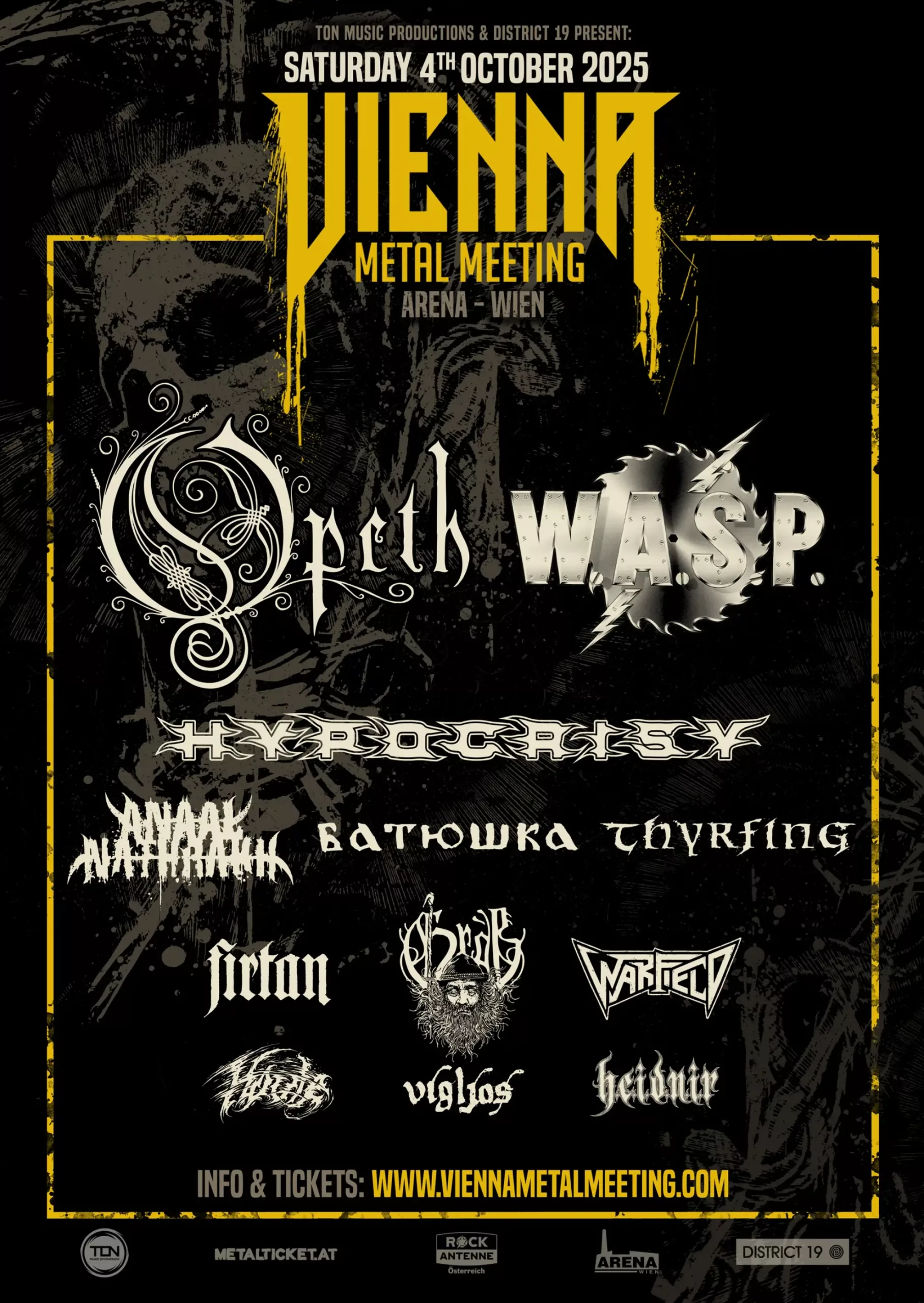
The 2025 edition follows this pattern. With Swedish bands Opeth and Hypocrisy headlining, and fellow Swedes Thyrfing also on the bill, the festival continues to bring international artists to Austria. This function is important. For a nation with a solid but smaller scene, the festival provides access to world-class artists without the expense of international travel, while simultaneously elevating the status of the domestic scene by placing Austrian bands, such as 2025’s black metal act Heidnir, on the same bill.
The Vienna Metal Meeting Festival thus contributes to Vienna’s historical identity as a European crossroads—a meeting point not just for empires and classical arts, but for contemporary currents of global subculture.
The Bulletin
Subscribe
Subscribe today and connect with a growing community of 613,229 readers. Stay informed with timely news, insightful updates, upcoming events, special invitations, exclusive offers, and contest announcements from our independent, reader-focused publication.
The Swedish Invasion: Profiling the 2025 Headliners
The 2025 lineup includes two prominent Swedish metal bands, Opeth and Hypocrisy. Both bands emerged from the Scandinavian extreme metal boom of the early 1990s, yet they have developed different and influential styles. Their co-headlining status offers a view of the artistic breadth that has made Sweden a notable country for metal music.
Opeth: The Alchemists of Progressive Metal
To speak of Opeth is to speak of the singular vision of its frontman, guitarist, and principal songwriter, Mikael Åkerfeldt. After joining the band shortly after its formation in Stockholm in 1990, Åkerfeldt has guided Opeth on a three-decade journey of relentless artistic evolution. What began as a death metal band soon became more complex and unclassifiable. Åkerfeldt’s approach fuses the sonic architecture of death metal with the spirit of 1970s progressive rock, incorporating elements of folk, blues, classical, and jazz.
The band’s discography contains a series of distinct artistic statements. Their 1995 debut, ‘Orchid,’ tested the boundaries of the genre with its inclusion of acoustic guitars, piano, and clean vocals alongside the expected metallic elements. The 2001 album ‘Blackwater Park,’ produced by Porcupine Tree’s Steven Wilson, was a critical breakthrough that combined light and shade, creating a work described as transcending the limits of blackened death metal.
Later, the band released 2011’s ‘Heritage,’ an album that completely abandoned the death growls that were once their signature in favor of a vintage, prog-rock sound.
This constant flux is a part of Opeth’s identity. A key feature is the dynamic shift—the transition from aggression to a moment of acoustic serenity. This duality is a component of their music, a sonic exploration of the idea that brutality and beauty are not opposites. Their performance in Vienna will feature material from their late-2024 album, ‘The Last Will and Testament,’ a work that saw the band re-embrace their heavier elements and growled vocals after 16 years.
Hypocrisy: The Architects of Alien Death Metal
While Opeth’s direction has been one of inward, progressive exploration, Hypocrisy’s has been an outward gaze into cosmic and paranoid themes. The band is the creation of Peter Tägtgren, a figure in the Swedish metal scene who is not only Hypocrisy’s leader but also a producer for other bands.
Formed in 1991, Hypocrisy began as a more traditional death metal act, with early lyrics focused on anti-Christian and Satanic themes. As the band matured, so did their sound and vision. They became associated with the melodic death metal style, but their thematic shift set them apart. Tägtgren turned his lyrical focus from earthly blasphemy to extraterrestrial subjects, writing about alien abductions, government cover-ups, and paranormal phenomena. Songs like ‘Roswell 47’ from their 1996 album ‘Abducted’ established this identity.
Hypocrisy’s sound is atmospheric and groovy, defined by memorable riffs and Tägtgren’s versatile vocals. After an eight-year hiatus from recording, the band released the album ‘Worship’ in 2021. Their performance in Vienna will demonstrate their place in the metal genre.
A Choir of Sounds: The Richness of the Undercard
While the Swedish headliners are a main draw, the Vienna Metal Meeting Festival includes a diverse undercard. The 2025 lineup presents many facets of metal, from American showmen to British nihilists and bands with lyrical themes about cursed swords and medieval bees.
Providing a different style from the European extreme metal acts are the American shock-rock group W.A.S.P.. Emerging from the Los Angeles scene in the early 1980s, the band, led by Blackie Lawless, became known for their theatrical live shows and controversial lyrics. Their conflicts with the Parents Music Resource Center (PMRC) in the mid-80s were a point of contention in the culture wars over music censorship. Their sound—a blend of heavy metal and glam rock theatrics—is from a different era of metal history, one defined by spectacle and a more flamboyant style of rebellion.
At another end of the spectrum is Anaal Nathrakh, a British duo whose music is extreme. Comprising multi-instrumentalist Mick Kenney and vocalist Dave Hunt, the band creates an intense and dense sound, fusing black metal and grindcore with industrial music. Their lyrical themes are bleak, exploring war, misanthropy, and a philosophical nihilism that opposes Enlightenment values—a concept they explored on their 2020 album, ‘Endarkenment.’
Another band on the bill is the Polish group Batushka. The group appeared on the scene in 2015 with a specific aesthetic, using the rituals, vestments, and Old Church Slavonic language of the Eastern Orthodox Church to create a form of black metal that was both blasphemous and reverent. Their public image was affected by a dispute between the band’s founder, Krzysztof “Derph” Drabikowski, and its then-vocalist, Bartłomiej Krysiuk, which resulted in two competing versions of the band.
The Vienna Metal Meeting’s billing of “Krzysztof Drabikowski’s Батюшка” is a specific choice. In a conflict that has divided fans, the festival has sided with the artist widely seen as the project’s creator, a position supported by legal rulings that led Krysiuk’s version to officially adopt the new name Patriarkh in late 2024. This decision shows an understanding of the scene’s internal politics and a choice that reflects the subculture’s value of artistic integrity over brand recognition. This curatorial choice indicates the festival’s position within the community it serves.
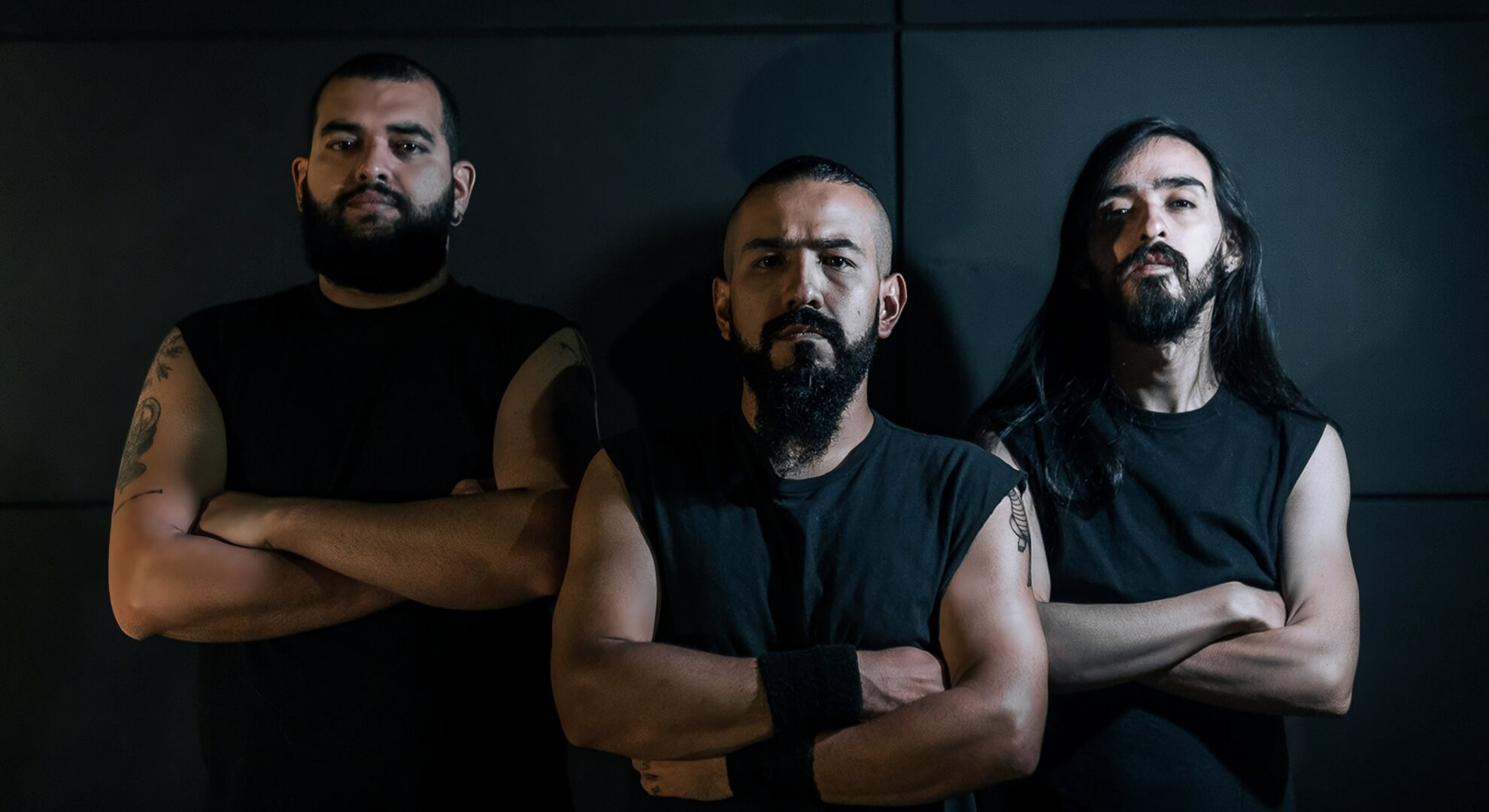
The lineup also includes bands that draw from mythology and esoteric history. Sweden’s Thyrfing takes its name from the cursed royal sword of Norse mythology, basing their Viking metal in the ancient tales of their homeland. In contrast, the Swiss band Vígljós, formed in 2023, finds inspiration in other parts of history.
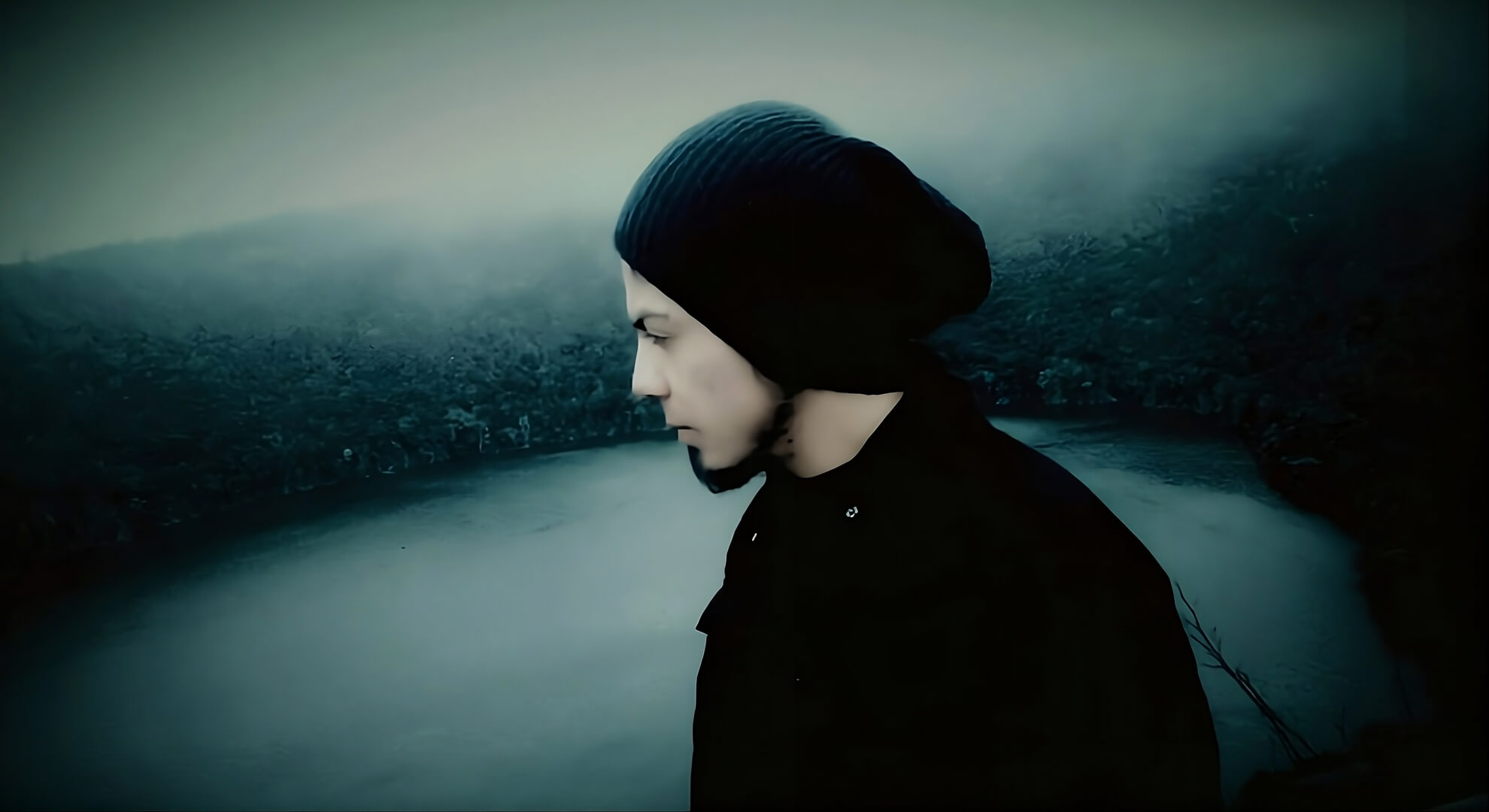
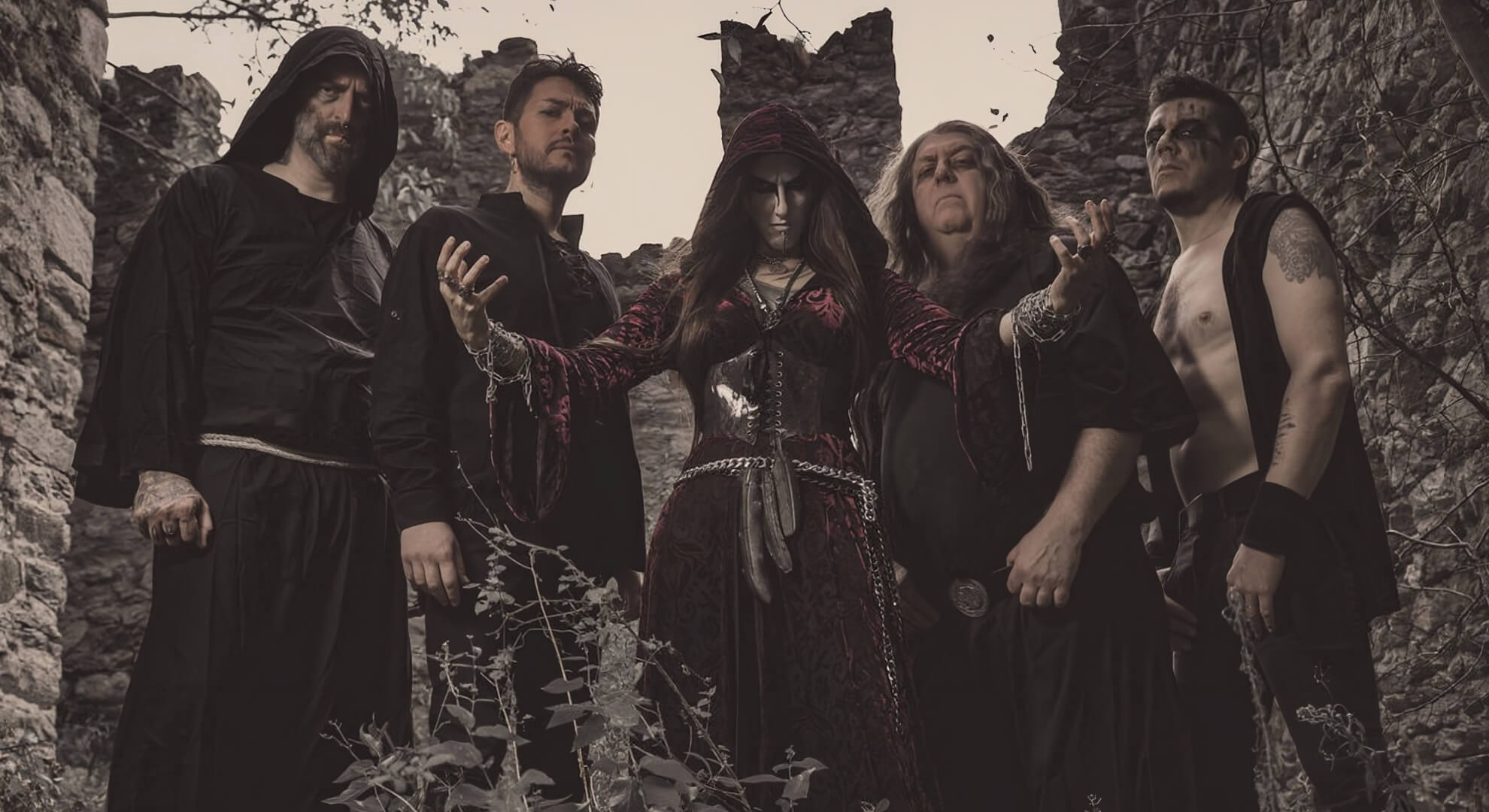
Their conceptual work covers medieval beekeeping on their debut ‘Tome I: Apidæ’ and the historical phenomenon of ergot poisoning (or “St. Anthony’s Fire”) on their upcoming album ‘Tome II: Ignis Sacer.’ This focus on unusual subjects, alongside the nautical black metal of France’s Houle and the thrash metal of Germany’s Warfield, shows a global genre that is creative and intellectually curious.
Conclusion
In the city of waltzes and opera, the Vienna Metal Meeting Festival presents a different kind of music. The music consists of roaring guitars, intricate drum patterns, and voices that tell tales of cosmic horror, ancient myths, and human philosophy. Held in a venue born from a defiant act to preserve culture, the festival is an expression of an art form that has developed from its origins into a diverse global movement.
The 2025 edition, with its diverse billing, affirms heavy metal’s place within Vienna’s broader cultural landscape—not as an adversary to its classical image, but as a contemporary expression that draws from its own history, symbolism, and creative integrity.
The Vienna Metal Meeting 2025 will be held on Saturday, October 4, 2025, at the Arena Wien, located at Baumgasse 80, 1030 Wien, Austria. Check-in for the event begins at 2:30 PM, with performances scheduled to start at 3:30 PM.
General admission tickets are available starting from €99.00 (approximately $107 USD) and can be purchased online through the official festival website, or via authorized sellers like Metalticket.at. At present, no festival-wide VIP packages have been announced.
Patrons should be aware that individual artists on tour sometimes offer their own VIP meet-and-greet upgrades, which are sold separately from festival admission. Attendees should consult the official Vienna Metal Meeting website for any updates regarding premium ticket options as the event date approaches.
Support
Independent
Journalism
Fund the voices Behind Every Story
Every article we publish is the product of careful research, critical reflection, and stringent fact-checking. As disabled individuals, we navigate this work with unwavering dedication, poring over historical records, verifying sources, and honing language to meet the highest editorial standards. This commitment continues daily, ensuring a consistent stream of content that informs with clarity and integrity.
We invite you to support this endeavor. Your contribution sustains the work of writers who examine their subjects with depth and precision, shaping narratives that question assumptions and shed light on the overlooked dimensions of culture and history.
Donations are processed through an in-kind sponsorship model powered by Paymattic—a secure, reliable donations plugin that enables direct support for our ongoing editorial work.
Leave a Reply