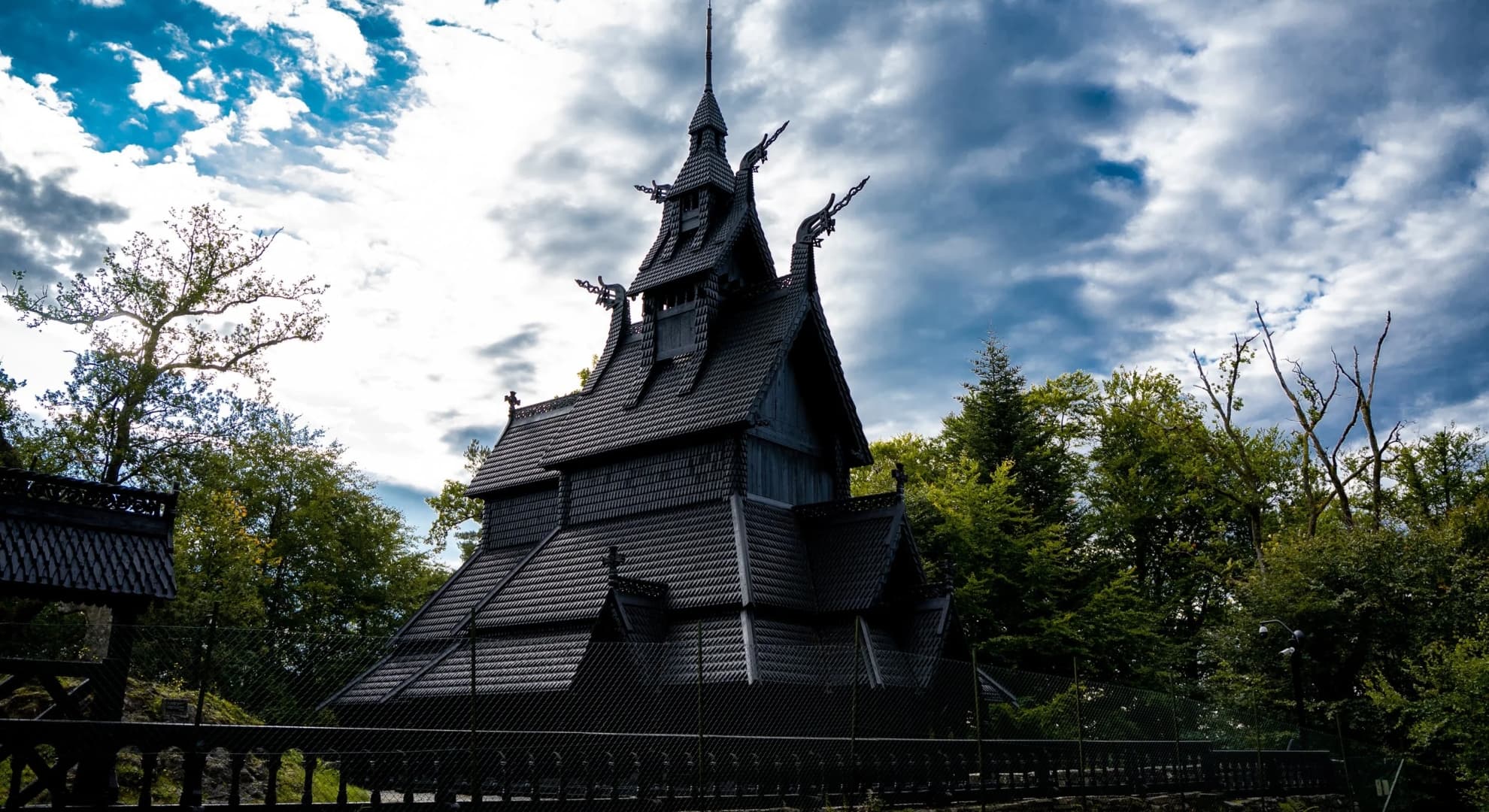


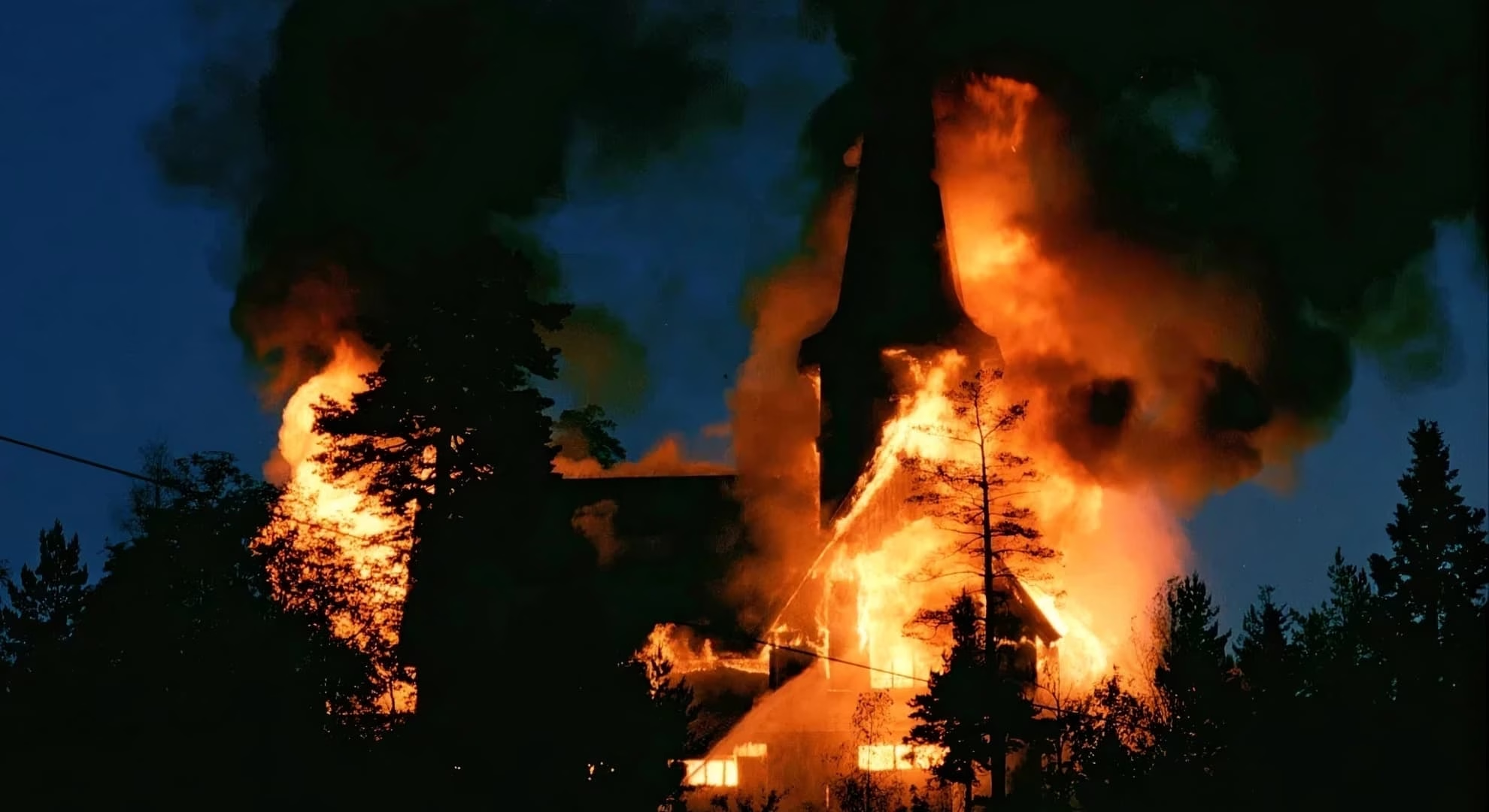
Just after midnight on June 6th, 1992, a wooden structure 6 kilometers from central Bergen caught fire; firefighters reached the scene within about two minutes of being alerted, but the tar-pitched timber caught immediately, and the structure burned to the ground within roughly half an hour. Investigators first suspected lightning.
Norway’s stave churches are tarred black with pine pitch and centuries old in places, and a single spark left too long in a corner has taken down more than one of them. The structure at Fantoft had survived 700 years and one relocation across the country. It did not survive that night.
A Church Moved Twice
The church that burned that night was not, strictly, of Fantoft at all. It was raised around the year 1150 in Fortun, a farming settlement near the eastern end of Sognefjord, and it served that parish for more than 700 years.
A newer church went up beside it in 1879, and the old timber frame stood empty, threatened with demolition. It was one of hundreds of medieval stave churches Norway lost or nearly lost to that same fate across the nineteenth century.
Consul Fredrik Georg Gade bought it in 1883 rather than watch it fall. He had it dismantled at Fortun, shipped down the coast, and reassembled on his own estate at Fana, outside Bergen, where the settlement of Fantoft takes its name from an old farm on the same ground.
The rebuild was not a plain copy. Gade’s carpenters borrowed decorative elements from Borgund, Norway’s most complete surviving stave church, giving Fantoft a set of dragon-head gables and carved portals that its Fortun original may never have carried in quite that form.
The construction technique itself predates either building campaign. Vertical pine posts, or staves, are pegged rather than nailed into ground sills raised on a low stone foundation, keeping the timber clear of soil moisture, a method that lets the frame flex under snow load and settling ground.
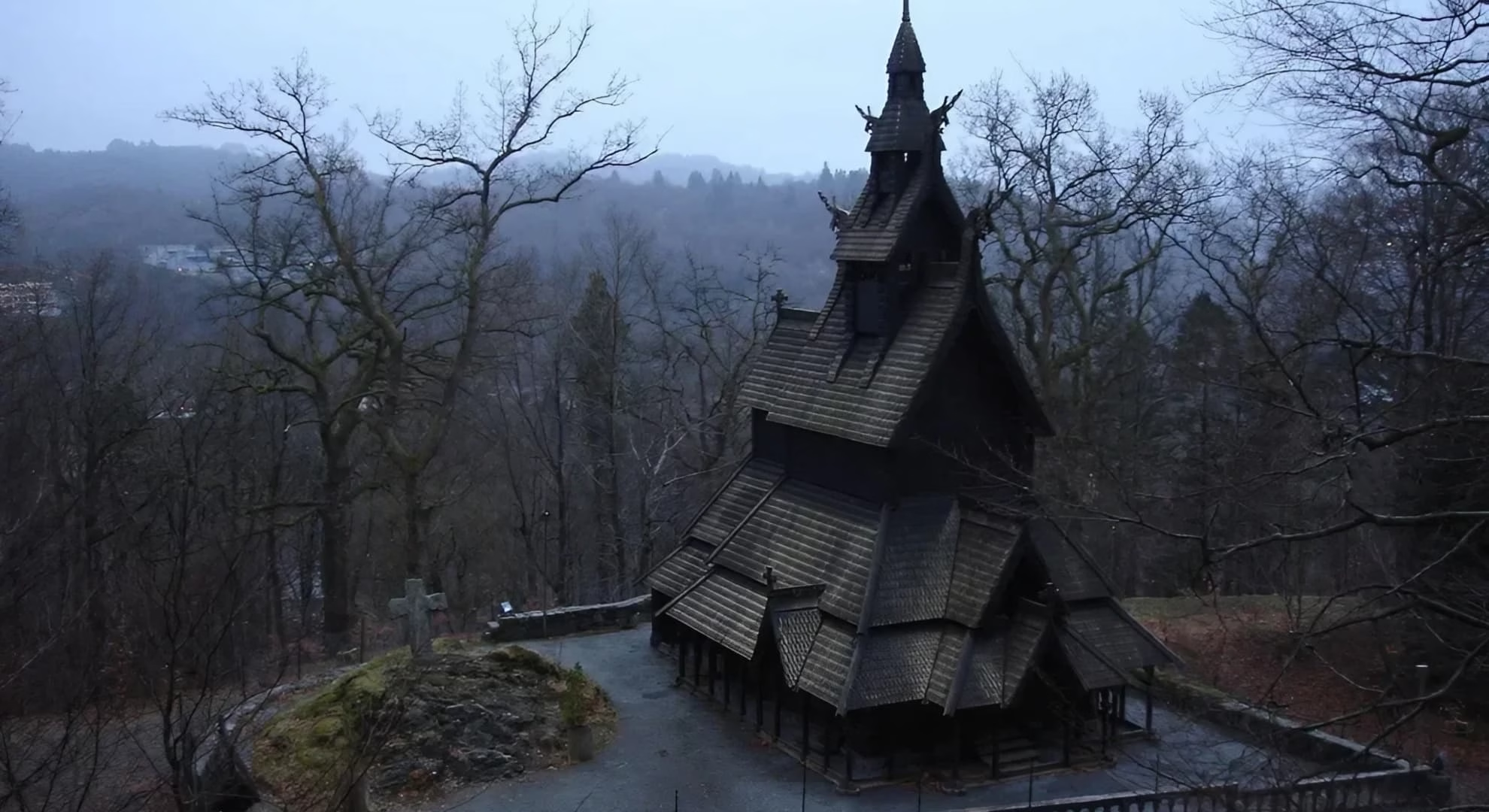
Fantoft’s nave holds five bays of paired staves beneath a raised central roof, placing it among the more elaborate stave-church types rather than the single-nave form used in smaller parish churches.
Inside, the nave narrows into a three-aisled space lit only by small openings set high in the walls, seating a few dozen worshippers at most. Carved wooden arches and columns, their motifs blending Christian and pre-Christian ornament, separate the nave from a chancel at the eastern end, where the crucifix, one of the few elements to survive the 1992 fire largely intact, still stands over the altar.
For more than a century afterward, the tarred, tiered profile at Fana stood as one of the country’s most visited stave churches, its steep shingled roofs stacked one above another, the ground approach lined by birch and a single stone cross that predates the church itself.
The site sits on a modest forested rise in the Fana borough, set back from the road and reached on foot, several kilometers removed from the harbor that shaped central Bergen’s own history. None of that history required an audience to imagine anything. It required only that the structure remain standing, which after 1992 it briefly did not.
The Night of June 6th
Investigators found no suspect for seven months. In January 1993, Kristian “Varg” Vikernes, a musician recording under the name Burzum, came under suspicion after giving an anonymous interview to the newspaper Bergens Tidende in which he claimed knowledge of the fire.
A jury later declined to convict him specifically for the Fantoft fire, though the acquittal did not extend to the three further church arsons a court found him guilty of two years afterward.
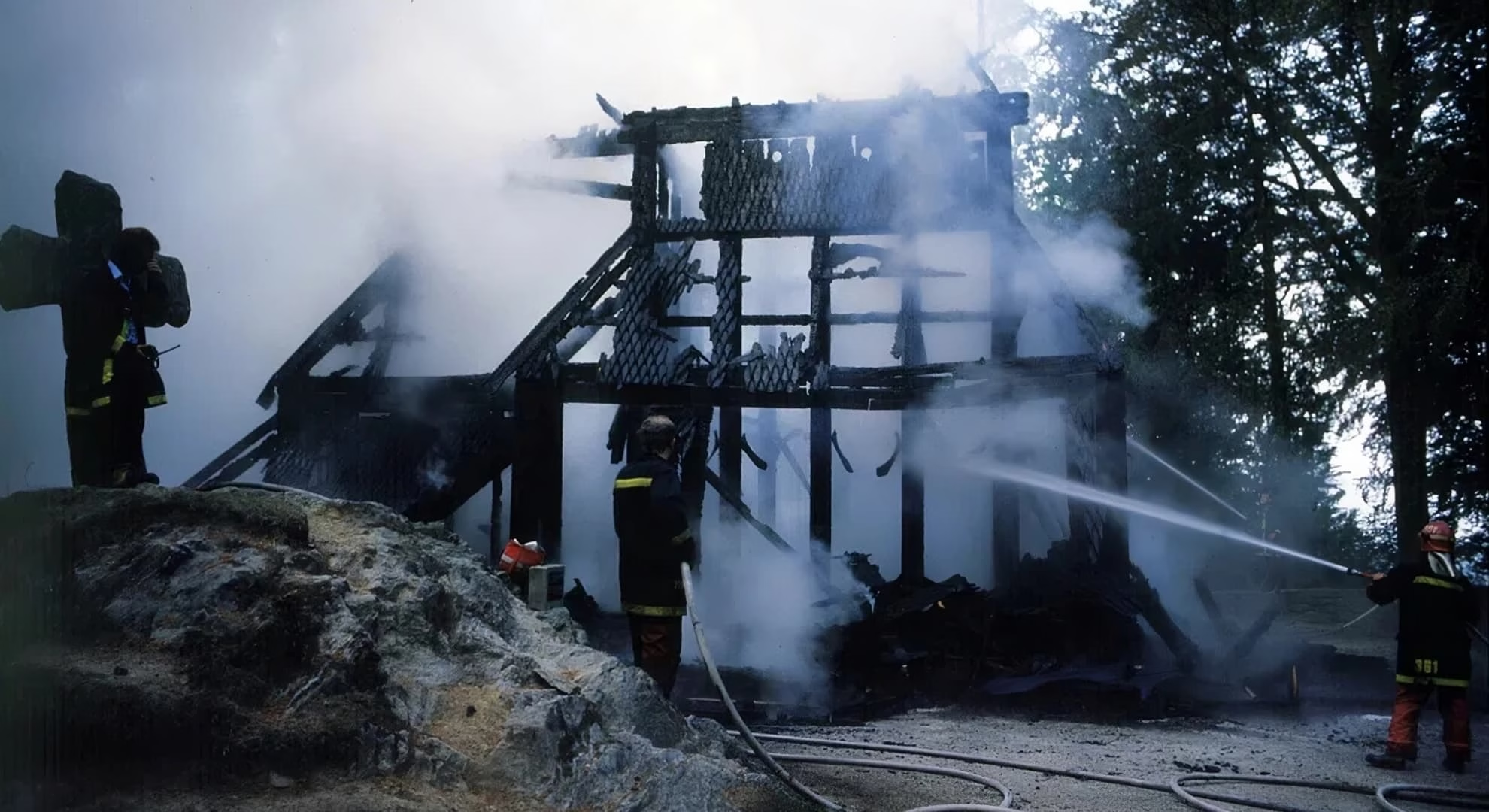
A photograph of the charred frame, taken before any clearing began, became the cover image of Burzum’s 1993 release ‘Aske,’ Norwegian for ashes.
What stands at Fantoft today asks a documentary question that a reconstruction always raises. A visitor is looking at timber cut and shaped after 1992, on a plot the church had occupied for only a little over a century when the fire happened, in connection with a killing that took place in an Oslo apartment more than a year later and hundreds of kilometers away.
The site’s claim on a traveler’s attention rests less on anything that occurred at this specific plot of ground than on the arson-and-homicide network that radiated outward from it across four years of Norwegian black metal.
A Horg Nobody Confirmed
Vikernes offered his own justification to the writers Michael Moynihan and Didrik Søderlind, describing Fantoft as sitting atop a horg, a pagan stone altar, desecrated when a cross and a nave were raised over it centuries earlier.1
Burning the church, in his account, was a way of clearing Christian material to see what he claimed was the older, buried belief system it had displaced.
Norway’s heritage authorities never considered that claim as an archaeological proposition, and the timeline explains why.2 The church had stood at Fana for barely 100 years by 1992.
Whatever horg Vikernes believed himself to be avenging, if it existed at all, belonged to Fortun, roughly 300 kilometers away, not to the private estate where a consul’s relocated frame happened to be standing. The justification borrowed the language of reclaimed ground for a plot that had never held the ground in question.
50 Fires After Fantoft
Fantoft was the first of at least 50 attacks on Norwegian churches recorded between 1992 and 1996, a small number of them accidental or unrelated, most attributed to members or admirers of the same scene. Revheim Church in Stavanger burned that August. Holmenkollen Chapel in Oslo followed 20 days later, then Ormøya, Skjold, Hauketo, and Åsane.
A court convicted Vikernes in 1994 of setting three of those fires, of an attempted fourth, and of storing 150 kilograms of stolen explosives.
Scholarship on the period has traced the arsons to a wider argument the scene was making about Norwegian identity, one that framed Christianity as a foreign imposition on an older, ethnically bounded past and treated church burning as a symbolic act of national restoration rather than simple vandalism.3
On August 10th, 1993, that argument turned lethal in a different city. Vikernes stabbed the Mayhem guitarist Øystein Aarseth, known as Euronymous, 23 times in Aarseth’s own Oslo apartment.
Fantoft supplied the image that made the scene notorious. The killing that made it a criminal case happened somewhere else entirely, a distinction the reconstructed church cannot physically hold in one place for a visitor to see.
Six Years to Reassemble
Reconstruction began within weeks of the fire and took until 1997 to finish, a longer span than the original relocation itself. Nobody in Norway had raised a stave church using traditional joinery in several centuries, so much of the technical knowledge had to be recovered from surveys and photographs rather than living practice.
Carpenters selected pine between 350 and 400 years old, felled at roughly 400 meters of elevation near Kaupanger, on the theory that slow-grown, high-altitude timber would weather the way the original stock had.
Almost nothing of the pre-1992 structure survived to be reused. A wishing stone set into one wall and the altar’s cross, both spared by the fire, remain the only physical continuity between the church a visitor sees today and the one that burned. Since the reconstruction’s completion, a security fence has stood around the grounds, a permanent, unglamorous acknowledgment that the site the fence protects is understood to remain a target.
The Ethics of Standing Here
A visitor drawn to Fantoft by its place in black metal’s history is engaging with a killing that a released, still-living man committed against another named person, not with a distant medieval atrocity safely sealed behind centuries. Vikernes served just over 15 years, was released in 2009, and now lives in France under a changed legal name.
Aarseth’s family, and the Fana congregation that worships in the rebuilt nave, continue to live alongside a story that outside visitors arrive to consume as a chapter in music history.
The distinction worth holding onto is not between interest and disinterest. It is between attention that engages the documented record, the conviction, the acquittal, the convicted arsons elsewhere, and attention that treats a real killing as decorative material for a subculture’s mythology.
The church itself offers no ambiguity on the point. It is a rebuilt place of Lutheran worship, not a monument to the man who destroyed its predecessor, and it hosts services with no reference to the events that made it recognizable outside Norway.
Visiting an Absence
Dark tourism scholarship distinguishes sites by the intensity of their connection to actual death, ranging from locations where the events themselves occurred to sites that merely commemorate distant suffering. Fantoft sits at an unusual point on that scale.
It is not a grave, and its reconstruction means it is not even the physical fabric that burned. What it offers instead is closer to a monument that predates its own commemorative purpose.
That structure was raised for one reason around 1150, rebuilt for an entirely different reason in 1997, and now serves as the fixed point around which a scattered, undocumented set of crimes across four years and multiple cities gets organized into something a traveler can stand in front of.
That is a specific kind of pull, distinct from the appeal of an actual crime scene or an unaltered ruin. A visitor to Fantoft is not confronting evidence. A visitor is confronting the choice an entire country made to rebuild, in six years and at real expense, the single object that a subculture had turned into its founding image, and to keep worshipping inside it regardless.
The Absence Fantoft Guards
I have not stood inside the fence at Fana, and I want to be precise about what that limits me to arguing. What the documented record supports is narrower than the subculture’s own account of itself.
A fire whose motive rested on a claim about ground the church had not occupied for even a full century. A wave of further arsons that spread across a country far larger than any single congregation’s grievance. A killing that happened somewhere else, to someone else, for reasons the arsons alone do not fully explain.
Fantoft’s reconstruction did not settle any of that. It simply gave visitors somewhere physical to stand while they worked out what they thought they were looking at.
That may be the closest thing to an honest answer dark tourism can offer here. The impulse to travel toward a site like this one is not always an impulse toward the past at all. Sometimes it is an impulse to locate a fixed point for events that never had one, and to accept that the point provided will always be, in some measure, a substitute.
Have you visited a reconstructed site whose story turned out to belong somewhere else, and did standing at Fantoft, or a place like it, change how you weighed the difference between a rebuilt monument and an actual scene?
Tourism Partnership
We reach an audience that travels with intention — drawn to documented history, dark heritage, and the cultural weight of the places they seek out. If you operate tours, cultural experiences, accommodation, or heritage sites aligned with that ethos, we would like to hear from you. We consider partnerships with tour operators, travel agencies, hostels, hotels, museums, and any organization whose work engages seriously with dark tourism, gothic culture, or historical travel. We do not promote services we cannot stand behind editorially. Reach us through our Contact page.
- Michael Moynihan and Didrik Søderlind, ‘Lords of Chaos: The Bloody Rise of the Satanic Metal Underground’ (Los Angeles: Feral House, 1998), 89, 156. ↩︎
- Thomas J. T. Williams, ‘A Blaze in the Northern Sky: Black Metal and Crimes Against Culture,’ Public Archaeology 11, no. 2 (2012): 59–72. ↩︎
- George Ananchev, ‘Black Metal and Notions of Norwegian Identity: A Brief Review of Current Scholarship from a Geographic Perspective’ (University of Wisconsin–Milwaukee, 2012). ↩︎
Leave a Reply