


Extreme metal festivals routinely borrow the imagery of a genre’s darkest corners without holding any lived claim to them. Bergen offers the rarer case of a festival staged inside the actual geography its music once shook, its venues sitting minutes from the same fjord-side streets that produced Norwegian black metal’s most infamous chapter. That proximity is not a marketing flourish; it is the argument the festival renews with every edition.
Beyond the Gates convenes in Bergen from July 29th through August 1st, 2026, marking its 14th chapter since the festival succeeded Hole in the Sky in 2012, a predecessor that had run twelve consecutive editions from 2000 before ending deliberately with a farewell edition in 2011. Pandemic-era cancellations absorbed one chapter number without a physical festival taking place, so the count of editions actually held stands at 13 rather than 14.
Four days unfold across three rooms within walking distance of each other: USF Verftet, a converted sardine cannery on the harbor; Grieghallen, the concert hall where several formative Norwegian black metal albums were tracked during the nineteen-nineties; and Kulturhuset, which houses the festival’s club-level day and night programming.
Faust and Mortiis Return
Emperor’s Saturday performance carries weight beyond its headline slot. Grieghallen will host a one-time reunion featuring two former members, drummer Bård Faust Eithun, who played on 1994’s ‘In the Nightside Eclipse,’ and original bassist Håvard Mortiis Ellefsen rejoining Ihsahn and Samoth for the set, festival organizers confirmed.
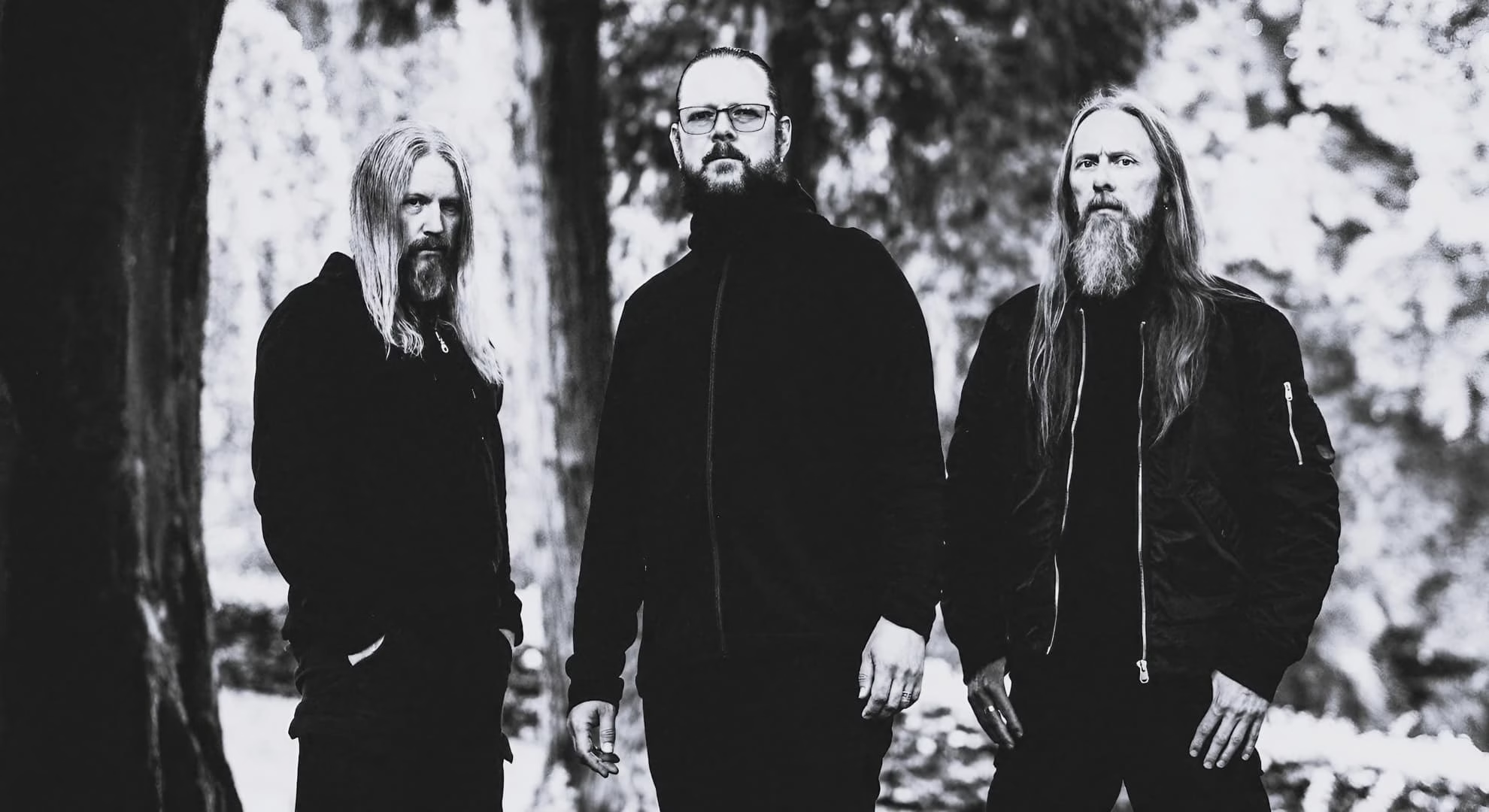
Ellefsen played bass in Emperor from 1991 to 1992 and co-wrote lyrics for two of the album’s tracks before departing to build Mortiis, his own dark ambient project; Terje Tchort Vik Schei recorded the album’s actual bass parts after Ellefsen’s exit. Meanwhile, Eithun served a prison sentence in the nineteen-nineties connected to a killing tied to the same Norwegian black metal circle before later resuming musical work. Neither has held a standing role in Emperor for three decades, making Saturday’s configuration closer to a one-time historical assembly than a touring reunion.
The booking follows Emperor’s spring 2026 Emperial Wrath tour of North America, on which Blood Incantation, also booked for this year’s Friday bill at Grieghallen, served as direct support.
In a recent interview, Ihsahn described revisiting the band’s earliest material as a return to the unguarded instinct of the sessions that produced ‘In the Nightside Eclipse,’ though he stopped short of confirming any new Emperor recording, a question he has deflected for two decades.
Thrash Meets the Source
Testament opens the festival on Wednesday at USF Verftet, the Bay Area thrash veterans sharing a bill otherwise built from black metal repertoire. The pairing argues something specific about how Beyond the Gates positions American thrash’s mid-eighties lineage alongside Scandinavian black metal, treating the two as parallel extremities rather than separate traditions.
Nergal of Behemoth performs the same night with Misþyrming, the pair reconstructing Behemoth’s 1995 album ‘Sventevith’ in full, a one-time collaborative rendering rather than a standard reunion booking. Rotting Christ and Spectral Wound round out the evening, extending the night’s reach from Greek to Canadian black metal without leaving the genre’s core register.
Doom’s Slowest Register
Electric Wizard headlines Thursday, the English doom act’s crawling tempo and occult sleaze sitting at doom’s furthest remove from black metal’s blast-beat velocity. Beherit, the Finnish act whose early recordings helped define war metal’s deliberately degraded production standard, and 1349, Oslo’s own blast-driven veterans, share the same night.
Stretched across a single evening, the bill covers doom’s slowest tempo and black metal’s fastest without treating either register as the exception. Warning and The Ruins of Beverast fill the remaining slots, both acts working slower, more atmospheric variations that sit closer to Electric Wizard’s end of the night than to 1349’s.
Death Metal’s Wider Orbit
Friday belongs to Blood Incantation and Marduk at Grieghallen. Blood Incantation’s death metal draws as heavily on progressive structure and cosmological lyric content as on genre orthodoxy, the Denver act’s crossover attention extending well past death metal’s usual circulation.1
Marduk, the Swedish black metal band active since 1990, represents the genre’s more militarized wing, precise and unyielding where Blood Incantation is exploratory. Whoredom Rife and Misotheist complete the night, both drawing on the same militarized current Marduk has occupied for three and a half decades.
The Ornate Return
Saturday closes with Emperor, Alcest, Arcturus, and Gaahls Wyrd at Grieghallen, a night weighted toward the symphonic and atmospheric edges of black metal’s original Norwegian generation. Emperor formed in Notodden in 1991 and remains among the genre’s most influential exponents of orchestral ambition, their presence anchoring Saturday’s turn toward the ornate rather than the raw.
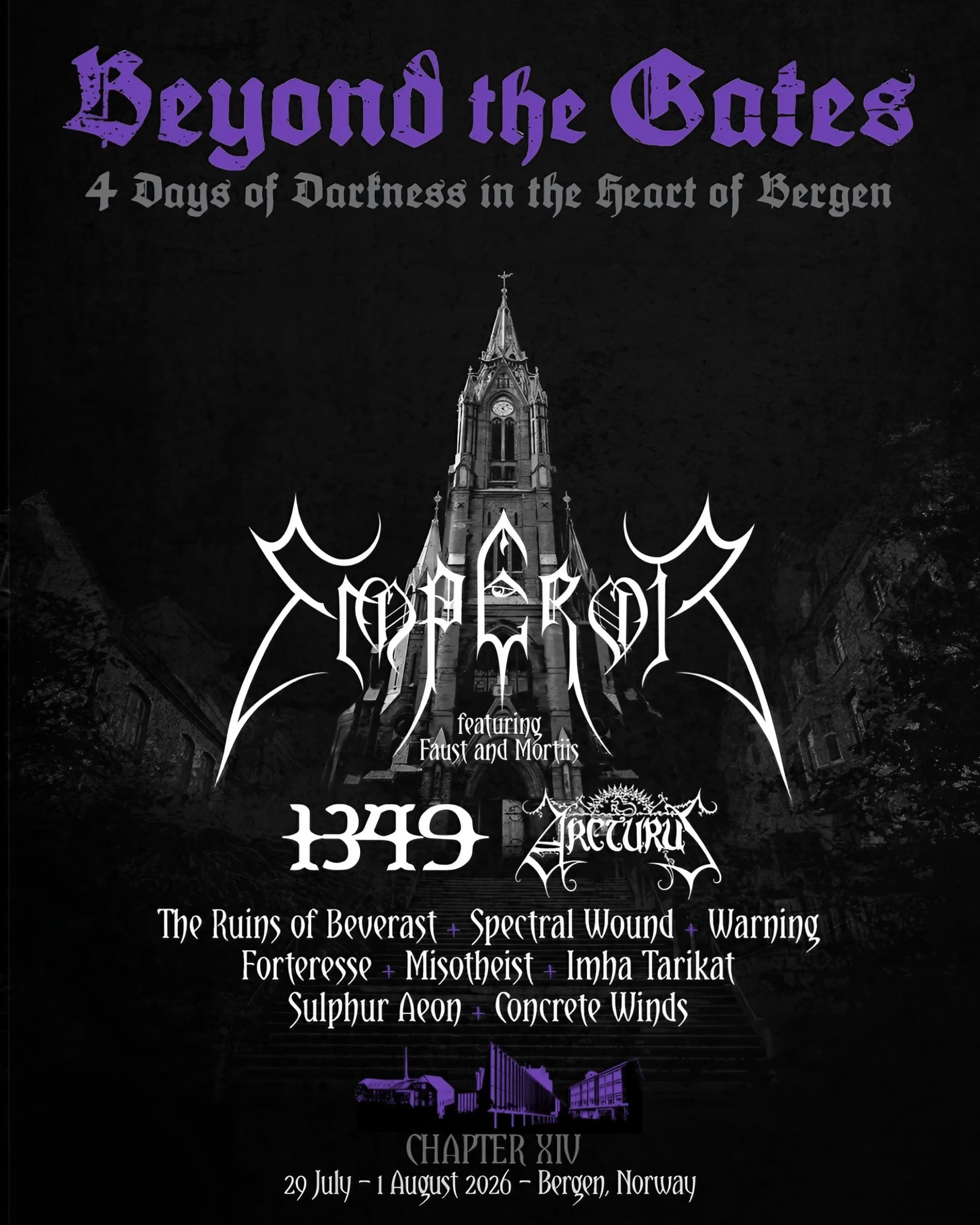
Alcest extends the same ornamental thread from a different direction, its blend of black metal texture and shoegaze melody drawing an audience that rarely overlaps with Beherit’s the night before.
Gaahls Wyrd, led by Kristian Gaahl Espedal of Gorgoroth, ties Saturday directly to Bergen’s own black metal history. Espedal’s documented role in the city’s early nineteen-nineties scene predates the festival by two decades, giving his booking a different weight than a simple headline slot.2
Arcturus, whose avant-garde black metal has moved through orchestral and jazz-inflected phases since the late nineteen-eighties, closes the ornamental case Saturday makes for itself.
Beneath the Marquee
Castle Rat’s booking beneath the top of the bill signals a curatorial interest reaching past extreme metal’s established camps. The New York act works a theatrical doom and heavy rock hybrid built around a fantasy stage persona, an aesthetic closer to occult rock revivalism than to blast-beat lineage.
Its inclusion alongside Rotting Christ, the Greek black metal band active since 1987, suggests a bill willing to place newer, genre-adjacent acts next to acts whose history predates the festival itself.
A Notable Absence
Mayhem headlined Beyond the Gates in 2019 alongside Watain, Emperor, and Abbath, then returned in 2022 to perform ‘De Mysteriis Dom Sathanas’ in full at Grieghallen alongside Emperor’s and Enslaved’s own classic-album sets, and again in 2024 for a fortieth-anniversary show. Mayhem does not appear on the confirmed 2026 bill.
Emperor returns without them this year. Gaahl’s presence in Gaahls Wyrd keeps a genuinely Bergen-rooted voice on the bill, but Mayhem’s absence still removes the Oslo-formed band most closely tied to Grieghallen’s own recording history from a festival built around exactly that history.
The Cost of Entry
Admission runs through a 4-Day Festival Pass offered in Gold and Silver tiers, the Gold tier granting access to Kulturhuset’s day and night club programming in addition to the main stages at USF Verftet and Grieghallen. Single-day tickets are sold separately for each of the four dates, tied to whichever venue hosts that night’s program.
Exact 2026 pricing was not independently confirmable through public sources at the time of writing. Current rates are listed through the festival’s official ticket outlets and through Ticketmaster Norway.
Ash and Timber
Fantoft Stave Church stands a short ride on the Bergen Light Rail from the city center, a wooden church built around 1150 and moved to its current site in 1883.
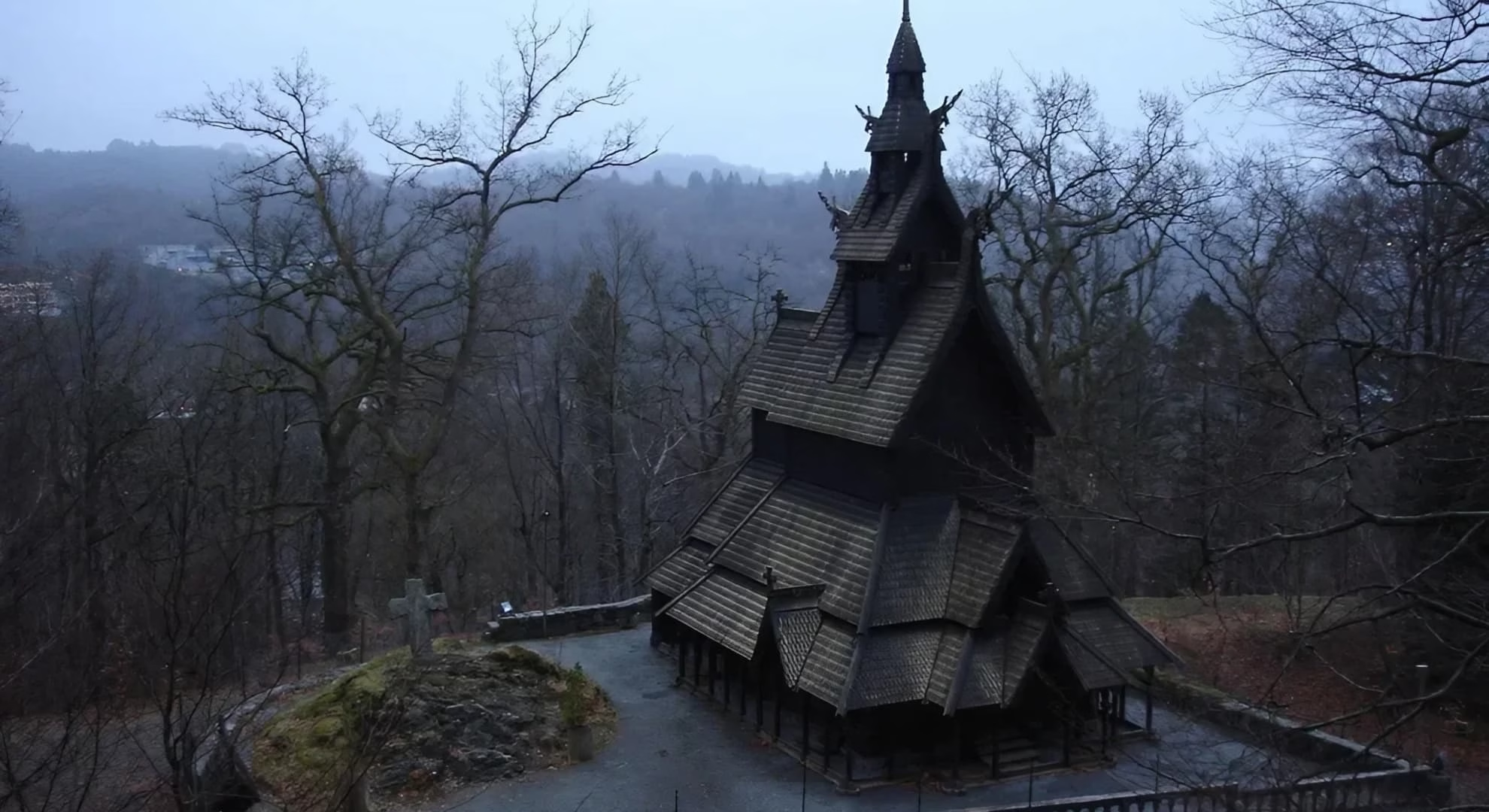
On June 6th, 1992, the church burned to the ground in an arson later tied to the early Norwegian black metal scene, the same scene whose members and successors populate several corners of this year’s bill. It was rebuilt using traditional joinery methods and reopened in 1997.
The building’s history complicates any easy visit. Its charred first incarnation became an object of fascination and imitation within the scene it was tied to, and what remains today is a careful, publicly accessible reconstruction of a medieval building destroyed for reasons the festival’s own lineup continues to reference, directly and indirectly, three decades later. This publication’s fuller treatment of the church’s history and its place in black metal’s own mythology goes further into that history than this section allows.
Standing before Fantoft does not resolve the tension between a genre’s documented history and its ongoing musical output. It does make that tension physically legible in a way no stage set can, the rebuilt timber a visible record of a moment black metal’s mythology returns to often and rarely explains.
Where the Timber Still Stands
Bergen’s relationship to its own black metal history is not incidental background for Beyond the Gates; it is the condition that makes the festival’s international bookings mean something more specific than a shared genre tag.
Testament’s thrash, Electric Wizard’s doom, and Blood Incantation’s cosmological death metal all play a city that produced a chapter of extreme metal’s history the genre has never fully absorbed or renounced.
The 14th chapter does not resolve that history. It simply continues to stage international extremity inside the place where one of the genre’s founding ruptures actually happened, four nights running, without treating the two as separable.
Does hosting an international extreme metal bill inside the specific city where Norwegian black metal’s most notorious moment took place change what audiences owe that history, or does the music travel independently of the ground it plays on?
References
- Michelle Phillipov, ‘Death Metal and Music Criticism: Analysis at the Limits’ (Lanham: Lexington Books, 2012), 88–93. ↩︎
- Dayal Patterson, ‘Black Metal: Evolution of the Cult’ (Port Townsend: Feral House, 2013), 210–215. ↩︎

Leave a Reply