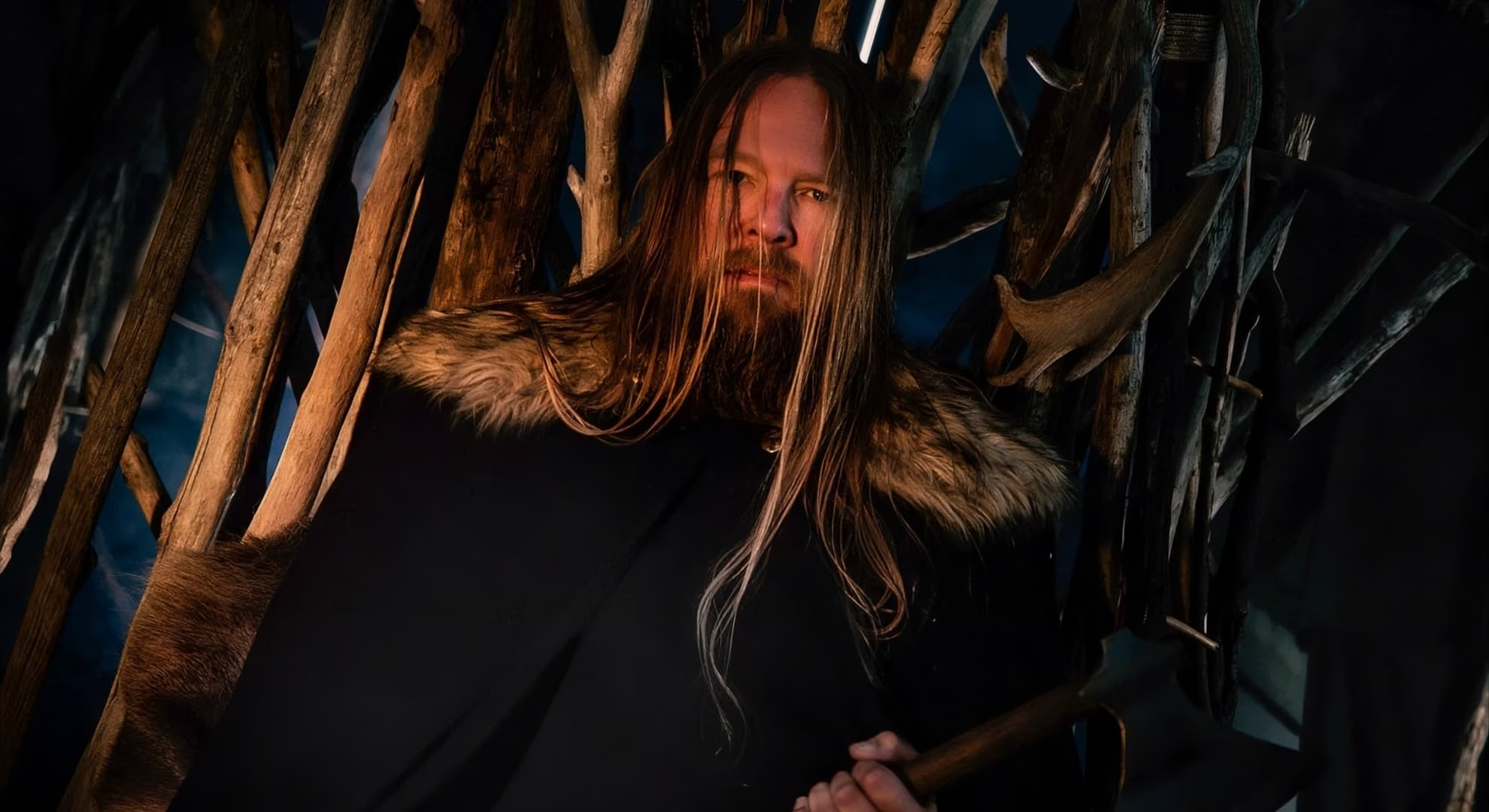


The old theatre at Verdensteateret in Sandefjord was built in 1916 as a cinema and has hosted concerts and events since the nineteen-eighties, its hall built for crowds that never assembled on one particular weekend in 1994. That year, a local technician who knew the room’s acoustic quirks helped four musicians record a set live, without an audience and without a title. No cover was printed and no copies circulated. The tape went into a private archive, where it stayed for more than 30 years.
That silence ends on July 31st, 2026, when Limbonic Art release ‘Arcane Past: The Celestial Grimoire’ through Kyrck Productions and Armour, with SPKR handling distribution.
The Norwegian symphonic black metal project built its reputation on scarcity and distance from its own audience, and the eight-disc hardcover artbook now consolidates a catalogue that has circulated for three decades in fragments, deleted pressings, and secondhand copies. The set gathers every studio album, the early demo tapes, and, restored for the first time, that unheard 1994 recording.
A Weekend Without an Audience
Vidar “Daemon” Jensen, the vocalist, guitarist, and sole constant across Limbonic Art’s history, recorded the 1994 session with guitarist Roy A. Sørlie, bassist Erlend Hole, and drummer Roger Jacobsen, the same four-piece that had formed the group a year earlier.
Jensen has said the theatre’s own technician built the setup and that the four musicians largely assembled the recording as it happened, with little preparation beyond the room itself. No logo or artwork was produced at the time, and Jensen kept the reels in private storage rather than pursue release through any label.
German engineer Patrick W. Engel, working from Temple of Disharmony Studios in Triptis, restored the recording for this edition, a credit confirmed through the label’s official announcement. The photographs of Sørlie, Hole, and Jacobsen included in the artbook were taken at a separate performance at the same venue, according to Jensen, rather than during the recording session itself.
Before Nocturnal Art Found Them
Jensen founded the band in Sandefjord in 1993 as a four-piece, and it was after that lineup dissolved and Jensen began collaborating with Krister “Morfeus” Dreyer that their 1995 rehearsal demo reached Tomas Thormodsæter Haugen, the Emperor guitarist known as Samoth, who ran Nocturnal Art Productions.
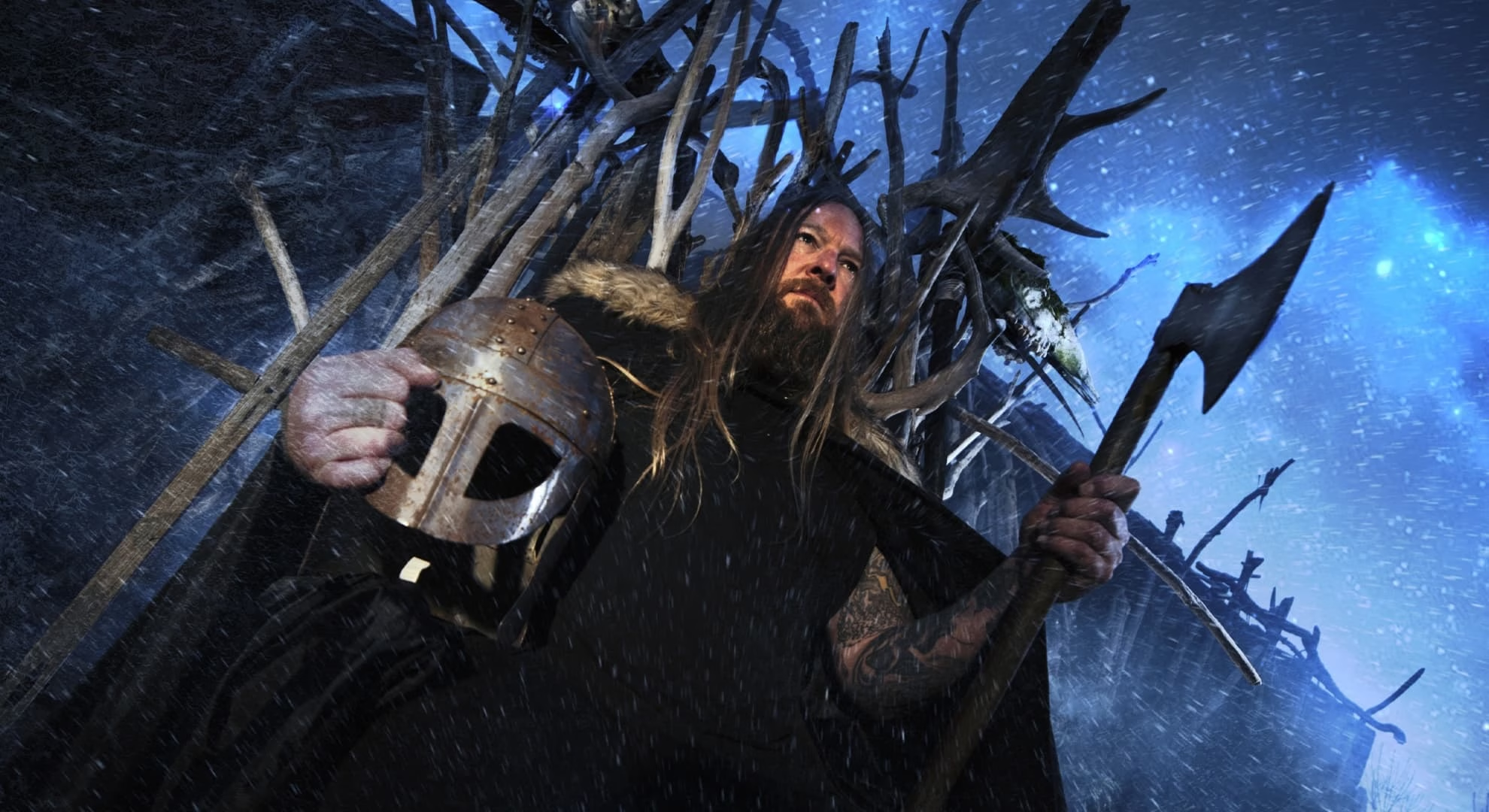
Samoth’s interest led to the release of Limbonic Art’s debut, ‘Moon in the Scorpio,’ in 1996, recorded with producer Anders Offenberg Jr. at Bondi Lydstudio in Asker.
The album entered a Norwegian scene whose early nineteen-nineties activity had already reshaped extreme metal through a documented combination of criminal notoriety and aesthetic invention, a duality that scholarship on the period has traced through the genre’s ongoing negotiation between transgression and eventual institutional recognition.1
Limbonic Art joined that network through Samoth’s label from its first release, though the project’s combination of harsh black metal with orchestral and classical influence set it apart from labelmates working in sparser registers.
Reading the ‘Celestial Grimoire’
The artbook’s title borrows a term with a documented history, and it is a substantive borrowing rather than a decorative one.
Grimoires were working texts within European magical practice, compiled and circulated from the medieval period into the eighteenth century to record conjurations, ritual instructions, and catalogues of spirits rather than to serve as literary artifacts in their own right; ‘The Key of Solomon the King,’ the ‘Lemegeton,’ and ‘The Grand Grimoire: The Red Dragon’ remain among the tradition’s most documented examples.
Richard Kieckhefer’s study of one fifteenth-century manuscript describes such books as miscellanies assembled for practical use, their authority resting on accumulated procedure rather than narrative structure.2
‘Arcane Past: The Celestial Grimoire’ adopts that same logic of accumulation: eight discs organized not as a chronological narrative but as a compiled record of demos, overhauled recordings, and rarities meant to be consulted rather than read in sequence.
The unreleased 1994 material functions within that frame as the kind of foundational, previously undisclosed text that grimoire compilations have traditionally depended on, retroactively explaining the working method behind everything the band released afterward.
A Duo Narrows to One
Krister “Morfeus” Dreyer joined Limbonic Art after the original four-piece dissolved and before the release of ‘Moon in the Scorpio,’ forming the two-man configuration most listeners came to associate with the band.
The follow-up, ‘In Abhorrence Dementia’ (1997), and the third album, ‘Epitome of Illusions’ (1998), assembled from re-recorded pre-label demo material, were produced, engineered, and mixed by Peter Lundell at Pete’s Place Recording Studio in Sandefjord, with mastering by Tom Kvålsvoll at Strype Audio in Oslo across the catalogue.
Across those two records, the symphonic material that had defined the debut receded in favor of a leaner, more direct attack, a shift the band never fully reversed.
Limbonic Art rarely performed live, but a confirmed appearance at the Black Whitsun sub-festival within the 2000 edition of the Wave-Gotik-Treffen in Leipzig remains one of the few documented instances of the duo playing outside Norway, a booking that placed the project inside the same German gothic and industrial festival circuit that has long hosted Scandinavian extreme metal acts seeking listeners beyond their home scene.
Jensen later joined Samoth’s other project, Zyklon, before Limbonic Art disbanded in February 2003. Jensen reformed the band alone in 2006, and Dreyer’s involvement ended in 2010; the two solo-era albums that followed, ‘Phantasmagoria’ (2010) and ‘Spectre Abysm’ (2017), were credited to Jensen as the band’s sole official member, a status confirmed on the current release.
‘Opus Daemoniacal’ Reopened the Case
Limbonic Art’s most recent studio album, ‘Opus Daemoniacal,’ appeared in 2024 after an extended interval, marking Jensen’s return to a comparatively direct black metal approach while deliberately referencing the atmospheric and orchestral character of the band’s earliest recordings.
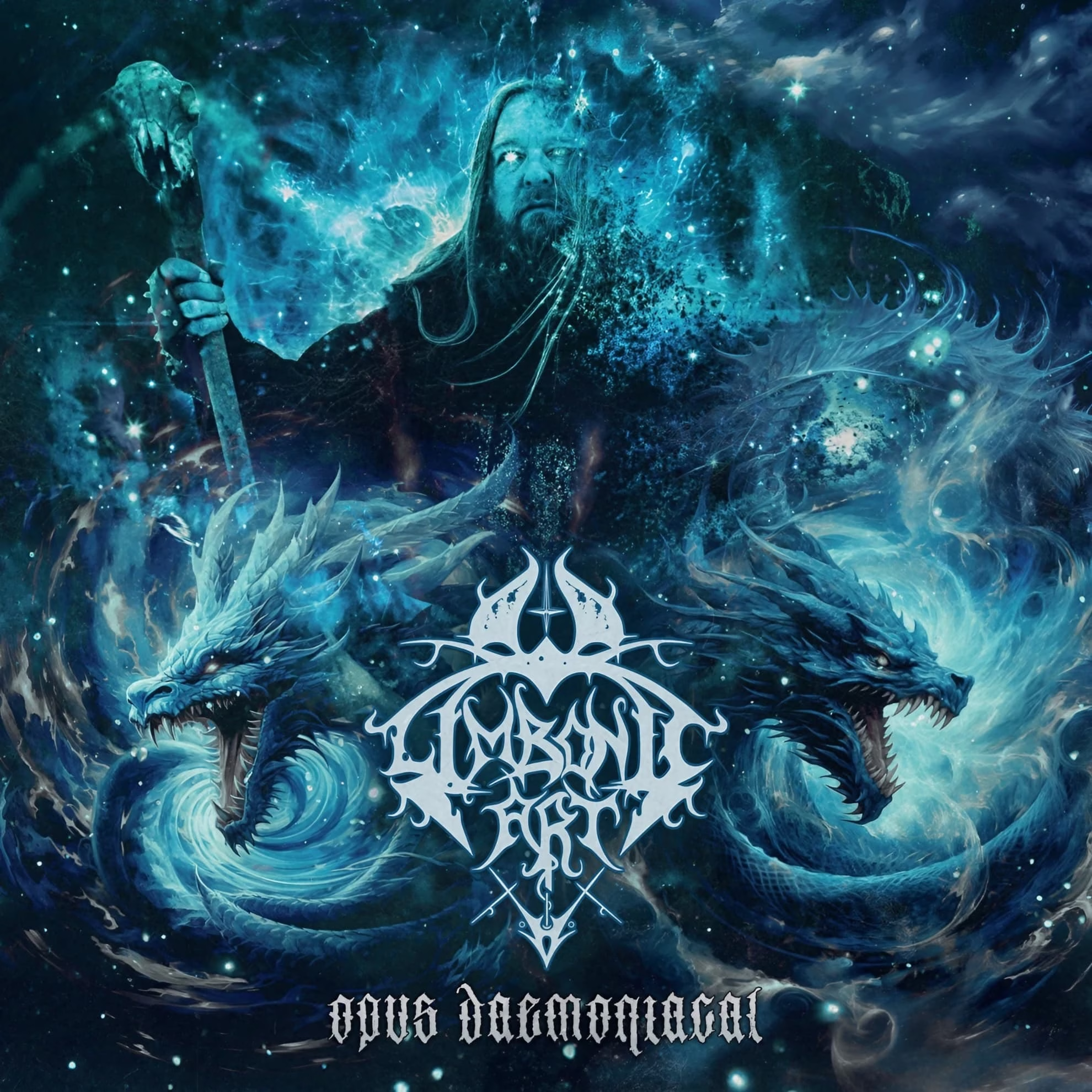
That album functions as the immediate predecessor to ‘Arcane Past: The Celestial Grimoire,’ and the two releases now sit in direct conversation with one another: one is a new record built from a conscious return to old methods, the other is the unearthed and reorganized record of those methods themselves.
Where ‘Opus Daemoniacal’ argued for continuity through new material, the artbook makes the same argument through documentation, assembling the demos, the overhauled recordings on ‘Epitome of Illusions,’ and the guest contributions across the catalogue, including Attila Csihar’s vocal appearance on ‘The Ultimate Death Worship’ and Per Eriksen’s gong part on ‘Ad Noctum – Dynasty of Death,’ into a single reference point for how that continuity was built in the first place.
Eight Discs as an Object to Hold
‘Arcane Past: The Celestial Grimoire’ is limited to 600 copies, packaged as a 60-page hardcover book measuring 28 by 28 centimeters, with design and layout by Alexander Trinkl of Irrwisch Artdesign. The physical edition includes a written memoir by Jensen alongside lyrics, enhanced artwork, and photographs. No vinyl pressing or separate digital edition had been confirmed at the time of publication, leaving the artbook the release’s only confirmed format.
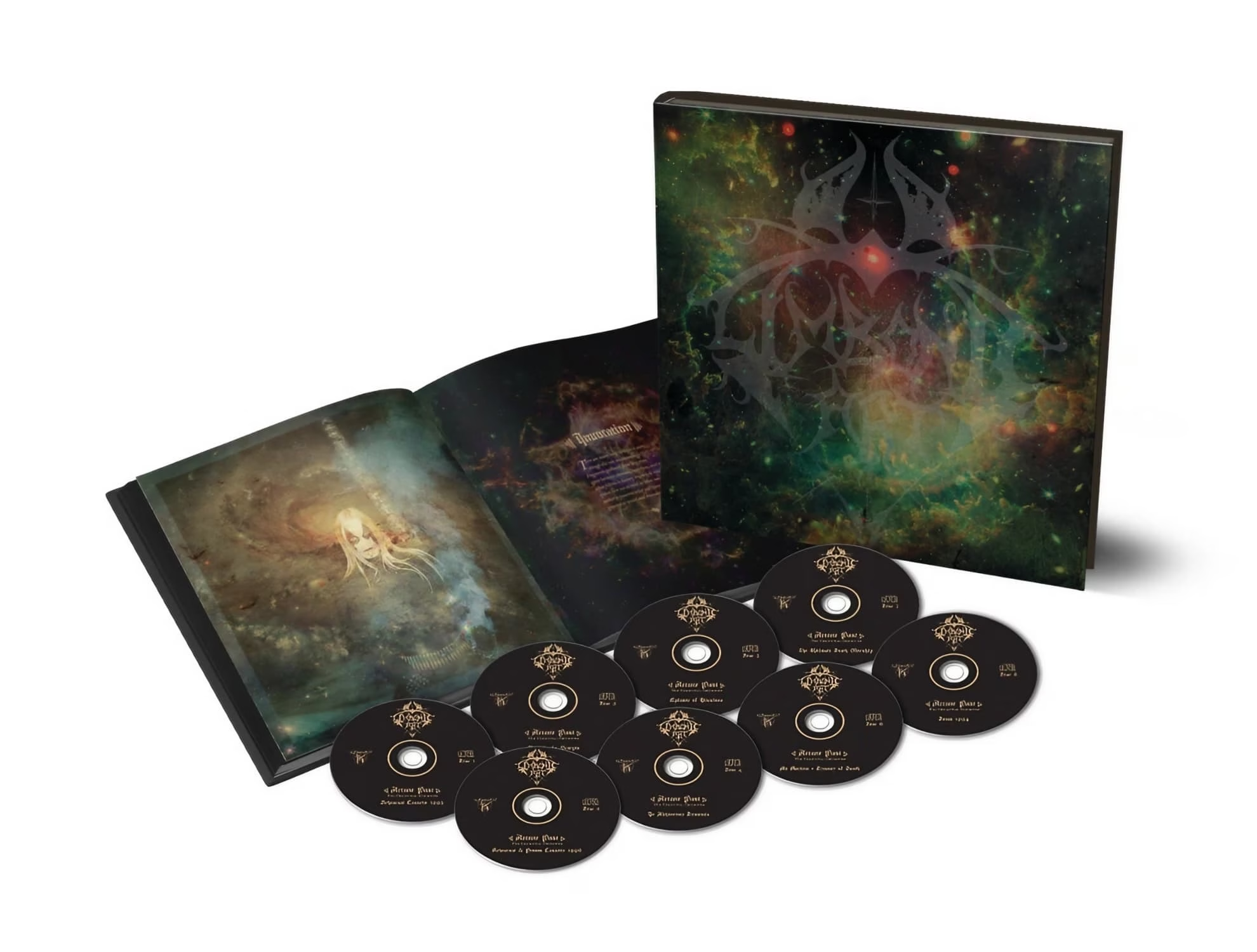
Scholarship on record collecting has long treated the assembled physical archive, rather than any single disc, as the unit that carries meaning for a genre’s most committed listeners, with connoisseurship expressed through the completeness and material condition of a collection.3
More recent research within metal fandom studies extends that argument to the reissue market specifically, describing how fans convert scarce or discontinued physical formats into objects that carry cultural and material value at once, a dynamic that a limited run of 600 numbered artbooks activates directly.4
For a catalogue that has spent three decades scattered across small-run vinyl, deleted CD pressings, and import copies, the artbook does not so much introduce new music as consolidate an already-circulating one into a single, finite, and collectible object.
The Archive Jensen Chose to Keep
Jensen held the 1994 tape in private storage for more than 30 years before agreeing to its inclusion here, and that decision frames the release as an act of custodianship rather than an ordinary catalogue reissue.
‘Arcane Past: The Celestial Grimoire’ does not add a new installment to Limbonic Art’s history so much as it makes the existing one legible in a single sequence, gathering material that listeners beyond Norway have long had to assemble piecemeal through import shops, deleted pressings, and secondhand trading.
The eight discs place a band that rarely performed and rarely explained itself into the position of narrating its own record, with Jensen’s memoir standing in for the interviews and documentation the project avoided for most of its existence. What the artbook ultimately preserves is not a finished story but a working method, restored in the same condition it was recorded in: undocumented until now, and entirely on Jensen’s own terms.
Readers who have spent years tracking down individual Limbonic Art pressings through import shops and secondhand trades might ask what a single bound artbook changes about the experience of piecing a scattered catalogue together one release at a time.
References
- Karl Spracklen, ‘True Norwegian Black Metal: The Globalized, Mythological Reconstruction of the Second Wave of Black Metal in 1990s Oslo,’ in ‘Sounds and the City: Popular Music, Place and Globalization,’ ed. Brett Lashua, Karl Spracklen, and Stephen Wagg (Basingstoke: Palgrave Macmillan, 2014). ↩︎
- Richard Kieckhefer, ‘Forbidden Rites: A Necromancer’s Manual of the Fifteenth Century’ (University Park: Pennsylvania State University Press, 1998), 3–18. ↩︎
- Will Straw, ‘Sizing Up Record Collections: Gender and Connoisseurship in Rock Music Culture,’ in ‘Sexing the Groove: Popular Music and Gender,’ ed. Sheila Whiteley (London: Routledge, 1997), 3–16. ↩︎
- Eleftherios Zenerian, ‘Vinyl Records, Metal Fandom and Fan Labour: Productions and Exchanges at the Intersection of the Cultural and Financial Economies,’ Metal Music Studies 5, no. 1 (2019): 89–106. ↩︎


Leave a Reply