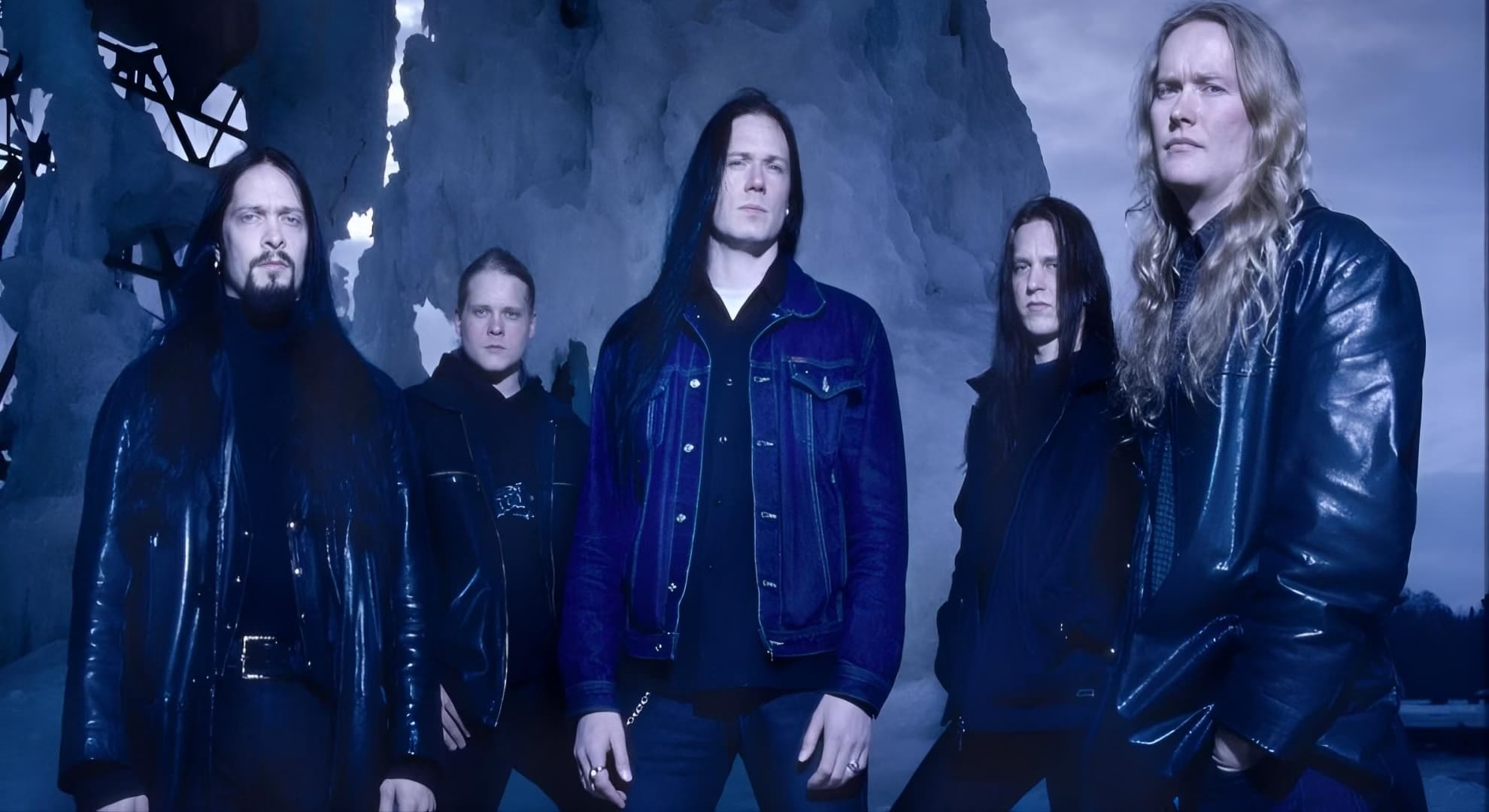


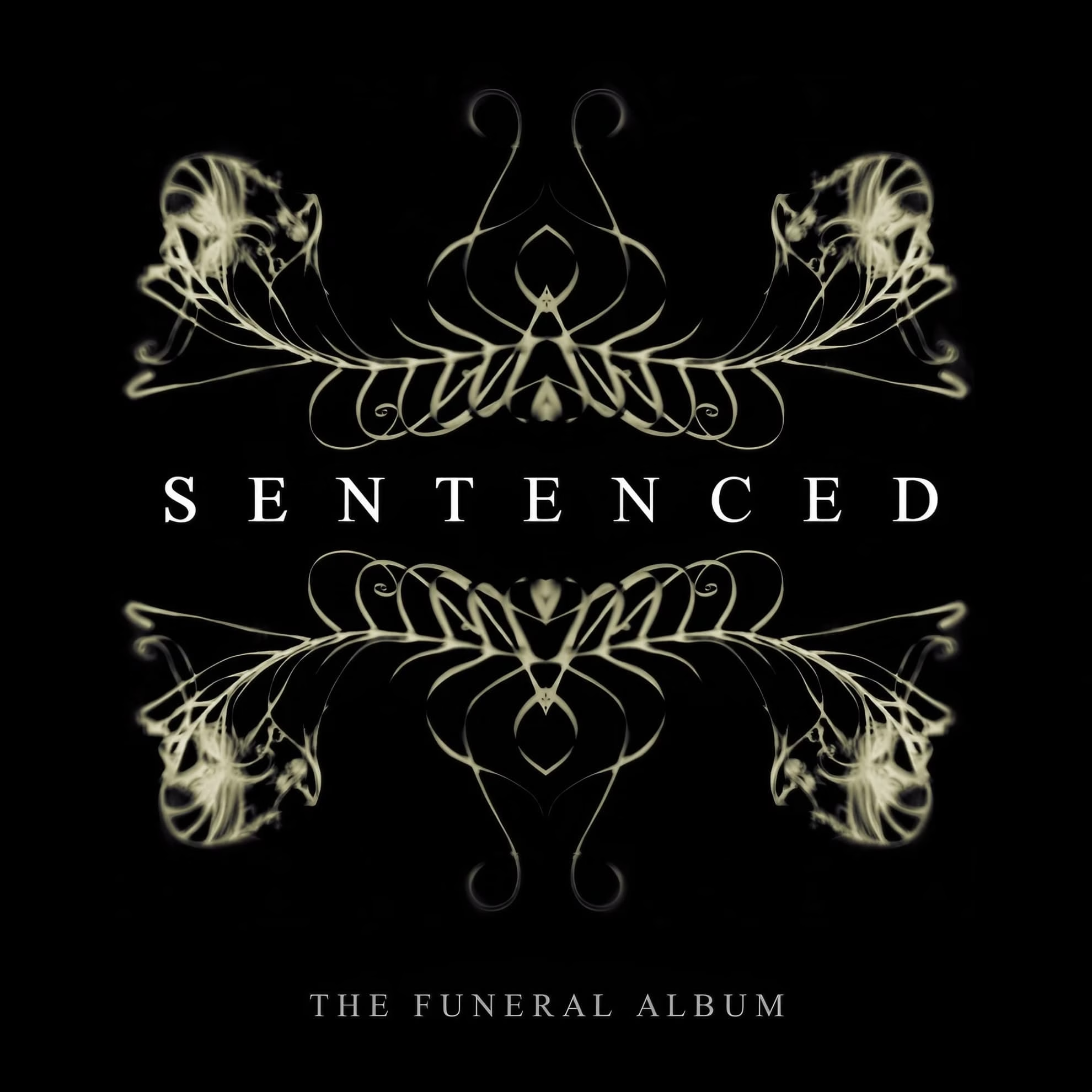
Most bands simply stop. A smaller number choose to end, and fewer still turn the ending itself into the final work — planning it, announcing it, and shaping a last record around the fact of their own closing. The group from Muhos that titled its eighth and final album ‘The Funeral Album’ belonged to that rare third category, and the discipline of that gesture is why its catalog can be read now as a single, complete argument rather than a career cut short.
Between a primitive death metal debut and a farewell staged as a public rite, this was a band that changed shape twice over — first from Finnish death metal into a cold melodic idiom, then from that idiom into an unashamedly tuneful, grief-saturated rock — before refusing the usual slow decline and electing to write its own last page while the writing was still strong.
What follows is an account of a closed body of work, and of a band that grasped, earlier than most of its peers, that how a story ends is part of what the story means.
A Band That Wrote Its Own Ending
The central claim of this retrospective is narrow and, I think, defensible: Sentenced matters less as an originator of any single style than as one of the very few extreme metal bands to convert the act of ending into the meaning of its work.
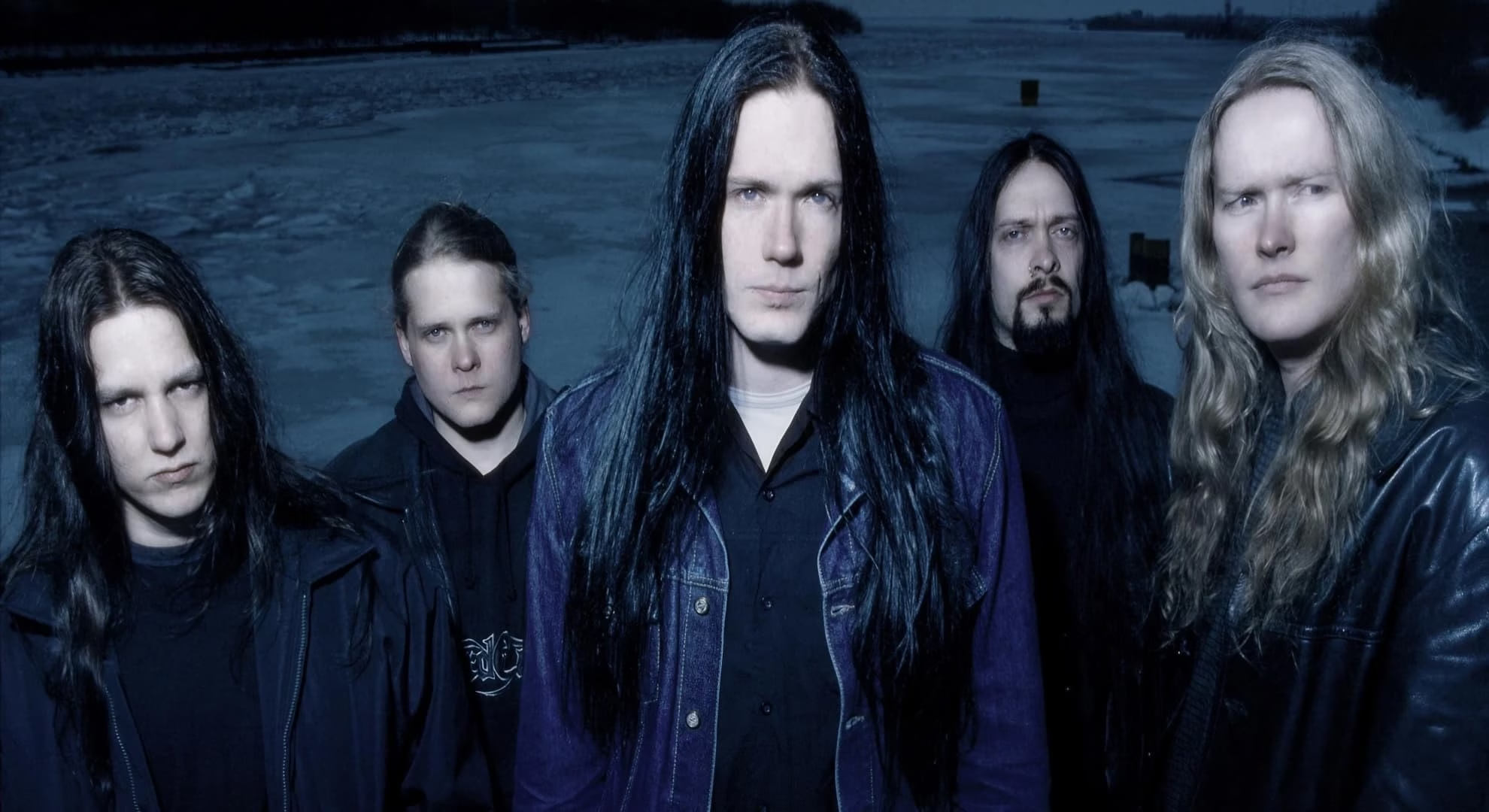
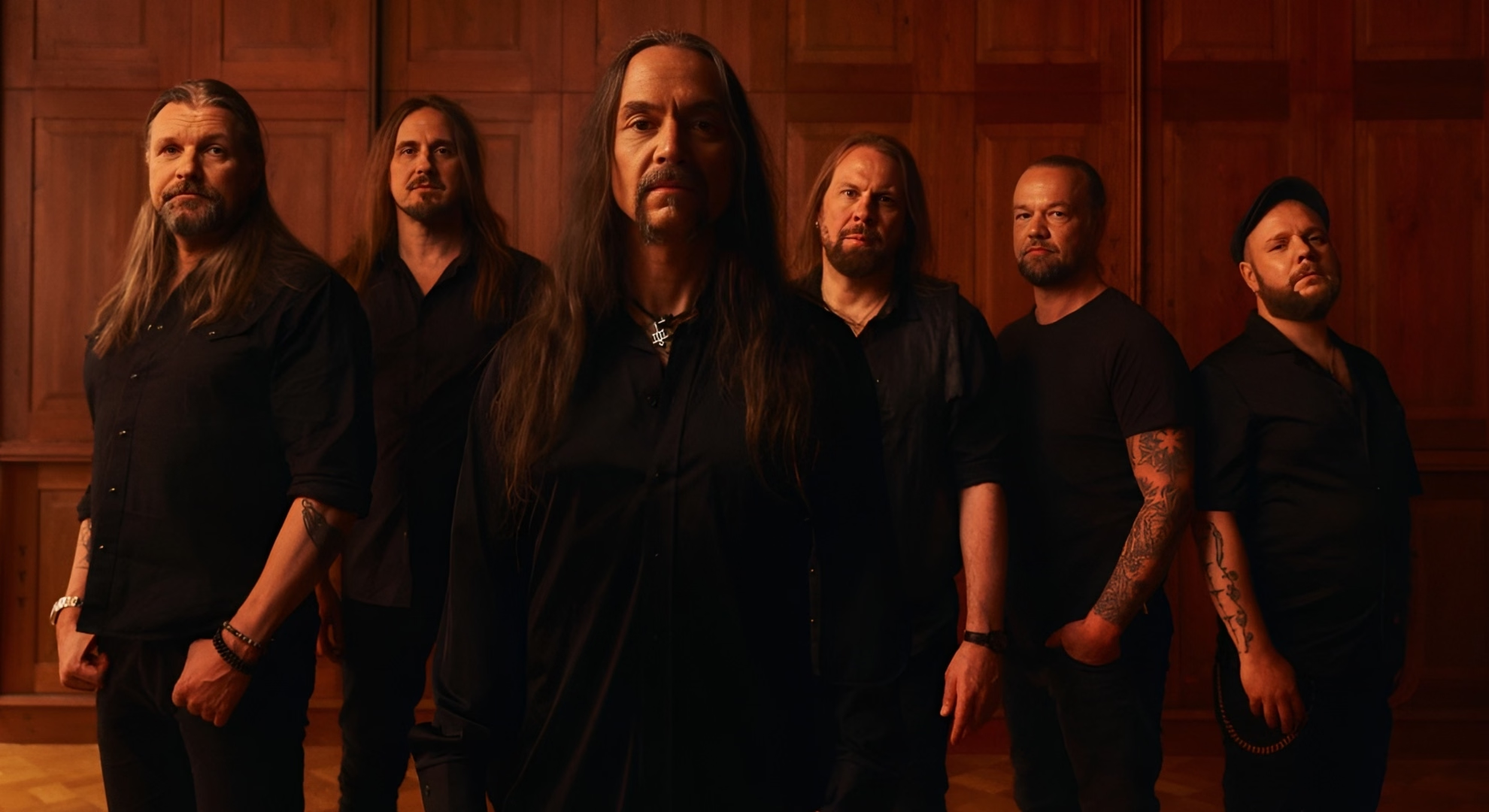
In early 2005 the band announced that the record it was about to release would be its last, then toured behind that announcement through the spring and summer and closed the account with a single valedictory concert in its home region on the 1st of October, 2005.
The album was called ‘The Funeral Album.’ Nothing about that sequence was accidental, and nothing about it was forced by external collapse. Where the standard rock narrative ends in acrimony, exhaustion, or a quiet drift into inactivity, this band designed its conclusion and executed it in public.
This is a rarer thing than it sounds. Deena Weinstein’s account of heavy metal as a subculture stresses how strongly the form prizes endurance, loyalty, and the refusal to sell out or soften — values that make a voluntary, dignified self-termination almost countercultural within the counterculture, since the expected trajectory is to continue until the audience or the members give out.
A band that stops while still capable, and that treats stopping as a compositional decision rather than a business one, is doing something the genre’s own value system does not readily supply a script for.1
Because the account is closed — sealed permanently, as I will argue, by the death of the band’s principal songwriter in 2009 — the eight studio albums can be assessed as a whole rather than as a work in progress. Read that way, they describe an arc with unusual internal logic: an ugly, derivative start; a first metamorphosis into a distinctly northern melodic style; a second metamorphosis into melodic rock steeped in depression and mortality; and a deliberate final chapter that folds the band’s lifelong subject, death, back onto the band itself.
My argument across the sections that follow is that this arc, taken as a completed shape, is Sentenced’s real contribution, and that the specifically Finnish, cold-weather melancholy the band refined along the way is the trait most audibly inherited by the musicians and bands that came after it.
From Muhos to a Northern Underground
The band came together in 1989 in Muhos, a small municipality near Oulu in northern Finland, out of an earlier short-lived outfit called Deformity. The founding core — guitarist Miika Tenkula, guitarist Sami Lopakka, and drummer Vesa Ranta — would remain the band’s spine for its entire existence, with Tenkula serving as chief composer throughout.
Two demos, ‘When Death Joins Us…’ in 1990 and ‘Rotting Ways to Misery’ in 1991, secured an early deal with the French label Thrash Records; a third promotional tape, ‘Journey to Pohjola,’ recorded in the spring of 1992, brought the band to the Finnish label Spinefarm Records.
Understanding why a death metal band from Muhos could become nationally significant requires some sense of what Finland was becoming musically in exactly these years. Toni-Matti Karjalainen has documented how heavy metal moved, across the 1990s and 2000s, from a marginal Finnish subculture to something close to a national cultural signature, exported abroad and increasingly treated at home as a legitimate expression of Finnish identity rather than a foreign import.
Sentenced stood at the front edge of that shift, part of an initial wave — alongside contemporaries such as Amorphis and Impaled Nazarene — whose international visibility in the mid-1990s helped make the later, larger Finnish metal export possible.2
Geography is not incidental here. Karjalainen’s work on “sounds of origin” argues that metal scenes routinely narrate their own northernness, remoteness, and cold as constitutive of their sound, folding geography and latitude into the music’s self-description. Sentenced took this literally and repeatedly.
Their second album was titled ‘North from Here’; later records and singles leaned on frost, permafrost, and winter as organizing images; the band’s very sense of itself was bound to Oulu and the north rather than to the Helsinki-centered mainstream. The northern provenance was not a marketing veneer laid over a generic product but a claim the band kept making, in titles and imagery, about where its music came from and what it was about.3
The scene into which they emerged was small, cold, and serious. Northern Finnish metal of this period tended toward a heavy, gloom-laden expression rather than the polished rock of the country’s south, and Sentenced’s early work sits squarely in that austere tradition before the band began to complicate it. What distinguished them almost immediately was not aggression — there was plenty of that around — but an appetite for melody that their first record only hinted at and their second made unmistakable.
Death Metal and the Melodic Turn
The debut, ‘Shadows of the Past,’ released in 1991 (and originally titled ‘Shadows of Past’), is the least characteristic thing the band ever made. It is primitive death metal in the early European mode, indebted to American forebears and to the surrounding Finnish death metal underground, with Tenkula himself handling lead vocals — the only Sentenced album on which he did so.
It is competent and it is generic, and the band later described their own starting point in roughly those terms, as one death metal clone among many. As the opening entry in a closed catalog it earns its place mainly by contrast: it establishes a floor against which every subsequent transformation can be measured.
The decisive change came with ‘North from Here’ in 1993, released through Spinefarm, and it is here that the small-catalog approach of engaging each record on its own terms starts to pay off. Taneli Jarva had joined on bass in 1991 and now assumed lead vocals, but the more consequential shift was compositional.
The band pushed toward a colder, more technical, and markedly more melodic form of death metal, and it was this record that drew the attention of the German label Century Media, which signed the band for a wider international reach in 1994.
It is worth being precise about what “melodic death metal” meant at this moment, because the term is often used loosely. Benjamin Hillier’s musicological study of the style’s formative years locates its emergence chiefly in Gothenburg, Sweden, in the early-to-mid 1990s, and identifies its defining move as the importation of harmonized, memorable lead melodies — drawn from an older European heavy metal songwriting tradition — into the harmonic and rhythmic frame of death metal, producing extreme music organized around tunes rather than around riff accumulation alone.
Sentenced were working this seam in the north at close to the same time as the Swedish originators, and, tellingly, developed a recognizably different dialect of it: colder, gloomier, more inclined toward minor-key mournfulness than toward the martial drive of the Gothenburg bands.4
The melodic vocabulary itself had a lineage worth naming. The harmonized twin-guitar lines that Sentenced increasingly favored descend from the melodic conventions of the New Wave of British Heavy Metal, whose harmonic and gestural language Robert Walser analyzed as a fusion of popular and quasi-classical melodic practice built to carry both power and feeling.
What Sentenced did was pull that essentially melodic, feeling-forward guitar language into an extreme metal setting and then bend it toward sorrow rather than triumph — an early sign of where the band’s center of gravity actually lay.5
‘Amok,’ released in 1995 through Century Media, is the culmination of this phase and, for many, the pivot of the whole discography. Still rooted in death metal, it takes the melodic direction of ‘North from Here’ further and folds in elements of traditional heavy metal and doom, along with the first clear hints of the gothic-tinged rock the band would soon embrace.
Jarva’s smoke-roughened voice suited the material’s mixture of melancholy, mythology, and self-destruction. It was, in retrospect, the last record of the band’s death metal identity and the first that pointed unambiguously past it. When Jarva departed after the accompanying ‘Love & Death’ release, also in 1995, worn out by touring, that identity effectively left with him.
Down and the Turn Toward Rock
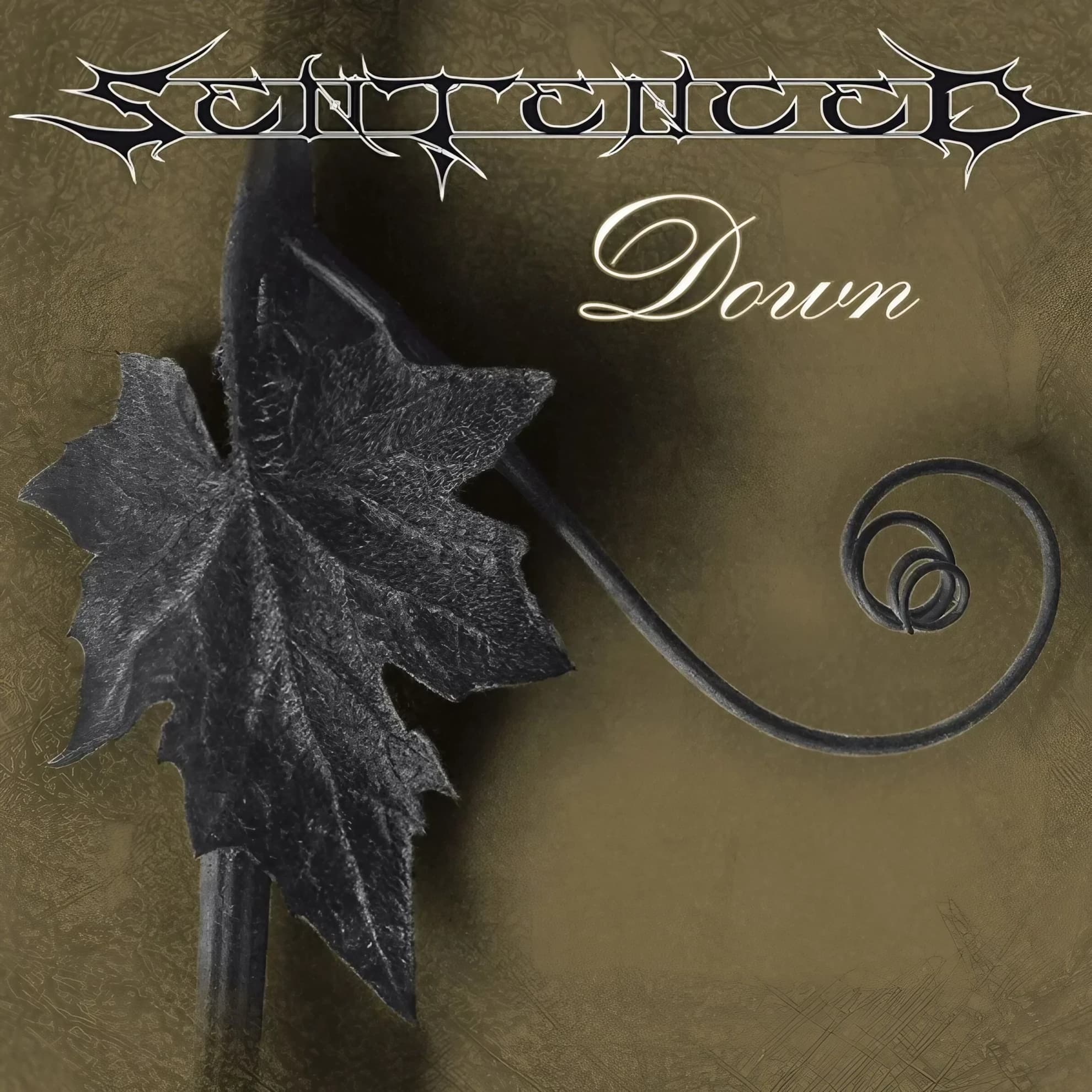
The addition of Ville Laihiala as vocalist for ‘Down’ in 1996 completed the band’s second metamorphosis, and it was more radical than the first. ‘Down’ largely set aside the death metal growl for sung, clean, baritone vocals, and reoriented the band around concise, hook-driven songs about depression, loss, and suicide.
The harshness did not vanish so much as migrate: it moved from the throat into the subject matter. What had been extreme metal became a form of dark, melodic rock — sometimes described as death ‘n’ roll — whose heaviness was now emotional as much as sonic.
The lyrical world of this later Sentenced is central to why the band lodged so deeply in Finland, and it has attracted genuine scholarly attention. Atte Oksanen, analyzing self-destruction and traditional masculinity in Finnish metal lyrics, treats Sentenced as a principal example of a wider Finnish current in which anguished men are depicted living in the immediate proximity of death, with alcohol, shame, and suicide recurring as the vocabulary of a specifically masculine despair.
Songs from the Laihiala era — with their explicit imagery of the noose, of bleeding, of drinking to obliterate the self — are, in this reading, not adolescent shock but a culturally legible narrative of male misfortune that Finnish listeners recognized as their own. The band’s despair, in other words, was received as native rather than imported.6
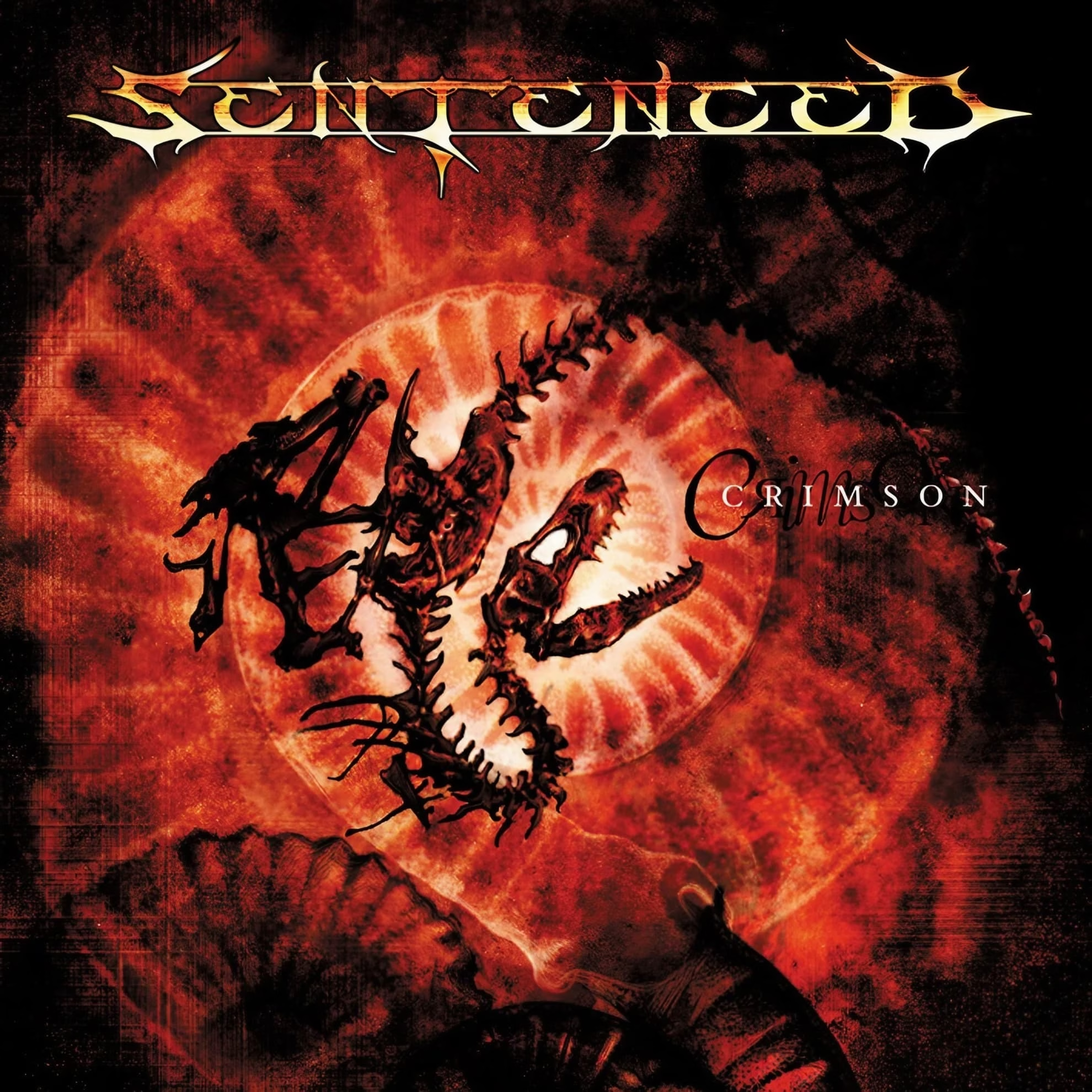
Across ‘Frozen’ in 1998, ‘Crimson’ in 2000, and ‘The Cold White Light’ in 2002, the band refined this melodic, mortality-obsessed rock into its mature form and reached the peak of its domestic prominence. The titles alone chart the consolidation of a single mood — frost, cold, white light — and the music grew correspondingly more spacious, more openly melodic, and more willing to sit in sorrow rather than outrun it.
A curious episode in 2003, a Finnish-language track dedicated to the Oulu ice hockey team that drew accusations from some politicians of coded extremist content — accusations the band firmly rejected — stands out mainly because it was so untypical of a group whose real and consistent subject was interior desolation, not ideology.
Taken together, the eight albums describe not a band that lost its way but one that kept following the same instinct toward melody and melancholy to its logical conclusion. The death metal of the debut and the gothic rock of the final records can look like different bands; the through-line is a composer, Tenkula, who was always more interested in a mournful tune than in brutality for its own sake, and who was given, across sixteen years, the room to prove it.
A Language of Frost and Graves
The band’s visual identity tracked its musical one closely enough that the two are best read together. Research by Karjalainen, Ainamo, and Laaksonen on how metal bands create visual meaning argues that a band’s logo, cover imagery, and typographic choices function as a coherent signifying system, communicating genre allegiance and thematic content before a note is heard. Sentenced’s visual output is a clean illustration of that principle in motion, because the imagery changed in step with the music rather than lagging behind it.7
The early death metal records carried the expected apparatus of the style — a jagged, near-illegible logo and murky, morbid artwork, including a debut cover drawn by Luxi Lahtinen and, on a later reissue, replaced by a reproduction of a medieval woodcut of death. As the music turned colder and more melodic, the visual field cooled with it.
Frost, snow, winter light, bare northern terrain, and the recurring motif of the grave came to dominate, matching titles such as ‘Frozen’ and ‘The Cold White Light’ and singles built on the imagery of permafrost and everlasting frost. The band even adopted the self-description “Death Metal Orchestra from Finland,” a phrase that captures the paradox of the later work: extreme metal origins married to an almost orchestral commitment to melody and mood.
By the end, the visual and the verbal had converged completely on a single idea. A record literally called ‘The Funeral Album,’ closing a catalog obsessed with cold and death, staged its own artwork and packaging as a kind of interment. The imagery was not decoration applied to the songs; it was the same argument the songs were making, delivered through the eye.
For a band whose entire late identity was an aesthetics of northern mortality, the coherence of that visual language across sixteen years is itself a form of evidence for how deliberate the project had become.
Ending the Account on Their Terms
The circumstances of the band’s ending are, unusually, a matter of clear public record rather than reconstruction, and they should be reported as such. In early 2005 the members announced that their forthcoming album would be their last. ‘The Funeral Album’ was released on the 31st of May, 2005.
The band then played a series of farewell festival dates through the summer and gave a final concert on the 1st of October, 2005, in Oulu; that show was filmed by Mika Ronkainen and released as the concert document ‘Buried Alive,’ which premiered at the Oulu Music Video Festival on the 9th of September, 2006.
The stated reason for ending was neither collapse nor conflict but a decision to conclude with dignity while the work was still strong. In the band’s own framing at the time, articulated by Sami Lopakka in the album’s promotional materials, the record was conceived so that every song carried a farewell, and the intent was to let the band’s flame burn at its brightest to the very end and then let it die rather than fade.
Whatever private fatigue underlay that choice — and touring strain had already cost the band Jarva a decade earlier — the public, documented rationale was an artistic one: to make the ending itself the final statement. I want to be careful here, because this is exactly the kind of moment where a retrospective is tempted to import drama the record does not support.
There is no documented account of a bitter split, a financial failure, or an external force shutting the band down. The evidence points to a planned, mutual, deliberate conclusion, and the honest reading is to take that at face value rather than to manufacture a hidden cause.
What converted a chosen ending into an irreversible one came later and was genuinely tragic in the plain sense of the word. Miika Tenkula — founder, guitarist, and the band’s principal composer — died of a heart attack on the 19th of February, 2009, at the age of 34. Whatever faint possibility of reunion the culture of metal reunions might otherwise have kept alive was foreclosed by that death.
The account Sentenced had chosen to close in 2005 became, in 2009, permanently closed, because the person most responsible for its music was gone. This is why the catalog can be assessed as complete with a confidence one could not have had in 2005 alone: the ending the band authored was, four years later, sealed beyond revision.
The Northern Melancholic Lineage
An honest influence map has to begin with the clearest and most direct cases, and for Sentenced those are the successor bands formed by its own members, in which the specific stylistic DNA of the later work is documented by direct continuity of personnel rather than inferred from resemblance.
Ville Laihiala carried the gothic, melodic-rock direction of ‘Frozen’ and ‘The Cold White Light’ almost seamlessly into Poisonblack, the band he founded in 2000 initially to play guitar and fronted as vocalist only from the 2006 album ‘Lust Stained Despair,’ its 2003 debut ‘Escapexstacy’ having been sung by Juha-Pekka Leppäluoto of Charon; Poisonblack’s downcast, hook-driven darkness is recognizably the same idiom Sentenced had reached in its final phase.
Vesa Ranta, after a deliberate multi-year break from music to recover from what he described as post-Sentenced battle fatigue, pursued the atmospheric, mournful strain of the sound in The Man-Eating Tree, the band he formed in 2009. Taneli Jarva, the band’s middle-era voice, carried the darkened rock ‘n’ roll impulse forward into The Black League. In each case the connection is not thematic guesswork; it is the same musicians continuing the same specific project under new names.
Beyond the members’ own projects, the more interesting claim concerns the cold, melancholic dialect of melodic metal that Sentenced helped establish in the Finnish north, distinct from the Swedish Gothenburg template that shares its lineage. The later Finnish melodic and melancholic metal current — heard in bands such as Insomnium, Omnium Gatherum, and Before the Dawn — works a register of wintry sorrow that Sentenced had made viable as serious, exportable music a decade earlier, and the Finnish scene’s own retrospective accounts routinely place Sentenced at the head of exactly this northern tradition.
I would distinguish carefully between the two kinds of claim: the successor bands are direct inheritance, documented by shared membership, while the broader lineage is a scene-level influence that later Finnish coverage has repeatedly asserted but that rests on stylistic descent rather than on individual bands naming Sentenced as a single decisive source. Both are real; they are simply evidenced at different levels of certainty, and it would be dishonest to present them as though they were equally documented.
The point of the map is not to inflate Sentenced into the origin of a genre. Melodic death metal has its own well-documented Swedish beginnings, and the Finnish melancholic strain had several parents. The specific, arguable claim is narrower and stronger: that the particular fusion Sentenced refined — extreme metal roots reshaped into cold, melodic, death-obsessed song — became a template that its own members extended directly and that the northern Finnish scene absorbed as one of its defining moods.
Where the Members Went Next
The afterlife of the band and its people bears directly on the central argument, because it shows what the 2005 ending did and did not foreclose. It ended Sentenced as a working band; it did not end the creative lives bound up in it.
Laihiala continued in Poisonblack and later projects; Ranta moved into The Man-Eating Tree and, more recently, into the progressive doom band The Abbey and the Nordic gothic-rock supergroup Cemetery Skyline — the latter placing him behind the kit alongside members of Dark Tranquillity, Insomnium, Omnium Gatherum, and Amorphis, the very lineage his old band helped shape.
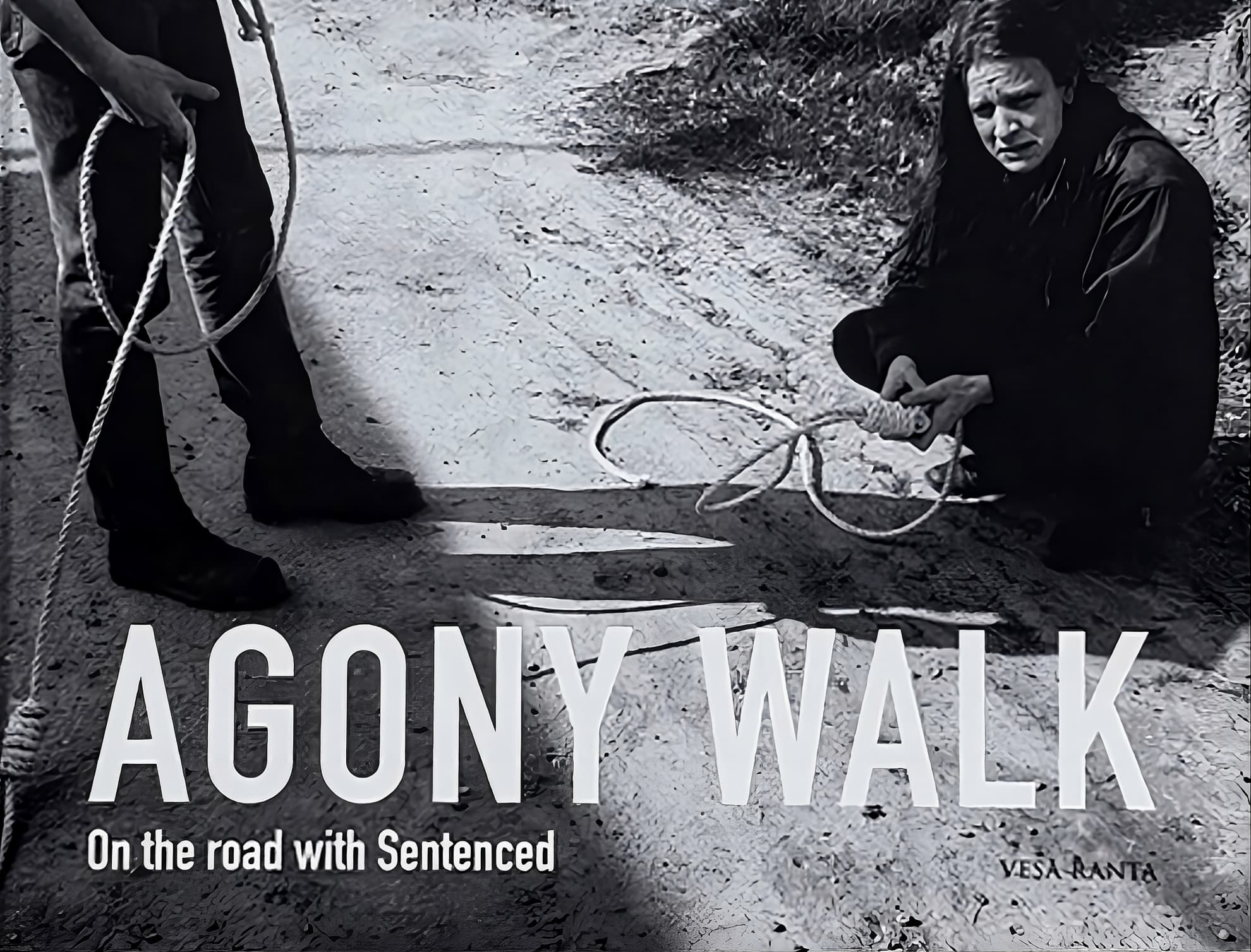
He also built a parallel career behind the camera, publishing a book of images from the band’s touring years, ‘Agony Walk,’ in September 2019, and directing music videos through his own company, Kaira Films.
Sami Lopakka turned to fiction, publishing a first novel, ‘Marras,’ in January 2014, drawing on a Finnish metal band’s European touring for its material. The people did not disappear; only the shared vehicle was retired.
The catalog’s own afterlife has been active in a way that confirms the account is treated as closed and complete rather than dormant. A full band history by the Finnish journalist Matti Riekki, Täältä Pohjoiseen – ‘Sentencedin Tarina,’ appeared on the 12th of December, 2014, with an English translation following in 2021 — the kind of retrospective book-length treatment that a finished, historically settled subject invites.
The studio albums have been reissued in successive editions. The farewell concert film ‘Buried Alive’ was widely circulated and remains the definitive record of the band’s final performance, and in 2010 a group of Australian metal musicians organized a tribute to Tenkula after his death.
More recently, an exhibition of northern Finnish metal history in the Oulu region has placed Sentenced among the pioneering bands of its scene. These are the activities that accrue around a body of work whose shape is fixed: reissue, memorial, documentation, and canonization, rather than continuation.
All of this returns to the same point. Because the ending was chosen and then sealed, everything that followed has taken the form of tending a completed legacy rather than extending an open one. The members went on to other work; the catalog went on to be reissued, written about, and honored; but Sentenced itself remained exactly what its final album declared it to be — finished, and finished on purpose.
A Story Allowed to End
The temptation with any disbanded group is to treat its ending as a loss to be mourned, and there is real loss here, sharpened by Tenkula’s early death. But mourning is the wrong frame for what Sentenced actually accomplished, and it obscures the thing that makes the band worth a closed-account assessment at all.
Very few bands in extreme metal have understood their own work as something that could have a proper ending — a designed last chapter, executed while the band was still capable of making it good. Sentenced did. They spent sixteen years turning aggression into melody and melody into a sustained meditation on death, and then they applied that same subject to themselves, closing the catalog with a record named for a funeral and a final concert that functioned as one.
The result is not a career interrupted but a work completed, with a beginning, a double transformation, and a chosen end. That completeness — rare, deliberate, and now permanent — is the legacy, and it is why the band reads, in retrospect, less as a casualty than as one of the few that got to finish the sentence itself.
If a band’s decision to end on its own terms is itself part of its art, does knowing that Sentenced authored its own farewell change how you hear the records that led up to it — and what would it mean for the northern melancholic tradition they helped shape if more of its bands treated their endings as deliberately as Sentenced treated theirs?
References
- Deena Weinstein, ‘Heavy Metal: The Music and Its Culture,’ rev. ed. (Cambridge, MA: Da Capo Press, 2000). ↩︎
- Toni-Matti Karjalainen, ‘And so, Finland Became a Heavy Metal Nation,’ in ‘Made in Finland: Studies in Popular Music,’ ed. Toni-Matti Karjalainen and Kimi Kärki (New York: Routledge, 2020). ↩︎
- Toni-Matti Karjalainen, ‘Tales from the North and Beyond: Sounds of Origin as Narrative Discourses,’ in ‘Sounds of Origin in Heavy Metal Music,’ ed. Toni-Matti Karjalainen (Newcastle upon Tyne: Cambridge Scholars Publishing, 2018), 1–40. ↩︎
- Benjamin Hillier, ‘Musical Practices in Early Melodic Death Metal,’ Journal of Music Research Online 11 (2020): 1–28. ↩︎
- Robert Walser, ‘Running with the Devil: Power, Gender, and Madness in Heavy Metal Music’ (Middletown, CT: Wesleyan University Press, 1993). ↩︎
- Atte Oksanen, ‘Drinking to Death: Traditional Masculinity, Alcohol and Shame in Finnish Metal Lyrics,’ Nordic Studies on Alcohol and Drugs 28, no. 4 (2011): 357–372. ↩︎
- Toni-Matti Karjalainen, Antti Ainamo, and Laura Laaksonen, ‘Occult, a Tooth, and the Canopy of the Sky: Conceptualizing Visual Meaning Creation of Heavy Metal Bands,’ in Design and Semantics of Form and Movement: DeSForM 2009, ed. Lin-Lin Chen et al. (Taipei, 2009), 20–32. ↩︎

Leave a Reply