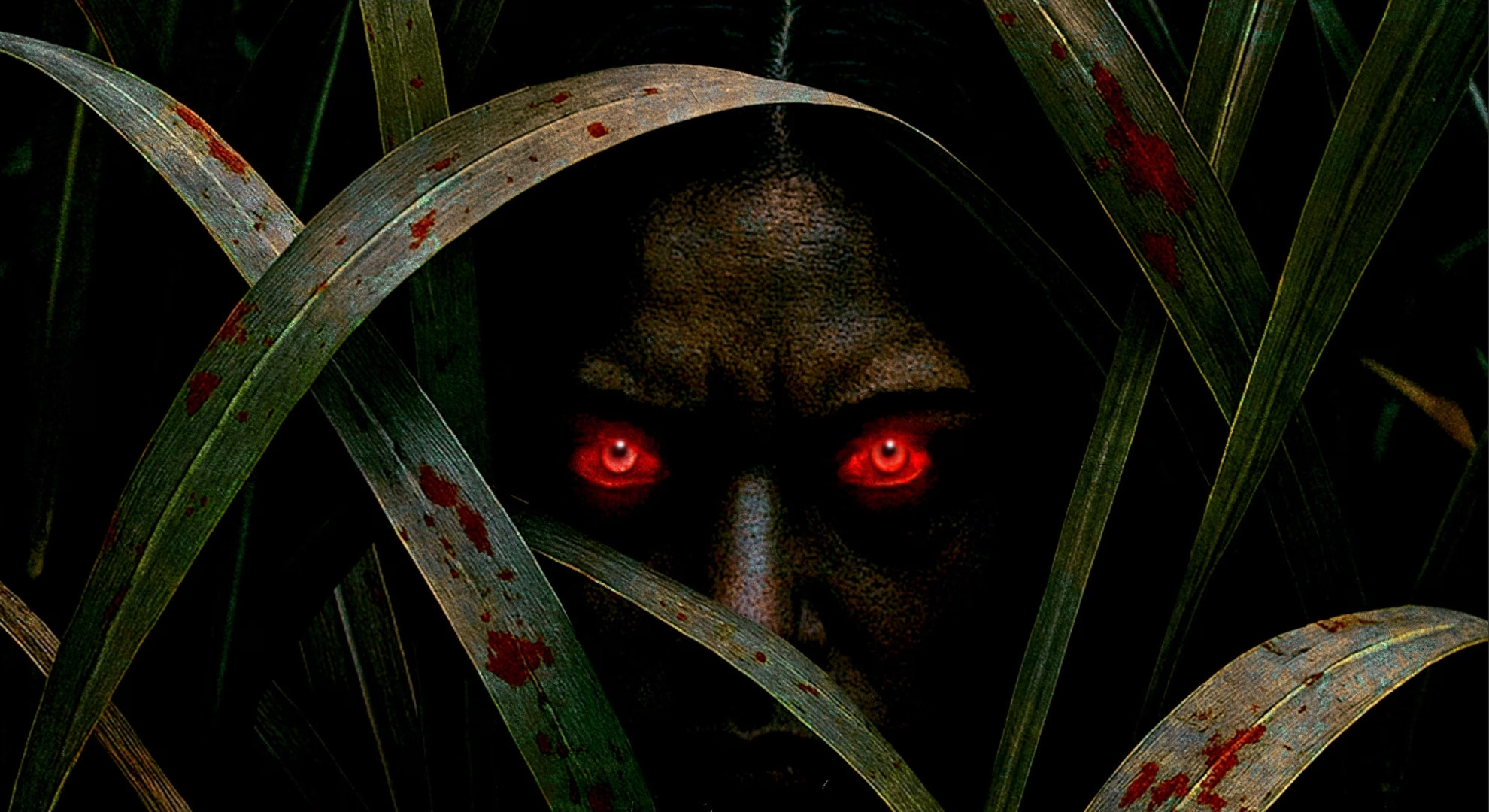


A myth that crosses a national border rarely settles into one version of itself. Diego Velasco’s new horror film has already worn four names and opened under three of them before its Colombian theatrical premiere on September 24th, 2026. That instability of title says as much about the legend it adapts as about anything the film itself decided to do differently.
El Silbón, the whistling revenant who gives the story its shape, belongs to the oral tradition of the Llanos, the plains that stretch across Colombia’s eastern departments and Venezuela’s western interior. The most frequently cited point of origin sits on the Venezuelan side, in Guanarito, a municipality in Portuguesa state, but the figure has traveled east into Colombia’s own Llanos Orientales for generations, carried by the same cattle-camp storytelling that produced him.
Velasco’s film is credited internationally as ‘The Whistler,’ was released in Venezuela as ‘El Silbón,’ and now opens in Colombian theaters as ‘Poseído.’ Juan Pablo Raba, the Colombian actor known internationally for ‘Narcos,’ and Diane Guerrero, the Colombian American actress from ‘Doom Patrol,’ play a grieving couple who inherit a remote hacienda and meet the forces the whistle announces. A Colombian rating has not yet been confirmed.
A Legend Shared Across a Border
The film’s story sits inside the very geography it is adapting, even if the production itself did not. Coverage of the shoot places filming across five weeks in 2024 in Cali, in Colombia’s Valle del Cauca department, well outside the Llanos where the plot is set.
That gap between setting and shooting location is not a flaw so much as an accurate reflection of how the legend itself behaves. It has never respected a single side of the frontier either.
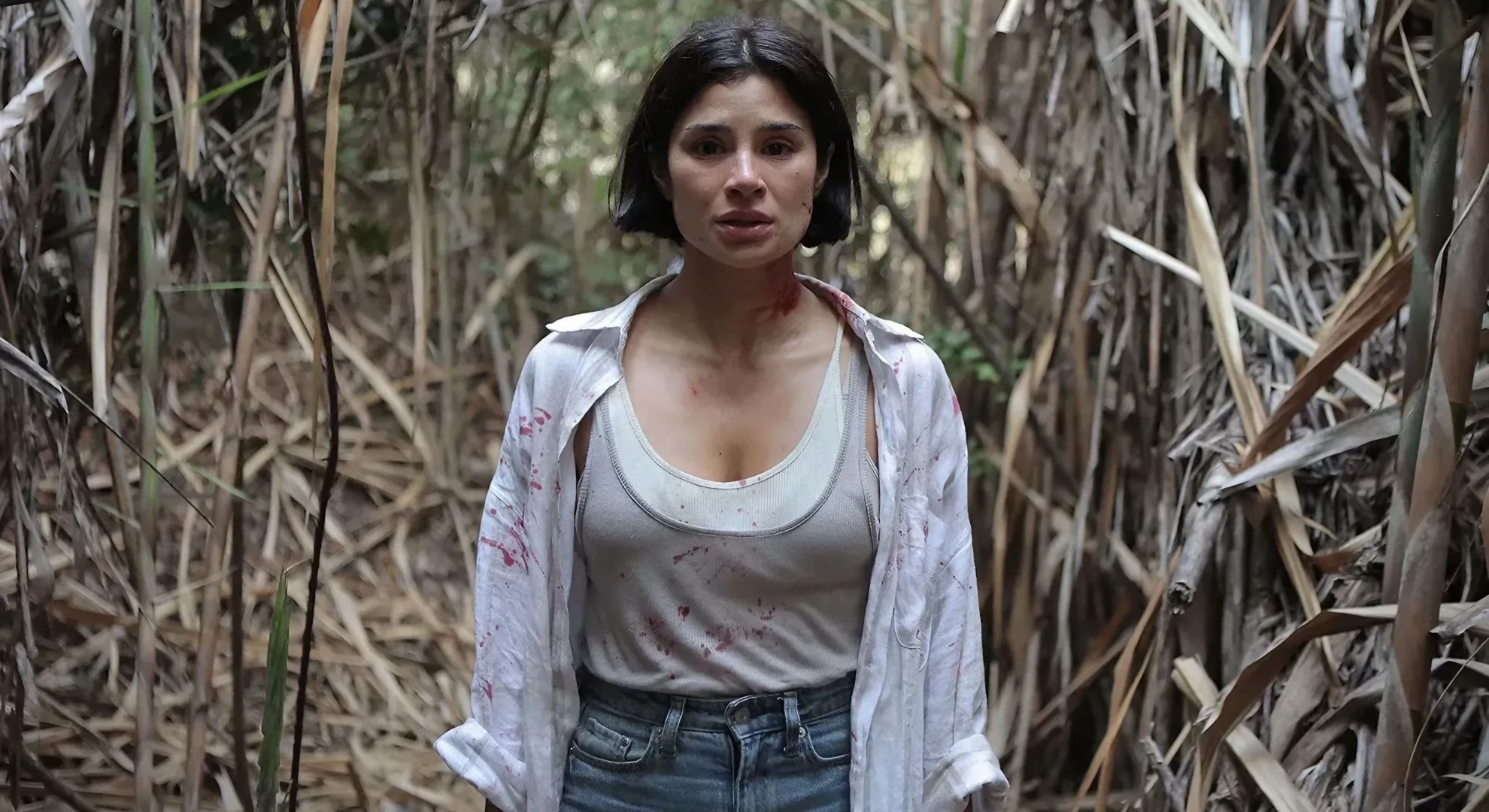
Colombia’s own Llanos Orientales, spanning departments including Casanare, Arauca, and Meta, share the same cattle-ranching tradition, the same joropo music, and much of the same repertoire of plains spirits that produced El Silbón on the Venezuelan side of the border. The legend made that crossing centuries before any camera arrived on the plains.
Juan Pablo Raba’s own presence in the cast reinforces the point without needing to argue it. A Colombian actor leads a story that Venezuelan press coverage describes as belonging to their own national folklore, in a production filmed on Colombian ground, opening in Colombian theaters under a Colombian title.
Colombian horror cinema’s own output over the past two decades leans more heavily on urban crime and case-based possession narratives than on adaptations of the country’s regional oral folklore, which makes a plains-legend adaptation like this one a comparatively rare crossing, even before any question of national ownership enters the conversation.
Punishment Behind the Whistle
Academic scholarship on the region’s oral tradition situates the Llanos’ storied figures, among them the devil legend of Florentino y El Diablo, within a body of storytelling that blends indigenous and Christian cosmology into narratives of moral consequence, the same lineage from which El Silbón descends.1
The whistle at the center of the story is not incidental to that lineage; it structures the punishment’s entire logic. The sound grows louder as the creature moves farther away and quieter as it draws near, an inversion that turns a traveler’s own hearing into an unreliable guide.
The most common account of the legend frames its creature as a son who killed his own father in anger, condemned ever after to carry the dead man’s bones in a sack, a fate imposed not by any court but by the surrounding community itself. Punishment administered by neighbors rather than institutions marks the tale as a product of a frontier world with little formal justice apparatus of its own.
Scholarship on folk monsters in screen media describes exactly this kind of figure, a being whose monstrousness comes from violating an inviolable category such as the bond between parent and child, as one of the clearest examples of Noel Carroll’s influential definition of monstrosity.2 El Silbón fits that definition more precisely than most haunted-house apparitions, because what makes him monstrous cannot be separated from the specific crime that created him.
A Title Change at Every Border
The project began under the title ‘The Fields Are Watching,’ the name under which Diane Guerrero and Juan Pablo Raba were first announced as its leads. By the time it reached Fantaspoa, the Brazilian genre festival where it premiered on April 11th, 2026, the film had already become ‘The Whistler,’ the title under which Vertical released it in North American theaters six days later.
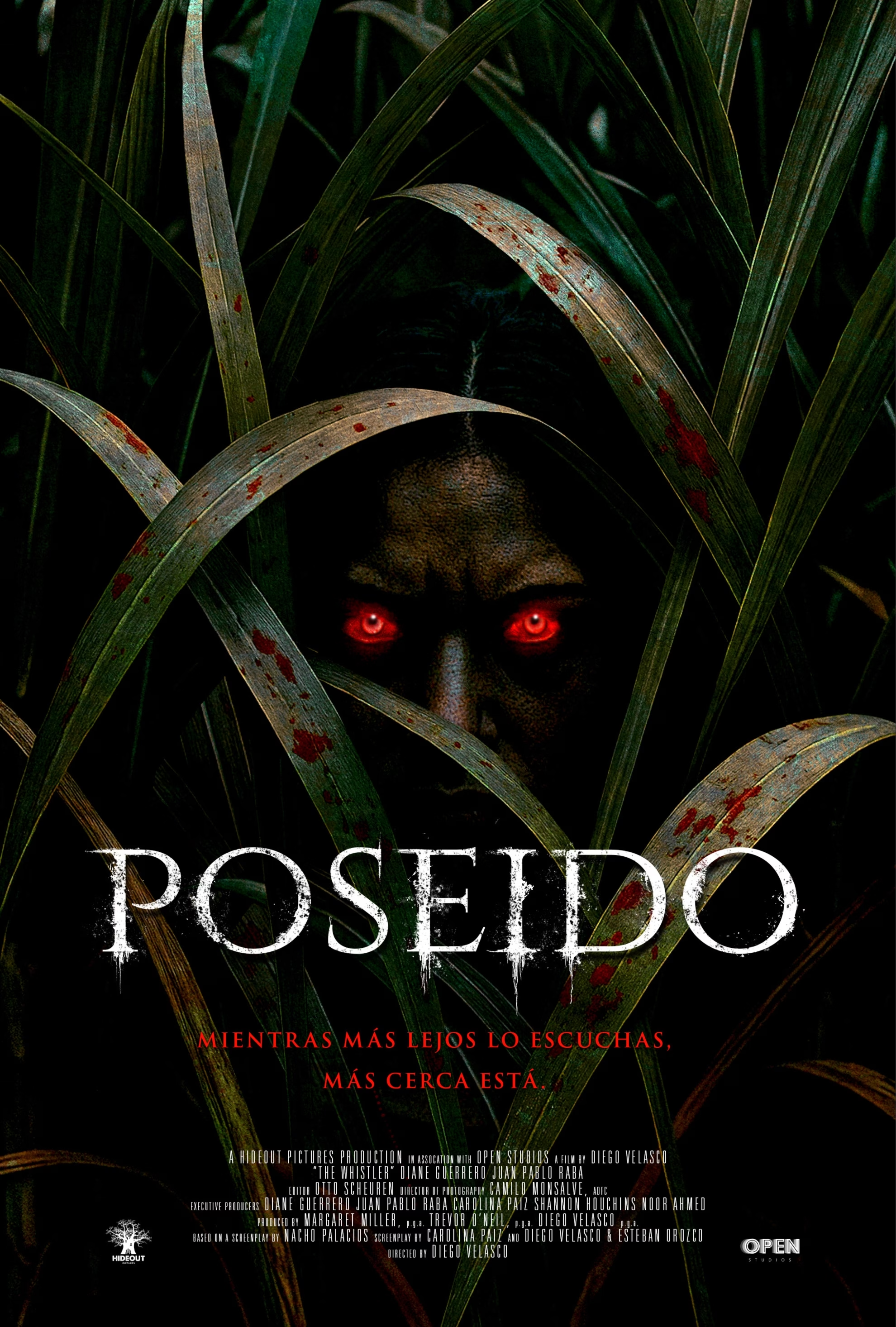
Venezuela received the film as ‘El Silbón’ on September 24th, 2026, distributed there by Mundo D Película under the Spanish name for the same revenant. Colombia’s theatrical release, opening the same week, carries a fourth label, ‘Poseído,’ trading the creature’s own name for the couple’s condition.
The shift from a creature’s name to a human condition understates what the story actually offers Colombian audiences: a specific regional monster with a specific regional history, arriving under a title that could describe almost any possession film ever made. The film runs 96 minutes across each of its international releases.
Velasco’s Return to the Llanos
Velasco directs from a screenplay he co-wrote with Esteban Orozco, Carolina Paiz, and Nacho Palacios, joining collaborators whose own backgrounds run through character-driven genre writing for American streaming series. The pairing returns Velasco to the plains 16 years after ‘The Zero Hour,’ his 2010 debut feature, which used a medical strike in Caracas to frame a very different kind of Venezuelan crisis.
Camilo Monsalve’s cinematography and Freddy Sheinfeld’s score ground the production in the region’s own musical vocabulary. Sheinfeld’s music incorporates the traditional arpa llanera, performed by harpist Eduardo Betancourt, alongside percussion from Yonathan Gavidia, tying the soundtrack to the same joropo tradition the legend itself grew out of.
Hideout Pictures, the American production company behind ‘Spirit Halloween: The Movie,’ produced alongside 64A Films and Open Studios, with early development support from the Sundance Institute. That combination, a Venezuelan-set story, a Colombian shoot, and American genre producers, is a familiar shape for the region’s horror cinema, where a single film’s setting, production location, and backers rarely share one flag.
A Whistle Heard on Both Sides
‘Poseído’ reaches Colombian theaters as the fourth version of a single premise, having crossed two nations and two languages before arriving here. The more interesting fact is not the number of titles the film has carried but that a monster the Llanos Orientales have always claimed as partly their own needed an American-backed, Venezuelan-set production to reach a mainstream Colombian theatrical release at all.
That imported production framework may serve the legend’s own particular logic, or it may simply borrow its name for a more familiar haunted-property plot. Colombian audiences are now positioned to judge the difference for themselves, against a version of the story many of them already grew up hearing.
Readers closer to Colombia’s own Llanos Orientales than to a movie theater might ask which version of El Silbón they grew up hearing, and whether Velasco’s “hacienda” resembles the plains they remember. What other plains figures, told around a fire long before any studio arrived, deserve their own crossing onto Colombian screens?
References
- Aaron Kappeler, ‘The Devil and Florentino: Specters of Petro-Populism in Venezuela,’ Comparative Studies in Society and History 66, no. 3 (2024): 474–500. ↩︎
- Jessica Balanzategui and Allison Craven, eds., ‘Monstrous Beings and Media Cultures: Folk Monsters, Im/Materiality, Regionality’ (Amsterdam: Amsterdam University Press, 2023), 13. ↩︎

Leave a Reply