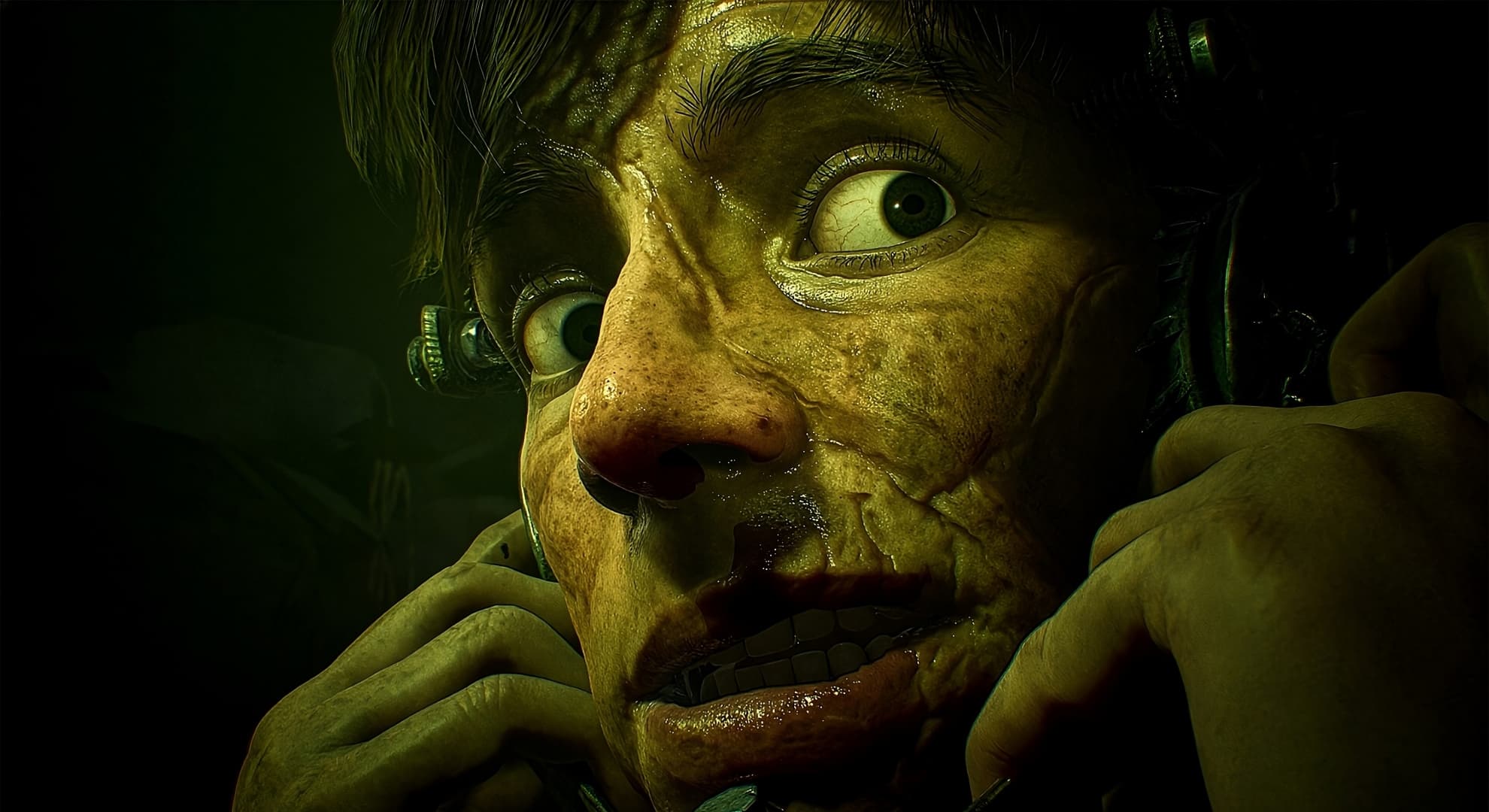


Asymmetrical multiplayer horror occupies a peculiar position in the history of the medium. Behaviour Interactive’s ‘Dead by Daylight,’ released in 2016, did not invent the genre concept—its roots run through competitive hide-and-seek structures that predate it by decades—but it industrialized the formula: one supernatural killer against four survivors, maps that exist to be escaped, a loop calibrated for replayability rather than narrative weight.
What followed was a decade of licensed elaboration: slashers from film and television absorbed into the ‘Dead by Daylight’ roster, and parallel titles—‘Friday the 13th: The Game’ in 2017, ‘Evil Dead: The Game’ in 2022, ‘The Outlast Trials’ in 2024—attempting variations on the same architecture.
‘The Outlast Trials’ notably departed from pure asymmetry, replacing the player-controlled killer with AI-driven threats and foregrounding cooperative escape over predator-prey confrontation. Each entry in this line refracted an existing horror property through the asymmetrical lens and discovered that franchise material behaves differently once you hand control of the monster to another human being.
The announcement of ‘SAW: Genesis,’ revealed at Summer Game Fest on June 5th, 2026, belongs to this conversation. Developed by Broken Mirror Games and Anshar Studios, published by Bloober Team, and licensed from Lionsgate, the game is a 3v1 asymmetrical multiplayer title set in the aftermath of World War I—a prequel premise that situates the Saw franchise’s moral architecture in its earliest historical moment.
Its design diverges from the genre standard in at least one documented respect: the Judge, the game’s dominant player role, is physically vulnerable and cannot win through force alone.
Jigsaw Before Jigsaw
The Saw franchise has a documented relationship with games as a medium. The first licensed title, ‘Saw: The Video Game,’ was developed by Zombie Studios and published by Konami in October 2009—positioned, explicitly, as a spiritual successor to Konami’s own ‘Silent Hill’ series.
The third-person survival horror structure placed detective David Tapp inside an abandoned asylum dense with Jigsaw’s traps, iterating on puzzle-solving under duress as its central mechanical language. A sequel, ‘Saw II: Flesh & Blood,’ followed in 2010 and received worse reception; Konami did not pursue the franchise further.
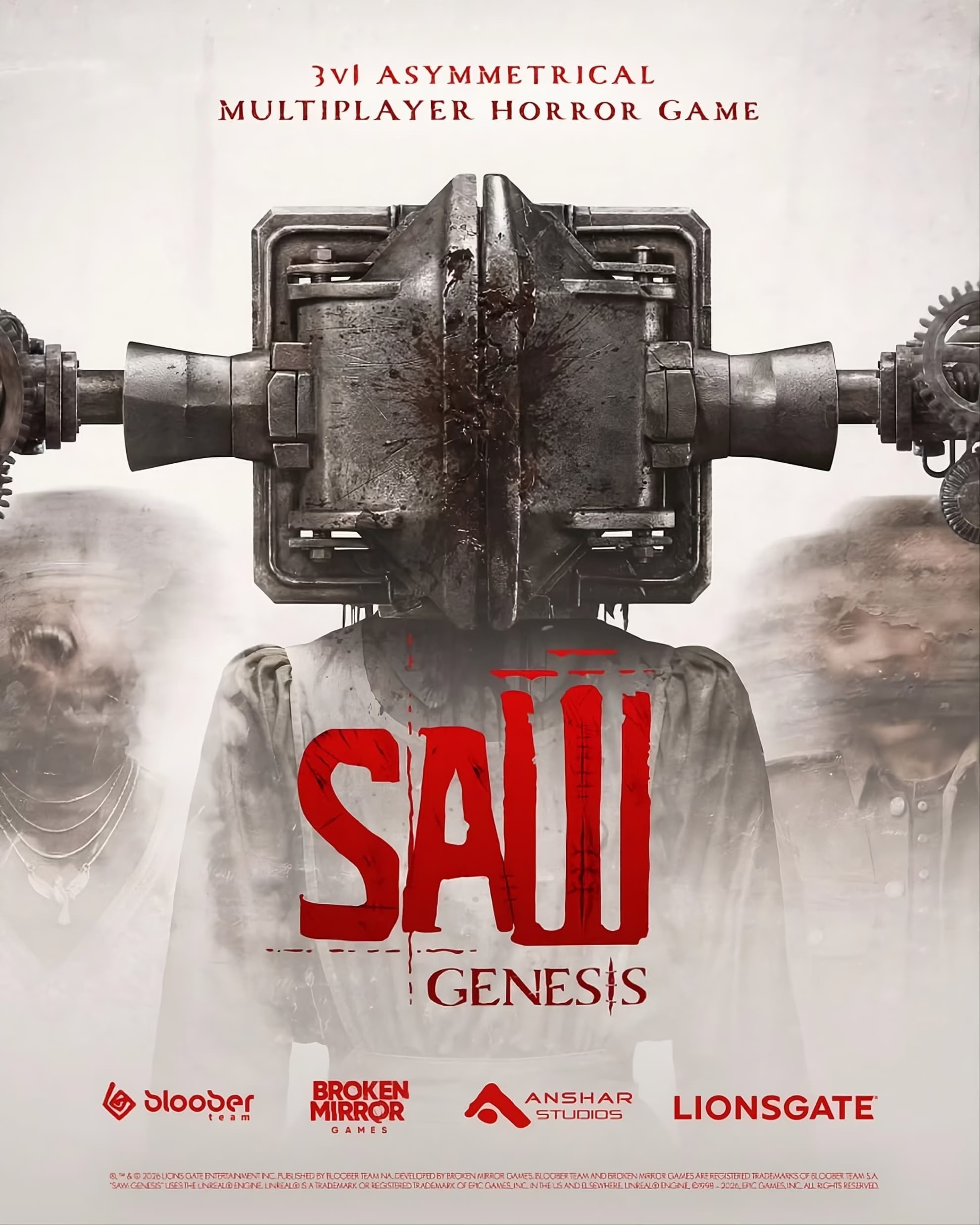
‘SAW: Genesis’ is the first Saw game since 2010. Its premise is entirely disconnected from the Tapp-era single-player approach: there is no detective protagonist, no asylum corridor to traverse, no puzzle box to be solved in isolation. Instead, the game posits a character called the Judge—described in official materials as an early architect of Jigsaw’s philosophy, shaped by experiences in the Great War—who orchestrates trials for three Accused players on procedurally generated maps.
The historical displacement is the most arresting design decision in what has been announced. Jigsaw as cultural figure is inseparable from the films’ specific late-industrial American context: the warehouses, the deteriorating infrastructure, the hospital corridors.
Moving the premise to the post-WWI period introduces a different register of institutional collapse and moral reckoning—one in which the Judge’s philosophy of rehabilitation through pain can be anchored to the historical discourse on sacrifice and suffering that World War I generated throughout European culture.
The Judge’s Deliberate Vulnerability
The mechanical design claim that distinguishes ‘SAW: Genesis’ from its genre predecessors is the explicit vulnerability of its dominant player. In ‘Dead by Daylight,’ the killer’s physical superiority is the mechanical premise of the asymmetry: survivors exist to run, hide, and repair generators because they cannot fight back. The power differential is the genre’s organizing principle.
Bloober Team’s official materials state that the Judge in ‘SAW: Genesis’ cannot overpower the Accused through sheer force alone. The dominant player instead relies on perks and traps—customizable ahead of each match—and the manipulation of environmental systems: surveillance, hazards, and an “Accomplice” that can be summoned to apply pressure. Matches take place on procedurally generated maps, meaning no two trials share the same spatial layout.
This is a meaningful structural departure from the genre standard. A Judge who must out-think rather than out-run the Accused shifts the asymmetry from predator-prey to something closer to dungeon-master against players: one side sets conditions, the other navigates them. Whether this distinction holds under extended play—whether the trap-and-environment toolset is genuinely capable of substituting for physical dominance—is a question the announced design cannot yet answer.
Bloober and the Shift to Publishing
Bloober Team’s involvement as publisher rather than primary developer marks a structural expansion in the Kraków studio’s operational identity. Founded in November 2008 by Piotr Babieno and Piotr Bielatowicz, the studio built its reputation through single-player psychological horror: ‘Layers of Fear’ in 2016, ‘Observer’ in 2017, ‘Blair Witch’ in 2019, ‘The Medium’ in 2021.
The 2024 remake of ‘Silent Hill 2’ for Konami substantially elevated the studio’s standing in the genre, and ‘Cronos: The New Dawn,’ released in September 2025, was its first original IP after that success.
Broken Mirror Games is Bloober Team’s publishing subsidiary. Anshar Studios is a Polish developer established in November 2012 by CEO Łukasz Hacura and his team, previously of City Interactive Katowice, with a documented collaborative history with Bloober that includes ‘Observer: Redux’ and work on the ‘Layers of Fear’ remake. ‘SAW: Genesis’ represents Broken Mirror Games’ public debut as a credited developer alongside Anshar Studios, a studio whose relationship with Bloober now extends across multiple production cycles.
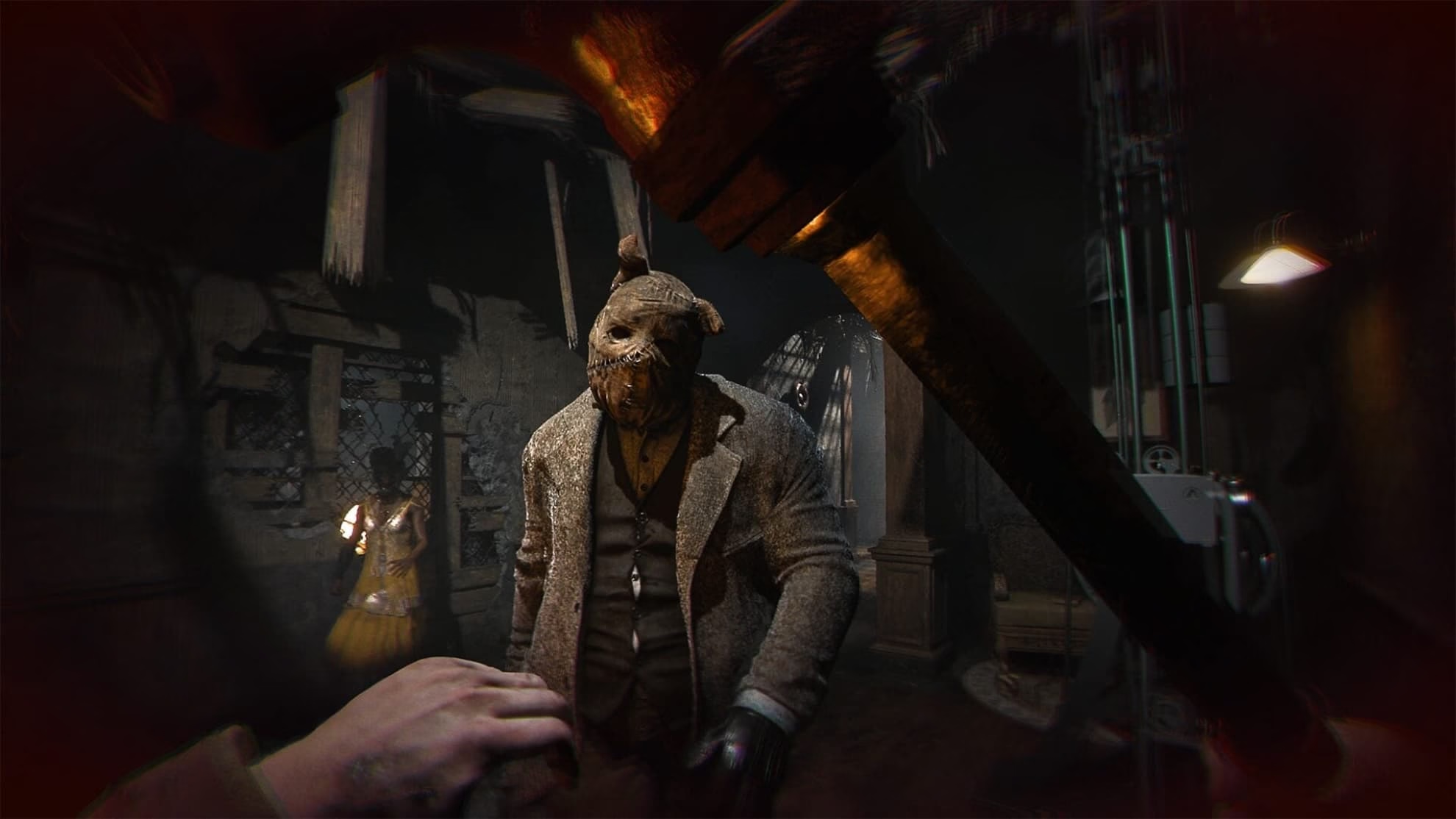
The publishing model being deployed here—Bloober Team as licensor and publisher, with development responsibility distributed between a new subsidiary and a trusted long-term collaborator—allows the Kraków studio to maintain its primary development focus on its own original IP and the ongoing ‘Silent Hill’ relationship while simultaneously expanding into franchise licensing.
It is a structural move that mirrors what Behaviour Interactive did with ‘Dead by Daylight’ once that game demonstrated the long-term viability of live-service asymmetrical horror.
Early Access and What Can Be Assessed
‘SAW: Genesis’ is planned for Steam Early Access in autumn 2026, targeting PC first before a full release on PS5, Xbox Series X/S, and PC. Official materials confirm that the Early Access version will include 2 locations, 2 Judges, and 4 Accused. The developers have stated their intention to maintain consistent pricing between the Early Access launch and the full release, a policy that signals awareness of the community reception risk that Early Access horror titles face when pricing structures shift mid-development. An alpha playtest is currently open for registration.
The franchise context is unavoidable: Lionsgate’s ‘Saw’ film series, created by James Wan and Leigh Whannell, is a property with ten films and a well-documented relationship between its cult audience and the question of what constitutes a valid entry in the mythology. ‘SAW: Genesis’ does not engage directly with the films’ continuity—its prequel premise and the Judge character are original to the game—but it inherits the franchise’s audience expectations and its specific register of trap-logic as moral philosophy.
What cannot yet be assessed is the central question this design raises: whether the Judge’s vulnerability, the procedural map generation, and the trap-customization system produce genuinely differentiated play from the genre standard. Asymmetrical multiplayer horror has demonstrated, across a decade of titles, that the formula is reproducible but that sustained engagement requires either constant content expansion or a mechanical hook distinctive enough to retain a community without it.
The announced design philosophy—traps and environmental control over physical dominance—is the proposed hook. Its execution is the article of faith.
The Trial That Has Not Started
The ‘Saw’’ franchise’s sixteen-year absence from interactive media has done nothing to diminish the potency of its central conceit. Jigsaw’s philosophy—that suffering is a diagnostic tool and that the unwilling subject is the patient—remains one of the few sustained moral systems in mainstream horror cinema, however compromised it became across the franchise’s later entries. Moving that conceit into the asymmetrical multiplayer space, with a pre-Jigsaw Judge operating in the moral devastation of post-WWI Europe, is a coherent conceptual decision.
Whether ‘SAW: Genesis’ delivers on it depends on whether Broken Mirror Games and Anshar Studios can translate the Judge’s documented vulnerability—the absence of brute-force dominance—into a multiplayer experience that sustains genuine tension rather than frustration. The genre has established what the formula looks like when it works; this announcement offers a specific variation on that formula. The alpha playtest and Early Access launch will determine whether the variation is structural or merely cosmetic.
The asymmetrical horror genre has now absorbed properties as varied as ‘Alien,’ ‘Resident Evil,’ and ‘Friday the 13th’—each with its own monster logic and its own audience expectations: which horror franchise do you think has yet to be adapted into asymmetrical multiplayer, and what would need to be true about the design for the adaptation to honor the source material’s specific register of dread?

Leave a Reply