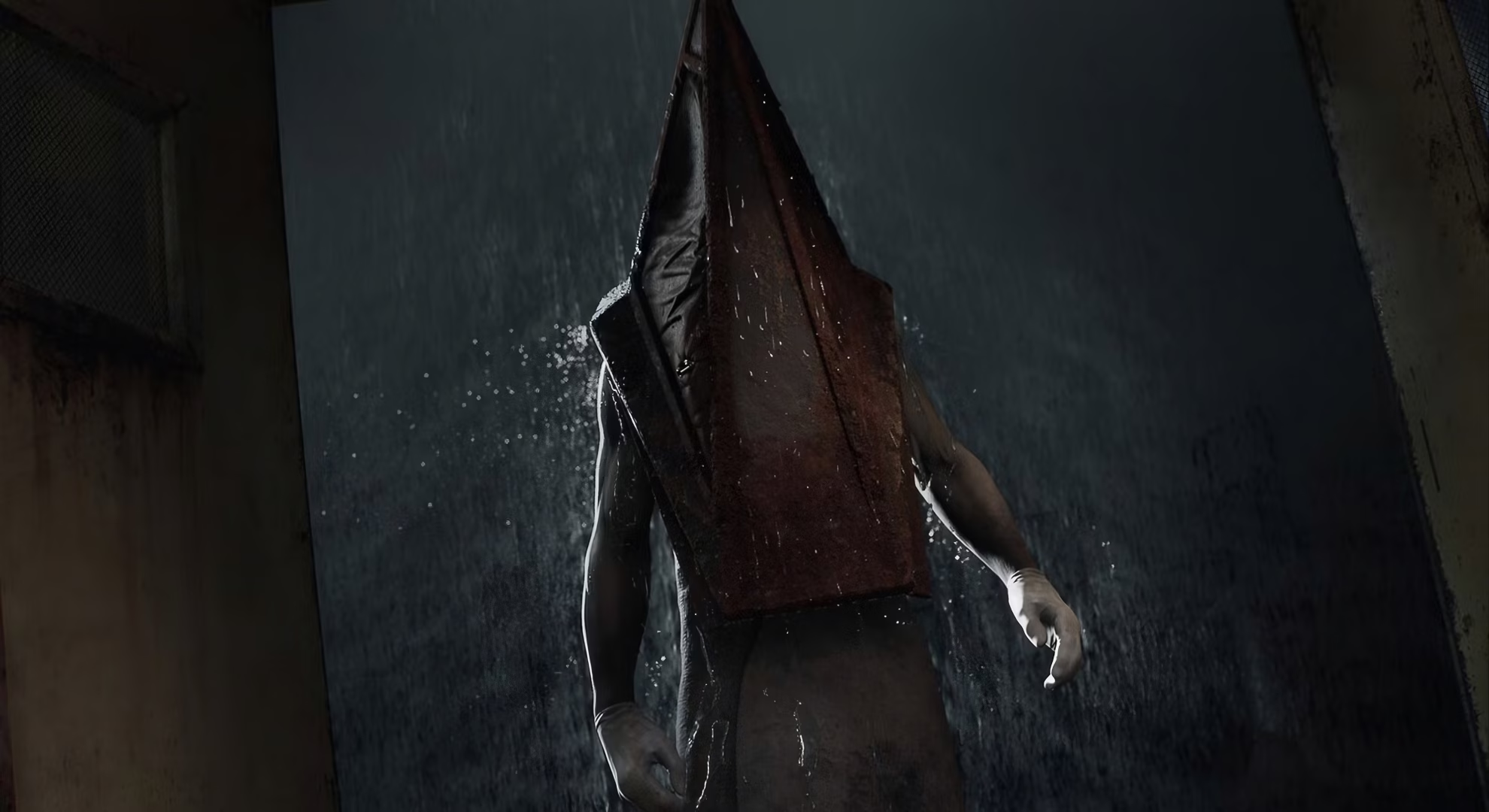


Folk horror has always depended on real geography carrying weight that invented plot alone cannot supply — a parish, a coastline, or an island whose documented history lends the fiction a credibility no blank setting provides. British cinema settled that method into a defined genre with ‘The Wicker Man’ in 1973, placing a pagan cult on a remote Scottish island precisely because Scotland’s own religious record made the premise plausible rather than arbitrary.
‘Silent Hill: Townfall’ borrows the same geographic logic for a franchise built on a different variety of dread. Developed by the Glasgow studio Screen Burn and co-published by Konami Digital Entertainment and Annapurna Interactive, the game is confirmed for release on September 24th, 2026, on PlayStation 5, Steam, and the Epic Games Store, with a Standard Edition priced at $49.99 and a Digital Deluxe Edition at $59.992.
The project is directed and written by Jon McKellan, designed by Graeme McKellan, and scored by the musician Pilotpriest, with art direction from Paul Abbott.
St. Amelia’s Documented Past
The game unfolds in 1996 on the fictional island town of St. Amelia off the Scottish coast, where the amnesiac protagonist Simon Ordell returns after being summoned to “put things right.” He finds the town emptied beneath a heavy fog, seemingly abandoned yet not entirely at rest, and begins uncovering fragments of a personal history connected to a woman named Zoe.
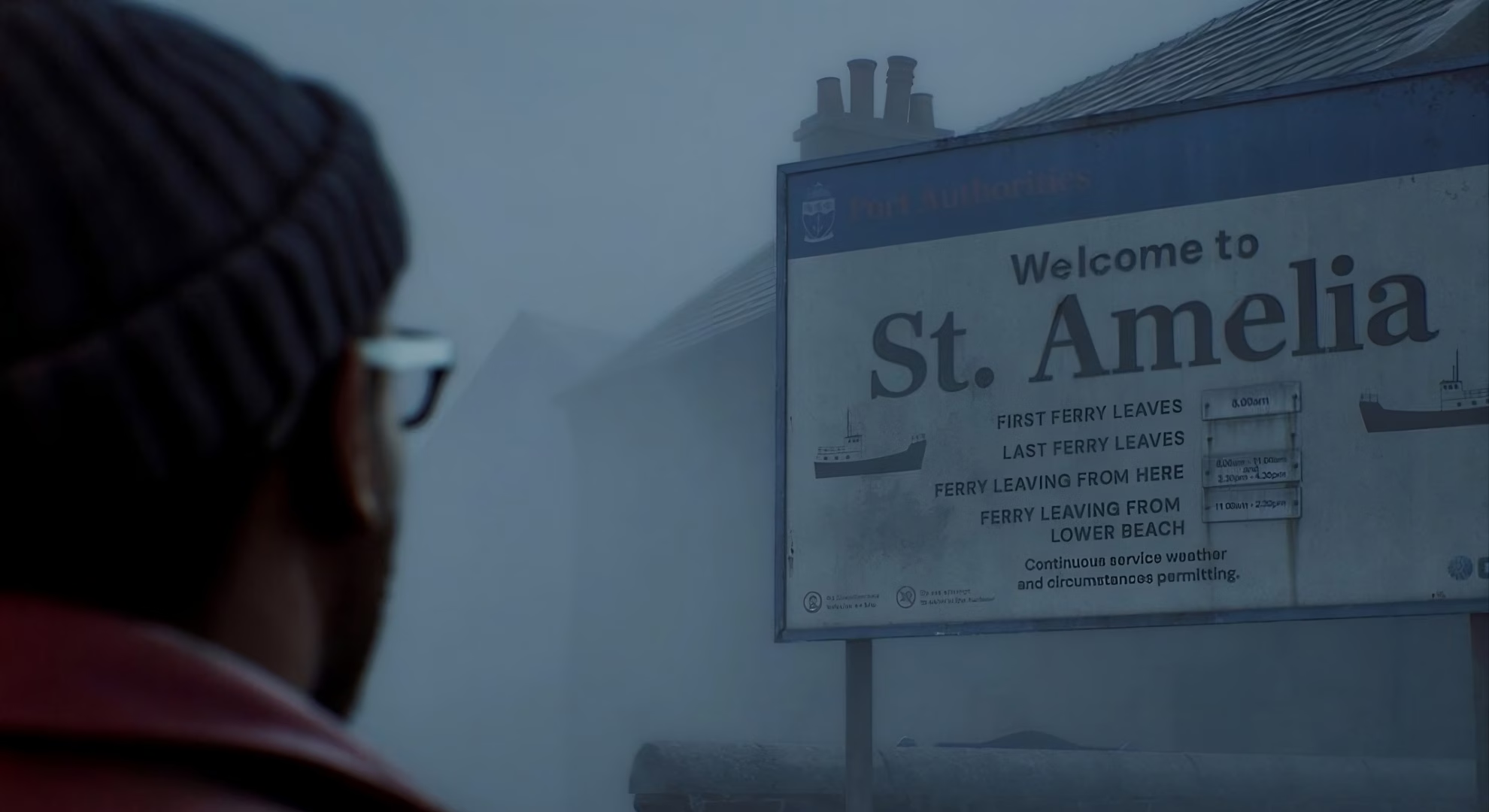
St. Amelia has no real counterpart, but setting a story of guilt and community secrecy in Scotland specifically draws on a documented record no earlier entry set in a fictional American town could invoke.
Scotland executed an estimated 2,500 people for witchcraft between the sixteenth and eighteenth centuries, a rate several times higher per capita than England’s, beginning with the North Berwick trials of 1590, which King James VI personally oversaw and which shaped his 1597 treatise Daemonologie.
Screen Burn has not confirmed that ‘Silent Hill: Townfall’s plot engages this history directly, and no released material describes a literal witch cult driving events on the island. The setting nonetheless places the series, for the first time, inside a country whose relationship to religious persecution is public record rather than the studio’s own invention, a distinction the Deep South and Midwestern settings of earlier entries never carried.
From Radio to Television
The series’ oldest survival tool returns changed. Where the 1999 original and its sequels equipped players with a portable radio that crackled into static near danger, ‘Silent Hill: Townfall’ replaces it with the CRTV, a handheld television and radio transceiver Simon tunes across unstable analog frequencies.
The device folds three functions into a single object. It reveals nearby threats through walls and fog, switching from distant yellow markers to a closer red warning as danger approaches; it surfaces narrative fragments tied to Zoe’s disappearance; and it assists with the game’s environmental puzzles.
Sound design built around electromagnetic distortion and dissonant metallic noise reinforces the CRTV’s role, a register the developer has described as deliberately reduced in its reliance on longtime series composer Akira Yamaoka, whose place on this entry instead belongs to the musician Pilotpriest.
Exploration sits alongside combat and evasion rather than yielding to either. Simon can fight with improvised melee weapons and firearms including a revolver, or avoid confrontation by running, creating distractions, or hiding from creatures capable of tracking him if he draws too much attention.
The Entertainment Software Rating Board assigned the game a Mature 17+ rating for blood, strong language, and violence, citing sustained blood-splatter effects and a cutscene depicting a character being consumed by a monster.
From Ebisugaoka to St. Amelia
‘Silent Hill: Townfall’ is not the first recent entry to relocate the series away from its titular American town. ‘Silent Hill f,’ developed by NeoBards Entertainment and released in September 2025, moved the franchise to Ebisugaoka, a fictional mountain town modeled on rural Japan during the Showa era of the 1960s, written by Ryukishi07 around a story of a teenager confronting expectations placed on her by tradition and family.
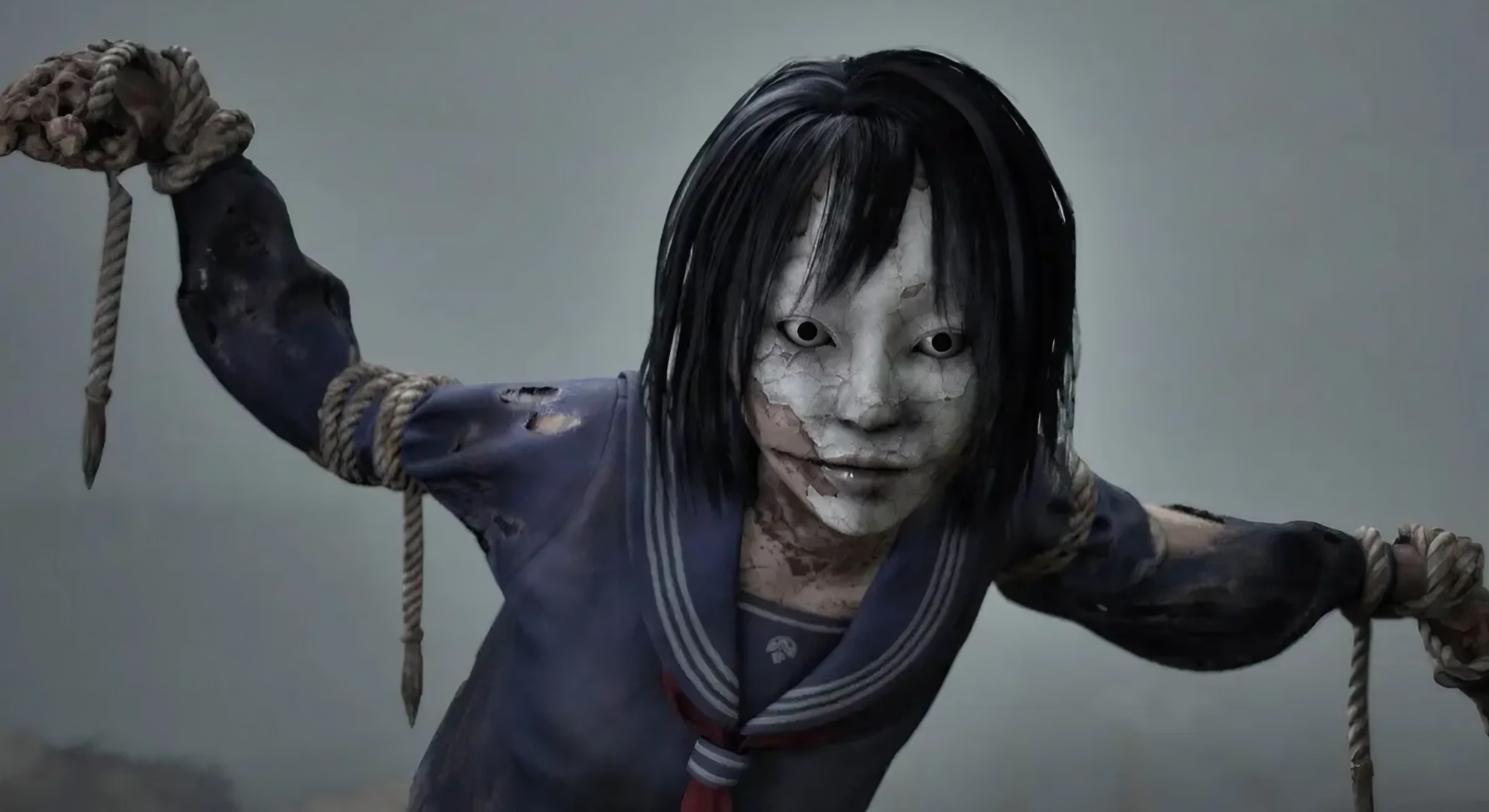
That relocation corrected a drift rather than inventing one. Series producer Motoi Okamoto and composer Akira Yamaoka had felt later mainline entries leaned too heavily into Western horror convention, and pursued a Japanese setting specifically to recover ground the franchise’s earlier Japanese developers had established before it was diluted by imitation.
‘Silent Hill: Townfall’ pursues the reverse geographic move for a studio built entirely outside Japan, testing whether the series’ particular blend of guilt, memory, and the uncanny holds inside a setting with no prior connection to the franchise’s Japanese design origins.
Ten Years Since a Cancellation
‘Silent Hill: Townfall’s own path to release has not been direct. Konami first revealed the project during a Silent Hill Transmission stream in October 2022, alongside Bloober Team’s ‘Silent Hill 2’ remake and ‘Silent Hill f,’ with a teaser trailer offering no plot detail. Updates grew sparse enough over the following two years that speculation about cancellation spread among fans, a concern Annapurna Interactive addressed directly after the publisher underwent a wave of internal departures in October 2024.
The Glasgow studio changed identity during that same stretch. Founded in 2015 and known previously for the narrative-driven titles ‘Stories Untold’ and ‘Observation,’ the team renamed itself from No Code to Screen Burn in July 2025, a reference, according to founder and creative director Jon McKellan, to the ghost image an old cathode-ray tube screen leaves behind.
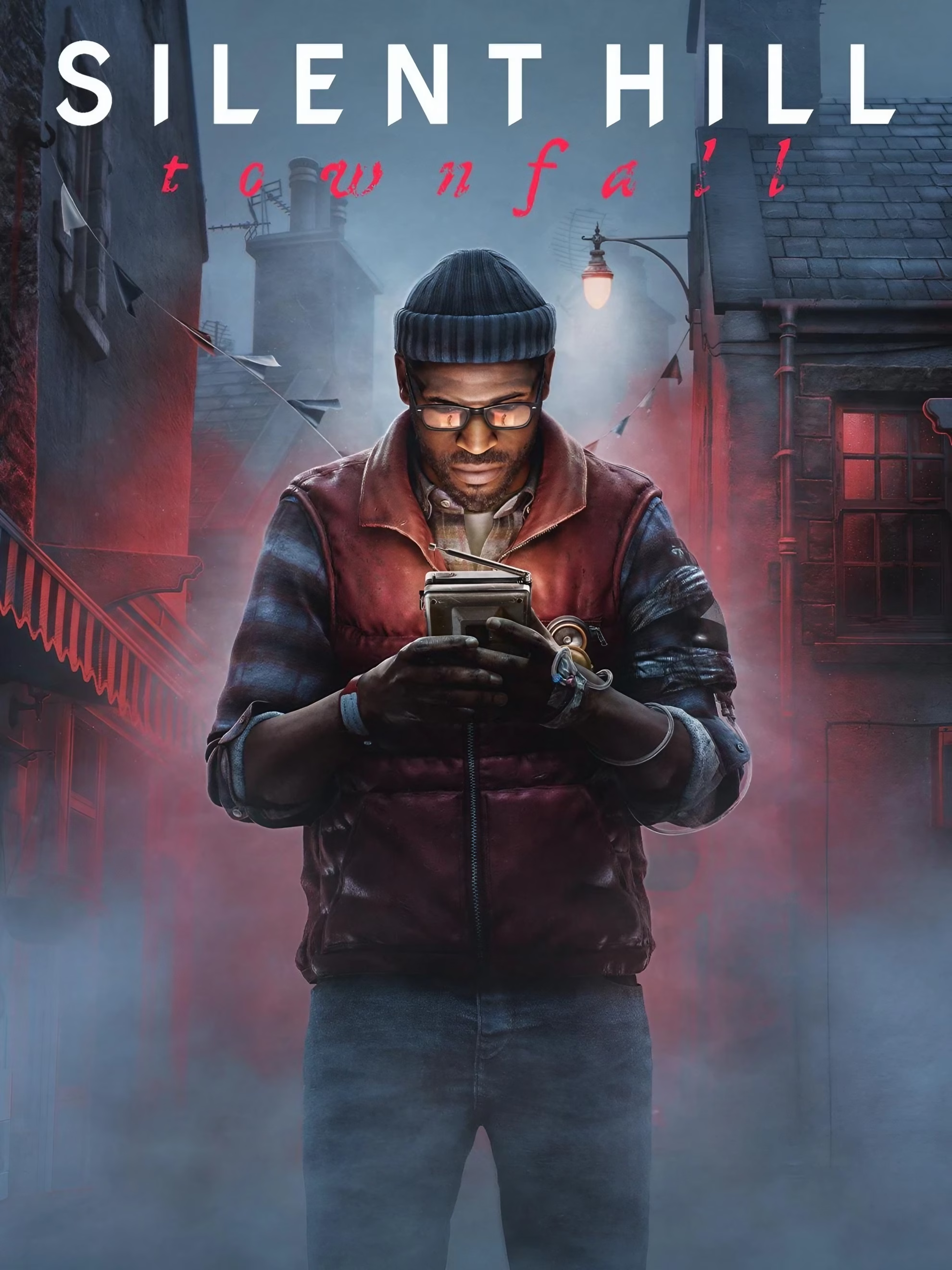
Confirmed release details arrived only this year. PlayStation’s February State of Play carried the first extended look at the game, a June broadcast then locked in the September 24th release date, and an August gameplay showcase detailed the CRTV and combat systems described above.
A Test Case for the Revival
‘Silent Hill’s ongoing revival has kept one consistent method: hand the property to a studio with no prior history in the franchise, and let that studio’s own instincts determine what psychological horror looks like away from the original town. NeoBards answered that instruction by returning to the series’ Japanese origins. Screen Burn is answering it by moving in the opposite direction entirely, toward a country whose own historical record of religious persecution the studio did not need to invent.
The result is a franchise now defined less by a single setting than by a working method: take the underlying structure of guilt made monstrous, and test whether it holds across sharply different geographies and design traditions. St. Amelia will not settle that question before September 24th, but it does mark the point where the series’ post-2022 revival becomes something closer to a sustained design approach than a sequence of separate comebacks.
St. Amelia joins a short list of horror settings willing to let a real, documented persecution history do quiet work behind a fictional community. Which other horror games have built their dread around a specific historical record in a similar way, and would you point other readers toward them ahead of ‘Silent Hill: Townfall’s release?

Leave a Reply