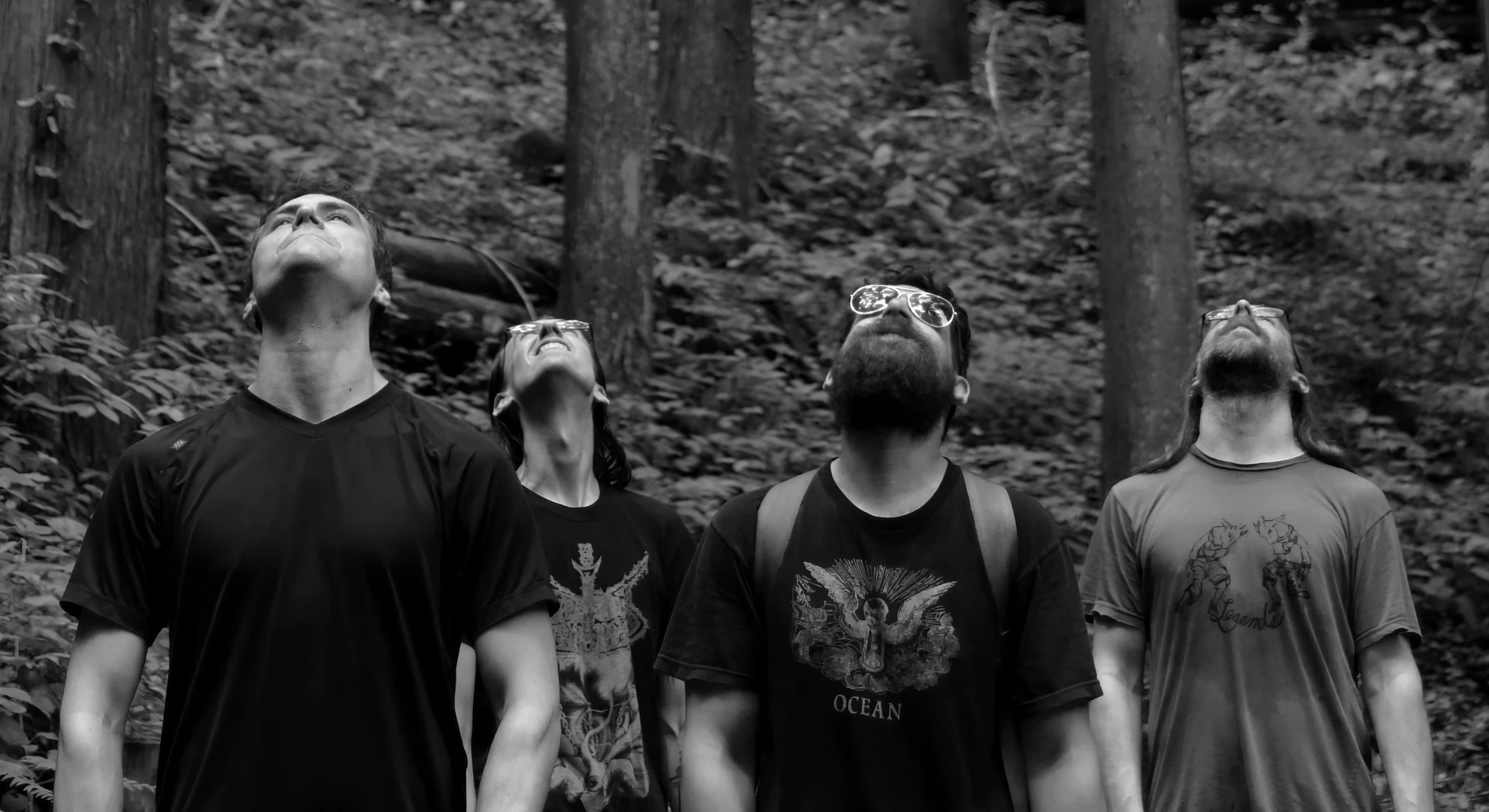


A hymn on memory, composed by a poet already sliding toward the breakdown that would end his working life, closes with a warning: hold the soul together, or mourning itself goes unmet. Friedrich Hölderlin wrote those closing lines about the death of Achilles outside the walls of Troy, in one of the last poems he completed before three decades of near silence.
Two centuries later, a black metal quartet working out of a relocated basement studio in Queens borrowed the passage for a song called ‘Grievous Corrector,’ sung over guitar lines that collapse into themselves and reassemble on the beat after.
Krallice release their 16th full-length, ‘Scour Order,’ on September 18th via Profound Lore Records, the label that issued the band’s first three albums nearly two decades ago, before 12 self-released records carried the group through a long stretch of internal reinvention.
‘Scour Order’ draws its eight track titles and much of its lyrical material from two sources confirmed directly by the band: selections from Aeschylus’s ‘Oresteia,’ paired with selections from the poetry of David Ferry, and the third surviving version of Hölderlin’s ‘Mnemosyne,’ interpolated whole into ‘Grievous Corrector.’
Where extreme metal has often treated antiquity as scenery, Krallice’s method resembles literary translation more than lyric-writing, a distinction that matters for a genre still routinely read for its extremity rather than its content.
From Woodhaven Outward
Krallice began in 2007 as a two-guitar collaboration between Colin Marston and Mick Barr, conceived without a firm plan beyond testing what a black metal record shaped entirely around the two guitarists’ technical vocabularies might sound like. Marston already ran a recording studio in the neighborhood, a windowless space he called Menegroth, The Thousand Caves, and it was there the pair recorded the sessions that became the band’s self-titled debut in 2008.
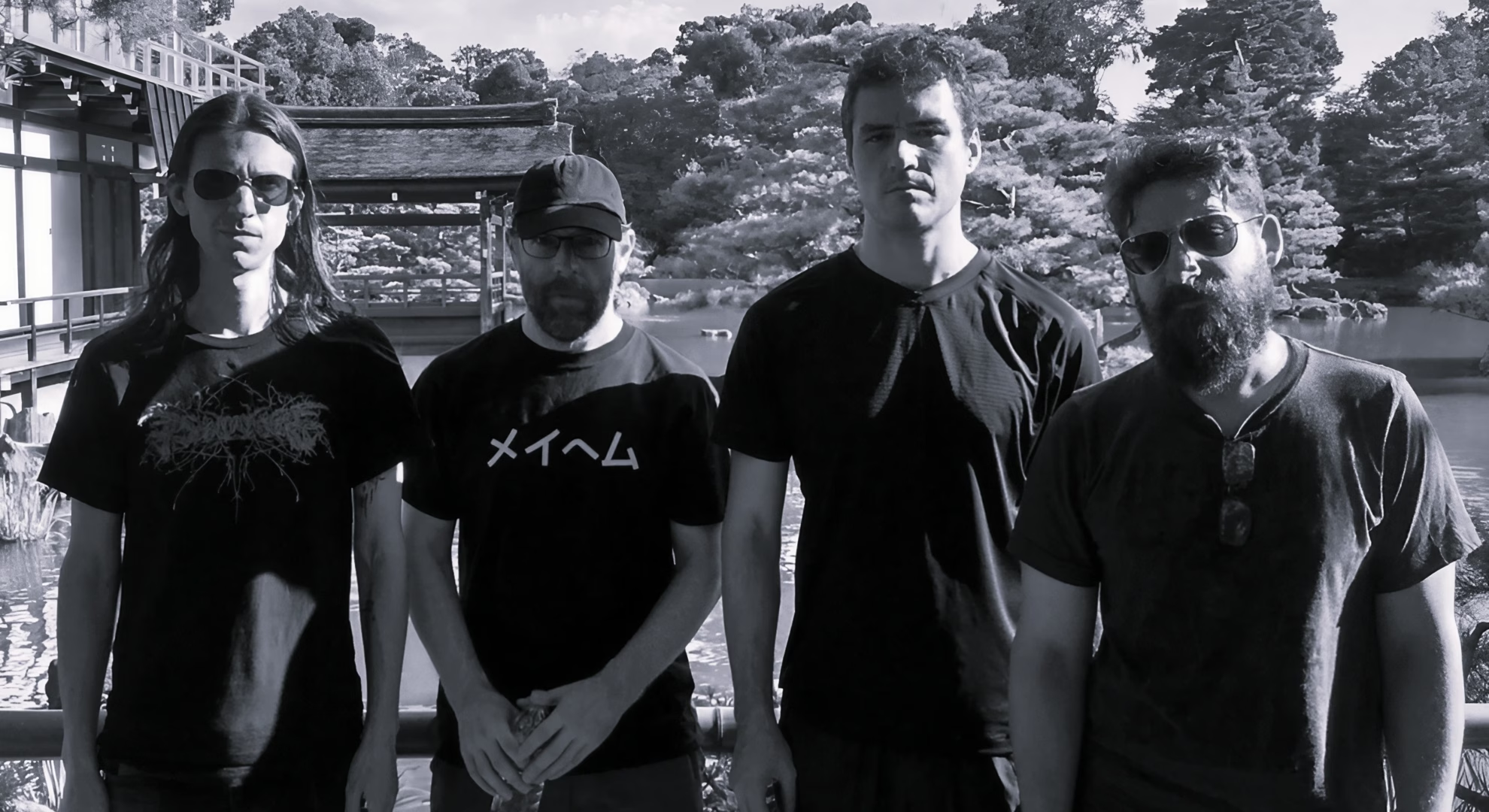
Bassist Nick McMaster and drummer Lev Weinstein joined by the time that record was finished, completing the lineup that carried Krallice through its first phase: dense, high-register dual-guitar black metal, vocals split between Marston and Barr, tracked on tape in a single room so the guitars’ feedback bled together across the mix.
The Instrument Swap Years
Over the following decade and a half, the band’s internal division of labor rotated more than once. After ‘Years Past Matter’ in 2012, Krallice’s songwriting loosened into longer, more hypnotic forms, a shift already underway on ‘Ygg Huur’ in 2015 and the ‘Hyperion’ EP the following year.
Beginning with ‘Loüm’ in 2017, the band brought in Neurosis’s Dave Edwardson for vocals, lyrics, and synthesizer, a collaboration that continued through the darker, less predictable ‘Mass Cathexis’ in 2020. ‘Demonic Wealth,’ self-released in 2021, reset those roles again: Marston took over guitar, synthesizer, and composition entirely, and Barr became the band’s sole vocalist, a change that pushed the sound toward a lower-fidelity, synthesizer-heavy register carried by a single guitar.
Four releases that followed swapped roles once more, with Barr on bass and vocals, McMaster on guitar and vocals, and Marston on synthesizer and additional drums, favoring a single-guitar, synthesizer-laced atmosphere over the dual-guitar density of the band’s founding years.
The Final Caves Record
That run of records reached its most expansive point on ‘Inorganic Rites,’ released July 5th, 2024, the band’s 15th full-length and, by the band’s own account, the final album completed at the original location of Marston’s studio.
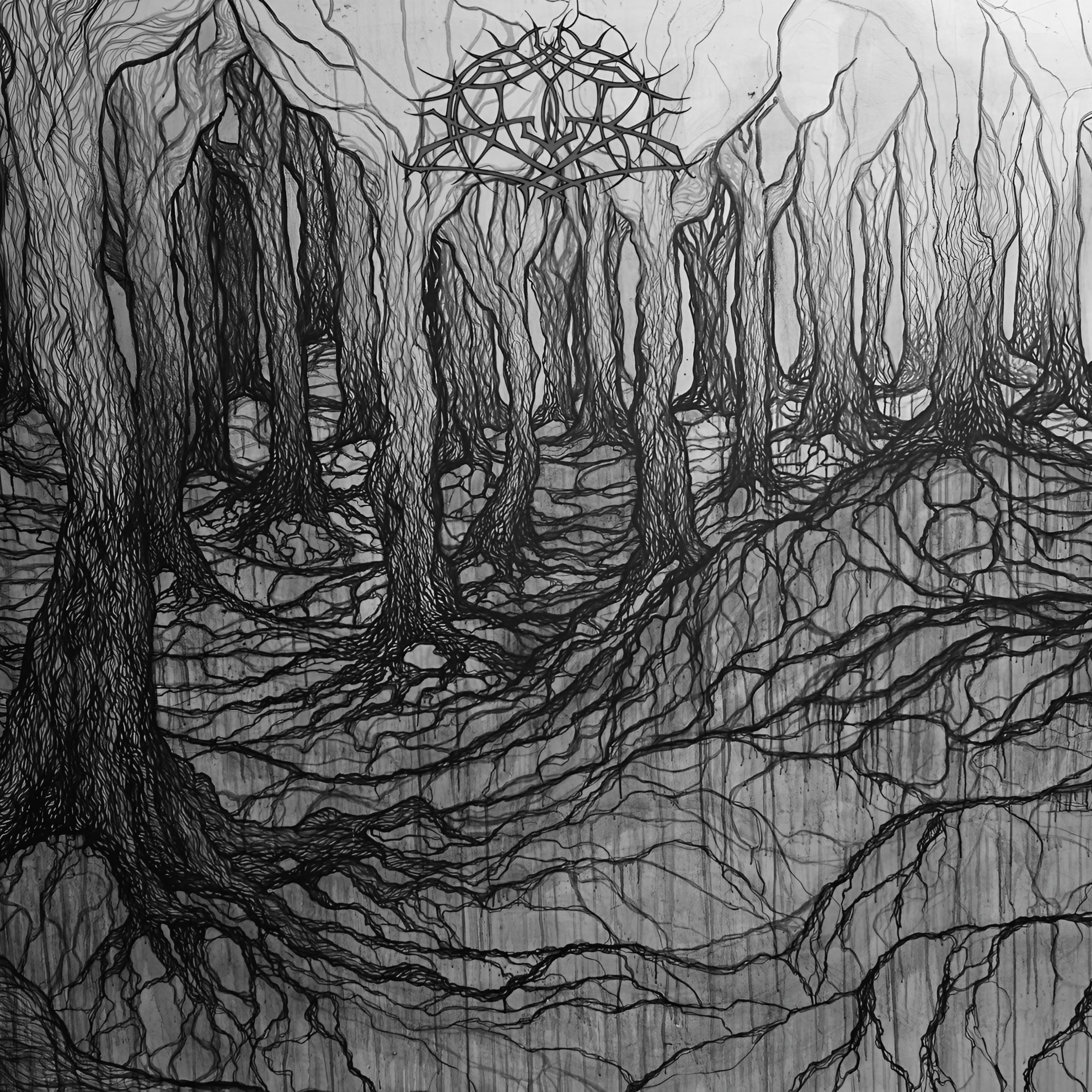
Ten tracks and roughly an hour long, ‘Inorganic Rites’ folded extended synthesizer passages into the band’s usual density, credited to McMaster on guitar and vocals, Marston on synthesizer, guitar, and vocals, and Barr on bass and guitar, with Weinstein on drums throughout.
The record let its synthesizer interludes function as structural pauses inside otherwise relentless material, closing out a stretch of the catalogue defined by single-guitar, synthesizer-forward arrangements. Weeks after its release, Marston’s studio was forced to relocate, ending its run at the Woodhaven address where Krallice had recorded every album since 2008. Both the sound and the studio behind ‘Inorganic Rites,’ then, closed within the same year.
The New Thousand Caves
Colin Marston recorded, mixed, and mastered ‘Scour Order’ himself, as he has every Krallice album since the band’s founding, now working from a new location under the same studio name, Menegroth, The Thousand Caves. Marston’s credentials extend well past his own band: he has engineered and produced records for Gorguts, Dysrhythmia, Behold… The Arctopus, Imperial Triumphant, Origin, Panopticon, and Liturgy, among others, in addition to playing guitar, bass, and synthesizer across several of his own project bands.
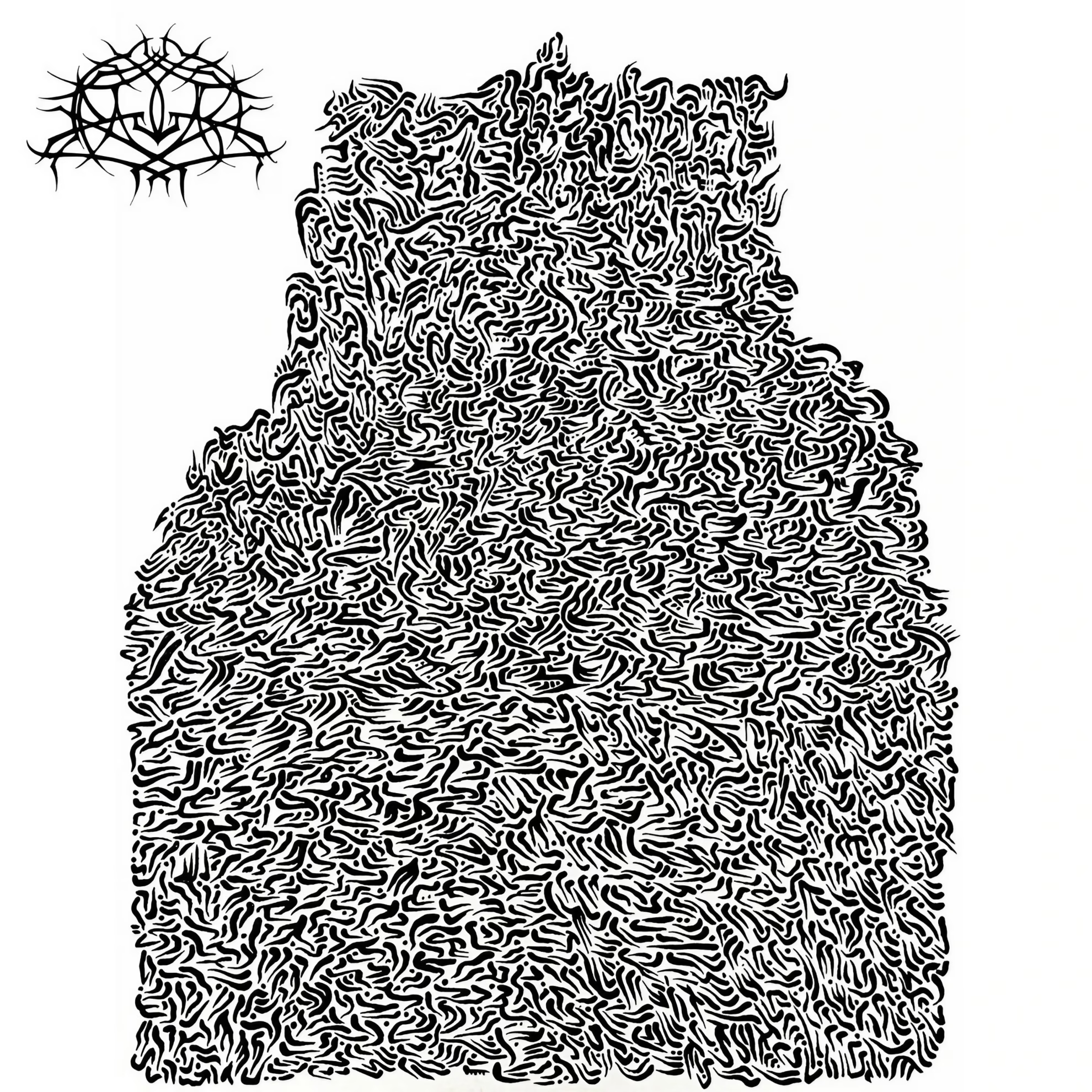
His studio’s reputation, documented across more than fifteen years of production credits, rests specifically on complex, structurally demanding material, precisely the kind of writing ‘Scour Order’ returns to after several albums centered on single-guitar synthesizer arrangements.
The relocation has become part of the record’s own account of its making: ‘Inorganic Rites’ closed out the studio’s original run, and ‘Scour Order’ opens the next one, recorded in a space carrying the same name into a new address. For a band whose personnel roles have rotated across nearly every release since 2007, that continuity of name across a literal move is one of the record’s few constants.
The House of Atreus
Heavy metal’s engagements with classical antiquity have usually taken the form of virtuosity rather than citation, guitarists borrowing harmonic language from Baroque and Romantic composition to signal technical seriousness, a move documented across three decades of metal scholarship as a matter of musical structure rather than literary content.1 ‘Scour Order’ works differently.
McMaster’s lyrics for the record draw on selections from Aeschylus’s ‘Oresteia’ and, separately, from the poetry of David Ferry, according to the album’s own release credits, a trilogy that stands as the only complete example of Greek tragic drama to survive from antiquity, first staged in Athens in the fifth century BCE.
The three plays trace a single, escalating account of the House of Atreus: Agamemnon’s murder at the hands of his wife, Clytemnestra, upon his return from Troy; the retaliatory killing of Clytemnestra by their son, Orestes; and Orestes’s subsequent pursuit by the Furies, ancient spirits of vengeance bound to answer blood with blood.
The trilogy resolves not through further killing but through the founding of a court in Athens, presided over by the goddess Athena, converting a private cycle of vengeance into a public system of judgment, the movement from blood-debt to civic order that stands at the center of Aeschylus’s design.2
Track titles including ‘Kill the Guardian’ and ‘Grievous Corrector’ echo that same procession of avengers and correctors, Clytemnestra as her husband’s self-appointed corrector, Orestes correcting Clytemnestra in turn, the Furies as guardians of an older order that Athena’s court ultimately supersedes. ‘Scour Order,’ as an album title, sits comfortably inside that same vocabulary, a scouring, a corrective violence, applied to restore a disrupted balance.
Achilles by the Fig Tree
The album’s other literary source is more fragmentary and considerably stranger. ‘Grievous Corrector,’ per the band’s own credits, interpolates the third surviving version of Friedrich Hölderlin’s hymn ‘Mnemosyne,’ one of the last poems the German poet completed before the mental collapse that ended his working life.
Hölderlin’s poem takes its name from the Greek goddess of memory, mother of the nine Muses, and spends its three stanzas circling the deaths of Homeric heroes: Achilles, killed near a fig tree outside Troy; Ajax, who died by his own hand on foreign soil after a fit of battle-madness; and Patroclus, killed while wearing Achilles’s own armor.
Recent scholarship on the poem reads its central image, “my Achilles died on me,” in the hymn’s own first-person address, as an attempt to hold together two kinds of mourning at once: personal grief for a single fallen figure, and a broader account of a civilization’s heroic age receding into memory. The poem closes with a warning that the poet’s soul must be actively held together against the pull of unbounded grief, or mourning itself, in the hymn’s own paradoxical phrase, goes into default.3
That same tension, mourning that must be held in check rather than surrendered to, sits at the center of ‘Grievous Corrector,’ the track that interpolates the passage directly, and colors the language of correction that recurs across the album’s other song titles. Where Aeschylus’s trilogy resolves grief through the invention of a civic order, Hölderlin’s fragment offers no such resolution, only the demand that the mourner keep hold of himself. ‘Scour Order’ sits between those two responses to loss without settling on either.
The Porridger Session
Two songs from ‘Scour Order’ have been made public ahead of the full record, and both bear out the album’s return to Krallice’s founding instrumentation.
‘Living Useless Ritual,’ the first single, restores the twin-guitar interplay between Marston and Barr that largely receded from the band’s sound after 2021, with McMaster back on bass and Marston retaining the vocal role he took on during the band’s synthesizer-centered years. ‘Kill the Guardian,’ released as the record’s second single, is one of only two songs on the album carrying vocal parts from all three of the band’s singers, a track Marston has said began as a riff from Barr that the group arranged collectively.
Full critical assessment of ‘Scour Order’ waits on the record’s public release, in keeping with this publication’s standard for unheard material, but the two confirmed songs already argue for treating the album’s classical sourcing as compositional material as an integral structural element rather than a superficial ornament, a distinction that popular-music scholarship on extreme metal has flagged as chronically underexamined, given the genre’s tendency to be read for its extremity ahead of its content.4
First Crossing to Europe
‘Scour Order’ also marks a first for Krallice’s public life: the tour that follows its release, running from October 8th through November 7th, will be the band’s first tour of Europe in nearly two decades of activity, following individual festival appearances at Roadburn, Maryland Deathfest, and Incubate, among others.
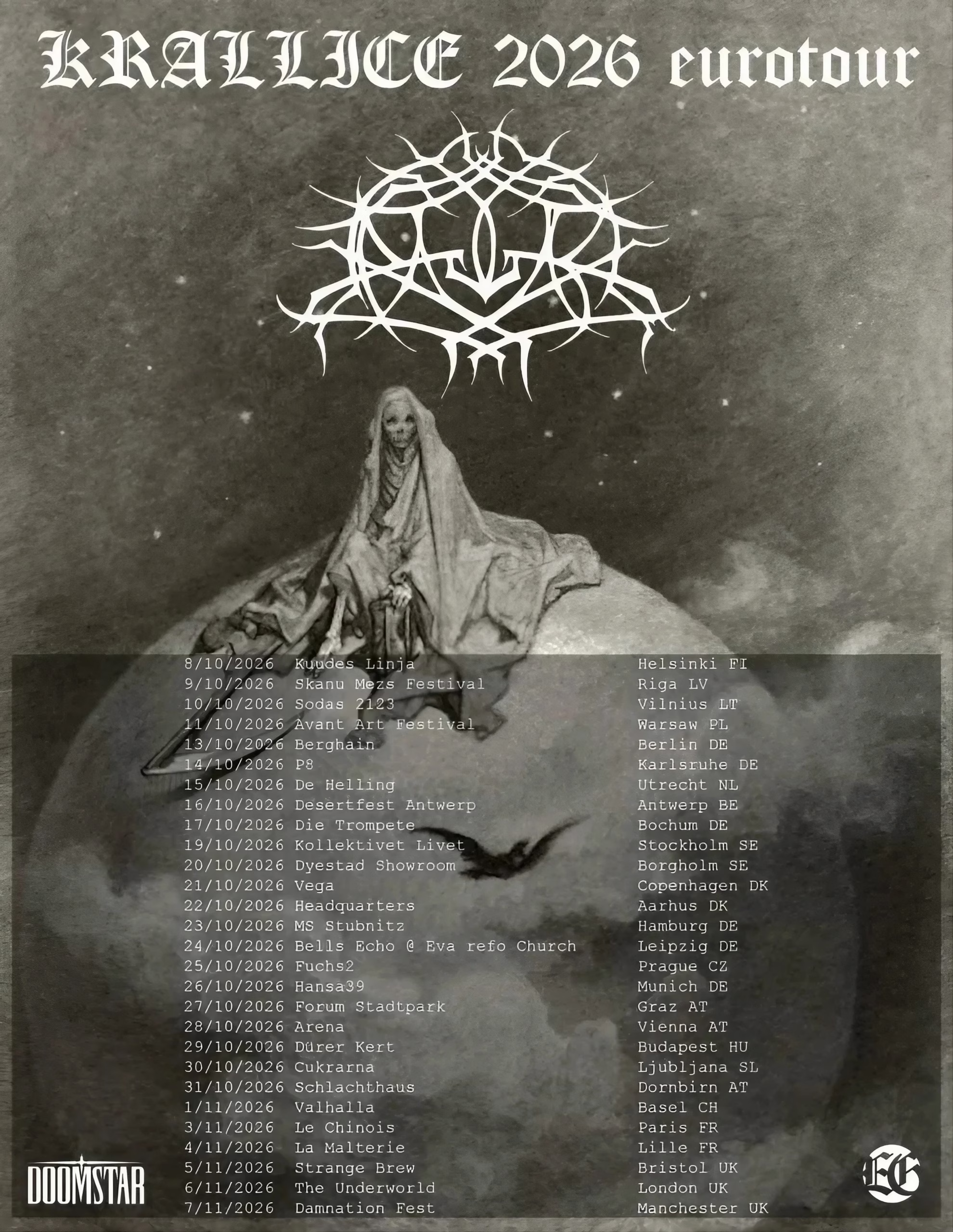
Roadburn’s own account of the booking describes commissioning three separate sets from Krallice, spanning the band’s earliest material, its recent lineup-rotation years, and an entirely new work, the material that became ‘Scour Order,’ a level of specific curatorial attention uncommon for an American extreme metal band whose profile has been carried almost entirely by recorded output rather than touring.
That commission, and the tour it now anchors, gives ‘Scour Order’ a documented point of contact with a European festival audience assembled over more than two decades around exactly the kind of technically dense, structurally uncompromising extreme metal Krallice has spent its career refining, an audience whose relationship to the band, until this year, ran only through import pressings rather than a shared room.
The Furies’ Unfinished Work
Aeschylus’s trilogy ends with a resolution: private vengeance converted into a public court, blood-debt into law. Hölderlin’s hymn refuses that same comfort, closing instead on a demand that grief be carried rather than resolved.
‘Scour Order’ sits inside that gap between a culture that found a mechanism for closing its oldest wounds and a poet who found none, set against a band that has spent 18 years and 16 records declining to settle on a single version of itself.
The relocation of Marston’s studio between one Krallice album and the next gives that refusal a literal home: ‘Scour Order’ comes out of a room carrying the same name as the one that closed, on the same street, doing the same work under new walls. For a European audience meeting Krallice’s recorded catalogue in person for the first time this October, that continuity may matter more than the record’s classical apparatus, proof that a band assembled almost entirely through rotating internal roles and recorded output alone remains, underneath all of it, one continuous project.
For those who have followed Krallice through five different lineups since 2007, does a record drawing on Greek tragedy and German Romantic verse feel like a genuine return to the band’s origins, or simply one more rotation in a catalogue defined by change?
If you are a band, artist, label, or promoter navigating the dark and independent scene, you need press materials that speak the language — not generic copy. Our Studio writes press releases, EPKs, bios, and website content for the underground and the vanguard alike. Plans start at $150, with turnaround as fast as 2 days.
References
- Robert Walser, ‘Running with the Devil: Power, Gender, and Madness in Heavy Metal Music’ (Hanover, NH: Wesleyan University Press, 1993), 57–71. ↩︎
- Simon Goldhill, ‘Aeschylus: The Oresteia’ (Cambridge: Cambridge University Press, 1992), 24–33. ↩︎
- Charles Bambach, ‘Hölderlin’s Mnemosyne: A Reading,’ Humanities 14, no. 10 (2025): 194. ↩︎
- Michelle Phillipov, ‘Death Metal and Music Criticism: Analysis at the Limits’ (Lanham, MD: Lexington Books, 2012), 1–15. ↩︎

Leave a Reply