

The Roman satirist Horace named them without mercy — Gratidia, Sagana, Veia, the unnamed others — cataloguing their nocturnal rites with fascinated revulsion in the fifth and seventeenth epodes: the “veneficae,” practitioners of the dark botanical arts, women who pressed cursed tablets from wax, gathered bones from crossroads graves, and shaped their power from roots and poisons in equal measure.1
What made the “veneficae” enduring as a cultural figure was not their malice but their specificity — their rituals were exact, their ingredients particular, their knowledge accumulated across generations of women whom official history preferred to prosecute rather than acknowledge.
On ‘Veneficium,’ released May 22nd, 2026 by Edged Circle Productions, Opera IX draws on this same specificity: the album is organized around the precise figures, implements, and botanical logic of Roman “veneficium” as Horace recorded it. The result, for a band navigating lineup crises and stylistic recalibrations across nearly four decades, is their most coherent and internally purposeful full-length since the Cadaveria era.
The Weight of Thirty-Seven Years
Ossian founded Opera IX in Biella, Piedmont, in 1988, and the career arc is more complicated than mere persistence. The classic period, stretching from ‘The Call of the Wood’ (1995, Miscarriage Records) through ‘The Black Opera: Symphoniae Mysteriorum in Laudem Tenebrarum’ (2000, Avantgarde Music), produced work whose ambition set a standard against which everything since has been measured.
‘Sacro Culto’ (1998, Shiver Records) remains the high-water mark: six tracks spanning 70 minutes, Cadaveria’s vocal range serving as the album’s primary dramatic instrument, the keyboards of Lunaris establishing an atmospheric depth that the band’s subsequent configurations have consistently aimed for.
The departure of Cadaveria and Flegias in 2001 — both going on to form the Cadaveria project — left Ossian with a band carrying symbolic weight and a void in its vocal center.
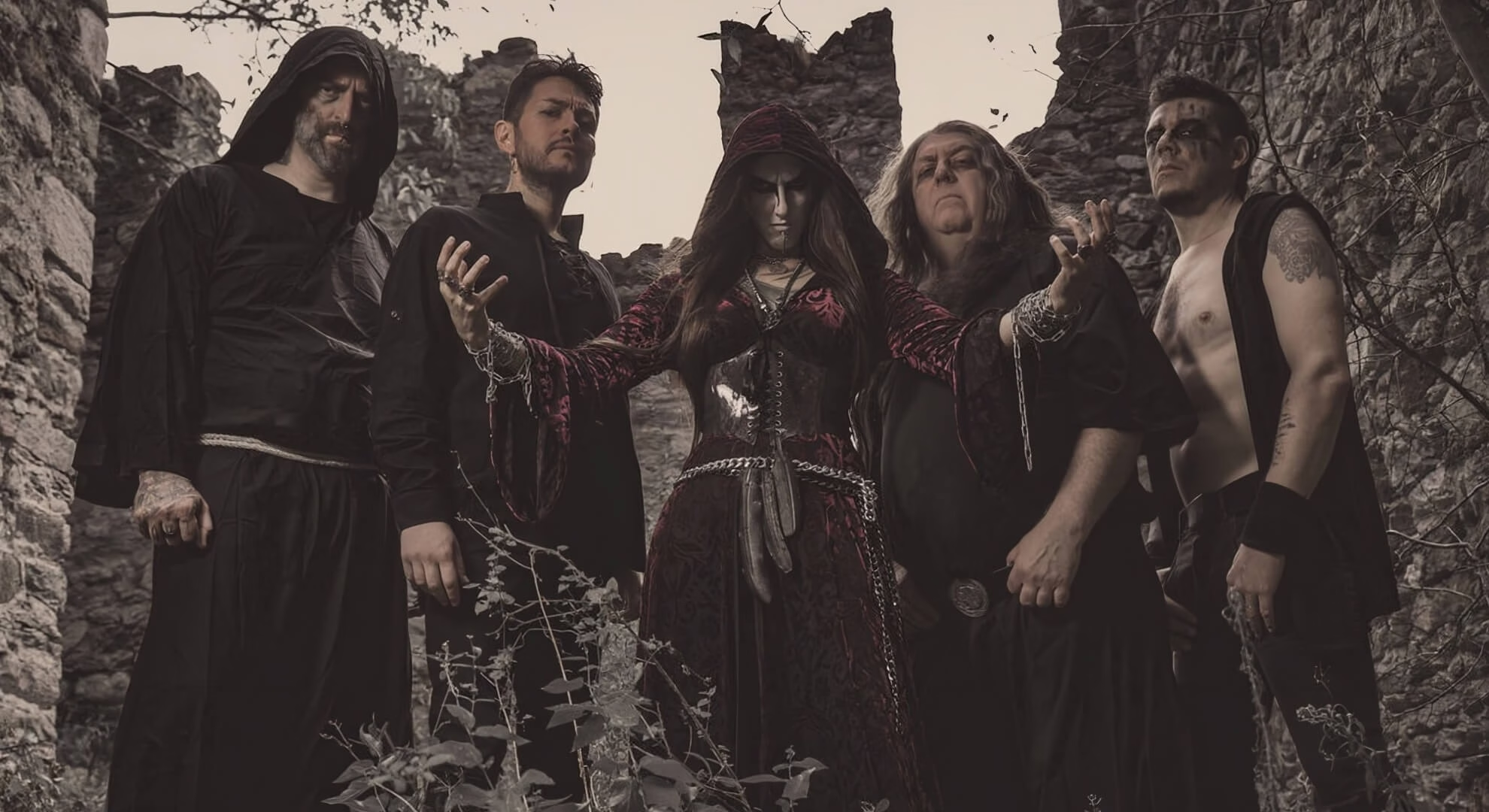
The decade that followed saw several lineup configurations cycle through. ‘Maleventum’ (2002, Avantgarde Music) with Madras on vocals was transitional; ‘Anphisbena’ (2004, Avantgarde Music) with M The Bard established a harder and less atmospheric direction; ‘Strix Maledictae in Aeternum’ (2012, Agonia Records), mastered at Necromorbus Studio by Tore Stjerna, was the strongest post-Cadaveria work to that point, its focus on the European witch-trial period providing the thematic coherence the intervening albums had lacked.
‘Back to Sepulcro’ (2015, Dusktone Records) — re-recordings of catalogue material with new vocalist Abigail — functioned as a reset rather than a creative statement. The arrival of Dipsas Dianaria for ‘The Gospel’ (2018, Dusktone Records), a concept album drawn from Charles Godfrey Leland’s text on Tuscan witchcraft, marked the start of the current phase. That album was uneven: the atmospheric framework was right, but the recording, produced by Federico Pennazzato at Musik Inch Studios, lacked the density the compositions required, and several tracks settled for momentum where precision was needed.
With ‘Veneficium’, distributed across Elfo Studios, ADSR Decibel Studio, Occultum Studio, and Daemon Star Studio between November 2025 and January 2026, with Algol handling mix and mastering at Daemon Star, both of those problems are directly addressed.
Poison as Structure
The choice of “veneficium” as conceptual subject carries specific structural implications that the album follows through. ‘Veneficium’ — Latin for sorcery through poison, encompassing the preparation of “venena” (substances that function as remedy or toxin depending on intent and dosage) — was among the most serious criminal categories in Roman law, and its practitioners were overwhelmingly identified as women.
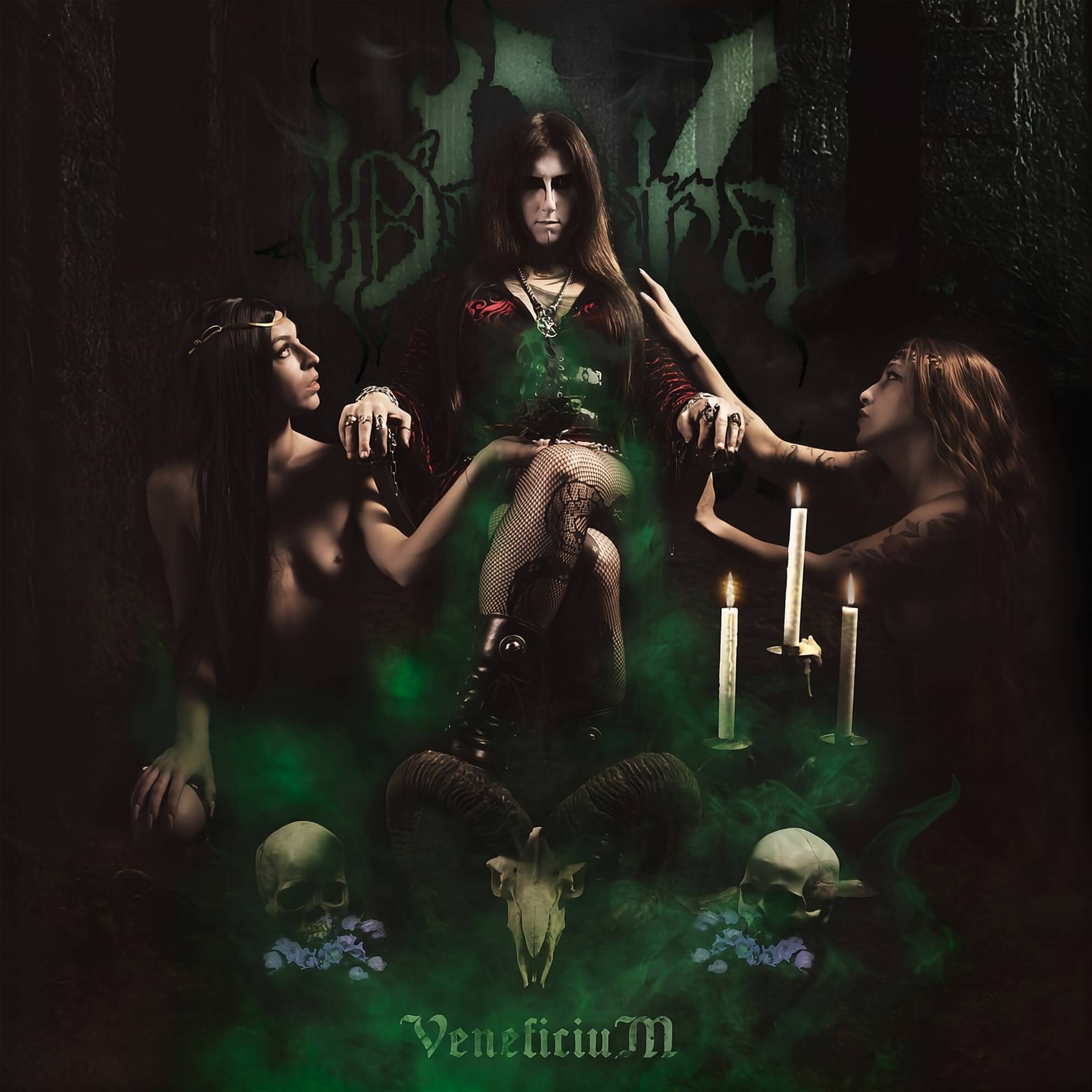
The album’s 10 tracks on vinyl — an eleventh, a reading of Black Sabbath’s opening title track, appears as a CD-only bonus — are organized around figures and elements drawn from Horace’s Epodes directly: ‘Gratidia’ names the most dangerous of the epode’s witches; ‘Sagana’ and ‘Veia’ name her companions in the ritual; ‘Defixiones’ refers to the lead curse tablets through which “veneficae” channeled their power; ‘Hortus Sagae’ gestures at the botanical knowledge central to the practice; ‘Asphodelios’ names the underworld flower associated with the knowledge of the dead.
The thematic coherence is unusually rigorous for a genre where occult imagery frequently functions as atmospheric decoration rather than structural principle.
What distinguishes this coherence is that the musical decisions serve the conceptual frame rather than running independently of it. The album opens with ‘Gratidia’, built around a rising synth figure that functions as an invocation rather than an overture — Dipsas Dianaria’s voice enters beneath it in a near-spoken register, each syllable articulated with the deliberateness of a recited formula rather than the expressivity of a sung passage.
The transition into ‘Vocatio Mortuorum’ does not signal a generic escalation into aggression but a formal summoning: the drums enter precisely where the dead would arrive, the guitar work thickening around the vocal lines rather than displacing them. L.P. Vault’s drumming throughout is notable for its restraint — there is none of the double-kick saturation that makes lesser symphonic black metal productions indistinguishable from each other. The percussion anchors the ritual.
Dipsas, Velum, and the Vocal Center
The contrast with ‘The Gospel’ is most audible in the relationship between Dipsas Dianaria’s voice and the album’s instrumental fabric. On the earlier record, her delivery sometimes competed with Alexandros’s keyboard arrangements; on ‘Veneficium,’ Algol’s mixing places the vocals within the sound rather than above it, creating an effect of a voice emerging from dense undergrowth.
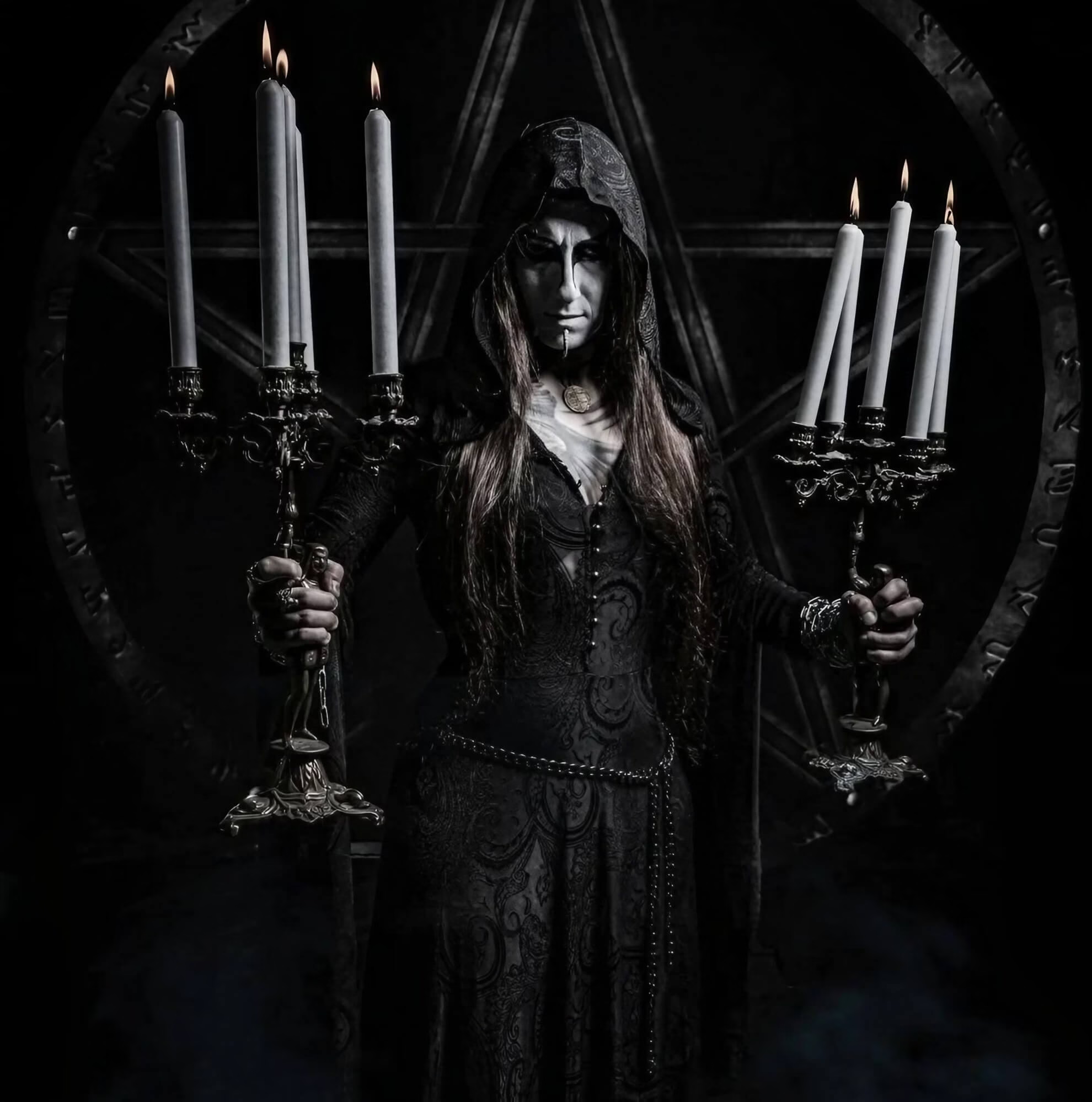
On ‘Saturni Arcanum,’ the third track, this relationship is clearest: a guitar figure running in descending thirds provides harmonic motion while Dipsas Dianaria’s delivery shifts from the hushed incantatory register of the opening pair into something fully confrontational — the phrasing more rhythmically aggressive, the pitch at the upper range of her harsh delivery.
Velum’s keyboards support this without ornamenting it: the synth lines function as sustained tonal fields rather than melodic counter-voices, leaving the guitar and vocal work room to generate the album’s forward motion.
‘Saltatio Corvi’ — Dance of the Raven — demonstrates the album’s structural intelligence most clearly. An arpeggiated guitar figure opens it in a way that, in a less disciplined record, would cue a conventional verse-chorus structure; instead, the verse builds through rhythmic accumulation, and the release is lateral rather than climactic: a shift in Dipsas Dianaria’s register, from the ceremonial to the direct, functions as the track’s emotional apex without the expected dynamic surge.
G.G.’s bass work warrants specific attention — the instrument is mixed at an unusual prominence for the genre, audible as a distinct melodic voice on ‘Hortus Sagae’ in particular, where it operates in a register well below Ossian’s guitar and creates a low-end density that suits the track’s poisonous subject.
The Art of the Curse Tablet
The album’s second half maintains discipline without surrendering to monotony. ‘Sagana’ is the fastest track on the record — a brief and ferocious piece whose compressed duration reads as deliberate contrast with the longer, slower pieces surrounding it. ‘Defixiones’, named for the lead curse tablets deposited at graves and temples across the Roman world, matches its subject in sonic weight: a doom-paced track whose central riff carries a compression that the album’s more rhythmically varied pieces do not replicate.
Ossian’s guitar tone here carries more distortion and less definition than elsewhere — the notes seem corroded at the edges, an effect that suits material organized around the literal casting of curses. The title track ‘Veneficium,’ eighth in sequence, functions as the album’s formal consolidation rather than its climax: it gathers the vocal and instrumental approaches established across the preceding seven tracks rather than introducing new elements, a compositional decision that reads as confidence rather than conservatism.
‘Asphodelios’ and ‘Veia’ close the vinyl edition, and the sequencing is purposeful. ‘Asphodelios’ is the album’s most atmospheric track, its tempo the slowest, Dipsas Dianaria’s delivery in its most ceremonial register — a near-spoken passage midway through the track reads as genuine incantation rather than a performed one.
‘Veia’ strips the arrangement back: guitar, bass, and drums only for its opening two minutes, with keyboards entering in the final third as if the elaborate apparatus of the ritual has done its work and only the essential elements remain. The album ends on a fading sustained note rather than a cut — the formal implication being that what has been set in motion persists after the last track concludes.
Production and the Daemon Star Standard
The production represents a meaningful advance over ‘The Gospel.’ The album’s most consistent technical quality is its reverb profile: instruments decay more slowly than the genre norm, creating a sense of acoustic space that suggests stone or earth rather than the bright mid-range profile of a more conventional studio environment. This is not a warm or flattering reverb — it is heavy, persistent, and on the slower passages it makes the album feel genuinely subterranean.
On the faster material such as ‘Saturni Arcanum,’ the same reverb extends each guitar attack so that the decay bleeds slightly into the following beat, adding a quality that distinguishes ‘Veneficium’ sonically from both the Avantgarde Music-era releases and from ‘The Gospel.’ Whether this results from a deliberate production decision or from the particular acoustic character of the four studios involved, its consistency across the album’s 57 minutes and 18 seconds is audible and meaningful.
The CD-only cover of Black Sabbath’s ‘Black Sabbath’ is a competent and unsurprising reading — Ossian’s guitar maintains the original’s tritone-based foundation without significant reinterpretation, and Dipsas Dianaria handles the spoken sections with appropriate deliberateness. It adds nothing to the album’s argument and functions as a fan-facing appendage rather than a considered creative addition. The vinyl edition, in omitting it, is the more coherent artistic object.
What the Poison Leaves Behind
Opera IX has always been a band sustained by Ossian’s certainty about what the project means — a certainty that held through Cadaveria’s departure, through a decade of lineup reconstructions, through releases that failed to fully realize the ambitions the concept carried.
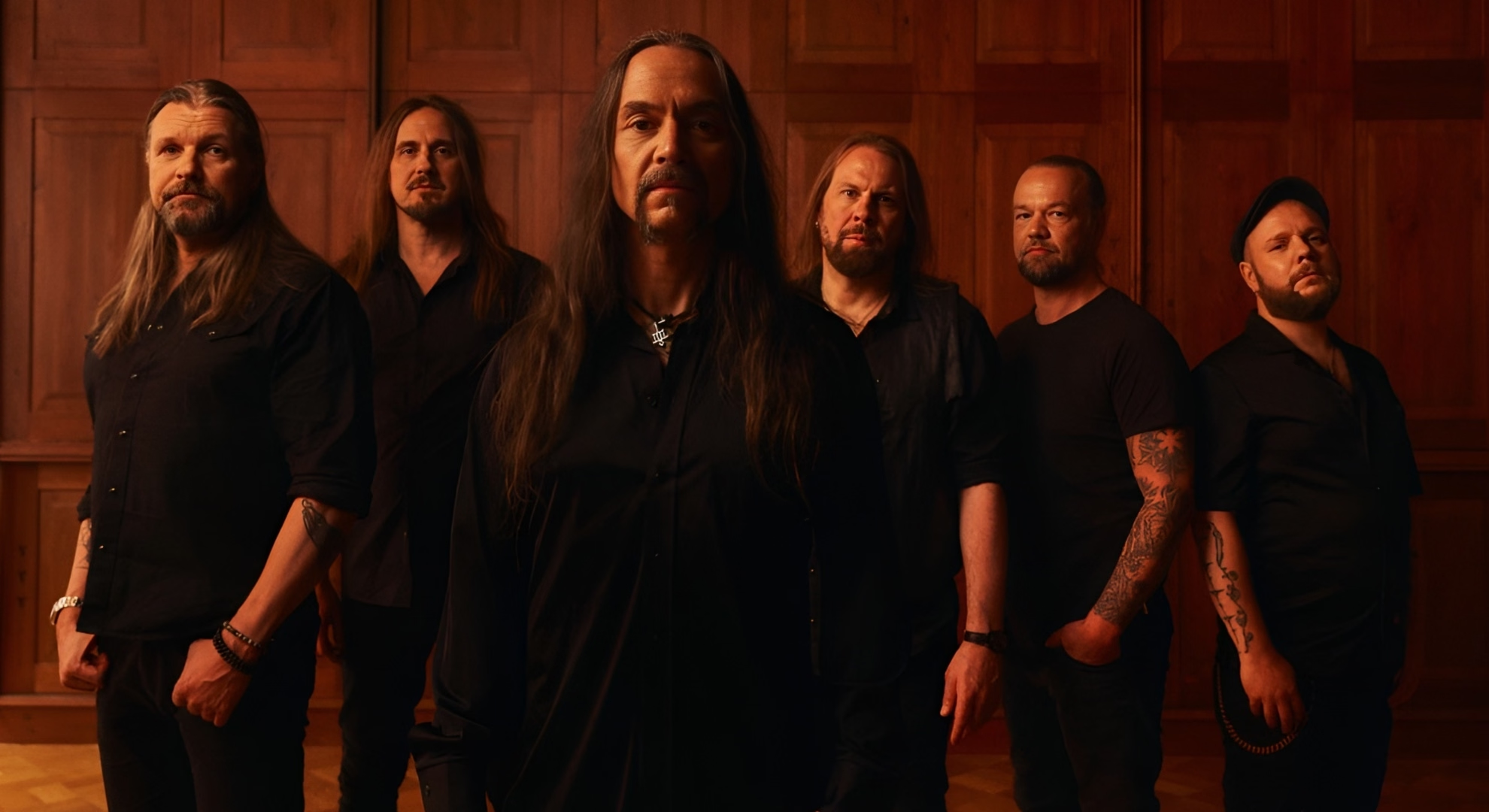
‘Veneficium’ is the record on which that certainty produces an album whole enough to bear its full weight. The current configuration — Dipsas Dianaria, G.G., Velum, and L.P. Vault alongside Ossian — does not sound like a band still calibrating but like one that has accepted its form and occupied it with purpose.
The conceptual specificity of the “veneficium” subject — rooted in Roman legal history, in Horatian satire, in the botanical knowledge of women whom the ancient world both feared and prosecuted — gives the album a seriousness that surpasses genre convention. The argument ‘Veneficium’ advances is not that Opera IX has recaptured their nineties period, but that the band’s current configuration has found a subject and a production framework equal to what Ossian has been attempting across the entire documented arc of the project.
‘Veneficium’ is Opera IX’s strongest original-material release since ‘Sacro Culto’ — a 57-minute statement in which conceptual rigor and compositional discipline function in genuine service of each other. Its minor weaknesses — transitional passages in the album’s middle section that favor atmospheric continuity over precision, and a CD-only bonus track that contributes nothing to the album’s argument — do not undermine what the record achieves across the majority of its runtime.
Reference
- Horace, Epodes 5 and 17, in ‘Horace: Epodes,’ trans. and ed. David Mankin (Cambridge: Cambridge University Press, 1995), 89–108. ↩︎
Leave a Reply