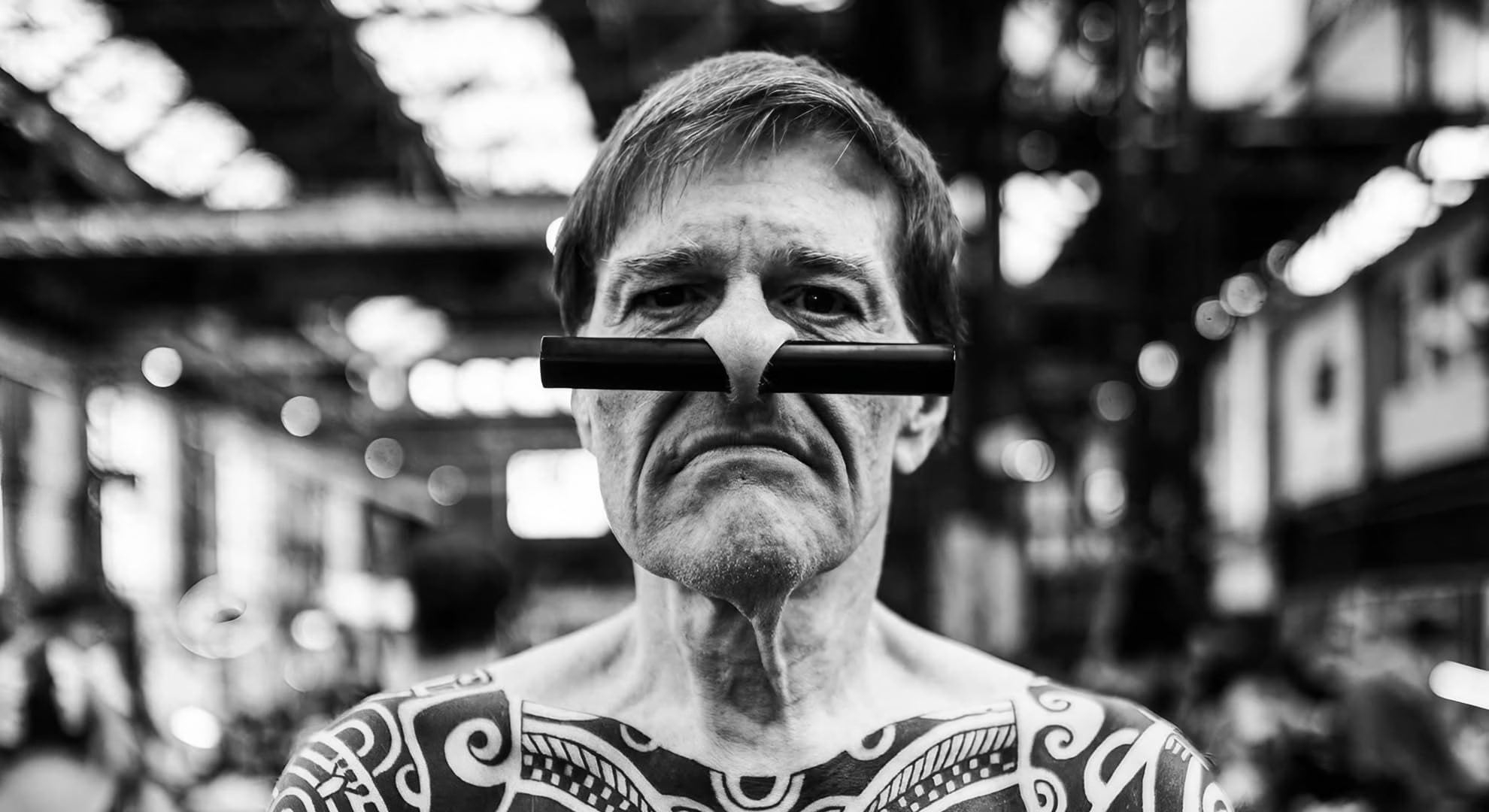


A tattoo convention built around trophies and stage lighting tends to treat the practice as decoration first, a permanent purchase judged under competition lamps. The 20th edition of the event returning to Amsterdam’s NDSM Loods from September 4th–6th, 2026, complicates that picture.
Alongside 14 judged categories built for machine-driven work, the confirmed program lists a dedicated slate of hand-tap artists working traditions the electric needle never touched, an anthropologist delivering a public lecture on tattooing’s deep history, a Buddhist lama leading prayer sessions on the show floor, and a Samoan kava ceremony closing the weekend.
Ink Before The Machine
The convention’s official artist directory sorts its more than 350 confirmed exhibitors by tattooing style, and alongside the usual categories it lists six separate hand-tap lineages on their own terms — Maori, Polynesian, and Samoan tapping; Borneo and Maluku work; Nordic, Celtic, and Viking revival tattooing; Thailand’s sacred sak yan; Japanese tebori; and ornamental hand-tap more broadly.
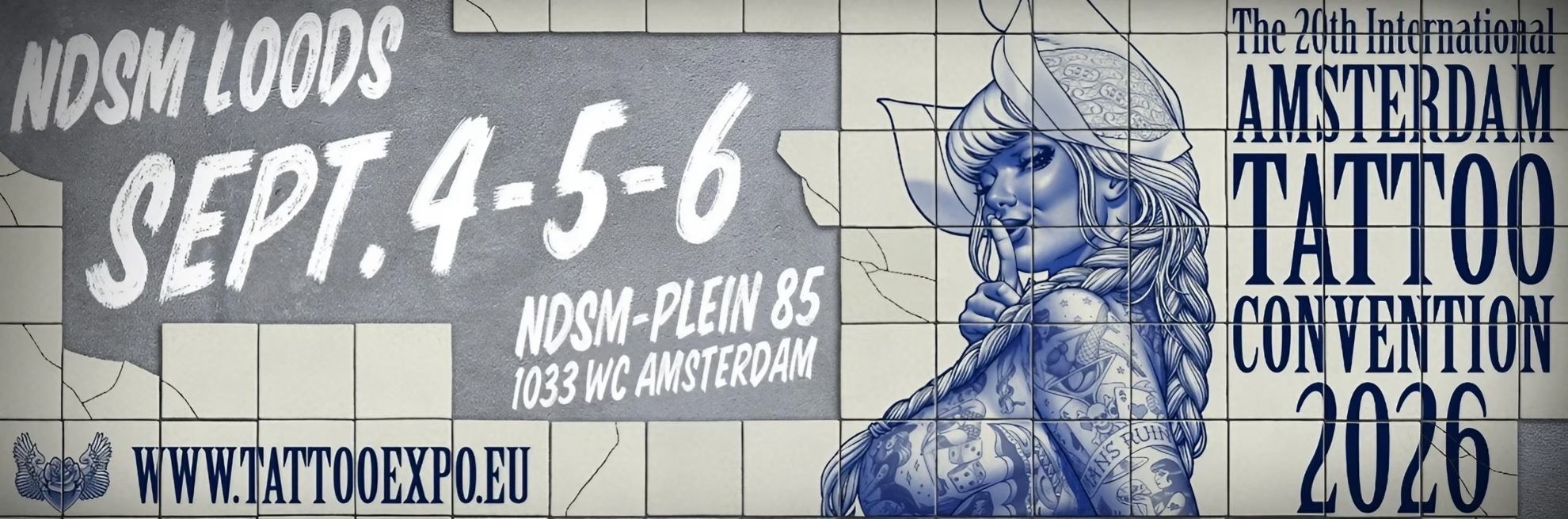
None of those six lineages appear in the convention’s separate competition rulebook, which instead runs 14 categories built for finished, photographable machine work — color and black-and-grey pieces judged small or large, lettering, back and chest pieces, full sleeves, dotwork, tribal and ethnic patterns, old school, blackwork, and three tiers of same-day fresh-tattoo contests.
That gap is not incidental. Hand-tapped work, applied with a mallet and a sharpened tool rather than a rotary machine, resists exactly what the competition stage requires — a piece finished inside a single weekend, healed skin ready for judging, work that photographs cleanly under stage lighting.
Exhibitors listed under those hand-tap categories include Sua Segaula Lawrence Ah Ching of Segaula Tatau in Samoa, Colin Dale of Denmark’s Skin&Bone studio working Nordic and Celtic revival tattooing, and Kensho of Amsterdam’s own Japanese Tattoo studio practicing tebori. Their booths sit on the same hall map as every machine artist, but none of their work is entered for a trophy.
A Lecture Not A Trophy
The program draws the same line through what it schedules instead of a competition slot. Saturday’s schedule places a talk titled ‘Skin & Ink: A World Heritage of Tattooing’ by Lars Krutak directly after the doors open, followed by an audience question and answer session.
Krutak is an American anthropologist and the host of Discovery Channel’s ten-part documentary series ‘Tattoo Hunter,’ and before turning to tattoo research full time he worked as a repatriation case officer at the Smithsonian’s National Museum of the American Indian and National Museum of Natural History.1
His research includes the tattoos on the 5,300-year-old Alpine mummy known as the Iceman, whose markings overlap with roughly 80 percent of the acupuncture points still used today to treat rheumatism — a finding he has cited to argue that tattooing’s oldest documented function was medicinal rather than purely aesthetic.
The same register continues off the lecture stage. Sunday’s schedule includes a kava ceremony led by Ah Ching, drawing on Samoan and wider Polynesian custom, while Tibetan Buddhist teacher Lama Tashi Norbu Rinpoche leads prayer sessions on all three mornings and works as a tattoo artist on-site between them.
Neither the ceremony nor the prayer sessions carry a competition slot, a ticket surcharge, or a judged outcome — they run as programmed content the convention treats as worth an audience’s time on its own terms, not as entries in the contest that otherwise structures the weekend.
20 Editions One Gap
The current edition is the 20th, but the run has not been continuous. The convention went dark for two years during the pandemic, reopening in September 2022 after the gap disrupted its usual annual rhythm. That interruption sits inside the same twenty-count the organizers now advertise, and it means the milestone reflects survival through a forced pause as much as unbroken continuity.
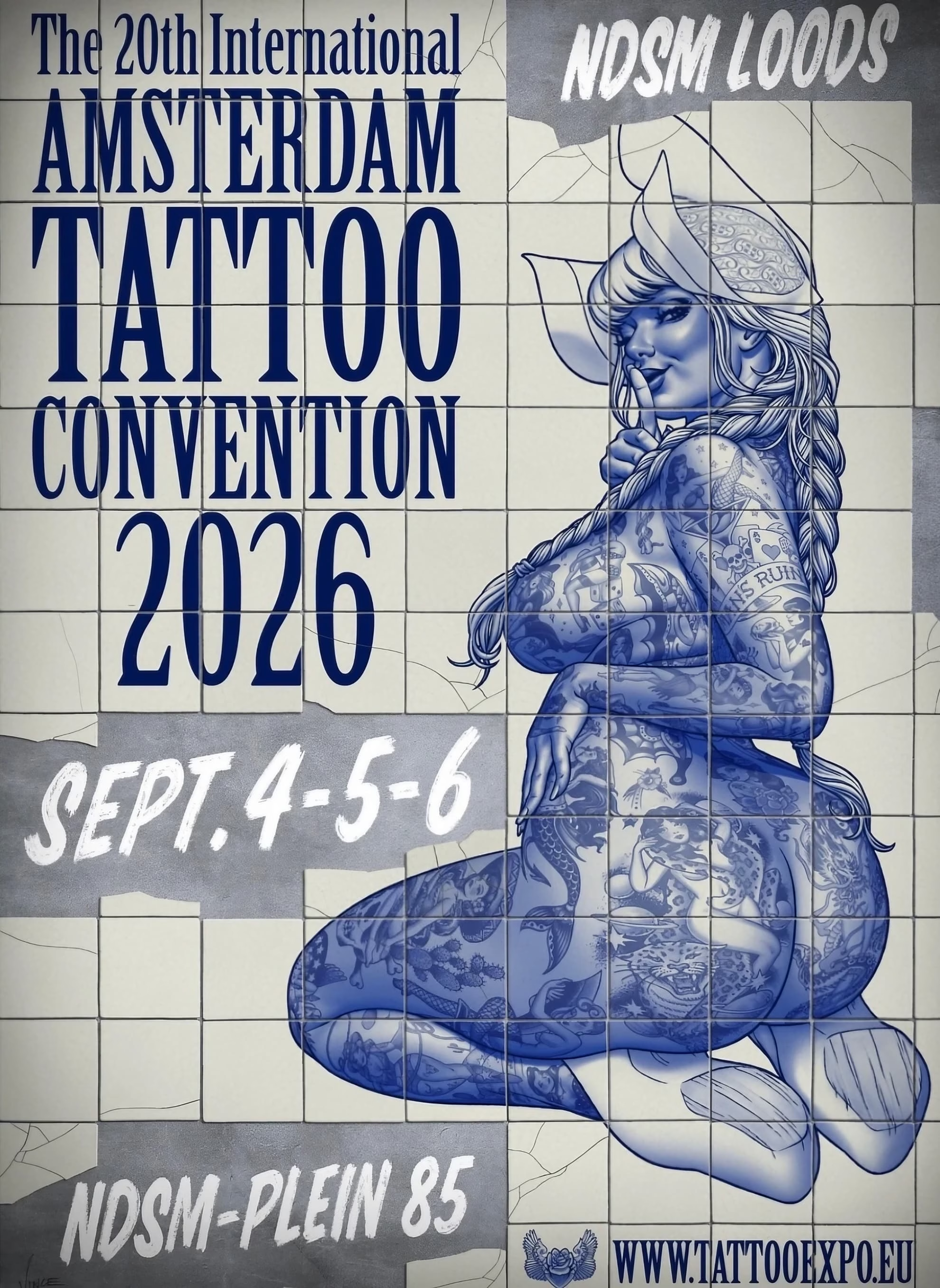
The 2026 edition returns to NDSM Loods, the same converted shipyard warehouse the convention has used for its recent editions, with more than 350 confirmed national and international tattoo artists across the weekend — its largest confirmed exhibitor count in the current run.
The program extends past tattooing into body modification more broadly: Bluddhistic stages an 18-and-over body suspension performance on Friday and again with Ferwhara on Sunday, and Burning Moon Body Art runs a live installation called The Cube across the full weekend.
Positioned beside the hand-tap program and Krutak’s lecture, that lineup reads less like added spectacle than like a consistent curatorial commitment to tattooing’s more extreme, ritual edges, kept visible alongside its competition floor rather than folded into it.
Doors At NDSM Loods
The 20th Amsterdam Tattoo Convention runs September 4th–6th, 2026, at NDSM Loods, a converted shipyard warehouse on NDSM-Plein in Amsterdam Noord.
Friday admission is €14 (approx. COP 60,200), Saturday and Sunday admission is €19 each (approx. COP 81,700), and a full weekend pass is €45 (approx. COP 193,500). Children up to 11 years old are admitted free, one child per accompanying adult.
Tickets are sold exclusively through the convention’s official WeTicket page, with a door box office as the only other authorized outlet. COP conversions are approximate, based on an exchange rate of approximately 4,300 COP per euro at the time of writing.
Ritual Outside The Ledger
Twenty editions in, weighed against a two-year pandemic gap, the Amsterdam Tattoo Convention has built a structure that keeps its oldest, most ritual-bound tattooing traditions visible without asking them to compete for a trophy. That is a specific choice, not a neutral one.
A competition rulebook built for finished, photographable machine work could have simply excluded hand-tap artists, kava ceremonies, and Buddhist prayer sessions from the program altogether, treating them as incompatible with a trade-show format. Instead the 2026 program places Lars Krutak’s lecture, Lawrence Ah Ching’s kava ceremony, and six documented hand-tap lineages on equal footing with the show floor, without requiring any of it to be judged.
Two decades into its run, that separation is the convention’s clearest argument about what it believes tattooing still owes to the traditions it did not invent.
For readers who have watched their own scene decide which traditions get judged on a stage and which get set apart as something closer to ceremony, does keeping hand-tap tattooing outside the competition floor protect its meaning, or does it just build a quieter kind of distance from the practice around it?
Tourism Partnership
We reach an audience that travels with intention — drawn to documented history, dark heritage, and the cultural weight of the places they seek out. If you operate tours, cultural experiences, accommodation, or heritage sites aligned with that ethos, we would like to hear from you. We consider partnerships with tour operators, travel agencies, hostels, hotels, museums, and any organization whose work engages seriously with dark tourism, gothic culture, or historical travel. We do not promote services we cannot stand behind editorially. Reach us through our Contact page.
References
- Scallan, Marilyn. ‘Tattoos: Telling Stories in the Flesh, Q&A with Lars Krutak.’ Smithsonian, August 25, 2015. ↩︎
Leave a Reply