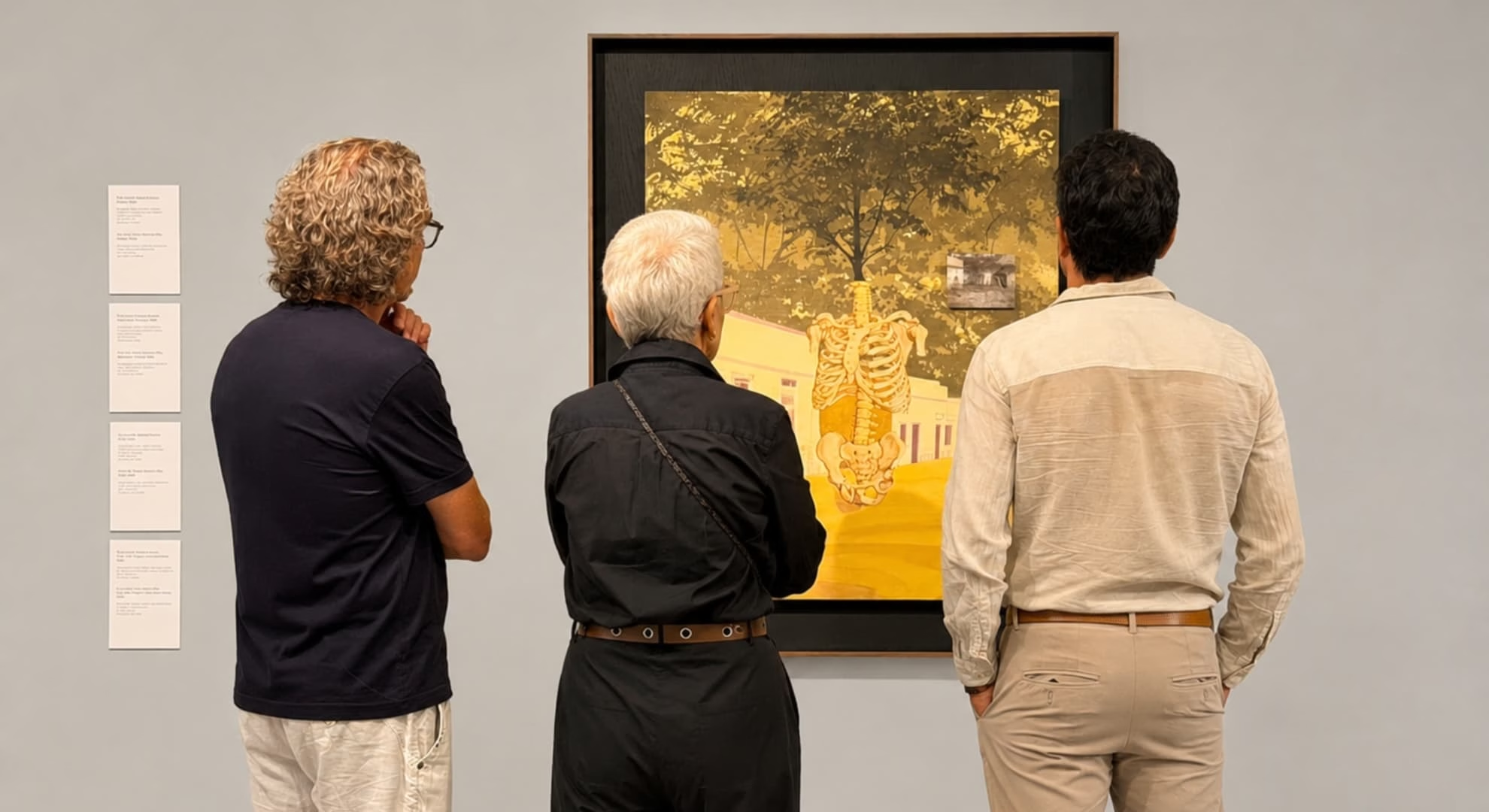


A town of twenty-five thousand dead has no formal cemetery, because there was no time and no ground left to build one on. What remains of Armero, Tolima, is ruin reclaimed by vegetation, and an artist who has spent a decade returning to that ruin has now built an exhibition out of it using a material blunt enough to match the scale of what happened: bone.
The question this exhibition leaves open is whether that bluntness constitutes memory-work or a different, more polished kind of spectacle built from real loss.
No Cemetery for Armero
On the night of November 13th, 1985, the eruption of the Nevado del Ruiz volcano sent a lahar down the Lagunilla River valley that buried the town of Armero within minutes, killing an estimated twenty-five thousand people in one of the deadliest volcanic disasters of the twentieth century.
The scale of the loss, and the fact that so many bodies were never recovered, left Armero without the ordinary infrastructure of collective mourning — no single cemetery holding the dead, no fixed site where the town’s absence could be visited and marked in the way a war memorial or a graveyard allows.
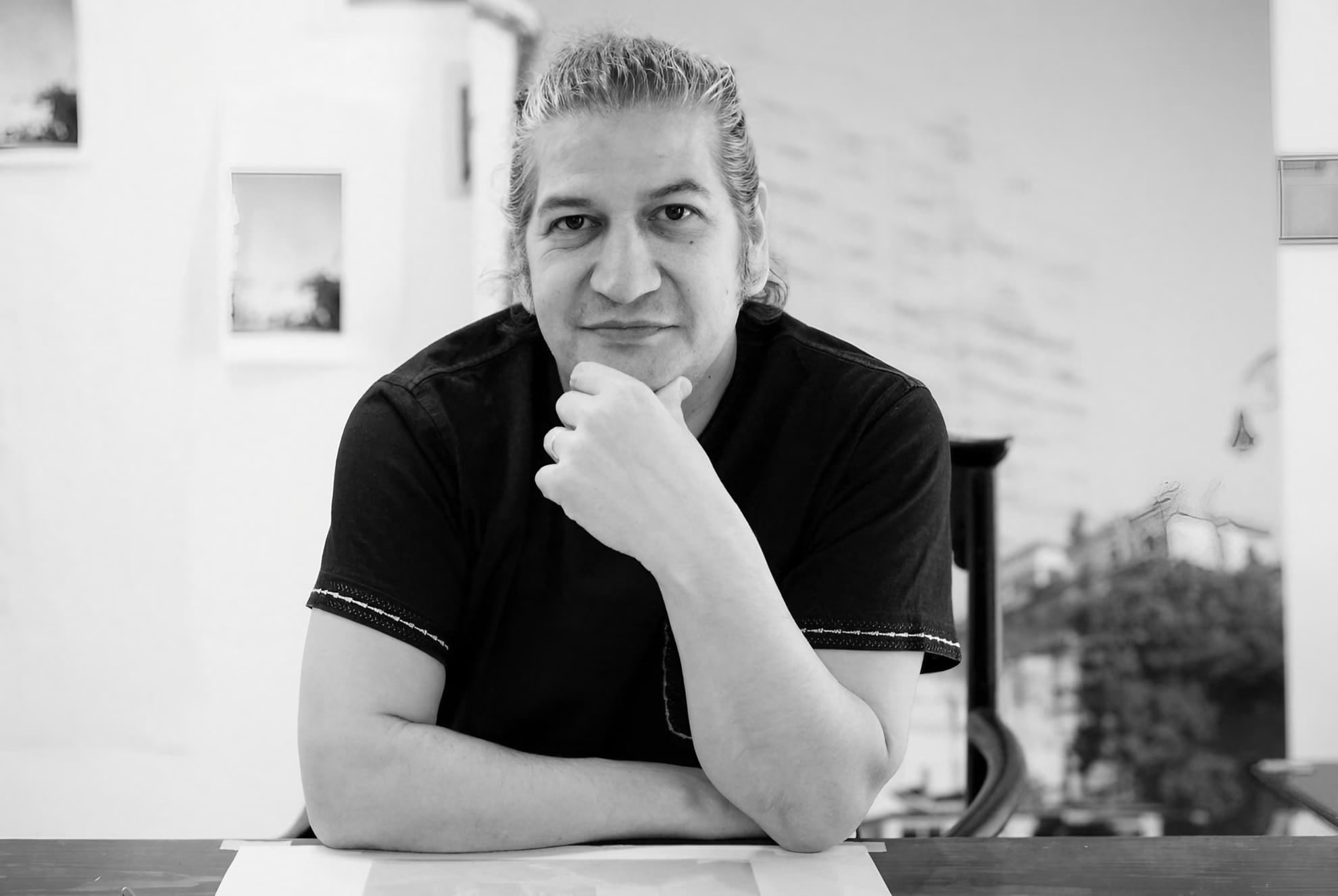
That absence of formal mourning infrastructure is the specific gap a Cuban artist’s decade-old body of work has set out to occupy, and it is worth naming plainly rather than folding into general language about tragedy: gothic visual tradition has always specialized in giving physical form to loss that has nowhere else to go, and Armero is a rare case where that specialization is not metaphorical.
The vegetation that has grown back over Armero’s ruins in the four decades since the disaster adds a second layer to the site’s visual argument: nature reclaiming a townscape is one of gothic Romanticism’s oldest images, the ruin overtaken by growth standing in for time’s indifference to human catastrophe.
What separates Armero from a purely aesthetic ruin, though, is that the growth is covering an unmarked mass grave, not an abandoned abbey. An exhibition built from that site inherits both registers at once — the picturesque ruin and the literal burial ground — and has to answer for both.
La Tertulia’s Seventy Years
Founded in 1956 by Cali intellectuals meeting in a private house during a period when the city’s formal cultural infrastructure had been hollowed out under the Rojas Pinilla dictatorship, Museo La Tertulia became, by 1968, the first museum in the country built with a specific focus on graphic art, and it now holds a collection of roughly two thousand works spanning American and Colombian art.
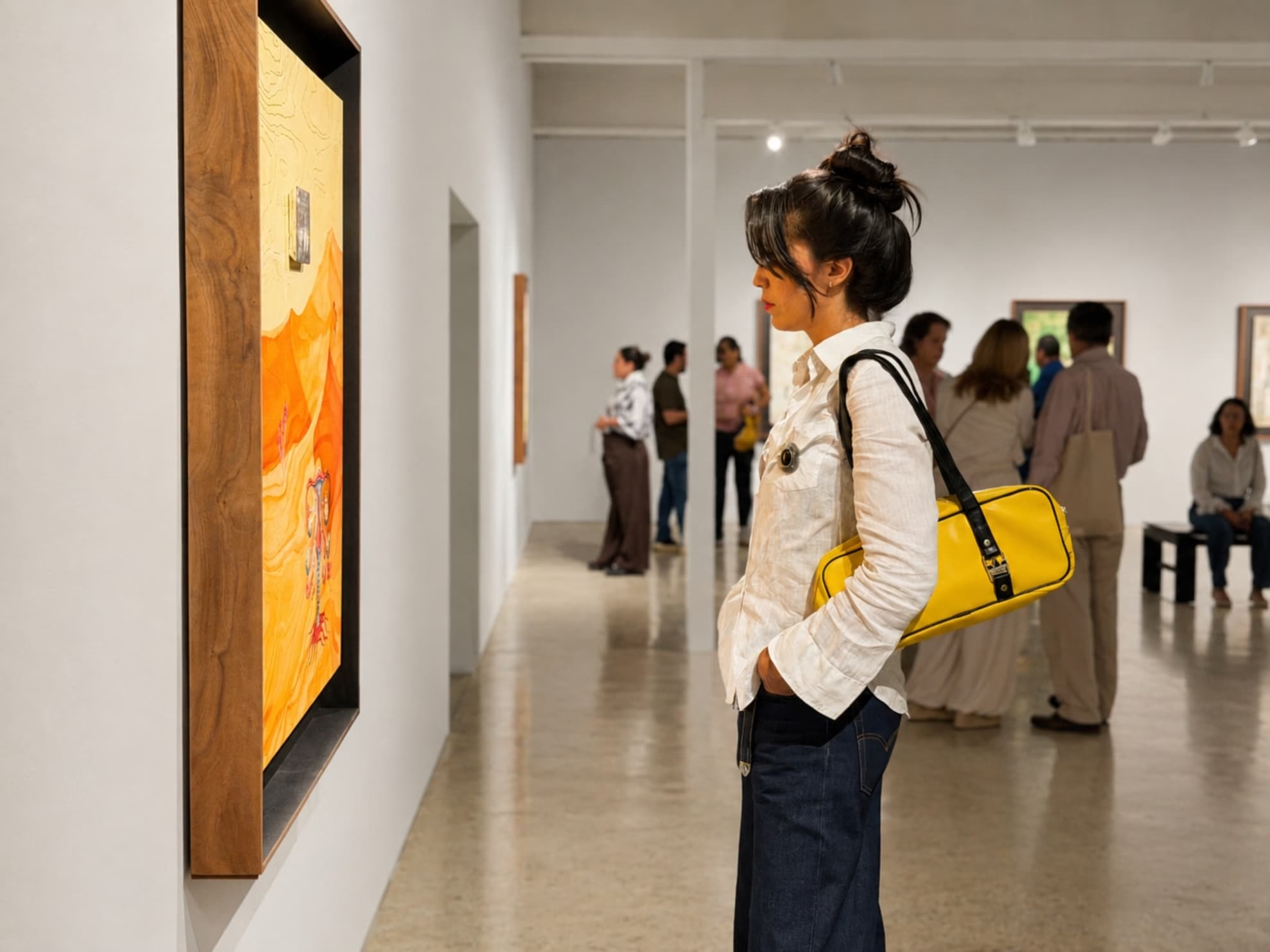
In 2026 the museum marked seventy years of continuous operation, positioning itself as the principal reference point for modern and contemporary art in southwestern Colombia — a museum whose reputation was built specifically as a regional counterweight to Bogotá’s institutional gravity, which matters directly to how it is using that reputation this season.
A Route That Skips Bogotá
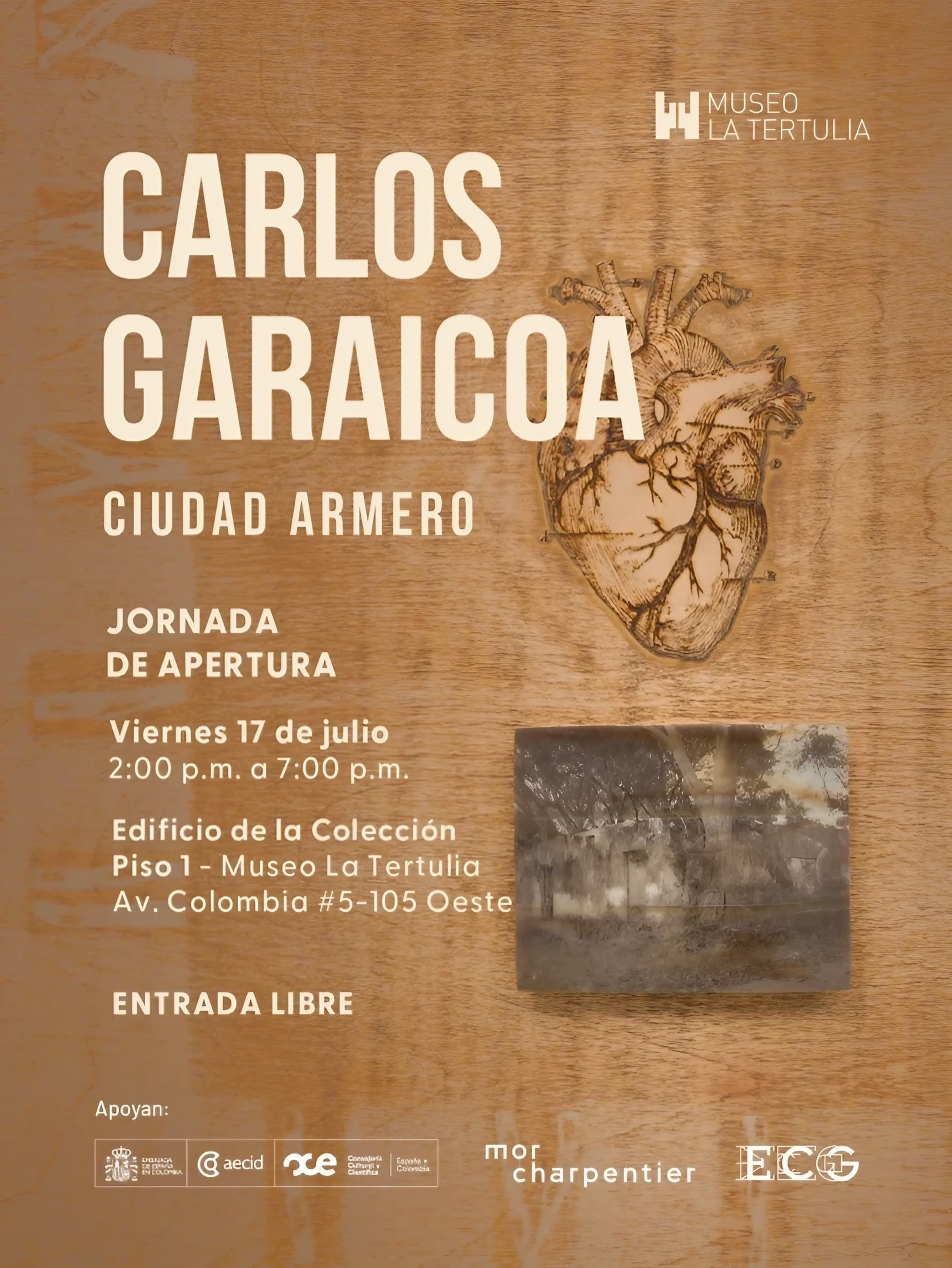
‘Ciudad Armero,’ running July 16th through September 6th, 2026 and curated by Óscar Roldán-Álzate, gathers sculpture, photography, drawing, and installation by the Cuban artist Carlos Garaicoa, born in Havana in 1967.
Garaicoa began the series, whose individual works date from around 2021, after visiting Armero’s ruins directly, struck by the collision between the visible traces of catastrophe and vegetation that had grown back over the site with unsettling vigor.
Works in the series, including ‘De la serie Ciudad Armero (Iris),’ combine acrylic and pyrography on birch with pigment prints on gelatin-covered bone — literal skeletal material standing in for a town with no formal grave to visit. Garaicoa is a living artist, and his own documented account of the work’s origin is available and admissible on its own terms here, in a way a posthumous retrospective’s curatorial framing would not be; no estate stands between the stated intent and the work on the wall.
Garaicoa’s Lisbon connection predates ‘Ciudad Armero’ itself: MAAT hosted a different, decade-earlier body of his work in 2017 under the title ‘Yo nunca he sido surrealista hasta el día de hoy,’ and he continues to work with the Galleria Continua and Filomena Soares galleries. ‘Ciudad Armero’’s specific route to Cali, though, runs through mor charpentier, the Paris- and Bogotá-based gallery that began representing Garaicoa in 2026 and served as a core organizational partner for this exhibition.
Its arrival at La Tertulia also carries the specific support of the Embassy of Colombia in Spain and the Spanish Agency for International Development Cooperation (AECID) — a structural mechanism that routes a Cuban artist’s meditation on a Colombian catastrophe back to Colombian soil through an existing Spanish-Colombian cooperation channel, rather than through a Bogotá-brokered international partnership.
For a regional museum to be the venue that closes that loop, rather than a Bogotá flagship with more obvious international leverage, is itself part of what makes this exhibition worth examining rather than simply announcing.
Admission to La Tertulia is 20,000 COP for general Colombian visitors, 30,000 COP for foreign visitors, and a reduced rate of 14,000 COP; members of the museum’s Amigos Tertulia program enter free.
Where Cali Keeps Its Dead
Cali’s Cementerio Central, established on its current site in 1852 over an earlier indigenous settlement, holds republican-era mausoleums built for the city’s founding families and remains the subject of persistent local accounts of nocturnal rituals conducted among its tombs — a documented, still-active site of exactly the folk-supernatural practice this exhibition’s own visual language gestures toward from a different angle.
The Iglesia de La Ermita, rebuilt in Neo-Gothic style in the early twentieth century after earthquake damage destroyed its colonial predecessor, remains one of Cali’s most recognizable landmarks along the Cali River and offers the city’s clearest example of Gothic Revival architecture translated into a Colombian setting, worth pairing with a visit to the exhibition for anyone tracing the gothic’s formal vocabulary through the city.
What Bone Cannot Bury
‘Ciudad Armero’ does not settle the tension between memory-work and spectacle that any art built from mass death carries with it; using bone instead of a more conventional material does not resolve that question, it only makes it harder to look away from. What the exhibition does prove is that a regional museum, working through an international cooperation channel that bypasses Bogotá entirely, was willing to give that unresolved tension gallery space while a national flagship waited for safer terms.
Armero’s dead may or may not be better served by an internationally circulating art series than by a fixed memorial on the site itself — the exhibition raises that question and lets it sit unanswered, which might be the most honest choice available to it.
Does an artwork owe more to the dead it represents when it travels internationally before it returns home, or does the travel itself change what the work is doing for the place it started from?
Tourism Partnership
We reach an audience that travels with intention — drawn to documented history, dark heritage, and the cultural weight of the places they seek out. If you operate tours, cultural experiences, accommodation, or heritage sites aligned with that ethos, we would like to hear from you. We consider partnerships with tour operators, travel agencies, hostels, hotels, museums, and any organization whose work engages seriously with dark tourism, gothic culture, or historical travel. We do not promote services we cannot stand behind editorially. Reach us through our Contact page.

Leave a Reply