

A belief that once justified strapping a child’s dominant hand to a school desk is not the kind of history most museums choose to hang on a wall, in part because there is no way to display it without asking whether the institution is studying the belief or, in some quieter register, still entertaining its authority.
A regional museum in Ibagué has decided this season that the risk is worth taking, and the choice says as much about the limits of Bogotá’s institutional caution as it does about the artist whose work now occupies its walls.
Naming What Doctrine Punished
The association between the left hand and the demonic is not exotic folklore invented for gallery purposes. It descends from a documented European ecclesiastical tradition — reinforced by centuries of religious symbolism that placed the righteous at the right hand and the condemned at the left — and it survived well into the twentieth century through Catholic catechetical practice that treated left-handedness as a correctable deviation, often through physical discipline.
That history crossed the Atlantic intact and lodged in rural Andean Catholic communities, where it folded into a broader vocabulary of folk demonology alongside beliefs about the evil eye and marked births. What makes a regional Colombian museum’s decision to give that history gallery space interesting is not the history itself, which is well documented, but the audience the museum is addressing it to: not a Bogotá crowd encountering the belief as anthropological curiosity, but a Tolima public more likely to have inherited some version of it directly.
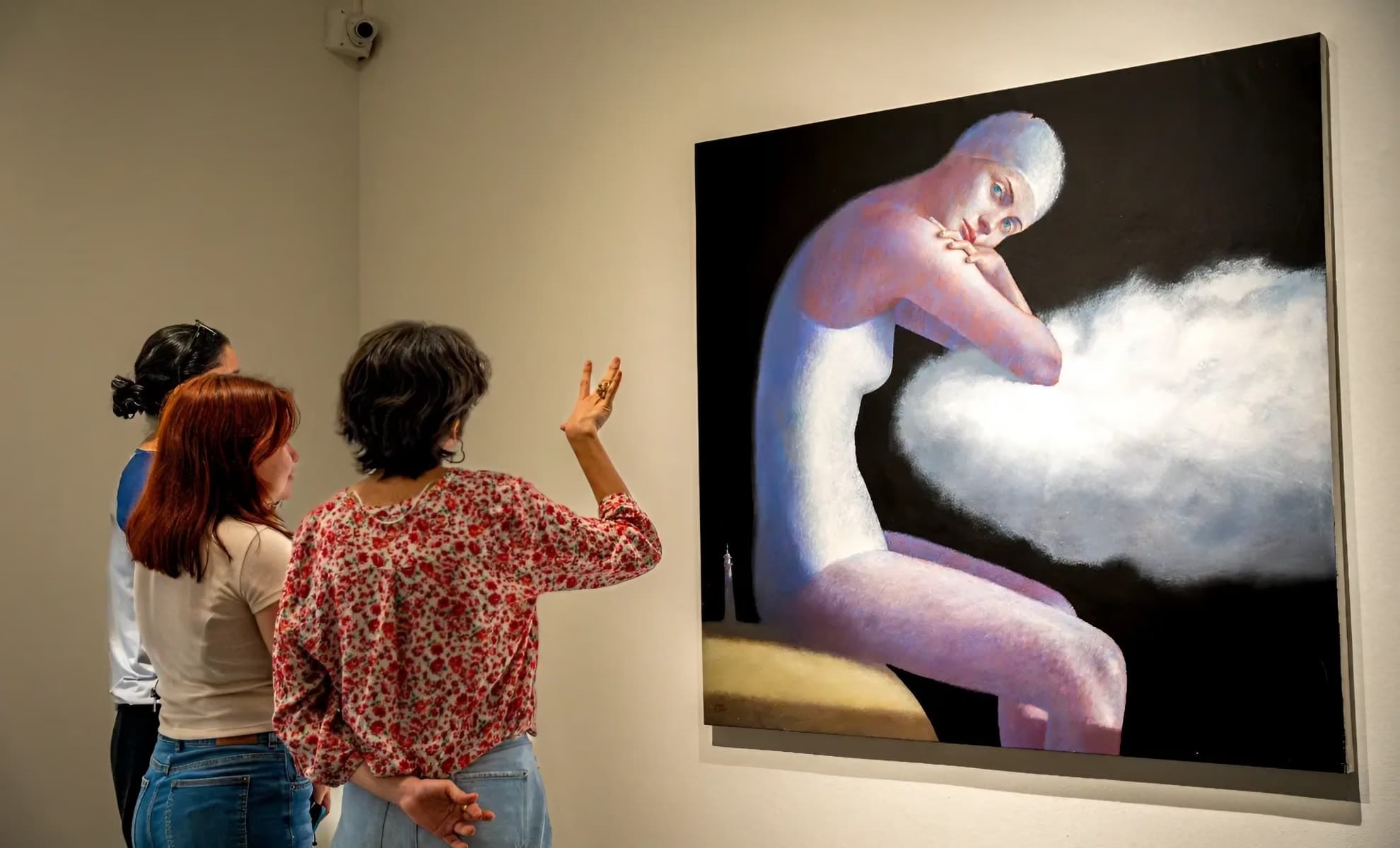
This is where the exhibition’s gothic register does real work rather than decorative work. Gothic visual tradition, since its Romantic origins, has always specialized in giving shape to beliefs that official culture has disavowed but not fully extinguished — the superstition still whispered at the family dinner table even after the church stopped enforcing it publicly.
A museum naming that belief in oil paint and salvaged wood is doing something a wall label alone cannot: it is neither mocking the belief as backwardness, which would flatter an educated audience at the expense of the people who held it, nor treating it as a fixed cultural truth worth preserving uncritically.
The exhibition sits in the harder space between those two postures, and that is a curatorial risk a national flagship museum, more accountable to an international biennial audience with no stake in Tolima’s specific inheritance, would have less reason to take on.
MAT’s Long Road to Risk
Founded in December 2003 by the artists Darío Ortiz Robledo and Julio César Cuitiva Riveros, working with the regional cultural authority of the time, the Museo de Arte del Tolima (MAT) occupies a converted building in Ibagué’s historic Belén neighborhood.
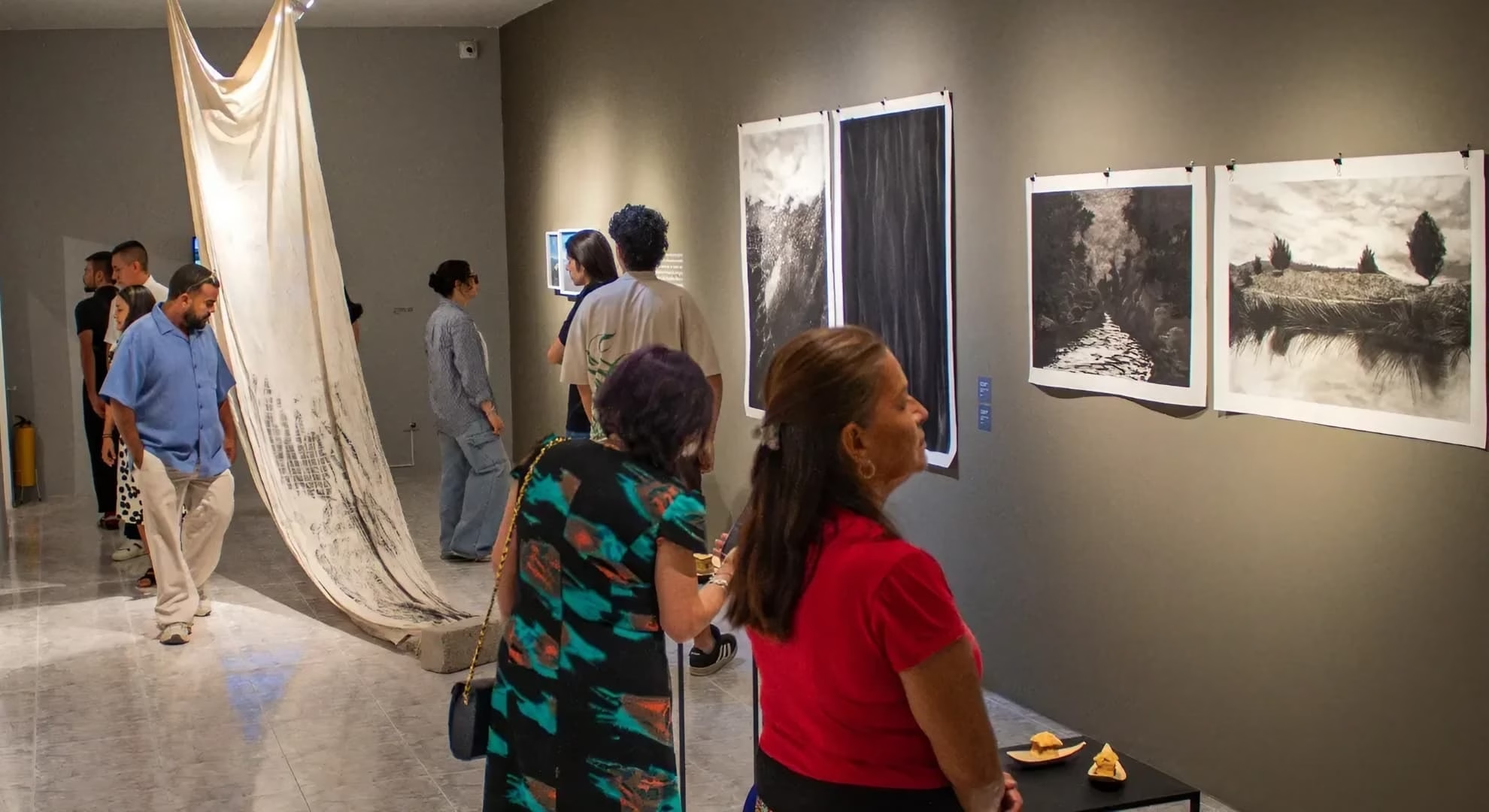
Over two decades the museum has built a permanent collection that includes regional Tolima artists alongside internationally recognized names, and its programming has previously included a Leonora Carrington retrospective, giving MAT a documented, if intermittent, connection to the Surrealist tradition’s own interest in the irrational and the marvelous.
That track record matters here: MAT is not a young institution reaching for shock value to build an audience. It is a two-decade-old regional museum that has already shown it will take dark and fantastic visual material seriously rather than as spectacle.
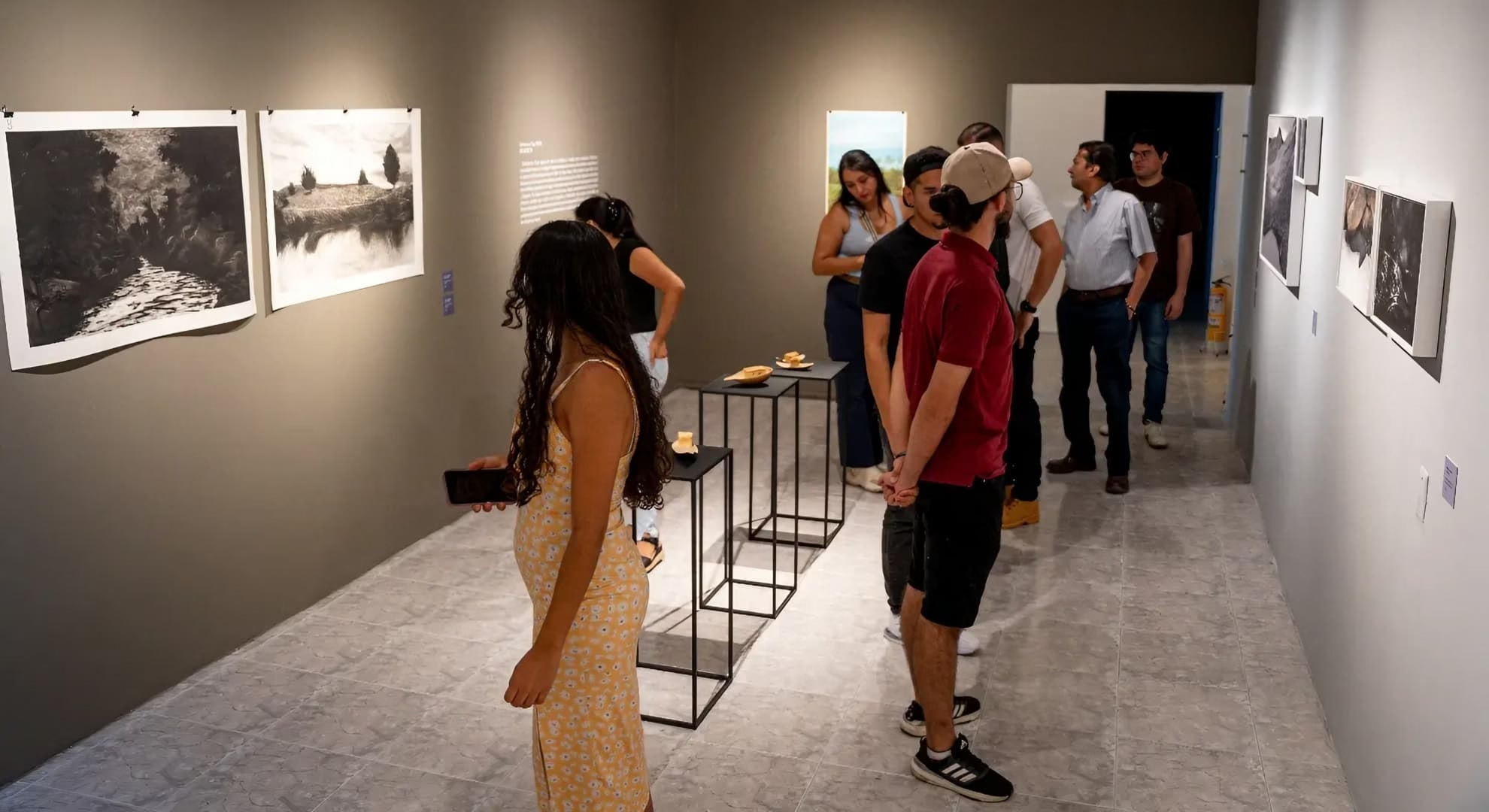
The museum’s current season, which opened August 20th, 2026 and runs through September 24th, 2026, gathers four artists from Tolima, Cundinamarca, and Peru under a program organized around territory, memory, and mystery, with the support of the departmental government
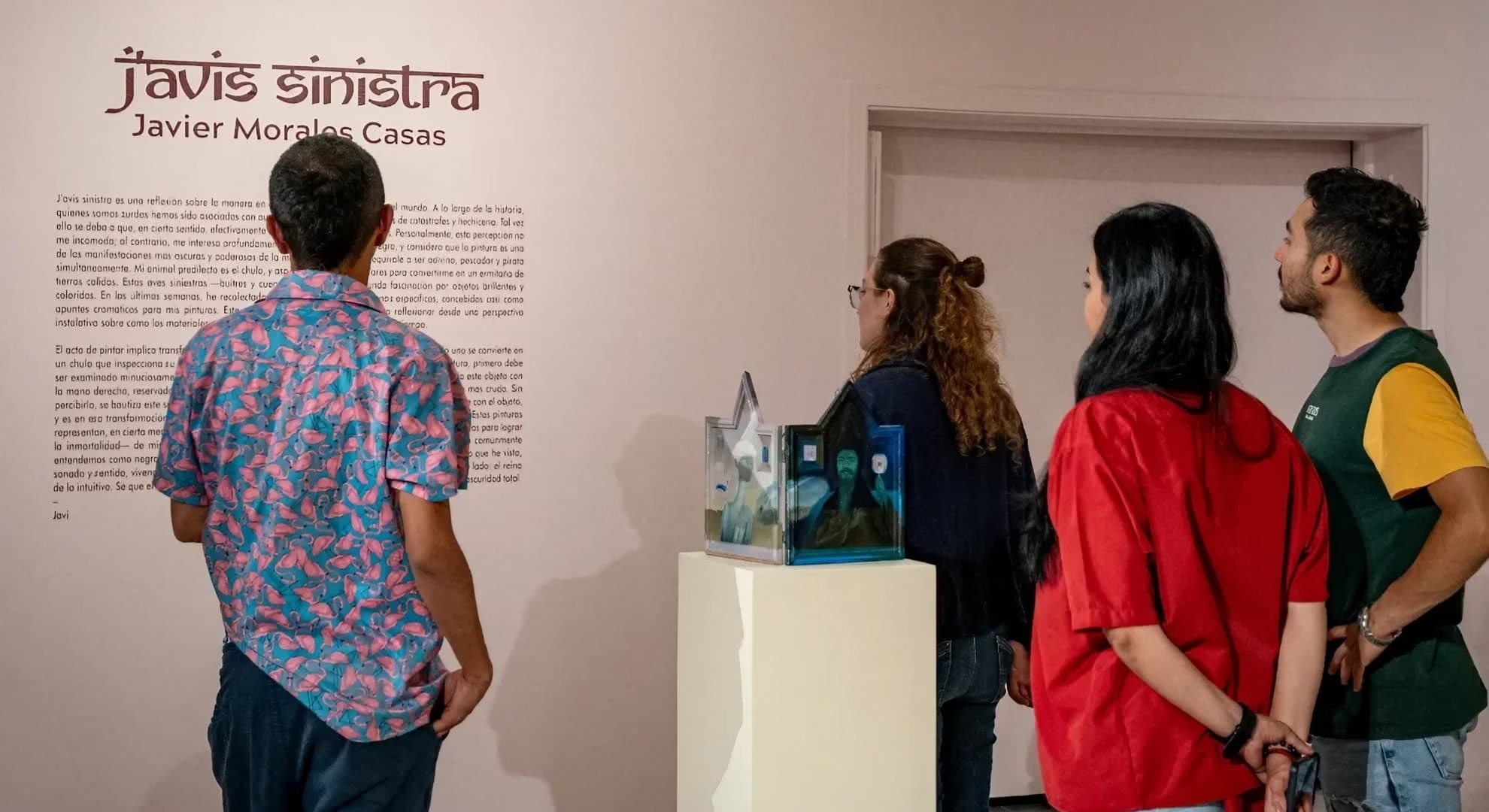
‘J’avis sinistra’ is the contribution from Tolima-born artist Javier Morales, born in Ibagué in 1993, and it is the only one of the four shows built explicitly around the demonic register that gives this piece its argument.
Grammar of the Left Hand
Morales works under a visual language he calls Primitivismo mágico, a framework he has developed connecting Haitian vodou iconography with Colombian rural primitivism, and in ‘J’avis sinistra,’ that framework is applied specifically to zurdera — left-handedness — and its historical relationship to the dark, the occult, and the supernatural in Tolima rural memory.
Through painting, salvaged and reclaimed materials, and what the artist describes as an interplay of magic, intuition, and reuse, found objects become supports and symbols in which the domestic and the fantastic sit side by side rather than in opposition.
The technique matters as much as the subject: by building the demonic mark out of literally discarded material, Morales stages the belief system itself as something scavenged from memory rather than presented whole, which keeps the work from reading as a straightforward re-endorsement of the superstition it depicts.
What the exhibition does not do is treat the belief as ethnographic curiosity preserved under glass for outside observers. It is presented as art addressed to people who might recognize the belief directly, which is a different curatorial posture than the one a national institution, courting an audience with no inherited stake in Tolima’s specific folk-Catholic history, would likely choose.
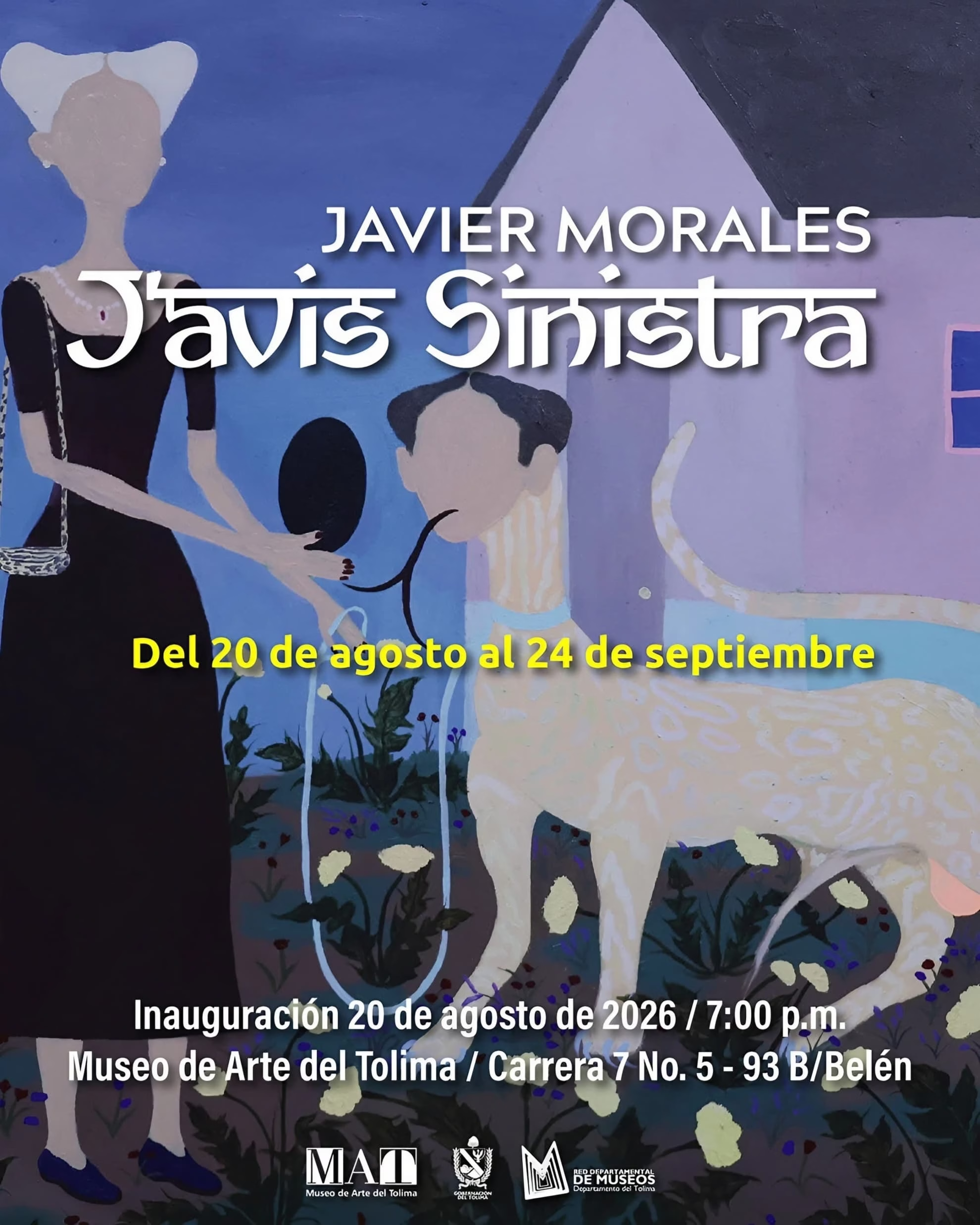
General admission to MAT is 6,500 COP, with a reduced rate of 3,500 COP for children and students, the most recently published figures at the time of writing.
Where Ibagué Marks Its Dead
The Panóptico de Ibagué, a radial prison built between 1892 and 1905 on Jeremy Bentham’s panopticon design and now preserved as a national cultural heritage site and museum, offers a different register of institutional darkness worth pairing with the exhibition: nearly a century of surveillance architecture built to make confinement and correction total, now open to the public as a monument to that design’s own history.
The Cementerio San Bonifacio, where the city’s annual homage to the folk-music duo Garzón y Collazos originated in 1987, sits further north near Barrio El Bosque at Carrera 1 and Calle 32, a separate historic district from MAT’s own Belén neighborhood, and carries its own layered tradition of Tolima memorial custom, worth a visit for anyone drawn to how the region marks and remembers its dead.
What Naming Belief Costs
MAT’s season does not settle the argument over whether naming a discredited belief keeps it alive or finally lays it to rest, and Morales is not offering an answer either.
The exhibition simply makes the case that a museum speaking to the people who inherited a superstition directly is better positioned to hold that argument honestly than one speaking to an audience for whom the belief is only ever folklore. Other Colombian institutions, working further from the communities that once enforced this particular discipline, would have to prove they could take the same risk without it curdling into exoticism — a proof MAT has not asked of itself, because it did not need to.
What discredited belief from your own upbringing would you want to see named plainly on a gallery wall, rather than left as a story no one repeats anymore?
Tourism Partnership
We reach an audience that travels with intention — drawn to documented history, dark heritage, and the cultural weight of the places they seek out. If you operate tours, cultural experiences, accommodation, or heritage sites aligned with that ethos, we would like to hear from you. We consider partnerships with tour operators, travel agencies, hostels, hotels, museums, and any organization whose work engages seriously with dark tourism, gothic culture, or historical travel. We do not promote services we cannot stand behind editorially. Reach us through our Contact page.

Leave a Reply