

A river does not usually outlast its century, but the one a teenage Arthur Rimbaud set flowing through his poem in the spring of 1870 has drifted through paintings, songs, and now three records without settling anywhere. The poem borrowed its central figure from William Shakespeare: a young woman driven to madness and death by a betrayal she never chose.
Rimbaud transformed her into something closer to a willing escapee, a body given over to water on her own terms rather than swept there by circumstance. That transformation, private and stubborn, has proven durable enough to survive 156 years, a translation into heavy music, and, as of September 4th, a third and final progressive metal album shaped around it.
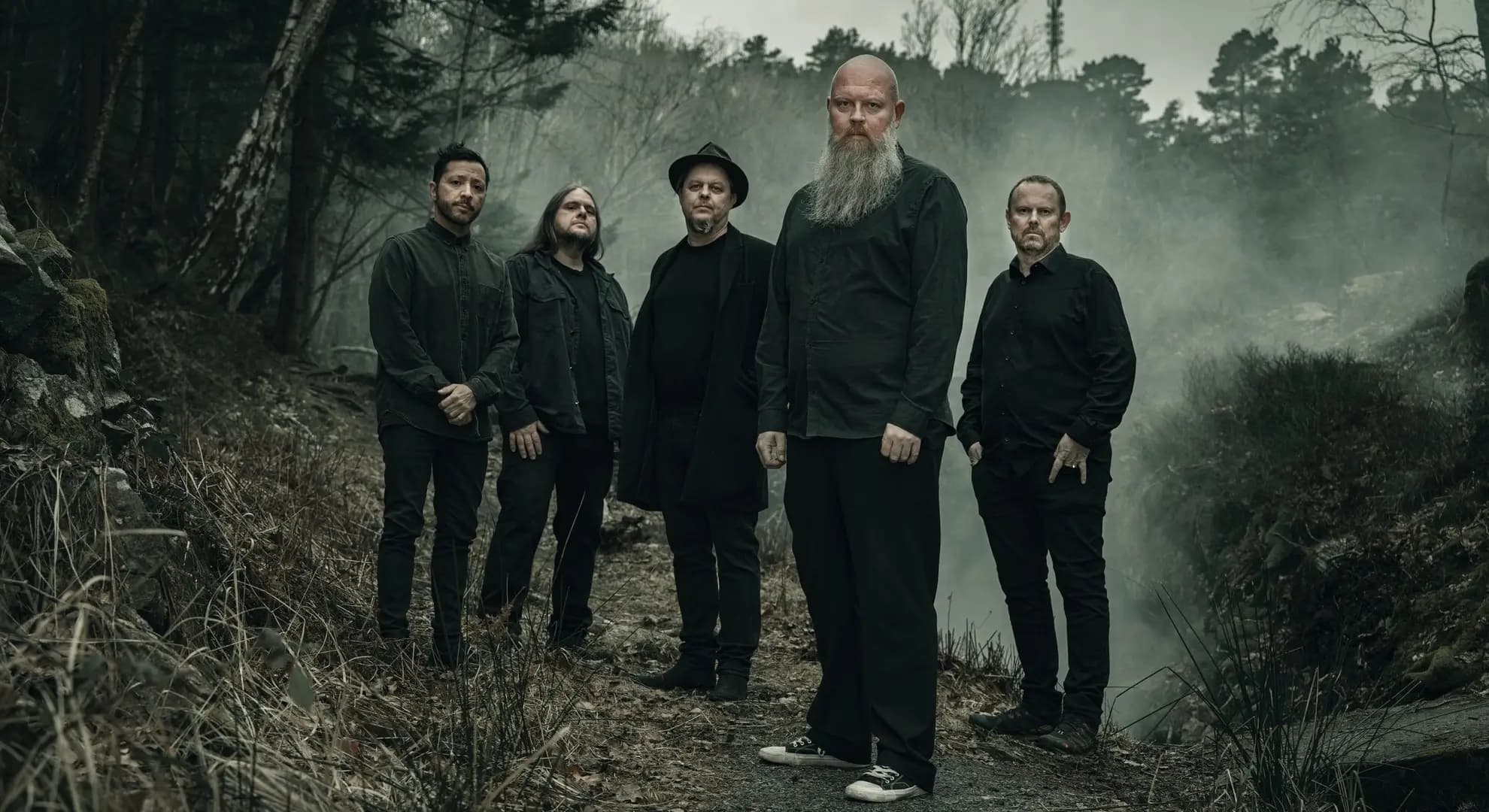
Green Carnation, the Norwegian progressive metal band founded by former Emperor bassist Terje Vik Schei, close their trilogy ‘A Dark Poem’ with ‘Part III: The Messiah Complex,’ released via Season of Mist.
As this publication noted in its coverage of ‘Part I: The Shores of Melancholia’ in 2025, the band built that opening chapter around the historical concept of melancholia; the trilogy’s second installment, ‘Sanguis,’ followed in April, largely uncovered in these pages until now. ‘The Messiah Complex’ does not simply end the story. Per the band, it gathers the two records that came before it into a single closing argument, one built as much on an old French poem as on the anxieties of the present.
A Phantom Down a Long River
Rimbaud was 15 and a half when he wrote ‘Ophélie,’ sending it to the Parnassian poet Théodore de Banville in May of 1870 in the hope of a place in Le Parnasse contemporain. He was working from two sources at once.
The first was Shakespeare’s ‘Hamlet,’ where Ophelia drowns after her father’s murder and her lover’s cruelty strip away everything that had ordered her world. The second was a painting: John Everett Millais had shown ‘Ophelia’ floating among reeds and wildflowers at the Royal Academy two decades earlier, and Rimbaud’s opening image, a white figure stretched across dark water, follows the canvas closely enough that a direct debt is difficult to dispute.1
Millais’s picture had already done its own work of transformation. Where earlier illustrators treated Ophelia’s death as a moral lesson about feminine fragility, Millais rendered the moment with enough botanical precision and formal command that the image began to function as an object of desire in its own right, copied, cited, and restaged across British visual culture for the rest of the nineteenth century and well past it.2
Season of Mist has framed ‘The Messiah Complex’ as the piece that finally closes this dialogue: the band’s own account describes the third record weaving strands from across the trilogy into a 16-minute orchestral suite performed with the Kristiansand Symphony Orchestra and Opera Choir, the first time the band has worked at that scale.
Rimbaud’s Ophelia chose the river over the world that had failed her. A trilogy that has spent three years and two prior albums returning to her image now closes, appropriately, with an ensemble large enough to carry a drowning to its end.
The Quiet Turn of Sanguis
Before Part III could close anything, Part II had to open a different door. ‘A Dark Poem, Pt. II: Sanguis’ was released on April 3rd, 2026, the trilogy’s eighth full-length overall and the second produced by the same trio of Kirkesola, Sordal, and Nordhus who oversaw its predecessor.
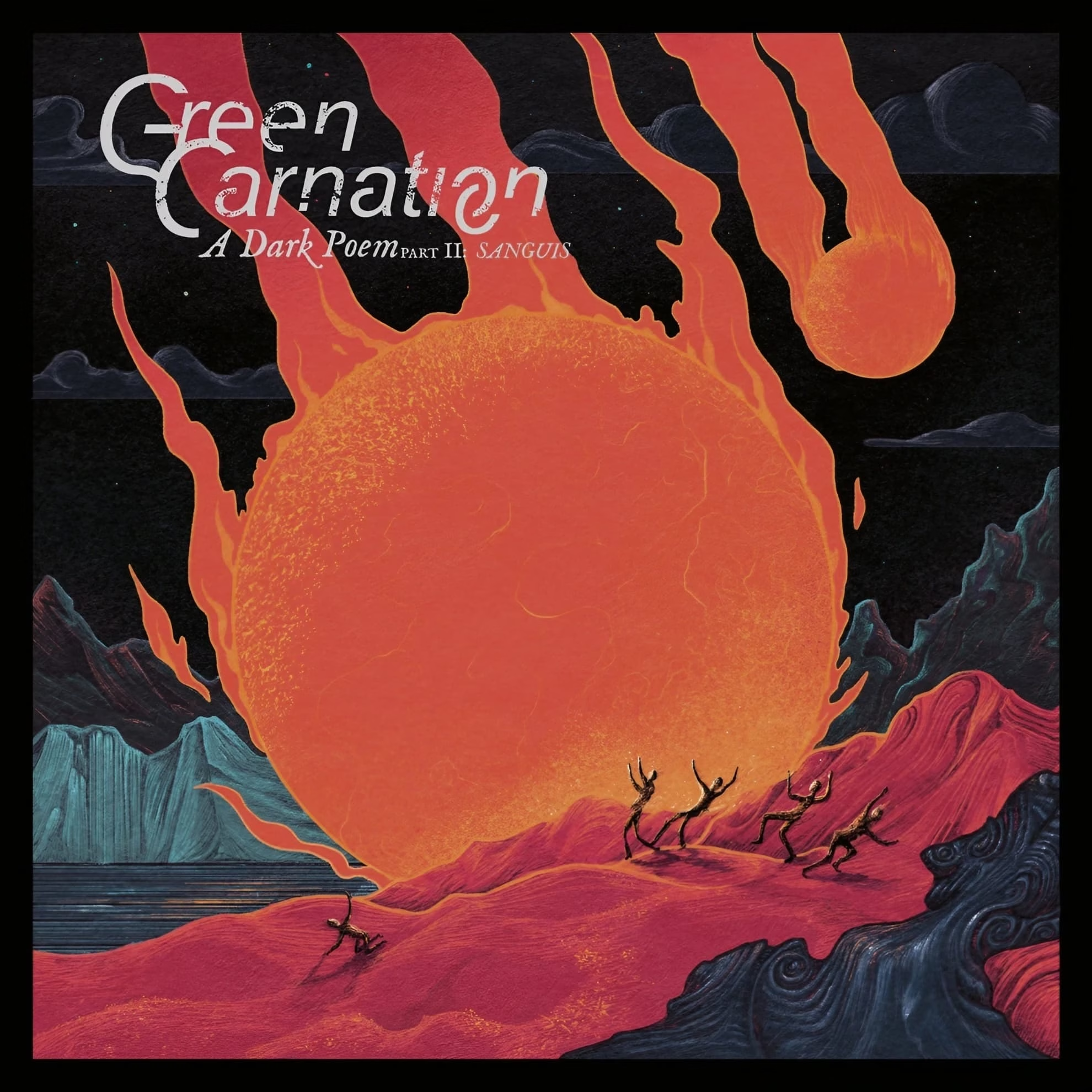
Two singles preceded it: ‘Sanguis (Blood Ties),’ released on February 4th, and ‘I Am Time,’ released on March 9th. The album’s six songs ran from the near 10-minute title track to the comparatively brief ‘Lunar Tale,’ which closed the record with a guest flute part from Ingrid Ose threaded through Endre Kirkesola’s backing vocals.
Where the opening chapter had looked outward, Nordhus explained that the second record turns markedly inward, more introspective and personal than Part I’s focus on society and the world beyond the band.
Bassist and primary writer Stein Roger Sordal, elaborating in the same conversation, connected the writing directly to his own life, noting that at 50 he had accumulated enough material, from childhood through the present, to make the songs worth releasing. That inward turn, largely unremarked in this publication until now, sets up the resolution ‘The Messiah Complex’ now attempts: a record that has to hold both the societal preoccupations of Part I and the private reckonings of Part II inside a single closing statement.
An Old King in New Anxiety
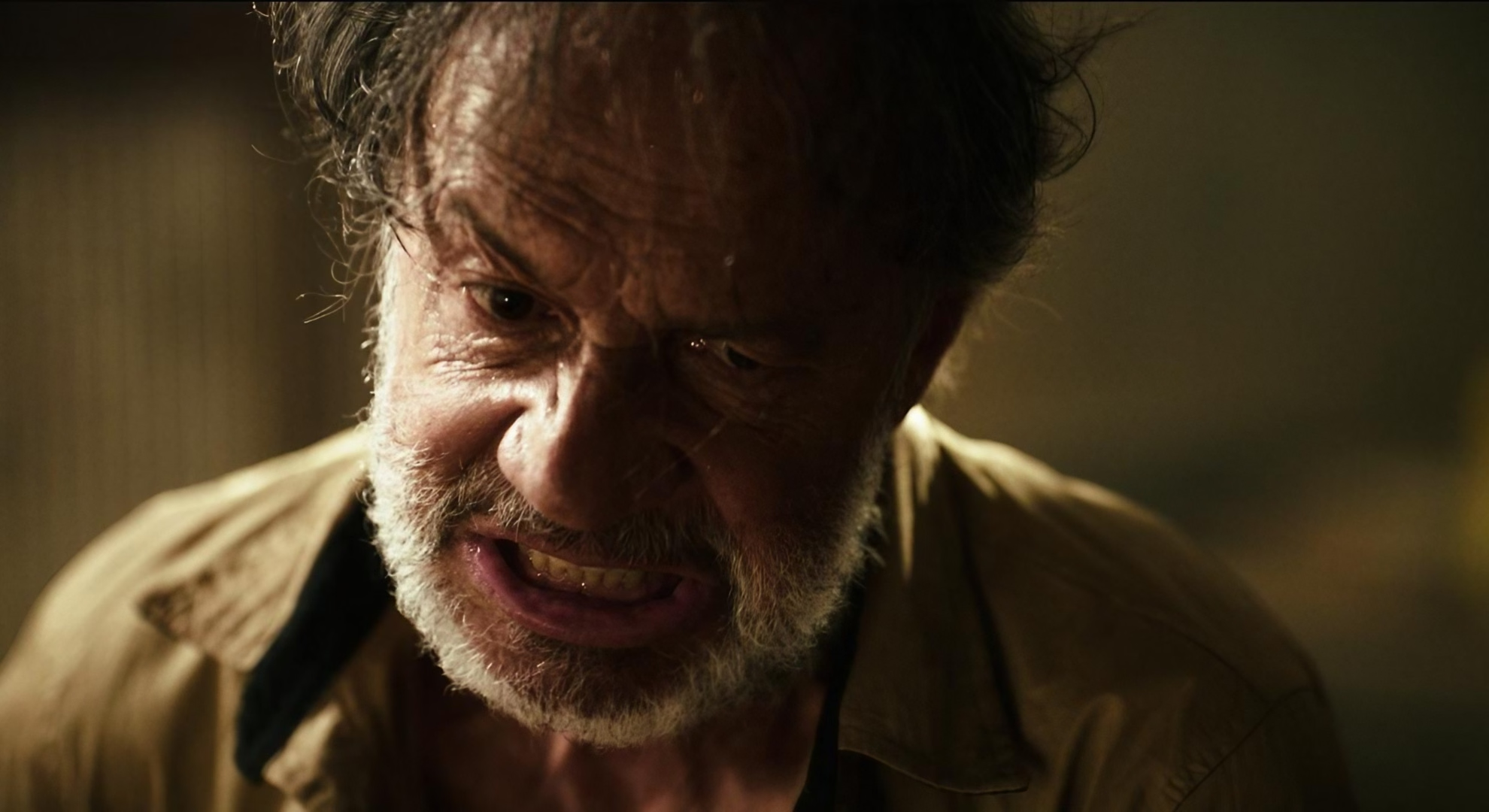
The trilogy’s two confirmed advance singles make the shape of that closing statement audible before the full record is released. ‘Unconditional Artificial Chemistry,’ released June 24th alongside a video directed by Rikard Amodei, opens the album with what Nordhus has described as a warning about dependence on artificial intelligence; the video, he explained, shows a version of the band’s own likeness corrupted by the technology it depicts, a meta gesture aimed at the systems increasingly shaping how music itself reaches an audience.
The title track, issued weeks later as the album’s second single, reaches further back for its anxiety. Its lyrics invoke King Herod, the Judean client king whose Roman-backed rule over first-century Palestine has made him, in the centuries since, a byword for tyrannical insecurity: a ruler whose historical reputation for political ruthlessness, confirmed by ancient and modern scholarship alike, later fused with the biblical account of his order to kill infant boys in Bethlehem.3
Herod’s documented paranoia about rivals to his throne gives Green Carnation a concrete historical anchor for the record’s title: not messianism as private delusion, but as the mechanism by which power protects itself from being questioned.
Sordal has described the song as confronting “our need to find external excuses for our behavior,” a line he ties explicitly to an “increasingly digital world” in which responsibility diffuses too easily. Nordhus, for his part, described it as a standout in the trilogy, pointing to Bjørn Harstad’s guitar work and Sordal’s bass and lead vocal turn on the song’s bridge as evidence of a band still finding new internal balances after three decades together.
Kept in the Family
‘The Messiah Complex’ was recorded and mixed at dUb Studio and mastered at Rorysound Studios by Lawrence Mackrory, continuing an arrangement the band has maintained across the entire trilogy. Kirkesola, Sordal, and Nordhus again produced the record themselves, a level of self-direction rare for a band operating at this scale and one that places creative control for all three albums, cover to cover, inside the group itself rather than with an outside hand.
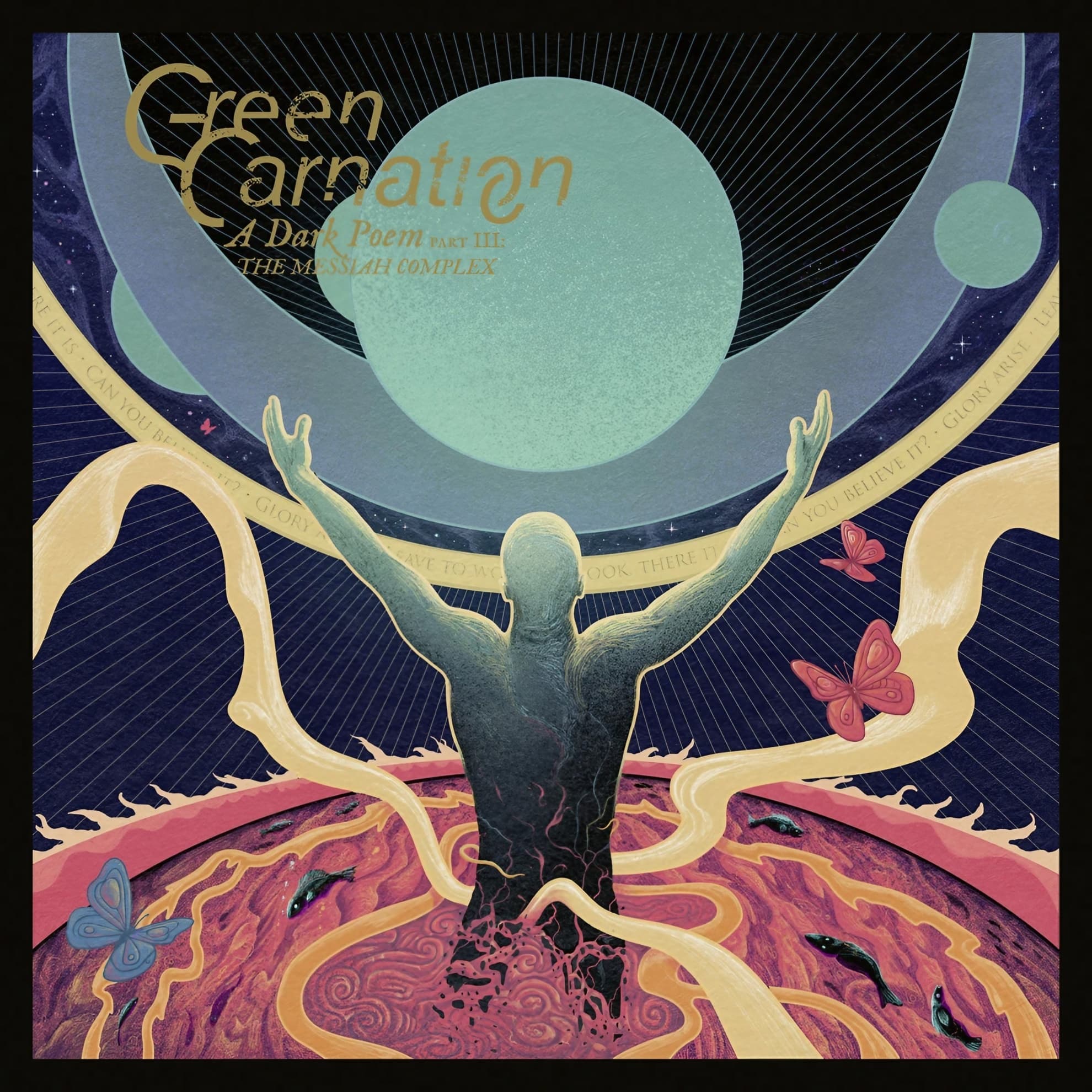
Season of Mist has framed the record within a specific lineage, describing passages that recall King Crimson’s melodic command and the more contemplative reaches of Opeth’s catalogue, a comparison that places ‘The Messiah Complex’ inside a tradition of concept-driven rock music that has long paired classical structure with rock’s own scale.4
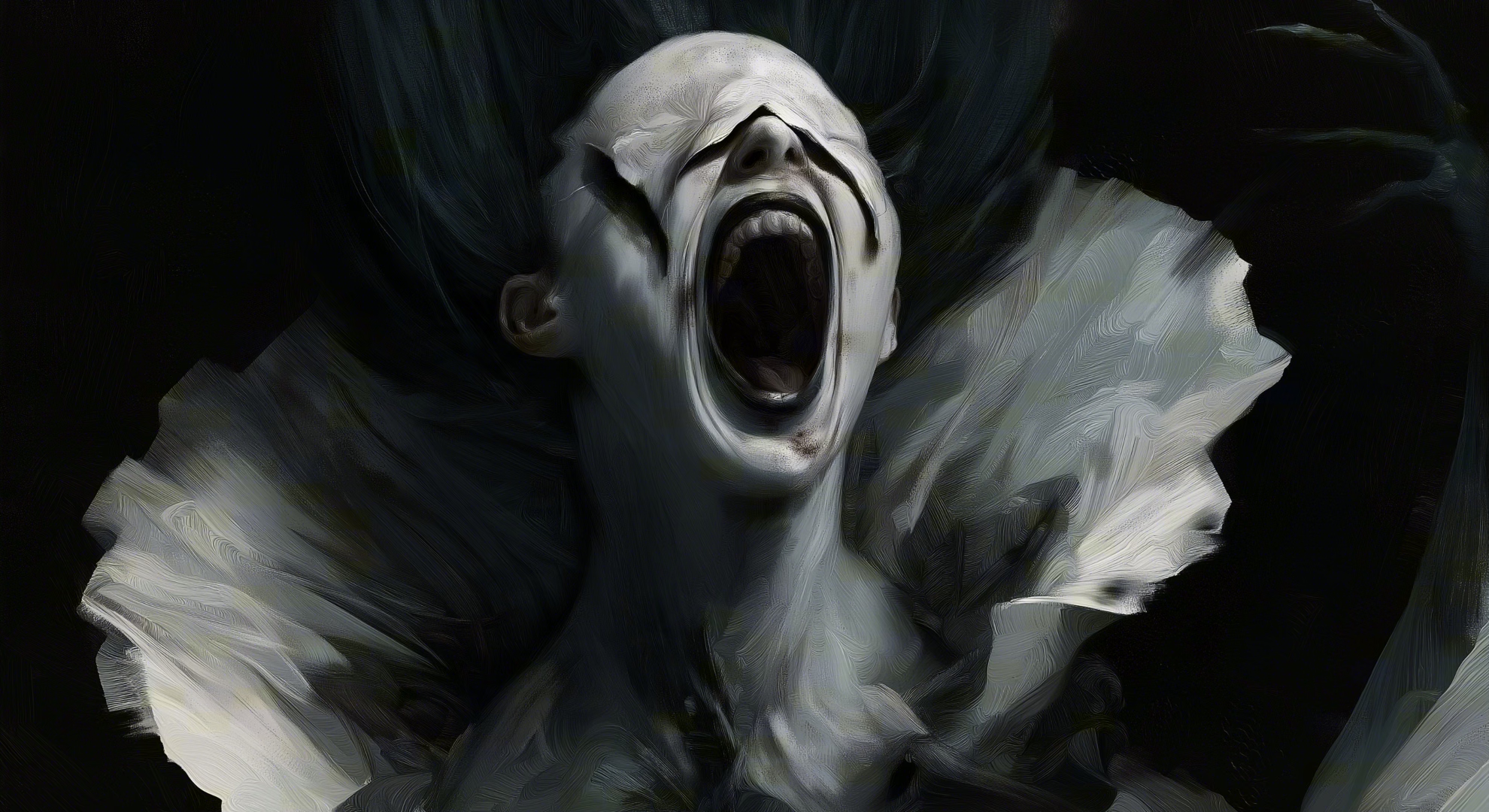
Niklas Sundin, the former Dark Tranquillity guitarist whose cover artwork established the trilogy’s visual identity on ‘The Shores of Melancholia,’ returns to complete the set, giving all three records a continuous, if evolving, visual thread.
Physical formats remain the primary way to own the record. Season of Mist and the band’s own Bandcamp page list a deluxe CD digipak with a 16-page booklet and copper-toned printing, alongside a limited first vinyl pressing in gatefold packaging; a white-splatter vinyl variant and a boxed edition collecting all three parts together sold out ahead of release.
Digital download remains available as a secondary option through Bandcamp, offered in high-resolution formats for those who pre-order ahead of the September 4th release.
An Orchestra Closes the Poem
Green Carnation will carry the album beyond Norway in the weeks after release, with a confirmed date at Barcelona’s Be Prog! My Friend! festival on September 25th and a further booking at Karmøygeddon Festival in Kopervik next spring, both stages where Scandinavian progressive doom of this particular, unhurried strain has drawn a returning crowd across three decades of touring.
Neither booking needs the band’s home country explained to it; what both audiences have followed, record after record, is a specific tradition of classically inflected heaviness that Norway has exported since long before this trilogy began.
‘The Messiah Complex’ does not resolve Rimbaud’s Ophelia so much as it gives her a fuller stage. The 16-minute orchestral suite that closes the record, scored for a full symphony orchestra and opera choir rather than the four musicians who wrote it, is the clearest signal yet that Green Carnation always intended this ending to outscale everything that came before it in the trilogy.
A poem about a woman who chose the water over the world now closes inside a hall full of strings and voices large enough to make that choice sound, for the length of one closing piece, like the only reasonable one.
Which half of ‘A Dark Poem’ has stayed with you more so far, the outward alarm of Part I and this closing record, or the private reckoning of ‘Sanguis,’ and why?
References
- Graham Robb, ‘Rimbaud’ (New York: W. W. Norton & Company, 2000), 62-65. ↩︎
- Kimberly Rhodes, ‘Ophelia and Victorian Visual Culture: Representing Body Politics in the Nineteenth Century’ (Aldershot: Ashgate, 2008), 41-47. ↩︎
- Peter Richardson, ‘Herod: King of the Jews and Friend of the Romans’ (Columbia: University of South Carolina Press, 1996), 298-303. ↩︎
- Edward Macan, ‘Rocking the Classics: English Progressive Rock and the Counterculture’ (New York: Oxford University Press, 1997), 71-76. ↩︎
Leave a Reply