

A tenure of 20 years is uncommon for a single-site gathering organized around electronic body music and gothic rock, genres whose commercial visibility has moved unevenly against their subcultural loyalty. Where several founding festivals of the movement splintered, relocated, or folded outright during the two-thousands and the twenty-tens, the event that opened inside an amphitheater in Gelsenkirchen in 2005 simply moved to Cologne the following year and stayed.
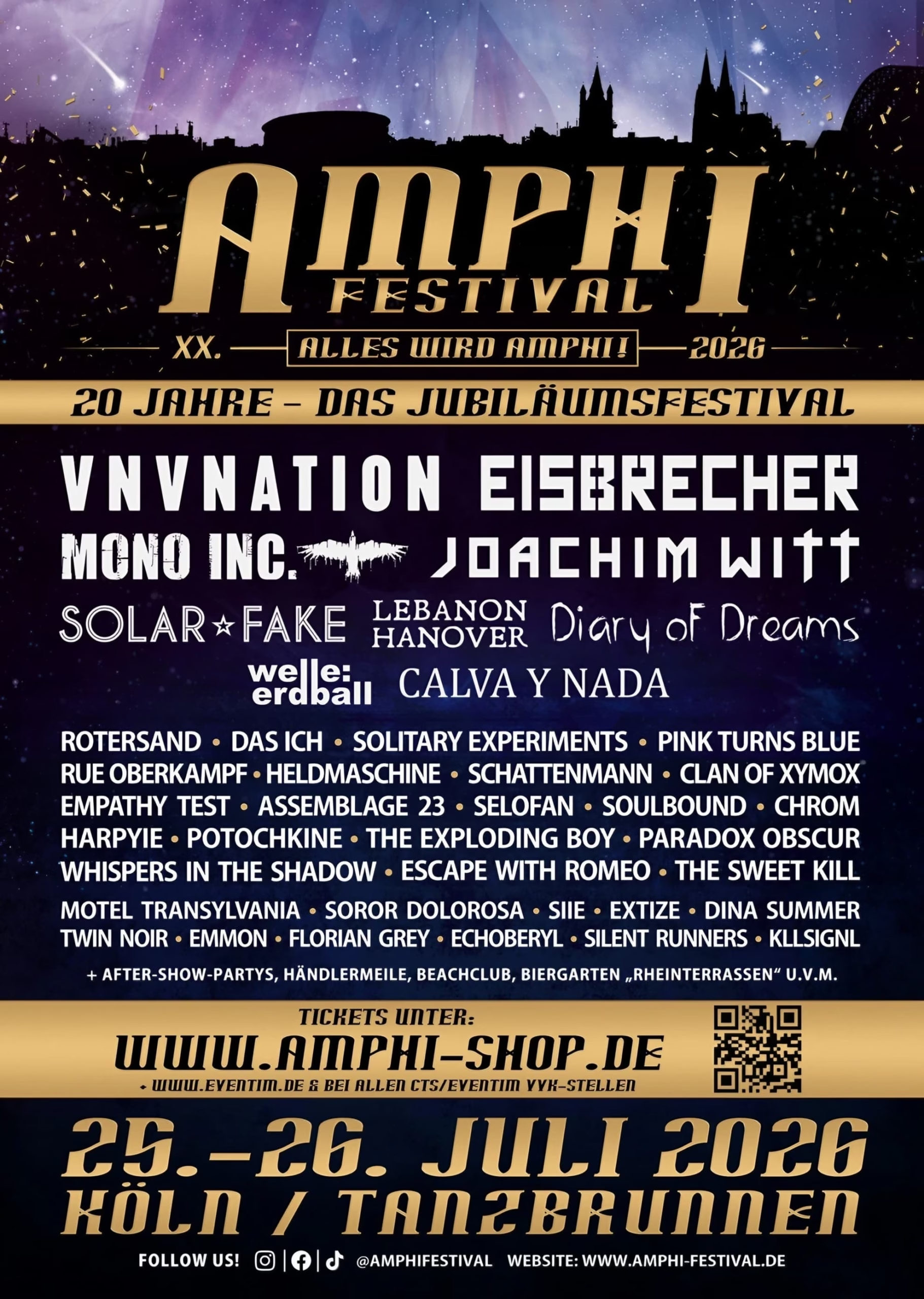
Amphi Festival’s 20th edition takes place on July 25th and 26th, 2026, at the Tanzbrunnen, on the eastern bank of the Rhine, the festival’s home for every edition since 2006 but one: a single year, 2015, spent at the indoor Lanxess Arena before returning the following season.
This publication has followed the event’s line-up announcements and recurring artists in earlier coverage; what distinguishes the current edition is not its origin story but the argument its 20th bill makes about where the gothic, EBM, and darkwave scenes stand in the middle of this decade.
A Return to the Tanzbrunnen
The festival operates from a single riverside site rather than distributing its programming across a host city’s scattered venues, concentrating roughly 40 confirmed acts across stages inside one continuous ground rather than spreading them through churches, clubs, and fairgrounds.
That concentration has produced an event with a documented capacity near 12,500, a scale that places Amphi Festival among the mid-size institutions of the European dark-music circuit rather than beside the continent’s boutique gatherings or its stadium-scale metal festivals.
Organizers confirmed in the days before the current edition that no further tickets remained available, a detail that speaks to the festival’s standing within its scene more directly than any promotional language could.1
The Lineup as Argument
VNV Nation were originally billed at the top of the lineup, but Ronan Harris withdrew in the week before the festival, citing back surgery and a lengthy recovery. Covenant, the Swedish trio marking their own 40th year in 2026, stepped into the vacated Saturday headline slot with a career-spanning set.
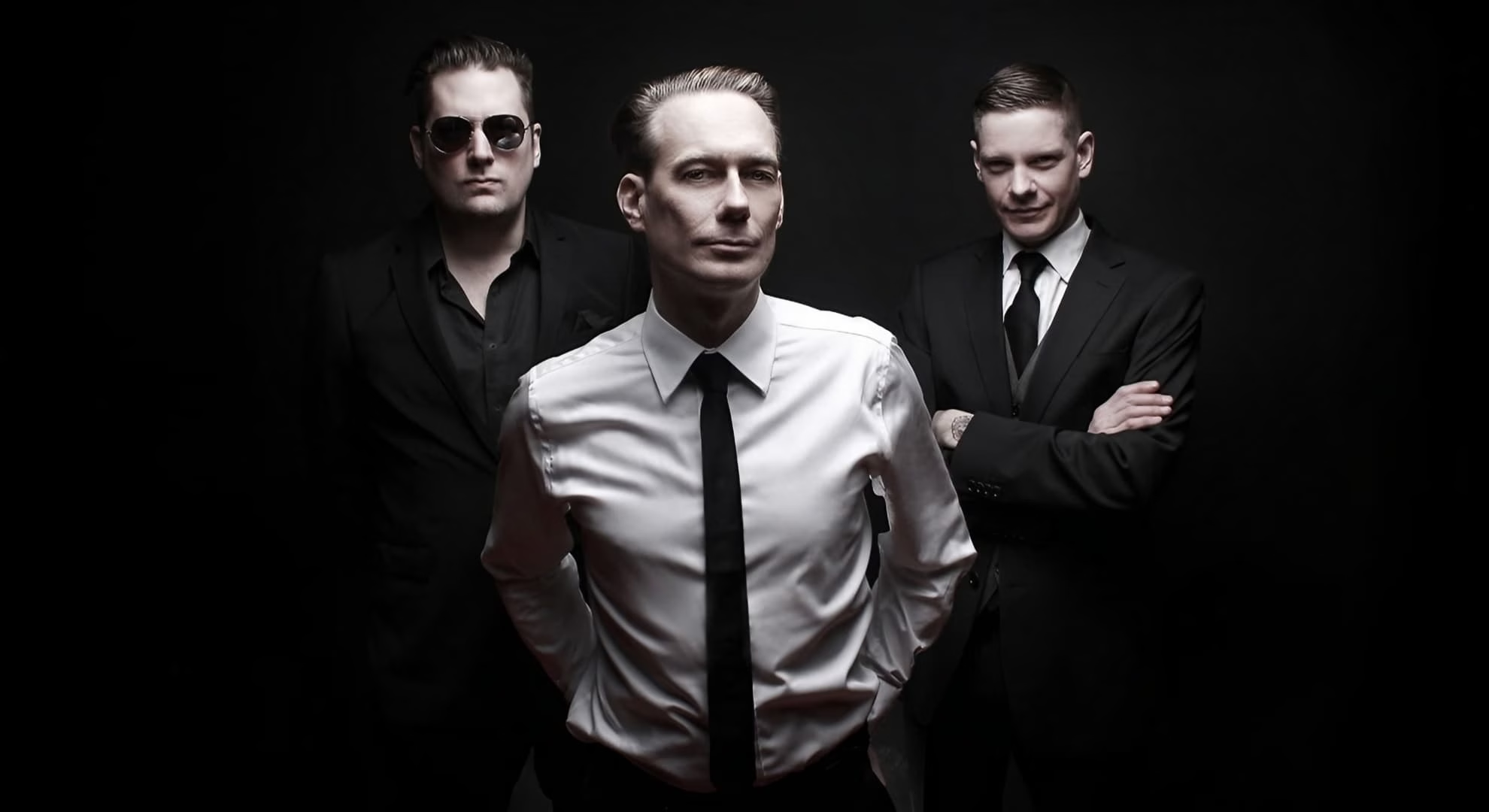
The substitution reads as continuity rather than diminishment: Covenant helped originate futurepop’s fusion of electronic body music’s rhythmic discipline with new wave’s melodic ambitions in the first place, occupying the same historical center of the genre VNV Nation was booked to represent.
Eisbrecher and Mono Inc. occupy the bill’s harder-edged and more commercially crossed-over tier, respectively. Eisbrecher, formed by Alexx Wesselsky after his departure from Megaherz, works within Neue Deutsche Härte, the German heavy-electronic tradition that treats industrial texture as a delivery system for arena-scaled hooks rather than as an end in itself.
Mono Inc., by contrast, draws from gothic rock’s more theatrical wing, closer in temperament to the genre’s nineteen-eighties British originators than to EBM’s mechanized pulse. Placing both acts atop the same bill as Covenant documents a curatorial position: that the “black scene” Amphi Festival serves was never a single genre but a coalition of adjacent, occasionally contradictory listening habits.2
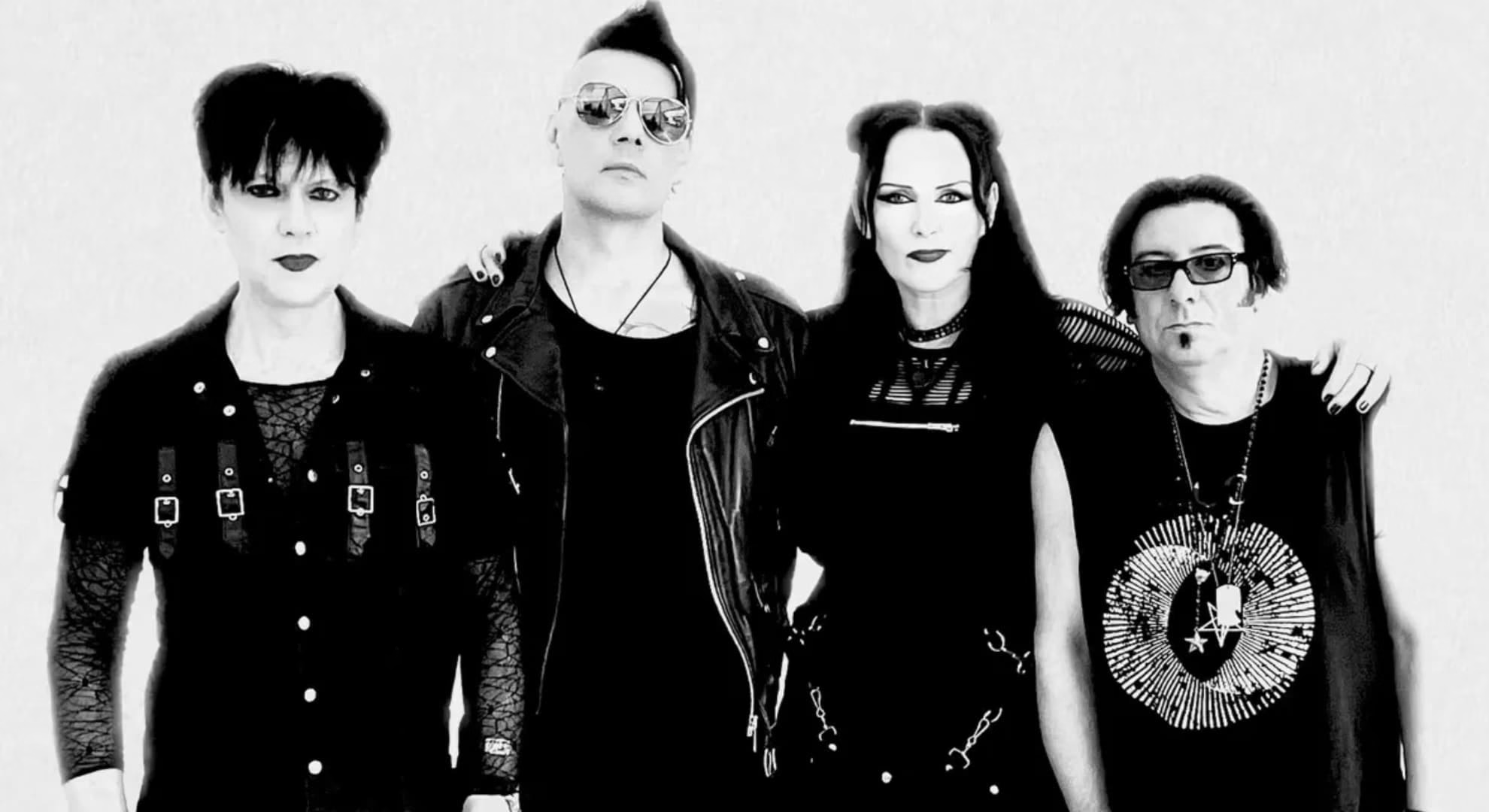
Clan of Xymox and Das Ich anchor the bill’s older lineage. Clan of Xymox, active under various names since 1981, occupied the same early-nineteen-eighties Dutch and British post-punk ground that produced gothic rock’s vocabulary, before synthesizer-based composition and guitar-driven rock hardened into separate marketing categories.
Das Ich, founded in Bayreuth in 1989 by Stefan Ackermann and Bruno Kramm, belongs to the German current sometimes labeled Neue Deutsche Todeskunst, distinct from the British tradition Clan of Xymox represents. Diary of Dreams, the long-running project of Adrian Hates, extends a third, more introspective strand of German darkwave operating continuously since 1989 without fully aligning with either the harder EBM camp or the metal-facing acts elsewhere on the bill.
Where the Edges Sit
Beneath the headline tier, Lebanon Hanover’s booking carries specific weight. The duo, active since 2010, works a minimal, deliberately unpolished post-punk that has found renewed circulation among younger listeners discovering gothic music through channels removed from the festival circuit that sustained the genre in past decades. Their presence signals that Amphi Festival’s programming continues to track the scene’s informal expansion rather than resting solely on its founding generation.
What the 2026 bill omits is equally telling. Prior editions have hosted harder EBM and aggrotech acts such as Combichrist, Front 242, and Nitzer Ebb, artists whose absence from the confirmed roster this year is not incidental. The current lineup leans further toward gothic rock, darkwave, and futurepop than toward the mechanized, industrial-club end of the “black scene,” a shift that tracks with where new listener interest has visibly concentrated over the past several years.
Access and Its Price
The weekend ticket for the 20th Amphi Festival reached its final “Late Bird” tier at 126.00 euros total, including fees (approximately COP 479,000), before organizers confirmed the remaining inventory had sold through; a third of the full allocation had already sold within ten minutes of the initial on-sale.
Single-day tickets were also available. The festival has no official campsite, a consequence of its placement inside Cologne proper, and most attendees lodge in the Deutz district or city center within walking distance of the Tanzbrunnen.
A sold-out mid-size festival without campsite infrastructure is a statement about the durability of urban festival models within a subculture that has historically favored rural gathering sites.
Cologne’s Darker Ground
Two sites within Cologne hold a documented relationship to the emotional register that draws audiences to gothic and industrial music, independent of the festival itself.
Melaten Cemetery, inaugurated in 1810 on the grounds of a former medieval leper colony first documented in the thirteenth century, functions today as the city’s largest and most stylistically varied burial ground. Its more than 55,000 graves span neoclassical, neo-gothic, neo-baroque, and art nouveau styles, and its central “Millionaires’ Avenue” of family mausoleums is a recognized stop on the city’s dark-tourism circuit independent of any festival calendar.
For an audience traveling to Cologne for a weekend organized around gothic and industrial sound, Melaten offers the same romanticized relationship to mortality that the music itself frequently stages, made physical in stone rather than performed on a stage.
Cologne Cathedral, the twin-spired gothic structure whose construction began in 1248 and continued intermittently until 1880, remains the largest cathedral facade in Germany, a defining example of medieval gothic engineering carried, after a six-century pause, to modern completion.
Where the cemetery stages an intimate relationship with individual mortality, the cathedral stages the same era’s confrontation with the sacred and the monumental, the aesthetic register gothic rock borrowed its name from.
Two Decades at the Rhine
A festival that has returned to the same riverside ground for all but one of its twenty editions, interrupted only by a single indoor relocation in 2015, has demonstrated that the “black scene” it set out to serve in 2005 was never as narrow as outside observers assumed.
The current bill, weighted toward gothic rock and darkwave veterans and lighter on the harder EBM acts that once shared its stages, documents a scene redefining its own center rather than repeating its past. Whether that redefinition holds past this edition is a question only the festivals that follow it can answer.
What would it mean for the European dark-music circuit if its mid-size institutions continue drifting away from EBM’s mechanized core and toward gothic rock’s more theatrical inheritance?
Tourism Partnership
We reach an audience that travels with intention — drawn to documented history, dark heritage, and the cultural weight of the places they seek out. If you operate tours, cultural experiences, accommodation, or heritage sites aligned with that ethos, we would like to hear from you. We consider partnerships with tour operators, travel agencies, hostels, hotels, museums, and any organization whose work engages seriously with dark tourism, gothic culture, or historical travel. We do not promote services we cannot stand behind editorially. Reach us through our Contact page.
References
- Paul Hodkinson, ‘Goth: Identity, Style and Subculture’ (Oxford: Berg, 2002), 45–49. ↩︎
- Michael Bibby and Lauren M. E. Goodlad, eds., ‘Goth: Undead Subculture’ (Durham: Duke University Press, 2007), 112–116. ↩︎

Leave a Reply