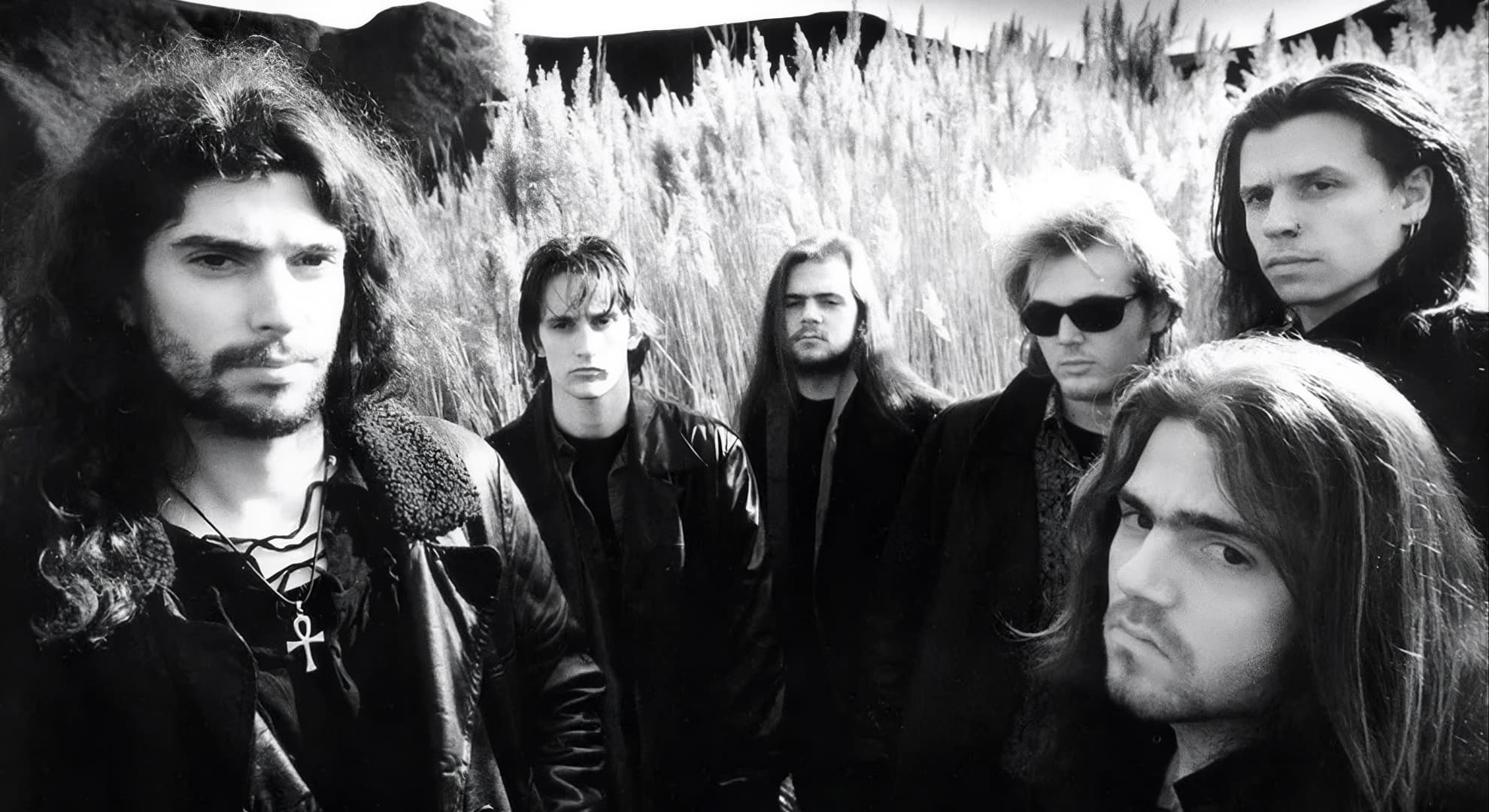


Most short-lived bands leave behind a single, coherent gesture and an argument about what they might have become. This one left something rarer: a completed round-trip through a genre’s evolution, executed so fast that the band did not survive reaching the far side. Between one album and the next, a group of Colchester musicians moved from the slow, keyboard-saturated gothic doom that British extreme metal had spent the early 1990s working out to a loose, organ-driven progressive rock their own audience had not asked for, and then broke apart at the precise moment the second style displaced the first.
The whole passage took under three years. What remains is a two-record case study in a transition that the wider Peaceville Records lineage would take the better part of a decade to complete, and a reminder that the migrations metal narrates as triumphant were, for at least one band, fatal.
Two Albums, One Migration, No Survival
The argument of this piece is narrow and, I think, falsifiable. The Blood Divine did not fail to find a sound; they found two, one per album, and could not hold together across the distance between them. Their debut belonged to the mournful, keyboard-saturated gothic doom that British extreme metal had spent the first half of the 1990s working out.
Their second record set that style aside for a loose, organ-led progressive rock closer to early-1970s hard rock than to anything else on Peaceville’s roster. Nothing in the historical record suggests these were two attempts at one target. They were two different targets, and the band dissolved at the seam between them.
This reading cuts against the way the band is usually filed. Most accounts treat The Blood Divine as a way station for cast-off and between-projects members of Cradle of Filth, with a former Anathema singer at the microphone — a footnote to two larger stories rather than a subject in its own right.
That framing is not wrong about the personnel, but it mistakes the interesting fact. The interesting fact is not who was in the band; it is that the band compressed, into two records and under three years, a stylistic passage that the group of Peaceville acts around them would take the better part of a decade to complete.
That passage has been studied at the level of feeling rather than personnel. The death doom idiom the debut drew on has been described as a distinct emotional world, one whose slow tempos and depressive affect its participants experience less as aggression than as a shared vocabulary of grief.1 The Blood Divine entered that world already half-transformed: the growled voice of death doom had given way to clean, sorrowful singing, and the violence of the form had been traded for atmosphere. The debut, in other words, was not a beginning but a midpoint — a band reaching gothic doom already looking for the exit.
If the central claim is to hold, two things must be true, and both are documented. The second album must be a genuine stylistic break rather than a refinement, and the band’s collapse must sit at that break rather than somewhere unrelated to it. Both conditions are met.
Contemporary accounts and the band’s own members describe the second record as less gothic and more classic-rock and progressive in shape, and the split followed directly from a dispute over how much further to push the group’s direction. A band that had wanted only to make the debut again would have had no such dispute to have.
What this produces is not a tragedy and not a lost masterpiece, two labels the band tends to attract. It produces something more useful to a historian: a legible specimen. Because the migration happened so fast and inside such a small body of work, the usual noise that obscures a band’s evolution — years of touring, incremental records, shifting membership across a long arc — is absent. Two albums, one move, one fracture. The Blood Divine is the cleanest available illustration of a transition that the British scene otherwise narrates as a slow, survivable maturation.
The remainder of this account traces that specimen from both ends: the wreckage the members walked out of to form the band, the two records that mark the start and finish of the migration, the packaging that signaled how seriously their label took them, the dismissal that ended everything, and the way their influence, such as it was, ran back inward toward the bands they had left rather than outward toward imitators.
The verdict is not that they were overlooked geniuses. It is that they are worth reopening precisely because they show, in miniature, a process the scene prefers to remember as gradual.
A Band Assembled from Two Wreckages
British heavy metal of the early 1990s had produced a genuinely new dialect, and the northern English scene around Peaceville Records was its center. The gothic turn in this music has been read by scholars as the point where metal’s aggression met the older literary machinery of the Gothic — ruin, mourning, the beautiful corpse — and produced something that was neither pure extremity nor pure atmosphere.2
Three bands on Peaceville, Paradise Lost, My Dying Bride, and Anathema, had become the reference points for this dialect, moving death metal’s weight into slow tempos, clean and choral textures, and unembarrassed melancholy. The Blood Divine were assembled out of the edges of exactly this world.
The band’s spine came from a departure. Guitarist Paul Ryan, a co-founder of Cradle of Filth, left that group along with his brother, keyboardist Benjamin Ryan, and guitarist Paul Allender, in the period after the 1994 debut ‘The Principle of Evil Made Flesh’ and around the sessions that would become the ‘Vempire’ EP.
Cradle of Filth were then pushing toward the ornate, symphonic black metal that would define them; the Ryans and Allender wanted something slower and less theatrical. Their exit was not amicable in its details, but its result was clean: three experienced players free to pursue the gothic-doom register their former band had bypassed.
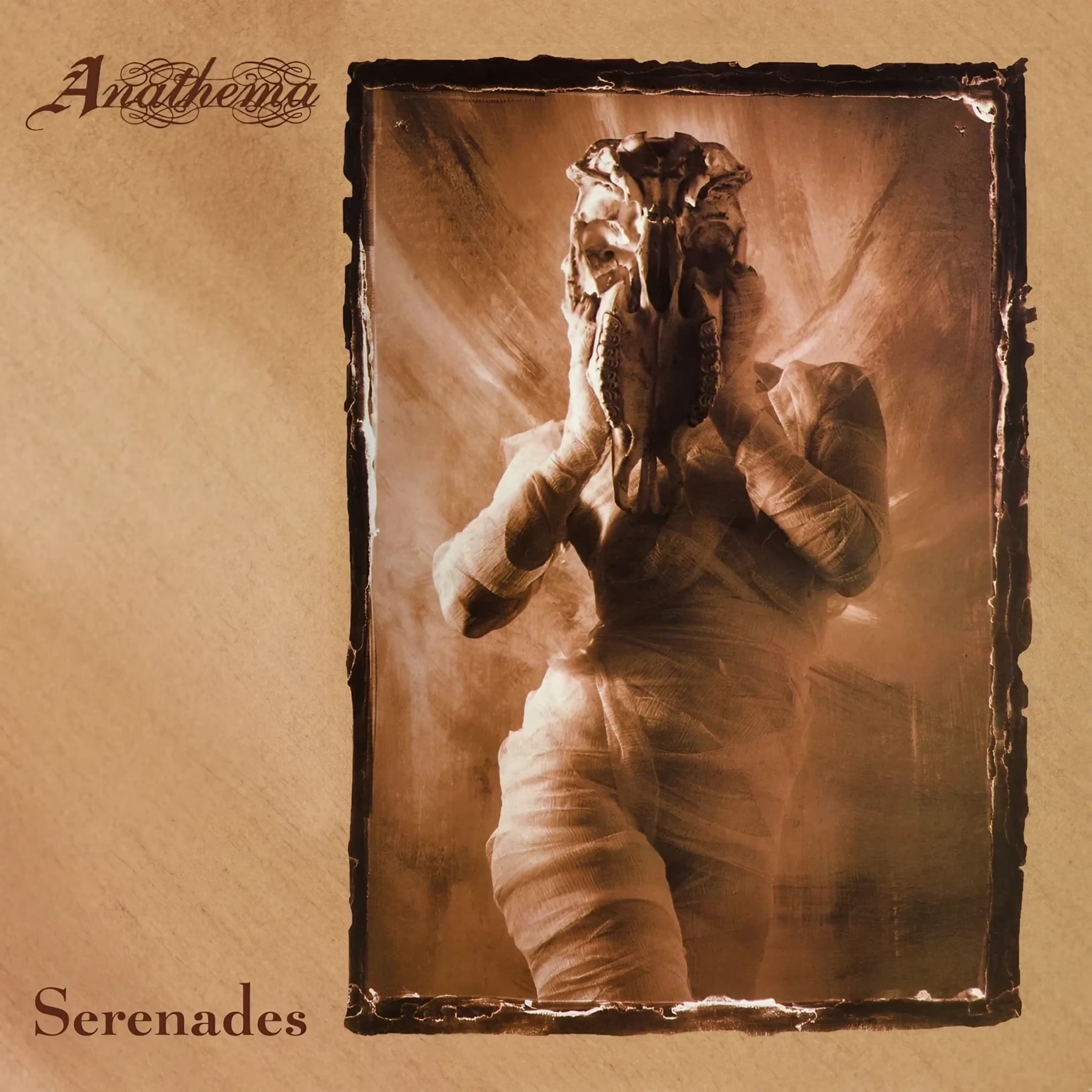
The voice came from a second departure, unrelated to the first except in kind. Darren White had fronted Anathema through their 1993 debut ‘Serenades,’ one of the founding documents of British death doom, and had been present at the very start of Cradle of Filth as an early drummer — a detail that binds the two lineages together before The Blood Divine existed.
By 1995 White had been removed from Anathema, just as that band began the move toward clean-sung atmospheric rock that would occupy the rest of its career. He came carrying the death doom vocabulary of ‘Serenades’ and a grievance, and both would shape the debut.
Around this core the band recruited a rhythm section from the wider extreme-metal pool: drummer William A. “W.A.S.” Sarginson, whose background ran through December Moon and Extreme Noise Terror, and bassist Steve Maloney. Peaceville, the label that had defined the dialect the band wanted to speak, signed them quickly. The whole assembly took place across the latter half of 1995 in and around Colchester, in Essex — geographically at the southern edge of a scene whose gravity was northern.
The composition of the group is worth pausing on, because it explains the debut’s peculiar poise. This was not a set of beginners working out a style in public. Every member had already helped make a record that mattered to the scene, whether Cradle of Filth’s debut or Anathema’s. They came to The Blood Divine with the death doom and early-gothic idiom already in their hands, which is why the first album sounds less like an experiment than like a summary — a group of practitioners consolidating what they collectively already knew, rather than searching for it.
That consolidation is the debut. It is also the reason the second record’s break would prove so destabilizing: a band that begins from mastery has nowhere to grow except sideways, and sideways, for The Blood Divine, meant out of the genre entirely.
‘Awaken’ and the Weight of Grief
‘Awaken’ was recorded in February and March of 1996 at Academy Studios in West Yorkshire — the same northern facility associated with the scene’s defining records — and mixed that May. Peaceville released it later in 1996. From its first minutes it announces a band uninterested in speed. The opener ‘So Serene’ runs past nine minutes; ‘Aureole,’ the track the band would return to most often, unfolds with the patience of a processional rather than a song in a hurry to reach its chorus.
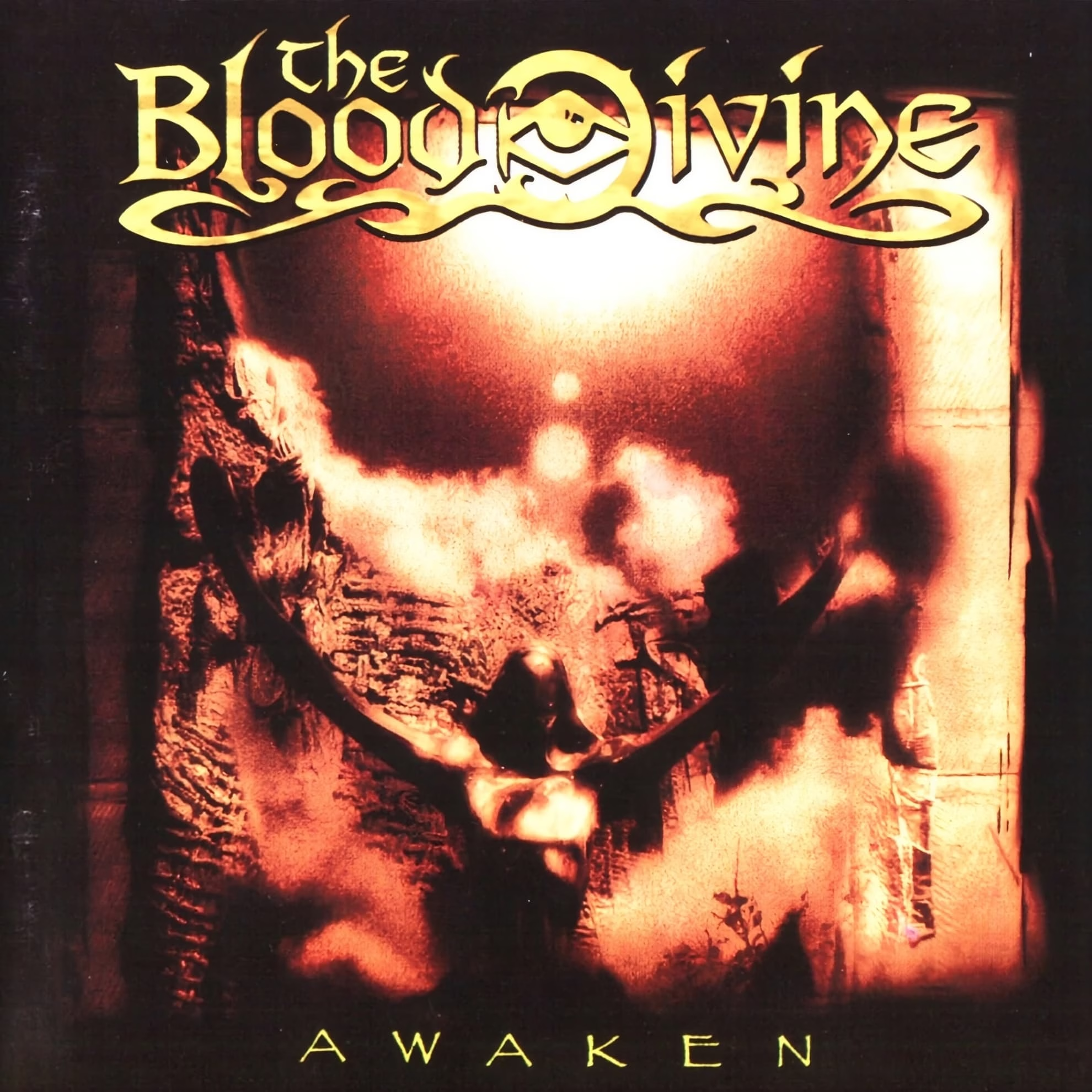
The most consequential choice on the record is the voice. Where death doom had typically paired funereal tempos with a subterranean growl, White sings — clean, low, grief-stricken, occasionally cracking into something harsher but never surrendering the melody. This places the album squarely in the gothic register that scholars have identified as metal’s absorption of an older mourning tradition, in which loss is not screamed but sustained and, in a sense, savored.3
The keyboards of Benjamin Ryan do not decorate the songs so much as flood them; the guitars of Paul Ryan and Allender move in slow, harmonized arcs. ‘In Crimson Dreams,’ ‘Moonlight Adorns,’ ‘Wilderness’, ‘Artemis’ — the titles alone name the emotional territory, and the music honors them without irony.
For the argument of this piece, the important thing about ‘Awaken’ is what it is already not. It is not a death metal record with slow parts; the growl is largely gone. It is not an experiment in progressive song form; the structures, long as they are, stay anchored in mood. It is a fully achieved gothic-doom album, and a fully achieved thing has, by definition, completed its journey to that point.
The band had gotten there, and the question the debut silently poses — and that the second album would answer catastrophically — is where a band goes once it has nothing left to reach for inside its chosen form.
Even the object itself signaled ambition. The debut appeared in an elaborate hardbound digibook edition, unusual for a first album by a new act, which I take up separately below. For now it is enough to note that Peaceville did not present ‘Awaken’ as a tentative debut. They presented it as a statement.
What holds the record together is not any single song but a consistency of feeling. Grief here is not a subject the band visits; it is the medium they work in. That coherence is the debut’s great strength and, in hindsight, its trap. A band this unified in tone has defined itself so completely that any significant change will read not as growth but as departure — as becoming a different band. Fifteen months later, that is precisely what happened.
Heard now, ‘Awaken’ sits comfortably beside the records its members’ other bands were making in the same window, without sounding like any of them. It has neither Cradle of Filth’s theatrical velocity nor Anathema’s incipient art-rock restraint. It occupies a narrow band of the spectrum — slow, clean-sung, keyboard-drenched British gothic doom — and fills it completely. That it fills it completely is the point. There was no room left inside it to move.
‘Mystica’ and the Turn to Rock
‘Mystica’ was recorded in May and June of 1997 at Lartington Hall Studios in County Durham. During or shortly after those sessions, Paul Allender left the band, citing a wish to spend more time with his family; he would in time return to Cradle of Filth. His exit reduced the group to a five-piece and removed one of the two guitarists who had given the debut its harmonized weight. Peaceville released the album on October 13th, 1997.
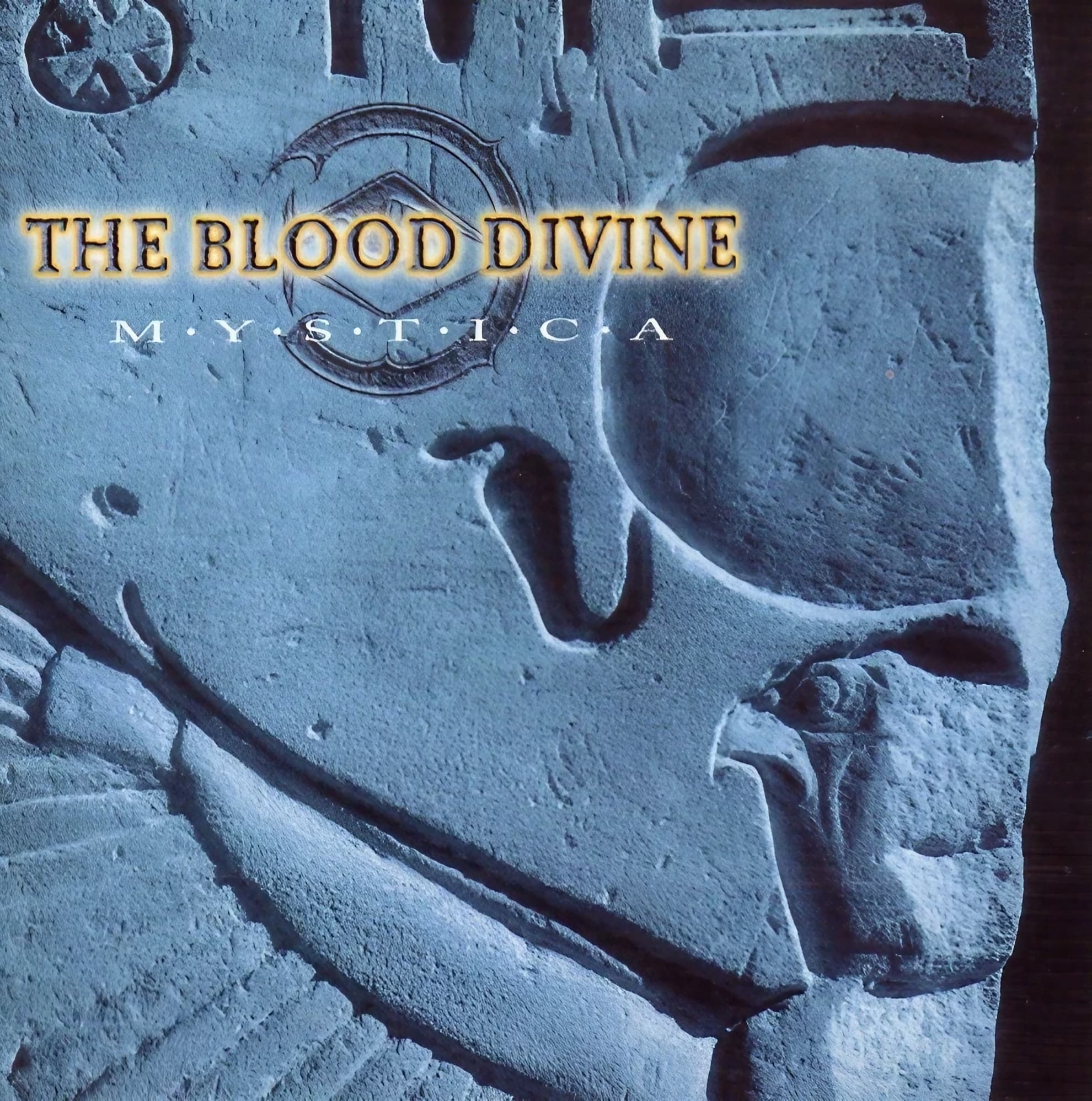
The record that resulted is the hinge on which this entire account turns. By broad agreement, including that of the band’s own members, ‘Mystica’ set aside much of the gothic apparatus of the debut in favor of a looser, groovier, organ-forward sound indebted to early-1970s hard and progressive rock.
The keyboards that had flooded ‘Awaken’ now swagger; the guitars riff where they once mourned; blues phrasing appears where there had been only grief. Read through the lens of scholarship on metal’s musical grammar — its coding of power, its genre signals, the way particular sounds carry particular meanings to an audience trained to hear them — this is not a small adjustment.4
It is a change of dialect, and an audience that had bought the debut for its funereal certainties was being asked to follow the band somewhere its vocabulary no longer applied.
None of this is to call ‘Mystica’ a failure on its own terms. Tracks like the title song, ‘As Rapture Fades,’ and ‘Visions Part II: Event Horizon’ — the last a deliberate sequel to the debut’s ambient ‘Visions (Of A Post-Apocalyptic World): Part I’ — show a band playing with real looseness and confidence, and the organ work in particular has a warmth the debut’s colder textures never sought.
Considered in isolation, it is an interesting, slightly wayward record. Considered as the second half of a two-album career, it is something more significant: proof that the band had already stopped wanting to be the band that made ‘Awaken.’
This is where the compression I described at the outset becomes visible. The distance between ‘Awaken’ and ‘Mystica’ is, in stylistic terms, roughly the distance Anathema traveled from ‘Serenades’ to the art-rock of their late-1990s records — except Anathema took that distance in stages, across several albums and several years, carrying their audience with them one increment at a time.
The Blood Divine attempted the same crossing in a single leap between two records. The leap is legible, even admirable in its nerve. It was also more than the band’s internal cohesion could bear.
It is worth stating plainly that the second album’s turn was a matter of intent, not accident. The band did not drift into classic rock for want of better ideas; the members have described a deliberate move away from the constraints of the gothic-doom form. That intent matters to the argument, because it means the migration was chosen. The Blood Divine were not carried out of their genre by circumstance. They walked, and the walking is what pulled them apart.
A group can survive changing its sound. What is harder to survive is changing it while its members disagree about whether the change should continue, and disagree, further, about who belongs in the band that would carry it forward. ‘Mystica’ did not break The Blood Divine, but it set the terms on which they would break, and it did so within months of its release.
The Digibook as Prestige Signal
The most telling piece of visual evidence in the band’s short life is not an image but a format. ‘Awaken’ was issued, in its limited edition, as a hardbound digibook — a bound, book-style package closer to a small hardcover than to the standard jewel case that housed nearly everything on the shelf beside it. For a debut album by an act with no track record under its own name, this was an unusual investment, and it tells us how Peaceville understood the band.
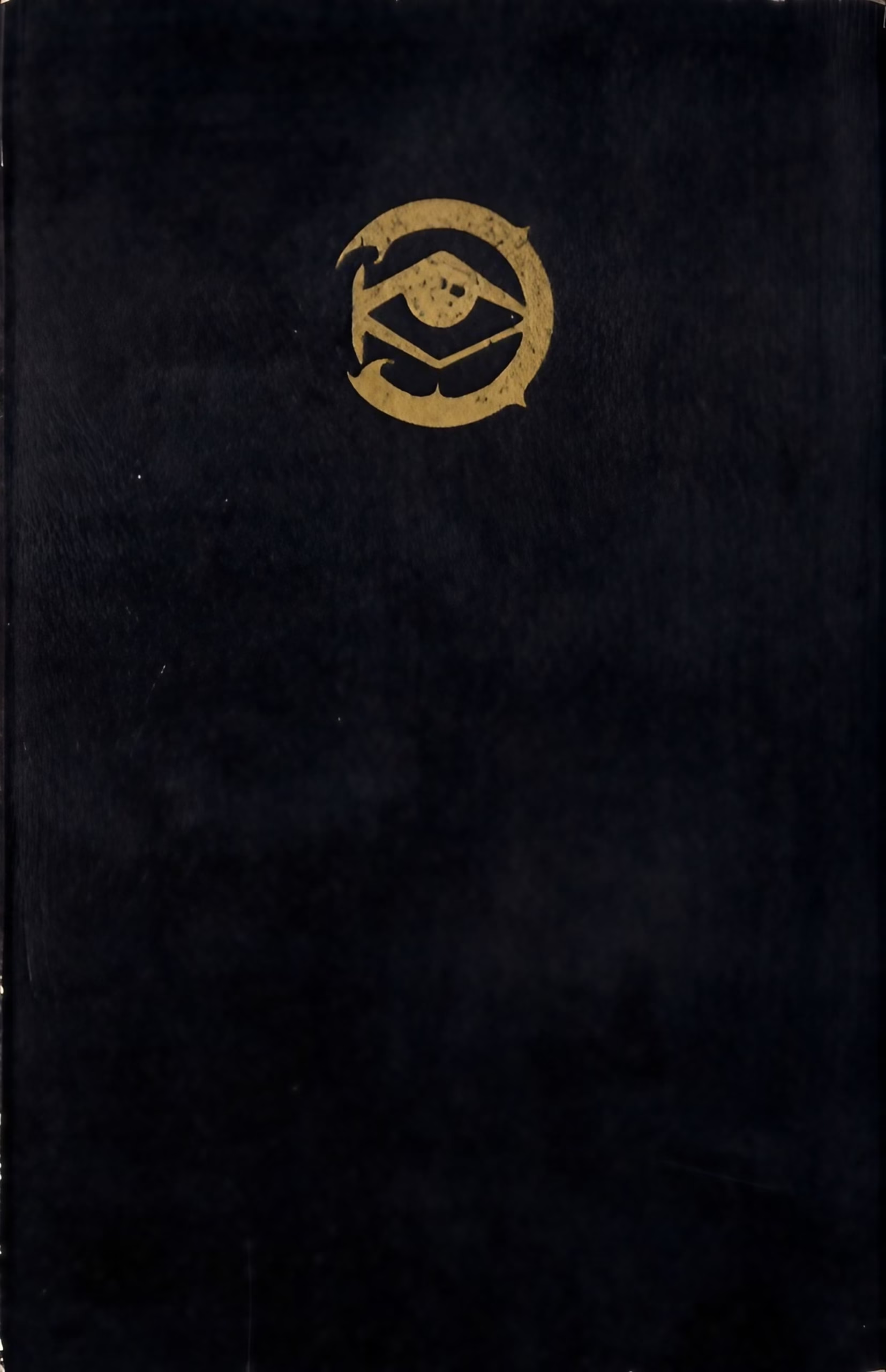
Labels do not spend on packaging indiscriminately. The digibook placed ‘Awaken’ in the small category of releases a label treats as flagship objects rather than catalog filler — records meant to be handled, kept, and displayed. In choosing that presentation for a new band, Peaceville signaled that it viewed The Blood Divine not as a minor side venture for some ex-Cradle of Filth players but as a serious addition to the gothic-doom canon it had done so much to define. The object made a claim about the music’s permanence.
There is an irony in this, given how the story ends. The digibook is a form that insists on durability — it is designed to survive, to sit on a shelf for decades, to be treated as literature rather than product. The band it housed lasted barely two more years. The most permanent thing The Blood Divine made was arguably the container, not the career. ‘Awaken’’s binding outlived the group that recorded it, and copies of that edition remain the artifact collectors seek.
The visual identity beyond the packaging was restrained to the point of austerity, and deliberately so. Where the members’ parent bands traded in spectacle — corpse paint and vampiric theater on one side, the imagery of romantic doom on the other — The Blood Divine presented themselves plainly, letting the mournful weight of the music stand without costume.
That restraint is consistent with the argument running through this piece: this was a band stripping away the theatrical machinery of its origins, keeping only grief. The plainness was not a lack of identity. It was the identity.
A Dismissal That Broke the Band
The confirmed sequence of the band’s end is brief and can be stated without embellishment. In April 1998, keyboardist Benjamin Ryan was told to leave the band. His brother, guitarist and co-founder Paul Ryan, was dismayed by his dismissal. Within weeks, in May 1998, the group dissolved.
Those are the documented facts, and they are the load-bearing ones: the proximate cause of the end was not a market, not a label, and not exhaustion alone, but a personnel decision that fractured the family relationship at the band’s core.
Around those facts it is tempting to assemble a tidier story, and here care is required. The available accounts connect Benjamin Ryan’s removal to a wish among some members to push the band’s sound further still, beyond even where ‘Mystica’ had taken it. That connection is plausible and is consistent with everything the two albums show. But it should be marked as interpretation rather than settled fact: what is documented is that Ryan was removed and that his brother’s reaction to the removal ended the band. The claim that the removal was fundamentally about musical direction is an inference — a well-supported one, in my judgment, but an inference all the same.
Read through this article’s central claim, the end has a grim logic. A band that had already moved once, decisively, from gothic doom to progressive rock was, by some members’ wish, preparing to move again. The migration was not going to stop at ‘Mystica.’ And a group cannot keep changing its sound indefinitely without, at some point, changing its personnel to match — without deciding that the people who fit the last version no longer fit the next.
Benjamin Ryan’s keyboards had been central to the debut’s gothic flood. In a band heading still further from that sound, the instrument most identified with the abandoned style was a natural casualty. That his removal broke the band is precisely what one would expect when the person cut is the brother of the person steering the new direction.
What the ending was not is as important as what it was. It was not a collapse under outside pressure, and it was not the slow fade of a band running out of audience or ideas. It was an internal fracture produced by the very restlessness that had made the band interesting — the same appetite for change that carried them from the debut to the second record, followed one step too far. The Blood Divine did not run down. They accelerated into the wall.
There would be no reunion. Unlike many acts of its scene and generation, The Blood Divine never reactivated, never staged the anniversary return that has become almost obligatory for bands of the 1990s doom and gothic underground. The account closed in 1998 and has stayed closed, which is part of why it can be assessed cleanly. There is no later chapter complicating the verdict, no comeback record forcing a revised judgment. The two albums are the whole of it.
Influence That Ran Inward
The honest account of The Blood Divine’s influence has to begin by admitting what it is not. There is no school of bands that cite ‘Awaken’ as their origin, no documented lineage of imitators who took the band’s specific approach and carried it forward under their own names.
To claim otherwise would be to manufacture the kind of vague genre-adjacency that means nothing. The scholarship on how metal genres police their own boundaries and reproduce themselves is useful here mainly as a contrast: this is a band whose influence did not propagate outward across the genre in the usual way at all.5 It ran the other direction — inward and backward, into the bands its members had come from.
The clearest channel is Paul Allender. After leaving The Blood Divine during the ‘Mystica’ sessions, Allender returned to Cradle of Filth, and from 1998 onward became that band’s defining guitarist across its most widely heard records, from ‘Cruelty and the Beast’ in 1998 through ‘Midian’ in 2000 and well beyond.
The melodic, atmospheric guitar sensibility Allender developed in the slow, harmonized world of The Blood Divine did not vanish; it went back to Cradle of Filth and helped shape the more textured, less purely blastbeat-driven sound of that band’s late-1990s and 2000s work. The Blood Divine, in this sense, functioned as a laboratory whose findings were carried back into a far more prominent band.
A second, smaller channel runs through the drum stool. William Sarginson briefly joined Cradle of Filth in the wake of The Blood Divine’s collapse, before that band settled on the Swedish drummer Adrian Erlandsson. The tenure was short, but it belongs to the same pattern: the personnel and the sensibilities of The Blood Divine dispersing back into the orbit of Cradle of Filth rather than seeding new acts of their own.
The most illuminating connection, though, is not a channel of influence at all but a parallel — and it is the parallel that gives this band its historical value.
Anathema, the group Darren White had been ejected from, spent the years after his departure making exactly the migration The Blood Divine compressed: from the death doom of ‘Serenades’ in 1993 to the clean, atmospheric, increasingly progressive rock of ‘Alternative 4’ in 1998 and ‘Judgement’ in 1999, and onward into full art-rock.
White’s old band completed the journey from doom to progressive rock and survived it, spread across a decade and half a dozen records. His new band attempted the same journey in two albums and did not. Placed side by side, the two trajectories are the argument of this piece made concrete: the same crossing, one taken slowly and lived through, one taken in a single leap and fatal.
White himself, in later interviews, positioned his work in Anathema and The Blood Divine as early instances of a gothic-metal sensibility that the following decade would carry to far wider audiences through bands such as Nightwish, Lacuna Coil, and Within Temptation.
That is his own framing, offered in retrospect, and it should be treated as a participant’s self-assessment rather than a documented line of descent; the commercially successful gothic metal of the 2000s had many parents and did not need The Blood Divine specifically. But the self-assessment is revealing in its own right, because it shows a musician who understood himself as standing near the head of a current he then watched flow past him.
The Members’ Later Roads
In 2002, Peaceville drew a formal line under the band with a compilation, ‘Rise Pantheon Dreams’ — a title with its own small history, having first been considered and set aside as the name of an Anathema album before it came to rest here.
The collection gathered material from both studio records alongside two previously unreleased tracks, ‘Revolt’ and ‘Forever Belongs,’ a live version of ‘Aureole,’ and, incongruously, a live cover of The Osmonds’ ‘Crazy Horses.’ That last inclusion is a fitting closing note for a band whose second act had reached back toward 1970s rock: their final recorded gesture on the compilation is a glam-rock cover played straight.
Darren White did not stop. He continued playing after the split, worked for a time with a project called Dead Men Dream, and in 2004 formed a new band, Serotonal, through which he pursued a more keyboard-led, atmospheric development of the sensibility he had carried since ‘Serenades.’ By his own account, he had abandoned the deep growl entirely by then; the migration toward melody that had defined The Blood Divine’s brief life continued in his subsequent work, now unconstrained by the need to hold a band of former extreme-metal players together.
The Ryan brothers’ paths diverged from White’s and from each other’s. Paul Ryan later surfaced in the black-metal project Nine Covens, a return to harsher territory than anything The Blood Divine had touched.
Allender’s road, already described, led back to Cradle of Filth and to the most visible work of any former member. The rhythm section receded from the documented view. What is striking, surveying these later roads, is how completely they scatter: no two members carried The Blood Divine’s specific hybrid forward together. The sound existed only in the particular chemistry of those two albums and did not survive the people who made it going their separate ways.
This scattering is the final piece of evidence for the reading I have offered. A band whose sound could be carried on by its members would show it in their later work; some fragment of the gothic-doom-into-rock hybrid would persist in one project or another. It does not.
White moved toward atmospheric keyboards, Paul Ryan toward black metal, Allender back toward symphonic extremity. The Blood Divine’s particular achievement was not portable. It lived in the tension between six specific people at one moment, and when that tension resolved — through a dismissal and a brother’s dismay — the sound it had produced simply stopped being made. The compilation of 2002 is not a revival. It is a headstone.
A Footnote Worth Reopening
To reopen The Blood Divine is not to argue that they were secretly major, or that history has done them an injustice by remembering them as a footnote. The footnote is, in most respects, accurate: two albums, under three years, no imitators, a quiet end. What the footnote misses is not scale but function. This band is one of the most legible small objects the British gothic-doom scene produced — a controlled demonstration of a transition that the bands around them lived through so gradually that the transition itself becomes hard to see.
The value is in the compression. Because The Blood Divine moved from gothic doom to progressive rock in a single leap between two records, and because they broke apart at the seam, we can see with unusual clarity what such a migration costs a band that cannot metabolize it slowly.
Anathema made the same crossing and became one of British rock’s quiet triumphs. The Blood Divine made it and ceased to exist. The difference was not talent or vision, both of which they had in quantity. The difference was time, and the internal cohesion that time buys. They tried to reach somewhere before they had the internal means to survive the trip.
That is the closed account, and it can be stated as a verdict now that there is no more of it to write: The Blood Divine were not a band that failed to find themselves. They were a band that found two selves, a record apart, and could not be both. Their two albums are worth returning to not as neglected masterworks but as an unusually clear picture of how a scene’s celebrated evolutions look from the inside of a band too small, and too honest, to slow them down.
If the same restless appetite for change can carry one band gradually into a celebrated second life and shatter another that moves too fast, where would you place the line between a migration a group survives and one that ends it — and does hearing The Blood Divine’s two albums back to back change where you would draw it?
References
- M. Selim Yavuz, ‘‘Delightfully Depressing’: Death/Doom Metal Music World and the Emotional Responses of the Fan,’ Metal Music Studies 3, no. 2 (2017): 201–218. ↩︎
- Gerd Bayer, ed., ‘Heavy Metal Music in Britain’ (Farnham: Ashgate, 2009), 3–9. ↩︎
- Bryan A. Bardine, ‘Elements of the Gothic in Heavy Metal: A Match Made in Hell,’ in ‘Heavy Metal Music in Britain,’ ed. Gerd Bayer (Farnham: Ashgate, 2009), 125–139. ↩︎
- Robert Walser, ‘Running with the Devil: Power, Gender, and Madness in Heavy Metal Music’ (Middletown, CT: Wesleyan University Press, 1993), 3–11. ↩︎
- Deena Weinstein, ‘Heavy Metal: The Music and Its Culture,’ rev. ed. (New York: Da Capo Press, 2000), 6–16. ↩︎
Leave a Reply