


A festival’s premiere slate can double as an argument about where genre cinema is headed, and the North American premiere of a Norwegian-led plague drama set among Wisconsin’s nineteenth-century Scandinavian emigrants makes that case with unusual precision. ‘A Prayer for the Dying’ cleared its formal vetting at the Berlin International Film Festival in February before crossing the Atlantic this September for Austin, where it screens inside a specialized-competitive festival that has held the same FIAPF designation as Sitges since 2023, and that opens its 21st edition asking what a festival built for discovery does with a film that has already been discovered elsewhere.
Fantastic Fest received accreditation from the International Federation of Film Producers Associations in March 2023, entering the federation’s competitive specialized feature film category — the designation also held by the Sitges International Fantastic Film Festival of Catalonia — and becoming, according to trade coverage of the announcement, the first United States festival in several years to hold it.
The distinction formalized what programmers and distributors had already treated as settled: that a genre-specific event, run inside a single Texas multiplex rather than a national cultural institution, had built the jury structures, premiere protections, and international submission volume that FIAPF’s specialized category exists to certify.
The 21st edition, running September 17th through 24th at the Alamo Drafthouse South Lamar, tests that infrastructure against a curatorial mandate its own director has stated plainly for 2026: a focus on new directors and new distribution pipelines over marquee packaging.
The edition’s own figures support the framing — 35 world premieres, 21 international or North American premieres, and 14 United States premieres sit inside a program that also includes Zach Cregger’s studio-scaled ‘Resident Evil.’ A specialized-competitive festival positioned between the emerging and the established is choosing, edition by edition, which side of that line carries more weight.
A Sheriff’s Authority Under Plague
Friendship, the fictional Wisconsin town where Sheriff Jacob Hansen confronts an outbreak alongside his own unresolved combat trauma, sits inside a specific historical gap.
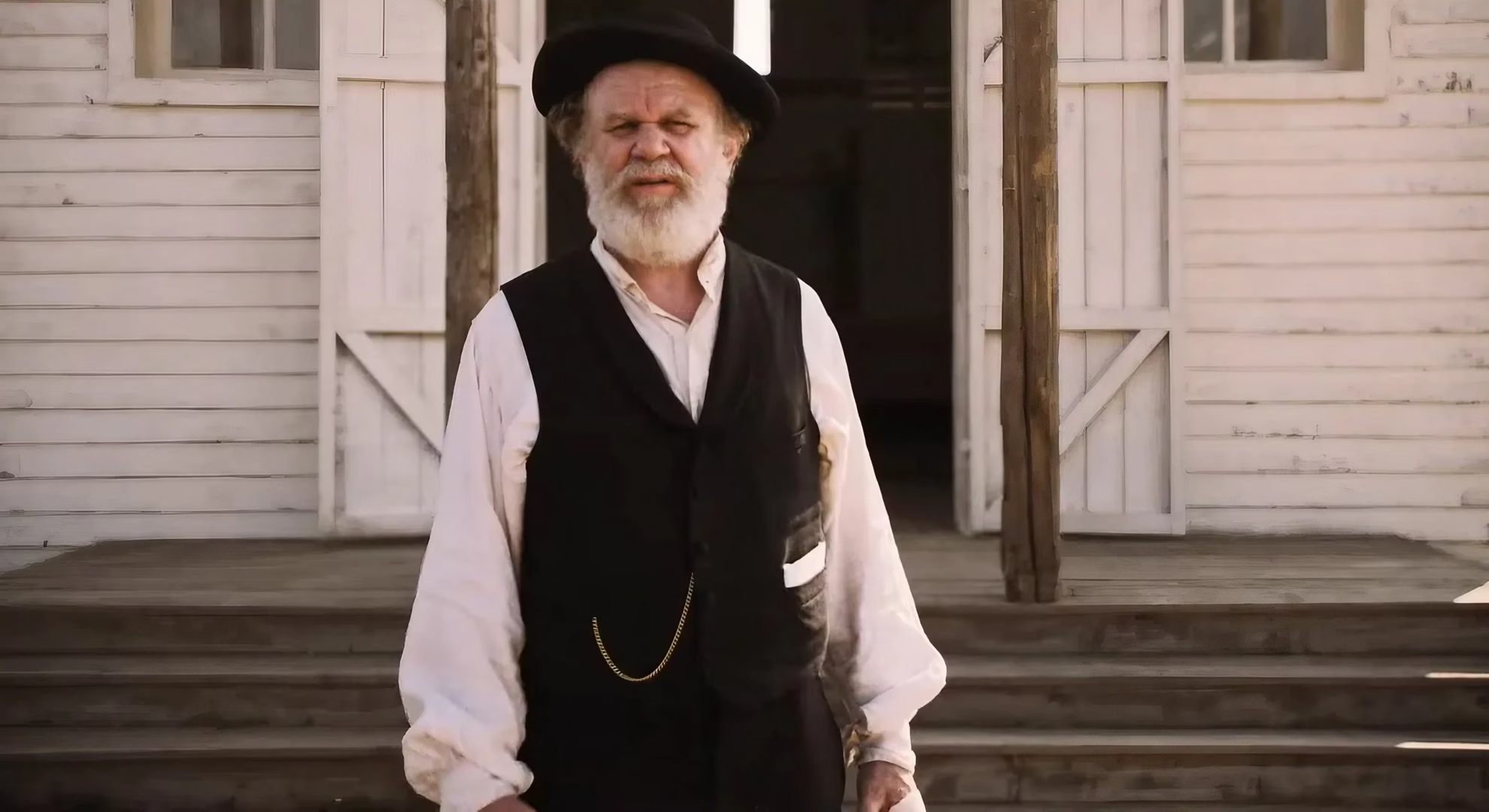
Federal quarantine authority in the United States remained fragmented and locally administered through most of the nineteenth century; formal nationalization of the country’s quarantine stations did not occur until 1921, and even the 1878 legislation that first gave Washington a role in epidemic control left rural communities managing outbreaks with whatever civil authority already existed on the ground.
In a town without a resident physician, that authority defaulted to whoever already held the badge or the pulpit. A sheriff adjudicating both crime and contagion is not an invented premise; it reflects how thin formal public health infrastructure remained outside American port cities for the entire period the film depicts.
That gap is where American frontier horror keeps returning, because it fuses two failures into a single timeline: the failure of the body and the failure of the institutions meant to protect it. A Civil War veteran running out of ways to tell threat from neighbor adds a second axis to that collapse, framing the outbreak as an extension of a battlefield he never fully left rather than a separate crisis layered on top of an old one.
From Berlinale to South Lamar
‘A Prayer for the Dying’ had its formal premiere at the Berlin International Film Festival in February 2026, competing for the Best First Feature award, before Anton and New Europe acquired its North American rights the same month.
Its Fantastic Fest booking is a North American premiere rather than a world premiere — and that distinction is the more interesting circuit fact. A specialized-competitive festival’s function is not only to introduce unseen work; it is to validate work that a non-specialized top-tier festival has already vetted, then hand it to the genre audience and distribution pipeline that a Berlinale slot alone does not guarantee.
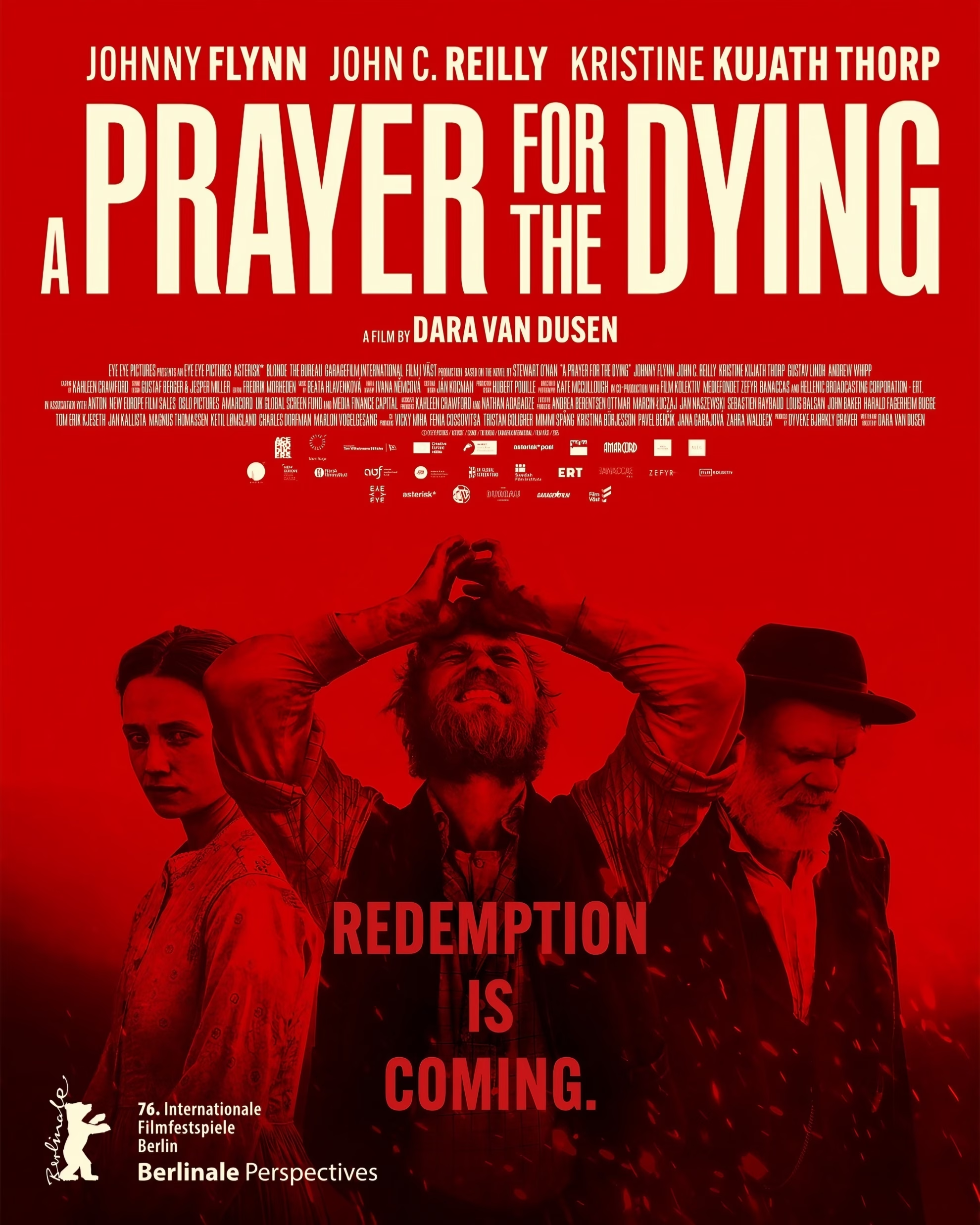
Dara Van Dusen’s film, adapted from Stewart O’Nan’s novel and led by Johnny Flynn and John C. Reilly, sits inside a strand the 2026 program leans on elsewhere: frontier and rural-isolation horror produced internationally rather than through the American studio system, with Norway’s Eye Eye Pictures financing a story set entirely in the American Midwest.
That a Scandinavian production company backed the most specifically American premiere of this year’s edition is itself evidence of how far the genre-production chain has decoupled from national setting, and Fantastic Fest’s willingness to program the film as a North American premiere — rather than wait for a wider release to force the issue — is consistent with the discovery framing the festival has stated for 2026.
An Independent Circuit Under New Owners
Tim League founded Alamo Drafthouse as a single-screen repertory cinema in Austin in 1997 and created Fantastic Fest inside that chain in 2005; the festival has operated as part of the theater company’s identity for its entire existence rather than as an independent nonprofit with its own venue.
In June 2024, Sony Pictures Entertainment acquired Alamo Drafthouse — and with it, Fantastic Fest — from League and the chain’s prior investment partners, placing both inside a new Sony Pictures Experiences division while leaving day-to-day festival operations with the existing Austin team.
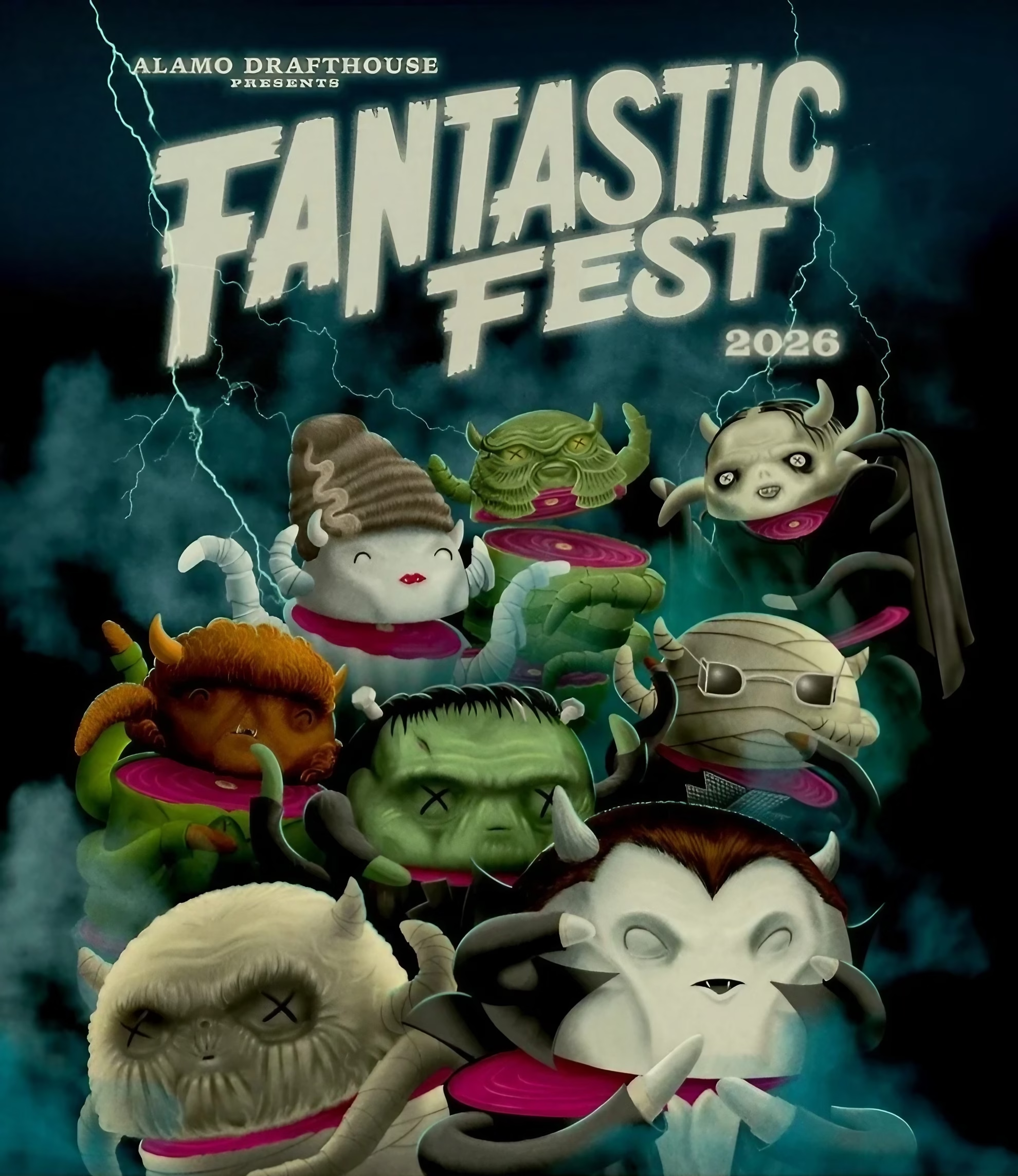
The festival’s specialized-competitive FIAPF status, secured the year before that sale, now sits inside a studio-owned exhibition company rather than the fully independent circuit that earned the accreditation in the first place.
Lisa Dreyer’s own path through that structure runs parallel to the ownership change. She joined the festival as a volunteer on its screening team in 2018 and moved into feature programming before becoming festival director. She stepped into the role on a contract basis in 2022 and was made full-time director in 2023 — the same year FIAPF accreditation took effect — working alongside Director of Programming Annick Mahnert, whose genre-film curation career predates Dreyer’s arrival by more than a decade.
A studio-owned parent company paired with a programming team promoted from inside the festival’s own volunteer ranks is the institutional shape this edition now operates inside.
Badges, Walk-Ups, and the Week Ahead
Fantastic Fest’s 21st edition runs September 17th through 24th, 2026, entirely inside the Alamo Drafthouse South Lamar at 1120 South Lamar Boulevard in Austin, Texas.
Full eight-day badges — the Cult Member and Superfan tiers — sold out ahead of the festival; remaining access runs through a Second-Half badge covering September 21st through 24th at $275 (approx. COP 858,000) and an Industry badge at $545 (approx. COP 1,700,000). Walk-up single tickets, where available, are priced at $15 each (approx. COP 47,000), sold at the box office roughly ten minutes before each screening and excluded from opening- and closing-night titles.
Feature submissions for the 2026 edition closed before the program’s August announcement, with eligibility rules changed for this cycle around confirmed U.S. distribution status; the festival accepts entries through FilmFreeway on a rolling basis ahead of each edition.
Where the Circuit Points Next
Walter Hill’s presence at this edition — accepting a special award for his contributions to genre film, introducing a screening of his 1987 South Texas thriller ‘Extreme Prejudice,’ and anchoring a nationwide Alamo retrospective of his work scheduled for January 2027 — sits deliberately alongside the festival’s stated discovery mandate rather than against it.
A specialized-competitive festival that opens its argument on a new Wisconsin plague drama and an Amazonian creature feature, then closes a portion of its program around a director whose career predates the festival by three decades, is making a case for its own durability: that a circuit built to launch unfamiliar filmmakers can also hold its ground on who its own history credits with building the genre in the first place.
Fantastic Fest’s 21st edition, financed by a studio and still run by people who came up through its volunteer ranks, argues that those two functions were never in tension.
Readers who track how European premiere circuits feed North American genre distribution — a pipeline this edition’s Norwegian-financed Wisconsin drama makes unusually visible — are welcome to point us toward other 2026 festival selections worth the same tracing, from Sitges’ own specialized-competitive slate to smaller regional showcases carrying work along the same Berlinale-to-genre-audience route.
Tourism Partnership
We reach an audience that travels with intention — drawn to documented history, dark heritage, and the cultural weight of the places they seek out. If you operate tours, cultural experiences, accommodation, or heritage sites aligned with that ethos, we would like to hear from you. We consider partnerships with tour operators, travel agencies, hostels, hotels, museums, and any organization whose work engages seriously with dark tourism, gothic culture, or historical travel. We do not promote services we cannot stand behind editorially. Reach us through our Contact page.


Leave a Reply