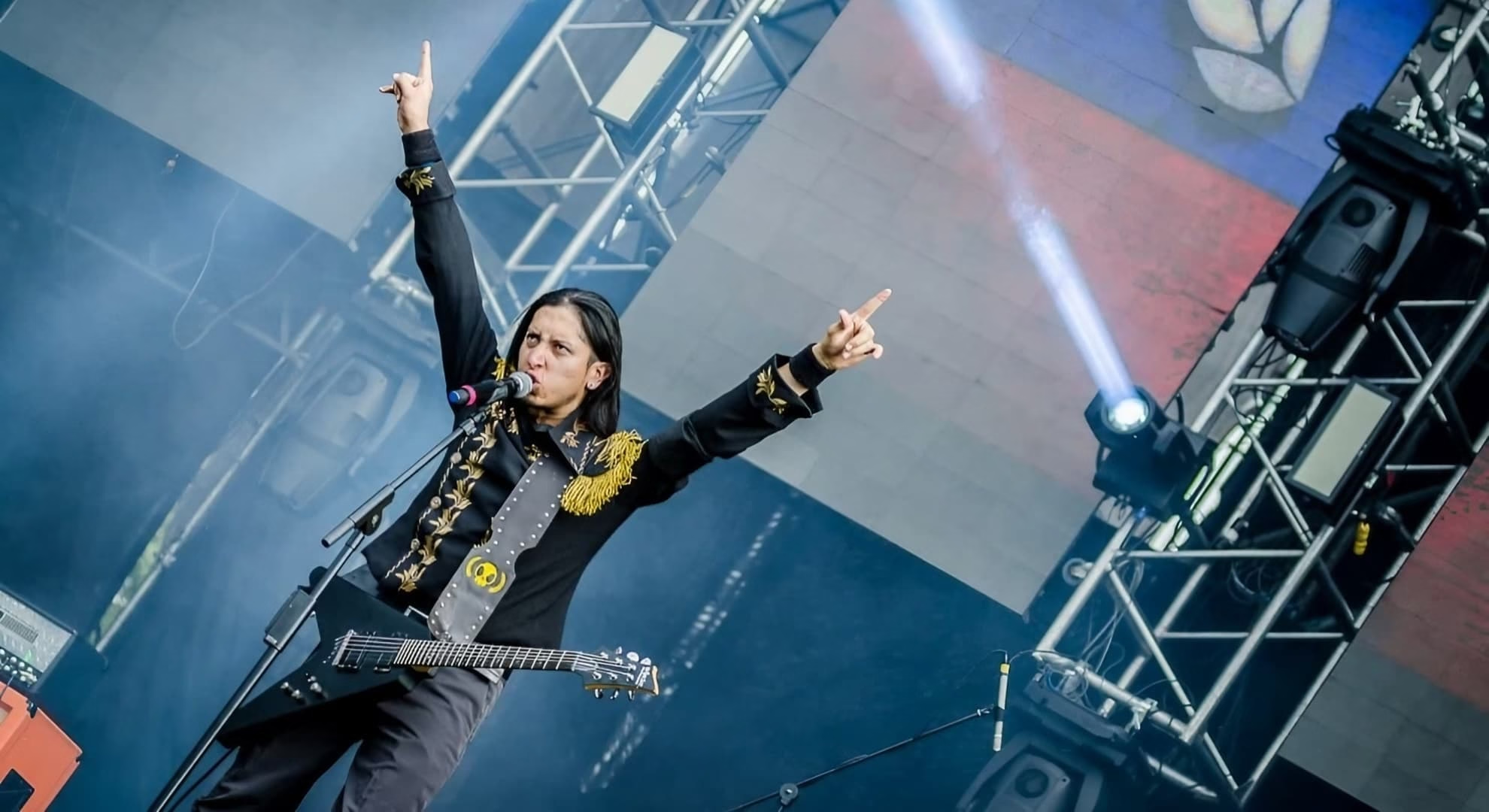


Rock carried a reputation problem in Bogotá long before it carried a festival. Through the nineteen-eighties and nineties, a garage full of amplifiers read as vandalism waiting to happen, and a crowd of teenagers read as a policing problem, not a cultural one. A year earlier, La Derecha frontman Mario Duarte and manager Julio Correal tested the idea anyway, drawing roughly 7,000 people to a two-day pilot at Parque Olaya Herrera in 1994. That undocumented trial run is why the city’s cultural institute later fixed 1995, not 1994, as the festival’s official founding year.
Antanas Mockus took office as mayor in 1995 on an unconventional wager: that civic culture, taught through humor and public example rather than punishment, could hold a crowd together better than a line of riot police.1 The institute leaned into that wager on May 26th through May 28th, 1995, staging 43 national acts and two international guests, Fobia and Seguridad Social, across four sites.
More than 80,000 people turned out this time, backed by Fuerza de Paz, the volunteer security outfit Edgar “El Pote” Cardona organized out of concertgoers he trusted from the bar circuit. Crowd control and a shared vocabulary for what a mosh pit was had to be invented on the spot.
Only La Santamaría bullring, one of that first edition’s four venues, ever charged admission; free entry became the festival’s defining and unbroken commitment from the following year onward.
Thirty Years, Thirty Editions
By its 10th edition in 2004, the festival outgrew La Media Torta for Parque Simón Bolívar, folding in Coca-Cola sponsorship over resistance from organizers who feared a soft-drink logo would dilute an event built on public money.
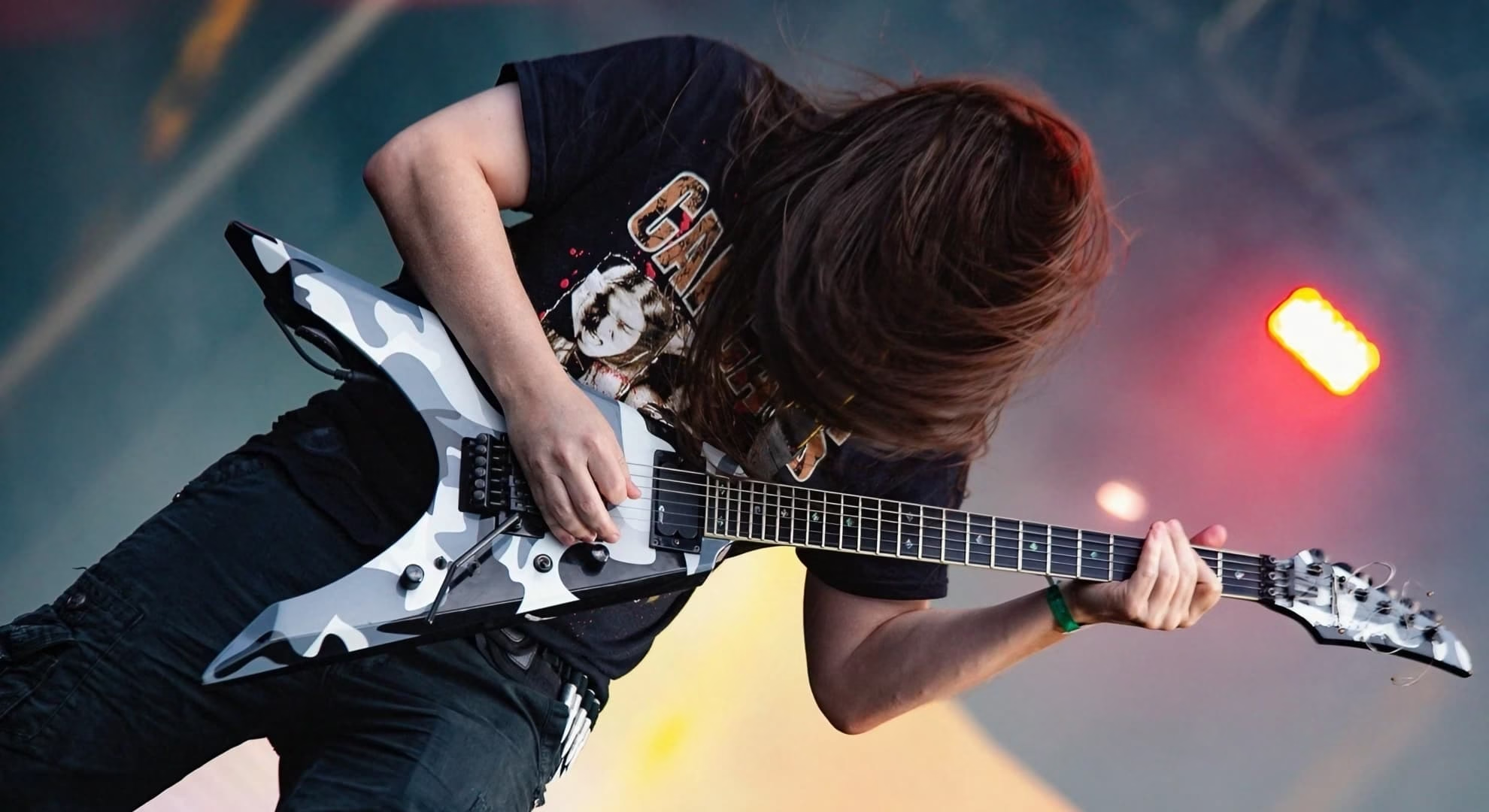
The years after cemented that shift: in 2005 Kraken opened the day at noon with the Bogotá Philharmonic to 50,000 fans before Apocalyptica’s symphonic-metal set drew over 210,000 that same night, and by 2008 Carcass and Paradise Lost shared the bill with Colombian death metal act Masacre. Backstage, staffer and metal vocalist Donny Rubiano spent those same years building the local-band pipeline, until his death in 2013.
The 20th edition in 2014 took shape inside a transformed city, reshaped by a decade of TransMilenio corridors and a wider civic embrace of public space, letting the festival work as both product and engine of Bogotá’s bid for regional cultural status.
Its 25th edition in 2019 pushed further still: of the 340,000 people who attended, 160,000 were women, the deliberate result of a five-year plan that used the district’s open call to recruit female artists rather than treat their absence as a simple accident of taste. The only interruption came in 2020 and 2021, when the pandemic pushed the festival online as Música del Parque a la Casa before it returned to Simón Bolívar in 2022.
This publication tracked that growth in real time, from Behemoth’s rain-soaked 2015 closing set at Escenario Plaza and Melechesh’s occult-inflected highlands performance through the 2016 bill’s Suicidal Tendencies set. Two years later, Dark Tranquillity’s 2018 debut on the same stage shared a program with Colombian death metal acts Masacre and Hypoxia, and Bogotá’s own Vein used its 2017 slot on the festival as the breakthrough that pushed the band toward wider recognition.
By the 25th edition in 2019, Deicide’s confirmed appearance anchored an extreme-metal opening day alongside Sodom, Tarja Turunen, and Angra, the most internationally weighted bill this publication had chronicled up to that point.
The Distrital Bill Speaks First
Idartes opened this year’s Convocatoria Distrital under the banner “thirty years, thirty editions, shaking Bogotá,” ahead of the festival’s October 10th through 12th run at Parque Simón Bolívar, and the response was its largest on record: 327 proposals submitted, 245 cleared for evaluation, and 40 acts invited to live auditions before 20 band winners were named in July.
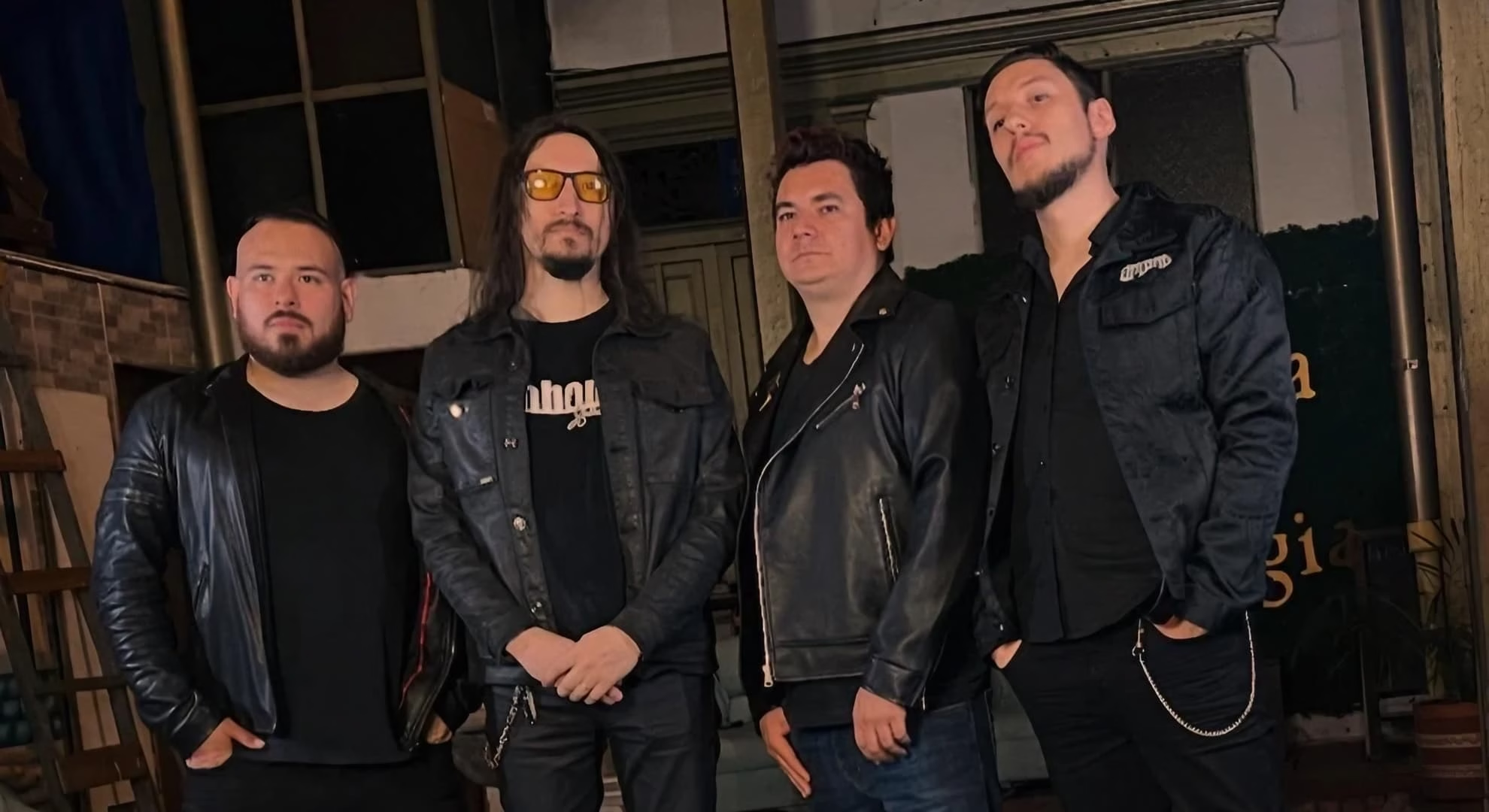
The institute then rounded the bill out to 26 total acts, adding four track-record names chosen for tenure rather than competition; the convocatoria’s competitive winners included progressive death metal act Valore, founded in 2022 by Ricardo Stiglich, signaling how far the anniversary’s reach extends into the genre’s newer generation.
True to the festival’s habit of loading its opening Saturday with the heaviest end of the bill, the convocatoria’s metal core spans a genuine range: Valore in progressive death metal, Solegnium in brutal death metal since 2006, Vein in death and groove metal, Ataque de Pánico in groove metal built around anxiety and depression, Mashkera in groove thrash metal, and Narcocracia building its social satire on a groove base that reaches from hard rock to the genre’s more extreme ends.
A parallel stipend program handed two 150-million-peso grants to long-tenured acts and 10 more worth 30 million pesos each to bands with eight to 12 years of history, aiming resources at continuity over novelty; veterans Perpetual Warfare, who once opened for Sepultura here, were among the recipients.
That emphasis on lived history over spectacle extends to the anniversary’s visual identity too, continuing a run of festival posters that scholars have read as recurring arguments over who gets to represent Bogotá’s sound in a single image.2
Rock That Outlasted Its Doubters
Thirty years ago, Rock al Parque had to prove that a crowd of teenagers with guitars was not a public-order threat. This October, that argument is already settled; the open question is whether an anniversary grown from distrital memory can still land an international bill worthy of it.
Bogotá answered the harder question back in 1995, deciding that noise, sweat, and thousands of unsupervised young bodies in a public park could add up to convivencia rather than chaos. Everything since, the move to Simón Bolívar, the gender quotas, the stipends handed to veteran bands instead of imported names, has been the slower work of keeping that answer true.
As Rock al Parque enters its fourth decade on public money and free admission, does an internationally unconfirmed lineup weaken the anniversary’s argument, or does its district-built foundation matter more than who eventually headlines it?
References
- Aleksandar Sasha Dundjerovic and Ilva Navarro Bateman, ‘Antanas Mockus’s Cultura Ciudadana: Theatrical Acts for Cultural Change in Bogotá, Colombia,’ Contemporary Theatre Review 16, no. 4 (2006): 457–467. ↩︎
- Mario Esteban Salamanca, ‘Análisis semiótico en dos niveles de los carteles publicitarios en el festival Rock al Parque (1995–2019),’ in ‘Rock y metal extremo: Congreso Colombiano y Encuentro Internacional de Estudios Sociocríticos,’ ed. Carlos Arturo Reina Rodríguez (Bogotá: Universidad Distrital Francisco José de Caldas, 2022). ↩︎


Leave a Reply