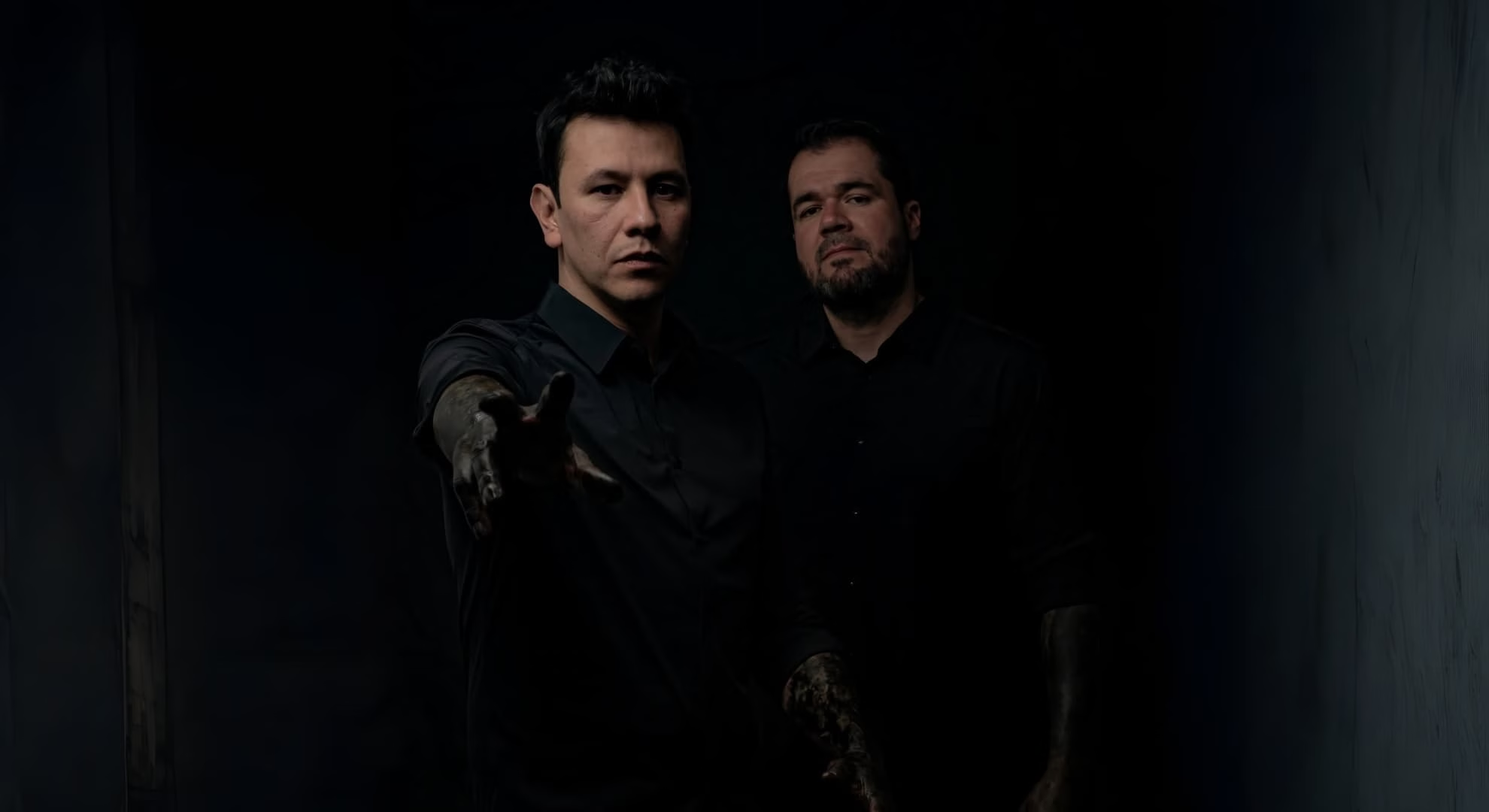


Few myths sit as coldly as the one where a god already knows, from his own dreams, exactly how he will die and cannot do a single thing to stop it. That is the Norse story of Baldr, and it now anchors the second full-length record from a death metal duo recording out of Bogotá’s high-altitude cold, a city whose extreme metal underground has spent years gathering an audience almost entirely through community radio, small podcasts, and word of mouth rather than any festival stage.
The cover art marks the point plainly: beneath the title ‘Nihil,’ a small Roman numeral II confirms what the band’s own history already suggests, that this is a second statement built on a first one nobody outside a narrow circle has properly examined yet.
A Duo Out of São Paulo
Self-Deceiver began in 2012 not in Colombia but in São Paulo, where guitarist and vocalist Jorge Oliveros and drummer Sergio Chaparro settled on a name borrowed directly from a song.
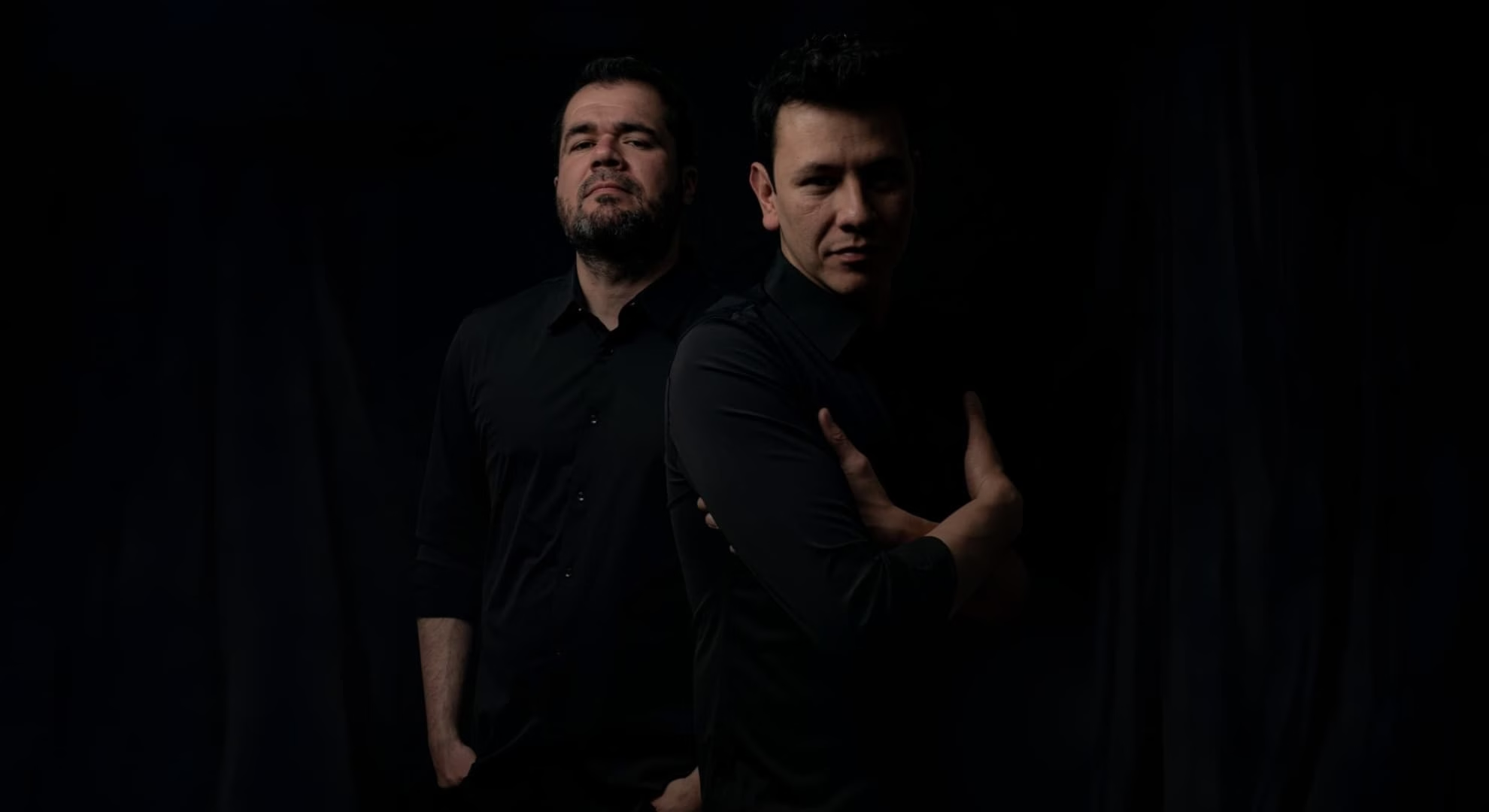
Swedish melodic death metal act A Canorous Quintet had recorded ‘Selfdeceiver (The Purest of Hate)’ years earlier, and the pair later explained, in an interview with Breathing The Core, an international, English-language metal webzine, that the phrase captured how people invent meaning for themselves rather than find it already made.
Self-Deceiver moved to Bogotá in 2016 and spent the following years composing the material that became ‘Across the Styx,’ carrying into it a stated interest in violence, the search for glory, and religious hypocrisy that has not loosened its grip since.
Echoes From the Styx
That first album, released December 1st, 2022, took its title and much of its imagery from the river of Greek myth that separates the living from the dead. It was recorded across 2020 and 2021 at Dark Angel Media Labs, where producer Oscar Rangel handled production, mixing, and mastering, and its cover illustration and visual design were credited to Carlos Jácome of JACOME artworks.
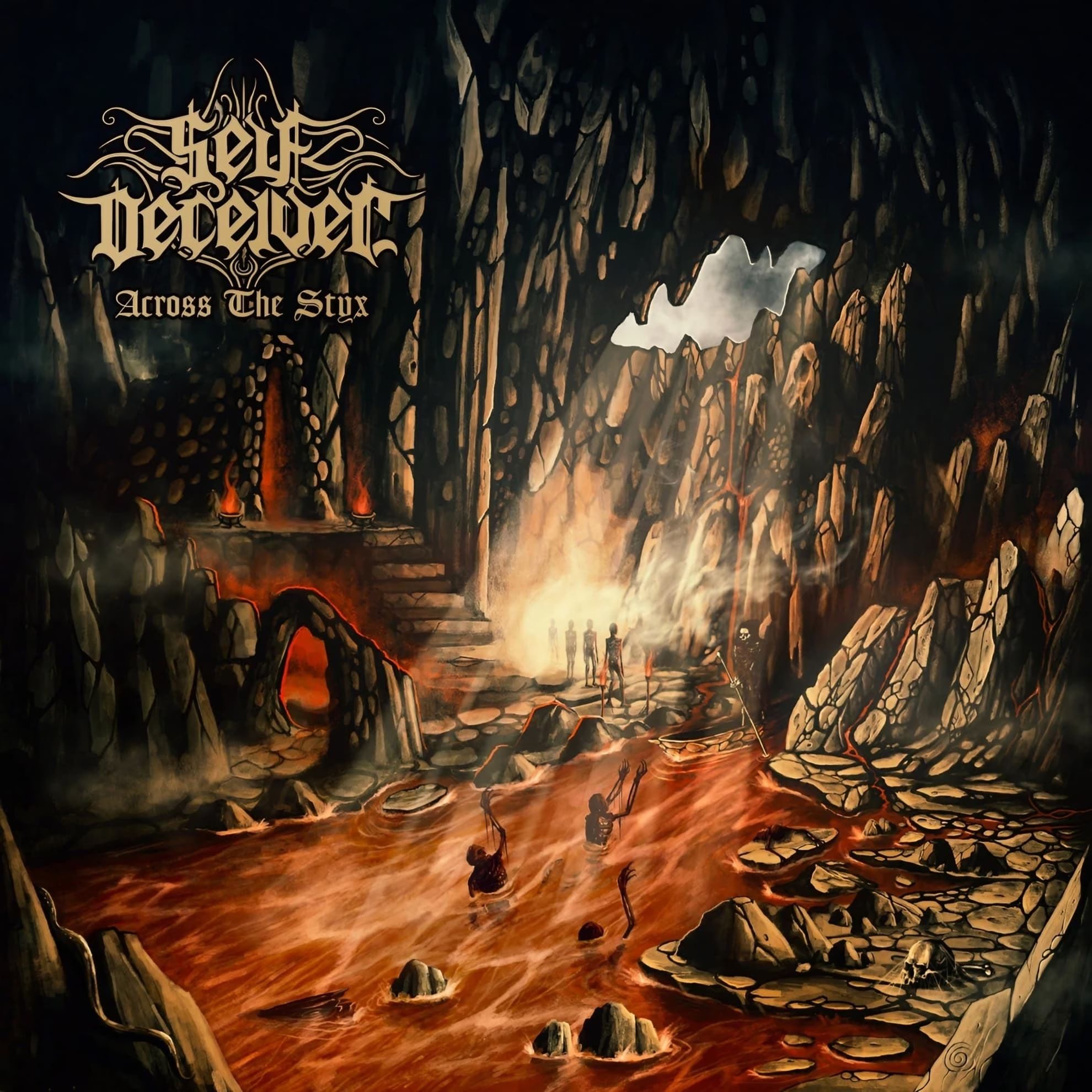
Seven tracks, compiled across 37 minutes from songs written during the band’s São Paulo and Bogotá periods, opened with ‘Closing the Circle,’ composed of tolling bells, distorted vocals, and layered choir textures before the title track’s mid-tempo riffs and guitar solo.
Later cuts pushed further into that choral register: ‘Where the Purest Souls’ was promoted with an official video addressing corruption inside religious institutions, and ‘A Moment of Clarity’ folded gothic keyboard lines and gospel-inflected choir work into otherwise abrasive riffing.
Across its full run, ‘Across the Styx’ set Scandinavian melodic death and black metal against 1980s and 1990s American death metal, alternating blast beats, tremolo-picked riffs, and symphonic overlays across songs concerned with Greek myth, existential despair, human mortality, and war.
Baldr’s Dream, Foretold
‘Nihil’ opens its documented public life with ‘Baldur’s Dream,’ released as the album’s first single and named for the god whose death sets the entire Norse cosmos toward its ending.
In the mythology recorded centuries later by Icelandic writers, Baldr, son of Odin and Frigg, begins to suffer dreams that portend his own death, and his mother extracts a promise from nearly everything in creation not to harm him.1
The single detail she overlooks, the unassuming mistletoe, becomes the weapon that kills him, guided into his blind brother Hödr’s hand by the trickster god Loki. Baldr’s death is one of the pivotal turns in the mythological cycle, since it removes the god most associated with light and beauty from the world and starts the sequence of events that leads to Ragnarök, the destruction and rebirth of the cosmos.
Self-Deceiver’s own description of the track, issued through the band’s official channels alongside its release, frames the song around the dreams that foretold Baldr’s death, the failed struggle to change what was already decided, and the beginning of Ragnarök, describing the myth as a reminder that not even gods escape what is coming for them.
That description positions ‘Nihil’ as a record treating despair as inherited rather than personal, folding 2,000 years of northern myth into a genre made in Florida, Scandinavia, and now the Andes.
A Lake Turned to Blood
The cover reproduced for ‘Nihil’ shows a black tree line above a still lake reflecting a storm-gray sky bled with red light, the Self-Deceiver logo rendered in pale Gothic script above it.
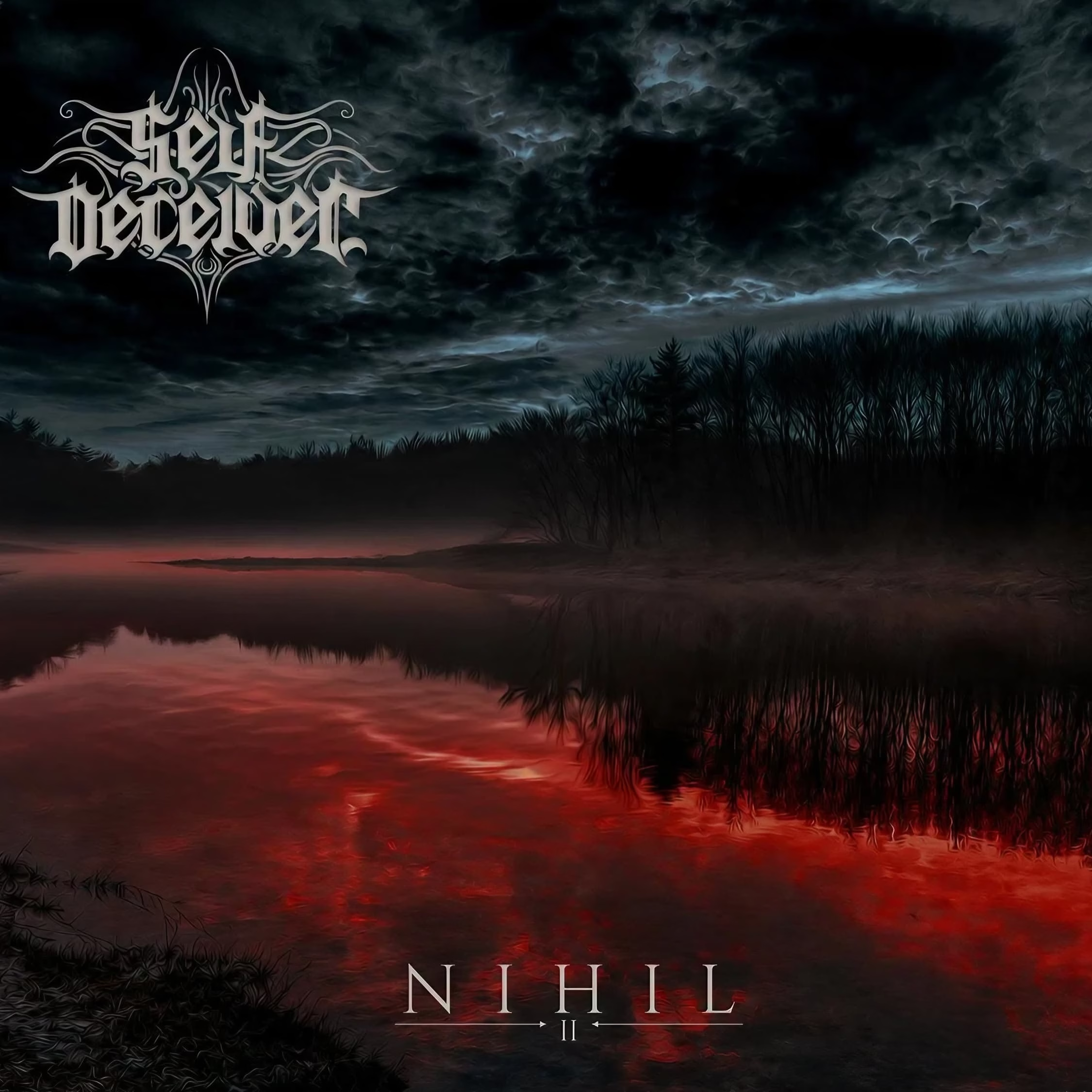
Design is credited to Sergio Chaparro, the band’s drummer, working from photographs credited to a Jaime Garzón, and what Chaparro made of those source images is a composition organized around a single unresolved color contrast: the cold blue-black of the sky and tree line against a red that pools only in the water, as though something has bled into the water.
It is a quieter image than the mythological violence of ‘Baldur’s Dream’ suggests, and that quiet, delayed threat fits a record that treats catastrophe as something already decided rather than something still on its way.
The Cycle Renews
Ragnarök, in the tradition Self-Deceiver borrowed for its lead single, is not simply an ending. It is a cosmos destroyed so a new one can begin, with even Baldr eventually returning once the old order has burned away. Whatever ‘Nihil’ does with that structure across its remaining eight tracks, the choice to open a second album with a god who cannot outrun his own dream says something about how this band understands the space between fate and effort, a tension that has run through Self-Deceiver’s writing since the two men were still commuting between São Paulo and the songs that would become ‘Across the Styx.’
Bogotá’s extreme metal scene has never asked for permission to reach for material this old or this far from home; ‘Nihil,’ distributed nationally through independent channels alone, only makes that habit explicit.
Readers who have followed Bogotá’s extreme metal underground through years of self-organized shows and community radio support might ask themselves what a myth about inevitable fate is doing at the center of a genre rooted in refusal, and whether Self-Deceiver’s choice to look north for that myth changes how they hear the record’s Colombian foundation.
Reference
- John Lindow, ‘Norse Mythology: A Guide to Gods, Heroes, Rituals, and Beliefs’ (Oxford: Oxford University Press, 2002). ↩︎


Leave a Reply