

When a child’s body changes in a way no one in the household can explain, someone has to decide whose account of the child will govern the house. Folk belief, medicine, and a mother’s instinct to conceal have each held that authority at different times, and the contest among them is the ground on which Christina Henry has set her new novel.
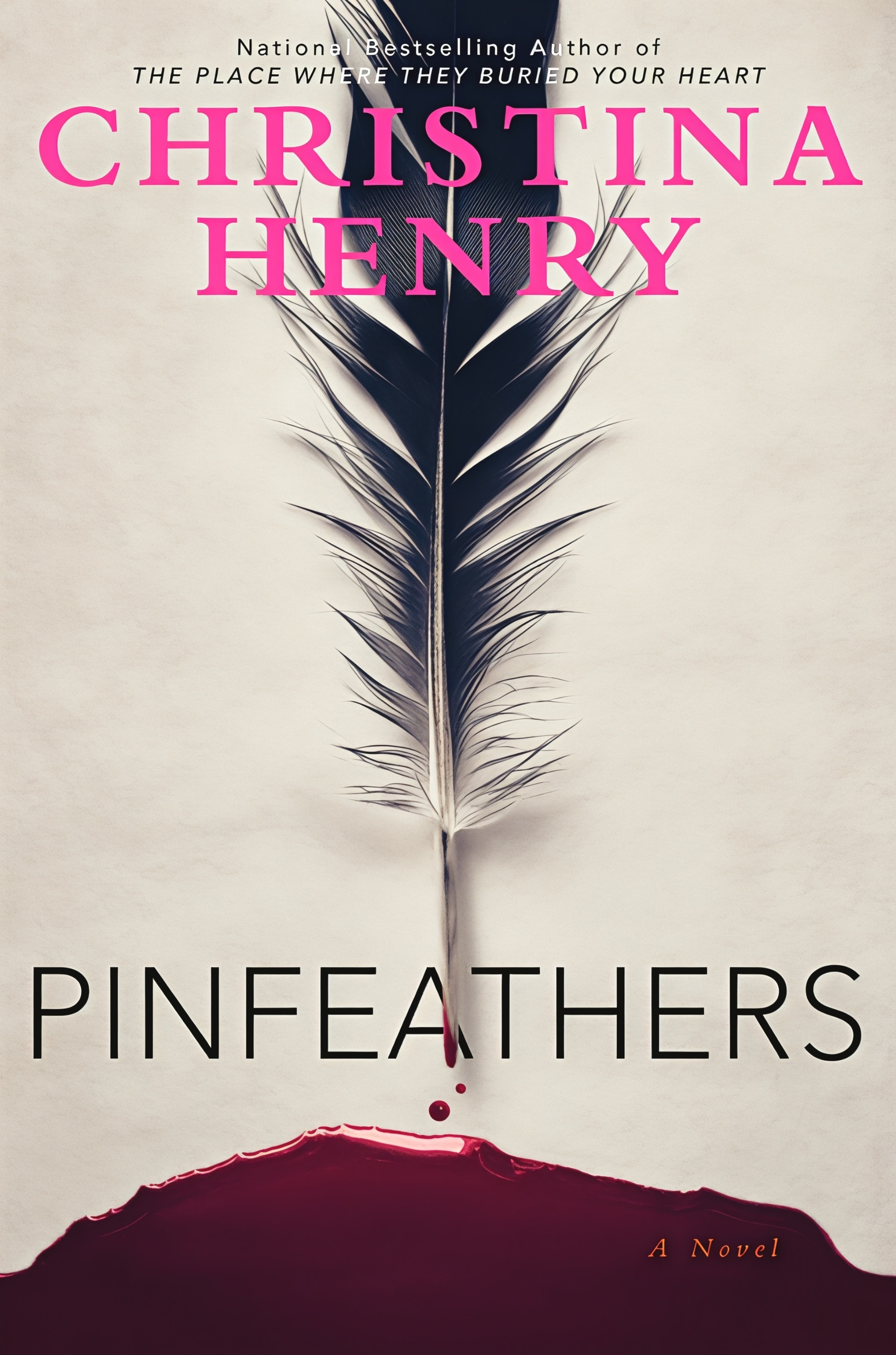
Berkley, the Penguin Random House imprint, publishes ‘Pinfeathers’ on November 17th, 2026. The hardcover runs 320 pages under the ISBN 978-0-593-95401-0, and the publisher also lists an ebook and an audiobook read by Samantha Desz, which runs nine hours and nine minutes.
The publisher’s synopsis introduces Nora Pacetti, a new stay-at-home mother whose mother, Giulia, is the first to notice what looks like a feather growing from the arm of Nora’s daughter, Olivia. Nora dismisses the idea at first. Her husband wants medical tests. Nora believes the situation must be kept hidden. Sinister people begin to ask questions, and Nora becomes determined to learn the truth.
A feature published October 22nd, 2026 supplies details the synopsis leaves out. The prickly nubs on the baby’s skin grow into black feathers, the story opens inside a condominium on Chicago’s North Side, and a physician, Dr. Noel Cassidy, believes Olivia belongs in a secret laboratory.
A Mother Keeps a Secret
The order of events in the synopsis is the first thing to notice. The sign comes first and is small enough to deny, a single feather on a single arm, and Nora does deny it: her mother, Giulia, is the first to notice, and Nora dismisses the observation as the product of too many conspiracy videos. Her later response, concealment, is placed before any diagnosis exists, so the secret precedes the knowledge it is meant to protect.
Each figure who follows offers a rival account of the same child. The husband proposes testing, the questioners want something the synopsis does not name, and Cassidy, as the feature describes him, would turn the infant into a laboratory subject. The child’s body stays constant while the authorities around it multiply, and the dread escalates through the widening circle of people who consider themselves entitled to say what Olivia is.
Henry has described the conditions under which such a structure takes shape. “All of my books come from either an image that I see or a piece of dialogue that I hear in my head,” she said in a Q&A published January 17th, 2026, adding that she writes chronologically and without plotting, so that the book unfolds as her characters make different choices.
In the same exchange she called ‘Pinfeathers’ “a pretty off-the-rails body horror about a woman who thinks her baby daughter is turning into a bird.” The October feature records her account of where the premise came from: the image rose from the “primordial ooze” of her mind, as her ideas generally do, and the novel is “really just an expression of the parental anxiety around illness, difficulty,” and the other unexpected strains of parenthood.
The same feature lists Shirley Jackson and Angela Carter among her influences and records her naming Stephen King as the overarching influence on horror writers who came of age in the 1980s.
Henry Before Pinfeathers
Henry lives in Chicago with her husband and son, and the publisher’s biography describes her as a horror and dark fantasy author. Her bibliography begins with the seven-book ‘Black Wings’ urban fantasy series, started in 2010, and moves into reworkings of familiar stories: ‘Alice’ (2015), the first of the ‘Chronicles of Alice,’ which reworks Lewis Carroll’s ‘Wonderland’ and was followed by ‘Red Queen’ and ‘Looking Glass’; ‘Lost Boy’ (2017), which returns to the world of Peter Pan; and ‘The Girl in Red’ (2019), which takes up ‘Little Red Riding Hood.’
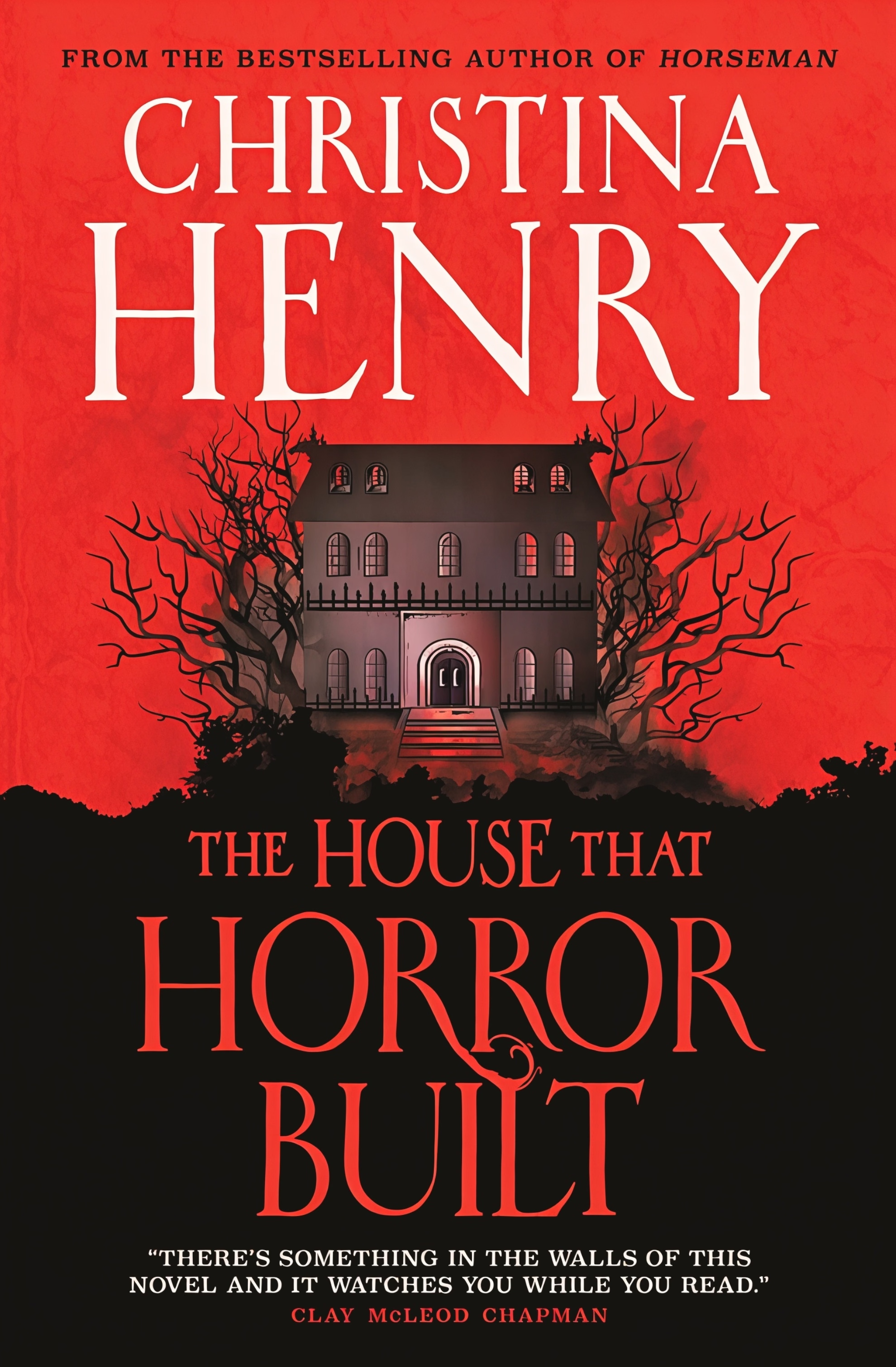
From 2020 her books move toward straight horror, among them ‘The Ghost Tree’ in 2020, ‘Near the Bone’ and ‘Horseman’ in 2021, ‘Good Girls Don’t Die’ in 2023, and ‘The House That Horror Built’ in 2024.
The earlier reworkings carried their sources in their titles, so a reader knew which tale Henry was bending before opening the book. ‘Pinfeathers’ names no such text, and Henry’s published comments on the premise point to an image and to parental anxiety, not to a tale or a folklore source. After a long run of books that bend existing stories, the new novel moves toward a premise without a prior text.
From a Hungry House
Henry’s immediately preceding novel, ‘The Place Where They Buried Your Heart,’ was published by Berkley on November 4th, 2025, at 320 pages.
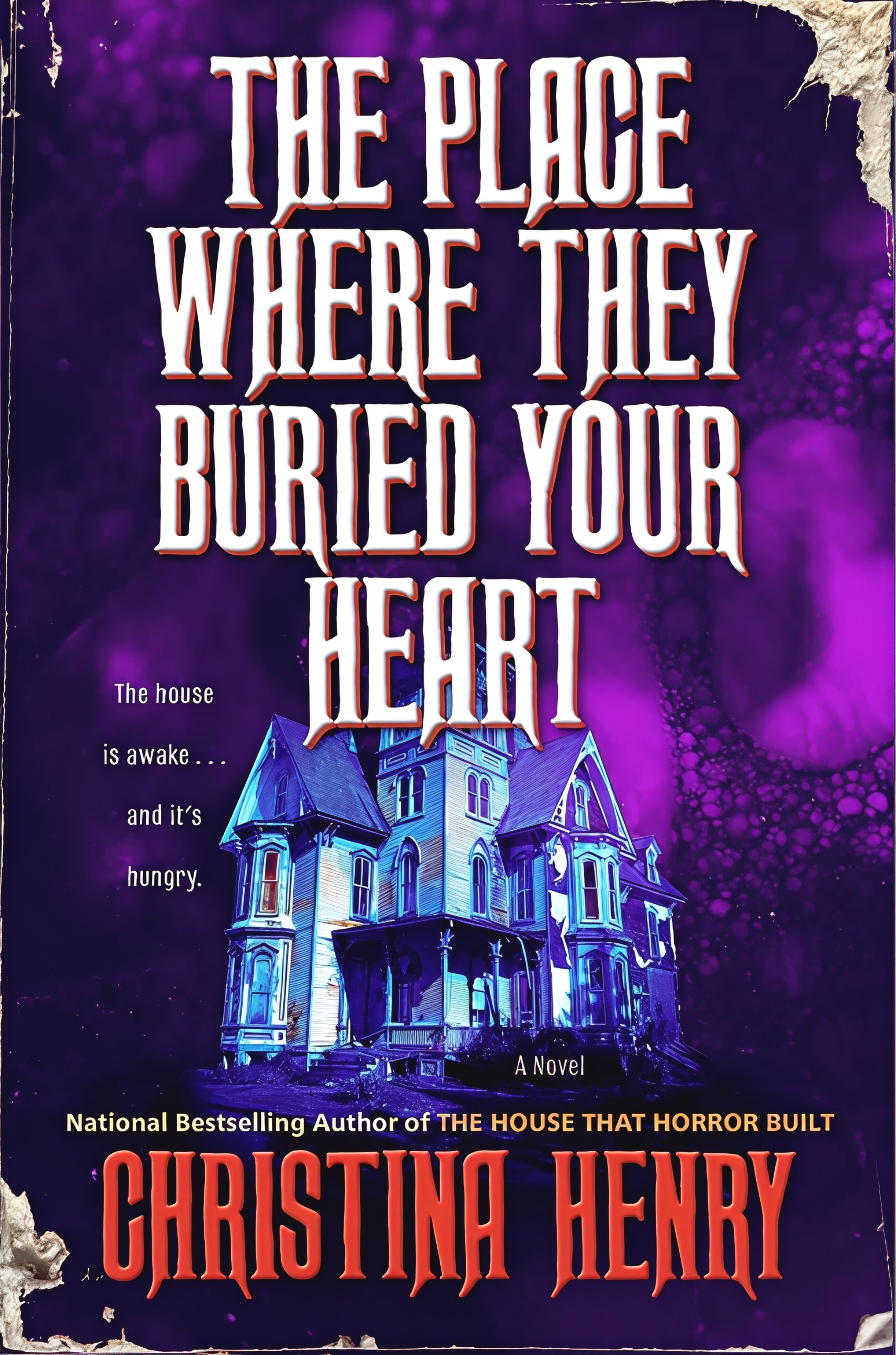
It is set on an ordinary Chicago street where an abandoned house stands and children dare one another to go inside. Jessie Campanelli dares her younger brother, Paul, to enter, and he does not return. Two other children, Jake and Richie, say the house ate him, and the adults assume he was kidnapped or harmed.
Jessie grows up, has a child of her own, and stays on the same street, while the darkness spreading from the house is described by the publisher as alive and hungry. The October feature places the house in Wrigleyville and records Henry calling the book a love letter to the neighborhood.
Henry told the January Q&A that the book began with an image of three boys entering a house and two coming out, one of them missing an arm, and that its title comes from a line in the song ‘Fall Out of Love’ by Salem. She described the book as being about “the love that we lose and that we gain” and about “parental love and or the lack thereof.”
The two novels meet at the parent. In the earlier book a parent lives beside a place that threatens children, and the danger sits outside the family. In the new one the child’s own body is the thing the parent must hide, so the protection that was a matter of distance in 2025 becomes a matter of secrecy in 2026.
A Feather in Its Sheath
A pinfeather is a feather that is undeveloped, before its vane-like parts have spread out, or one just beginning to push through the skin; the word is a compound of “pin” and “feather,” first recorded between 1765 and 1775.
The title therefore names a stage and not a creature: a feather caught between the body and the bird it has not yet become. The feature’s description of prickly nubs that grow into black feathers fits that stage exactly, and the synopsis places Olivia within it, with one feather on one arm.
The reading is this publication’s own, and it explains why the novel’s first crisis is a secret and not a spectacle. A pinfeather can still be mistaken for a blemish, and the household’s first task is to decide what it is looking at.
The folk figure closest to Olivia’s situation is the changeling, the child understood to have been taken by the fairies and replaced by a substitute. The connection is drawn by this publication and not by Henry, whose published comments name no such source.
The history of the belief nonetheless documents what a household does when the person in front of it no longer matches the person it knew, and the best-recorded modern case is the killing of Bridget Cleary in County Tipperary in 1895.
Ballyvadlea, March 1895
Bridget Cleary was 26 years old, a dressmaker and milliner who owned a sewing machine and kept her own hens. She lived in the townland of Ballyvadlea with her husband, Michael, a cooper, and her father, Patrick Boland. In early March 1895 she fell ill, with a diagnosis said to be bronchitis. A physician visited on March 13th, and a priest administered last rites.
Over the following days her husband, her father, and their neighbors came to believe that the woman in the bed was a fairy substitute, and they subjected her to treatments that included having urine thrown on her and being carried to the fire.1 Michael Cleary told the priest that he had no faith in the doctor’s medicine.
On the night of March 15th, Michael forced her to the floor before the kitchen fireplace. Her chemise caught fire, and he threw kerosene on her, insisting that she was a changeling and that he would recover his real wife from the fairies. Her burned body was found in a shallow grave on March 22nd, and a coroner’s inquest returned a verdict of death by burning.
Nine people were charged, and at the trial in July 1895 Michael Cleary was found guilty of manslaughter and sentenced to 20 years of penal servitude, of which he served 15, until his release in 1910.2
Angela Bourke’s study places the case within the fairy narratives of rural Ireland, and the record shows a household in which three authorities spoke at once: a physician’s diagnosis, a priest’s sacraments, and a belief that named the sick woman an impostor. The family chose the third and dismissed the first.
The case is not a source for ‘Pinfeathers.’ It is the documented outcome of the question the novel stages, which is the fate of a changed body when the people around it cannot agree on an account of it and one of them has the power to enforce his own.
In the synopsis, the accounts on offer are a husband’s testing, a mother’s concealment, and a physician’s laboratory, all of them medical or protective, and none of them invokes the fairies. The novel keeps the old contest over the child and removes the old explanation.
The Child Nobody Can Name
‘Pinfeathers’ gives the changeling story a modern household in which specialists have replaced the fairies, and the question that remains is the one the Tipperary kitchen put in 1895: who is entitled to say what the child is.
Henry’s reworkings of ‘Alice,’ ‘Lost Boy,’ and ‘The Girl in Red’ borrowed their stories from a shared inheritance of tales. This novel borrows a situation, the mother who conceals in her baby what others will want to examine, and asks that situation to carry the horror without a mythology to explain it. Henry has called the book an expression of parental anxiety, and the absence of a named source becomes an argument in its own right, because the anxiety is the source.
Henry’s path runs from the reworked tales of ‘Alice’ and ‘Lost Boy’ through the Chicago horror of ‘The Place Where They Buried Your Heart’ to a premise with no source tale at all: does a horror novel with nothing to lean on ask more of its premise than one that bends a familiar story, and which of her books made that case most clearly to you?
References
- Angela Bourke, ‘The Burning of Bridget Cleary: A True Story’ (London: Pimlico, 1999). ↩︎
- Joan Hoff and Marian Yeates, ‘The Cooper’s Wife Is Missing: The Trials of Bridget Cleary’ (New York: Basic Books, 2000). ↩︎

Leave a Reply