

A reprint anthology makes its argument through selection. The editor who assembles previously published work under a single cover commissions nothing new; the wager is instead that these particular stories, set beside one another, disclose a pattern their scattered first appearances could not.
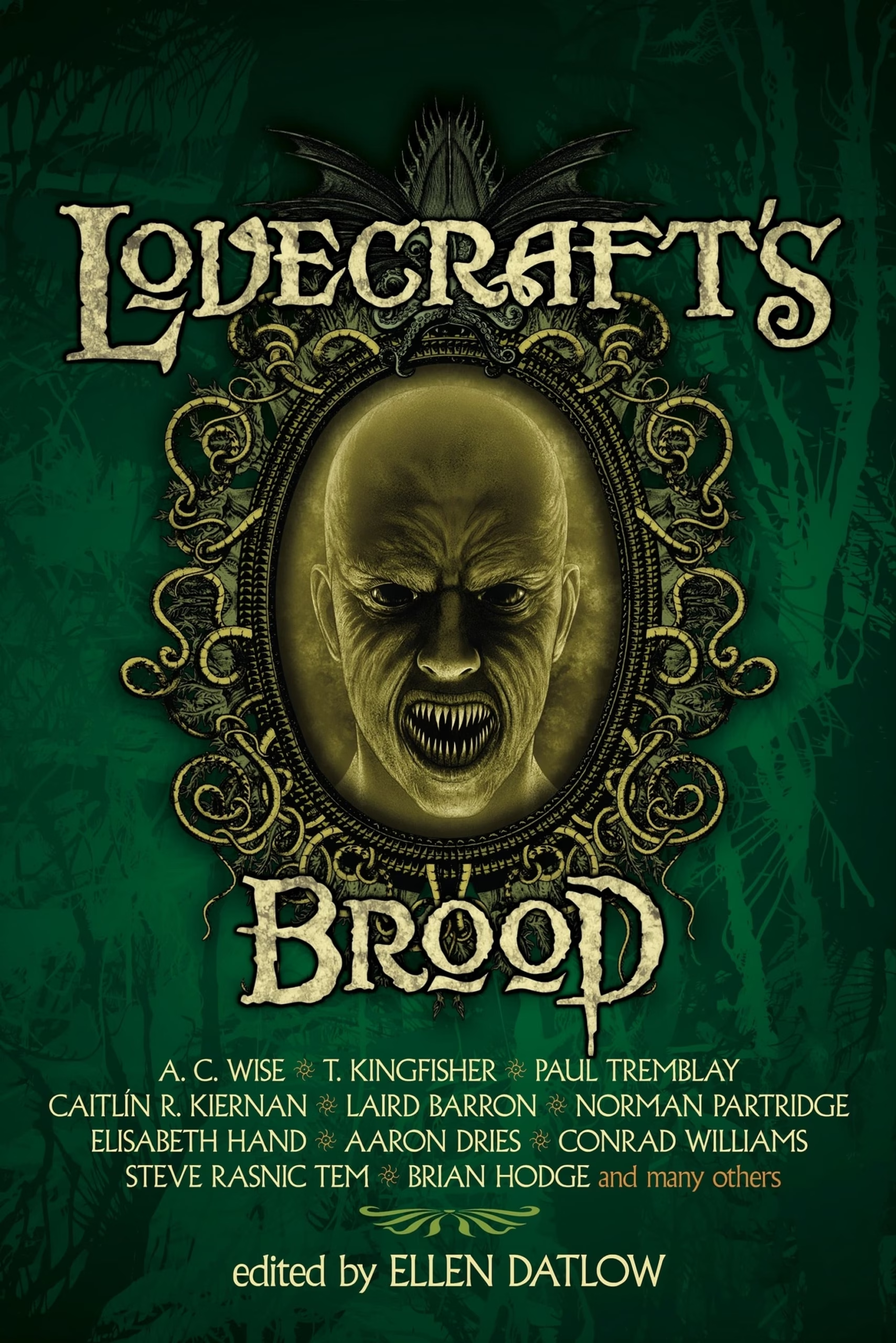
‘Lovecraft’s Brood,’ edited by Ellen Datlow and issued by Tachyon Publications on July 21st, 2026, is that kind of wager. The 320-page trade paperback, also available in digital form, collects 19 stories first printed earlier this century and sets them out as a considered account of where cosmic horror has traveled since H. P. Lovecraft fixed its coordinates in the early twentieth century.
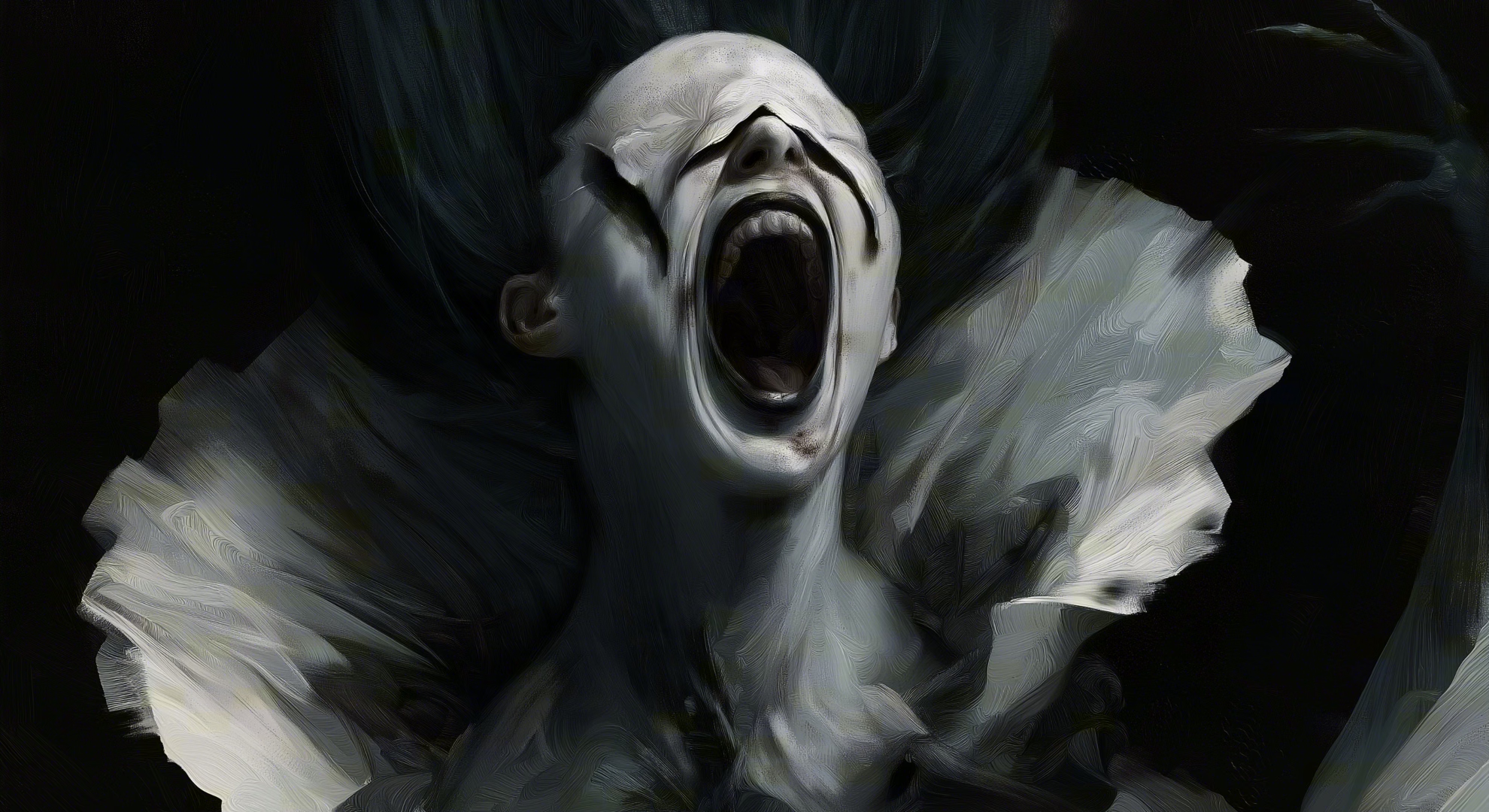
Each story carries an accompanying illustration by John Coulthart, so the volume presents its ‘Mythos’ in image as well as in prose.
A Reprint Anthology as Argument
The distinction matters because the book has been described, in early circulation, as a set of new stories written for the occasion. It is not. Every one of its 19 selections appeared in print before, drawn from magazines, single-author collections, and earlier anthologies published across the past two and a half decades. What Datlow has assembled is a survey, not a commission, and the survey form carries its own critical claim.
To gather only twenty-first-century work under a Lovecraftian banner is to argue that the mode has a living present rather than a merely canonical past. Each story was chosen after the fact of its writing, which places the editor in the position of reading the field instead of steering it, identifying the shape cosmic horror has taken in the hands of writers who came to Lovecraft already conscious of both his reach and his limits.
Datlow and the Anthologist’s Craft
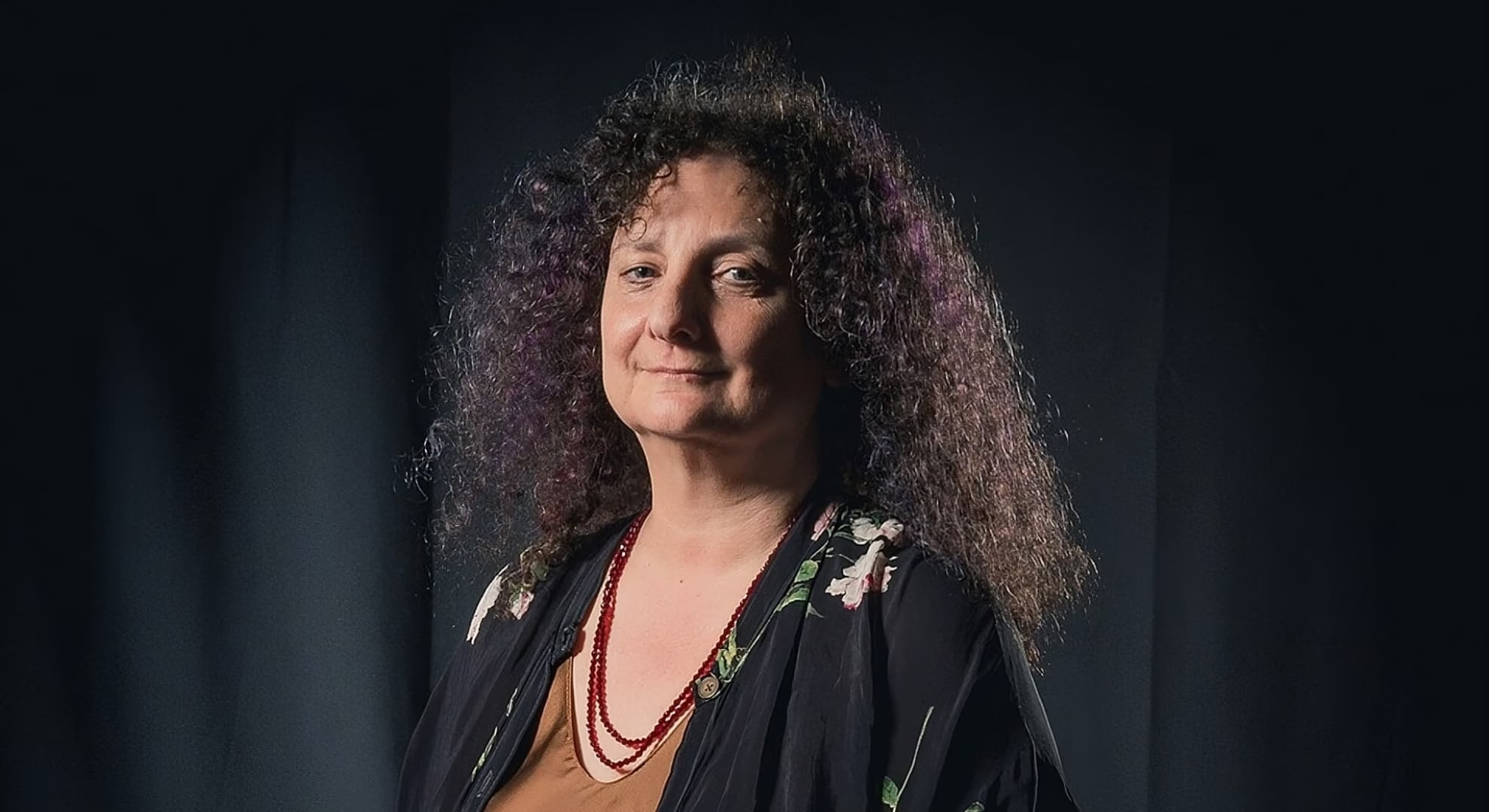
Datlow has edited science fiction, fantasy, and horror short fiction for 45 years. She served as fiction editor of OMNI Magazine and went on to edit ‘Event Horizon’ and ‘SCIFICTION’ before her current work acquiring short stories and novellas for Reactor and Tordotcom Publishing.
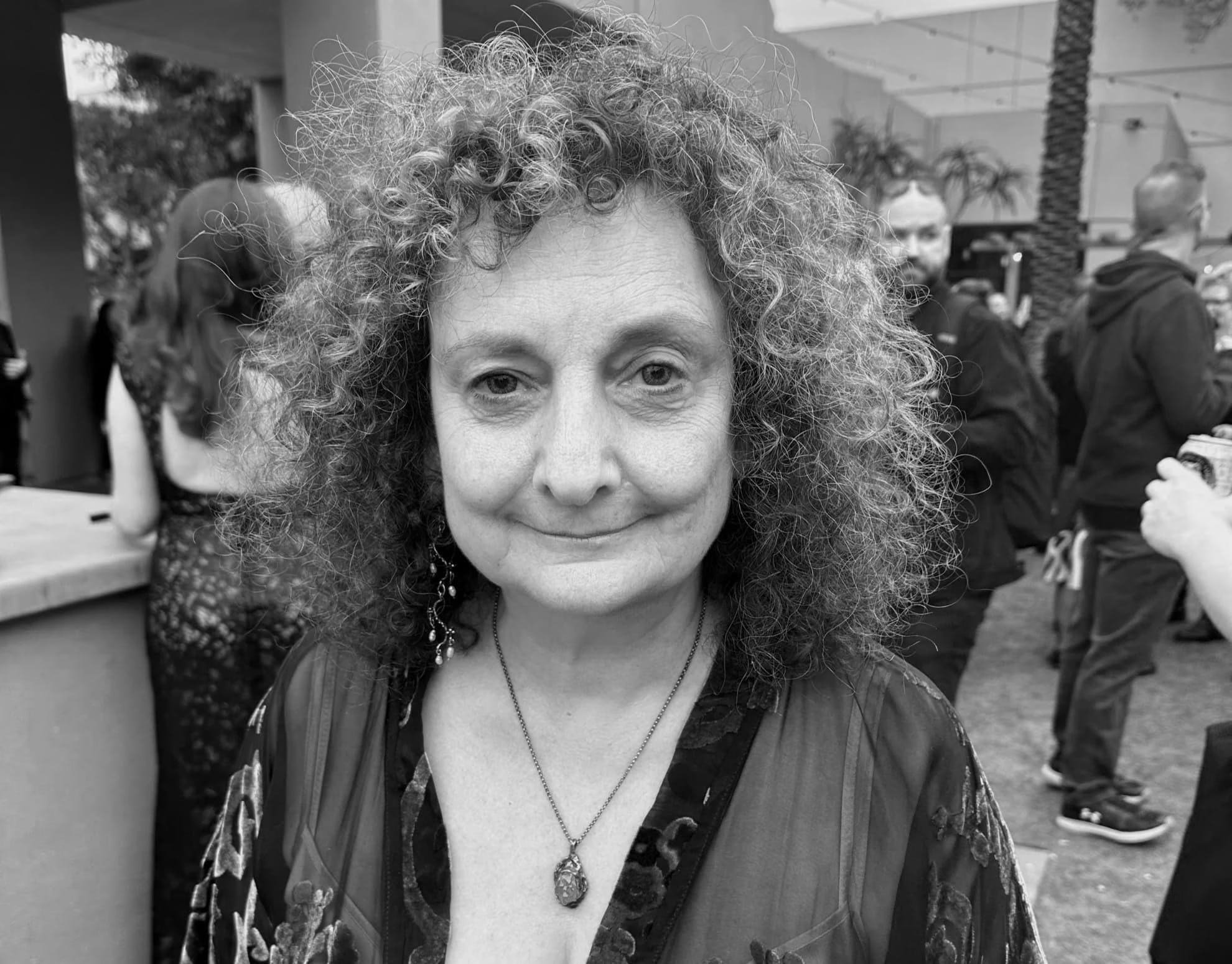
Across that span she has assembled roughly 100 anthologies, among them the continuing annual ‘The Best Horror of the Year,’ and has been recognized with multiple World Fantasy, Hugo, Bram Stoker, Locus, International Horror Guild, and Shirley Jackson Awards, along with the Horror Writers Association’s Life Achievement Award and a World Fantasy Life Achievement Award.
That record shapes how ‘Lovecraft’s Brood’ asks to be read. An anthology from an editor of this standing is a curatorial statement, and Datlow’s statements have consistently treated horror as an inquiry rather than a set of effects. Her annual surveys have favored work in which dread is a problem of knowledge and perception, not a matter of staging, and the same preference governs the present volume’s idea of what a Lovecraftian story can be.
The Duology and Its Predecessor
The book does not stand alone. It completes a pairing that opened in 2014 with ‘Lovecraft’s Monsters,’ Datlow’s earlier Tachyon anthology, and the two volumes are meant to be read together as a duology.
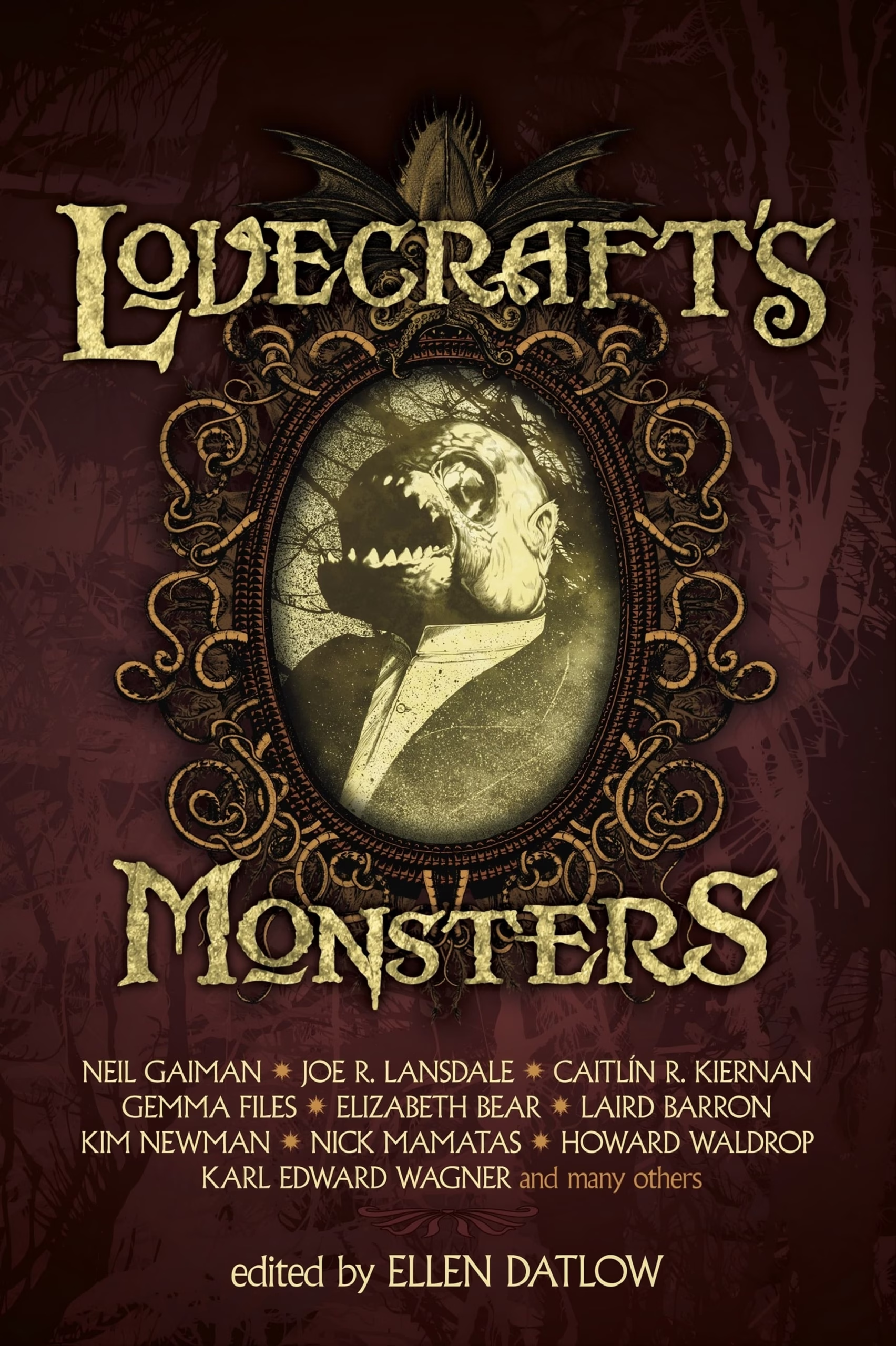
Where the first organized itself around the creatures of the ‘Mythos,’ the bestiary that Lovecraft and his successors placed at the edge of human sight, the second turns toward the condition those creatures were always instruments of: the recognition that the universe operates without reference to human meaning.
Cosmic Horror After Its Origin
Cosmic horror is defined less by its monsters than by a proposition about knowledge. S. T. Joshi, among the most exacting readers of the form, has argued that Lovecraft’s fiction advances a cosmicism in which human beings hold no privileged place and human perception is structurally inadequate to the scale of what surrounds it.1 The fear the mode produces is epistemological: not that something lurks, but that the mind cannot contain what it briefly apprehends.
The century since Lovecraft wrote has not domesticated that proposition. Deep-field images return a cosmos larger than the one he intuited without seeing it, the outer solar system withholds objects still unnamed, and the ocean floor remains less thoroughly mapped than the surface of Mars.
The mode’s central claim about human smallness has, if anything, gained evidentiary weight, which is part of what a contemporary survey of the form is positioned to register.
The tradition has also had to reckon with the man at its origin. Lovecraft’s xenophobia and racism are documented facts of the record, legible in the very vocabulary of dread he reached for, and later editors and critics have addressed them directly rather than around them.2
Much of the most searching cosmic horror of the past two decades has retained the philosophical core while discarding the prejudice that once shadowed it, a development a twenty-first-century reprint survey is well placed to document.
The 19 Stories and Their Range
The contributor list gathers writers working at the center of contemporary weird and horror fiction. Caitlín R. Kiernan, Paul Tremblay, Laird Barron, Elizabeth Hand, T. Kingfisher, Livia Llewellyn, Brian Hodge, Steve Rasnic Tem, Conrad Williams, Norman Partridge, Ray Cluley, Wendy N. Wagner, A. C. Wise, Gary McMahon, Aaron Dries, Ian Rogers, Jacob Steven Mohr, Carol Gyzander, and L. Marie Wood each contribute a single story, a roster that reads as a map of where the cosmic mode is currently practiced.
The premises range widely. A prison affair runs on fungal hallucination; squatters unearth a strange idol in a weird train station; a coastal survey replaces its expected wildlife with something else entirely; a mescal-tasting tour turns on the traveler; and an old woman stitches a portal that a nameless cat undoes.
The spread locates cosmic dread in domestic and mundane frames as readily as in remote ones, which is itself an argument about how far the form has moved from the crumbling town and the forbidden book.
Coulthart’s Illustrated ‘Mythos’
The volume’s second maker, in effect, is its illustrator. John Coulthart, whose work in dark fantasy and Lovecraftian design is long established, supplies an image for each of the 19 stories, so that the reader meets every tale first as a picture.
The choice separates ‘Lovecraft’s Brood’ from the plain-text anthology and gives the book a formal unity its reprinted, multi-authored contents would not otherwise hold. An illustrated ‘Mythos’ is also a fitting one, since Lovecraftian horror has always turned on the problem of what can and cannot be shown, and an image placed before each story stakes a position on that question story by story.
Tachyon and the Small Press Line
Tachyon Publications issues the book from a position within the independent-press tradition that has carried weird fiction for generations.
Founded in San Francisco in 1995 by Jacob Weisman, the press built its list on literary science fiction, fantasy, and horror, with a marked preference for short fiction and the anthology form; ‘Lovecraft’s Brood’ is Datlow’s ninth title with the house.
There is a historical fitness to a Lovecraftian anthology emerging from a small literary press, since the specialty press is the institution that preserved Lovecraft at all: Arkham House was created in 1939, expressly to keep his work in print after his death, and the line from that founding runs directly to a volume of this kind.
Dread Without a Human Scale
To reprint is to make a claim about what deserves to last. In choosing 19 twenty-first-century stories and setting them beside the 2014 volume they complete, Datlow argues that cosmic horror is not a period style to be revived but a continuous inquiry into human insignificance, pursued by writers who inherited Lovecraft’s central idea and abandoned his worst instincts.
The cosmos the mode describes has grown only larger and stranger since he named it, and the writers gathered here treat that enlargement as material rather than as a threat to their form. What the anthology keeps is less a set of monsters than a way of looking, one that continues to find new ground precisely because the thing it looks at refuses to shrink to human size.
Among the writers Datlow gathers in ‘Lovecraft’s Brood’ — Kiernan, Barron, Hand, Tremblay, Kingfisher, and the others working the cosmic mode today — whose engagement with Lovecraftian dread do you find has moved furthest from its origin while keeping the sense of human insignificance intact?
References
- S. T. Joshi, ‘The Weird Tale’ (Austin: University of Texas Press, 1990), 168–172. ↩︎
- Roger Luckhurst, ‘Introduction,’ in H. P. Lovecraft, ‘The Classic Horror Stories,’ ed. Roger Luckhurst (Oxford: Oxford University Press, 2013), xiii–xxviii. ↩︎

Leave a Reply