


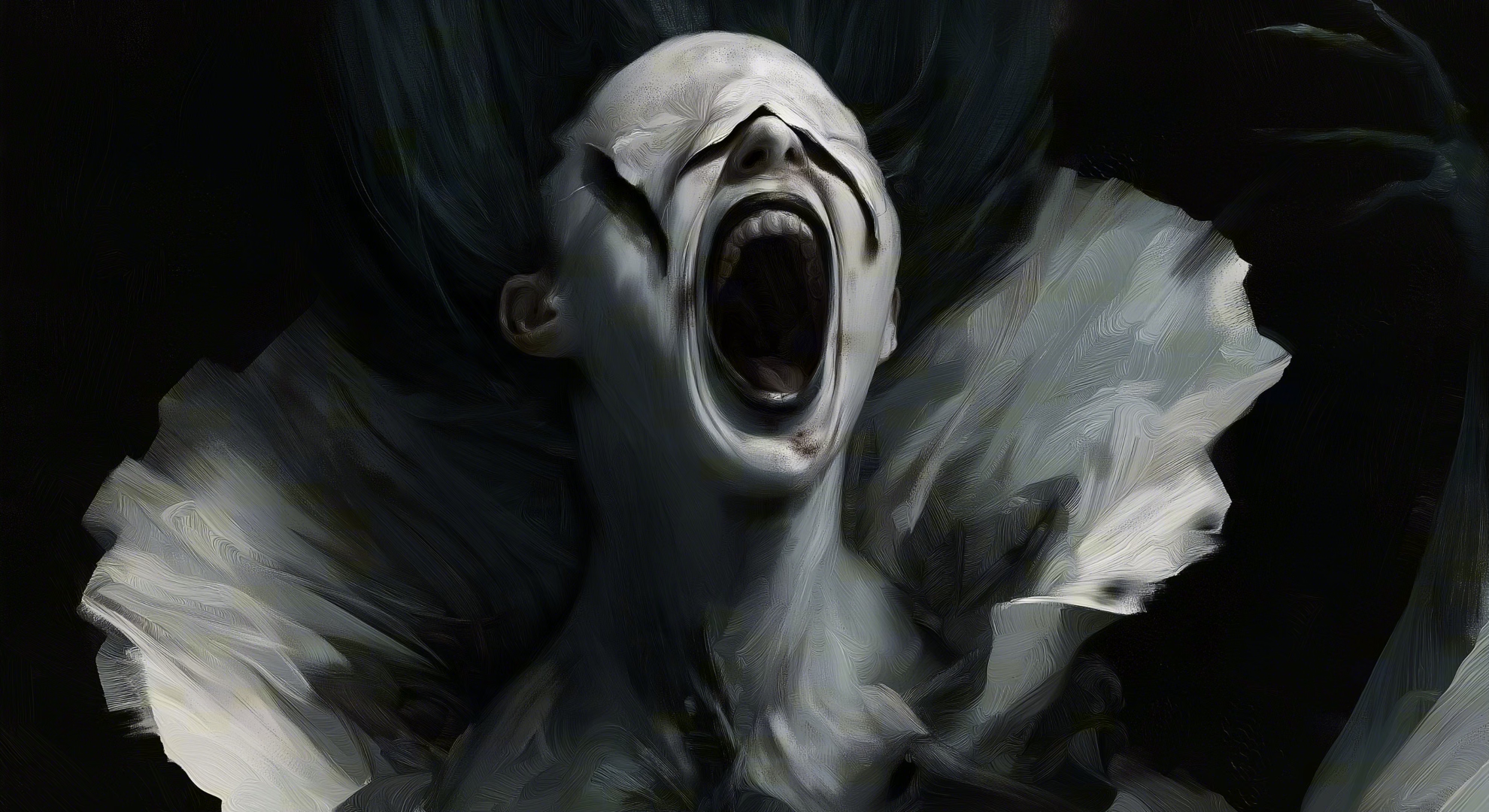
Along certain roads through Huila and Tolima, in Colombia’s Andean interior, a specific kind of warning has circulated for generations: watch for a beautiful woman at dusk, and watch her mouth. If it opens too wide, if the teeth inside it resemble a horse’s more than a woman’s, the man who approached her will not walk home.
She is called La Muelona, and unlike La Llorona, whose weeping figure English-language horror has long since absorbed into its own catalogue of monsters, La Muelona has stayed almost entirely inside Colombia’s own oral and printed folklore.
That changes on September 29th, 2026, when she crosses into a major American anthology for what appears to be her first appearance in English-language commercial horror fiction, carried there by a Colombian author already familiar with the same regional catalogue of monstrous women.
‘The Return of La Muelona,’ a short story by Bogotá-based author Carolina Flórez-Cerchiaro, appears in ‘Something Followed Us Home: Tales of Latiné Horror,’ edited by Bram Stoker Award winner Cynthia Pelayo. Atria/Primero Sueño Press publishes the 336-page trade paperback, ISBN 9781668091944, gathering 17 stories from writers including Mariana Enríquez, Isabel Cañas, Zoraida Córdova and Pelayo herself.
The Woman With the Teeth
Colombian folklorist and historian Javier Ocampo López documented La Muelona — also known as Colmillona, or “big fang woman” — among the legends of the Andean departments of Huila and Tolima in his 1996 compilation, ‘Leyendas populares colombianas.’
In the versions Ocampo López recorded, she first appears as an ordinary, attractive woman along a rural roadside at dusk, drawing the attention of men who have been gambling, drinking, or stepping out on their wives. Only once she has led one away from the road does her mouth reveal the oversized, horse-like teeth that give her name, and the men who follow her do not return.
Some tellings hold that she spared households that had recently welcomed a newborn, which fixed her specifically as a predator of male vice rather than a general threat.
Folklore compilers have catalogued La Muelona alongside two other Colombian female monster legends that recur across the same Andean departments: La Llorona, the weeping mother searching for a drowned child, and La Patasola, the one-legged predator of the Pacific jungle.
All three encode a specific anxiety about seduction, punishment, and female vengeance that Colombian oral tradition attached to women, in contrast to the imported vampire and succubus figures that English-language horror more commonly reaches for. That distinction is precisely what gives ‘The Return of La Muelona’ its stakes: rather than translating a familiar monster into a Colombian setting, Flórez-Cerchiaro is exporting one of the country’s own.
From Journalism to Gothic
Flórez-Cerchiaro’s path to genre fiction runs through journalism rather than a creative-writing program. Working as a journalist and international-politics specialist in Colombia, she partnered with local governments and non-governmental organizations on public policy aimed at reintegrating former combatants following the 2016 agreement that ended five decades of armed conflict between the Colombian government and the FARC guerrilla group.
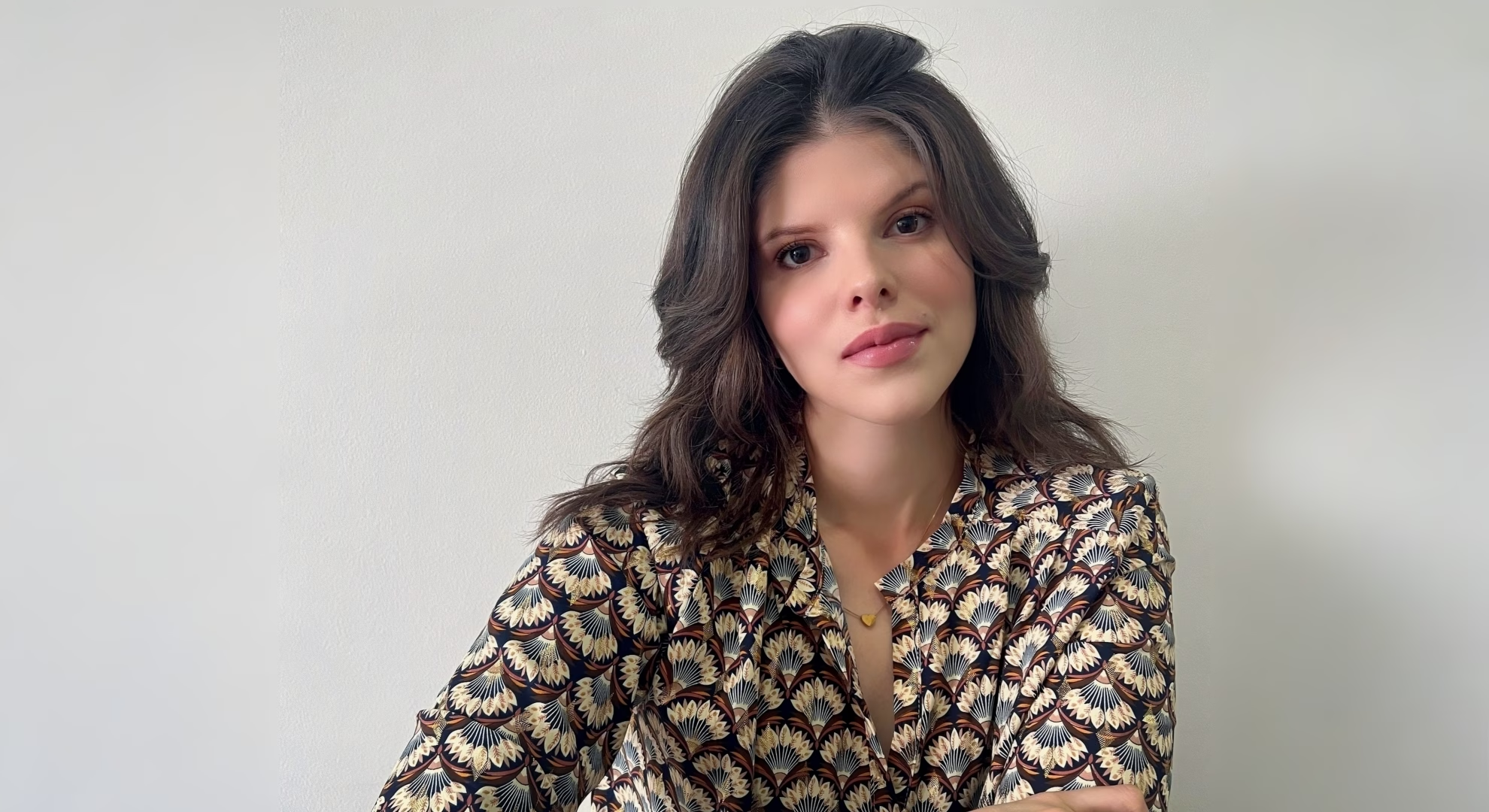
That documented institutional work grounds her fiction’s recurring interest in inherited violence and official silence rather than supplying its plot directly.
In one interview, Flórez-Cerchiaro described her research habits as carrying directly into her fiction, saying that journalism trained her to dig for the specific historical and documentary detail a novel needs to feel lived-in rather than invented.
The Debut That Preceded It
‘The Return of La Muelona’ is Flórez-Cerchiaro’s first published short fiction, but not her first engagement with Colombia’s catalogue of monstrous women.
Her 2025 debut novel ‘Bochica’ — published in hardcover by Atria/Primero Sueño Press on May 13th, 2025, and now available in a 256-page trade paperback — follows Antonia Rubiano through a haunted mansion built above the Salto del Tequendama waterfall outside Bogotá, where Muisca cosmology, the deity Bochica, and the malevolent svetyba entities collide with a family’s colonial-era secrets.
In one classroom scene early in the novel, Antonia privately dismisses the nuns’ stories of demonic possession as no more credible than the region’s own folklore, naming La Llorona and La Patasola directly — the same catalogue ‘The Return of La Muelona’ now draws its title character from, rather than mentioning in passing.
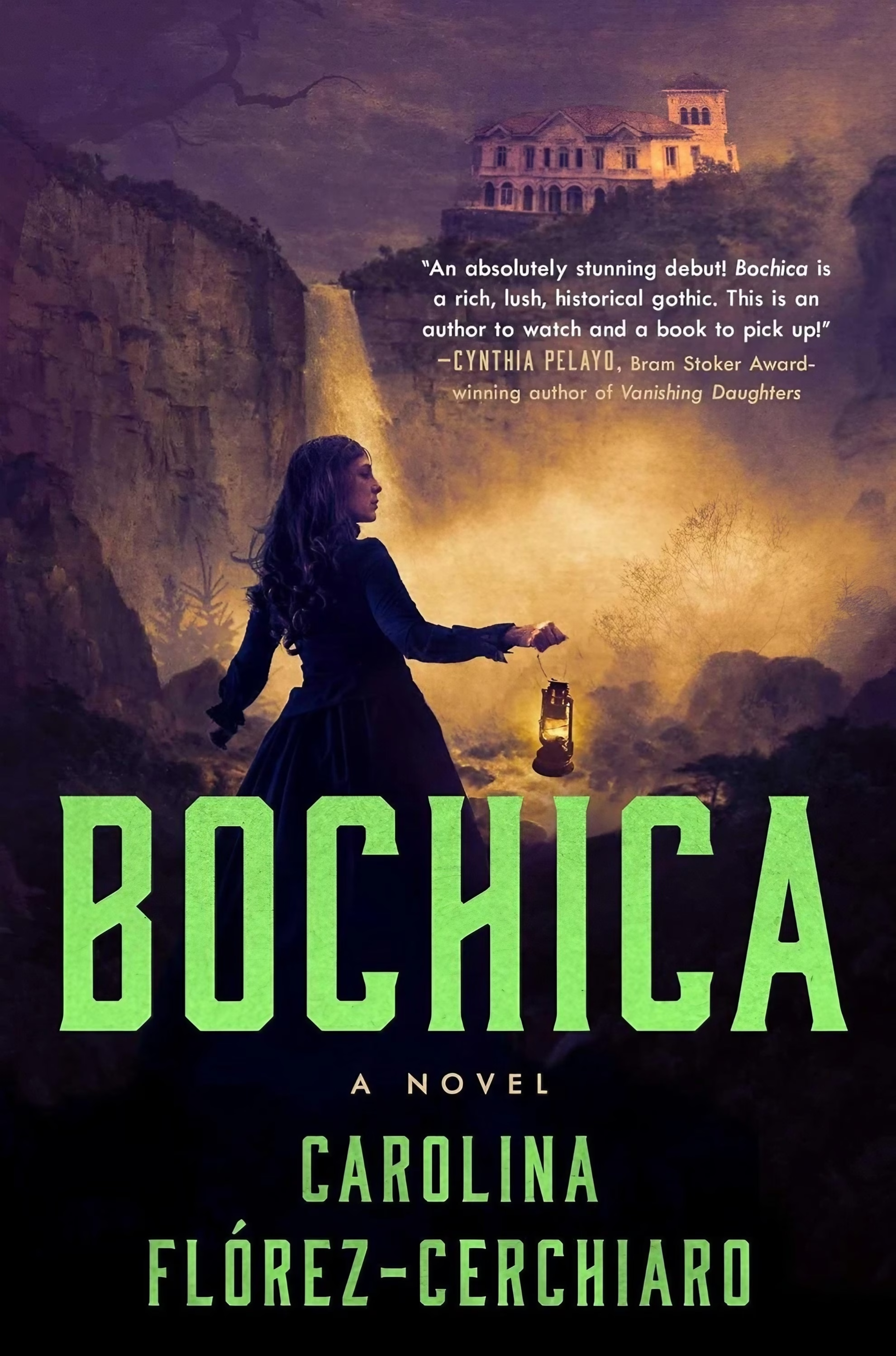
Cynthia Pelayo — the same author now editing the anthology carrying Flórez-Cerchiaro’s short fiction — blurbed ‘Bochica’ on its release as “an absolutely stunning debut,” and novelist Ana Reyes praised its blend of Indigenous myth and a defiant, sharply drawn protagonist.
‘Bochica’ positioned itself, in the publisher’s own framing, as a meeting point between Silvia Moreno-García’s ‘Mexican Gothic’ and Stephen King’s ‘The Shining’ — a comparison that places Flórez-Cerchiaro inside an active, cross-border conversation among Latin American gothic writers rather than treating Colombian material as a regional curiosity.
A Wider Latiné Company
That conversation runs deeper than a single blurb comparison. Colombian and broader Latin American fiction has engaged the uncanny and the monstrous since well before international horror publishing took notice of it — from Jorge Luis Borges’ fantastic geometries of impossible space to Juan Rulfo’s rural gothic, where the dead in ‘Pedro Páramo’ speak as casually as the living, to Gabriel García Márquez’s darker registers, where the supernatural sits inside ordinary village grief rather than announcing itself as spectacle.
Flórez-Cerchiaro’s fiction departs from that lineage in one specific way: where Rulfo’s ghosts haunt a village emptied by economic collapse, her monsters are explicitly gendered instruments of social punishment, women transformed into predators of male infidelity and vice — a register closer to Mariana Enríquez’s Argentine horror, in which women’s violence and disappearance carry the weight of a specific national history, than to magical realism’s more ambient uncanny.
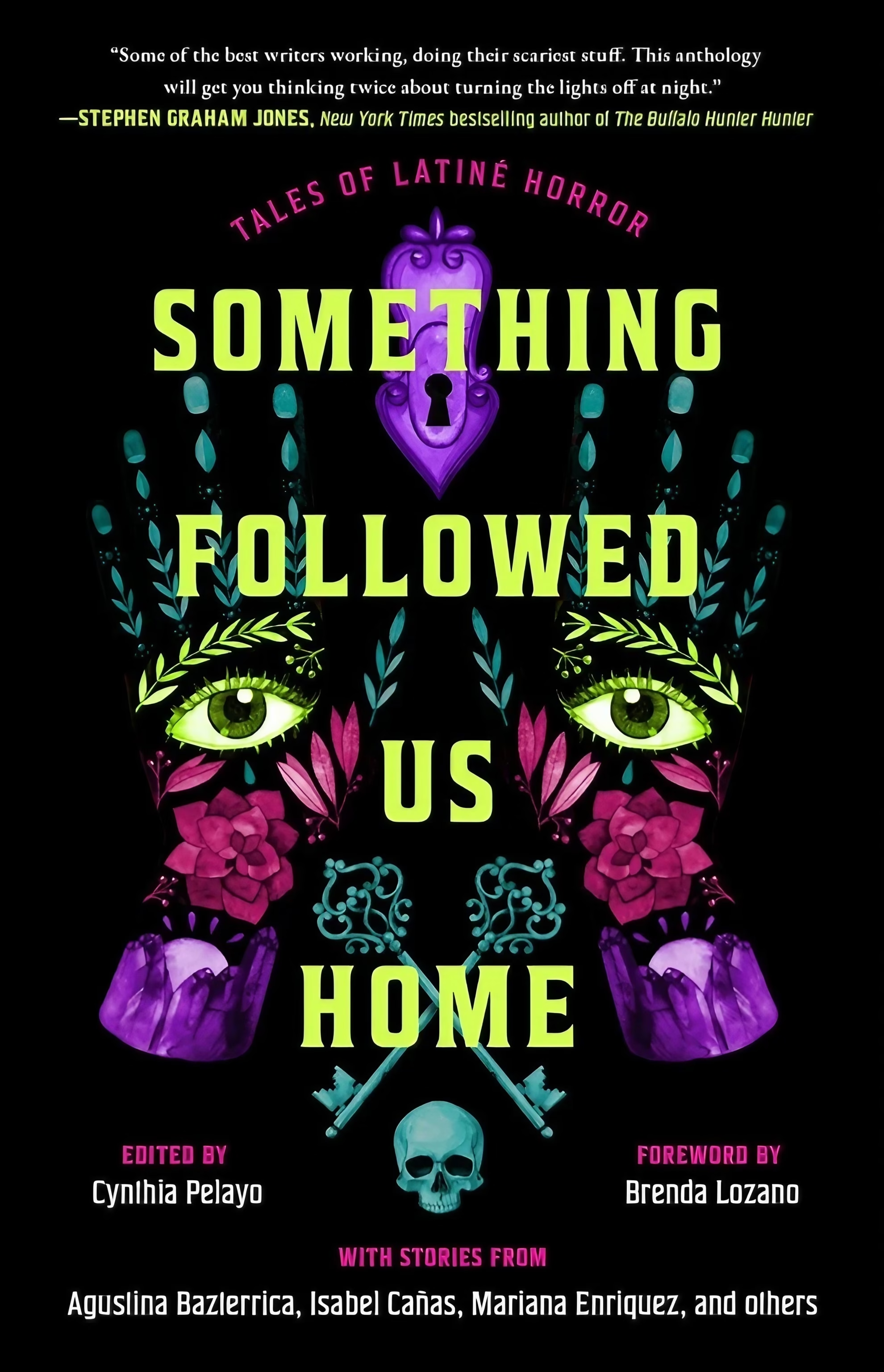
Inside ‘Something Followed Us Home’ itself, Flórez-Cerchiaro shares a table of contents with Enríquez’s ‘Guardian Angel,’ giving readers a direct point of comparison between two writers translating distinct national folklores — Argentine and Colombian — into the same anthology’s frame.
Novelist Erika T. Wurth, blurbing the collection, singled out Flórez-Cerchiaro by name among what she called “incredible standouts.”
Local Legends, Wider Readers
La Muelona’s appearance in ‘Something Followed Us Home’ does not close the gap between the scale of Colombia’s own dark fiction and its distribution abroad; a single short story inside a 17-writer anthology is a narrow point of entry for a figure who has spent a century confined to regional folklore compilations and roadside warnings.
What it does confirm is a specific authorial pattern: Flórez-Cerchiaro’s fiction, across a debut novel and now a debut short story, keeps returning to the same catalogue of Colombian monstrous women rather than importing horror’s more internationally familiar cast.
Readers who first met La Llorona and La Patasola in the margins of ‘Bochica’ now get La Muelona at the center of her own story, in a book positioned to reach considerably more English-language readers than any Colombian folklore compilation has on its own.
Which other Colombian or Latin American folkloric figure, still confined mostly to its home country’s oral tradition, would you like to see anchor a work of horror fiction reaching new international readers?


Leave a Reply