

A hand-drawn short film that shared a summer restoration slate with one of fantastic cinema’s most established festivals has traveled roughly 1,900 miles west into a converted stage house in the Utah high desert. That its next stop is St. George rather than a specialized preservation circuit says something about what a 24-year-old regional festival has assembled without ever functioning as a discovery engine.
From September 16th through 19th, 2026, the 24th edition of HorrorFest International Film Festival returns to the Electric Theater, closing the theatrical runs of two distributor-backed features while giving that restoration a place on its own bill.
A Circuit That Closes Rather Than Launches
HorrorFest International has appeared in Dread Central’s annual survey of the best horror festivals in the world since at least 2022, sharing a page with the outlet’s account of Sitges, Fantasia, Fantaspoa, Buenos Aires Rojo Sangre, and Bucheon’s BiFan — the same names this documented circuit treats as its premiere tier.
The St. George entry read nothing like those descriptions. One panelist praised an “incredible location on the edge of Paradise Canyon,” framing a 20-year-old event as a discovery for touring genre journalists rather than a festival they already knew well. Four years later, the festival’s own account of its 2026 programme suggests a more settled kind of standing inside that same circuit.
That standing does not mean the festival avoids premieres. Its 2024 edition included three world premieres and roughly forty films receiving their first Utah screening alongside titles already touring the circuit, but the 2026 marquee slots make a different identity explicit.
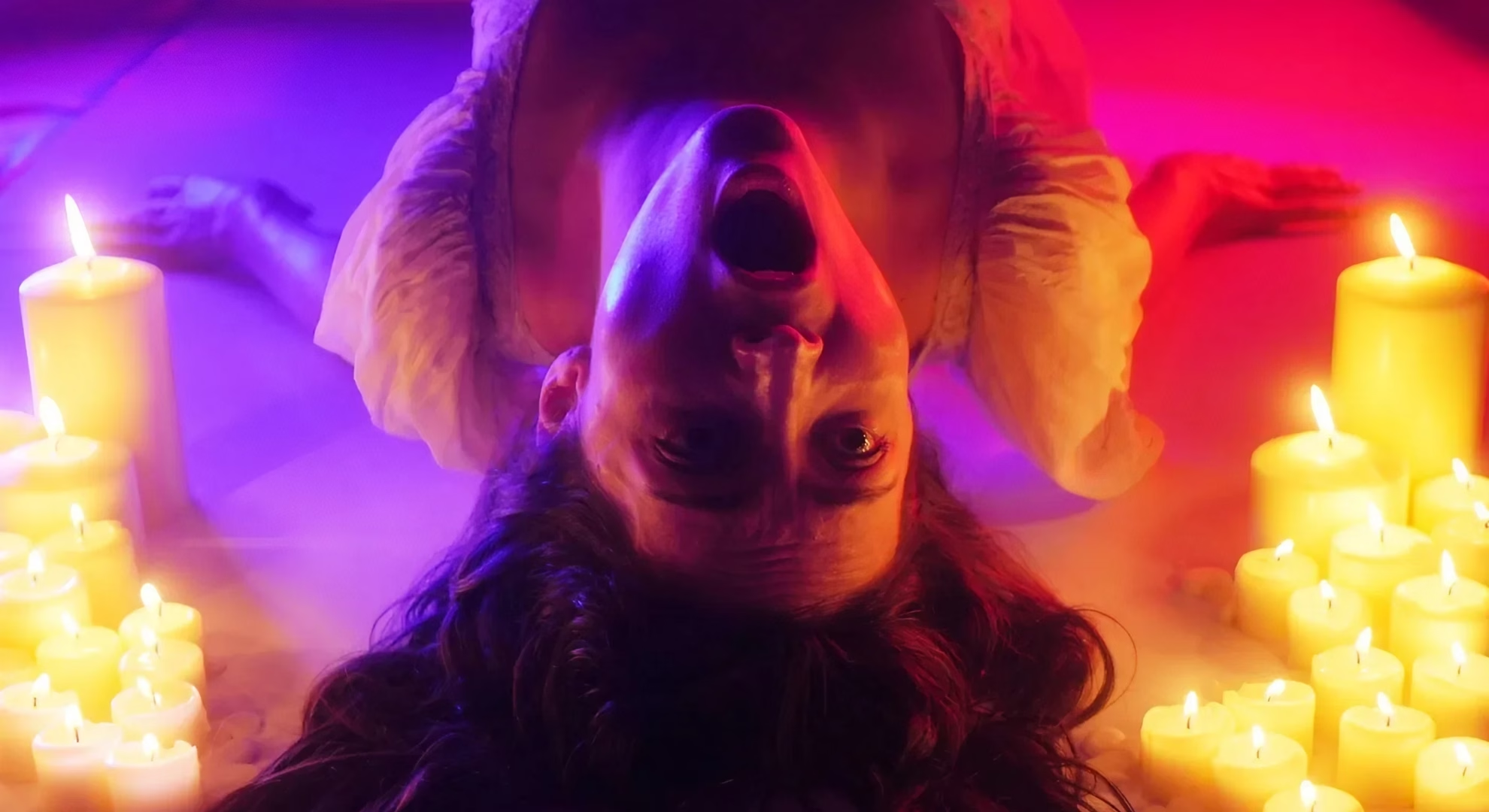
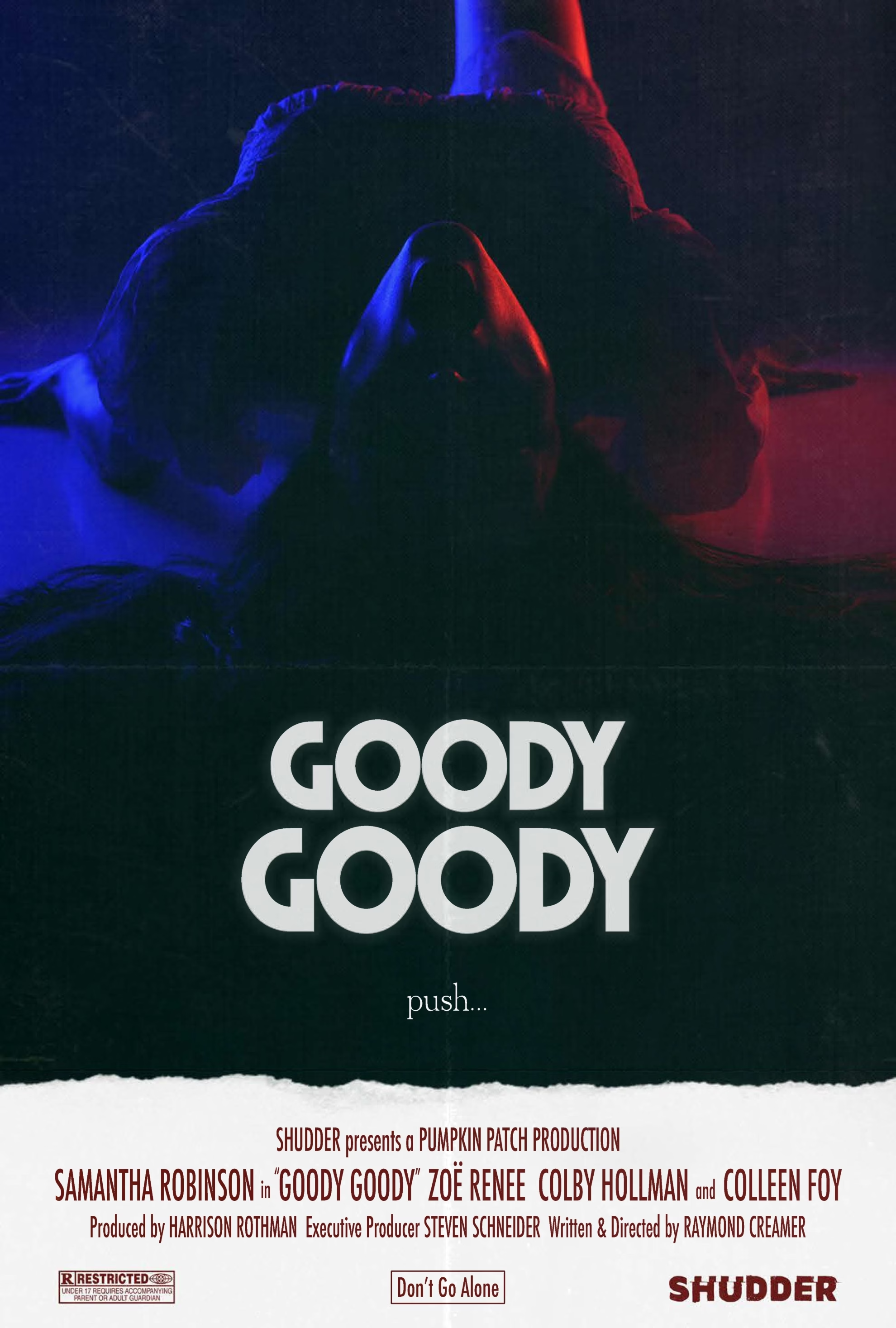
Raymond Creamer’s home-birth horror feature ‘Goody Goody,’ acquired for streaming by Shudder after a well-traveled circuit run, plays as HorrorFest’s opening-night selection, paired with the short ‘Night Feeds’ in a shared Birth of Horror block, effectively closing out its own festival life in St. George rather than beginning it.
Closing night belongs to ‘Never After Dark’, Dave Boyle’s Japanese import about a traveling psychic confronting a powerful entity, a title that already carries a Magnolia Pictures release rather than an unclaimed premiere.
24 Years From Revival Nights to the Circuit
HorrorFest’s own history supplies the specific lineage its 2026 programming argument depends on. The festival launched in 2002 as a two-day, locally focused event that curated revival screenings of genre classics alongside work by area filmmakers, a retrospective model rather than a discovery pipeline.
It operated at that scale, largely unchanged in ambition, for the better part of two decades before rebranding as HorrorFest International in 2020 — an accommodation of global submissions grafted onto a structure originally designed for local revival programming rather than a ground-up relaunch.
Founder and director Adam Mast had begun writing film criticism for the Southern Utah paper then called The Revolution, soon renamed The Independent, in May 1996, publishing his early reviews under the pseudonym Alan Smithee before writing under his own name.
The festival he would eventually expand functioned, for most of its history, as an extension of that same regional critical practice rather than as an industry-facing showcase — a continuity its later institutional growth did not erase so much as formalize.
A Preservation Wing Built Into the Bill
The 2026 program treats revival screenings as more than a nostalgia block, and its clearest evidence came from outside Utah first. Michael Dougherty’s ‘Season’s Greetings,’ the hand-drawn short he made as an NYU Tisch student in 1996, introduced Sam, the burlap-masked figure who would anchor Dougherty’s 2007 feature ‘Trick ’r Treat’ more than a decade later.
A new 4K restoration of that short played the Fantasia International Film Festival in Montreal this past July, ahead of its own 30th anniversary; the same restoration reaches St. George in September as part of HorrorFest’s Old Haunts block, alongside a parallel 30th-anniversary screening of Peter Jackson’s ‘The Frighteners.’
Placing a Fantasia-vetted restoration next to a 1996 studio feature does more than pad a nostalgia block. It argues that a festival without premiere leverage can still function as a documented stop on a bigger festival’s own restoration circuit, provided it can host what a specialized festival has already validated months earlier.
A Critic’s Three Decades Behind the Scenes
HorrorFest has no prior coverage on this site, which puts its producing organization under a level of scrutiny the format reserves for first-time subjects. That organization grew directly out of Mast’s critical career. Nearly two decades after he started reviewing films, in 2014, Mast partnered with fellow critic John Pugh to launch Cinemast.net, a site centered on fan-facing film analysis rather than trade reporting.
Three years later, the pair formalized their event-producing work into the Film and Media Alliance of Southern Utah, a 501(c)(3) nonprofit chartered to support regional filmmaking talent and preserve theatrical film history; Pugh now serves as the nonprofit’s technical director alongside a continued programming role.
FMASU’s slate beyond HorrorFest includes the Desertscape International Film Festival, the Electric Film Series, and the Guerilla Filmmaking Challenge, a timed genre-short competition that keeps the festival’s founding emphasis on homegrown talent active even as its main lineup went global.
Two Industry Panels and a Broadcast Debut
Two of the four days are anchored by industry panels rather than screenings alone. Devlin, the screenwriter behind 2022’s ‘The Texas Chainsaw Massacre’ and 2023’s ‘Cobweb’ — the latter also playing HorrorFest’s Family Secrets block as a repertory selection — discusses his path from a Black List-recognized spec script to an upcoming writing credit on a new ‘Blair Witch’ installment slated for 2027, in a session billed as Script to Scream.
Producer Christian Armogida, whose credits include ‘The Blackcoat’s Daughter,’ ‘Glorious,’ and ‘We Summon the Darkness,’ follows in Behind the Scream, a conversation on producing independent horror features; both panels are moderated by Kyle Peck, a senior producer at Wild Card Creative Group.
Elsewhere, the team behind the horror-fiction broadcast Necro Radio debuts a new episode at a listening party held during the festival’s run, and a separate panel gathers the creative team behind Universal Horror Unleashed, the year-round haunted attraction, to discuss haunt design as its own branch of horror storytelling.
Frank Dietz, a series regular, returns to host the festival’s Skreel Awards and its 80s Throwback Mystery Movie block, continuing a hosting role the festival has assembled around a single recurring figure rather than a rotating slate of guests.
Getting to St. George for the Weekend
HorrorFest International runs September 16th through 19th, 2026, preceded by a September 15th preview-night screening of ‘Poltergeist,’ all at the Electric Theater in St. George, Utah, the historic single-screen venue FMASU has used as the festival’s home base since its earliest editions.
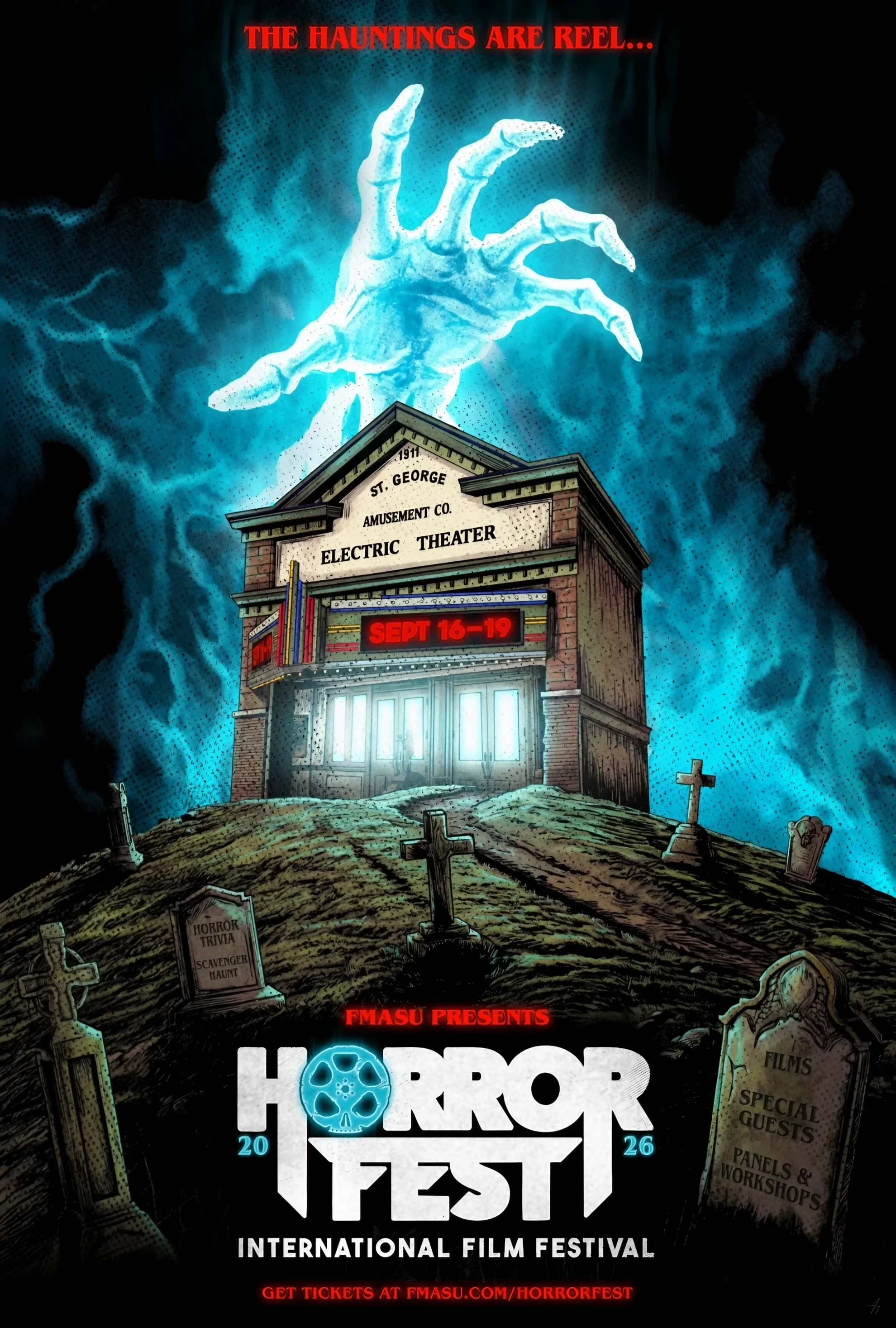
An All-Access Fright Pass costs $129 (approx. COP 400,000) and covers all four days of film blocks, opening and closing night parties, a VIP lounge, two catered meals, and festival swag; early-bird pricing on that pass ended August 18th, and the pass is non-refundable.
A Slasher Pass, covering film blocks and panels only, costs $75 (approx. COP 233,000). Day passes and individual block tickets were listed as forthcoming at the time of writing, without confirmed pricing. Submissions for the 2026 edition are closed; the festival has historically accepted entries, including a companion screenplay competition, through FilmFreeway.
The Value of Staying a Regional Fixture
HorrorFest International’s 24-year run answers a question smaller regional festivals rarely get asked directly: what becomes of a genre event that never adopts the premiere-chasing model that defines Sitges, Fantasia, or Fantastic Fest, and instead lets its identity grow out of revival programming and one small nonprofit’s own resources.
The 2026 lineup supplies an answer: a festival that can host a Fantasia-restored short and a Shudder-acquired feature within the same four days without needing either one to have started there. St. George’s high desert setting and Mast’s long run of regional criticism have produced something closer to a working archive that also books new work than to an early-stage discovery pipeline — a distinction that keeps a small nonprofit’s festival useful to the circuit even without premiere leverage to trade on.
Readers who track where genre restorations land after their festival premieres, rather than where those premieres happen, are welcome to point our publication toward other festivals doing the same closing-stop work with archival prints or newly struck restorations of their own; a single-screen historic theater keeping a 30-year-old short’s afterlife alive is exactly the kind of circuit footnote this coverage exists to catch.
Tourism Partnership
We reach an audience that travels with intention — drawn to documented history, dark heritage, and the cultural weight of the places they seek out. If you operate tours, cultural experiences, accommodation, or heritage sites aligned with that ethos, we would like to hear from you. We consider partnerships with tour operators, travel agencies, hostels, hotels, museums, and any organization whose work engages seriously with dark tourism, gothic culture, or historical travel. We do not promote services we cannot stand behind editorially. Reach us through our Contact page.
Leave a Reply