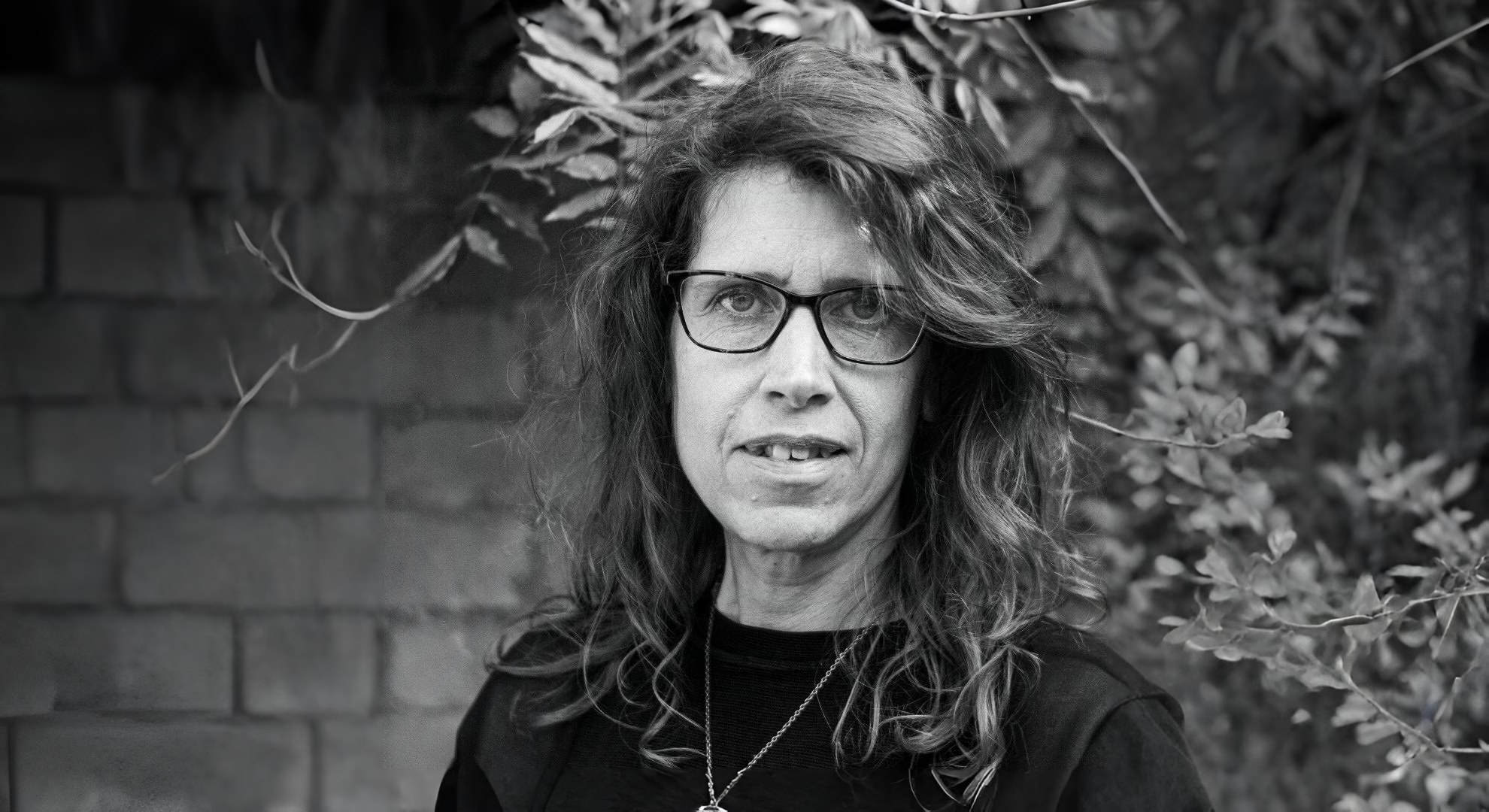


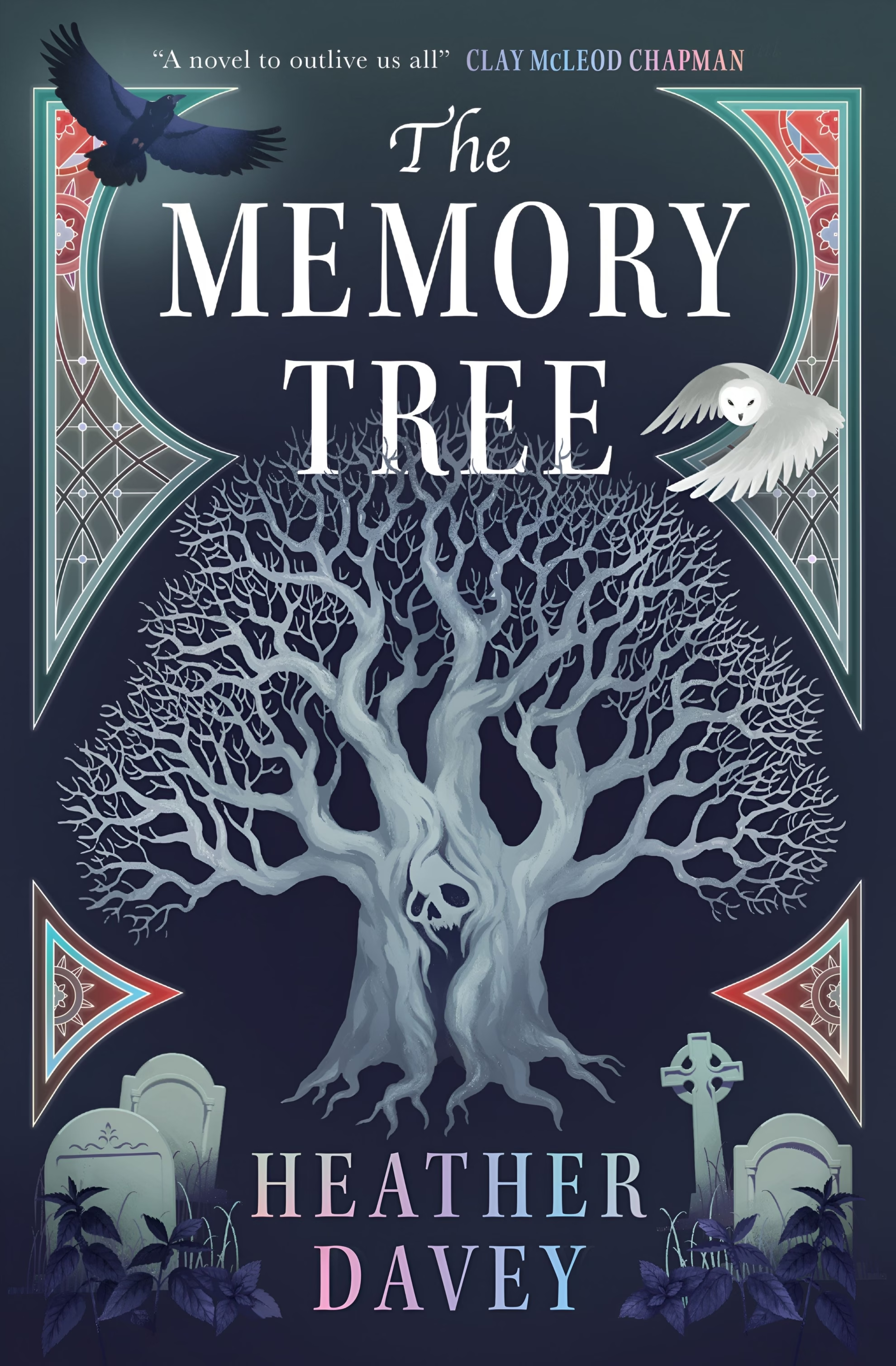
A vicar’s family moving into a new parish is standard furniture for English ghost fiction, but the object waiting for them at Hope-under-Barrow is not a portrait or a locked room. It is a yew, centuries old, rooted in the churchyard that borders their new garden, and it does not confine its effects to folklore. Heather Davey’s second novel, ‘The Memory Tree,’ reaches American and British readers on September 29th, 2026, in a 352-page trade paperback from Titan Books, carrying forward the same publisher and the same commitment to rural English ghost fiction that marked her 2025 debut.
Kate Greenwood, newly settled with her husband, Ben, and their young son as he takes his first parish, begins experiencing headaches, visions, and memories that are demonstrably not her own, all traced back to the tree at the edge of the graveyard.
A Second Novel in Dorset
Titan Books lists ‘The Memory Tree’ under ISBN 9781835414392, which designates the trade paperback edition, also available in hardcover and audio formats, with a United States and United Kingdom street date of September 29th, 2026.
The book sets its fictional village of Hope-under-Barrow within Dorset, where Ben takes his first parish and Kate finds herself unsettled by a community whose customs no one troubles to explain to newcomers, among them an annual observance the village calls Barrow Man Day.
The yew standing at the churchyard’s edge blocks most of the vicarage’s outlook and asserts itself over a wider stretch of ground than any fence was built to contain. Cover design and editorial credits for the release had not been confirmed at the time of publication.
Roots Older Than the Church
Davey’s title borrows its charge from a documented feature of the English countryside that predates the novel by centuries, and the book works self-consciously within that specific register, Gothic folk horror, in which supernatural threat is inseparable from one plot of consecrated ground.
Yew trees standing in parish churchyards are frequently older than the churches beside them, guarding the dead through an evergreen persistence and a toxicity severe enough that medieval authorities discouraged grazing near them, a documented double duty within English burial custom.1
Davey’s yew inherits that duality directly: it marks graves, and it does not release what it has witnessed.
Casting the tree itself, rather than a haunted room, as the vessel of transmitted memory extends a specific English continuity in which the ground, not the furniture, retains the crime, the antiquarian ghost fiction associated with M.R. James built its dread from objects unearthed from disturbed soil, insisting the countryside itself kept a legible and punishing record of what had been done to it.2
The Weight of Two Eras
Davey shapes the novel around the same dual-timeline method already present in her debut, splitting the narrative between Kate’s present-day unease and eighteen sixty-six chapters following Octavia Kibble, daughter of the village’s Reverend Phineas Kibble, who is drawn to the same tree after her own mother’s death.
The interruption is structural rather than ornamental: homiletic fragments attributed to Octavia’s father are spliced between chapters, functioning as a formal echo of the sermon as inherited authority, reinforcing that Hope-under-Barrow’s history has always reached its residents pre-interpreted by whoever stands in the pulpit.
Tension does not depend on whether Kate will uncover Octavia’s story, since Davey signals the join between the two women early through matched sensation rather than plot mechanics, headaches giving way to visions and then to memory that is unmistakably not the character’s own.
What holds the pacing together is a refusal to let either timeline resolve independently of the other, so that the tree is presented as a single continuous witness and revelation in one century is withheld until it can be paid out as consequence in the other.
From Merry Hall to Here
‘The Memory Tree’ follows directly from Davey’s September 16th, 2025 debut, ‘The Ghosts of Merry Hall,’ a Titan Books release built on the same dual-timeline method.
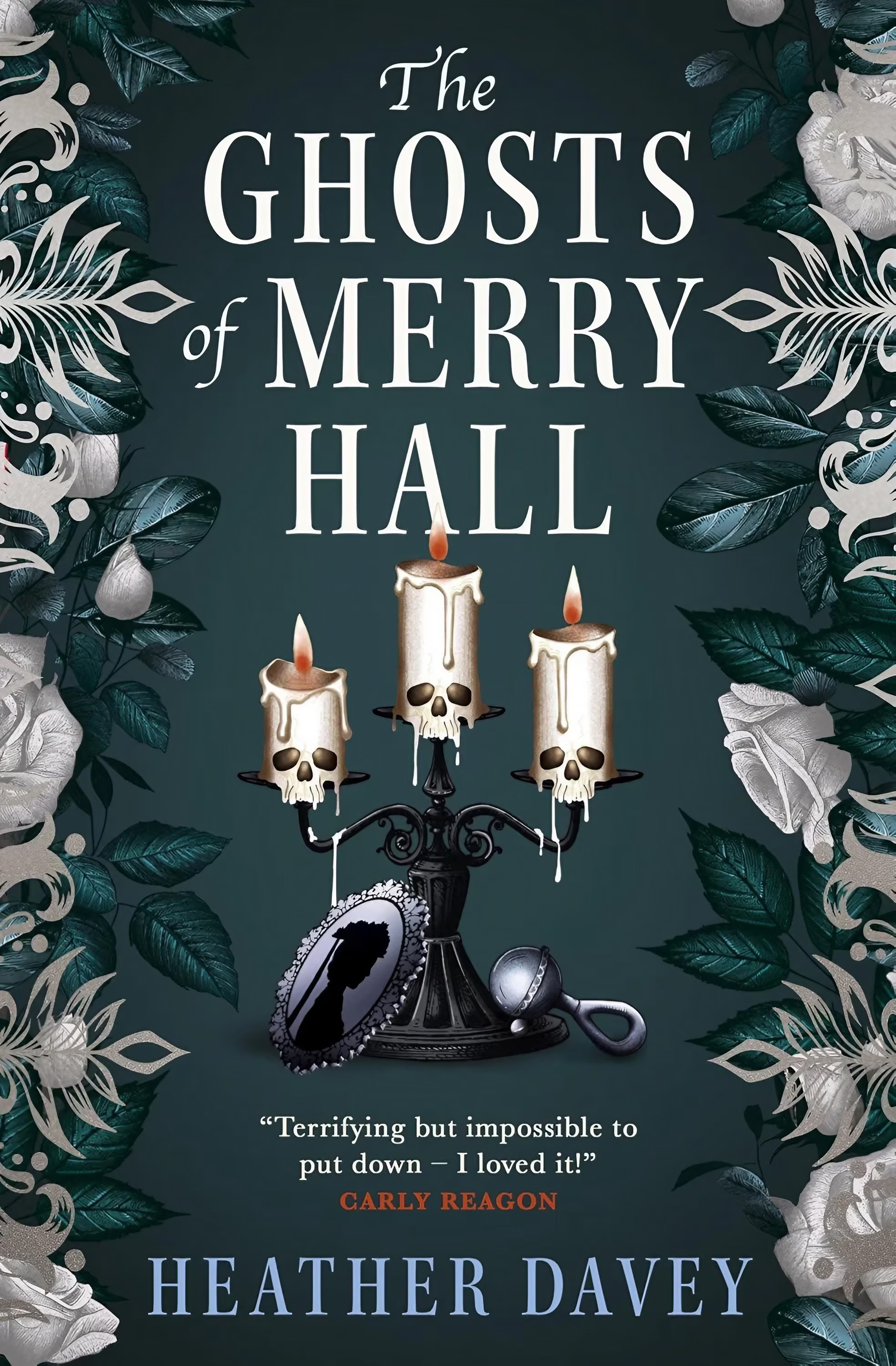
That novel paired a contemporary single mother, Nell, and her teenage daughter, Fern, housesitting a decaying Victorian mansion, with an eighteen forties strand following Dolly, an albino girl absorbed into showman Abel Wenham’s traveling exhibition of human curiosities and later confined at the house after becoming pregnant by him, with her only allies fellow performers billed as a bear-woman and a contortionist.
Where the debut located its ghost within a single building and its origin within one act of individual cruelty, ‘The Memory Tree’ widens the frame from house to churchyard and from one victimized woman to an entire village’s inherited practice, trading a single vengeful spirit for a collective, ongoing observance built around the tree.
The shift argues for a novelist moving from a contained haunted-house structure toward the wider social machinery of folk horror, in which the threat is not a wronged individual seeking redress but a community’s accumulated arrangement with something it has never fully named.
A School Librarian’s Route
Davey comes to horror fiction from eighteen years inside a school library rather than from a prior career in publishing. She holds a master’s degree in writing from Bath Spa University and completed the Curtis Brown Creative course built around finishing a first manuscript within eight months, work that led to representation and, subsequently, her contract with Titan.
She has also served as a judge for the Yoto Carnegie Medals, the established United Kingdom prizes for children’s and young-adult writing and illustration, and appeared as a contributor on the British television series ‘Uncanny,’ built around testimony of reported supernatural encounters.
That combination, a career spent selecting and evaluating other people’s books alongside sustained personal engagement with reported ghost testimony, situates Davey’s fiction inside a specifically English continuity: writers whose ghost stories grew out of close, professional proximity to inherited and disputed narrative, rather than from genre fandom alone.
Diction From the Pulpit
The prose register Davey works in draws its authority from ecclesiastical diction rather than from escalating incident. The homiletic interpolations lend the book a documentary cadence, as though every event in Hope-under-Barrow had already been sorted into doctrine before Kate ever questions it.
That choice argues for a specific thematic design, in which the horror is not the tree’s poison or its physical reach but the transfer of memory without consent, a violation staged as intimate rather than violent. Kate’s visions are described as belonging to someone else before they belong to her, and the novel’s engagement with grief runs through an inheritance she never signed for, extending the debut’s interest in women bound to houses and to histories they did not choose into a subtler claim, that a rural English community can transmit its unfinished business the way a family transmits a face.
The Yew Keeps Its Own
Davey’s second novel does not measure whether English ghost fiction can still locate horror in inherited ground rather than in a single wronged spirit, since the antiquarian tradition already settled that question decades before Titan Books existed. It measures instead whether a writer completing only her second full-length work can sustain a single structural conceit, a tree standing in for a village’s collective memory, across the length her debut gave to one house and one grievance.
Davey’s move from Merry Hall’s haunted room to Hope-under-Barrow’s entire churchyard suggests a novelist testing how far the English tradition of haunted ground can be made to carry a burden once assigned to haunted objects, a wager that will be judged over the length of a career rather than a single publication date.
Beyond Davey’s own two novels, where else in current English ghost fiction do you see the haunted-house tradition shifting its center from a single house to an entire parish or stretch of ground, and which writer’s version of that shift do you find most convincing?
References
- Jacqueline Simpson and Steve Roud, ‘A Dictionary of English Folklore’ (Oxford: Oxford University Press, 2000), 398–399. ↩︎
- Julia Briggs, ‘Night Visitors: The Rise and Fall of the English Ghost Story’ (London: Faber and Faber, 1977), 122–126. ↩︎

Leave a Reply