

In 1980, a villain who sentenced his own species for the offense of being alive was, first of all, a joke with teeth. John Wagner and Brian Bolland introduced Judge Death to 2000 AD that year as the logical terminus of the strip that hosted him: if the Judges of Mega-City One treated almost every human act as a potential crime, a Judge from another dimension could finish the syllogism and treat life itself as the offense.
The 1981 serial ‘Judge Death Lives’ gave him three companions, Fear, Fire, and Mortis, and a home dimension already emptied, a graveyard that Judge Dredd and Psi-Judge Anderson entered only after the verdict had been carried out.
Coverage on these pages ordinarily runs ahead of a book’s release. Very rarely, an exception is made for a release that deserves attention but came to light here only days after it reached shelves, and ‘The Dark Judges: The Fall of Deadworld Omnibus’ is one of them.
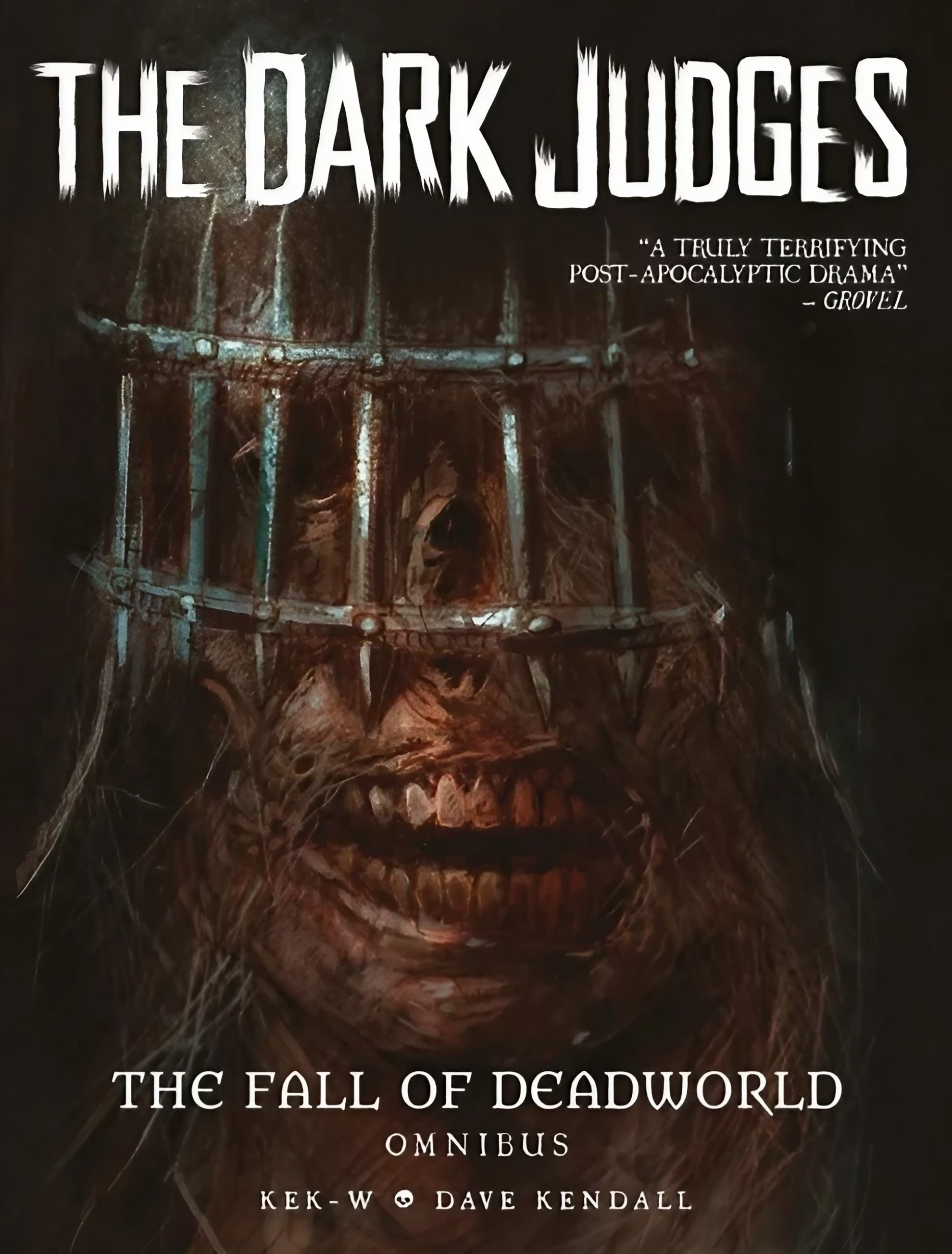
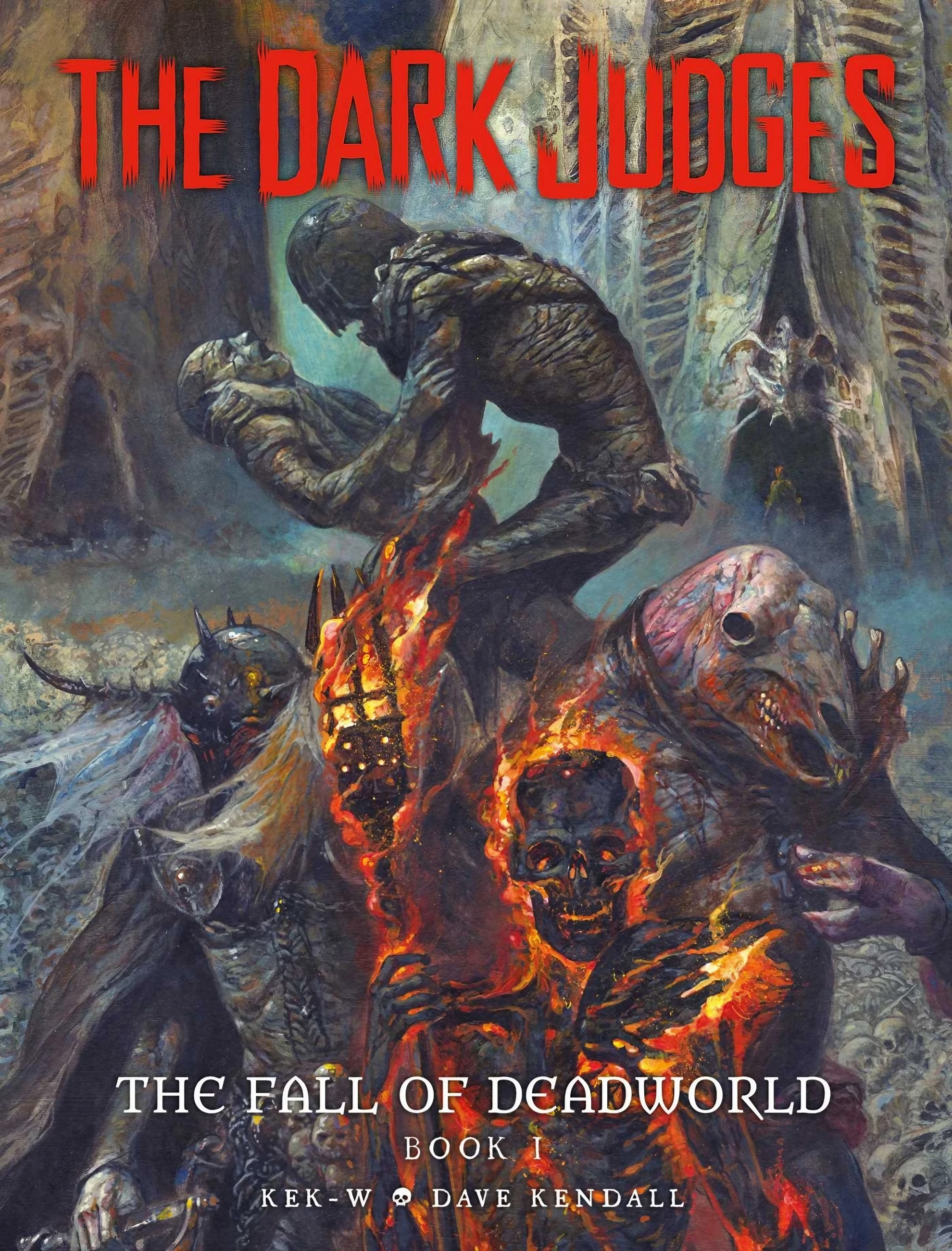
Rebellion published it under its 2000 AD banner on September 23rd, 2026, as a 368-page hardback priced at £39.99, ISBN 978-1-83786-846-9. The work inside is not new: the volume gathers every ‘The Fall of Deadworld’ story from the three earlier collected books, serialized in the weekly comic from 2016 onward, and the occasion is retrospective rather than breaking.
Kek-W, the pen name of Nigel Long and the co-creator of ‘The Order’ for the same comic, wrote every chapter. Dave Kendall, a fantasy illustrator whose clients have included Games Workshop and Wizards of the Coast, drew and painted them, supplying his own color so that no separate colorist stands between line and palette. Annie Parkhouse lettered the opening serial, with Ellie De Ville and Simon Bowland lettering later installments. Matt Smith, the editor of 2000 AD since 2002, served as series editor.
A Punchline Given a Past
Judge Dredd entered 2000 AD in 1977 as satire aimed at authoritarian policing, a strip whose target and sympathies shifted from story to story rather than settling into a single fixed position.1 Judge Death was that satire’s endpoint, and for three and a half decades the Dark Judges operated as its most extreme joke: a law so pure that it had nobody left to govern.
‘The Fall of Deadworld’ converts the punchline into a history. Deadworld, in Kek-W’s telling, was once a planet much like Earth, with its own Judges, its own sprawling American city, and a Soviet neighbor watching across a border, a geography that mirrors the world of Mega-City One closely enough to make the comparison unavoidable. The horror is recognition. The Dark Judges do not invade this society; they rise from inside its justice system, and the planet’s own legal apparatus carries their verdict outward.
The first serial, ‘Tainted,’ ran in progs 1973 to 1981 in 2016 and follows the takeover from the ground: a farming family, the Childs, whose daughter Jess becomes the saga’s moral center; a rogue Judge named Fairfax; and Fairfax’s Lawrider, a sentient, foul-mouthed motorcycle called Byke.
The Chief Who Stays Offstage
Across ‘Tainted,’ Judge Death is mentioned but never seen, referred to only as the chief. Fear, Fire, and Mortis make brief appearances, and the author of the verdict remains a rumor. The withholding relocates menace from the character to the procedure. Readers who know Judge Death from Bolland’s skeletal, grinning design are denied him, and his absence forces attention onto what his law does to a household, a road, and a town.
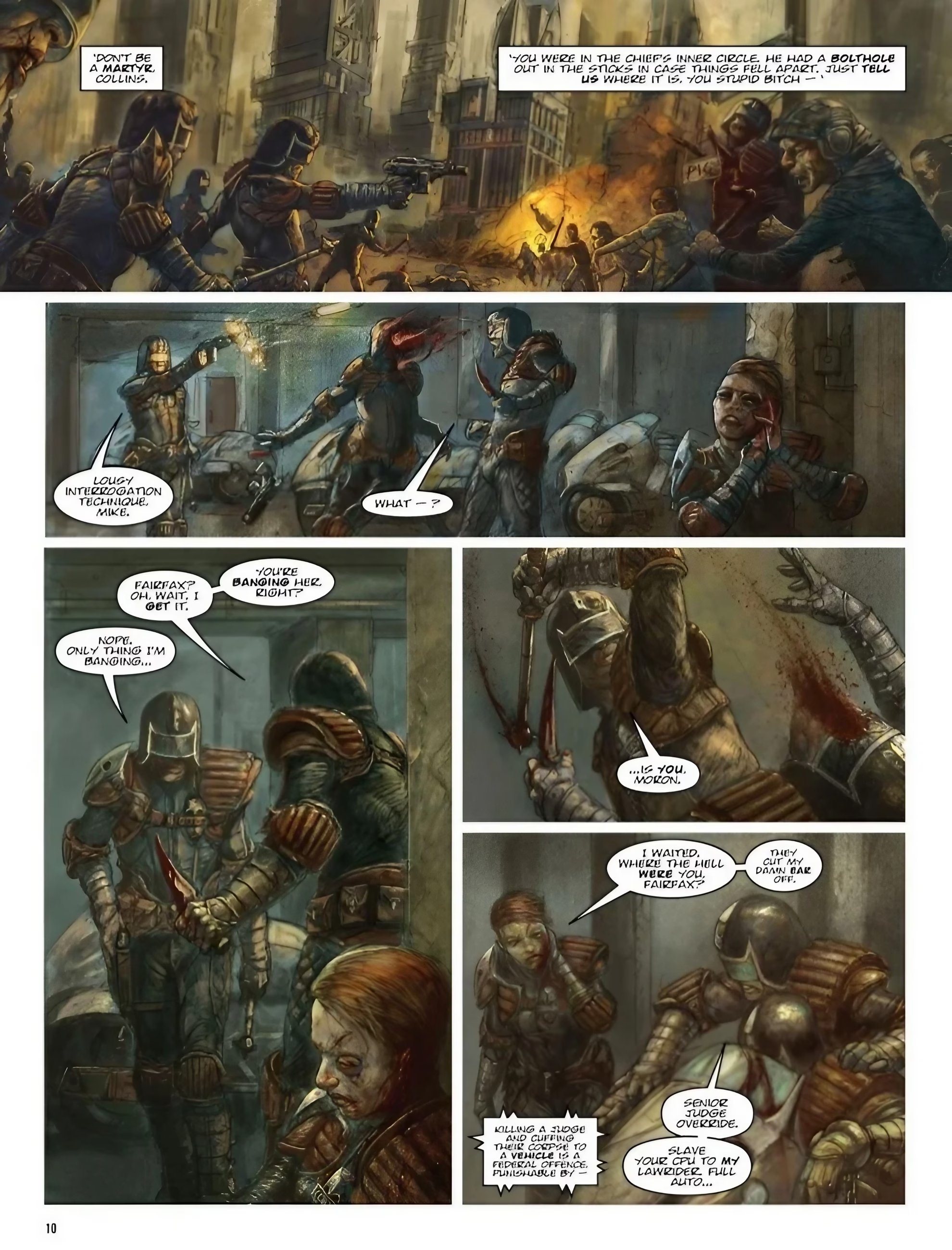
Byke is the book’s most unexpected instrument. A talking motorcycle with a gutter vocabulary belongs to the black comedy of 2000 AD, and on Deadworld his profanity becomes the one voice untouched by the language of sentence and judgment that the Dark Judges impose on everything around him. His irreverence is a form of vitality, and the book treats it as such, keeping the living alive on the page partly through their capacity to swear, joke, and refuse.
The later books extend the argument ‘Tainted’ begins. In the third volume, the psychotic Chief Judge Casey Tweed has dethroned and killed Judge Death and taken over his mission to exterminate every living creature on the planet. The office outlives the man who invented it. For a stretch of the saga the villain is dispensable, and the machinery he set in motion runs without him.
Paint That Rots the Page
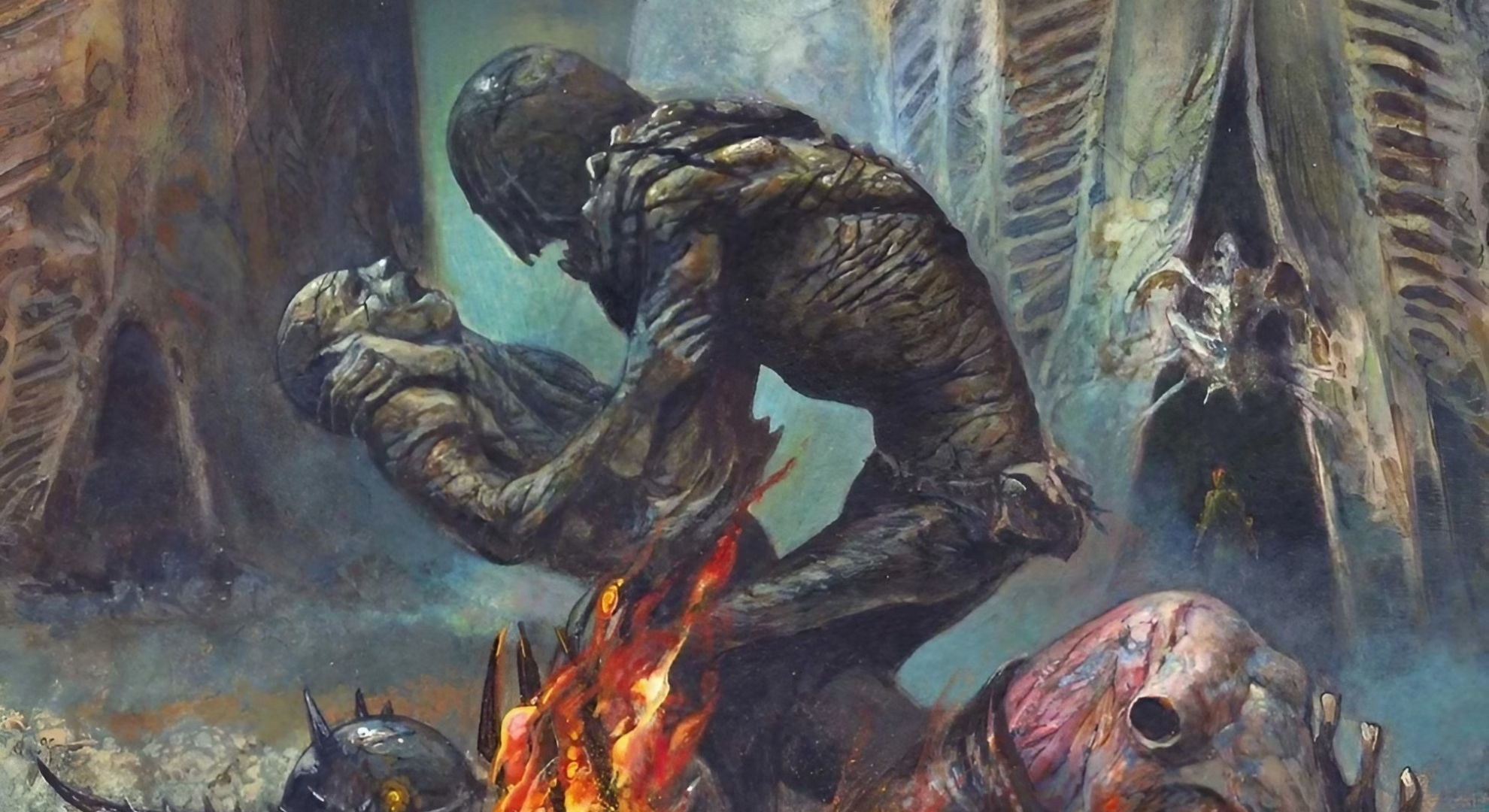
Kendall paints rather than inks, and that choice governs everything the book can say about contamination. In a line-and-flat-color strip, a body keeps its outline while the world changes around it; in Kendall’s painted pages, flesh, rubble, and weather share the same brushed and scraped surfaces, so decay reads as a property of the whole image rather than an event happening to one figure within it.
His palette runs narrow and bruised, and because the color belongs to the same hand as the drawing, no seam separates the depiction of a thing from the sickness of its hue.
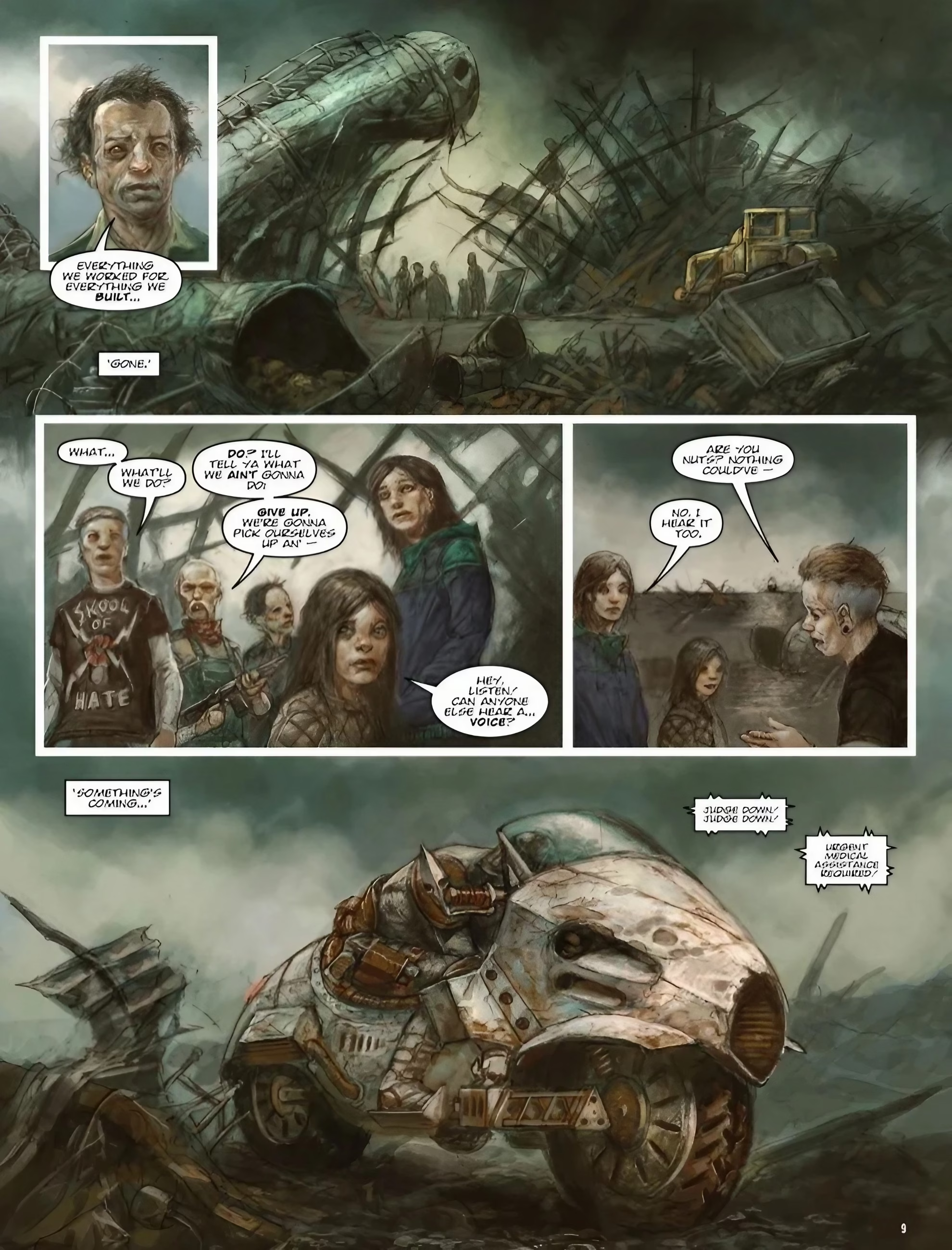
The seventh chapter of ‘Tainted’ opens inside the contamination itself, with a first-person account of the Dark Judges’ dead fluids spreading through a living body. Narration that ordinarily stands outside the action as a stable commentator is handed to the infected, so the words speak from within a conversion that the images can only show from outside.
Parkhouse’s captions become the transmission route: the reader absorbs the logic of the dead fluids in text before any picture confirms what that text has already surrendered.
The closing chapter of the same serial turns the family horror inward. A turned relative and the living are confined together inside a car, and the survivors are forced to kill someone they love. The apocalypse, planetary in scale for eight chapters, contracts to the width of a vehicle, and the confinement is the point: Deadworld’s extinction happens one intimate execution at a time.
From Prog to Hardback
The omnibus is a collected edition, not an original graphic novel, and its pages were calibrated for a weekly anthology in which each installment ran a handful of pages and closed on a hook. ‘Tainted’ debuted in the same prog as ‘Survival Geeks,’ a comedy about housemates adrift across dimensions, so the original reader moved from Deadworld’s slow extermination to slapstick within a single issue. The anthology format rationed the dread and cushioned it.
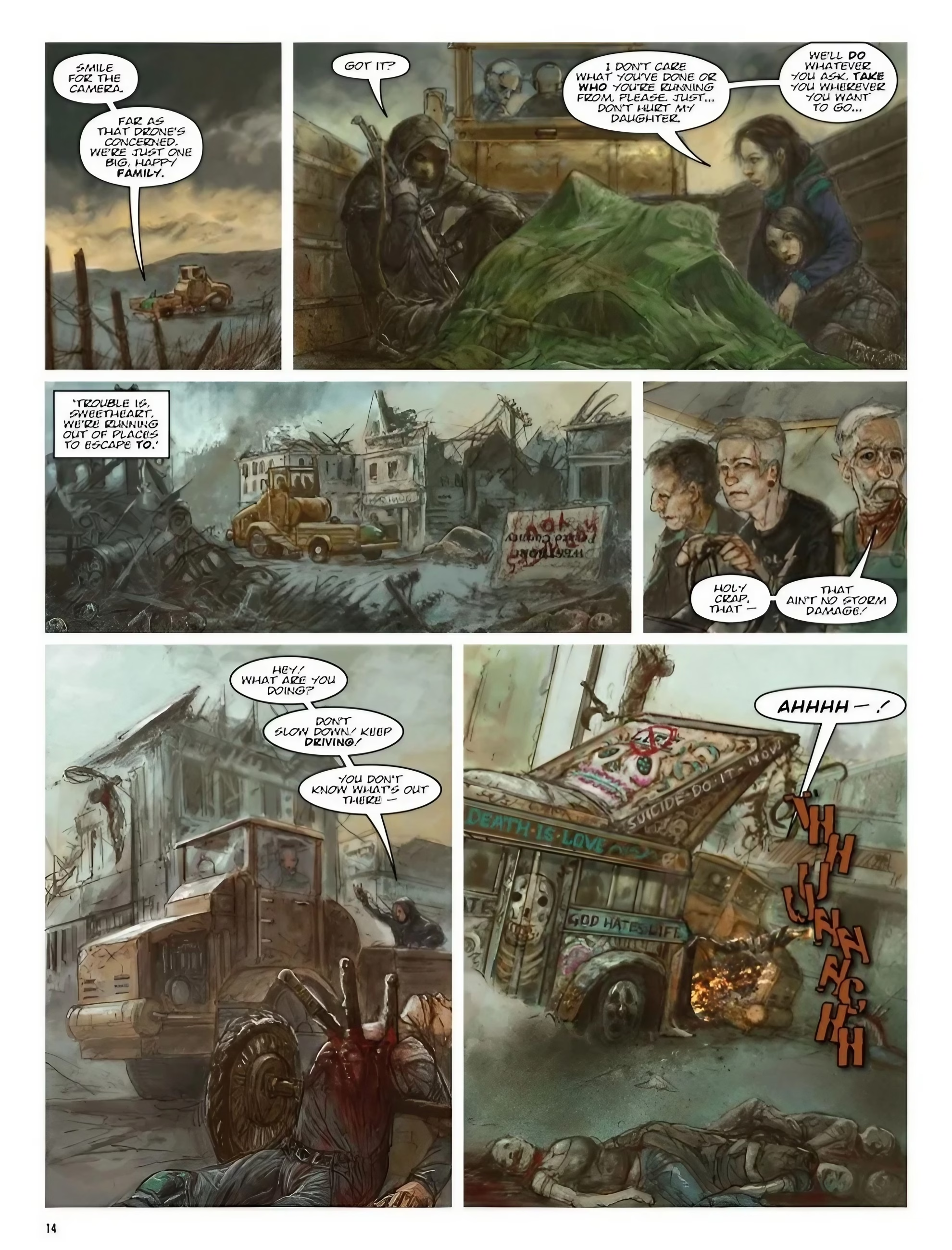
The hardback removes the cushion, and the loss of that relief is the collection’s gain. A story about a world with no interval between sentence and execution reads more truthfully without the seven-day pause between chapters; the recurring cliffhanger, stripped of its week of suspense, becomes a steady cadence of attrition.
What the serial staged as a sequence of shocks, the book presents as a process, and process is the subject. A planet does not die in episodes. Gathering three volumes into one binding also lets Kendall’s painted decay accumulate across hundreds of pages, so the reader’s eye tires as the survivors do.
A Planet Tried and Convicted
Wagner and Bolland conceived Judge Death as a conclusion, the last step of an argument about law carried past sense. Kek-W and Kendall return to that conclusion and give it duration, showing a functioning world whose own courts and officers carry the sentence from the first farmhouse to the last city.
The satire remains, but it has acquired a body count measured in families rather than punchlines, and a villain once defined by his grin becomes, for long stretches, a vacancy his institution fills without him. The omnibus suits that argument precisely, because it lets the verdict take as long as a verdict against an entire planet should.
At what point in Kek-W and Kendall’s account of Deadworld does enforcement become extermination, and why might the book leave that threshold so difficult to locate?
Reference
- James Chapman, ‘British Comics: A Cultural History’ (London: Reaktion Books, 2011). ↩︎


Leave a Reply