


Every safeguard that keeps a great house private has been switched off before the first night begins. The owners are away, the staff have gone, and the security cameras are dark, which is exactly the arrangement that lets a worn-out 26-year-old and her companions treat 200 acres as a holiday for a weekend. Everything about the arrangement says the trespass is harmless, and everything about the genre it belongs to says the house will collect.
G.P. Putnam’s Sons publishes ‘Newbourne Park,’ a standalone horror novel by Jennifer Thorne, on September 29th, 2026, in a 368-page hardcover (ISBN 979-8-217-17776-9). It is the first of Thorne’s adult horror novels to appear outside Tor Nightfire (Tor Books), the dedicated horror imprint that issued ‘Lute’ and ‘Diavola,’ and it follows her most recent solo horror novel by two and a half years.
A Weekend Without Owners
Martha Shaw is 26 and depleted by the years she spent as caregiver to her dying mother. When her brother proposes a weekend at a country estate where a friend of his works, she agrees with reluctance and a reasonable-sounding argument: the owners and staff will be elsewhere, the cameras will be off, and no one is harmed by a few days in an empty house. The friend’s employment is the key in the lock. Access to Newbourne Park comes through hired labor, borrowed for a holiday by guests who have no claim on the house.
The novel gives that argument a stretch of credibility. The historic mansion and its grounds return something close to ordinary pleasure to a woman who had stopped expecting it, and Martha begins to feel like herself again. Then night falls and the rightful master of Newbourne Park comes home, not alone, and what steps out into the moonlight is vicious and hungry.
What began as a lark becomes a struggle to stay alive in which greed and morality collide, and Martha must settle how she will meet the power in front of her: yield to it, break under it, or turn on it.
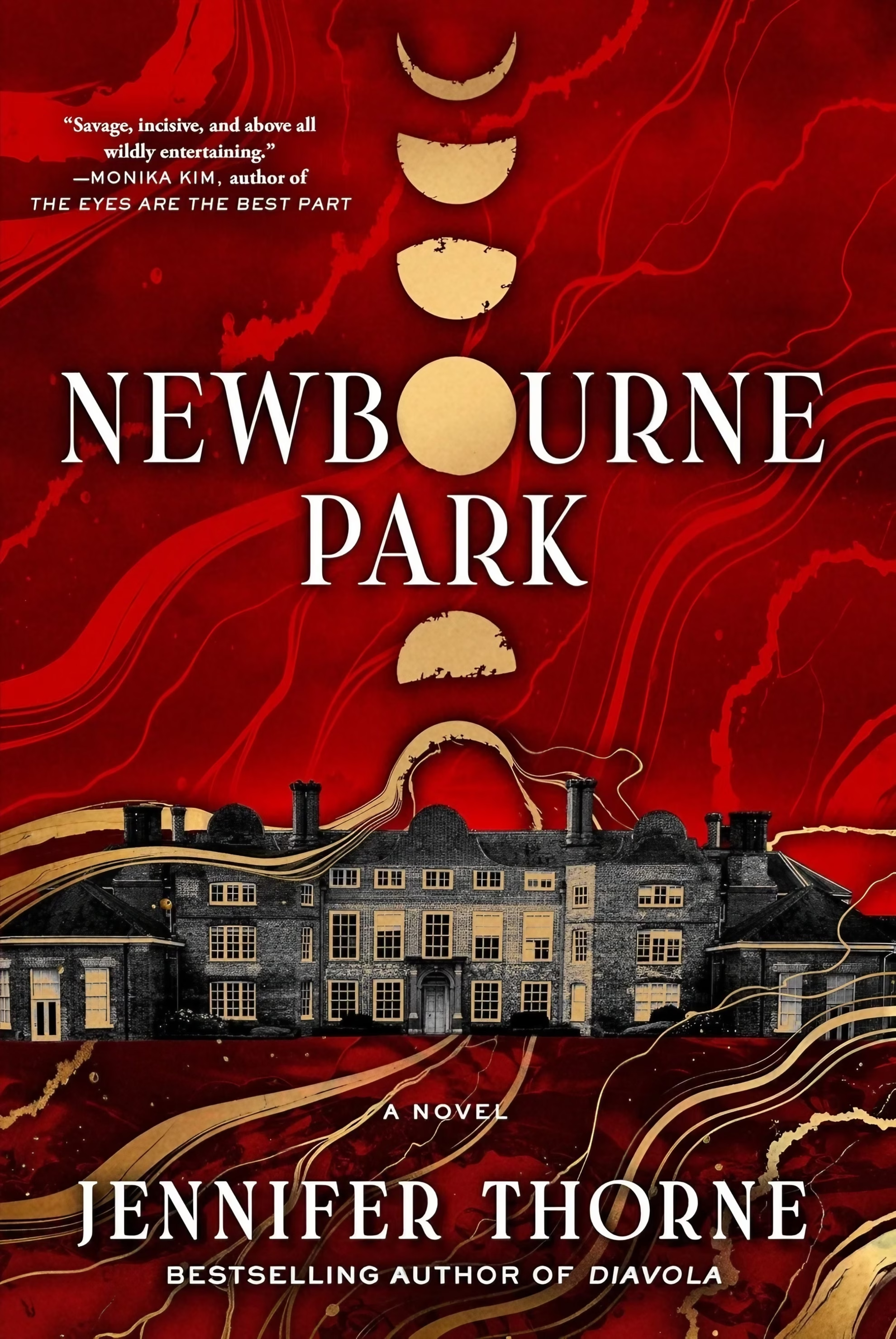
The book is pitched as dark comedy as well as blood-soaked horror, and its stated subject is the seduction of unlimited power rather than the mere endurance of it. That distinction matters. A story about surviving a monster is a chase; a story about being tempted by what the monster owns is a study of appetite, and the confirmed premise points toward the second.
Trespass in the Great House
Gothic fiction has treated the great house as contested property since its first decades. Kate Ferguson Ellis has argued that the Gothic novel emerged alongside the idealization of the home as a separate sphere for women, and that its authors used hostile houses to expose the promise of domestic safety as false: those inside are confined, while those shut out scheme to get back in.1
Ann Radcliffe’s ‘The Mysteries of Udolpho’ (1794) supplies a well-known instance. Emily St. Aubert is carried into the Apennine castle of the man who married her aunt, and she is pressed to sign away her estates.
‘Newbourne Park’ keeps the house and reverses the entry. Martha is not carried in against her will, and she is not an heir under pressure. She walks in believing the place empty, admitted by an employee’s access, and the owner who returns is the one entitled to say what her presence costs. Where the Gothic heroine’s peril is that the house will not let her leave, Martha’s is that its master has come home to find her in it.
The Master Comes Home
The figure who returns to Newbourne Park is named in the vocabulary of ownership rather than the language of ghosts: the rightful master. That word places the monster inside a lineage Franco Moretti traced through the nineteenth-century monsters of Shelley and Stoker.
In his account, the vampire changes over the century. John William Polidori’s vampire of 1819 is a minor feudal lord who travels Europe killing in order to survive, while Bram Stoker’s Dracula is a rational entrepreneur who reinvests his gold to extend his dominion and conquer London.2
Thorne’s master belongs to the ownership line rather than to the ghost tradition. A ghost occupies a house; a proprietor holds it, and everything around the holding is arranged in her favor, including the servants, the grounds, and the trespassers. The confirmed premise sets Martha, a woman whose years of unpaid care have just ended, before a figure whose claim on the estate is total.
Because the novel names the seduction of unlimited power as its subject, the master’s offer may not be only violence. How the book resolves that question belongs to readers on publication day.
A Career in Three Registers
Jennifer Thorne was born in a small town in Tennessee and spent her childhood moving between her parents’ homes in different states. She studied drama at NYU Tisch, took as many dramatic writing classes as she could, and turned away from acting toward the page.
Her first book, ‘The Wrong Side of Right,’ appeared in 2015 as a young adult novel under the name Jenn Marie Thorne. ‘The Inside of Out’ and ‘Night Music’ followed, along with the picture book ‘Construction Zoo,’ and her short fiction appeared in the young adult anthology ‘Battle of the Bands’ and the horror anthology ‘One Bad Night and Other Stories.’
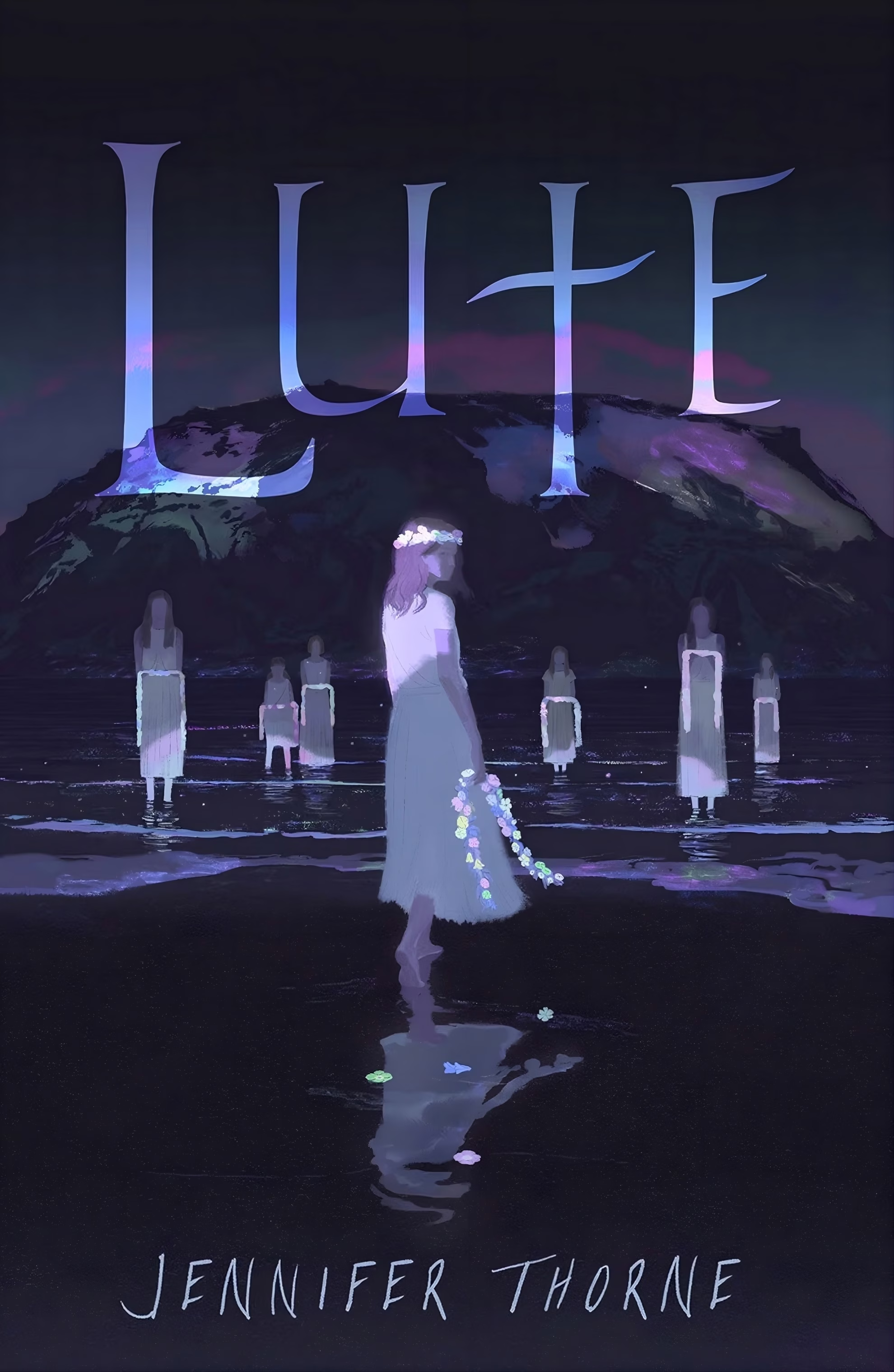
Her horror came with a change of country. After she relocated with her family to rural England, where she lives in Gloucestershire, she turned to adult horror under the name Jennifer Thorne, beginning with ‘Lute’ in 2022.
The third register is collaborative. With Lee Kelly she has co-written the historical novels ‘The Antiquity Affair’ (2023), ‘The Starlets’ (2024), and ‘My Fair Frauds’ (2025), all from HarperMuse, and ‘The Midnight Show’ (2026), from Crown. Those books occupy the years around ‘Diavola,’ which makes ‘Newbourne Park’ her first solo horror novel since it.
Lute and Diavola
‘Lute,’ released by Tor Nightfire on October 4th, 2022, was her first adult horror novel. It is a folk horror set on a small British island of the same name, where every seventh summer seven people die and the community’s good fortune is treated as the reward.
The point of view belongs to Nina Treadway, an American who became a lady of the island by marrying into the Treadway family, its long-standing guardians. Prosperity exacted in bodies, and an outsider admitted into a family that owns the arrangement, anticipate the appetite at the center of ‘Newbourne Park.’
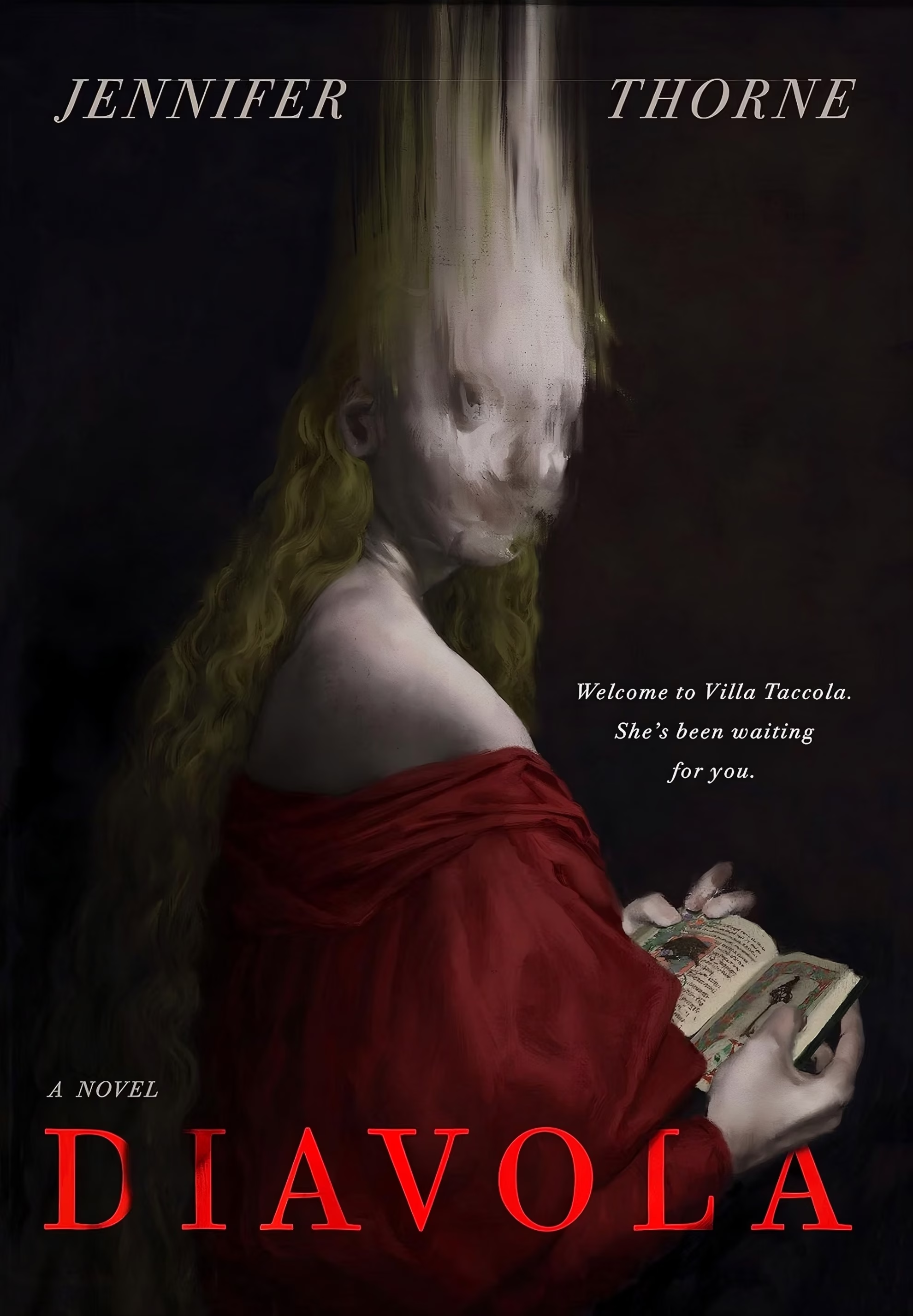
‘Diavola,’ issued by Tor Nightfire on March 26th, 2024, and named a Goodreads Choice Award finalist, moved the pattern into the family vacation. Anna Pace follows two rules on the annual Pace destination trip, which are to tread lightly and to survive, and she is the one member of the family who does not quite fit.
The setting is an Italian villa, and the book reworks the haunted-house story around loneliness, belonging, and the hold of family myth. Clay McLeod Chapman, author of ‘Wake Up and Open Your Eyes,’ has called Thorne “a travel agent of diabolic destinations.”
The line from the villa to the mansion is direct. Each novel sends people into a place engineered for leisure and lets the place answer back, and ‘Newbourne Park’ narrows the pattern from a family’s holiday to a trespasser’s weekend with the owners absent.
Property as the Predator
Since Horace Walpole set ‘The Castle of Otranto’ in motion in 1764, the great house has served horror as a device for asking who is entitled to be where. ‘Newbourne Park’ carries that question into a plot with an unusual entry point: a woman with no claim on the property beyond her own exhaustion, admitted through someone else’s job.
What Thorne adds, on the evidence of the confirmed premise, is the labor that keeps such a house running and the appetite of the one who owns it: a caregiver’s exhausted freedom, an employee’s borrowed access, and a master whose claim on the estate is absolute. For readers following the form, the book’s interest lies in that division of the house into those who own it, those who work in it, and those who wander into it, and in what a monster does with each.
Which novels have sent a caretaker, a hired hand, or an uninvited guest into a great house and made the owner answer for the intrusion, and which of them deserves closer attention from this publication?
References
- Kate Ferguson Ellis, ‘The Contested Castle: Gothic Novels and the Subversion of Domestic Ideology’ (Urbana: University of Illinois Press, 1989), 1–12. ↩︎
- Franco Moretti, ‘The Dialectic of Fear,’ New Left Review I, no. 136 (1982): 67–85. ↩︎



Leave a Reply