


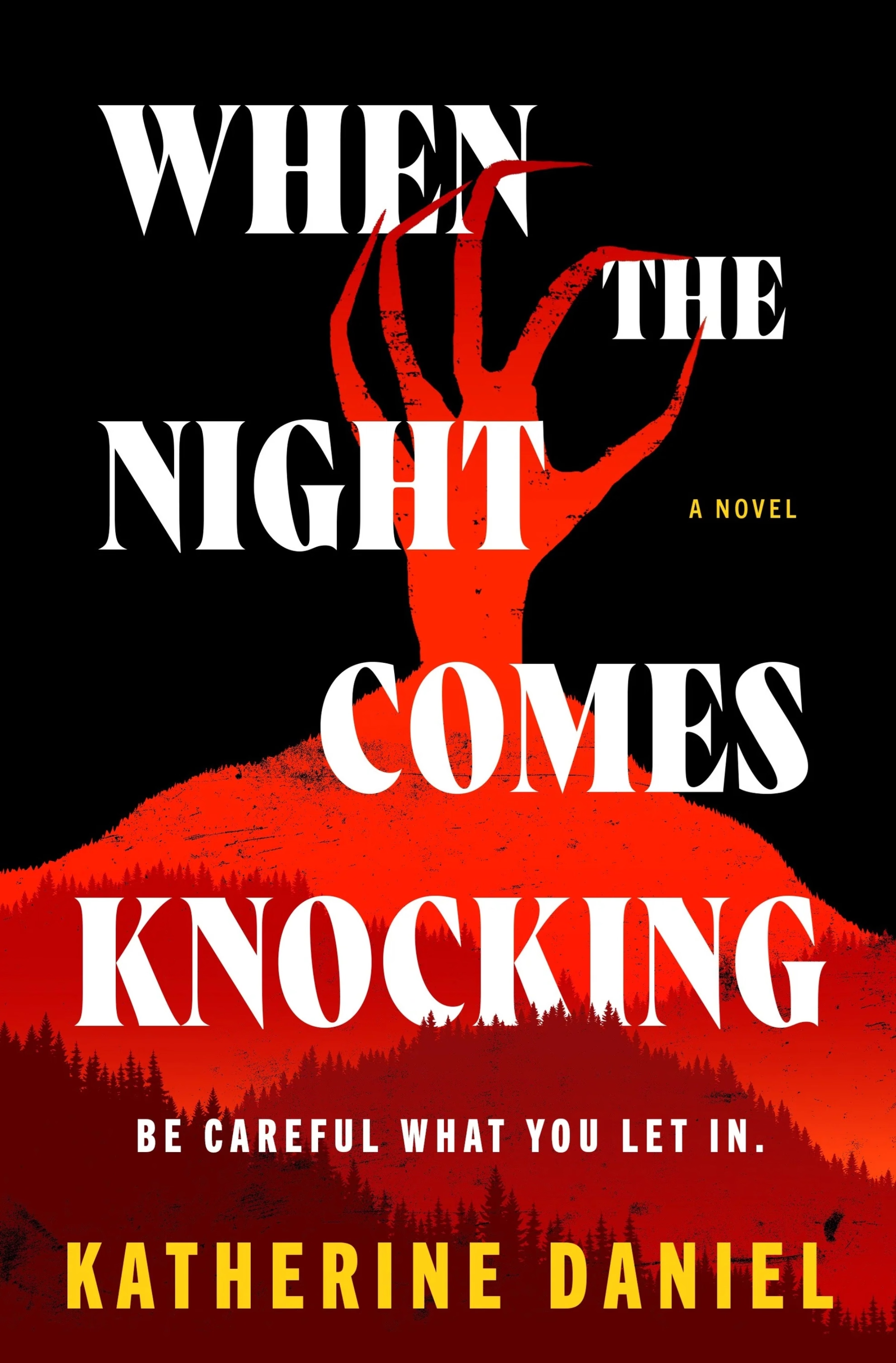
Two siblings who have not spoken since an accident, a roadside convenience store in the North Georgia mountains, and a stranger who staggers in mutilated and blames a monster: that is the situation Berkley, the Penguin Random House imprint, puts into hardcover on October 20th, 2026, as ‘When the Night Comes Knocking,’ the first novel by Katherine Daniel.
The 304-page hardcover carries the ISBN-13 9798217191338, and the ebook and the audiobook, read by Abigail Reno, are released the same day.
The publisher’s description makes the book’s central choice plain: the creature feeds on guilty hearts. That selectivity separates the premise from the siege stories it resembles, because it turns the locked room into a trial in which every person inside has reason to believe that survival depends on finding out who deserves to be eaten.
A Debut From Atlanta
Daniel was born and raised in Georgia, studied creative writing at Georgia State University, and is described in the publisher’s biography as a writer of fiction about “the most monstrous parts of being human.”
Her own website adds that she holds a bachelor’s degree in English and creative writing, is based in Atlanta, and is represented by Cheyenne Faircloth of Handspun Literary Agency, and it presents ‘When the Night Comes Knocking’ as her debut horror novel.
The novel’s precedents lie in two established lines of American horror: the siege story, in which strangers are confined with a threat and then with one another, and the mountain tale of the Southern Appalachians.
The publisher listed an event for 7:00 p.m. on publication day, October 20th, 2026, at the Barnes & Noble at 2900 Peachtree Road NW in Atlanta’s Buckhead district, a bookstore with a café inside The Peach, a mixed-use shopping center that also holds a supermarket.
The Premise, Precisely
The publisher’s description sets out the situation in a few strokes. Jane and Thomas have not spoken since an accident that nearly killed them both, and a silent drive from college through the North Georgia mountains ends at a roadside convenience store.
A man staggers in mutilated and blames a monster, and nobody believes him until the next customer to step outside is killed. A local legend then becomes the working theory: a beast in these mountains hunts guilty hearts, and someone inside has drawn it out of hiding.
Jane and Thomas carry secrets, and so do the other patrons, so that each new victim makes the survivors more willing to point at one another.
The Penguin edition for the United Kingdom, scheduled for November 19th, 2026, carries a differently worded description that adds a detail the American copy omits: the beast, it says, can wear the faces of others. Both descriptions are publisher-supplied, and this feature reports them as issued rather than reconciling them.
Daniel had not given a documented account of the title’s origin at the time of publication. Its phrasing links to the rhyme the American copy sets beneath its first line, “The mountain’s bones seek out a heart,” a chant-like cadence in which rattle and knock give the book a sound before the monster has a body. The cover designer had not been confirmed at the time of publication, and the artwork therefore cannot be credited or discussed as a designer’s argument.
Prose Under Pressure
Prose and structure can be assessed only as far as the publisher’s released excerpt allows, and the excerpt is a single scene outside the store.
Thomas, a Boy Scout named Jackson holding a shotgun, and a man named Evan with a Taser watch the tree line while a dog named Winnie fixes on something none of them can see.
The scene is written in the present tense from Thomas’s position, and it orders its evidence with care. The first intruder is a possum, a false alarm that spends the reader’s expectation on something harmless. The dog registers the real threat before any person does. Smell comes before sight, a stench of decay that Thomas names to himself in a single italicized word, and then come a face glimpsed among the branches and gone, a figure running sideways through the trees, and a sound that the excerpt stops before naming.
Each sense is granted only after the one before it has been explained away, and the explanations come from the characters: it was probably a deer, Jackson says, and Evan suggests the creature may have been threatened by the size of the group. Thomas answers with a sarcastic remark about a pink Taser, a flash of dark humor that keeps the scene from tipping into pure dread.
The horror of the passage lies less in what is seen than in how quickly frightened people supply ordinary causes. One image carries the publisher’s epigraph into the prose: the white oaks grow “like a twisted rib cage,” so that the forest has already been drawn as the mountain’s bones before anything moves among them.
A Siege Tradition
Stephen King’s novella ‘The Mist’ is the nearest American precedent for the setup. King wrote it in the summer of 1976, according to his own notes, and it first appeared in the anthology ‘Dark Forces,’ edited by Kirby McCauley (Viking, 1980), before it was collected in ‘Skeleton Crew’ (G. P. Putnam’s Sons, June 21st, 1985).
Its survivors shelter in a supermarket in Bridgton, Maine, while unseen creatures wait outside, and the most dangerous presence proves to be a fellow shopper whose apocalyptic certainty gives the group a story about who is to blame.
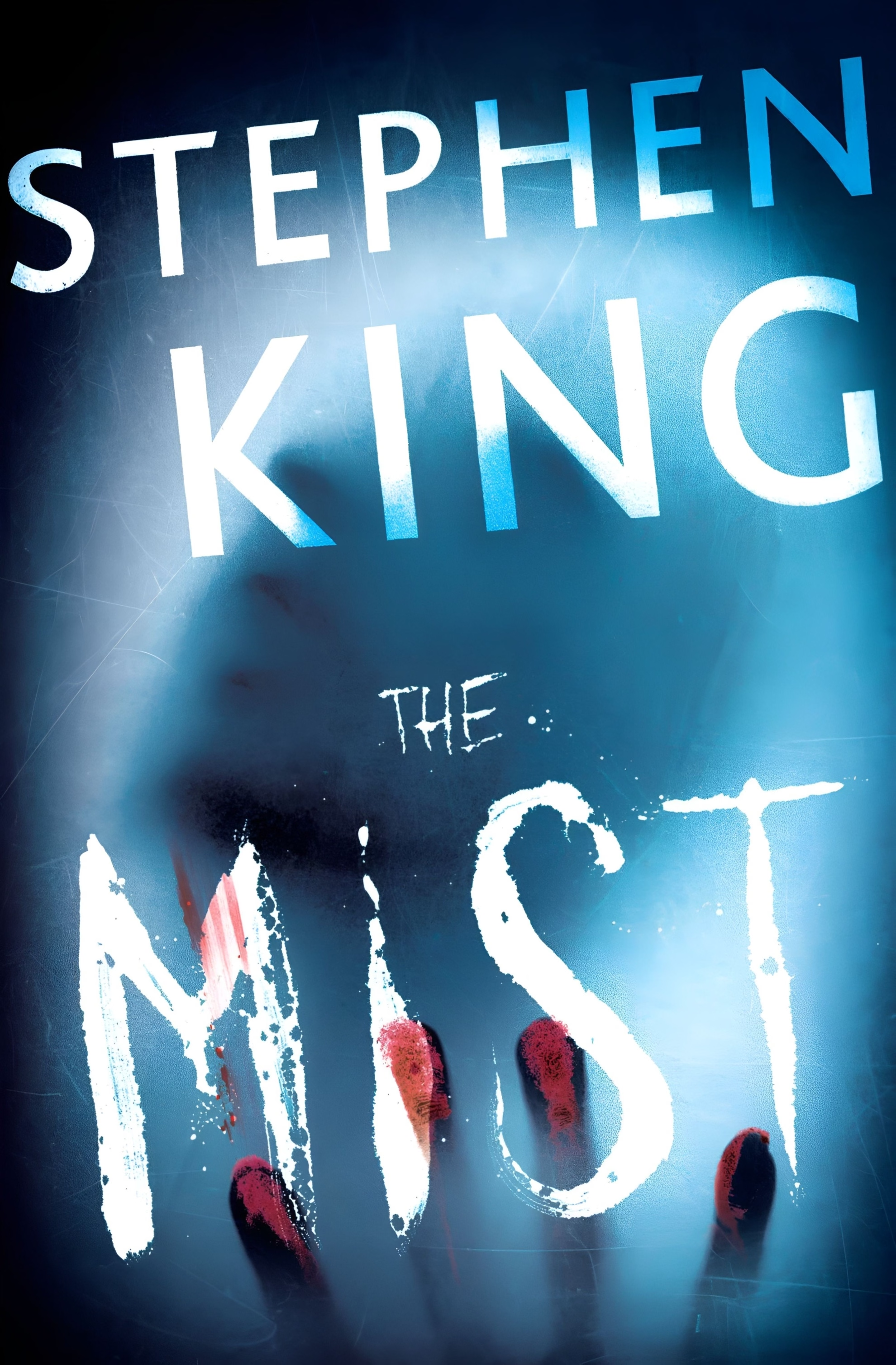
The monsters of ‘The Mist’ take whomever they find; the moral panic inside the supermarket is the survivors’ own invention. Daniel’s creature, in the publisher’s account, supplies what King’s fanatic had to improvise, a monster that does discriminate, so that the accusations inside the store can be right as well as wrong.
The closer model for the paranoia is John W. Campbell Jr.’s novella ‘Who Goes There?’ (Astounding Science Fiction, August 1938, under the byline Don A. Stuart), in which a shapeshifting creature leaves the men of an Antarctic camp unable to trust any face, a story John Carpenter filmed in 1982 as ‘The Thing.’
The British description’s detail that Daniel’s beast wears faces places her book at an intersection: the confinement of King, the impersonation of Campbell, and a moral appetite that neither of them gave their monsters.
Mountain Lore on the Page
Southern Appalachia entered American weird fiction through Manly Wade Wellman, whose balladeer John, known as Silver John for the silver strings on his guitar, appeared in magazine stories from 1951 and was gathered in ‘Who Fears the Devil?’ (Arkham House, 1963, in an edition of 2,058 copies, with jacket art by Lee Brown Coye).
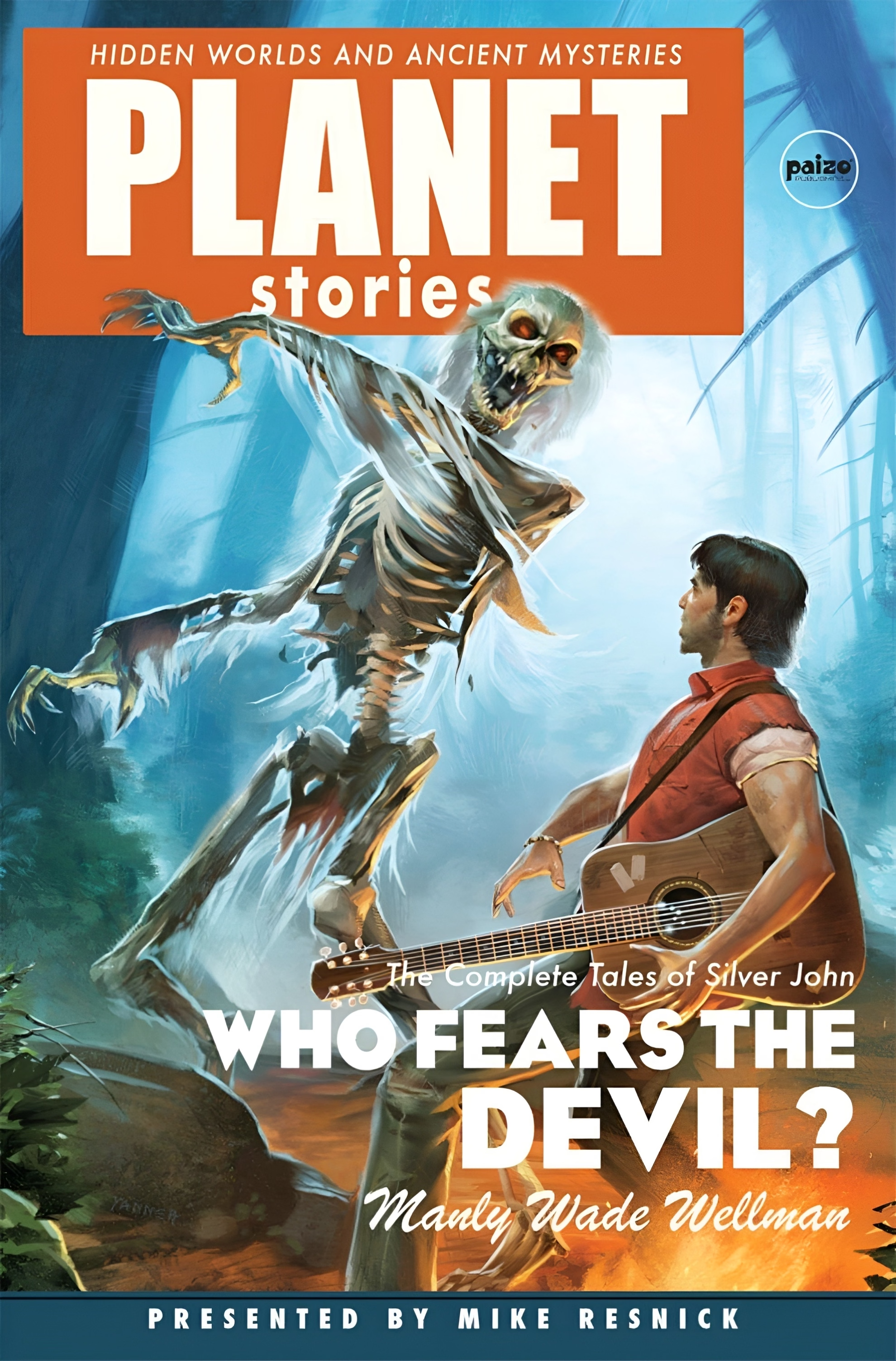
Wellman’s John wanders the mountains and answers what he meets with wit, faith, and a song; his Appalachia is a place where an outsider with the right tune can turn evil aside. The publisher’s description of Daniel’s book offers no wandering protector. The people who must answer the beast are the people it hunts, and the answer on offer is accusation.
Colombia’s Punishing Spirits
Colombian folklore holds several figures that share the novel’s central pattern, a supernatural being that singles out wrongdoers instead of striking at random, and the points of contact lie in what each being punishes.
Colombian scholarship sorts the figures of its oral tradition into “mitos menores,” minor myths that, in the account of a 2024 study of the legends of the department of Tolima, preserve inside a colonial setting older Indigenous stories of beings who defend nature.1
The same study’s catalog of Tolima figures reads as a roster of enforcers, each with a separate jurisdiction. The Madremonte, guardian of the mountain, punishes peasants who cheat in boundary disputes by drying up their land. The Tolima witch, a young and attractive woman who has made a pact with the devil, flies at night in search of unfaithful men to punish. The mule of Raffles condemns a landowner whose greed stripped Indigenous families of their land to wander the central cordillera, raising a hurricane when muleteers hear its hooves. And La Candileja, a flame that frightens travelers on the plains at night, does not pursue just anyone; it selects those involved in wrongdoing or carrying dishonest intentions.
The two figures most often paired in that scholarship, El Mohán and La Patasola, are less straightforward enforcers than they are sometimes described.
In the Tolima account the Mohán lives in the Magdalena and Saldaña rivers and seduces and abducts young peasant women, appearing as an attractive young man and drawing washerwomen into the depths with songs and tobacco; the study adds that Tolima compilers describe the figure among the Pijao as healer, priest, sorcerer, and oracle.
La Patasola is a one-legged woman of striking beauty whose image peasants use to frighten children into obedience, and against whom they recite a prayer of the mountain. These are living regional traditions, not relics: Ibagué, the departmental capital, names a park for the Mohán, although the study’s survey found that many adolescents there know little of the legends.
The name has a documented history older than the legend. Spanish chroniclers and colonial reports used “mohán” for Indigenous priests and healers of the Caribbean lowlands and the Magdalena Valley; the Malibú priest was called mayhan, a word the Spaniards turned into mohan, and the Franciscan chronicler fray Pedro Simón complained that mohanes undid at night, in hidden places, what the priests taught by day.2
What these figures enforce, then, is territory and obligation: the river’s, the forest’s, the boundary’s, the marriage’s. Even La Candileja, the nearest Colombian counterpart to a creature that reads wrongdoing, answers to conduct that a community can see, accuse, and argue over.
The beast of ‘When the Night Comes Knocking’ is described as reading something no neighbor can verify, private guilt, which the accused may not recognize in themselves. A monster that enforces a boundary can be avoided by respecting the boundary; a monster that enforces conscience can be avoided only by persuading a frightened room that someone else is guilty.
A Verdict Without a Court
Daniel’s debut enters a shelf already crowded with sieges and shapeshifters, and the publisher’s description marks one place where it departs: the monster is a judge. That choice converts the locked room into a tribunal, with a jury of frightened strangers and no evidence but one another’s behavior.
The Tolima legends offer a contrast without offering a pedigree. Their punishers answer to wrongs a community can name, such as a moved fence, a broken marriage, or stolen land, while the beast of the North Georgia mountains is described as answering to guilt, the one offense nobody else can inspect.
The distance between suspicion and knowledge is the ground on which a first novel in this tradition has to make its case.
Stephen King’s monsters in ‘The Mist’ take whom they find, while Daniel’s creature chooses by guilt; in the horror you have read, does a monster that judges frighten more than one that merely hungers, and which novel makes the strongest case either way?
References
- Néstor Andrés Guarnizo Sánchez, Fabio Andrés Lizcano Prada, Robert Gutiérrez Ortiz, and Misael Fernando Ariza Rodríguez, ‘Patrimonio cultural: un estudio integral de las leyendas del Tolima en la ciudad de Ibagué,’ Modulema: Revista científica sobre diversidad cultural 8 (2024): 122–146. ↩︎
- José V. Rodríguez Cuenca and Arturo Cifuentes Toro, ‘Tequinas, mohanes, piaches y jeques. Los chamanes en el mundo prehispánico de Colombia’ (Bogotá: Universidad Nacional de Colombia, Colantropos, 2008). ↩︎

Leave a Reply