

The case against horror comics in 1954 was a case made with pictures. A Senate subcommittee on juvenile delinquency took up the genre that year, and the psychiatrist Fredric Wertham’s ‘Seduction of the Innocent’ supplied the campaign’s central text, case material that the historian Carol L. Tilley later showed he had altered and overstated.1
Seven decades on, Oni Press and William M. Gaines Agent, Inc. answer that history with an object that names the hand rather than the house: ‘Artists From the Abyss: Charlie Adlard’ #1, a 32-page, full-color, ad-free one-shot due November 11th, 2026, at $5.99 USD, approximately COP 18,950.
Oni Press and EC Comics
Oni Press describes itself as a publisher of comics and graphic novels since 1997, and its own account records a 2019 merger with Lion Forge Comics. EC’s account runs from 1944, when the company was established as Educational Comics, to 1956.
In 2024, EC announced a partnership with Oni to produce the first all-new EC titles in nearly 70 years, overseen by Oni president and publisher Hunter Gorinson and editor-in-chief Sierra Hahn together with Cathy Gaines Mifsud and Corey Mifsud, the daughter and grandson of William M. Gaines.
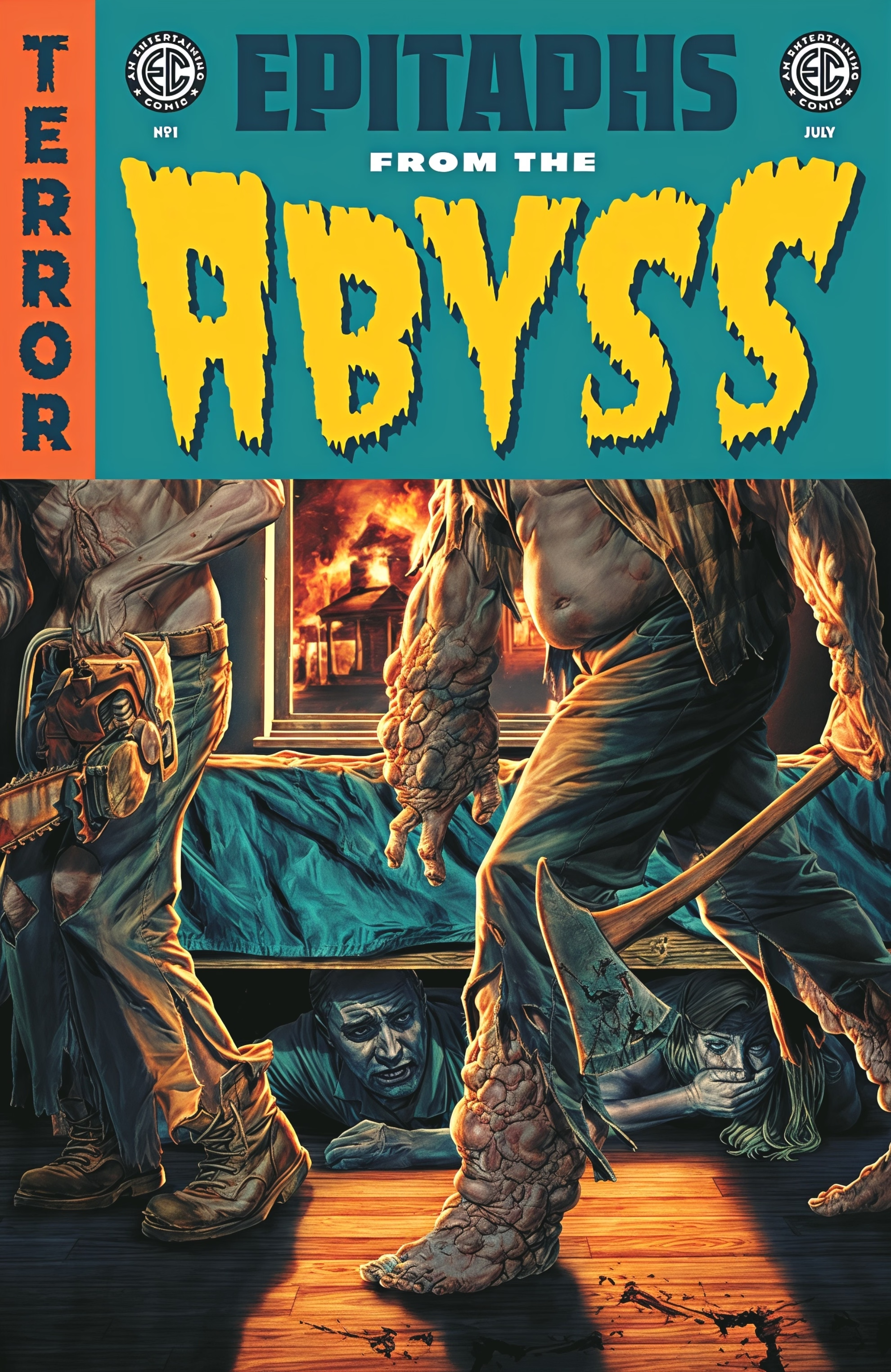
The first two titles, the horror anthology ‘Epitaphs from the Abyss’ in July 2024 and the science-fiction anthology ‘Cruel Universe’ in August 2024, set the revival’s pattern of rotating creative teams under a fixed EC banner.
Its collected editions have so far followed the run. The hardcover ‘Epitaphs from the Abyss’ Book One, published July 14th, 2026, collects issues #1 to 12. ‘Artists From the Abyss’ cuts across the same material along a different axis. Senior Editor Allyson Gronowitz said in the July 15th, 2026 announcement that EC has a strong claim to “the greatest stable of artists ever assembled by a single publisher.” The announced sequence runs from Adlard through David Lapham, Sami Kivelä, and Leomacs.
An Anthology Sorted by Hand
This one-shot is a collected edition in miniature. The announcement describes it as gathering Adlard’s earlier EC stories alongside a new one, ‘Death and Pickaxes,’ written by Chris Condon with Tim Seeley, and it does not say which earlier stories return.
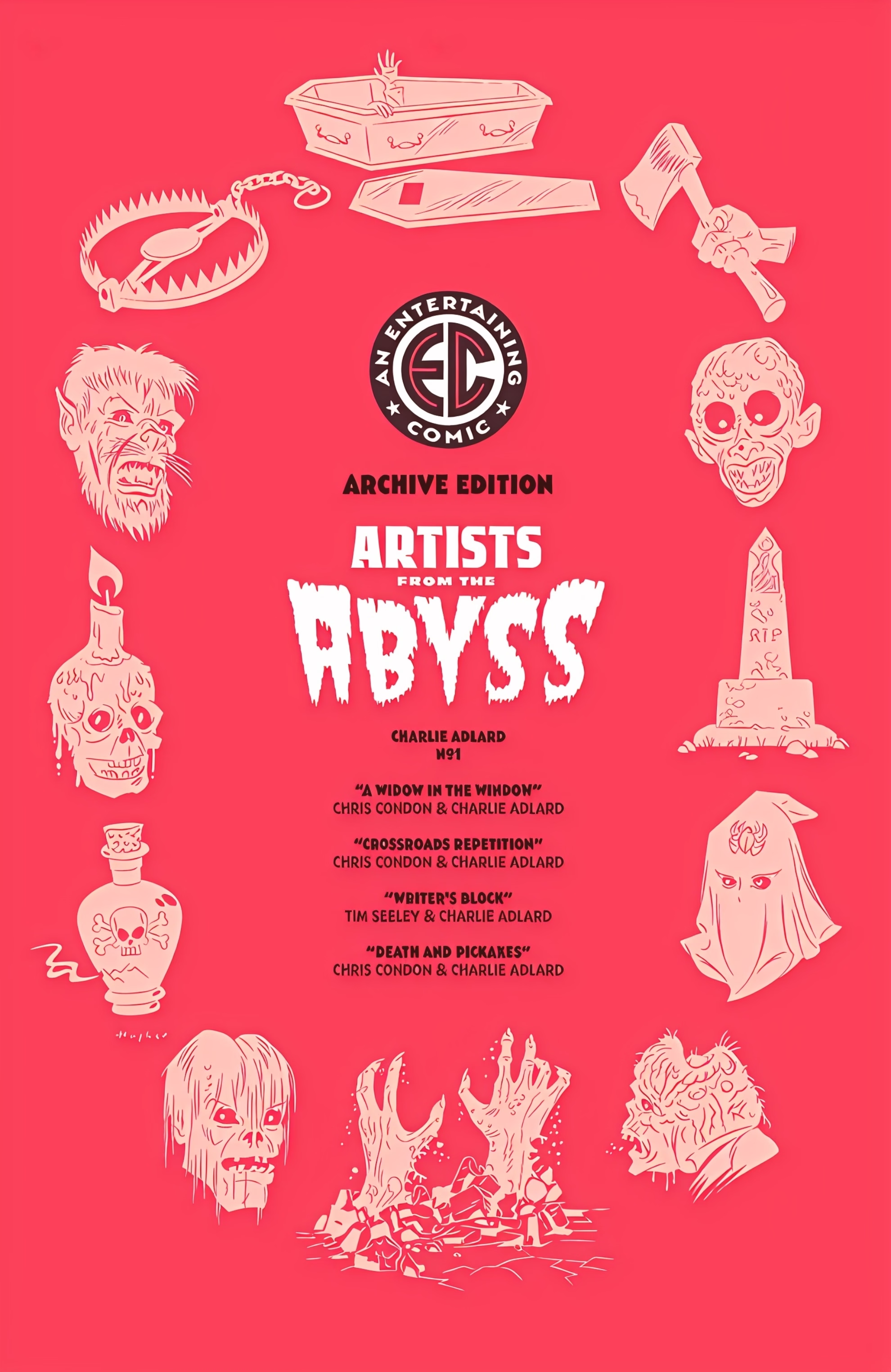
The scripts of those stories differ; the draftsman does not. That is the case for the form. In a monthly anthology a reader meets an artist once per issue among strangers, whereas a gathering by artist tests if the line, rather than the script, is what repeats. On the released pages, the collected form is a gain, and the loss it carries, the jolt of an unrelated story following the last, is the smaller one.
Adlard, presented in the announcement as an Eisner Award-winning artist known for ‘The Walking Dead’ and ‘Of the Earth,’ draws the issue and its Cover A, and he also draws a black-and-white Artist Edition variant cover.
Oni Press publishes under the EC Comics banner, and the edition carries ISBN 9798894885193. Colorist credit could not be confirmed at the time of publication, and neither could letterer credit.
Cover A and the Callout
Cover A sets two registers against each other. The top third is flat graphic design: a teal field, a dark red “ARTISTS,” a small orange “FROM THE,” and a white “ABYSS” in dripping capitals whose red offset shadow trails below every stroke. Below it the image turns grainy and almost wholly red.
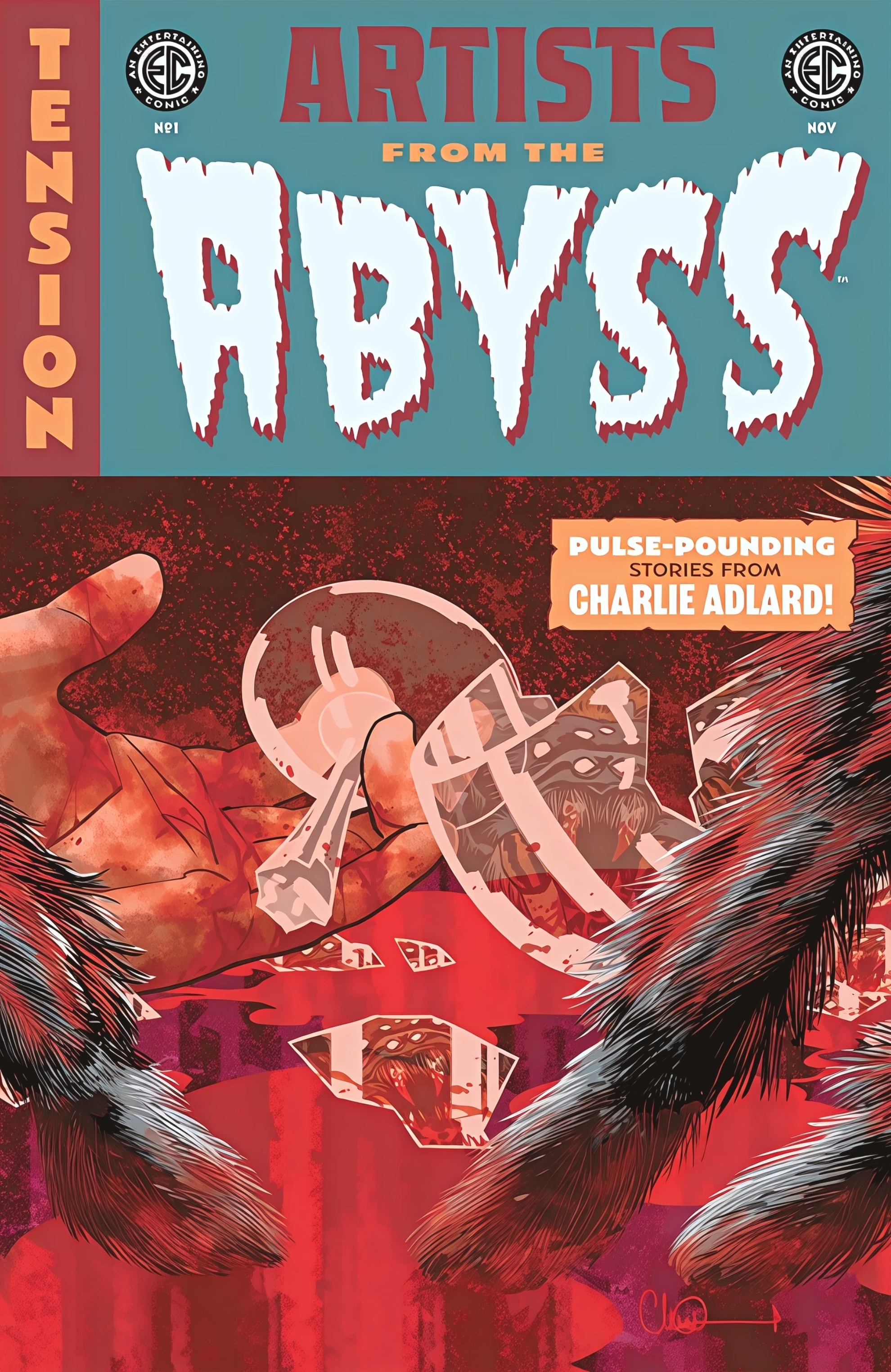
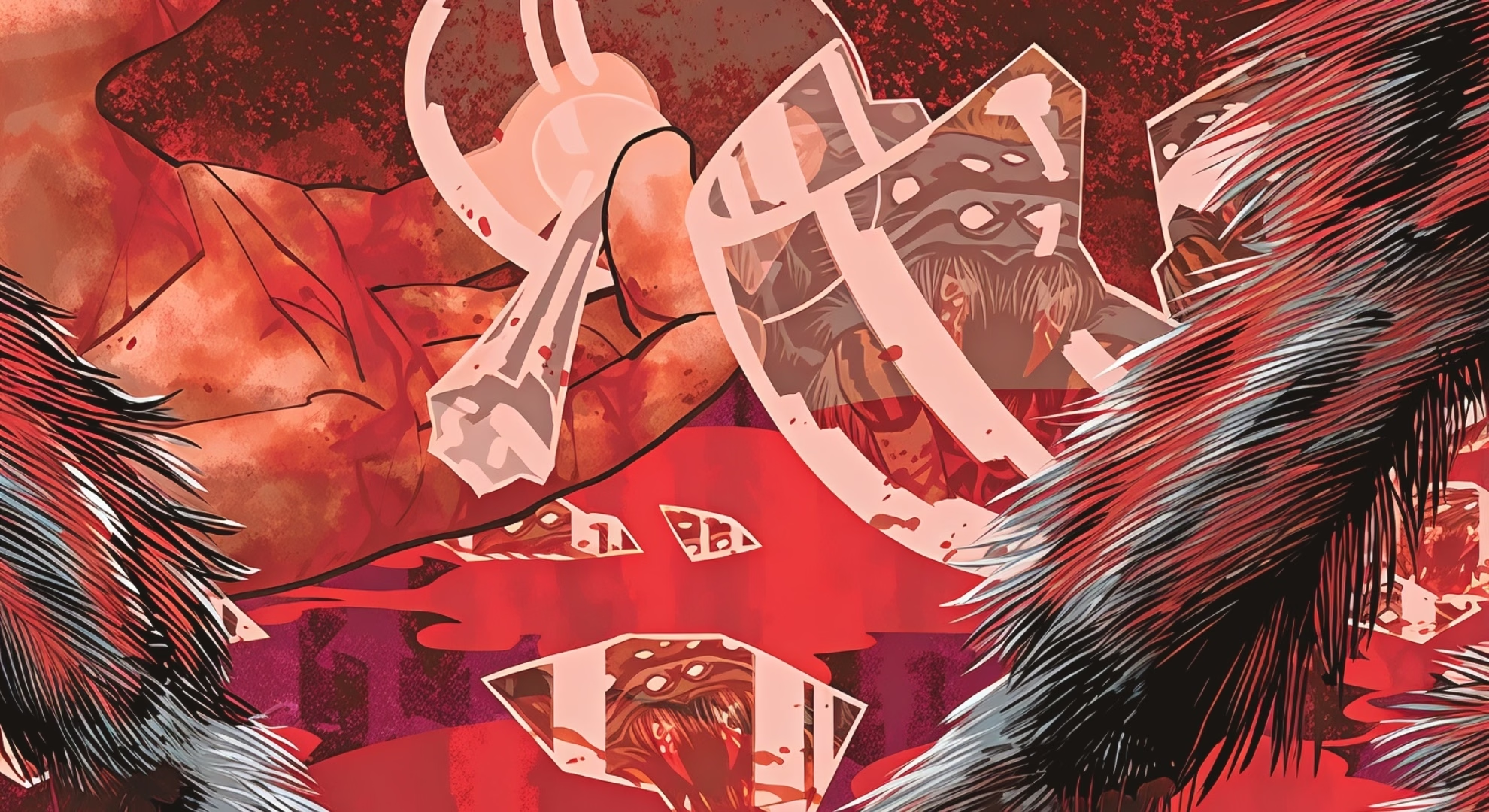
A blood-covered hand reaches in from the left, palm up, with a glass sphere cracked apart in its curl, and each shard reflects the same many-eyed, fanged face while bristled black legs close in from both edges. The red of the lettering’s drips and the red of the pooled blood are one red, so the title appears to bleed into the picture beneath it.
An orange callout in the upper right gives the artist’s name the position a cover otherwise reserves for its promise. A shattered sphere in which every fragment holds the same creature is also a fair picture of the format itself: separate scripts, one recurring hand.
The Last of Eight
The four released pages of ‘Death and Pickaxes’ show how that hand works inside a story. The first page opens on a close-up of a kiss, cropped so that two faces fill the frame, and then retreats: a wide panel of the awakened sleeper, an extreme long shot through trees, and finally a close-up of the one who watched, a white-bearded dwarf in a blue cap with red irises, gripping two vertical posts while the title lettering sits in the corner of his panel.
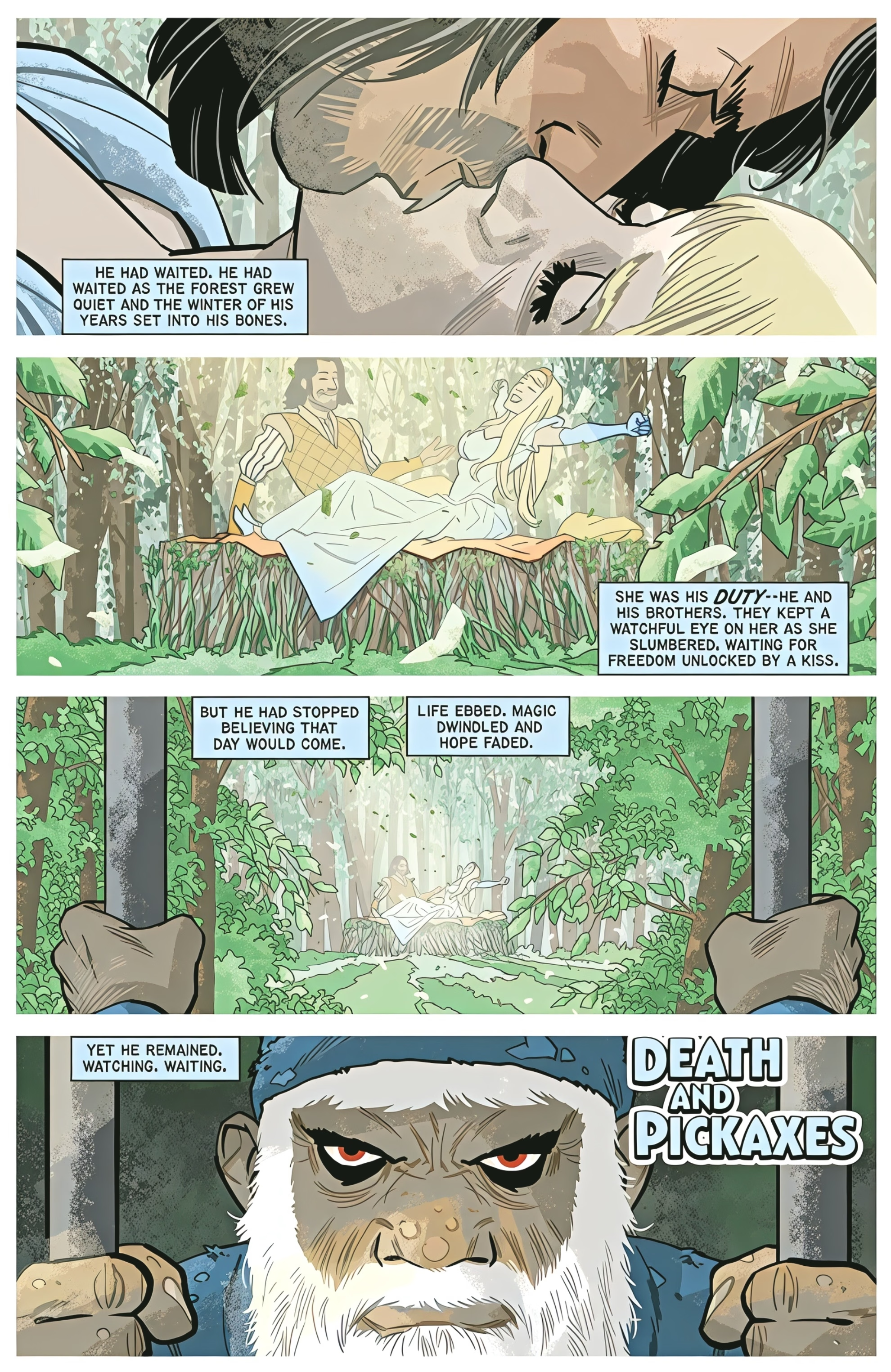
The page opens on the event that ends his waiting, and every panel withdraws from it toward him. The second page staggers overlapping inset panels with white borders, among them a doorway, a graveyard, and a mine mouth, while the caption states what the legends will do: he was the last of eight, and they would forget him.
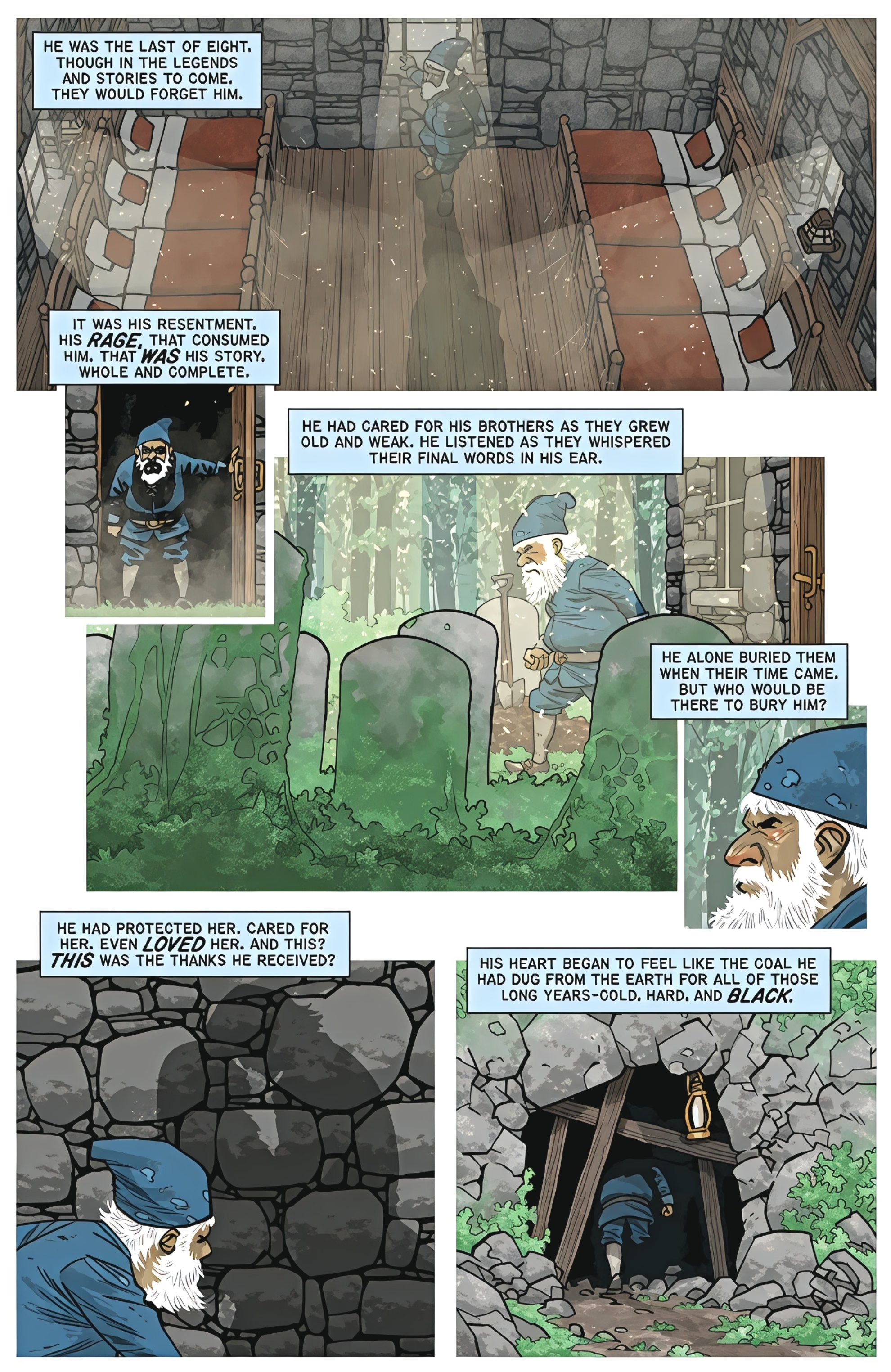
The caption voice never speaks in the first person. The bold italics on duty, rage, loved, and black belong to the dwarf’s grievance, and the captions sit in uniform pale blue boxes that match his clothing, so the narration reads as his voice in the third person.
A Page Gone Black
The third page carries the sequence’s argument. Between two daylight pages, the scheme inverts: the gutters turn white and the panels turn black. A strip at the top holds a single spark and the lettered sound of a match, and the caption pivots from the coal of the second page to the dwarf’s thoughts, which have darkened too.
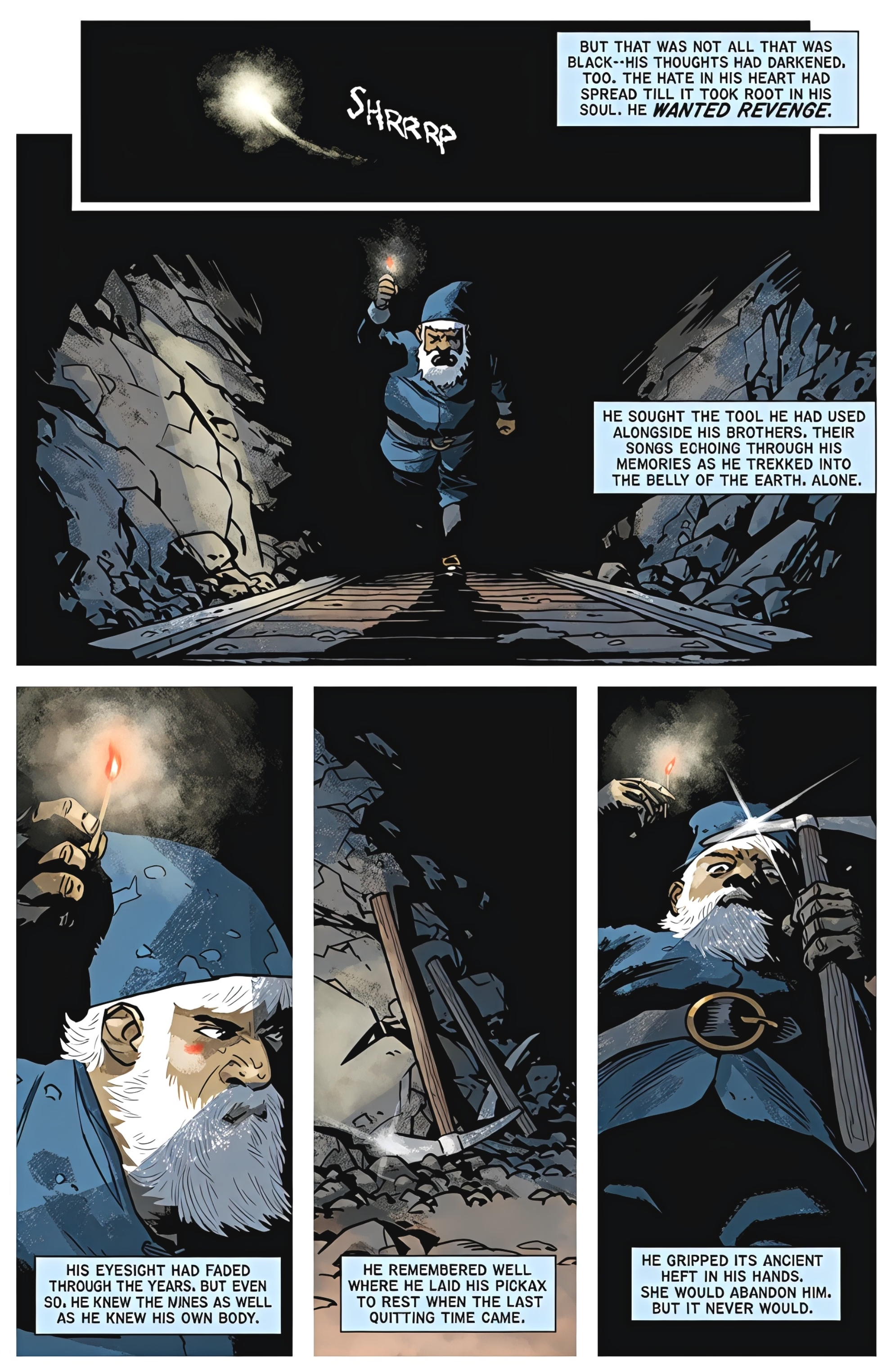
A tunnel panel puts him on rails running toward the reader with a lit match raised overhead, and three tall panels beneath hold his lit face, a pickaxe in rubble with a silver glint, and his hands around its haft.
The caption says his eyesight has faded, and the page enforces it: only the match’s small radius is legible and everything beyond is black, so the reader crosses the mine as he does, by memory. The single warm color in the dark is a flame orange that returns in daylight as the prince’s quilted tunic.
Caption Against Picture
The fourth page returns to green, and its strongest device is a disagreement. The captions call the prince a thief who did nothing to win his prize and insist he never followed the dwarf’s grievance. The pictures give him a saddle, a white horse, a puzzled “Hm…?”, and a greeting that addresses the dwarf with courtesy as master of the mines.
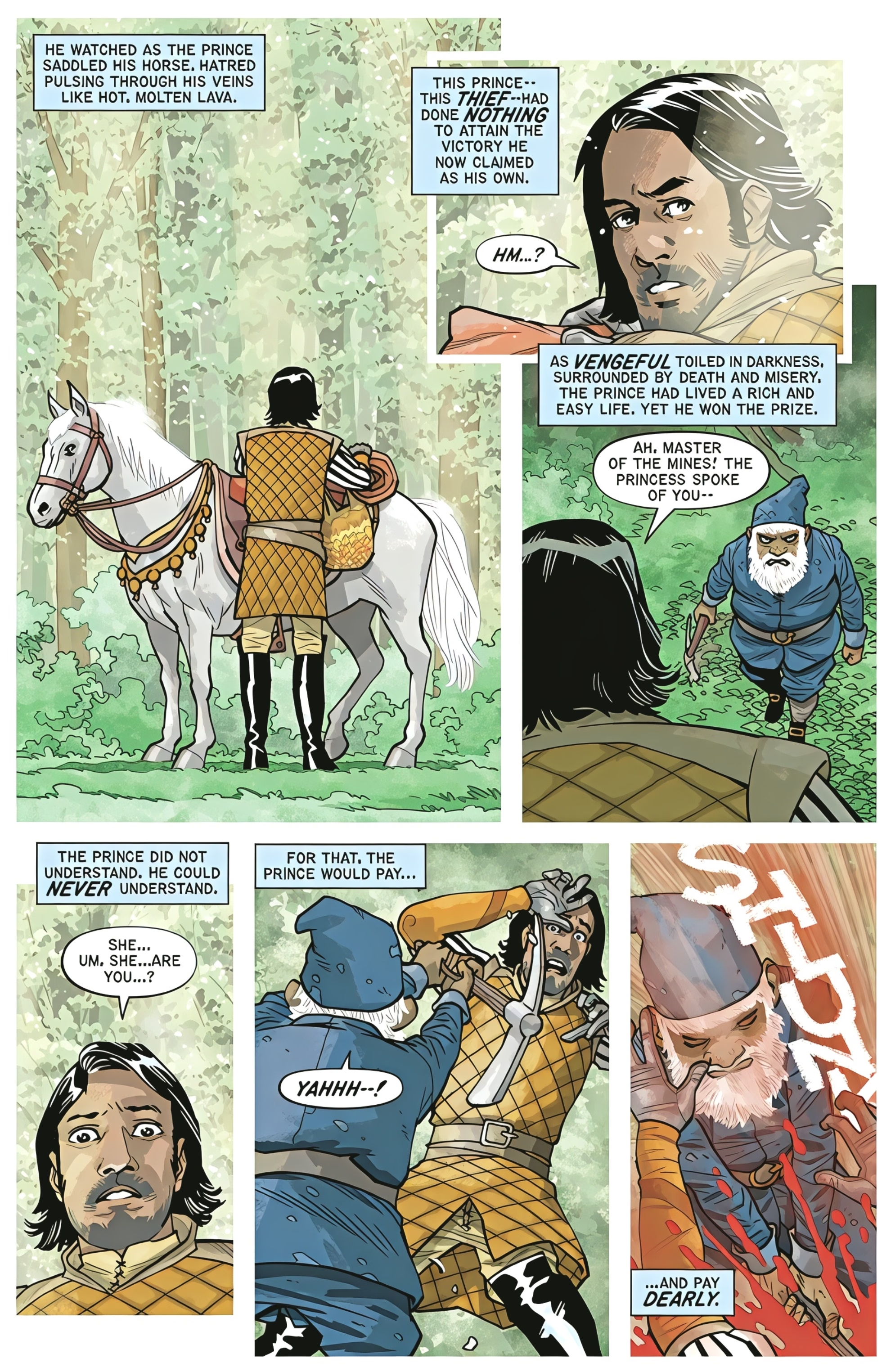
The only accusation in the sequence comes from the captions. When the two men collide in the lower middle panel, the palette does the arguing: the dwarf’s blue against the prince’s orange-gold tunic, with the pickaxe’s silver between them.
The final panel stays on the dwarf’s face under a large white sound effect, with blood crossing the lower edge, so the page never pictures what the narrator promised, a prince paying for a crime. The reader must decide which voice to trust, and the four pages withhold the answer.
The Name on the Cover
The special’s proposition is that the authorship of a horror anthology sits in the drawing, and the four pages test it in the strictest way available. A picture that contradicts its own captions cannot be demoted to illustration, because the reader must adjudicate between the two, and that adjudication happens inside Adlard’s panels rather than in the script.
A story that restores the figure the legends omitted, in an issue that puts the cartoonist’s name in its title, makes one argument at two scales: the one who did the work is the author of what it produces.
If the captions in ‘Death and Pickaxes’ accuse a prince the pictures never convict, who authors the horror on that fourth page: the narrator, the draftsman, or the reader who believes the captions?
Reference
- Carol L. Tilley, ‘Seducing the Innocent: Fredric Wertham and the Falsifications That Helped Condemn Comics,’ Information & Culture 47, no. 4 (2012): 383–413. ↩︎


Leave a Reply