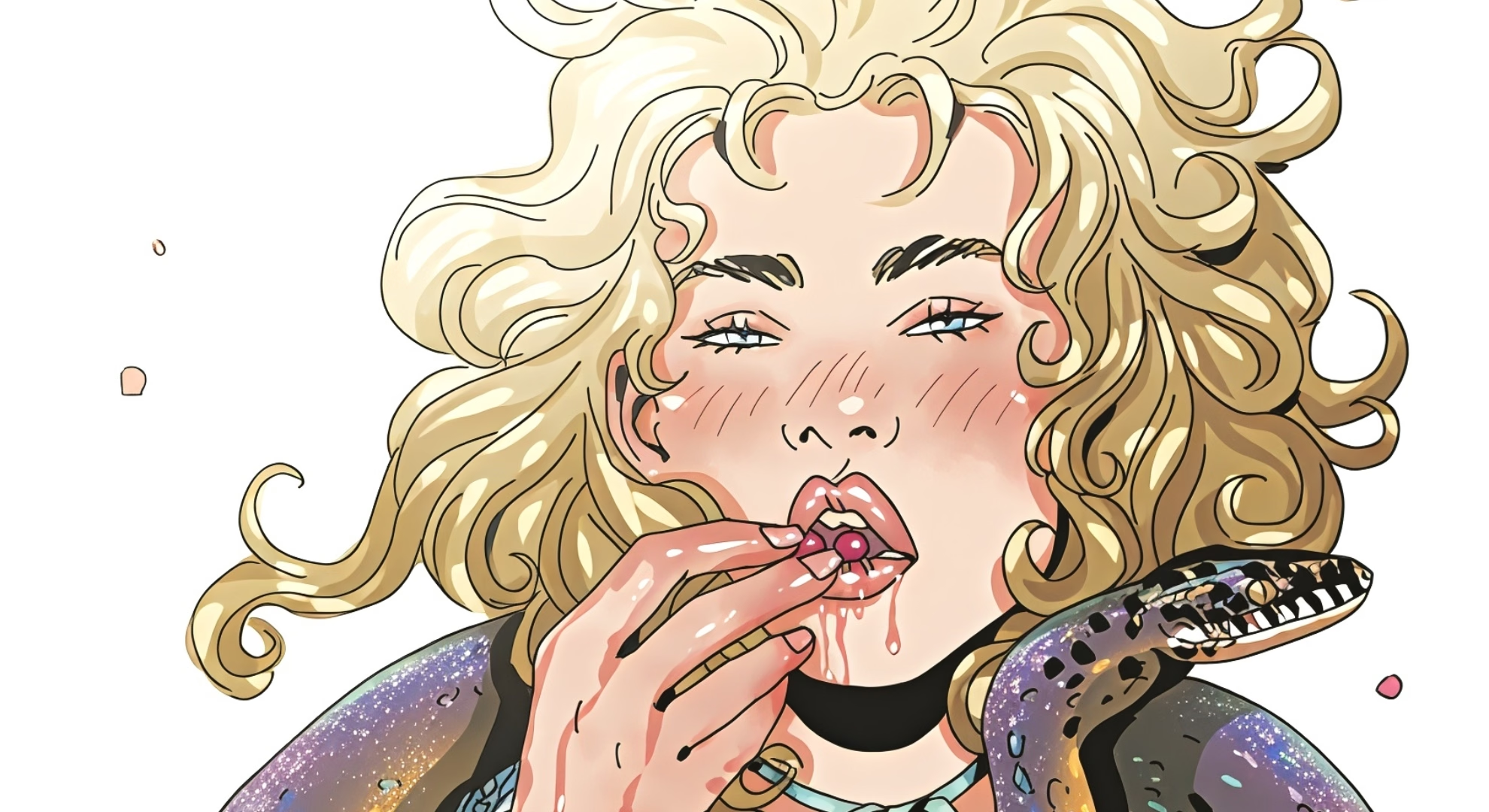


The royal menagerie at Versailles ended by transfer. When the Revolution founded its new menagerie in Paris, the nucleus came largely from animals confiscated from fairground showmen.1 The route ran from the king’s enclosure to the republic by way of the street performer, and it supplies the historical ground for a comic that sends two hunters into the overgrown gardens of Versailles.
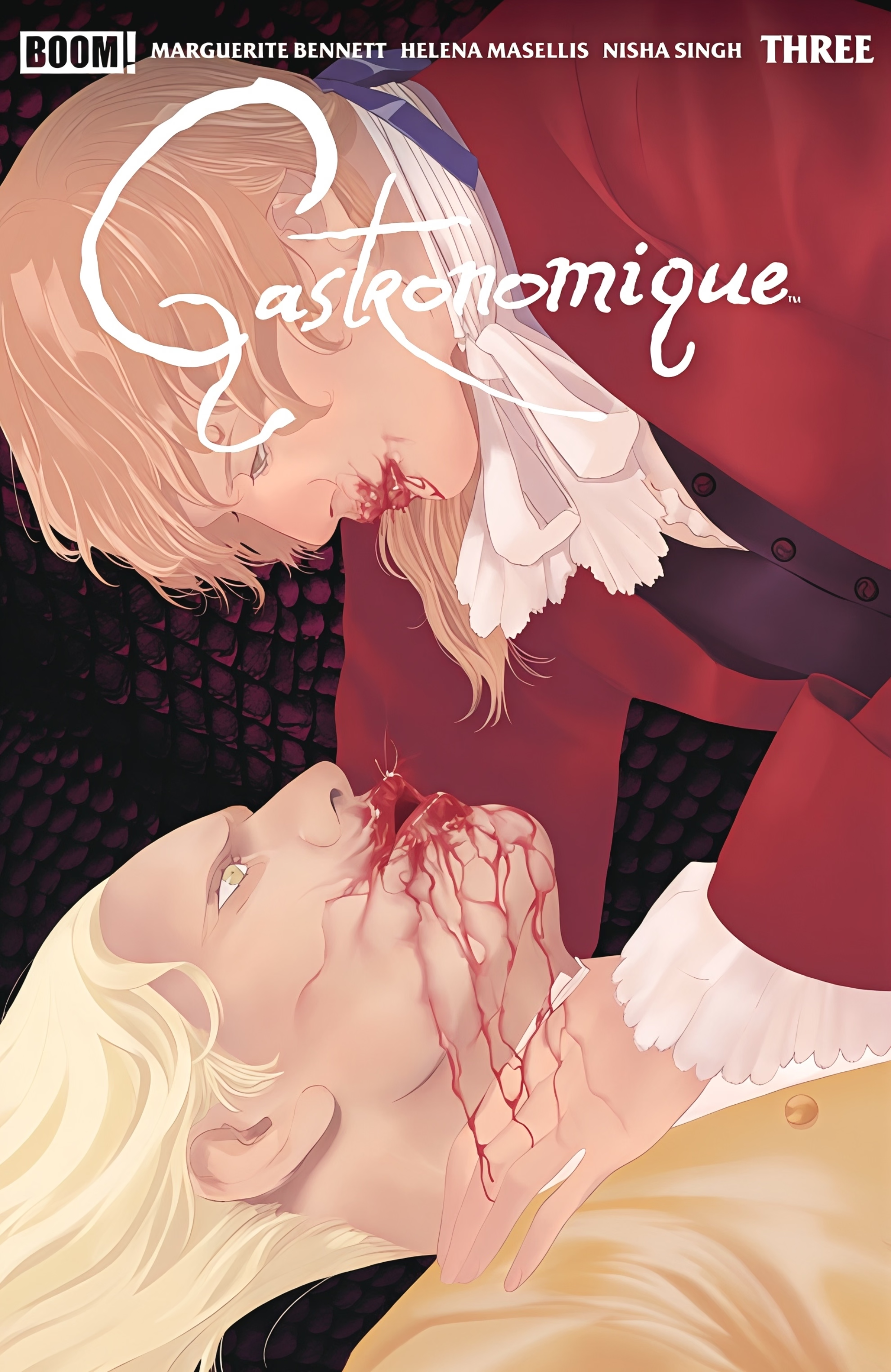
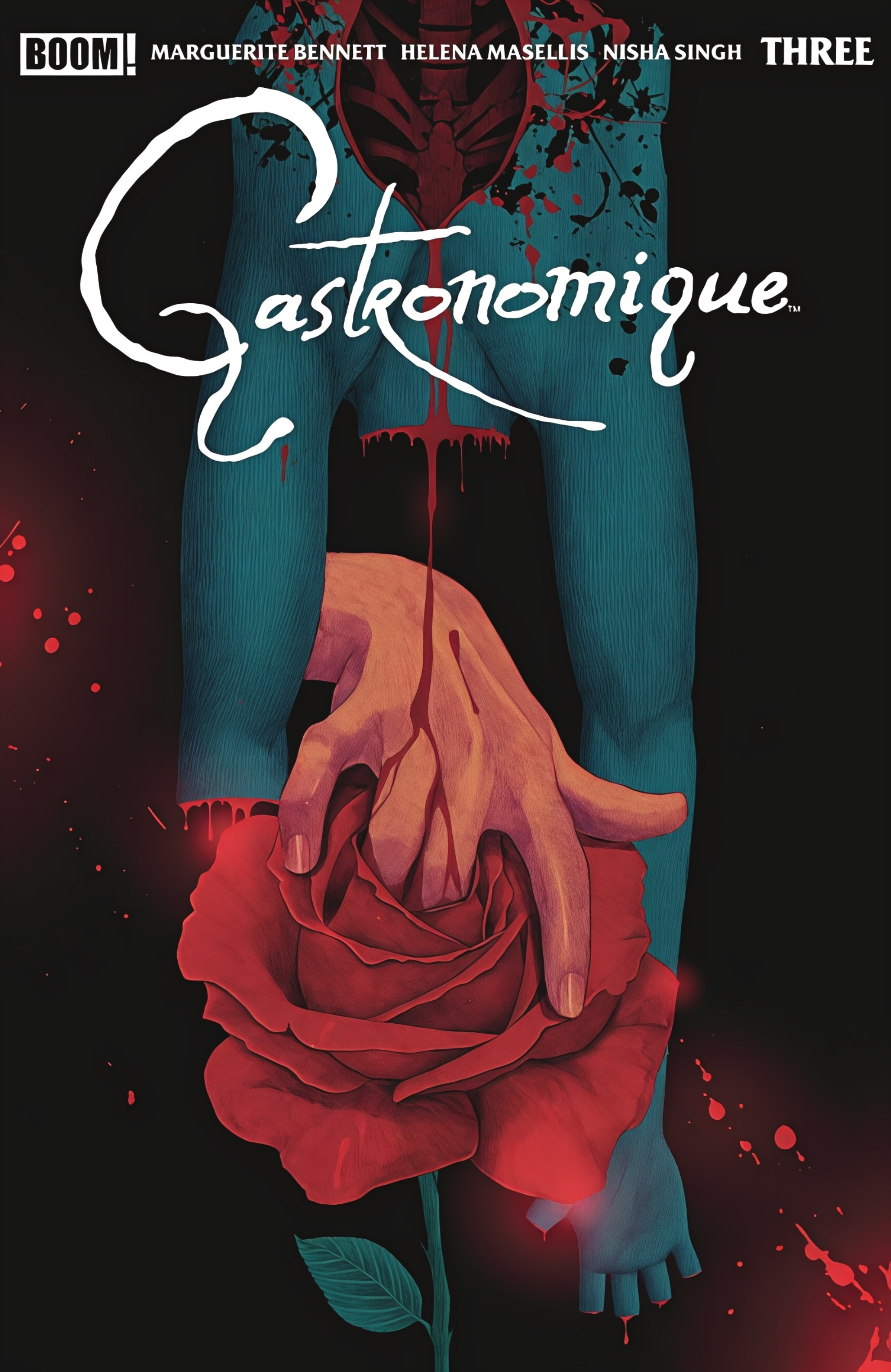
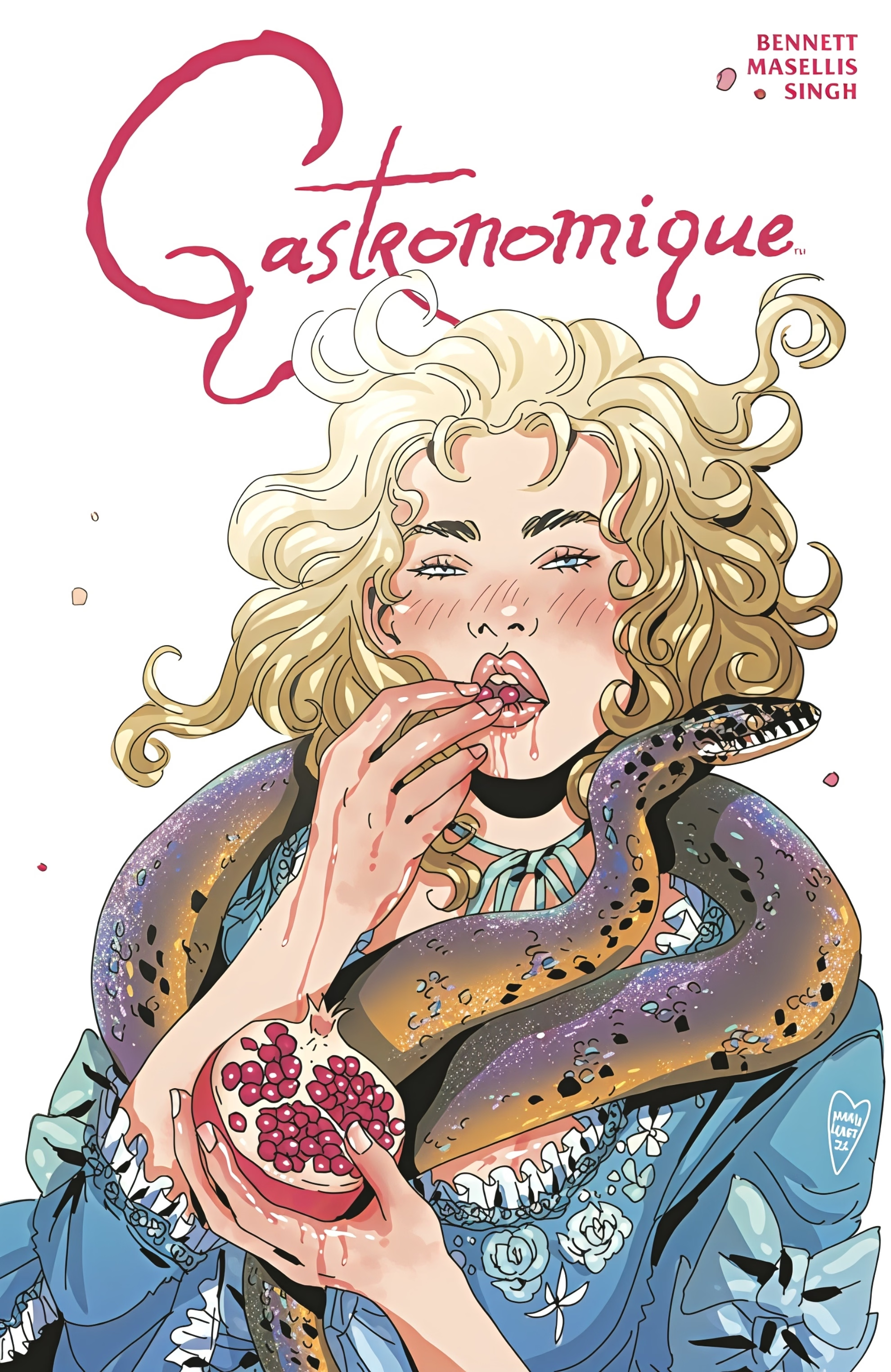
‘Gastronomique’ #3 from BOOM! Studios goes on sale November 11th, 2026, at $4.99, approximately COP 15,880 at the exchange rate certified on November 3rd, across 32 pages. It is the third installment of a limited series, neither an original graphic novel nor a collected edition, and it continues the series’ hunt.
Marguerite Bennett writes; Helena Masellis illustrates and draws Cover A; the variant covers are by Anwita Citriya, Ariela Kristantina, and Evgenia Vereli. The series credits list Nisha Singh as colorist and Jodie Troutman as letterer. An editor credit for this issue could not be confirmed at the time of publication.
The Hunt Turns to Memory
The publisher’s solicitation sets the issue in the wild gardens of Versailles, where Charlotte and Zélie push through overgrowth and past lurking beasts toward Tarrare, with the lives of Solange, Zélie, and Charlotte at stake.
The same text then changes direction: with Tarrare still out of reach, Charlotte recalls her earlier interludes with him and the training under the Royal Spies that led her to this pursuit. The chase stalls on purpose. An issue that stops a hunt to open a flashback concedes that the hunter and the hunted share a history, and that the pursuit is partly a way of returning to it.
That shared history is an invention, and it fills a particular gap. The written archive on Tarrare rests on a single case study, the surgeon Pierre-François Percy’s account of his patient, and nothing survives in Tarrare’s own words.
Wattle and Daub’s 2017 puppet chamber opera, ‘The Depraved Appetite of Tarrare the Freak,’ answered that silence by telling the story through Percy’s memories, with every puppet except Percy designed to resemble a corpse.2 Bennett’s issue keeps the device of a remembering witness and changes the witness.
Percy remembers a patient he examined, tested, and opened. Charlotte remembers a man with whom, by the solicitation’s account, she had earlier interludes. The surgeon’s memory reduces a person to a body under observation; the lover’s memory is obliged to concede that the body belonged to someone.
The Hospital at Versailles
The setting carries a second, quieter correspondence. Tarrare began as a street performer, and in 1798 a surgeon at the hospital in Versailles wrote to Percy that a patient wished to see him. It was Tarrare, bedridden with advanced tuberculosis and convinced that a fork he had swallowed was killing him. He died soon afterward, and the autopsy found an abnormally wide esophagus, an enormous stomach, and no fork.3
The solicitation places the pursuit in the gardens, not the hospital, and the series keeps its Tarrare alive and at large. Even so, a hunt that converges on Versailles converges on the one place where the case’s history ends.
The issue before this one, covered in this publication’s preview of ‘Gastronomique’ #2, named the Royal Menagerie as the next lead, and the royal menagerie stood at Versailles, so the pursuit follows its lead to its address.
History had already emptied that address of animals, which is why the lurking beasts of the solicitation have to be supplied by the story. The comic restocks a garden the Revolution cleared, and populates it with the figure whose appetite the institutions of that decade tried to put to use.
The Interval Between Issues
Serialization decides what a flashback issue is. In a bound book, the turn from pursuit to memory would read as an interlude between two stretches of chase. In an installment series, the reader has waited weeks between issues, and the memory sequence lands after the earlier chase has been half forgotten.
The wait is itself a loss of contact with the prey, and the flashback gives that interval a form: the reader, like Charlotte, spends the issue remembering a man who is out of reach. What the format cannot supply is resolution. With a fourth issue still to come, the third sits in the middle of the series, where a pause can be afforded.
Color and the Flashback
Interior pages for the issue had not been released at the time of publication, so this preview does not describe a specific page. What the premise sets up is a question for the artist and colorist: a flashback is the point at which memory must either share the color of the present or break from it.
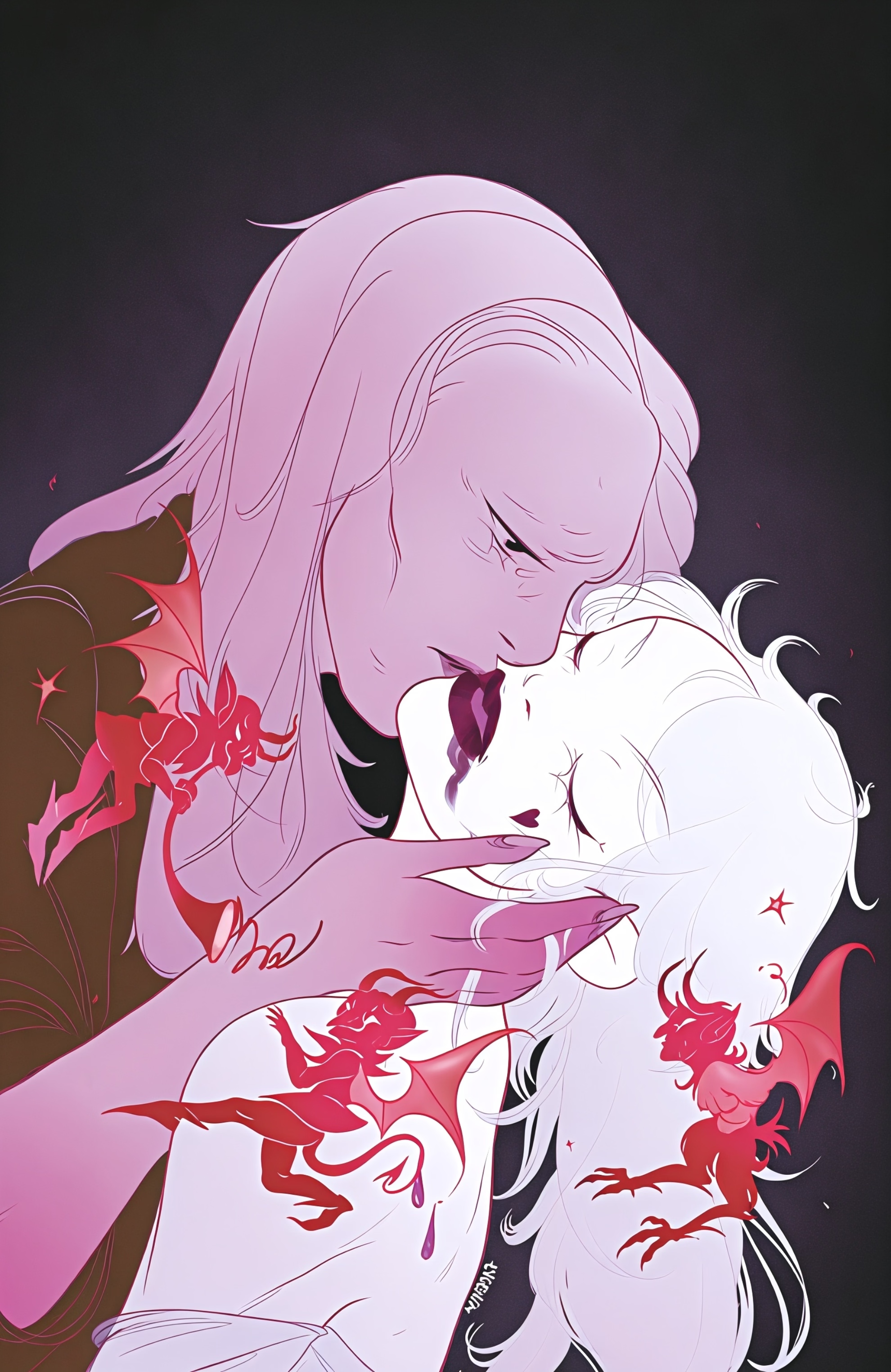
Helena Masellis and Nisha Singh could let the hunt’s palette run into Charlotte’s recollections, which would argue that the hunter has always shared the prey’s hunger. They could instead set the memory apart, which would argue that the two figures were distinct from the start. Either treatment makes the first page of the flashback the issue’s central formal event, and the page to watch when the book is in hand.
The Lover as Witness
Percy’s case study turns a life into a sequence of tests, and the opera that retold it kept the surgeon’s gaze at the center. A comic that hands the telling to the pursuer’s memory moves the center of the story from the examining room to the bed and the garden. This does not rescue Tarrare from observation. It gives him a second observer, one who has been inside his life and who intends to kill him.
The memory that lets Charlotte see Tarrare as a person is also the knowledge that lets her find him, and in a garden stripped of its keepers, she is the next one.
If the archive gave Tarrare a surgeon for a witness and the comic gives him a lover who has come to kill him, which of the two looks at him more truthfully?
References
- Louise E. Robbins, ‘Elephant Slaves and Pampered Parrots: Exotic Animals in Eighteenth-Century Paris’ (Baltimore: Johns Hopkins University Press, 2002), 213–214. ↩︎
- Laura Purcell-Gates, ‘Staging Corpses: Reanimating Medical History Through Puppetry,’ in ‘The Routledge Companion to Performance and Medicine,’ ed. Gianna Bouchard and Alex Mermikides (Abingdon: Routledge, 2024), 358–367. ↩︎
- Jan Bondeson, ‘The Two-Headed Boy, and Other Medical Marvels’ (Ithaca: Cornell University Press, 2004), 276–280. ↩︎

Leave a Reply