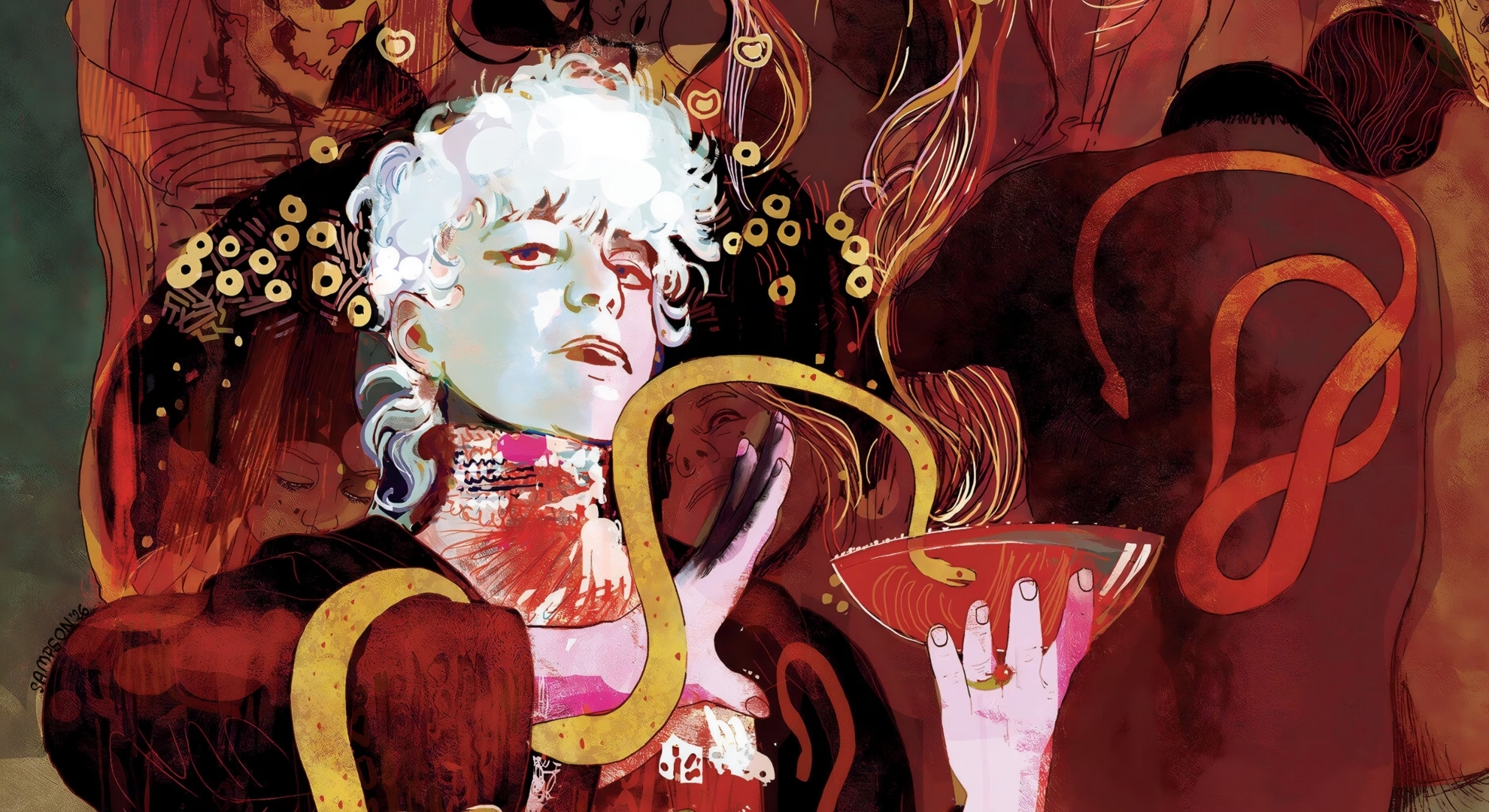


Military medicine of the French Revolutionary Wars left behind a case history strange enough to outlast the army that produced it. Tarrare, a former street performer from the environs of Lyon, was a soldier whom army rations could not satisfy, and Pierre-François Percy, surgeon-in-chief of the military hospital that kept him, set out to test him: a meal prepared for 15 laborers, then live animals that included snakes, lizards, and puppies, then a wooden box holding a document, which Tarrare swallowed and which returned legible.1
The record that survives contains a suspicion and no verdict. When a 14-month-old child vanished from the hospital, the staff concluded that Tarrare had eaten it, and he was driven out with nothing established against him.
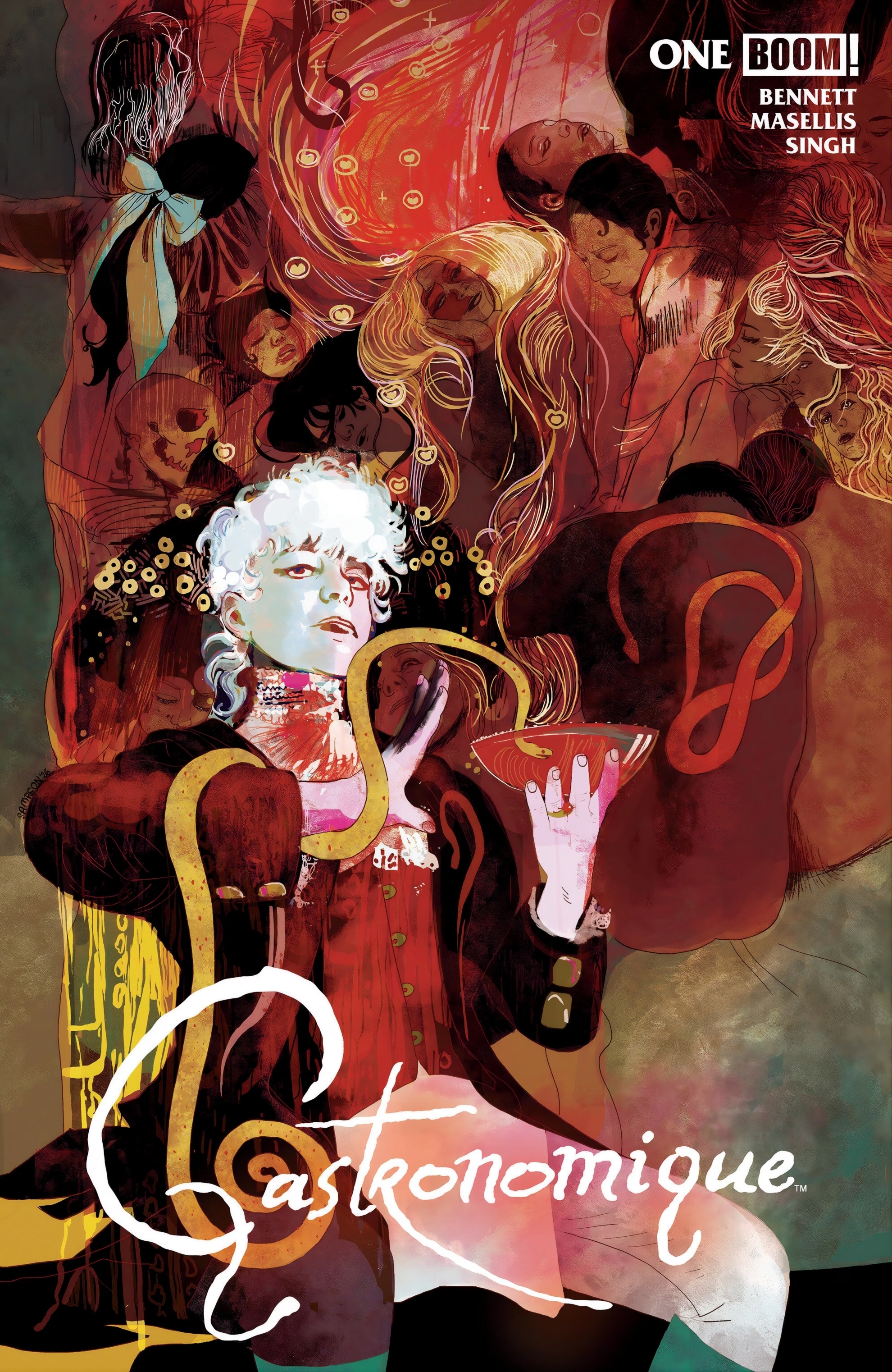
BOOM! Studios published ‘Gastronomique’ #1 on August 12th, 2026, and the second issue is scheduled for release on September 30th, 2026, at $4.99, approximately COP 15,930, across 32 pages. The limited series is a serialized story rather than an original graphic novel or a collected edition, and issue #2 is its second installment.
Marguerite Bennett writes; Helena Masellis illustrates and draws Cover A; Nisha Singh colors; Jodie Troutman letters. An editor credit could not be confirmed at the time of publication.
A Verdict History Withheld
In its May 13th, 2026 announcement, BOOM! Studios described the premise this way: Lady Charlotte, a royal spy known as the Python, is sentenced to execution until her sister offers to take her place, on the condition that Charlotte tracks down and kills the cannibal who murdered the sister’s child.
That cannibal is Tarrare. The inciting crime of the series echoes the accusation that ended the historical Tarrare’s stay in the hospital, a child consumed. Where the record holds a rumor, the comic holds a corpse.
The record is more ambiguous than that premise. It does hold scavenging in gutters, blood drunk from patients being bled, and attempts on the morgue’s corpses, but it records no established attack on a living person. Colleagues who thought Tarrare mentally ill pressed for an asylum, while Percy kept him under treatment and tried laudanum, wine vinegar, tobacco pills, and soft-boiled eggs against the hunger, none of which worked. The army used him as an experiment, then as a courier, then discarded him.
Comics have worked from documented cases before. Alan Moore and Eddie Campbell’s ‘From Hell,’ which Top Shelf collected in one volume in 1999, takes the unsolved Whitechapel murders and answers them with a theory of its own. ‘Gastronomique’ works from the opposite end. In ‘From Hell’ a documented case lacks its culprit; here a documented man lacks his crime, and the comic supplies one so that a hunt can exist.
The Weeping Eye
The preview pages BOOM! Studios released ahead of the first issue show how Masellis and Singh mean the reader to hold both facts at once. One page opens on a widescreen panel of a guillotine standing before a pale neoclassical façade, painted in cold blues. Two tiers of three panels follow a blond figure in a torn red cloak from a doorway to a heap of executed bodies, then close on his face: a mouth, hands pressed against it, and a foot lifted to the teeth. The final tier is a single band cropped to one eye, and what runs from it is a tear.
That last panel spends the page’s formal weight on grief. The widening from close-ups to one horizontal strip slows the reader to the pace of the crying, and blood, the expected payoff of the sequence, is absent from the closing beat. A comic set on convicting its cannibal would end the page on the teeth. This one ends on the eye, so that the picture argues for a compulsion while the script requires a killer.
One Red Across Pages
Singh keeps the sequence in dusk blues and lavenders, and the cloak is the only saturated warm note. The red does not stay there. On the preview’s performance page, a panel floods red at the moment a piglet is held above an open mouth, and a lower band of onlookers in powdered wigs and fans sits in a darker red.
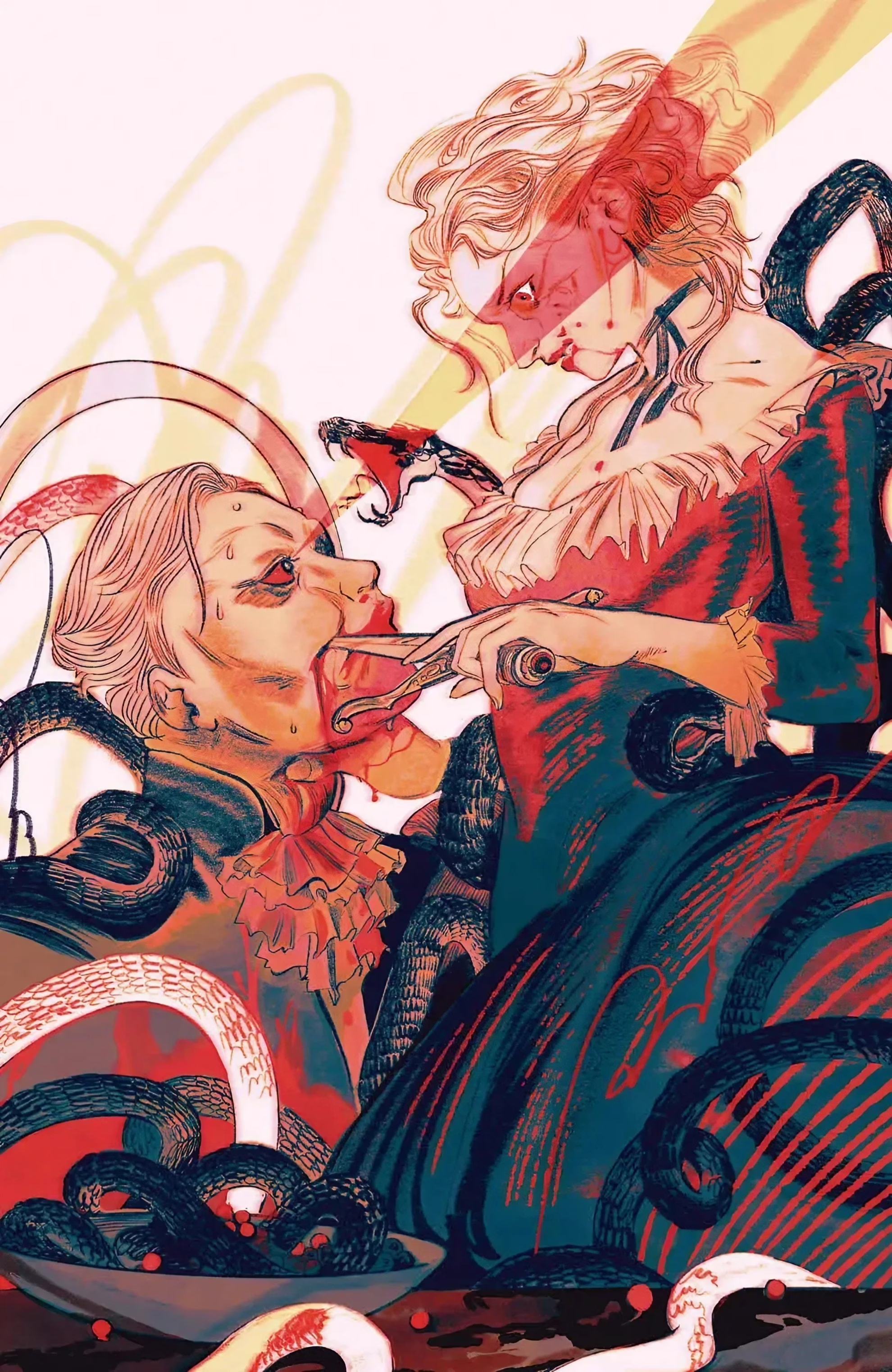
A full-page splash among the same previews lays the cloak across a mound of bodies beneath a full moon. Thierry Groensteen’s term for a motif that links panels far apart on the page or across pages is braiding,2 and here it joins the showman who swallowed for an audience to the scavenger who eats alone. The same red follows the appetite from spectacle to compulsion, and the reader is left to decide which of the two the hunt is chasing.
The Menagerie Lead
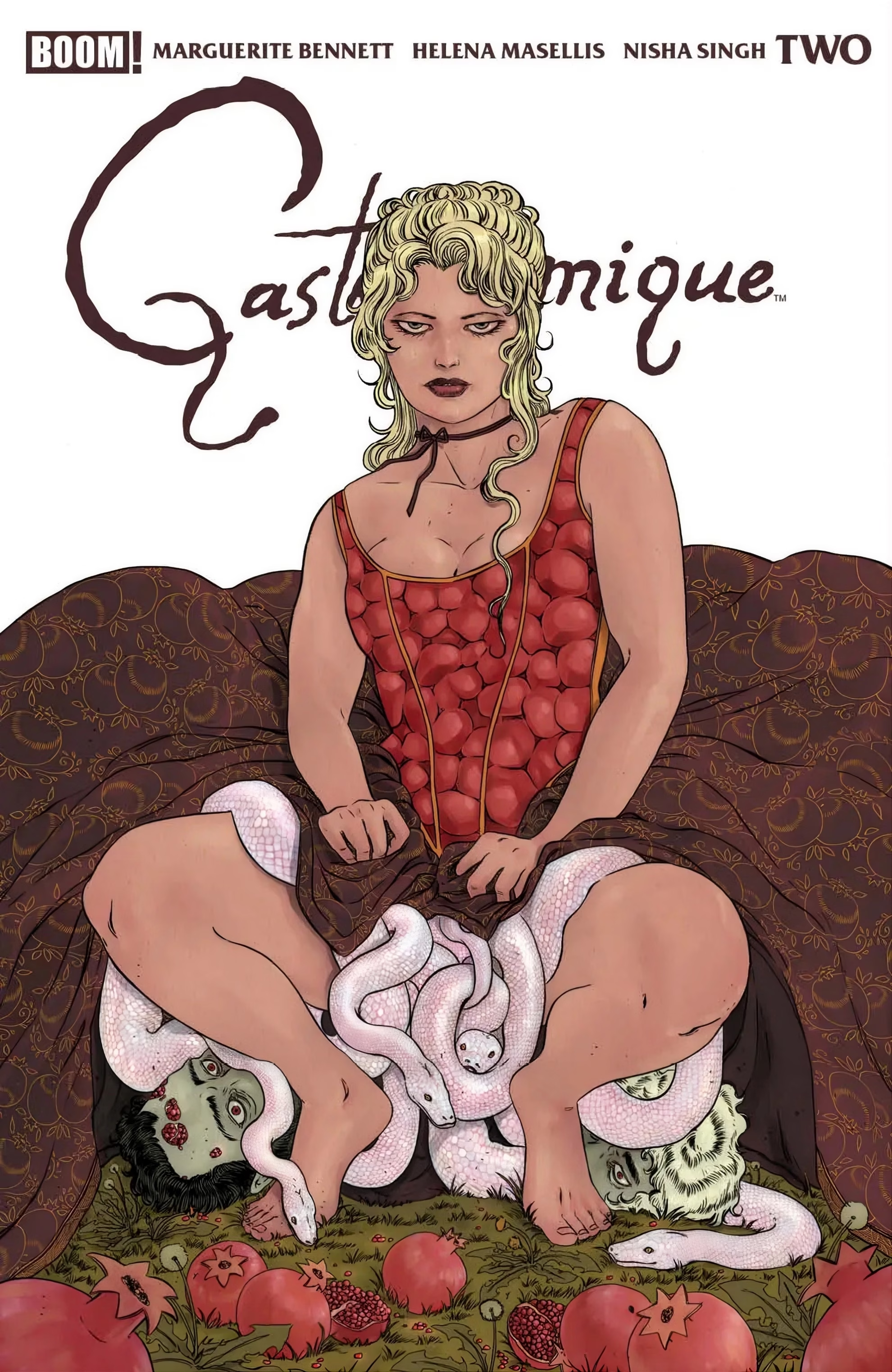
Issue #2 turns toward a specific place. The solicitation says the executions do little to dull the people’s appetites, or Tarrare’s, and that a night of reunion for Charlotte and her former lover Zélie produces a vision of their next lead, the Royal Menagerie. It does not say what the vision shows, and the interior pages had not been released at the time of publication.
The location is nevertheless pointed. A menagerie keeps live animals behind bars for public viewing, which is close to the situation of the historical Tarrare himself, a man exhibited first to street crowds and then to army surgeons, and fed live animals for both.
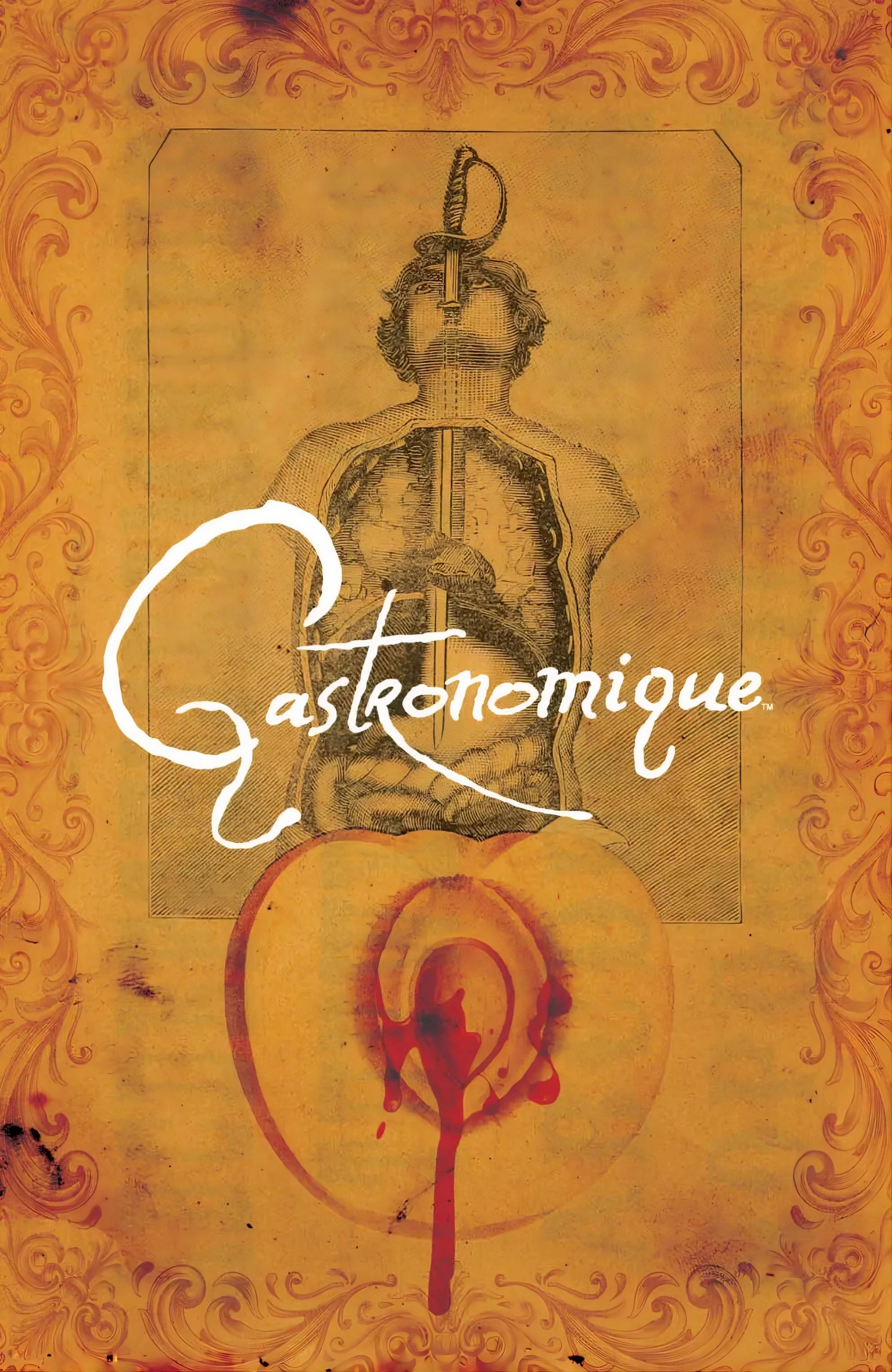
The issue also carries the burden of continuation. It is not a debut, and it points, by the solicitation’s own account, toward a lead rather than a capture. A pursuit story suits monthly installments in a way an original graphic novel would have to manufacture, because each 32-page issue can end on a place the reader must wait a month to enter. What the format cannot supply is a verdict. Until the limited series concludes, the Tarrare of the picture and the Tarrare of the script remain unreconciled.
Guilt Drawn as Grief
Maya Bollinger, assistant editor at BOOM! Studios, said in the series announcement that the book acknowledges “the horror of desire and the corporeal form.” The preview pages place that horror inside the person eating rather than among the eaten.
The case history of Tarrare is a record of what institutions did to a man they could not explain, and a comic that hunts him joins their number by design; the only counterweight in the material released so far is the eye at the end of the page. If the series holds to it, ‘Gastronomique’ gives Tarrare what the case history never did, which is a moment in which the subject of the experiment is allowed to grieve on the record.
If the script convicts Tarrare of a crime the record never established while the drawn figure weeps, which of the two should a reader believe?
References
- Jan Bondeson, ‘The Two-Headed Boy, and Other Medical Marvels’ (Ithaca: Cornell University Press, 2004), 275–281. ↩︎
- Thierry Groensteen, ‘The System of Comics,’ trans. Bart Beaty and Nick Nguyen (Jackson: University Press of Mississippi, 2007), 146. ↩︎




Leave a Reply