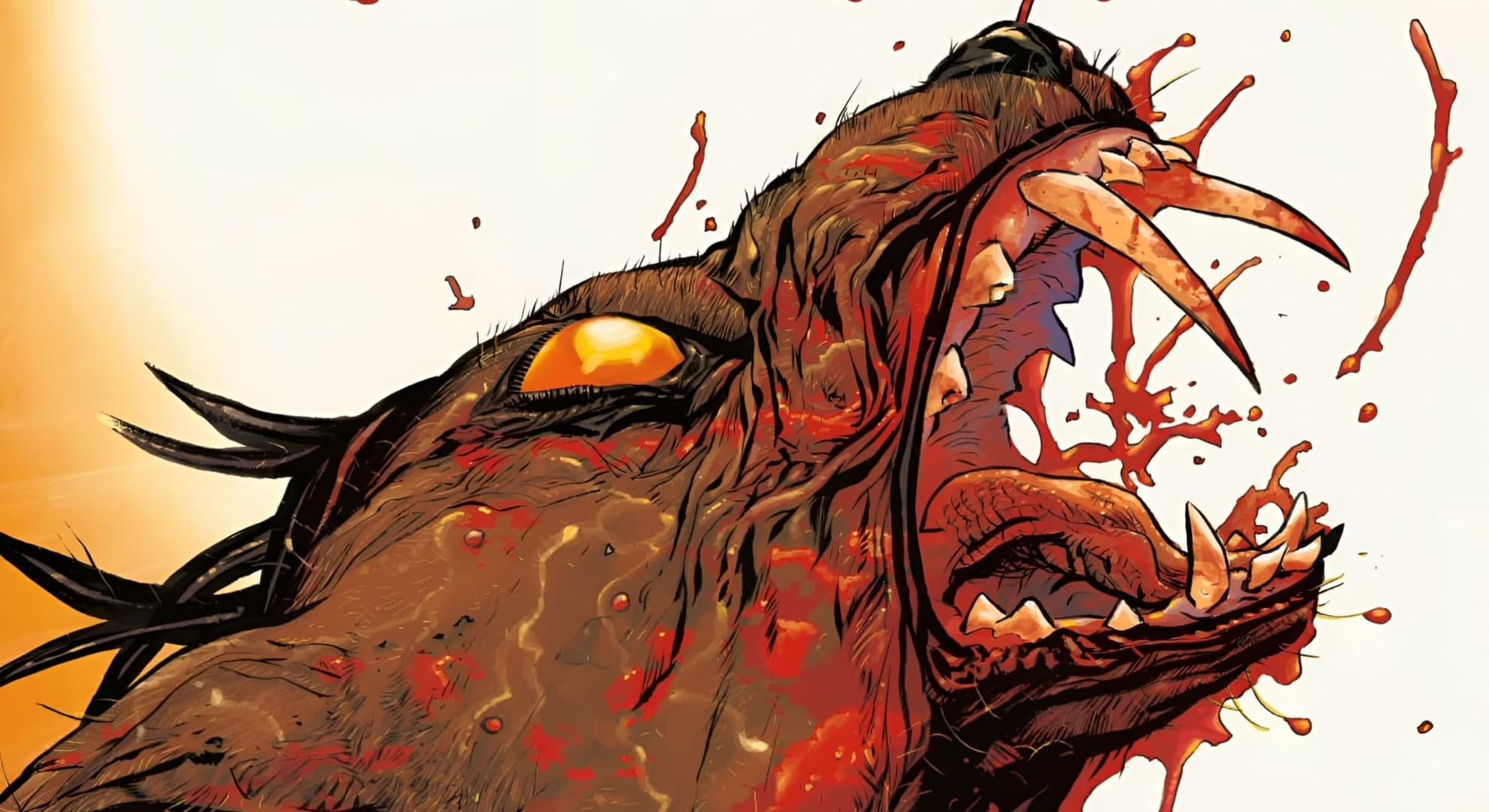


Most of the monsters that anchor horror comics arrived carrying centuries of folklore. The Chupacabra did not, and the creature now driving a new five-issue series from Tiny Onion (Dark Horse Comics) entered the record only in 1995, which makes it one of the youngest monsters a comic has tried to claim.
‘Beast of Borikén’ #1 reaches comic shops on July 1st, 2026, at $4.99 USD, approximately COP 20,000, across 32 full-color pages.
A Cryptid Born in 1995
The Chupacabra’s documented life begins in Puerto Rico, in the town of Canóvanas, where livestock found dead and drained of blood in 1995 produced the first eyewitness descriptions of a spined, red-eyed predator.1 Its name is plain description — goat-sucker — fixed to the animals found emptied.
Folklorist Benjamin Radford later traced that founding account to its resemblance to the creature in the science-fiction film ‘Species,’ released the same year, a coincidence that locates the monster’s origin inside late-twentieth-century media rather than ancestral myth. What spread from there was not an old story but a new one, carried fast across the Americas through television and tabloid report.
A creature assembled this recently gives a comic something unusual to work with. The folklore’s seams are still visible, and its meanings have not yet hardened into the fixed grammar that surrounds a vampire or a werewolf.
The Monster Goes Home
That openness is what ‘Beast of Borikén’ presses on. The series returns the Chupacabra to the island that first reported it and grants it a history it never had, recasting the tabloid livestock-killer as a brutal guardian whose line runs back to the indigenous people of Puerto Rico.
Loli Flores, an activist resisting the overdevelopment of the island by outside investors, learns this when a ceremony to break ground on a new development is torn open by a supernatural force. As she uncovers the killings firsthand, the creature moves on a parallel track, leaving elemental ruin behind it.
The reframing is the editorial heart of the book. A monster that began as dread aimed outward — at strange predators, at the unexplained — is turned to face inward, toward who owns the land and who profits when it is paved. Writer Julio Anta has framed the project as a story spanning more than 500 years of colonialism and resistance, with the cryptid as its engine.
The Team Behind the Beast
Julio Anta extends a body of work that has repeatedly set Latin American experience inside genre frames, including the migrant thriller ‘Frontera,’ the series ‘Home,’ and ‘This Land Is Our Land: A Blue Beetle Story,’ work that has earned him an Eisner Award nomination. He writes ‘Beast of Borikén’ as a creature feature grown from the films he absorbed as a reader and viewer.
Daniel Irizarri draws the series and supplies its principal cover, following recent comics ‘Xino’ and ‘Cemetery Kids Don’t Die.’ Patricio Delpeche colors the interiors, and Lucas Gattoni letters.
Issue #1 also carries a separate ‘True Weird’ short story from Justin Jordan, Tony Akins, and Aditya Bidikar, with covers by Irizarri, Naomi Franq, and Max Fiumara. An editor for the series had not been confirmed in the announced materials at the time of publication.
A Humanized Chupacabra
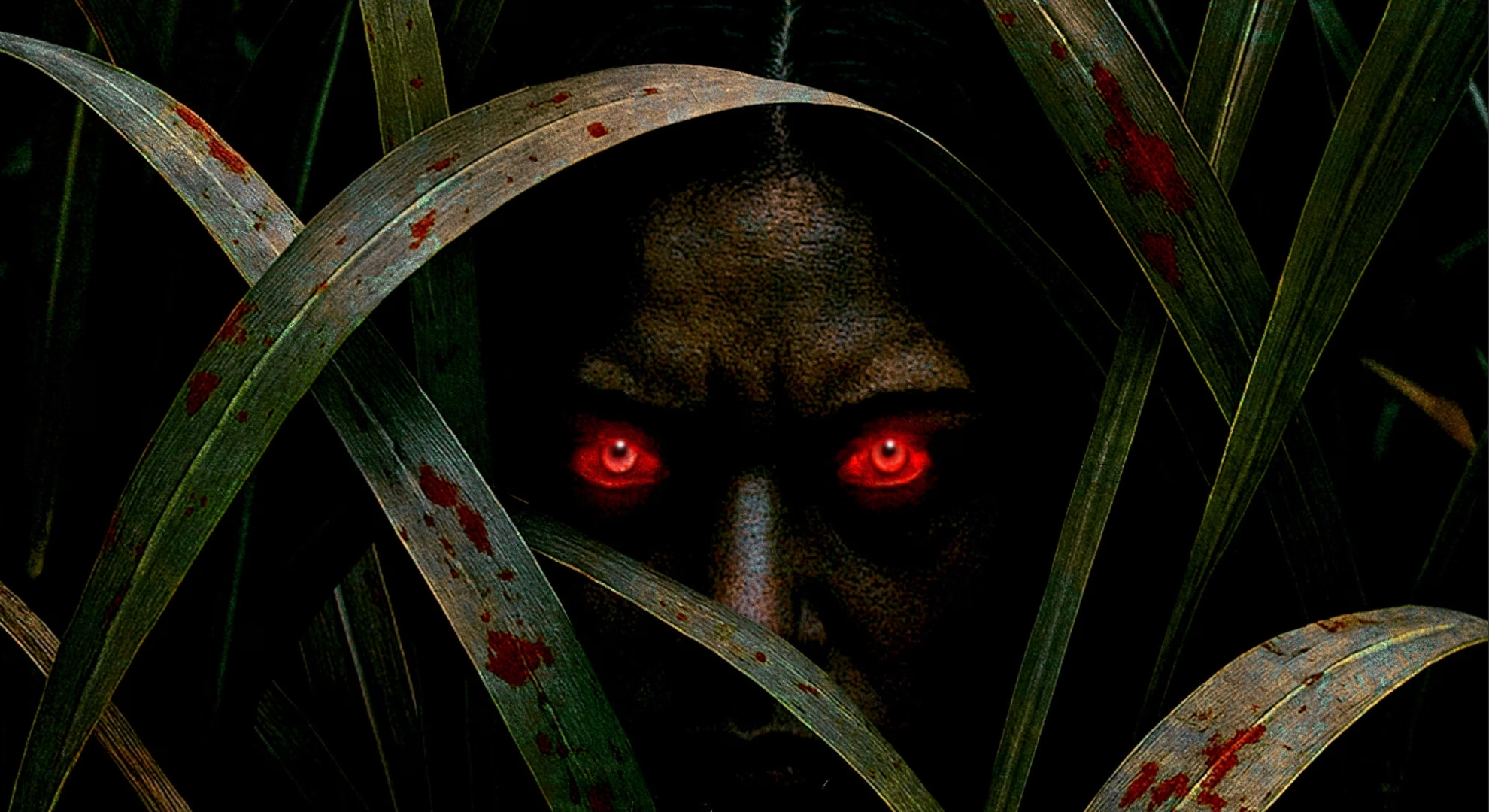
Because the interior pages remain unseen ahead of release, the clearest formal signal so far is the creature design the team has chosen to advertise. Anta describes the aim as a Chupacabra that looks unsettlingly human, and Irizarri as a contemporary, snarling figure rather than the leathery gargoyle of tabloid lore.
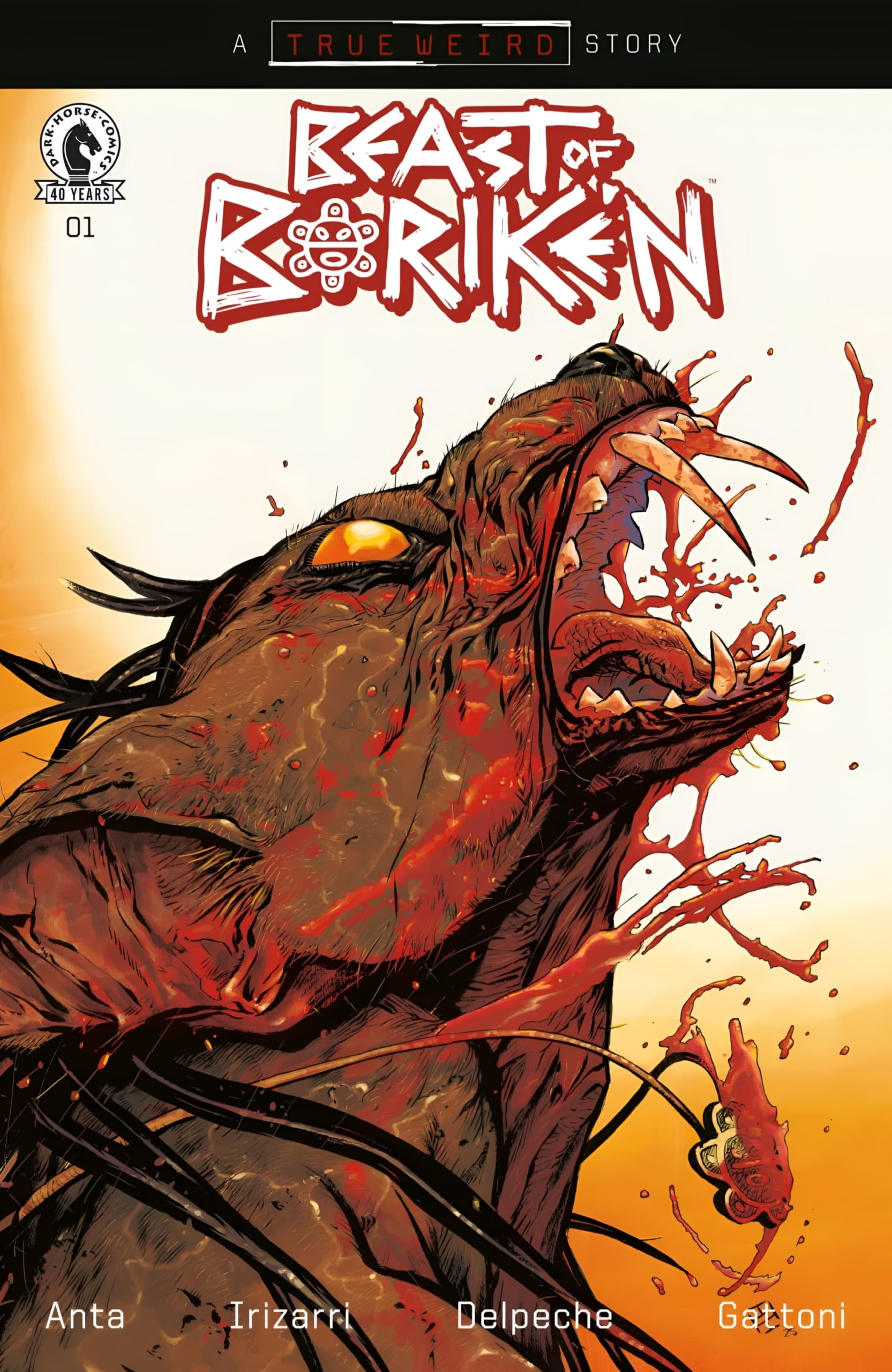
A human-looking monster is a deliberate formal risk. The horror of a creature feature usually depends on visible difference, where the more a thing diverges from a person the easier the fear; pulling the Chupacabra back toward a human silhouette trades that easy distance for recognition, and asks the art to carry dread through proximity rather than spectacle.
Irizarri’s recent comics lean on an energetic, manga-inflected line, and the variant covers place the book beside Max Fiumara, whose runs on Dark Horse’s ‘B.P.R.D.’ and ‘Abe Sapien’ tie him to the publisher’s supernatural horror. The cover lineup names the register the series reaches for before any interior panel is public.
The True Weird Line
‘Beast of Borikén’ is the second tale in the ‘True Weird’ line, a run of cryptid stories from James Tynion IV and Tiny Onion released through Dark Horse. Tynion is among the most visible horror writers working in comics, with ‘Something Is Killing the Children’ and ‘The Department of Truth’ to his name, and the line extends that sensibility toward regional monsters.
Dark Horse has kept company with horror since its 1986 founding, from Mike Mignola’s ‘Hellboy’ and its occult universe to the revival of the Warren magazines ‘Creepy’ and ‘Eerie.’ Setting a Puerto Rican cryptid inside that lineage continues a recent widening of whose monsters earn a full series rather than a cameo or a borrowed motif.
A Monster Reclaimed
The significance of ‘Beast of Borikén’ sits in that act of repatriation. The Chupacabra began as a monster the wider world projected onto Puerto Rico in the 1990s, a shape that drifted free of the island almost as soon as it appeared. Handing it back to a Puerto Rican team, with a lineage that predates the conquest and a grievance against what outside money does to the land, turns a borrowed scare into something the island can hold as its own.
If the Chupacabra is the rare monster with a documented birth date, does giving it an ancient ancestral lineage deepen its horror, or quietly erase the modern anxieties that first produced it?
Reference
- Benjamin Radford, ‘Tracking the Chupacabra: The Vampire Beast in Fact, Fiction, and Folklore’ (Albuquerque: University of New Mexico Press, 2011). ↩︎

Leave a Reply