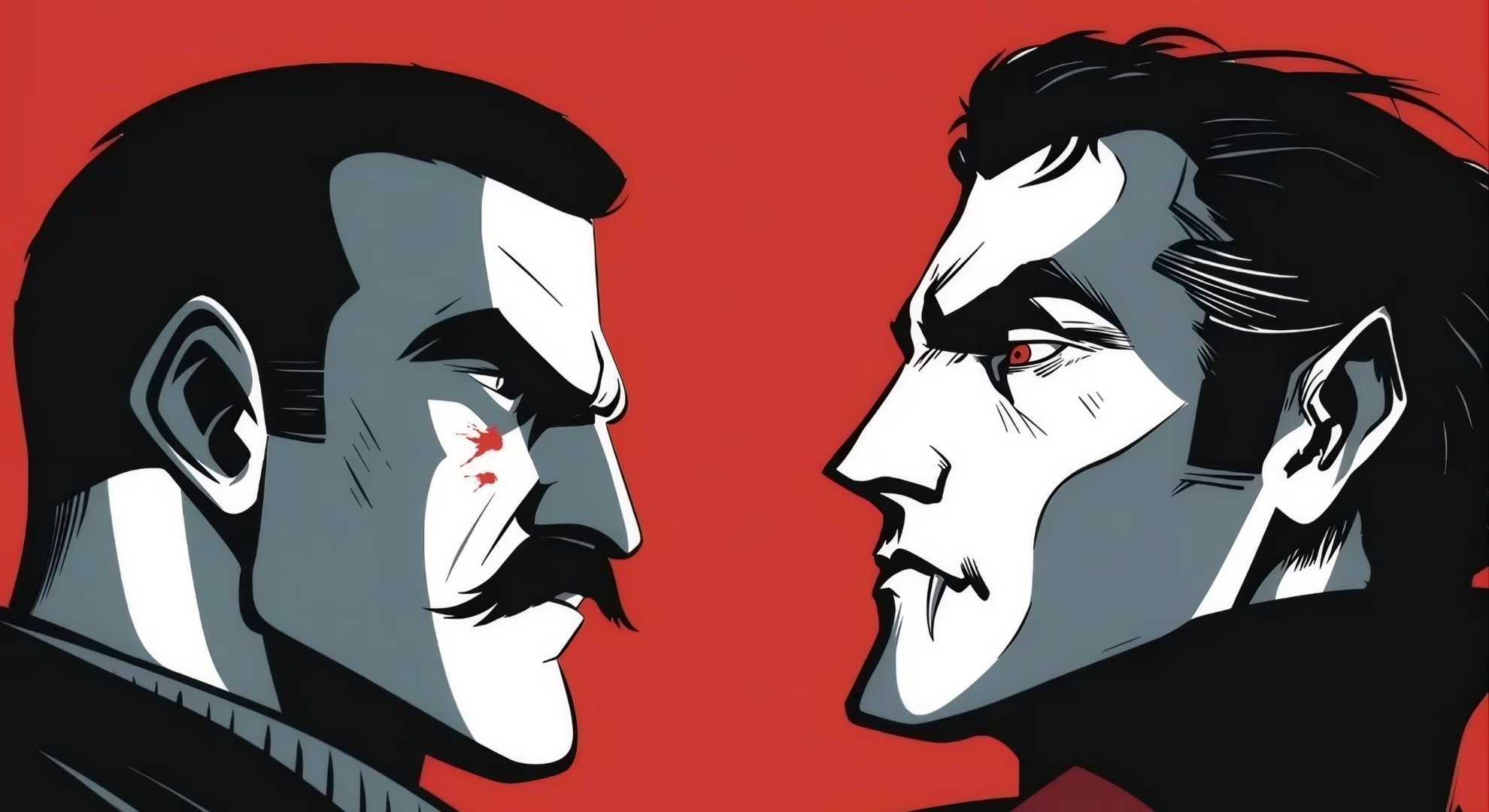


Detective fiction was born beside the gothic rather than against it. Edgar Allan Poe installed C. Auguste Dupin in a shuttered Paris apartment in 1841, two decades after Charles Robert Maturin’s ‘Melmoth the Wanderer,’ and kept the gothic’s locked rooms and mutilated bodies while promising that reason could account for each of them. The founding bargain of the genre was that the apparently supernatural would always resolve into a human agent.1
Arthur Conan Doyle wrote the most famous version of that bargain. ‘The Hound of the Baskervilles’ (1902) runs on moor, prehistoric ruin, and ancestral curse before Holmes reduces the spectral beast to a starved dog and a scheming relative.2 It is a gothic romance wearing a deerstalker, and its final chapters exist to take the costume off.
‘Watson v. Holmes,’ a 12-issue horror-detective series from Iron Age Comics, leaves the costume on. Its Sherlock Holmes does not expose the vampire; he is the vampire, and the work of reading a scene for what it conceals passes to the man who used to take the notes.
Reichenbach Reopened
The first issue reached comic shops on July 15th, 2026, at $4.99 across 28 pages, under a mature-readers label. Jon Santana scripted it from a story he shares with Rafael Santana, Jordan Rodriguez drew it, Daniel Annamalai colored it, and Dave Lentz lettered it. Editor credit could not be confirmed at the time of publication.
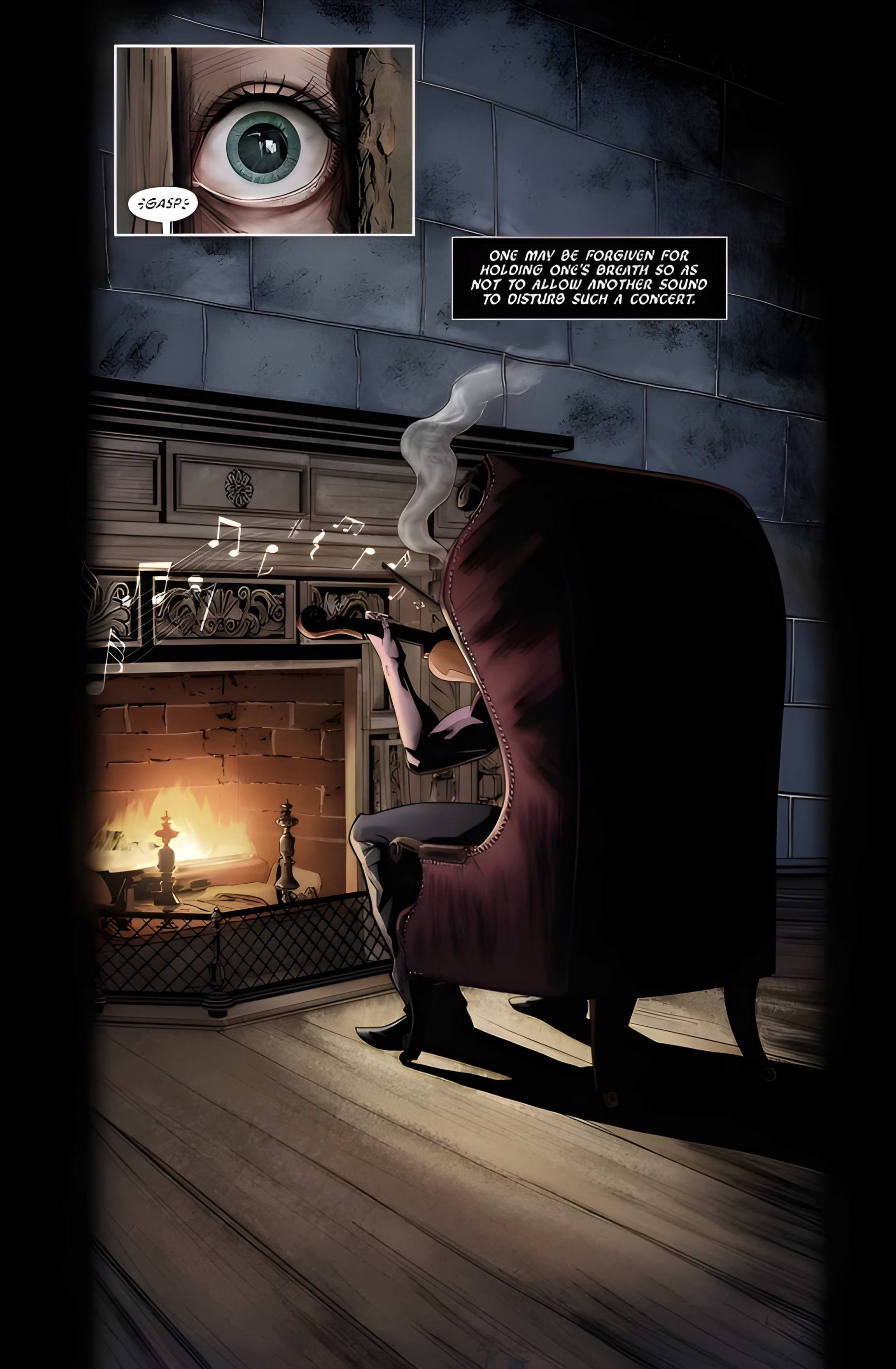
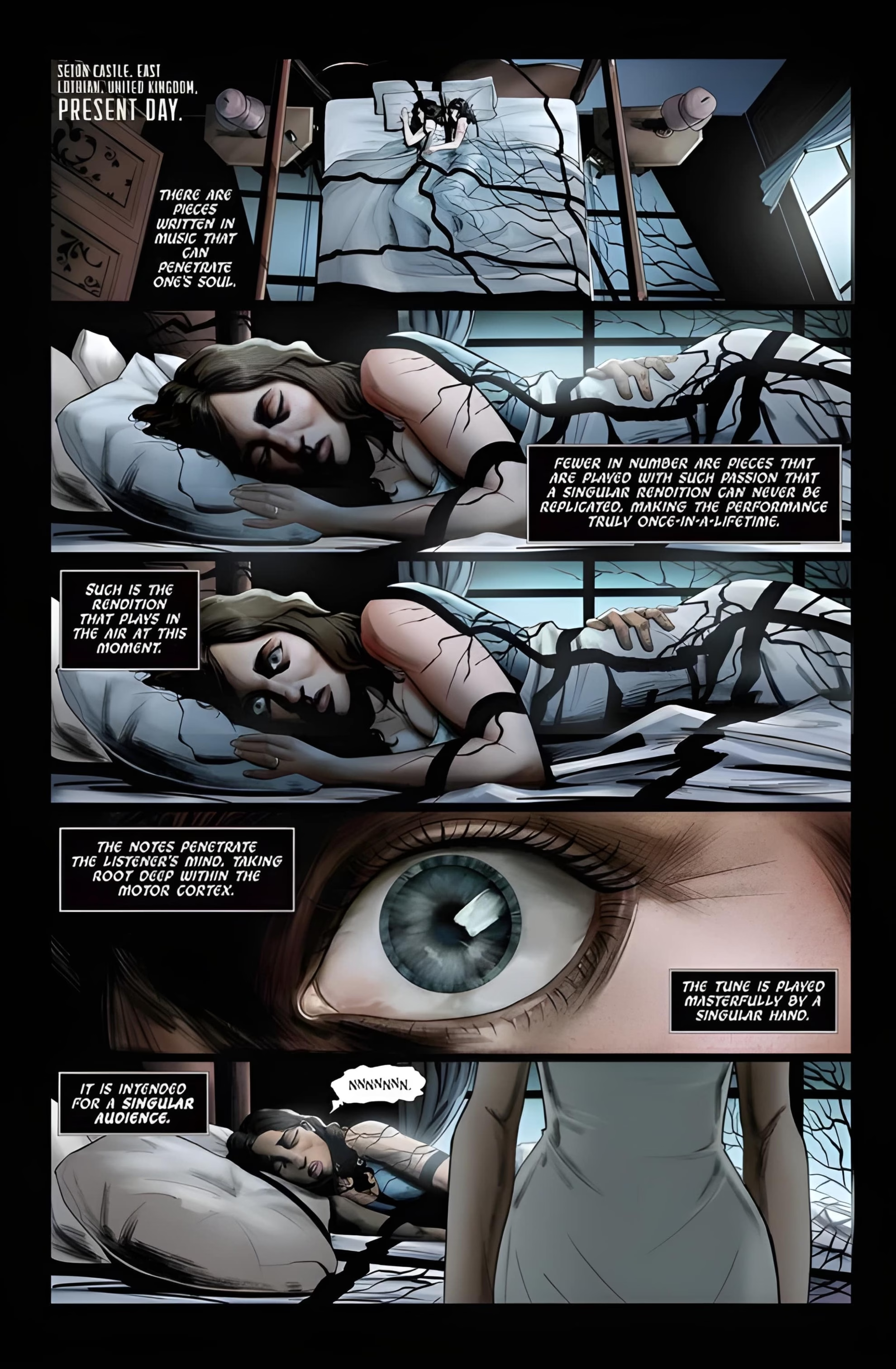
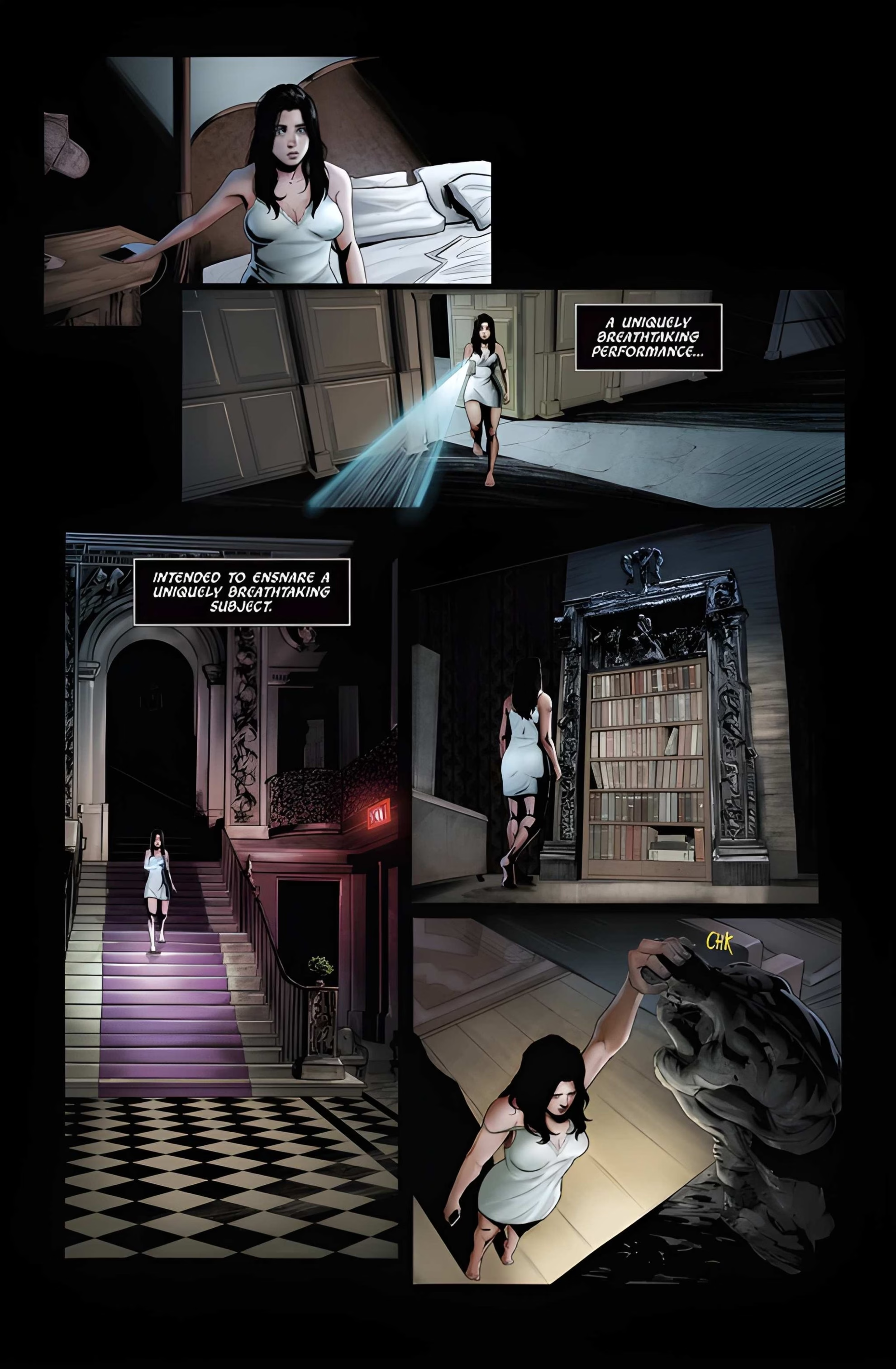
The premise moves the aftermath of Reichenbach to the present day, opening at Seton Castle in East Lothian. Holmes, presumed dead after the Falls, has returned undead, and Watson’s daughter Scarlett stands accused of murdering her fiancée Lila, whom Holmes has already turned. A retired, heavily drinking Inspector Lestrade joins Watson on an investigation that leads toward a technology corporation.
The contemporary setting sharpens Holmes by leaving him out of date. Watson lives among smartphones and corporate towers, yet Holmes still wears the deerstalker and keeps the calabash pipe, so the most recognizable silhouette in detective fiction becomes the signature of a man who stopped aging while the world kept moving.
A Violin Played in Blood
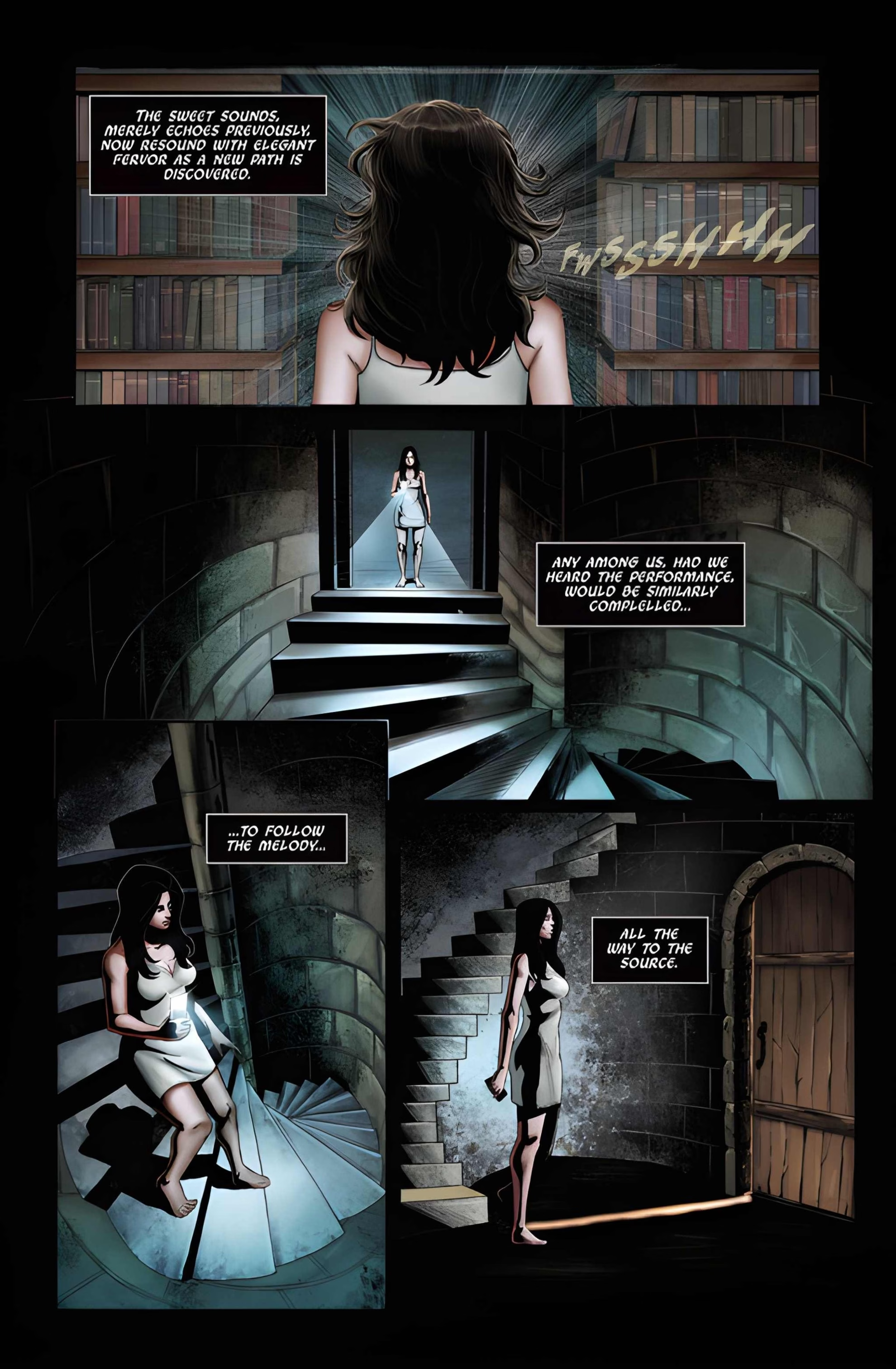
The chapter title page, which closes a four-page opening in which a woman sleepwalks through the castle toward his playing, states the book’s method more clearly than any caption. A tall panel places a cloaked figure at the violin, the red wing of an armchair looming beside him, his notes drawn as pale blue staves drifting out of frame.
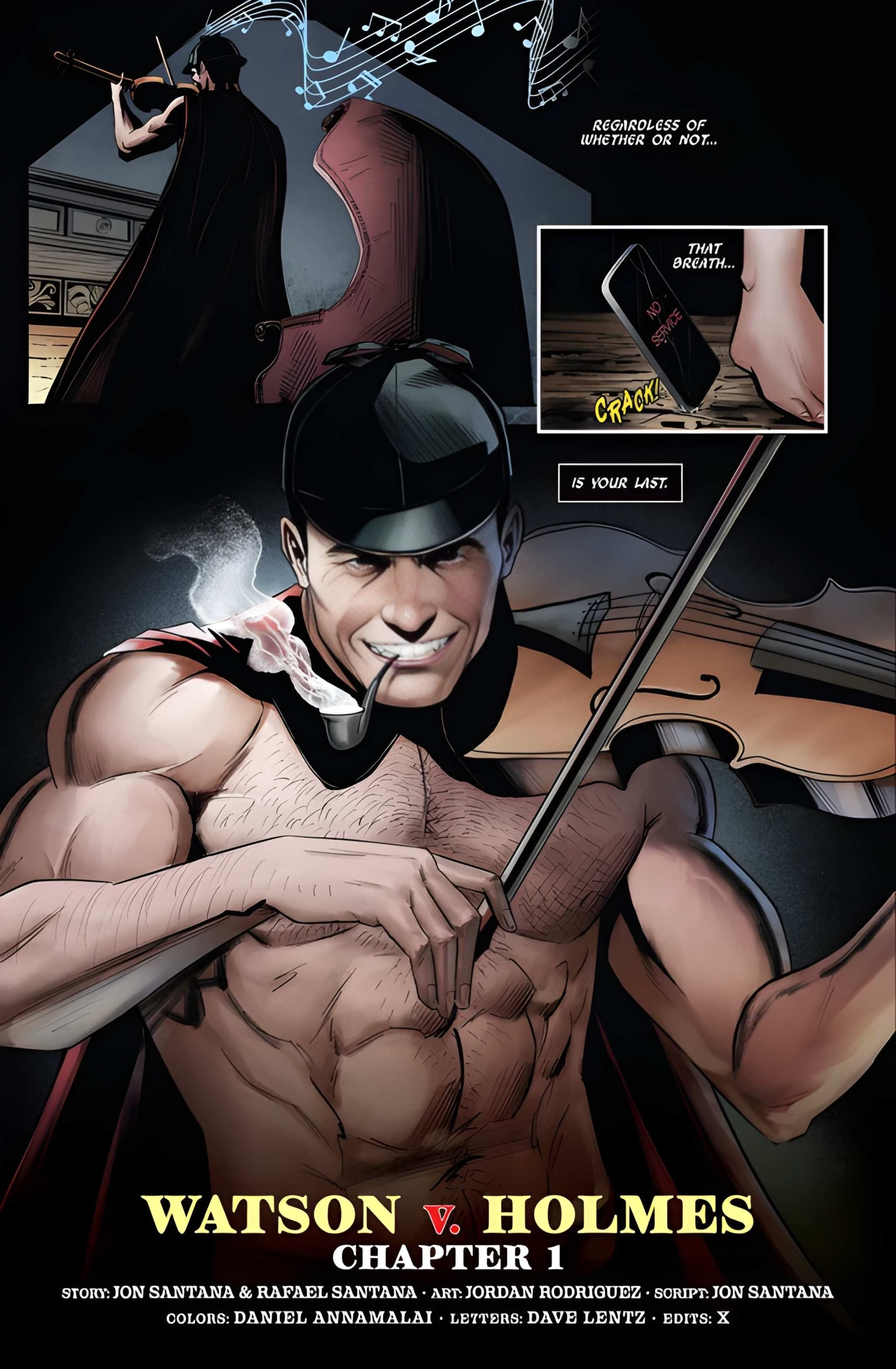
An inset cuts to the floor, where a bare foot stands beside a smartphone whose cracked screen reads “No Service.” Beneath both, the figure resolves into a half-length portrait filling more than half the page, bare-chested and grinning around the pipe stem so that the fangs show, smoke rising in the same pale register as the music above.
Three caption boxes carry one sentence down the page, “Regardless of whether or not… that breath… is your last,” and the eye descends with it from performance to victim to performer. On this page the victim receives no face; a foot and a dead phone stand in for a person. The palette holds to cold blue-black and reserves warm notes for skin, varnished wood, and the red lining of the cape, so that flesh reads as the object of appetite.
Rodriguez gives Holmes the musculature of a superhero splash rather than the gaunt ascetic Sidney Paget drew for ‘The Strand Magazine,’ converting the violin from an instrument of reverie into a display of predatory ease.
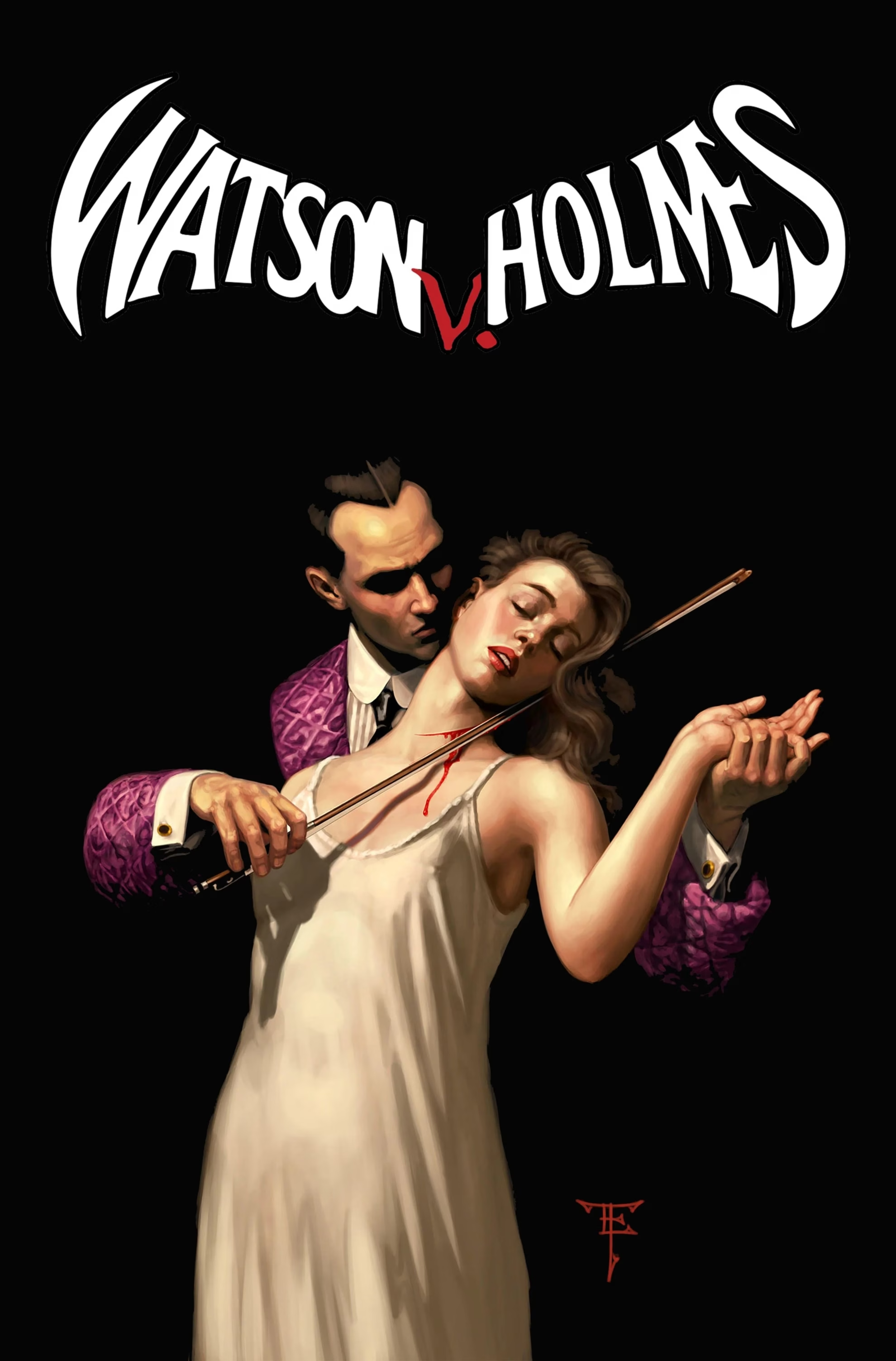
Tristan Elwell’s painted Cover A completes the image. Holmes, in a quilted purple dressing gown, holds a woman in a white slip as though she were the instrument, drawing the bow across her throat while blood beads along its line. Baker Street leisure and the detective’s reveries fuse into one act of feeding. Rob Gramlich supplied Cover B, an acetate “V” edition followed as Cover C, and Rodriguez drew Cover D.
The Undead Pastiche
Holmes has met the vampire before, always from the side of daylight. Loren D. Estleman’s ‘Sherlock Holmes vs. Dracula’ (1978) inserted the detective into Bram Stoker’s plot, and Ian Edginton and Davide Fabbri’s ‘Victorian Undead’ (Wildstorm, 2010) set him against zombies before its 2011 sequel set him against the Count. In each, deduction remains the weapon that defeats the monster.
A separate line of descent modernized the pair and recentered Watson, as Karl Bollers and Rick Leonardi’s ‘Watson and Holmes’ (New Paradigm Studios, 2013) did in present-day Harlem. ‘Watson v. Holmes’ joins the two lines, and in joining them moves the detective from hunter to hunted.
No Ghosts Need Apply
The reversal has a precise source in the canon. In ‘The Adventure of the Sussex Vampire’ (1924), Holmes dismisses a client’s fear with a formula: “This Agency stands flat-footed upon the ground, and there it must remain. The world is big enough for us. No ghosts need apply.” The Holmes of the Santanas is the creature that sentence declared impossible, and the series draws its tension from watching the case method survive the loss of its first premise.
Doyle had abandoned that premise in his own life by then. After the First World War he became one of spiritualism’s most prominent public defenders, while readers who had adopted Holmes as the emblem of secular reason kept a knowing, ironic faith in the detective that let him outlive his author’s conversion.3
The series assigns the halves of that split to two men, one who has crossed into the unexplainable and one who must still explain. The vampire has always taken the shape of its period’s anxieties, and this one is the man who reads everyone, in a world where a phone without signal marks the final disconnection.4
Poughkeepsie to the Shelf
This is the first Iron Age Comics title to receive coverage in these pages, and the publisher’s model explains much of the book’s shape. Iron Age works out of Poughkeepsie, New York, under Jon Santana, who edits and publishes its line. Its catalog leans toward high-concept genre horror introduced through crowdfunding, among them A.C. Medina’s ‘Abattoir Six’ and ‘Dead Head.’
The route to comic shops runs through Massive Indies, the sub-distribution program Massive Publishing announced with Lunar Distribution in February 2025, after Diamond Comic Distributors entered bankruptcy. That arrangement is why the second issue appears in release listings under Massive Publishing. A campaign must communicate a premise before anyone has seen a page, and the series accordingly puts Holmes as predator on every cover while its interiors carry the slower work of a procedural.
Issue Two and the Armchair
The second issue is scheduled for September 30th, 2026, with Rodriguez on interiors, a Cover A by Chin Fong, and a Cover B by Rodriguez. Its solicitation has Watson recruiting figures of the canon and an ally from his past while Holmes draws other vampires into his service.
Fong’s cover registers the change in station. Holmes sits in a leather armchair before a rose window, in a three-piece suit, pipe in one hand and a glass of red in the other, backlit in crimson. The first issue already seats him in a wingback chair by the fire, playing for one listener; the cover moves that chair from private reverie to public audience, and the canon’s seat of pure ratiocination becomes the throne of a court.
The 11-week interval between installments works against a mystery of accumulated clues. Twelve chapters amount to a substantial graphic novel, and this series is likely to read with greater coherence as a collected book than as single issues, each of which must restate the rules of a game the reader last saw a season earlier.
The Method Changes Hands
The lasting interest of the series is not the fangs. Doyle divided himself between a detective who banished ghosts and a believer who summoned them, and ‘Watson v. Holmes’ distributes that division across its two leads. The rationalist has become the phenomenon that cannot be explained away, and the companion who once recorded the method must practice it against the man who taught it.
Detective fiction once guaranteed that the monster would prove to be a man. This series begins with a man who has proven to be the monster, and it leaves Watson, the chronicler, as the last Victorian rationalist in a story where the gothic has already won the opening argument.
Can detective fiction keep its promise that reason outlasts horror once the detective himself becomes the horror, or does a vampire Holmes concede that the gothic was always the stronger genre?
References
- Srdjan Smajić, ‘Ghost-Seers, Detectives, and Spiritualists: Theories of Vision in Victorian Literature and Science’ (Cambridge: Cambridge University Press, 2010), 69–74. ↩︎
- Catherine Wynne, ‘The Colonial Conan Doyle: British Imperialism, Irish Nationalism, and the Gothic’ (Westport: Greenwood Press, 2002), 111–125. ↩︎
- Michael Saler, ‘“Clap If You Believe in Sherlock Holmes”: Mass Culture and the Re-Enchantment of Modernity, c. 1890–c. 1940,’ The Historical Journal 46, no. 3 (2003): 599–622. ↩︎
- Nina Auerbach, ‘Our Vampires, Ourselves’ (Chicago: University of Chicago Press, 1995), 145. ↩︎


Leave a Reply