


European medicine produced few images more durable than the plague doctor, a masked figure in a waxed coat, carrying a wand instead of a scalpel, defined by a beak-shaped mask meant to filter air rather than treat disease. That figure has drifted for four centuries between medical history and horror imagery, appearing in everything from Carnival costume to survival horror without needing an origin story attached to it.
Mad Cave Studios gives it one anyway. ‘Lazarus Order’ #1 reaches comic shops on August 19th, 2026, priced at $4.99 USD, approximately COP 15,570, across 32 full-color pages, opening an eight-issue limited series that recasts the plague doctor as a monastic monster hunter bound by religious oath rather than medical duty.
A Debut For Doctor Damien
Writer Sloane M. Siegel makes his comic book debut on the series, scripting a world co-created with character designer Benjamin J. Stockham. Artist and colorist Juan Doe renders the medieval setting in a single hand, with letters by D.C. Hopkins.
Cover A is illustrated by Juan Doe, with variant covers from Marguerite Sauvage and Georges Jeanty with Juancho. An editor had not been confirmed in the announced materials at the time of publication.
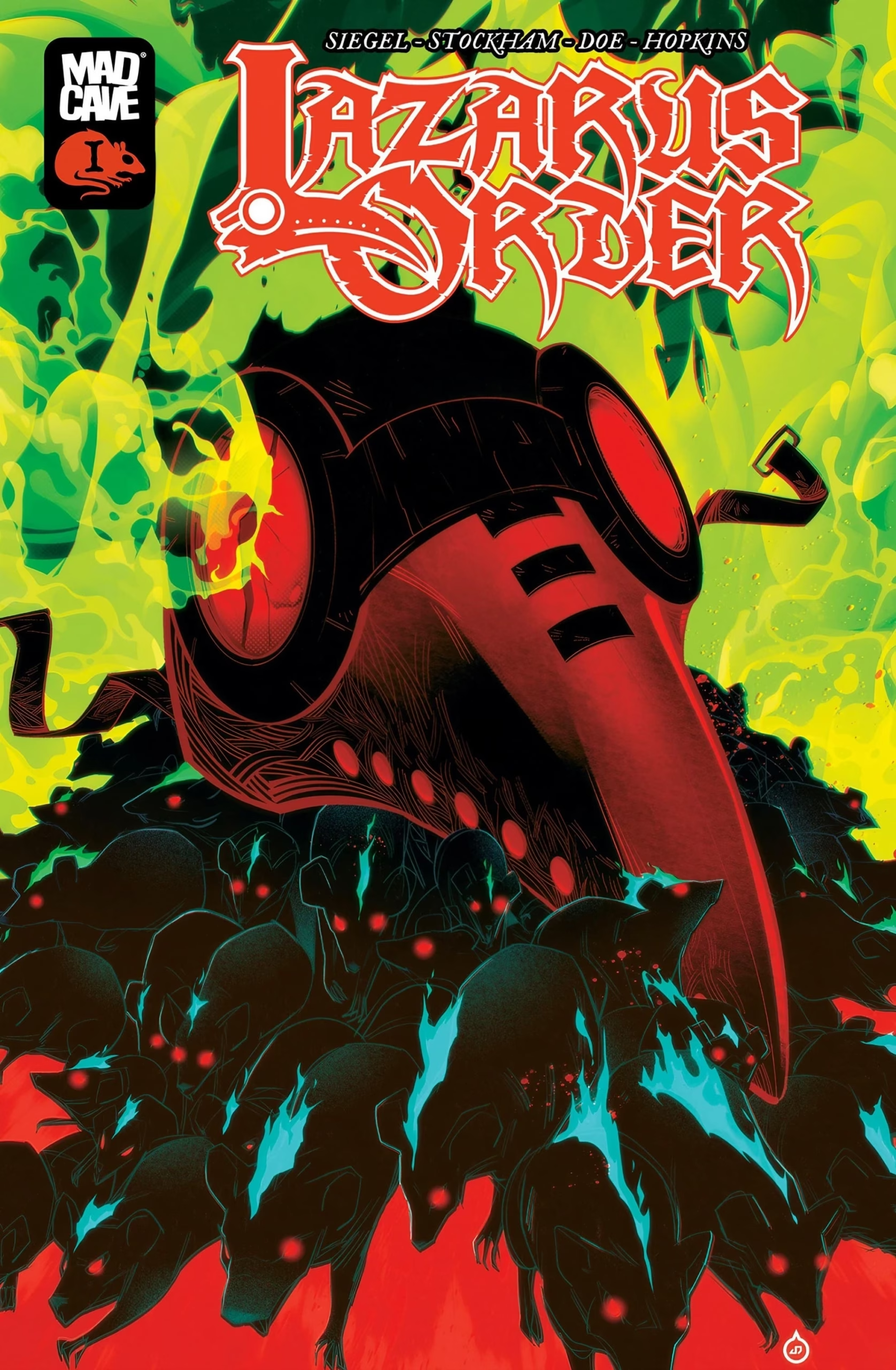
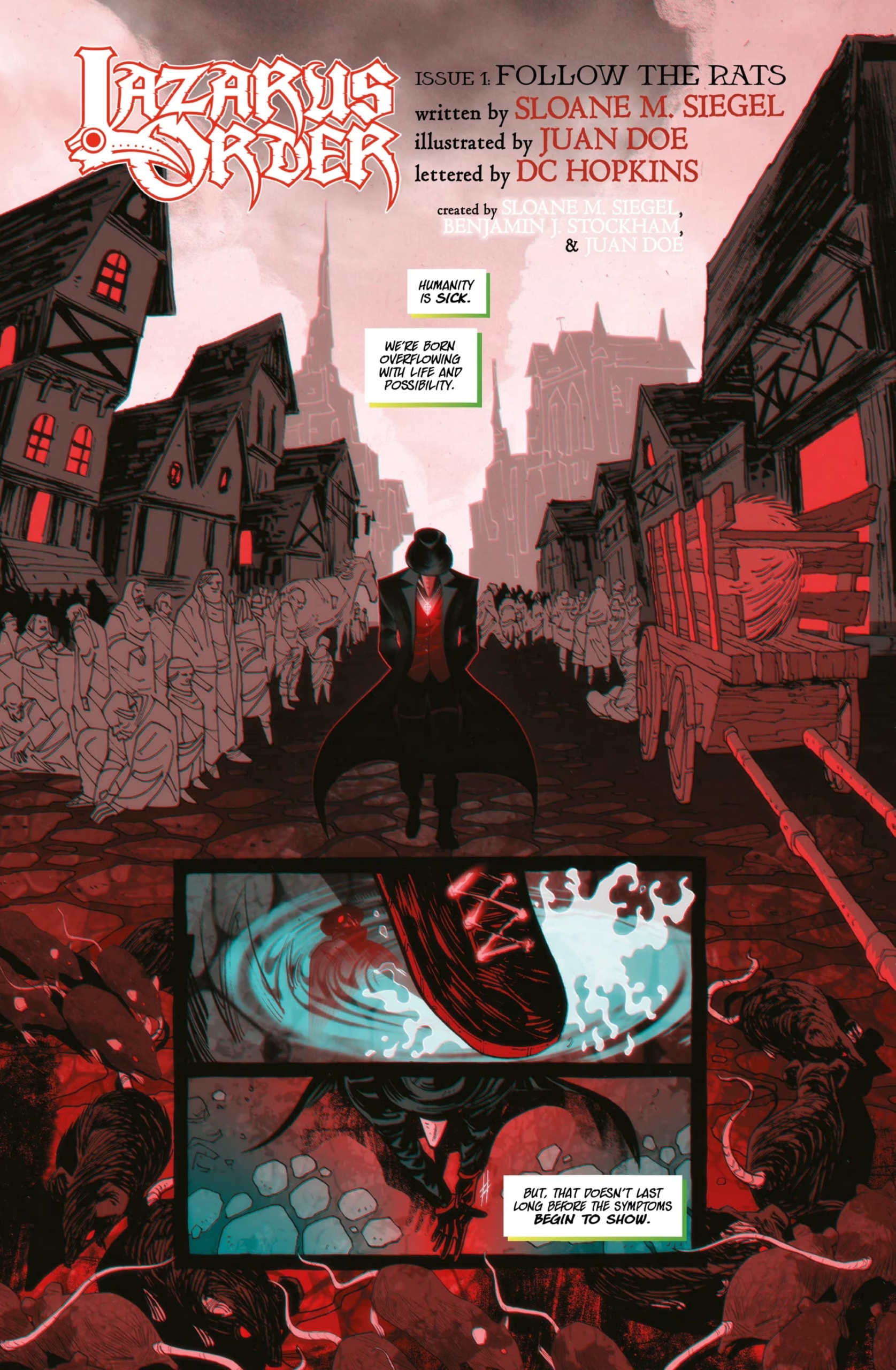
The premise turns quarantine and containment into a covenant. Members of the Lazarus Order are devout physicians who forfeit personal freedom in an oath to God in exchange for supernatural power, power that consumes them the more it is used.
Doctor Damien, described as a meek, middle-aged stickler for protocol, is paired with Edward Talis, an older and more opportunistic veteran of the order, and the first issue follows the two as a routine call to contain a monstrous transformation uncovers a threat aimed at the order itself.
The Beak Before The Comic
The costume the series borrows is not neutral set dressing. It stands as one of the most reproduced images in the visual history of European plague response, and its documented origin is considerably less certain than its familiarity suggests.
The beaked mask, wide hat, and waxed coat are conventionally credited to Charles de Lorme, physician to three French kings, said to have designed the outfit during a Paris plague outbreak in 1619, packing the beak with aromatic herbs believed to filter the “bad air” thought to carry disease.
Recent scholarship complicates that origin considerably. A 2023 study in the European Journal for the History of Medicine and Health traced the costume’s documented record back to a single, unreliable seventeenth-century biography of de Lorme, written by an author with a recorded reputation for embellishment, and found that the garment de Lorme himself described bears little resemblance to the beaked figure familiar from the popular prints that later fixed the image in public memory.1
That gap between the documented history and the popular image is useful material for a horror comic rather than an obstacle to one. ‘Lazarus Order’ does not need the beaked mask to have existed in the exact form legend remembers it; the series only needs the anxiety the costume represents, quarantine, ritual, and the isolation of the healer from the healthy, all of which the historical record confirms regardless of how the mask itself came together.
One Order Against Every Curse
The series’ name carries a historical echo beyond its medical framing. The Military and Hospitaller Order of Saint Lazarus of Jerusalem was a genuine Crusader-era order, documented as a functioning leper hospital as early as 1073 and formally established as a hospitaller body in the 1130s, whose members combined religious vows with the care of the diseased rather than combat alone.
Nothing in the announced solicitation confirms that the historical order informed the naming of Mad Cave’s fictional one, and the parallel should be read as a resemblance rather than a stated source, but a monastic order defined by disease and self-sacrifice sharing a name with a documented medieval institution built on precisely that combination is difficult to set aside entirely.
That structure, sacrificial vows married to disease containment, also collapses an entire monster taxonomy into symptoms of one affliction rather than treating each threat as its own mythology. The Lazarus Order defends against vampires, werewolves, a rodent-borne affliction called Rattusvir, the walking dead, and other named variants of a unifying condition the solicitation terms the First Sickness.
Mad Cave’s Decade In Genre
‘Lazarus Order’ comes from a publisher without a long documented history in horror specifically. Mad Cave Studios was founded in 2014 by Mark London in Miami, Florida, and spent its first several years assembling a catalog centered on action-adventure and fantasy titles, led by its flagship series ‘Battlecats,’ before expanding into imprints for young-adult and children’s comics.

The publisher’s horror output is a more recent and still-developing part of that catalog, represented by the science-fiction anthology ‘Terrorbytes’ and the eighties-set slasher series ‘Satanic Panic,’ both released within the past two years. ‘Lazarus Order’ extends that expansion into medieval horror specifically, a period setting the publisher’s existing horror line has not yet occupied, giving the imprint a third distinct horror register alongside contemporary anthology and retro slasher material.
A Faith That Costs The Body
What ‘Lazarus Order’ proposes, before a single issue reaches shelves, is a version of monster hunting built on medical exhaustion rather than triumph. Where the historical plague doctor was a functionary equipped with a flawed theory of disease, and the plague doctor of popular imagination became a menace-image, this comic asks the figure to be neither, casting quarantine work as a slow, consuming vocation rather than either science or spectacle, and whether an eight-issue arc can sustain that premise past its opening call depends on how consistently Siegel and Doe let the cost of the order’s power outweigh its display.
Does anchoring a horror series in the documented uncertainty of the plague doctor costume strengthen its dread, or does the history matter less than the image audiences already carry?
Reference
- Herbert J. Mattie, ‘Men in Tights: Charles De Lorme (1584–1678) and the First Plague Costume,’ European Journal for the History of Medicine and Health 81, no. 1 (2023): 1–13. ↩︎

Leave a Reply