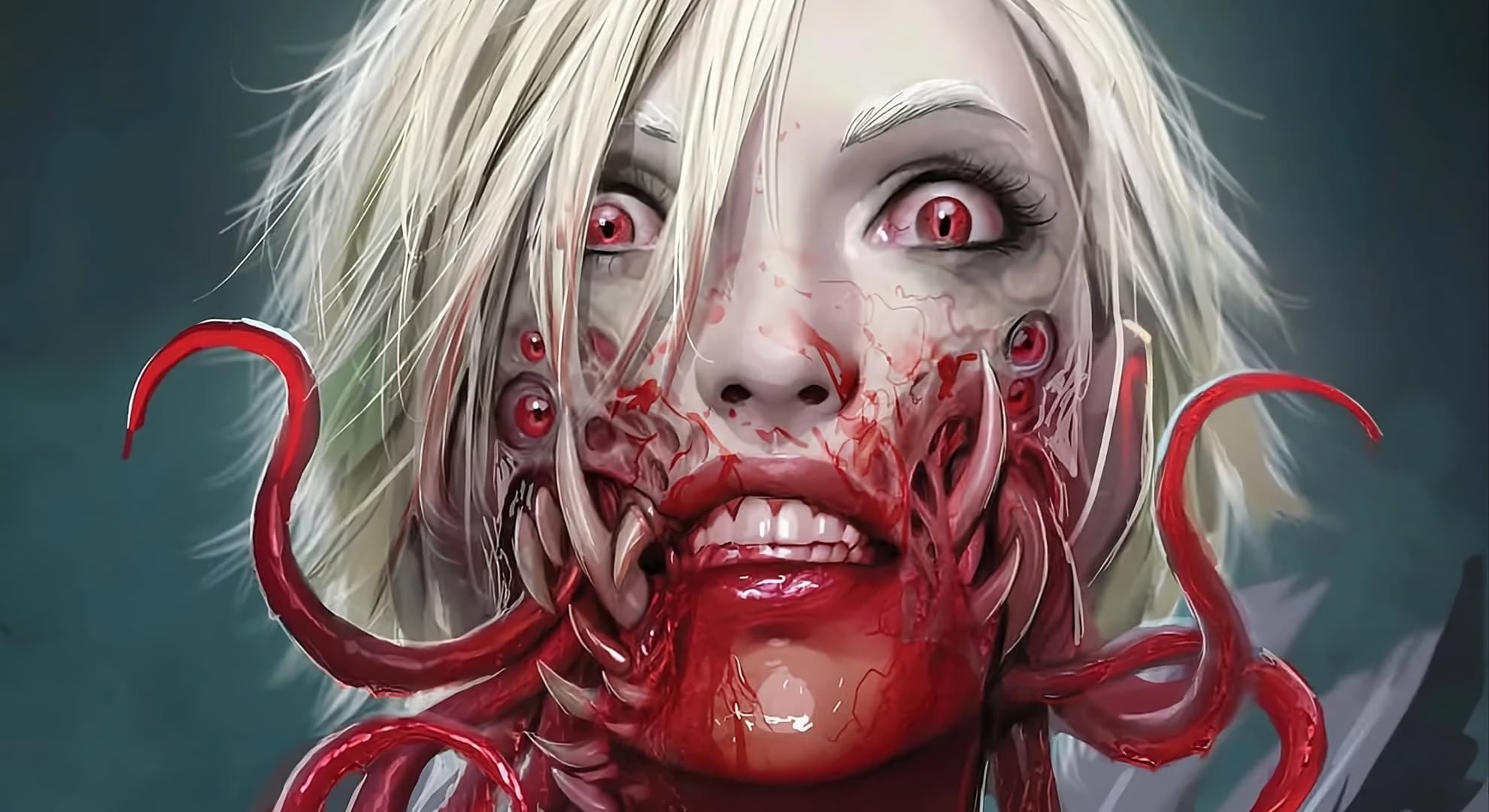


Cosmic horror reached the comics page wearing black. The strain of the genre that descends from H.P. Lovecraft, vast and indifferent forces pressing in at the edge of human comprehension, has tended to arrive in heavy ink and deep shadow, its dread carried by what the page withholds rather than what it shows.
Ben Templesmith’s bruised washes on ‘30 Days of Night’ and Mike Mignola’s blocks of spotted black on ‘Hellboy’ fixed that grammar for a generation of readers. The monstrous, in that lineage, lives in the dark the artist declines to illuminate.
That convention is worth holding in view, because the cosmic-horror book returning this summer departs from it almost entirely.
A Vigil Returns After 11 Years
‘Death Vigil’ (2026) #1 reaches comic shops on August 5th, 2026, from Image Comics and Top Cow Productions, priced at $5.99 USD, approximately COP 20,600, and rated Teen+.
Stjepan Šejić, who created the series and returns to write and paint it, has framed the continuation in unusually exposed terms, telling readers that this is the second arc and that without their response there may not be a third for a long time.
Šejić has set that appeal against his own trajectory, recalling that the first arc appeared while he was an unestablished artist still working to prove he could write as well as draw. He now presents himself as a creator known for layered characters and emotionally heavy storytelling, and the second arc as the realization of potential the first only signaled.
He also supplies covers A and D, with additional covers from Sozomaika and Mirka Andolfo, each of whom also contributes a virgin incentive variant. No separate letterer or editor was named in the announced materials.
The Painted Cosmic Horror
The first formal fact about ‘Death Vigil’ is that one person renders all of it. Šejić writes, draws, and paints the issue himself, with no separate inker or colorist credited.
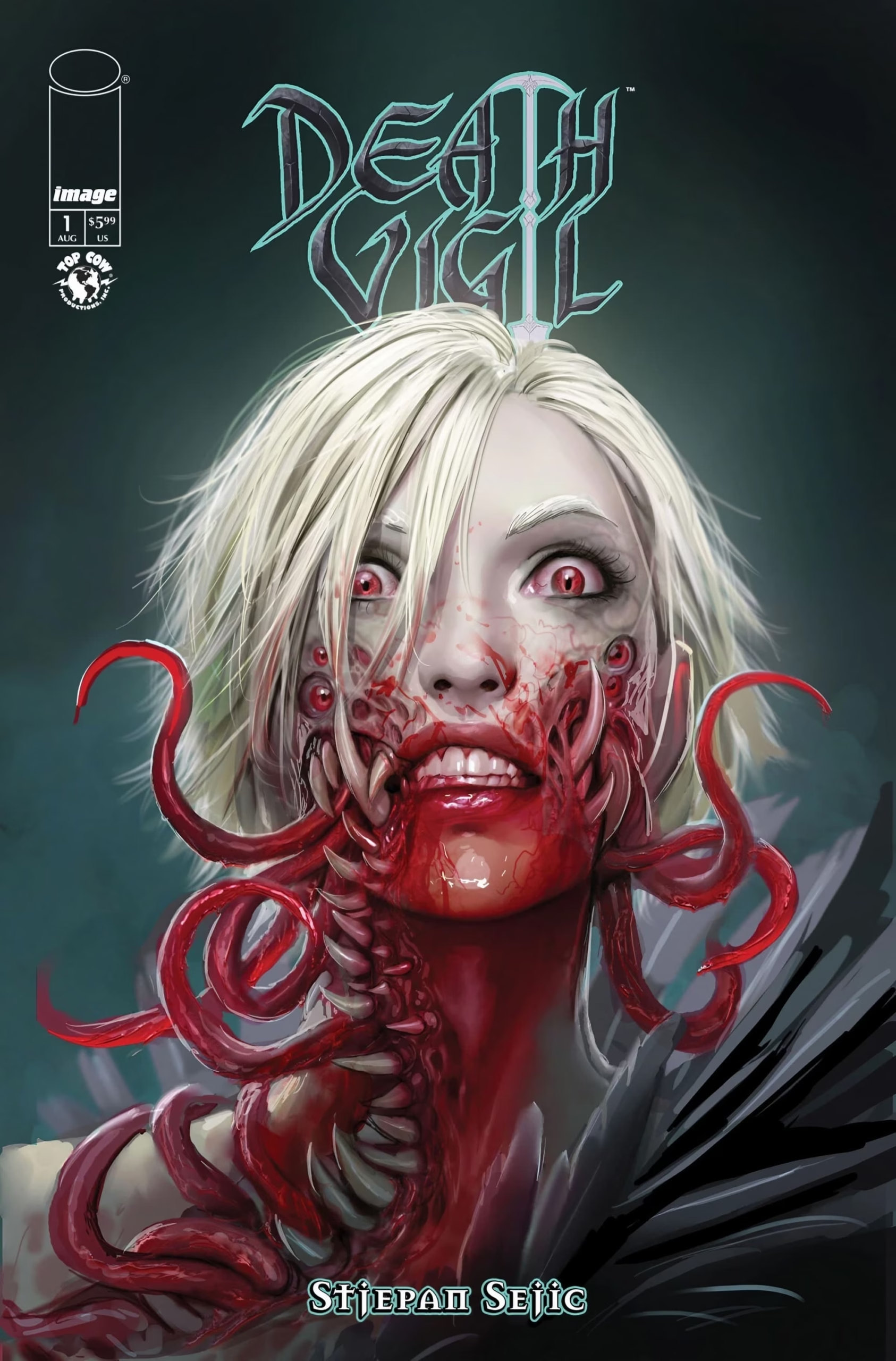
That single authorship produces a specific look. Šejić works in fully painted digital color, with soft volumetric modeling, luminous light, and faces built for legible expression rather than graphic abstraction.
The method runs against the cosmic-horror grain described above. Where the Templesmith and Mignola line locates terror in spotted black and negative space, Šejić keeps no inkline to hide behind; his monsters are lit, modeled, and fully present on the page.
The original series staged that collision physically. Glowing spirit weapons and the writhing forms of the Primordial Enemy were rendered in saturated light against the muted browns of ordinary rooms, so that the supernatural announced itself as a shift in palette rather than a descent into black.
The wager is that a Lovecraftian threat can hold its menace under full illumination, carried by painted color temperature and the weight of rendered form rather than by what shadow conceals.
Warmth as a Vector for Dread
The harder formal question is tonal. ‘Death Vigil’ rests on comedy as much as on cosmic horror, an ensemble of Death Knights whose banter and domestic ease run directly alongside an apocalyptic war.
The solicitation copy itself runs on that deadpan register, pitching immortal service against the Primordial Enemy as a job with poor pay and unforgettable coworkers. The comedy is not a wrapper around the horror but a property of the same material.
Top Cow President and COO Matt Hawkins has pointed to that balance of cosmic horror, action, and heart as the book’s defining quality. The orthodox view would treat such warmth as a dilution of fear.
The opposite case is stronger here, because dread sharpens against comfort. A reader made to care about the ensemble has something to lose, and the cosmic threat acquires stakes precisely because the book first establishes a world worth protecting.
That is the formal risk the second arc inherits, the open question of whether sustained warmth deepens the horror or domesticates it.
Šejić From ‘Witchblade’ to ‘Harleen’
The single authorship has a long history behind it. Šejić, a Croatian writer and artist, established his reputation at Top Cow across a years-long run on ‘Witchblade’ and work on ‘Aphrodite IX’ and ‘Artifacts.’
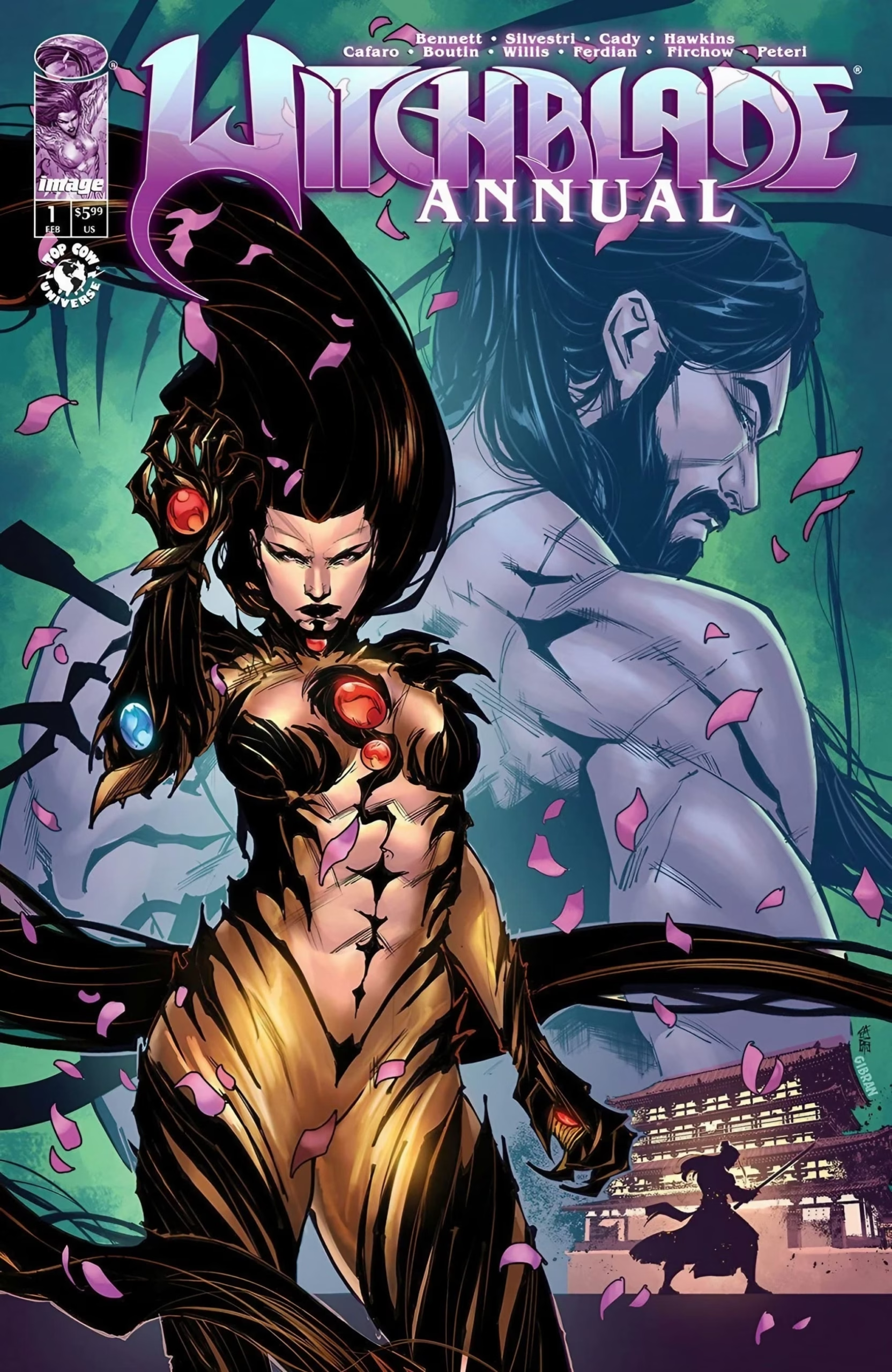
At DC Comics he drew ‘Aquaman,’ ‘Suicide Squad,’ and ‘Justice League Odyssey,’ and wrote and painted ‘Harleen’ for DC Black Label, a psychological account of a villain’s making.
His creator-owned shelf, which includes ‘Sunstone,’ ‘Fine Print,’ and ‘Ravine,’ is where the full writer-artist control on display here was developed. Within the genre proper, ‘Death Vigil’ remains his most sustained work in cosmic horror.
Top Cow and Its Supernatural Shelf
The home for the book carries its own genre record. Top Cow Productions, founded in 1992 by Marc Silvestri as a studio within Image Comics, made its name on supernatural and occult-inflected properties.
‘Witchblade,’ with its possessed bearer and demonic gauntlet, and ‘The Darkness,’ whose protagonist commands a living force of animate shadow, gave the studio a durable line in horror-adjacent fantasy, and ‘Death Vigil’ carries that line into more openly cosmic territory, trading the occult-thriller register of those flagships for Lovecraftian scale.
The Elder Gods in Comic Form
The threat the Death Knights oppose is the genre’s oldest. In ‘Supernatural Horror in Literature,’ Lovecraft argued that the deepest fear is fear of the unknown, and his cosmic horror built that principle into entities wholly indifferent to human survival.1
‘Death Vigil’ translates that inheritance into its Primordial Enemy and the League of Necromancers who serve it, a world-devouring force and the human agents who would open the door to it.
Joining the Vigil carries a fixed cost in the premise, since a recruit must die before taking up the fight. That entry price gives a war pitched at cosmic scale an unusually personal threshold.
Comics have carried Lovecraft’s Great Old Ones in many registers, from direct adaptation to the cosmic dread folded into larger shared mythologies. The Primordial Enemy places ‘Death Vigil’ inside that strain while keeping its own ensemble-driven shape.
A Return Made Contingent
What makes this return matter is not that a well-liked series is back, but the terms under which it returns, and for a creator-owned cosmic-horror property, authored start to finish by one hand, it resumes a narrative dormant for more than a decade and stakes its future openly on whether readers answer.
That is a rare structural position in horror comics, where most cosmic horror arrives under shared imprints and house mythologies rather than from a single writer-artist continuing a personal story on his own terms, and indeed, the second arc’s real test is the one the form sets for it, whether a fully painted, warmth-forward approach can carry Lovecraftian weight across six issues, or whether the comfort that made the first arc beloved finally softens the fear.
Does Šejić’s fully painted, warmth-forward method intensify the cosmic horror at the center of ‘Death Vigil’, or does the ensemble comedy that readers loved in the first arc work against the dread the second arc must sustain?
Reference
- H. P. Lovecraft, ‘Supernatural Horror in Literature’ (1927; repr., New York: Dover Publications, 1973). ↩︎

Leave a Reply