

Every extreme-metal underground begins the same way, with a handful of tracks distributed directly, without a label’s intervention, to whichever listener bothers to look. The Pacific Northwest scene that gave atmospheric black metal its most durable regional inflection built its early reputation exactly this way, trading recordings among a small circle of committed listeners years before wider distribution networks noticed.
England’s own black metal underground, concentrated for much of the past decade in scattered regional pockets rather than a single center, has followed a comparable path.
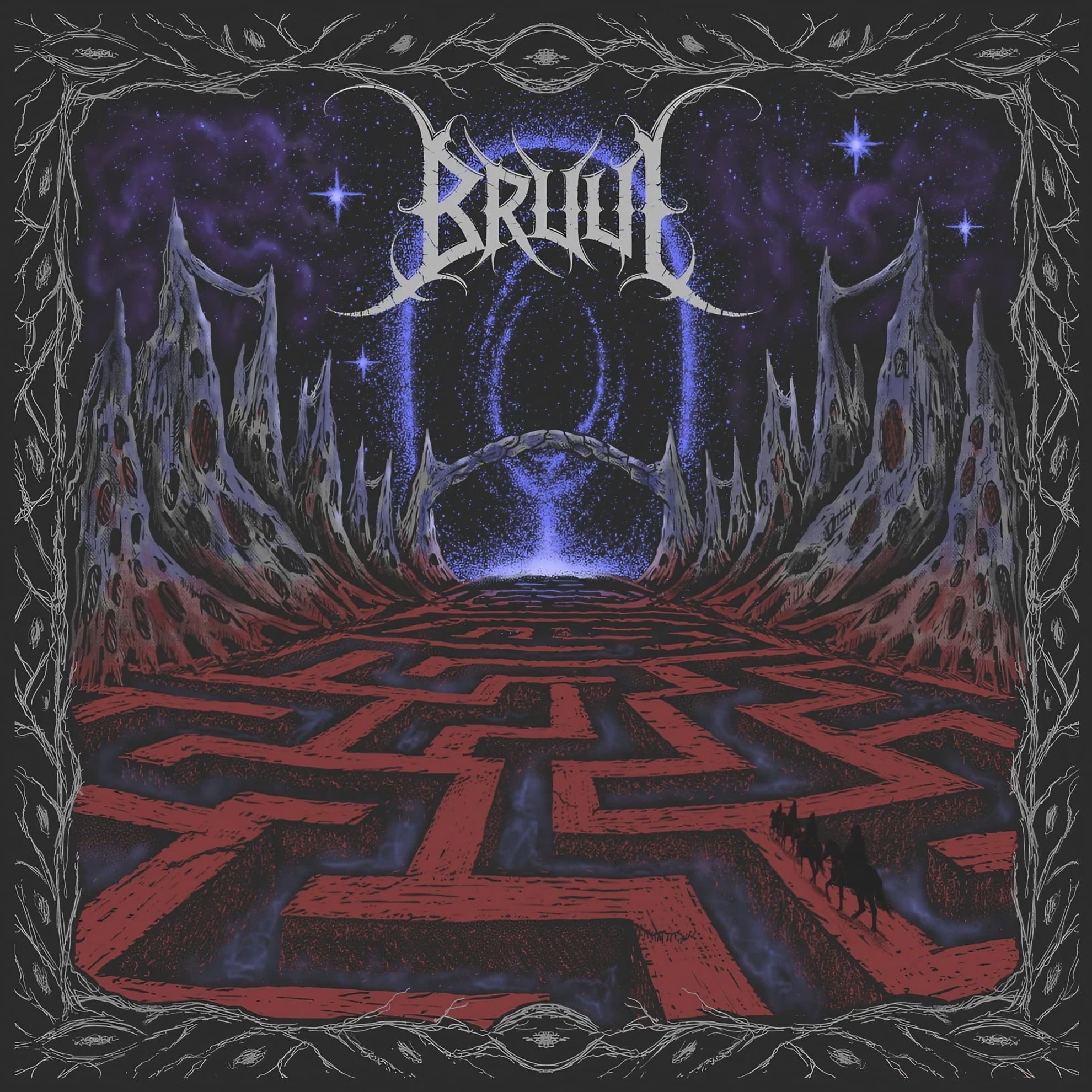
York, a cathedral city in North Yorkshire better known internationally for medieval history than for metal, has become an unlikely node in that pattern. On July 31st, 2026, the project Bruul release their self-titled debut EP, ‘Bruul,’ independently through Bandcamp, five tracks that extend a single-track demo issued less than a year earlier into a fuller, still self-directed statement.
A Single Signal From the Pennines
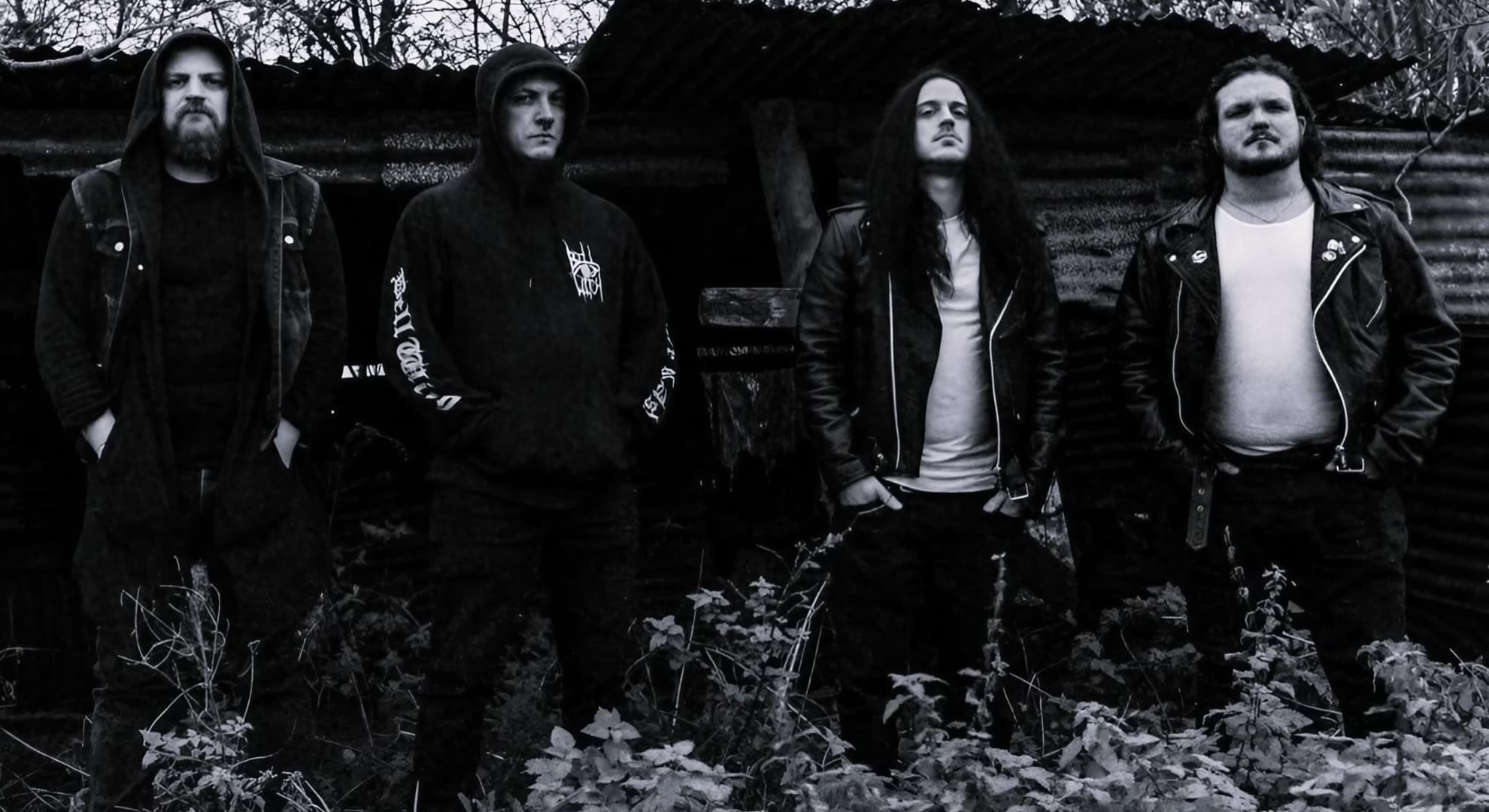
Bruul’s confirmed lineup includes Andy Mawer and James Cross on vocals and guitar, Nate Lewis on vocals and bass, and Joe Rees-Jones on drums.
The project’s Bandcamp presence identifies York, in North Yorkshire, as its base of operation, and bookings are handled directly through the project’s own contact channel rather than through a label or management company. No formation date or extended biography had been made available through official channels at the time of publication.
The project’s Bandcamp tags the music as atmospheric black metal with doom inflections, positioning Bruul within a lineage most closely associated with the Cascadian scene of the American Pacific Northwest, a regional style built on extended tremolo passages, forest-bound imagery, and an explicit turn away from the corpse-paint theatrics of the genre’s Norwegian originators.
‘Bruul’ is released with no label attached, a self-directed arrangement that places the full weight of distribution and reach on the project itself.
One Track Before the Five
Bruul’s first public release, a single-track demo titled ‘Gates of Silence,’ appeared on Bandcamp on September 19th, 2025, nearly 10 months ahead of the EP that carries the same song as its opening track. A one-track demo is, by design, a modest object, an announcement rather than a statement, offered to whichever listener happens to search a new tag rather than promoted through any established channel.
That the completed EP retains ‘Gates of Silence’ as its lead position, unaltered in title, argues for a project treating its own earliest material as foundation rather than as something to be superseded by whatever comes next.
The four tracks that follow it on ‘Bruul,’ ‘Words of the Sword,’ ‘Symphony of Misery,’ ‘A Dawnless Star,’ and ‘Blessed is the Flame,’ were composed and released without a prior public preview, making the EP itself the first opportunity for any audience beyond the project’s immediate circle to hear them.
Gates, Runes, and Sacred Fire
The EP’s five titles gather a specific set of images rather than a generic set of dark signifiers, and each carries a documented lineage worth situating on its own terms.
‘Gates of Silence’ names a threshold, and the gated underworld recurs across Northern European cosmology in more than one form. In the Old Norse tradition, the realm ruled by Hel was itself approached through a barred gate, a boundary the dead were required to pass rather than simply arrive at, marking death as a transition attended by its own ritual geography.1
The image belongs to a broader Germanic and Scandinavian inheritance in which the underworld is neither a void nor a simple absence but a bordered place, guarded and separate.
‘Words of the Sword’ draws on an older connection between weapon and language than the phrase might first suggest. Runic inscription, the writing system carried across early medieval Northern Europe, was frequently cut directly into blades and other weapons, binding the object’s lethal function to a written charge meant to carry power beyond the physical edge.2
The sword, in that tradition, was never a mute object. It spoke through the runes carved into it, and the phrase sits precisely at that historical intersection of blade and inscription.
The two remaining interior titles, ‘Symphony of Misery’ and ‘A Dawnless Star,’ operate in a more atmospheric register, naming mood and cosmic bleakness rather than reaching for a specific historical or religious source, and function as connective tissue between the more heavily sourced imagery that opens and closes the sequence.
‘Blessed is the Flame,’ which closes the EP, gathers a different and geographically distant tradition. Fire, known as Atar, functions in Zoroastrian religious practice as the supreme symbol of Asha, divine order, and the visible representative of Ahura Mazda, tended continuously in fire temples as a directional focus for worship rather than as the divine entity being worshipped.3
Positioning consecrated fire at the close of a record built otherwise from Northern European material extends its reach past a single regional mythology, gathering a repertoire of dread and reverence assembled from more than one inherited tradition.
A Cascadian Echo in Yorkshire
Atmospheric black metal’s most influential regional variant took shape in the forests of Oregon and Washington in the early twenty-first century, prioritizing extended, unbroken passages and a deliberate turn away from the genre’s earlier theatrical trappings in favor of what its practitioners described as a more direct communion with the natural world surrounding them.
That regional style traveled outward from its point of origin the way genre variants generally do now, not through label infrastructure but through direct digital exchange between listeners who had no geographic reason to encounter one another otherwise.
England’s own black metal underground absorbed that transmission unevenly, filtered through regional clusters rather than a single dominant scene.
Yorkshire, with a documented run of small, self-organized black metal projects operating largely outside any London-centered infrastructure, has functioned as one such cluster for over a decade. Bruul’s choice to self-release directly through Bandcamp, without label mediation, belongs to a broader British underground tradition in which do-it-yourself distribution has long served as the primary mechanism by which music outside commercial consideration reaches an audience at all, independent of geographic or institutional gatekeeping.4
Bandcamp and the Direct Route
For listeners outside England’s own regional metal circuits, a project like Bruul is encountered almost entirely through the same channel it was made available on, Bandcamp’s tagging system, where atmospheric black metal functions as a search term rather than a marketing category.
That structure flattens the usual asymmetry between a band operating inside an established scene and one working in relative isolation. A listener in Santiago or Seoul locates ‘Gates of Silence’ the same way a listener in Leeds does, through the tag rather than through festival exposure or press coverage the project has not yet accumulated.
Physical formats had not been confirmed at the time of publication. The EP exists, at present, as a digital release available directly through Bandcamp. That absence of a pressed edition is consistent with a project still building its documented catalogue one release at a time, choosing accessibility over the delay a physical run would introduce.
Joe Rees-Jones, the project’s drummer, recorded, mixed, and mastered ‘Bruul’ himself, keeping production in-house alongside the band’s own performances.
The Threshold Still Open
Bruul’s self-titled EP reaches listeners without the guarantee that comes from an established catalogue or a label’s backing, offered instead on the strength of a single demo track and five confirmed song titles that gather a gate, an inscribed blade, a darkened sky, and a tended flame into a single sequence.
What the EP demonstrates, on the evidence available ahead of its full release, is a project willing to draw its imagery from more than one inherited tradition and to trust a self-managed distribution channel to carry that imagery to whichever underground listener goes looking for it, in York or well beyond it.
For listeners who have followed atmospheric black metal’s spread from the forests of the Pacific Northwest into unexpected regional pockets across Europe, does a project’s decision to build its imagery from Norse, runic, and Zoroastrian sources within a single five-track sequence read as a considered synthesis, or as evidence that a still-young project has not yet settled on the specific mythology it wants to inhabit?
References
- Hilda Roderick Ellis Davidson, ‘Gods and Myths of Northern Europe’ (Harmondsworth: Penguin Books, 1964), 148–153. ↩︎
- R. I. Page, ‘Runes (Reading the Past)’ (London: British Museum Publications, 1987), 9–13. ↩︎
- Mary Boyce, ‘Zoroastrians: Their Religious Beliefs and Practices’ (London: Routledge & Kegan Paul, 1979), 154–158. ↩︎
- George McKay, ‘DiY Culture: Party and Protest in Nineties Britain’ (London: Verso, 1998), 1–5. ↩︎


Leave a Reply