

Nearly every French commune, however small, keeps a stone list of its dead. After the First World War, town councils across the country commissioned columns, obelisks, and grieving allegorical figures by the thousands, each one carved with a roll of local names that a village could not otherwise hold in shared memory. These monuments did not commemorate generals or campaigns. They recorded the ordinary dead of ordinary places, and in doing so turned private loss into a fixture of the public square.
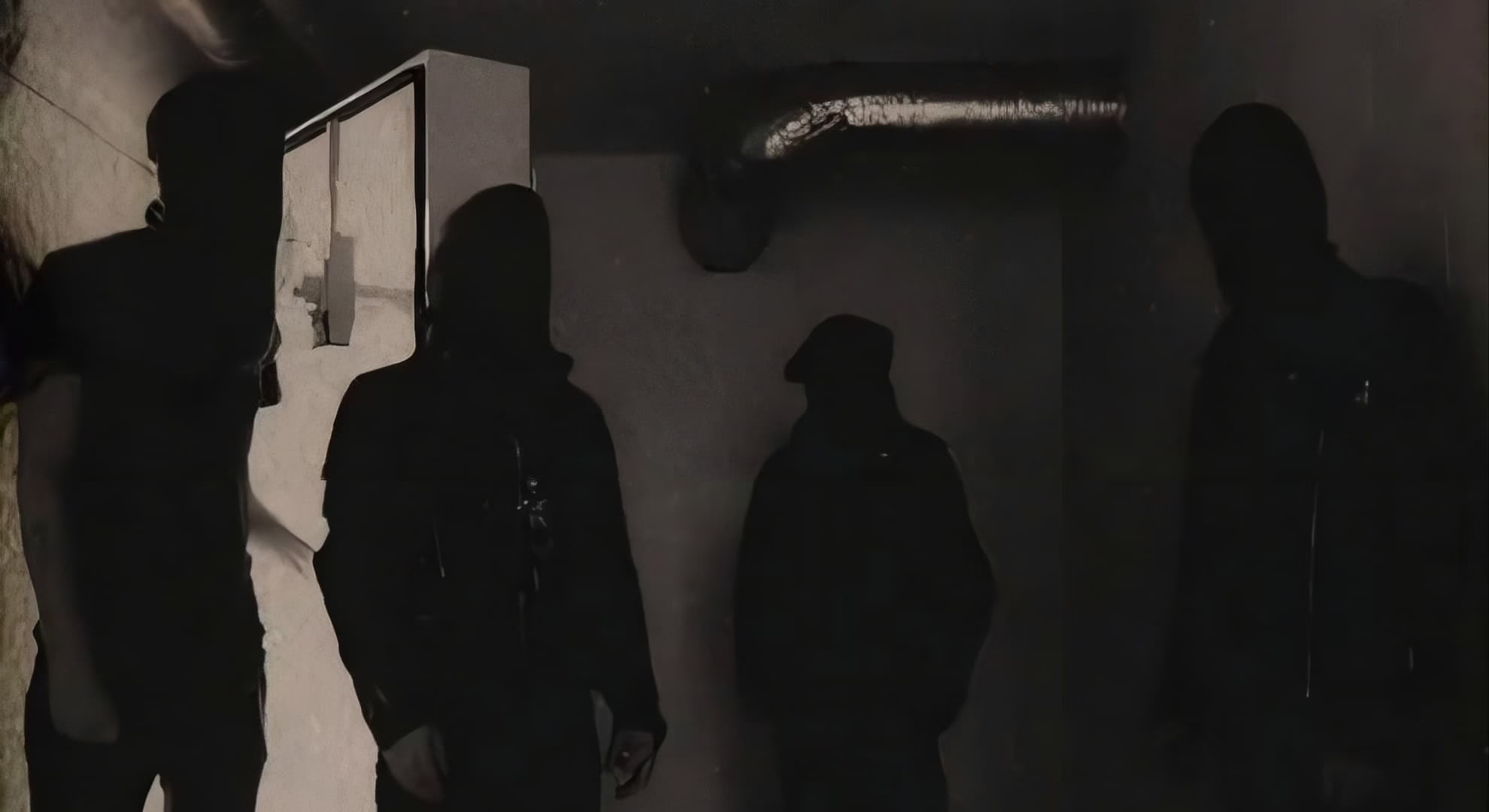
A death metal quartet from the French Alps has now borrowed the vocabulary of that civic mourning for a record that has nothing to do with war and everything to do with what a body and a mind can survive.
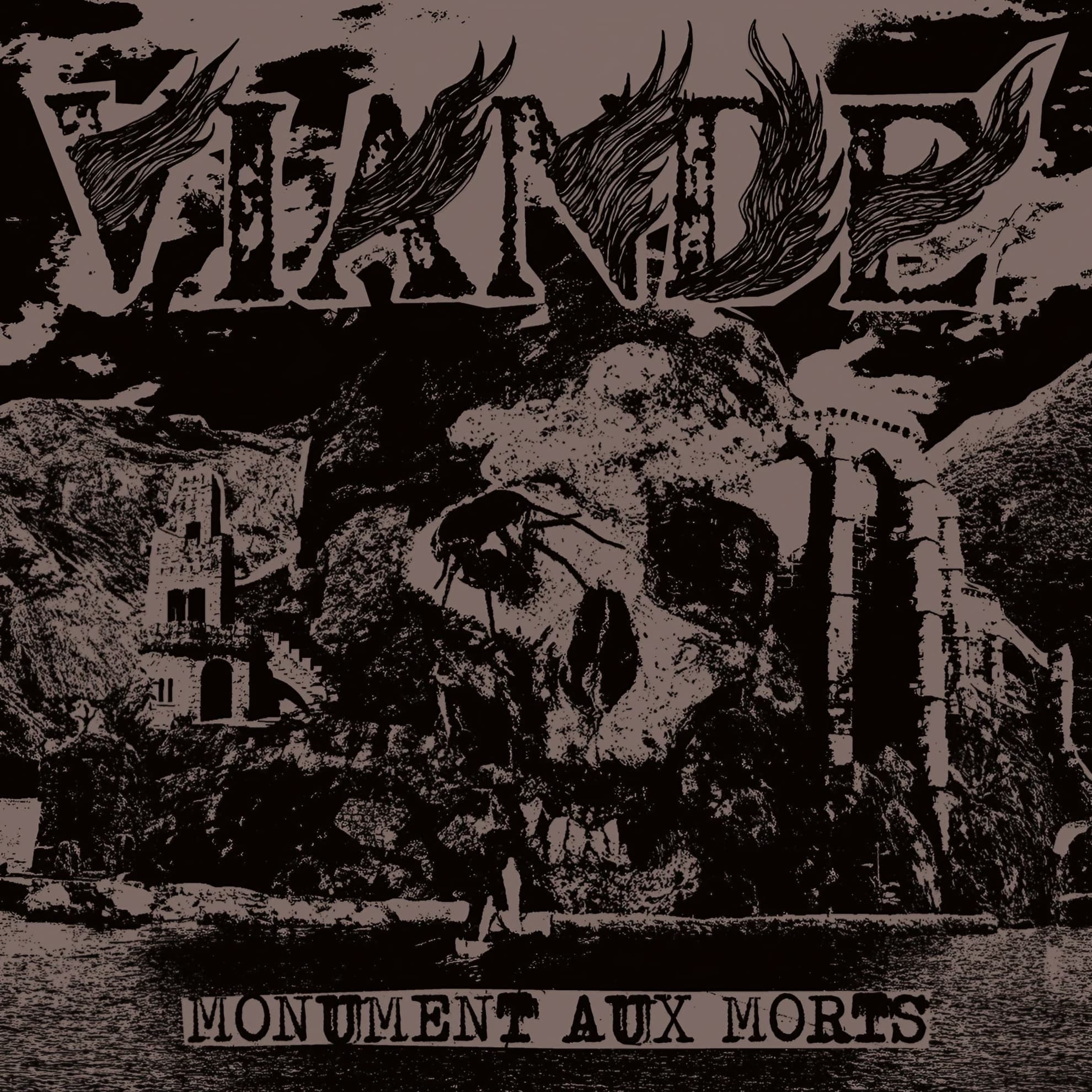
Viande release their second full-length, ‘Monument aux Morts,’ on July 31st, 2026, through the independent label Transcending Obscurity Records, on vinyl, compact disc, and digital formats.
The four-piece works in a blackened, atmospheric strain of death metal thick with doom-laden passages, a register the band has spent more than a decade refining from Chambéry, a city set against the Savoie Alps within reach of the Swiss border.
Formed in the Savoie Underground
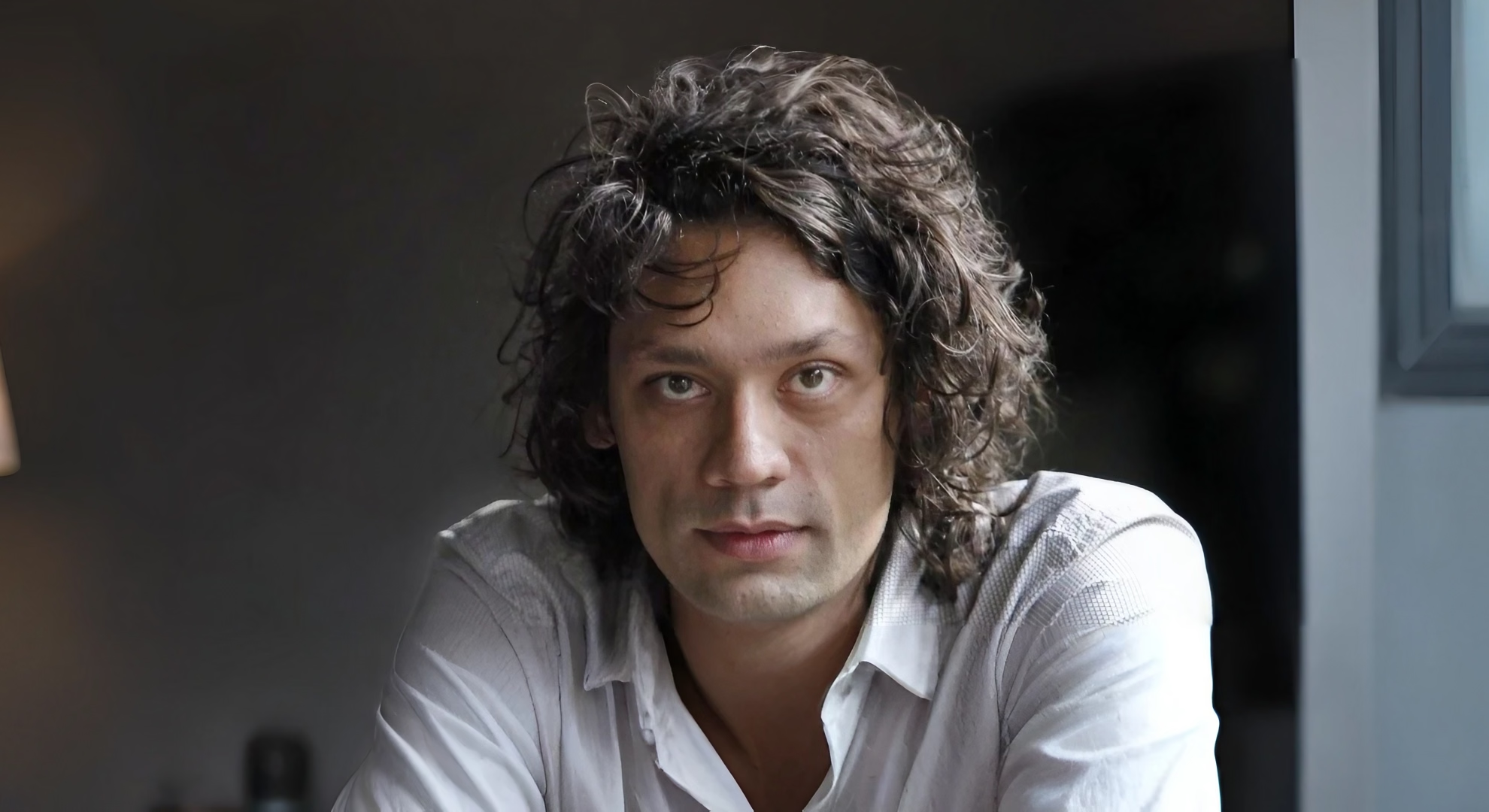
Viande took shape around 2013 in Chambéry, formed by vocalist J., previously of the black metal project Swarms of Darkness, and guitarist B., also a member of the French black metal band Nahar. The pair built the project on an aesthetic of deliberate excess, working toward a sound they wanted to feel as imposing and suffocating as the two of them could manage.
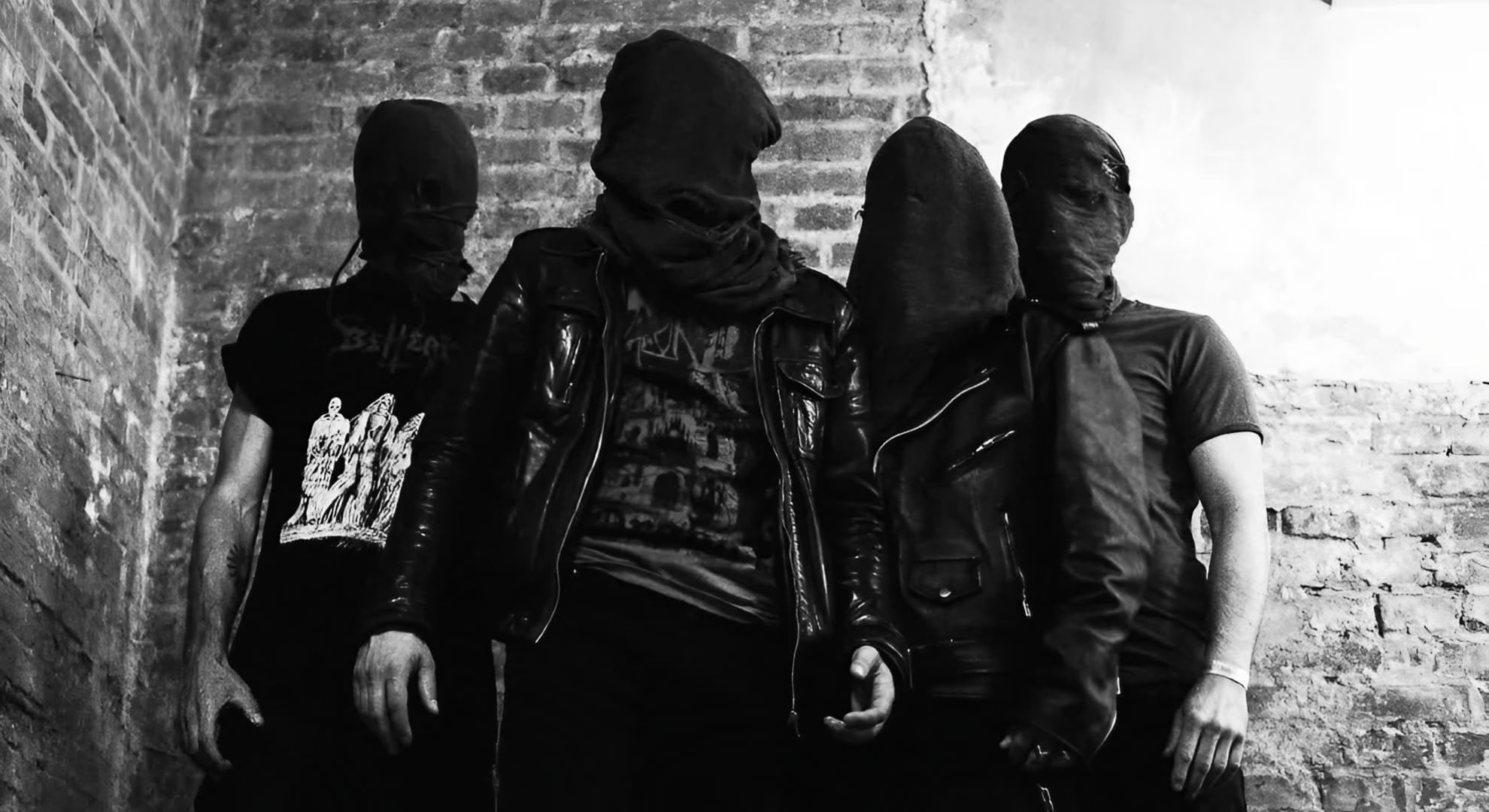
A self-titled extended play followed in 2015, tracked with a drum machine and shaped through partial improvisation, followed by a further demo two years later. Both releases circulated without label backing, inside the word-of-mouth circuits that carry the French underground’s most extreme music between cities rather than through any centralized industry.
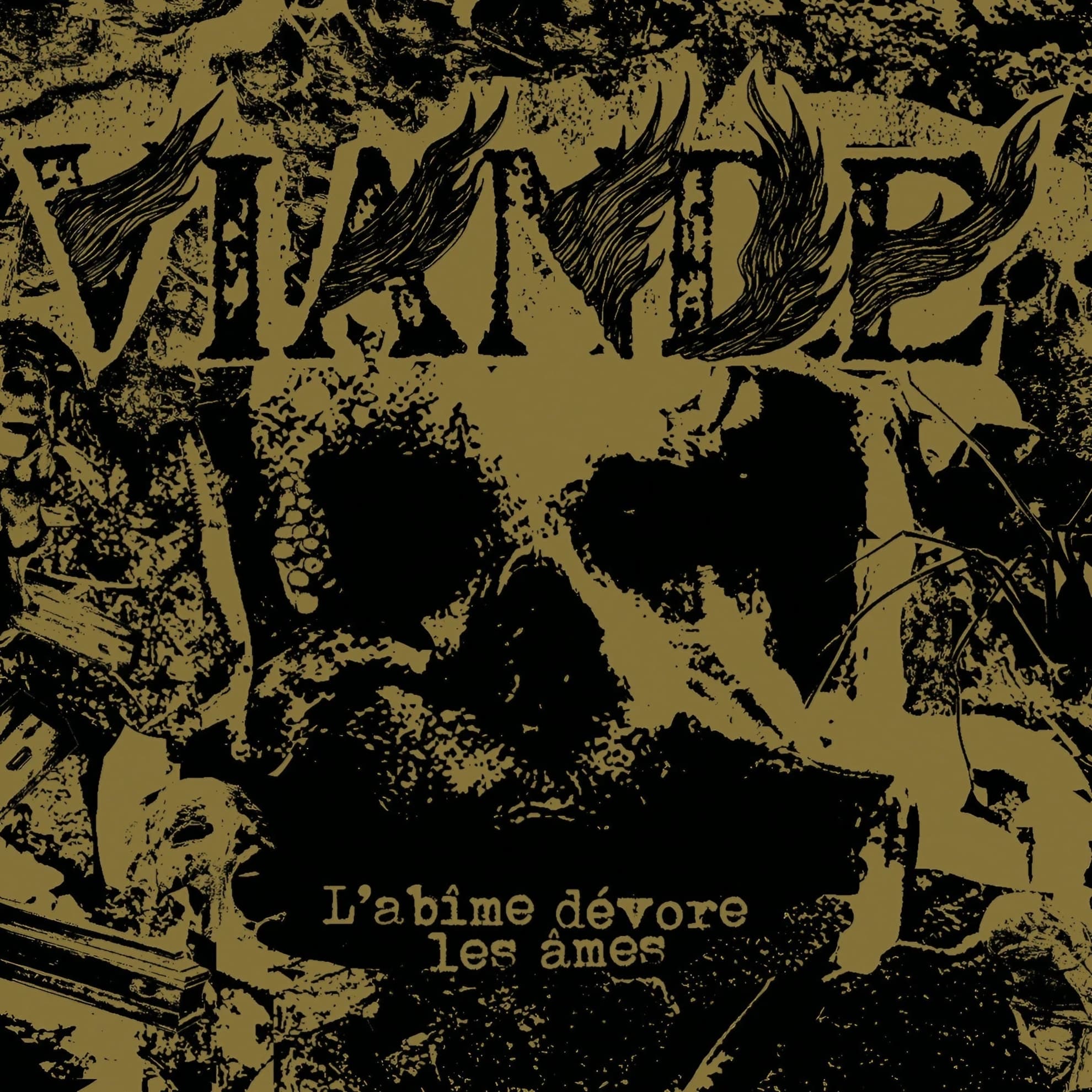
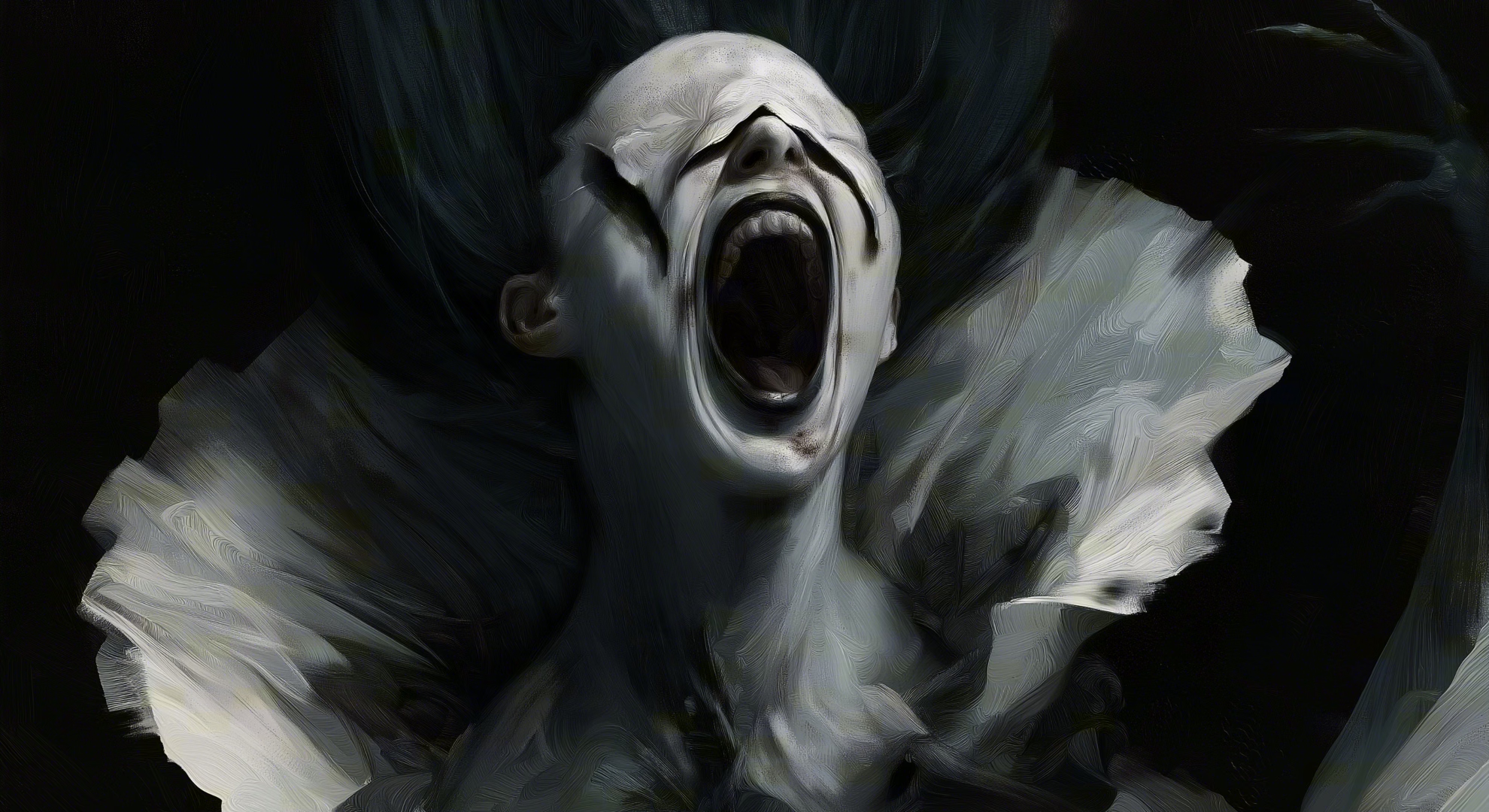
The band’s debut full-length, ‘L’abîme dévore les âmes’ — roughly, “The Abyss Devours Souls” — followed on April 15th, 2022, again through Transcending Obscurity Records, with cover art by J-B Godefroy, the same visual artist who would return for the follow-up. That nine-year gap between formation and a first full-length reflects a project that shaped its sound in isolation before presenting it to an audience beyond its own region.
The Abyss That Came First
‘L’abîme dévore les âmes’ set the template Viande has followed since: eight tracks running from the opening ‘Les Dents du Gouffre’ through the closing ‘Langues de Brume,’ combining the structural weight of death metal with an industrial-tinted atmosphere and passages of doom-paced collapse.
The album’s lineup listed J. on vocals, B. on guitars and noise, with M. on drums and G. contributing live bass, a rhythm section that would not carry forward into the band’s second record.
The atmospheric ambition documented on that debut, incorporating keyboards and stretches of dissonant, near-formless sound, positioned the band from the outset as something closer to a doom-death hybrid than to the straightforward blackened death metal its early demo work had suggested.
A Rhythm Section From Switzerland
The musicians who completed the debut did not remain. In press interviews, the band described the departing members plainly, as unable to withstand what the project had become, and recalled integrating two new players from the Swiss black metal scene to rebuild the rhythm section: a bassist identified as O., also of the act Abyssal Vacuum, and a drummer identified as I., who plays in Serpens Luminis and previously served in Lykhaeon.
That recruitment situates ‘Monument aux Morts’ inside a documented cross-border circuit, in which bands based in the French Alps and bands based in French-speaking Switzerland routinely share musicians, stages, and rehearsal space rather than operating as sealed national scenes bounded by a shared language.1
The new rhythm section’s imprint is audible directly on the album’s advance material, most clearly in the dissonant, lumbering groove of ‘Sacrifice Ardent.’ Where the debut’s rhythm section served largely as a supporting structure beneath Viande’s atmospheric ambitions, the current lineup treats groove and tempo shift as compositional tools in their own right, a change the band has attributed directly to the two new members’ background in the Swiss scene’s own dissonant, blackened idiom.
A Nation’s Roll Call of the Dead
The album’s title borrows directly from a specific and thoroughly documented French institution. Following the Franco-Prussian War of 1870 and 1871, French towns began commissioning monuments to soldiers killed defending the nation, a practice that expanded on an unprecedented scale after the First World War, when France counted close to 1.4 million military dead.
Nearly every commune in the country, from the smallest rural parish to the largest city, commissioned its own monument aux morts: a column, an obelisk, or a mourning figure, most often inscribed with the names of local men who did not return. By the middle of the 1920s, French municipalities had erected an estimated 36,000 of these monuments, one of the largest coordinated programs of public mourning in modern history, embedding grief directly into the geography of everyday civic life rather than confining it to a cemetery or a church.2
The monument aux morts was, and largely remains, a secular object standing in a public square, obligating passersby to register loss as a condition of moving through their own town.
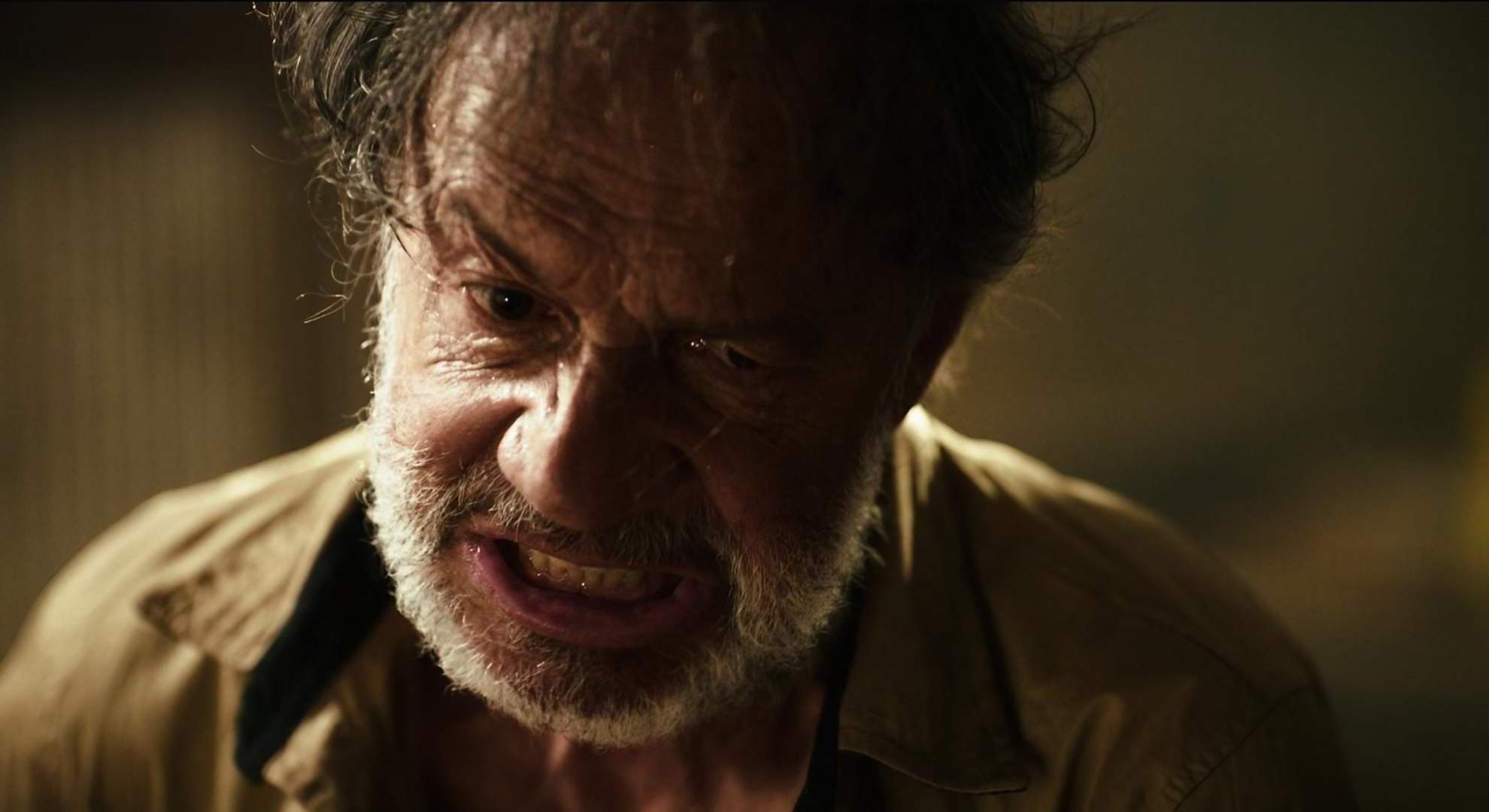
Viande’s appropriation of that phrase does not point toward the First World War specifically. What the band has described in interviews is a record built from a different accounting of casualties: psychiatric hospitalization, addiction, physical collapse, and the sustained cost the album’s making exacted on its own members.
“Psychiatric wards, intensive care, drunk brawls leading to serious health problems, accidents, recovery,” the band explained, describing the years spent completing the record. “Some of us paid a very heavy price.”
Read against the civic function of an actual monument aux morts, that language performs a substitution: the roll of names inscribed on a village obelisk becomes a private accounting of what four musicians survived in order to finish the record at all.
Extreme Metal’s Civic Grief
That substitution sits inside a broader pattern extreme metal has practiced for decades. Where mainstream culture tends to treat death as a subject requiring euphemism or clinical distance, death metal has developed an entire aesthetic vocabulary around naming mortality directly, drawing its imagery from decay, ritual, and the body’s failure rather than from abstraction.3
Viande’s own account of the album’s making, offered without the theatrical distancing that horror-themed extreme metal often supplies, positions ‘Monument aux Morts’ closer to documentary than to fantasy.
The band has said its guiding instruction to its mixing engineer was simply for “more darkness and menace,” and has described composing under a self-imposed mantra of maximum austerity, isolating themselves deliberately to write under conditions stripped of comfort.
Four Songs Already Broken Open
Four tracks from ‘Monument aux Morts’ have reached the public ahead of the July 31st release, each confirming a different facet of the record’s design.
‘Cercueil de Vase,’ the first extract shared in late April of 2026, works through the extended, six-to-seven-minute song lengths that dominate the album’s first half, laying down a groove-driven death metal foundation before letting it dissolve into passages of feedback and negative space.
‘Linceul Immense,’ issued as the second advance track roughly a week later, opens the album itself and pushes the record’s blackened edge further than the debut did, its tremolo-picked upper register set against a slower, doom-paced low end. ‘Sacrifice Ardent,’ issued in mid-June, introduces the new rhythm section most directly, its dissonant, lumbering groove carrying the imprint the band’s two Swiss members bring to the record’s compositional center.
‘Monolithe de Chagrin,’ the fourth advance track, falls near the midpoint of the album’s first half and leans furthest into the atmospheric, keyboard-inflected register the band has said it pursued with Beherit’s ‘Drawing Down the Moon’ in mind, an influence the group named directly when discussing the album’s development.
A bonus track, ‘L’Homme Brasier,’ has also been made available ahead of release, accompanied by an official video, though the band has treated it as a supplementary piece rather than as a fifth entry in the advance campaign.
Gachet and the Bordeaux Doom Line
Recording and mixing for ‘Monument aux Morts’ fell to Cyrille Gachet, credited by the band as having worked the session across seven days under the direct instruction to push toward “more darkness and menace.”
Gachet’s documented credits run through a specific corner of the French heavy underground: he engineered and mixed the Bordeaux post-metal group Year of No Light’s ‘Ausserwelt’ in 2010, and has mixed multiple releases by the Bordeaux-based sludge act Fange, including 2023’s ‘Perdition.’
That body of work situates him inside a French sludge, doom, and post-metal lineage distinct from the more polished, festival-oriented death metal production common elsewhere in the genre, and represents a deliberate departure from the debut album’s engineer, Cédric Lerges, who mixed ‘L’abîme dévore les âmes’ at Studio La Forge.
Drums and vocals for the new record were tracked in a studio, according to the band’s own account, while the remaining instrumentation was produced independently by the group; the specific facility used for those sessions had not been confirmed via official sources at the time of publication.
Grief That Travels Without a Passport
None of this requires a French listener, or one versed in the specific commemorative practice the album’s title invokes, to register its weight. Extreme metal’s slower, more atmospheric registers have long functioned, across radically different listening publics, as a space where audiences process loss, physical suffering, and social rupture through sustained volume and repetition rather than through language.4
A doom-inflected death metal record assembled from a band’s own account of hospitalization and collapse speaks directly to that function, and it does so without requiring listeners to share Viande’s nationality, their regional Alpine geography, or their familiarity with the specific civic tradition the album’s title borrows from. What travels is the structure of the gesture: private catastrophe dressed in the vocabulary of public mourning, offered to an underground audience with its own, equally serious, relationship to grief carried through extreme music.
The record’s physical formats, sold directly through Transcending Obscurity’s own channels and through Viande’s Bandcamp page, reach that audience through the same direct-sale infrastructure that has carried the international death metal underground for decades, allowing a listener anywhere in the world to encounter ‘Monument aux Morts’ through the identical vinyl pressing and digipak compact disc that a listener in Lyon would receive.
The Monument Chambéry Leaves Standing
Thirteen years after two musicians in Chambéry set out to make something as suffocating as they could manage, Viande releases a second album that borrows the vocabulary of French national mourning and turns it inward, toward the four people who survived making it.
‘Monument aux Morts’ reaches listeners on July 31st through Transcending Obscurity Records as a record whose title asks to be read literally, not as a metaphor for extremity but as a specific civic form repurposed for a private reckoning, and whether the album’s remaining, still-unheard tracks sustain that reckoning across the full sequence is a question only the actual release will settle. What is already documented is the cost the band has named openly, and the tradition it has borrowed to hold that cost in public view.
For audience members accustomed to extreme metal’s enduring tradition of translating private trauma directly into audio—circumventing fantastical framing or conventional horror tropes—does adopting the nomenclature of a state’s official memorial infrastructure intensify the engagement with personal grief? Or does the communal inheritance of that civic phrasing impose a thematic burden that the instrumentation itself does not strictly require?
References
- Andy Bennett, ed., ‘Music Scenes: Local, Translocal, and Virtual’ (Nashville: Vanderbilt University Press, 2004), 1–15. ↩︎
- Antoine Prost, ‘Monuments to the Dead,’ in Pierre Nora, ed., ‘Realms of Memory: Rethinking the French Past, vol. 2: Traditions,’ trans. Arthur Goldhammer (New York: Columbia University Press, 1997), 307–330. ↩︎
- Natalie J. Purcell, ‘Death Metal Music: The Passion and Politics of a Subculture’ (Jefferson: McFarland & Company, 2003), 3–8. ↩︎
- Christopher Partridge, ‘The Lyre of Orpheus: Popular Music, the Sacred, and the Profane’ (Oxford: Oxford University Press, 2014), 45–50. ↩︎

Leave a Reply