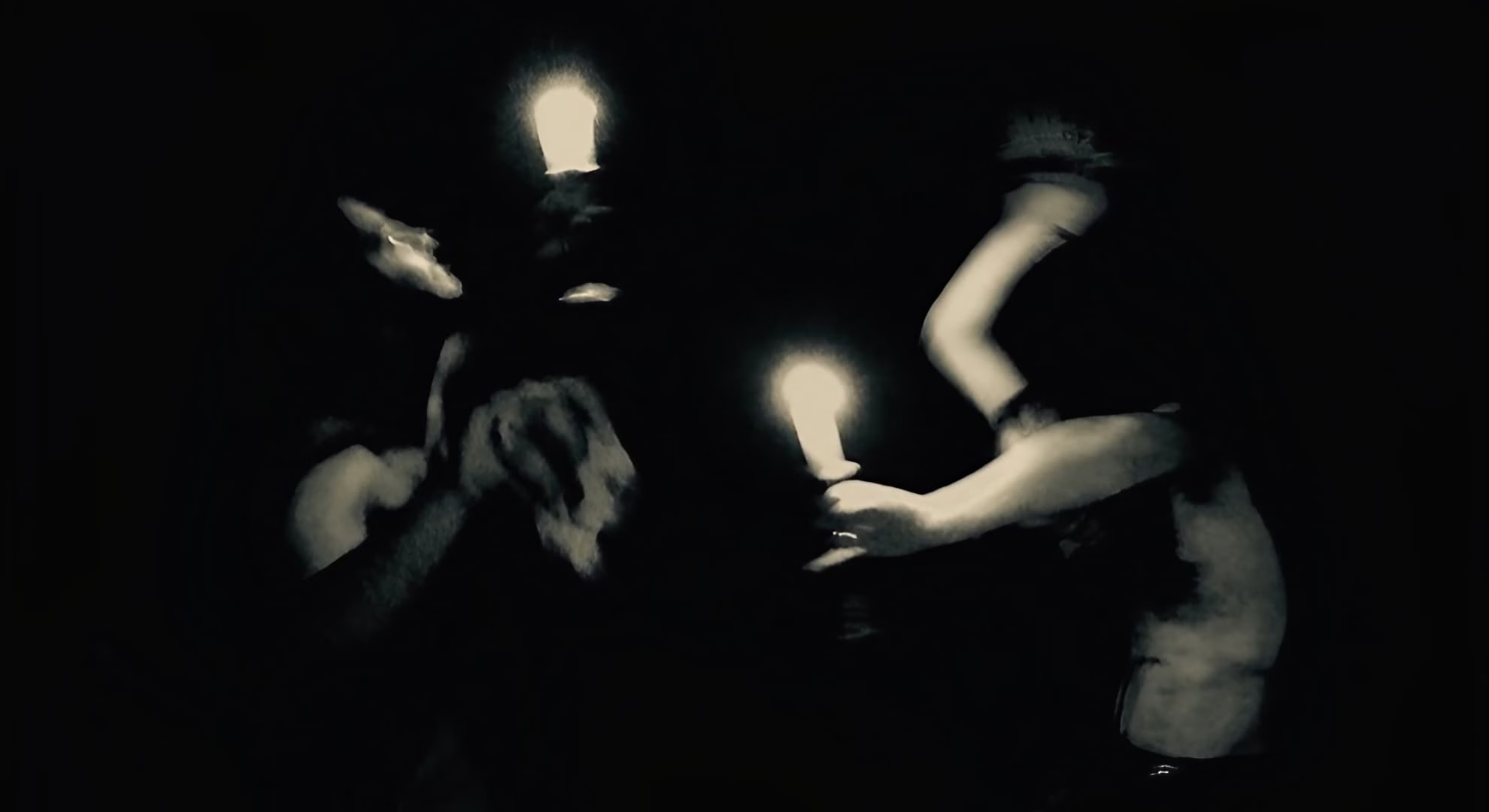


A body given over to something outside it, a hand that moves without instruction from the mind that owns it — this describes a séance room in late Victorian London as accurately as it describes a rehearsal space in Zurich, Switzerland, more than a century later. Death. Void. Terror., the anonymous Swiss collective behind three releases built around an entity they call the Great Monolith, do not perform their music so much as submit to it.
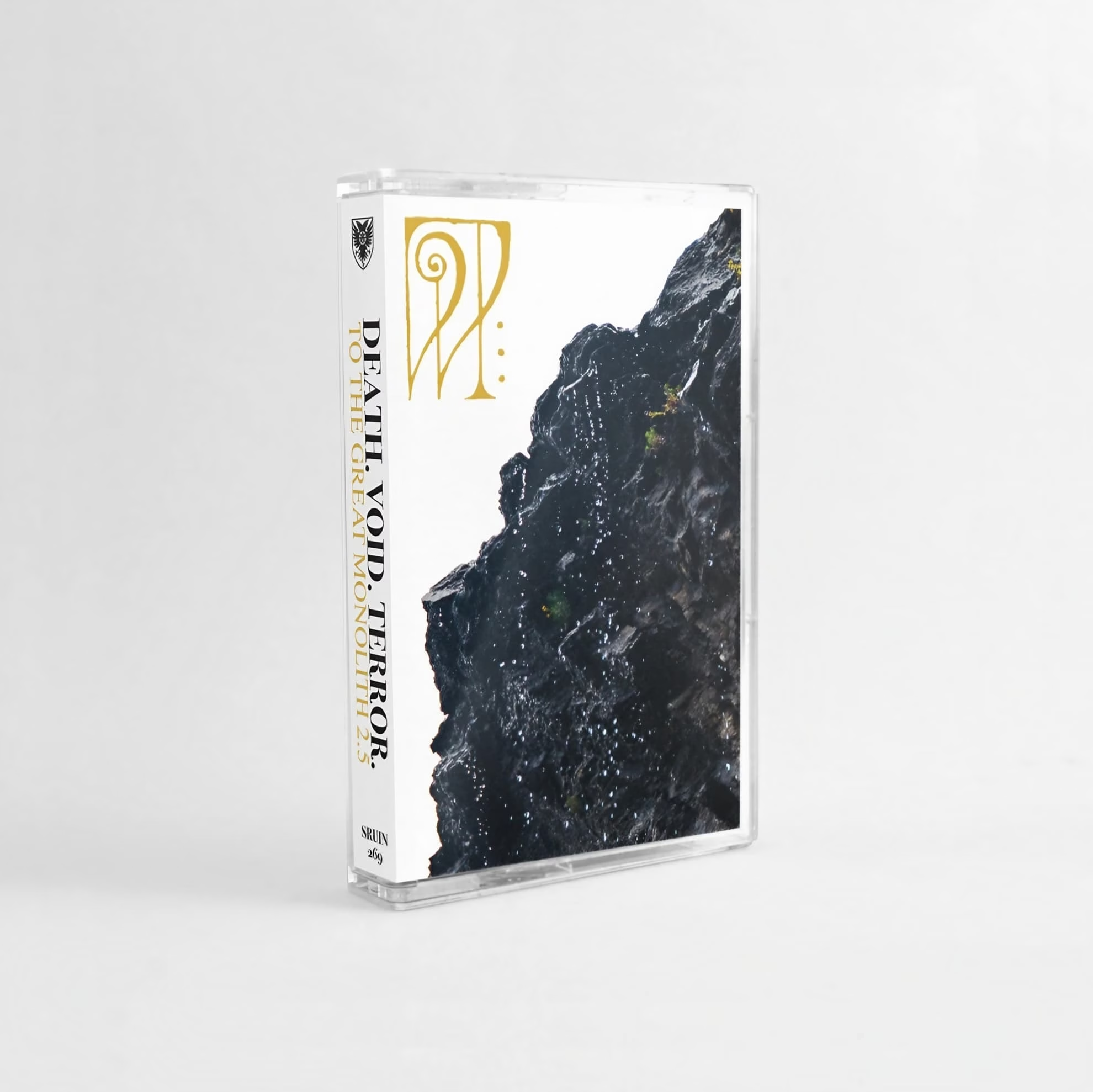
Members remain unnamed by design, and the band has said little about who plays what; what the group has said, consistently and across three separate labels since 2018, is that its recordings come through the practitioner rather than from him or her. On August 14th, 2026, that submission takes its shortest and most exposed form yet, in a three-track cassette-only EP titled ‘To the Great Monolith 2.5,’ released via the Oakland experimental-extreme label Sentient Ruin Laboratories.
A Circle That Renamed Itself
The project is one node within a larger Zurich collective that spent the better part of a decade under one name before adopting another. Formed as the Helvetic Underground Committee, the circle described its mission as advancing grotesque and depraved audio torment, gathering acts including Ungfell, Dakhma, Ateiggär, and ArkhaaIron Bonehead Productionsik under a single loosely organized banner.
In March 2025 the collective renamed itself Jünger Tumilon, German for disciple of stumbling, a title members said reflected the group’s creative process as continual departure from what came before rather than settling into any fixed style.
Death. Void. Terror. has belonged to this circle since its earliest recordings, though its own output has stood apart from labelmates such as the folk-inflected black metal of Ungfell or the more melodic reach of Ateiggär, hewing instead toward a slower, ritual-bound register closer to doom and drone.
The band’s discography traces three separate label homes without ever settling into one commercial identity: German imprint Iron Bonehead Productions issued the 2018 debut, British-facing outfit Repose Records issued the 2020 follow-up, and the current EP is issued through Sentient Ruin Laboratories, the Oakland, California label known for pairing black and death metal with drone, dark ambient, and occult rock acts.
Each transition tracks less a search for a larger imprint than a search for a closer aesthetic fit, as the band’s sound has moved further from riff-based black metal toward something closer to ceremony.
Two Monoliths Already Standing
The project’s origin point, ‘To the Great Monolith I,’ was issued on April 4th, 2018, through Iron Bonehead Productions on compact disc and vinyl LP. Its two tracks carried no titles beyond parenthetical dashes, an anonymity extending from the musicians themselves to the music’s own internal labeling.
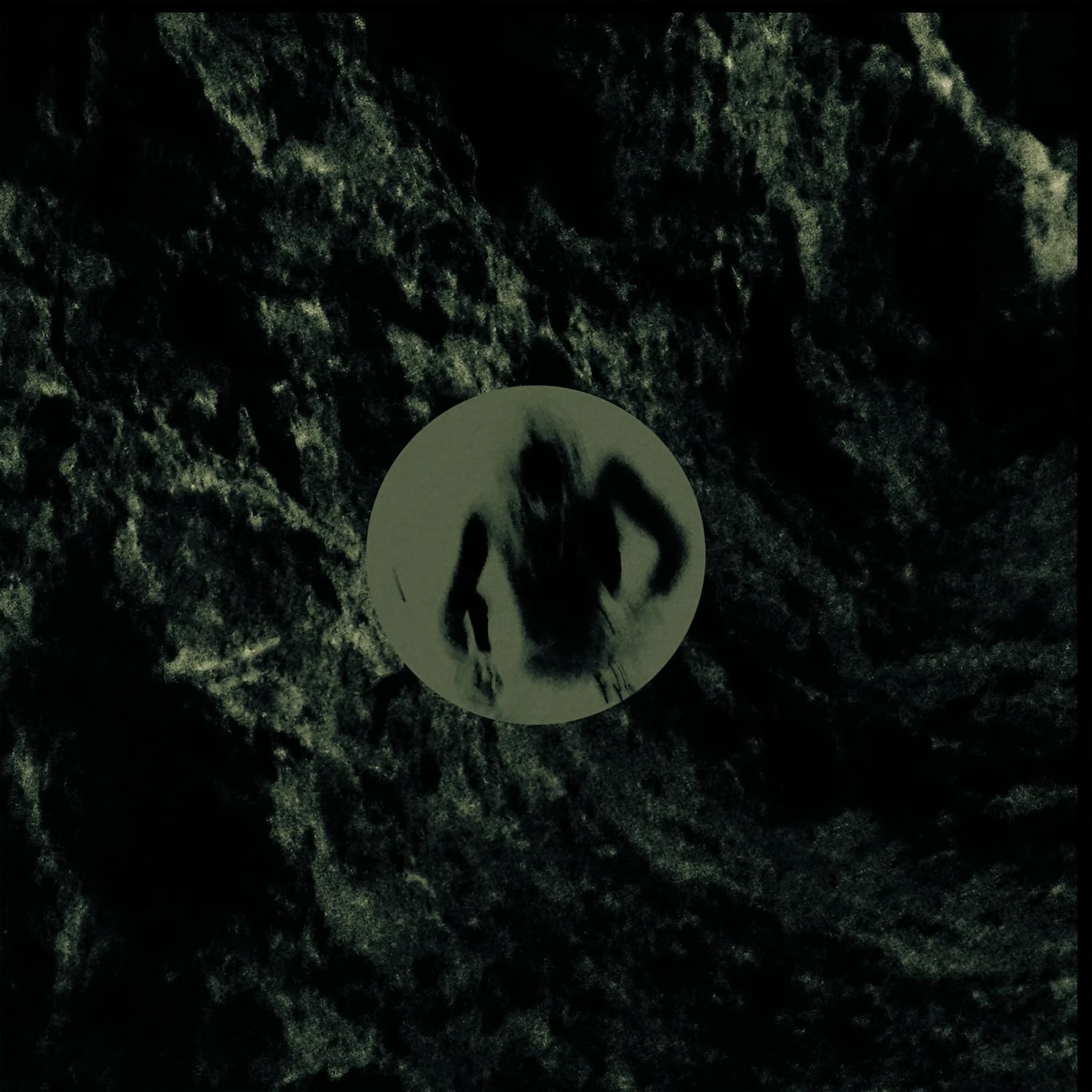
The label’s own copy described the record as a rejection of composition and performance as conventionally understood, framing it instead as documentation of ritual sessions the band undertook to purge themselves of ordinary consciousness, and that absence of conventional structure, married to a runtime exceeding 40 minutes across only two pieces, positioned the band from its first appearance as something closer to a devotional practice set to tape than a metal album in any familiar sense.
‘To the Great Monolith II’ followed in 2020 through Repose Records, again without individual track titles, again organized around the same core concept: musicians allowing their limbs to move without the mediation of intention, in service of a purity the label’s own materials described as impossible to fully attain.
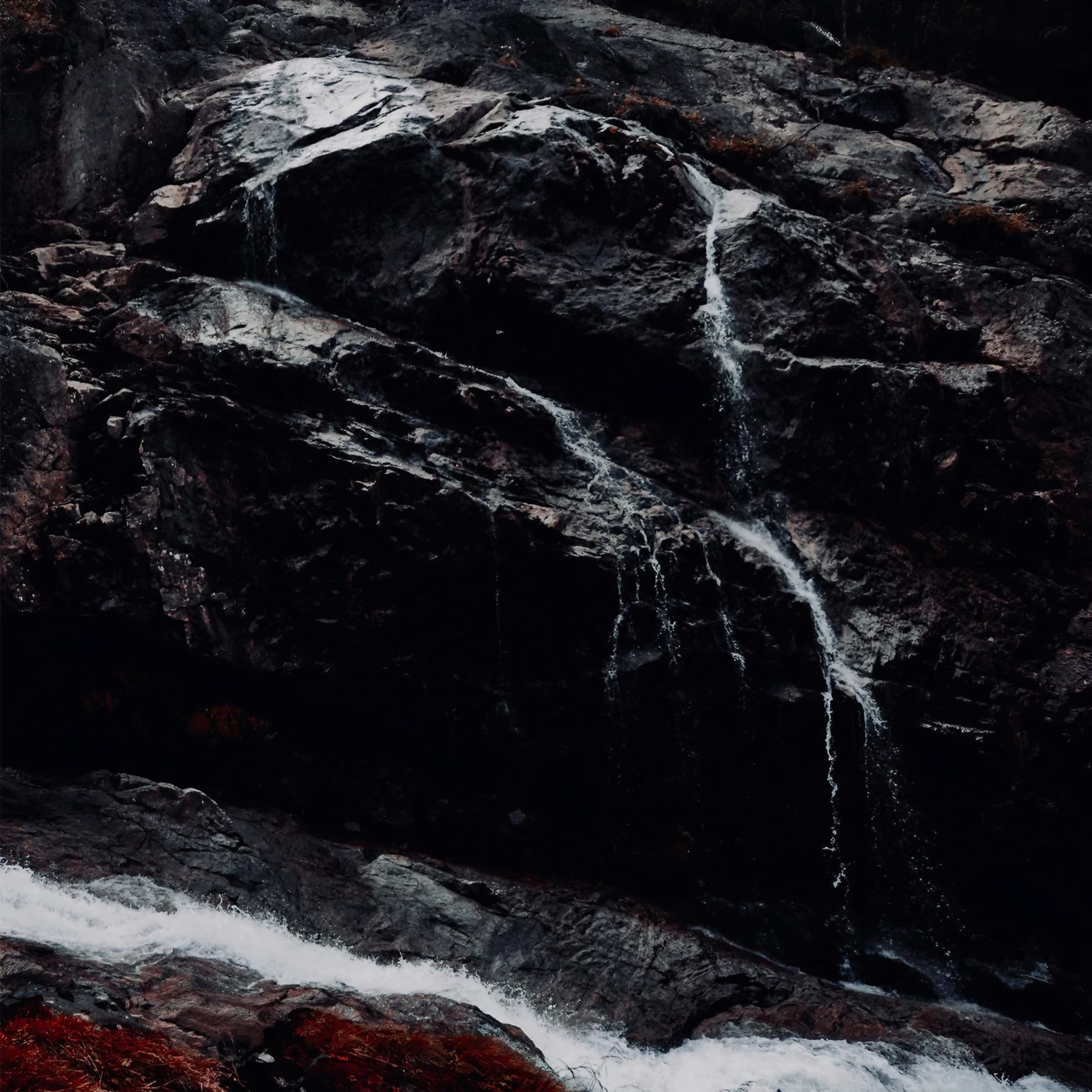
Where the debut leaned toward drone and dark ambient with a black metal coloring, the second record took on firmer shape, incorporating passages of clean, Gregorian-adjacent choral texture alongside its established vocabulary of feedback, distant percussion, and buried, cavernous production.
Physical treatments ranged from a limited red vinyl pressing of 100 copies, packaged with a 16-page artbook, down to a standard black vinyl and digipak CD, evidence of a small but committed collector base willing to support increasingly elaborate packaging for a project that offered no interviews, no photographs, and no names.
A Trance Older Than the Band
The vocabulary Death. Void. Terror. has used to describe its own process — limbs moving without the interference of will, sound passing through the performer rather than from a composing mind — belongs to a documented lineage considerably older than extreme metal itself.
Trance mediumship became a mass cultural phenomenon in Britain and North America during the second half of the nineteenth century, when practitioners, disproportionately women, entered altered states in darkened rooms and produced speech, writing, and physical phenomena they attributed to spirits acting through their bodies.
Historian Alex Owen’s study of the movement documents how mediums positioned themselves as passive vessels even as the role granted many of them an authority and public voice otherwise closed to them, a paradox of surrendered agency producing real social power.1
That same model of surrendered authorship resurfaced explicitly within twentieth-century art through Surrealism’s practice of automatic writing, in which André Breton and his circle attempted to transcribe thought without conscious editorial control.
Scholarship on Breton’s method has traced a direct debt to Spiritualist practice specifically, noting the influence of medium and codifier Allan Kardec’s concept of psychography, or spirit-dictated writing, even as Breton publicly distanced his movement from mediumship’s occult framing.2
The throughline from darkened Victorian séance rooms to Surrealist automatism to a Swiss metal act describing its own recordings as channeled rather than composed is not a matter of one directly influencing the other, but of a recurring cultural strategy: authorship displaced onto an outside force as a means of reaching material the conscious, composing self could not produce alone.
Three Tracks and a New Name
‘To the Great Monolith 2.5’ departs from its predecessors in one immediately legible way: its three pieces carry actual titles. Where the first two albums identified their tracks only by dashes inside parentheses, the new EP names its closing piece outright, ‘Third Monolithic Manifest,’ while its first two entries, ‘( — — ) Ametähna’ and ‘(– – -) Srek Ysedon,’ retain the parenthetical dashes as a kind of transitional scarring, half-named, still partially submerged in the project’s earlier anonymity.
Whether that shift signals a permanent departure from the band’s founding refusal of titles or a temporary gesture specific to this release could not be confirmed via official statement at the time of publication.
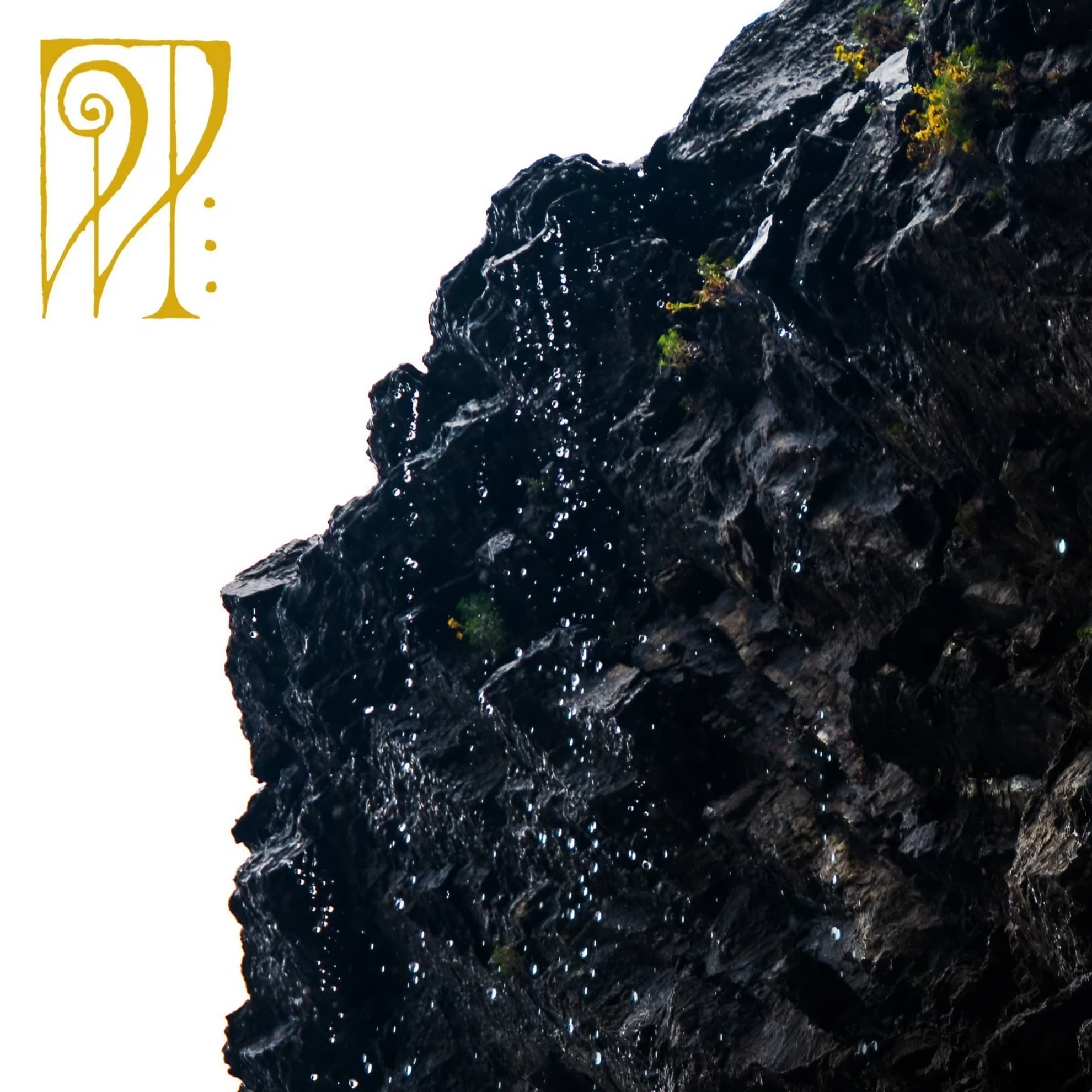
The EP is issued exclusively on cassette, a format choice the label has framed as intentional rather than a matter of budget, tying the release’s physical form to the same primitivism its concept invokes. A digital edition, available as a 24-bit download through Bandcamp, exists as secondary support for the tape rather than the release’s primary format.
No vinyl or compact disc edition had been announced at the time of publication. Mastering for the EP is credited to engineer M.R. at Static Sounds; the recording location and any producer or engineer responsible for the sessions themselves had not been disclosed via official channels at the time of writing, consistent with a project that has never named a single performer across three releases.
Opening track ‘( — — ) Ametähna’ has been made available as the release’s advance listen via Bandcamp, and it is here that the shift promised by the EP’s naming takes its clearest confirmed shape: a titled track occupying the position the band’s two prior records reserved for wordless ritual documents.
Beyond that structural fact, and the confirmation that all three pieces pass through Static Sounds’ mastering chain, specific evaluative claims about the material’s audible character exceed what can be responsibly asserted before the EP’s full release. The band’s own descriptions of guitar drone, ritual percussion, and chant remain promotional language rather than confirmed listening evidence, and are treated here accordingly.
Ritual Sound Beyond the Alps
Sentient Ruin Laboratories, the Oakland label now carrying the EP, has built its roster specifically around acts that blur black and death metal with drone, dark ambient, neofolk, and occult rock, a curatorial position that places Death. Void. Terror. alongside a documented community of listeners already primed for ritual-adjacent extreme music rather than a generic global collective. That community has an academic literature of its own.
Religious studies scholar Owen Coggins’s ethnographic study of drone metal culture found that listeners who do not identify as religious nonetheless describe the genre’s extended, abstracted sound using a consistent vocabulary of mysticism, pilgrimage, and ritual, treating extremity of volume and duration as a route toward an experience that resembles religious ecstasy without requiring belief in its literal claims.3
Anthropologist I. M. Lewis’s comparative study of spirit possession across cultures, from Haitian Vodou to Christian mysticism to Siberian shamanic practice, found a structurally similar pattern well outside any metal context: possession states recurring specifically among marginal or otherwise disempowered practitioners, for whom surrendering the self to an outside force offered a sanctioned route to experience and authority unavailable through ordinary channels.4
Placed against that literature, Death. Void. Terror.’s anonymity reads less as a marketing gesture than as an extension of the same logic Lewis documented in contexts with far higher stakes than a Swiss metal record: authorship surrendered to something else, a discipline of erasure practiced consistently enough, across three releases and two label transitions, to suggest genuine method rather than image.
For listeners already drawn to Sentient Ruin’s existing catalogue of ritual-minded extreme music, that consistency, rather than any single confirmed sound on the new EP, is the strongest evidence the project offers of where ‘To the Great Monolith 2.5’ is likely headed.
A Stone Still Being Placed
‘To the Great Monolith 2.5’ names itself, in its own numbering, an interstitial work: not a third full album but a numbered fraction, a small stone set down on the way toward a larger structure the band has promised but not yet built. That positioning matters more than any single confirmed detail about the EP’s three tracks, because it makes explicit what the project’s first two albums only implied through their titling: this is a body of work conceived as a single, extended act of approach rather than a sequence of discrete statements.
The trance-mediumship model the band invokes, knowingly or not, has always worked this way in its documented forms — never one completed transmission but a practice returned to again and again, each session partial, each one incomplete without the ones that came before and after it. Whatever ‘To the Great Monolith 2.5’ turns out to sound like in full, its place in that practice is already legible: another session, another partial surrender, another stone.
Does a band’s insistence on anonymity change how listeners interpret ritual and possession as artistic concepts, or does the concept carry the same weight regardless of who claims to be channeling it?
References
- Alex Owen, ‘The Darkened Room: Women, Power, and Spiritualism in Late Victorian England’ (Chicago: University of Chicago Press, 2004), 1–10. ↩︎
- Víctor Hugo Martínez Bravo, ‘A Contemporary Scientific Study of André Breton’s Automatic Writing,’ Barcelona Investigación Arte Creación 9, no. 2 (2021): 164–168. ↩︎
- Owen Coggins, ‘Mysticism, Ritual and Religion in Drone Metal’ (London: Bloomsbury Academic, 2018), 12–15. ↩︎
- I. M. Lewis, ‘Ecstatic Religion: A Study of Shamanism and Spirit Possession,’ 3rd ed. (London: Routledge, 2003), 25–30. ↩︎


Leave a Reply