

Nineteenth-century wax exhibitors discovered early that visitors would pay a second admission to see the faces of murderers rendered in careful physical likeness, provided the display was partitioned from the ordinary exhibition floor and framed as a choice made by an adult, not a spectacle forced on a family audience.
That partition, and the extra ticket price attached to it, became a durable commercial template for exhibiting criminal notoriety as entertainment.
A small museum along the Mississippi River is now testing whether that same template still works when the wax has been replaced by a personal collection, the marketing department by a single author, and the corporate license by three decades of one man buying up the material culture of American violence himself.
The Extra Sixpence That Never Left
Madame Tussaud’s original waxworks in London kept the ordinary allegorical and royal figures on the main floor and moved images of executed criminals into an adjoining room reached only by a further payment.
Scholars of the American dime museum, which absorbed this same model through impresarios including P. T. Barnum, have documented how the sixpence or dime charged for such rooms functioned less as an entrance fee than as a form of consent, a small transaction that let the visitor claim they had chosen the material rather than stumbled into it.1
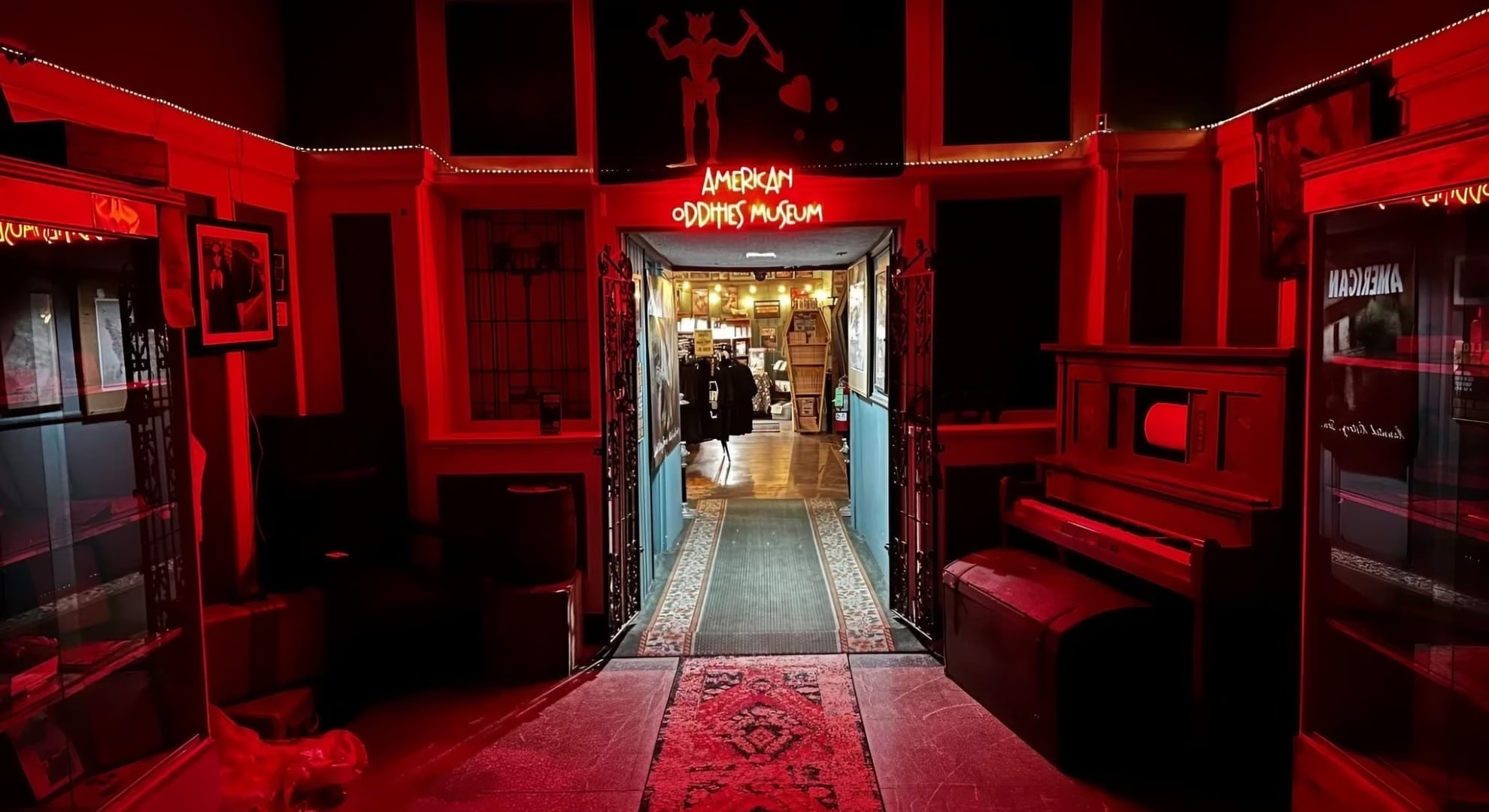
The American Oddities Museum, housed in Alton, Illinois’s former Mineral Springs Hotel, operates on a version of the same principle, without the license, brand, or corporate ownership that carried the Tussaud name into shopping malls and tourist strips worldwide. Its Chamber of Horrors, opening as an expansion within the museum this month, is billed by the museum itself as adults-only, a distinction that keeps the nineteenth-century separation of rooms alive as a separation of audiences instead.
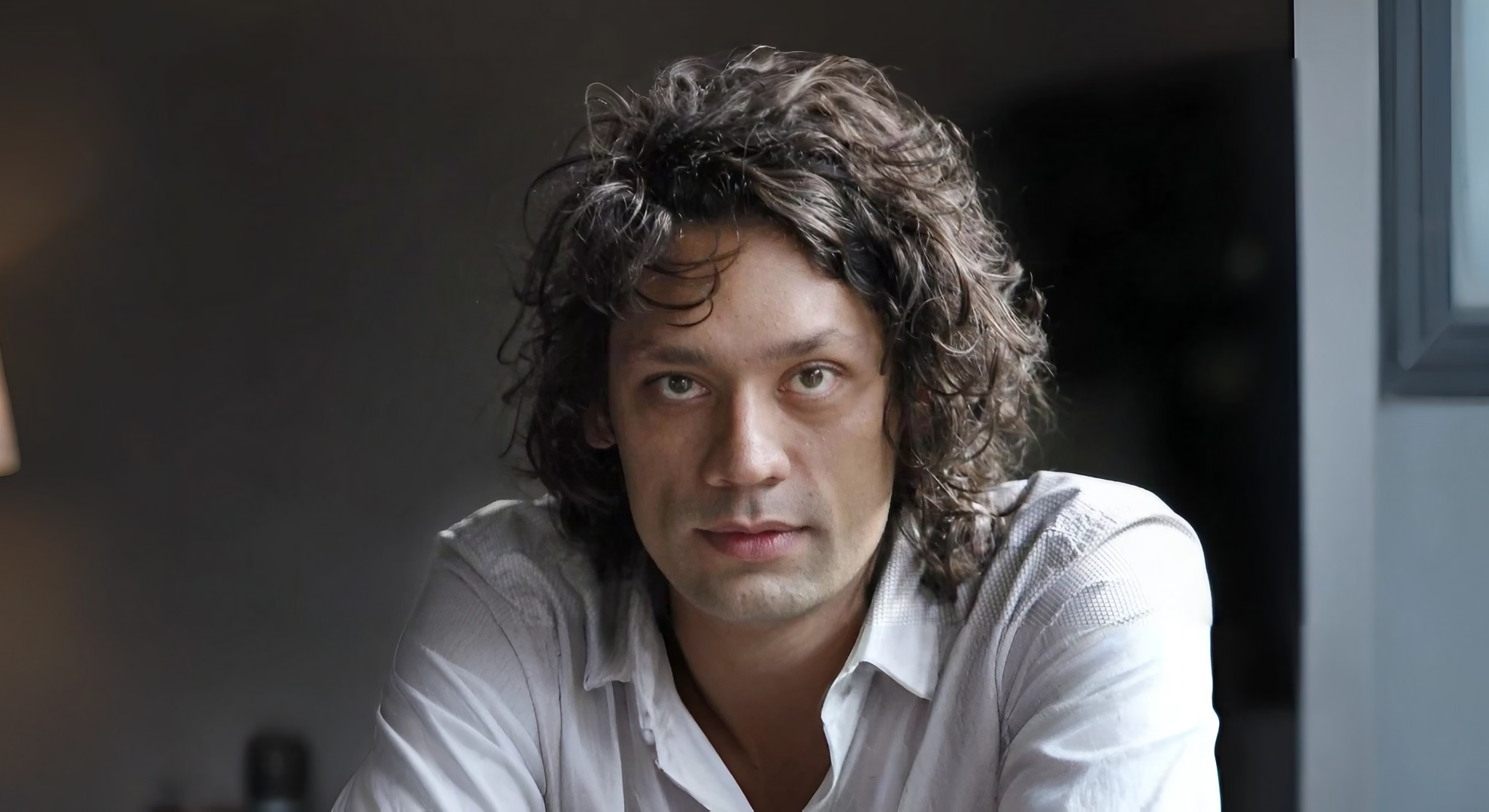
What distinguishes the Alton version from its franchised descendants is ownership. Troy Taylor, the museum’s founder, is not licensing a collection assembled by a corporate archive; he is exhibiting one he has personally built.
The Collector Behind the Cases
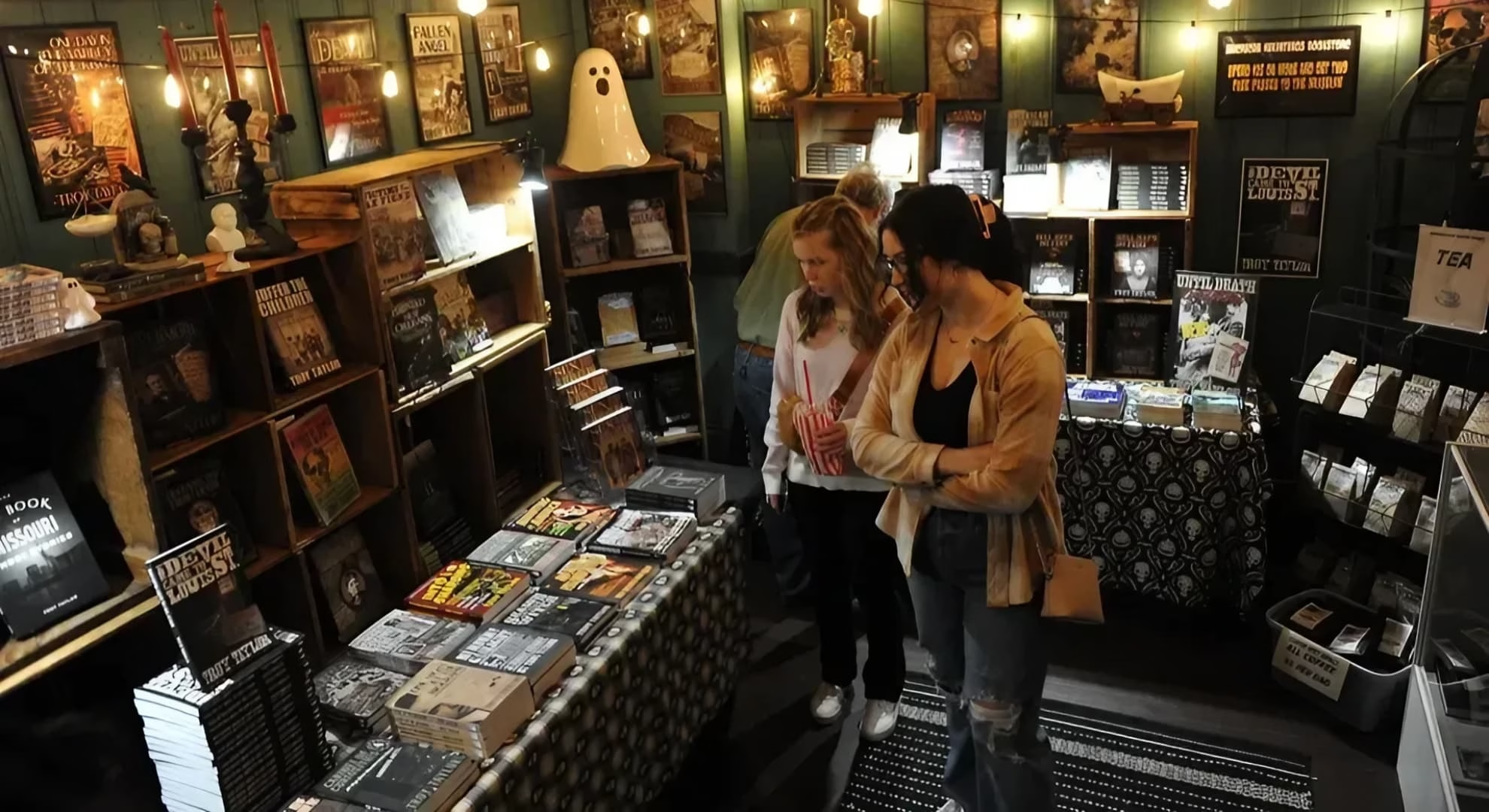
Taylor has spent more than three decades gathering the material culture of American crime, the supernatural, and the unexplained, publishing more than 150 books on the subject and founding the American Ghost Society along the way.
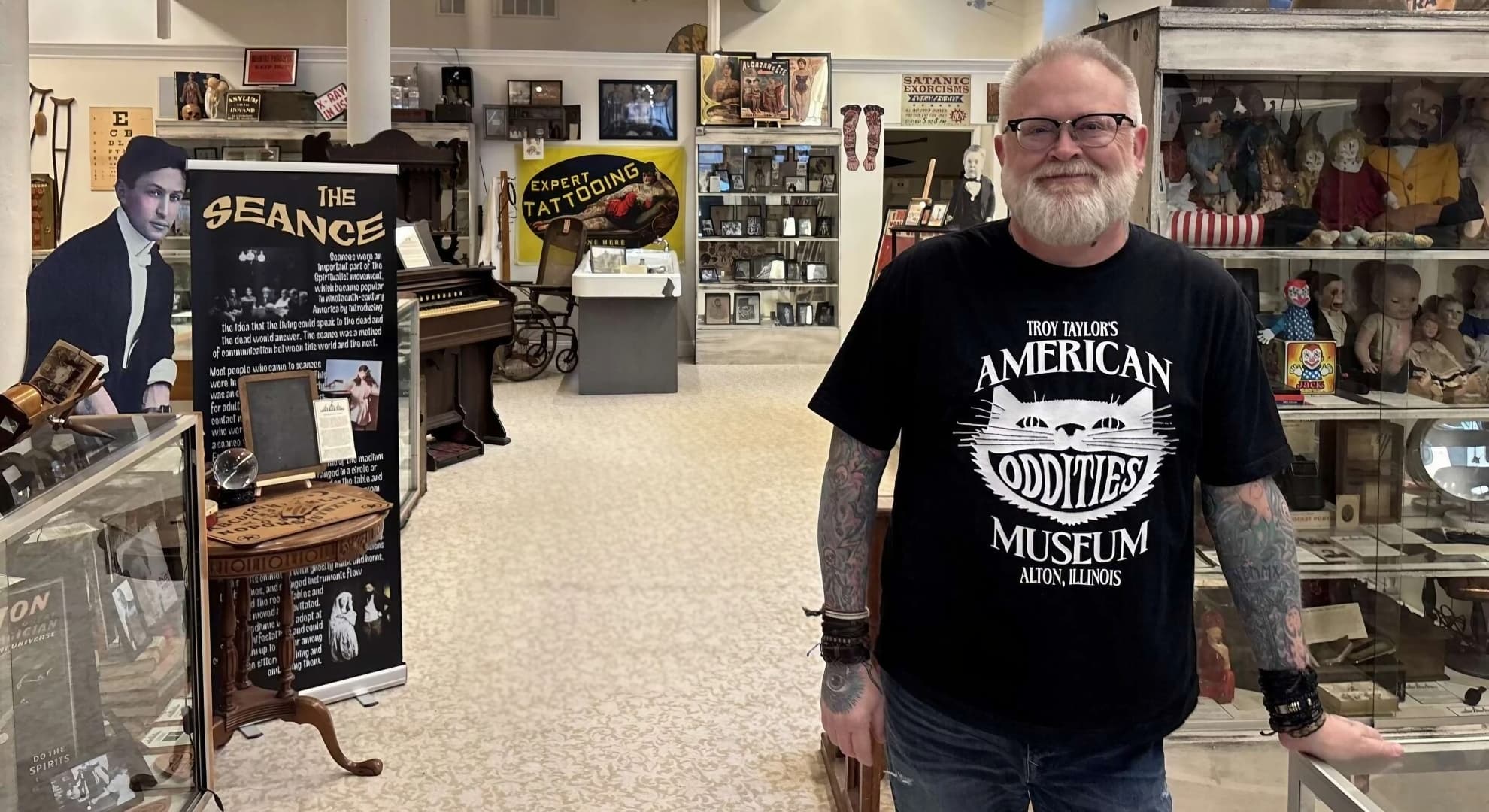
He opened the American Oddities Museum in 2024, consolidating that collection, which spans supernatural relics, funeral artifacts, sideshow ephemera, and true crime memorabilia, into a single Alton storefront rather than distributing it across tours and lecture halls alone.
The August 14th preview pairs a walk through the new exhibit with a presentation Taylor calls ‘Secret Psychopaths,’ a lecture built specifically around killers who never achieved the household recognition of Bundy, Dahmer, or Gacy. Historians of American murder narrative have traced how criminal notoriety has functioned less as a record of frequency than as a selective process, elevating a small number of killers into culturally legible monsters while leaving comparably brutal figures undocumented outside local newspaper archives.2
Taylor’s lecture argues against that selection process directly, restoring killers driven by profit, passion, or perversity to a record that mainstream true crime media has largely left them out of. The claim is not that these figures deserve fame; it is that the same forces determining which killers become famous also determine which histories survive at all.
Forty Dollars, One Night Only
The event carries a single admission price of forty dollars, covering the preview and the lecture together, with no VIP tier separating early access from general entry. That flat structure marks a departure from the two-tier scarcity model common to larger commercial markets and conventions, where early or VIP admission is priced specifically around the privilege of first selection among vendors.
There is no vendor floor to select from here. The August 14th gathering is a fundraiser built around a single collection and a single speaker, closer in structure to a book event or a museum members’ preview than to a market, and its ticket price functions accordingly, as support for an institution’s specific holdings rather than access to a marketplace of competing dealers.
That absence is itself informative. Where markets distribute the argument about death, spectacle, and collecting across dozens of independent practices, Alton concentrates the entire argument inside a single collector’s judgment about what belongs on display and what does not.
Where Alton Buried Its Own Dead
Roughly a mile from the museum’s Piasa Street storefront, Alton City Cemetery holds two histories that sit uneasily beside each other. Its principal monument commemorates Elijah P. Lovejoy, the abolitionist newspaper editor killed by a mob in 1837 while defending his printing press, a documented act of collective violence against a single dissenting voice.
The monument, dedicated in 1897, stands over Lovejoy’s own grave within the cemetery grounds, one of the few American memorials that commemorates a killing carried out specifically to silence the press.
Several miles to the north, a separate site, the North Alton Confederate Cemetery, holds the mass grave of more than 1,400 Confederate prisoners who died of smallpox at the nearby Alton Military Prison during the Civil War, evidence that the city holds more than one documented site where mass death became public memorial rather than private grief.
That same instinct, to keep the record of violent death visible rather than quietly buried, runs through both sites and through the museum’s own project of preservation and display, though Alton’s monuments were carved in granite and stone over a century before Taylor’s began accumulating in glass cases roughly a mile away on Piasa Street.
What One Collector Chooses to Keep
What the Chamber of Horrors fundraiser tests is not whether audiences will pay to look at crime rendered as artifact; that question was settled in London two centuries ago. It tests whether the same spectacle survives the removal of a corporate license, a marketing department, and a brand recognizable across continents, replaced instead by one man’s personal judgment about which killers, objects, and stories are worth preserving.
Alton’s answer, so far, is a flat-priced ticket and a sold-out preview list, evidence that the extra admission still works even when the room behind the curtain belongs to a single collector rather than a franchise.
What does it change, for a visitor, to know that a chamber of horrors was assembled by one collector’s hand rather than licensed from a corporate archive?
Tourism Partnership
We reach an audience that travels with intention — drawn to documented history, dark heritage, and the cultural weight of the places they seek out. If you operate tours, cultural experiences, accommodation, or heritage sites aligned with that ethos, we would like to hear from you. We consider partnerships with tour operators, travel agencies, hostels, hotels, museums, and any organization whose work engages seriously with dark tourism, gothic culture, or historical travel. We do not promote services we cannot stand behind editorially. Reach us through our Contact page.
References
- Andrea Stulman Dennett, ‘Weird and Wonderful: The Dime Museum in America’ (New York: New York University Press, 1997), 45–49. ↩︎
- Karen Halttunen, ‘Murder Most Foul: The Killer and the American Gothic Imagination’ (Cambridge: Harvard University Press, 1998), 61–65. ↩︎

Leave a Reply